


0,49 €
Mehr erfahren.
- Herausgeber: Booksell-Verlag
- Kategorie: Gesellschafts- und Liebesromane
- Sprache: Englisch
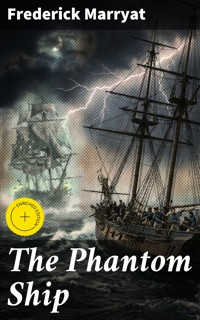
In Frederick Marryat's "The Phantom Ship," readers embark on a gripping maritime adventure that deftly interweaves themes of superstition, heroism, and the allure of the unknown. Set against the backdrop of the early 19th century, a period marked by burgeoning British naval prowess and the romanticization of the sea, the novel exhibits Marryat's distinctive narrative style, characterized by vivid descriptions and intricate character development. The text seamlessly blends elements of Gothic literature with sea-faring lore, encapsulating the era's fascination with phantoms and the supernatural, as it follows the protagonist's harrowing encounters with the titular specter amidst a tumultuous nautical journey. Frederick Marryat, a former naval officer himself, draws heavily from his own experiences at sea, imbuing the tale with authenticity and adventure that resonates through his characters'Äô struggles and triumphs. His firsthand knowledge of naval life and the perilous maritime environment of the time shapes both a realistic and thrilling narrative, reflecting the anxieties and aspirations of 19th-century Britain as it grappled with its imperial identity and the mysteries of the oceans that surrounded it. For those who relish tales of the high seas infused with thrilling adventure and an exploration of the supernatural, "The Phantom Ship" offers a compelling reading experience. Marryat's nuanced interplay of reality and myth invites readers into a world where courage meets the terrifying unknown, making it an essential addition to the libraries of both maritime enthusiasts and lovers of classic literature. In this enriched edition, we have carefully created added value for your reading experience: - A succinct Introduction situates the work's timeless appeal and themes. - The Synopsis outlines the central plot, highlighting key developments without spoiling critical twists. - A detailed Historical Context immerses you in the era's events and influences that shaped the writing. - A thorough Analysis dissects symbols, motifs, and character arcs to unearth underlying meanings. - Reflection questions prompt you to engage personally with the work's messages, connecting them to modern life. - Hand‐picked Memorable Quotes shine a spotlight on moments of literary brilliance. - Interactive footnotes clarify unusual references, historical allusions, and archaic phrases for an effortless, more informed read.
Das E-Book können Sie in Legimi-Apps oder einer beliebigen App lesen, die das folgende Format unterstützen:
Veröffentlichungsjahr: 2019
Ähnliche

















The Phantom Ship
Table of Contents
Introduction
A vow to defy fate can become a curse that outlives the one who makes it.
Frederick Marryat’s The Phantom Ship is a nineteenth-century sea novel that blends nautical adventure with Gothic and supernatural elements. First published in 1839, it draws on the long maritime tradition of the legendary ghost ship associated with the Flying Dutchman while retaining the concrete, workmanlike textures of seafaring life. The story moves through ports and oceans shaped by a world of sail, where weather, distance, and uncertainty govern daily existence. Marryat, known for fiction steeped in maritime experience, uses this setting to stage a confrontation between spiritual dread and practical survival.
The novel’s premise begins with a family marked by an inherited calamity: a father’s ominous fate at sea throws a shadow over those left behind. From this initial disturbance, the narrative follows a son who is drawn into voyages and encounters that promise both peril and revelation, as if the ocean itself were a corridor to the uncanny. The early setup establishes the central engine of the book without requiring foreknowledge of its later turns: an urge to seek answers and deliverance collides with forces that seem older than any single life. What follows is propelled by travel, chance meetings, and mounting foreboding.
Marryat’s style combines brisk incident with descriptive passages attentive to ships, seamanship, and the rhythms of maritime labor. The voice is generally that of an omniscient storyteller, moving between action and explanation with the confidence of popular nineteenth-century fiction, and the tone balances sensational menace with adventurous momentum. Readers should expect a narrative that proceeds through episodes and set pieces, where storms, shipboard routines, and unfamiliar coasts create a vivid external world for the internal drama to play against. The supernatural is treated with seriousness, yet the novel retains the pleasures of plotted movement and practical detail.
At its heart, The Phantom Ship explores the tension between human agency and a destiny that feels imposed, whether by transgression, tradition, or the inscrutability of the sea. The idea of a curse functions as more than mere spectacle: it becomes a mechanism for probing responsibility across generations and for testing what perseverance can mean when the terms of struggle appear unequal. The ocean setting intensifies these questions by placing characters in an environment where control is always partial, and where the horizon can promise rescue or ruin. Faith, doubt, and moral reckoning press close to the everyday demands of endurance.
The novel also meditates on identity and loyalty under pressure, asking what a person owes to family, to vows, and to conscience when each obligation pulls in different directions. It uses maritime travel to stage encounters with the unfamiliar and to dramatize the fragile ties that bind communities together, whether aboard ship or ashore. Even when the plot leans into melodramatic intensity, it remains anchored in the social and psychological realities of fear, hope, and grief. The supernatural frame amplifies these emotions, allowing private anguish to take on the scale of legend without dissolving into abstraction.
The Phantom Ship still matters because it offers an early, influential example of how genre can fuse the realistic with the uncanny to examine ethical and emotional stakes. Contemporary readers accustomed to horror-inflected fantasy or dark adventure will recognize the appeal of its atmosphere and its insistence that mystery can coexist with procedural, grounded detail. It also provides a window into nineteenth-century popular storytelling, where suspense and moral inquiry were often intertwined. The book’s concerns with inherited burden, the limits of knowledge, and the costs of obsession remain immediately legible in modern terms, even as its idiom reflects its era.
Synopsis
Frederick Marryat’s The Phantom Ship is a nineteenth-century sea romance that blends nautical realism with Gothic and religious legend. It centers on the long-shadowed fate of the “Flying Dutchman,” a vessel condemned to wander, and on a young seaman, Philip Vanderdecken, whose life is shaped by that curse. From the outset, the narrative frames a conflict between inherited doom and human agency, asking whether devotion, courage, and practical seamanship can confront a supernatural sentence. The novel moves between remembered catastrophe and present pursuit, establishing a world where shipboard discipline and storm-tossed peril coexist with omens and dread.
paragraphs
Philip’s early experiences are tied to tales of his father’s doomed command and to the fearful reputation that clings to the Dutchman’s name. Marryat situates Philip among working sailors and maritime communities, showing how rumor and religion circulate in ports and aboard ships, hardening into collective certainty. As Philip enters seafaring life, the novel emphasizes the routines of navigation, watchkeeping, and the hazards of weather, while allowing the supernatural legend to intrude in unsettling ways. This tension propels Philip toward a personal mission: to seek evidence, confront the story’s source, and discover whether the family’s fate can be altered.
paragraphs
The journey takes Philip through varied coasts and seas, with episodes that showcase Marryat’s command of naval detail—rigging, ship handling, and the daily calculus of survival at sea. Yet each realistic passage is shadowed by the possibility of encounter with the phantom vessel, and the narrative repeatedly tests Philip’s resolve through setbacks, storms, and the skepticism of others. He meets characters who interpret the curse through different lenses—piety, fear, opportunism, or stubborn disbelief—so that the supernatural question becomes also a social one. The plot’s momentum comes from pursuit and near-misses rather than immediate revelation.
paragraphs
Philip’s mission deepens from curiosity into an ethical and spiritual undertaking, and the novel links maritime trial with inward trial. The protagonist’s devotion to family and faith is measured against the brutal indifference of the sea, where skill may fail and chance may rule. Marryat introduces scenes in which the boundary between natural phenomena and supernatural visitation is difficult for characters to settle, intensifying suspense without resolving the mystery prematurely. As Philip gathers fragmentary accounts and experiences, the curse functions as a symbol of inherited burden, and the narrative asks what forms of knowledge—testimony, sight, scripture, or experience—can be trusted under extreme conditions and fear-driven rumor, leaving uncertainty intact for much of the voyage’s course onward and intensifying the stakes for those involved in the hunt across oceans and ports alike worldwide in scope overall steadily and relentless pace too in the end? Sorry no conclusion.
Historical Context
Frederick Marryat’s The Phantom Ship appeared in 1839, during the early Victorian period, when Britain’s maritime power and commercial shipping underpinned global influence. The novel looks back to the seventeenth century and the world of European oceanic expansion, with routes linking the North Sea, the English Channel, the Bay of Biscay, and the Cape route toward the Indian Ocean. Port cities and shipboard life were shaped by the institutions of chartered trade, naval warfare, and merchant enterprise. Public interest in sea narratives was high in the 1830s, reflecting both naval prestige and anxieties about perilous long-distance travel.
paragraphs of sailors, merchants, and coastal communities. Dutch dominance in European shipping and finance was strong after the 1602 founding of the Dutch East India Company (VOC), which organized voyages, maintained fortified trading posts, and employed large maritime labor forces. The VOC’s activities depended on disciplined shipboard hierarchies, convoy practices, and strict commercial regulation. Dutch maritime culture also fed a rich corpus of nautical folklore. Marryat’s use of Dutch settings and seafaring institutions reflects the period when Dutch vessels were frequent in Asian and Atlantic waters and when rivalry with other European powers increasingly defined the seas.
The seventeenth century was also an age of frequent Anglo-Dutch conflict. The First (1652–1654), Second (1665–1667), and Third (1672–1674) Anglo-Dutch Wars were fought largely for control of trade routes and maritime commerce, shaping naval tactics and the strategic importance of the Channel and North Sea. Battles, privateering, and the constant threat of capture were common features of maritime life. Even outside formal war, seamen faced impressment, harsh discipline, and hazardous navigation. A narrative centered on ships and fateful voyages draws directly on this environment, in which national rivalry and economic competition were lived realities for ordinary crews.
Long-distance sailing in this era was constrained by weather knowledge and imperfect navigation. Latitude could be determined with reasonable accuracy, but reliable longitude at sea remained difficult until the eighteenth century, increasing the risks of wrecks and prolonged voyages. The rounding of the Cape of Good Hope exposed ships to severe storms, strong currents, and the danger of being driven off course. Scurvy and other diseases caused heavy mortality on extended passages, and shipboard conditions were often cramped and unsanitary. These verifiable hazards help explain why maritime legends and supernatural interpretations flourished among sailors confronting repeated loss, uncertainty, and the vastness of the ocean.
Religious belief and ecclesiastical institutions were powerful forces in the seventeenth-century Low Countries and Iberian worlds connected by maritime trade. After the Reformation, the Dutch Republic was predominantly Calvinist, while Spanish and Portuguese domains remained Catholic, and confessional conflict shaped politics and personal life. The Spanish Inquisition, established in 1478 and active into the nineteenth century, functioned to enforce Catholic orthodoxy and investigate alleged heresy. Such institutions created a climate in which oaths, curses, and judgments could carry grave consequences, both socially and legally. Marryat’s engagement with religious themes reflects the era’s contested confessional landscape and the moral seriousness attached to belief.
The Phantom Ship was written in the wake of the Romantic movement, which had elevated interest in the sublime, the uncanny, and the power of the sea in literature and art. Maritime Gothic elements drew on earlier European legends, including the widely circulated tale of the Flying Dutchman, which appears in print in the eighteenth century and became prominent in nineteenth-century culture. By 1839, readers were familiar with nautical adventure fiction and with supernatural motifs set against realistic seafaring detail. Marryat combined these currents with technical knowledge, producing a narrative that could satisfy a public seeking both authenticity about ships and the imaginative charge of legend.
Marryat’s own career shaped his perspective. He served as an officer in the Royal Navy during the Napoleonic Wars (1803–1815), an era of blockade, convoy protection, and hard discipline at sea, and he later became a popular author of naval fiction. The postwar decades brought reforms and debates about naval administration and seamen’s welfare, alongside expanding literacy and a growing periodical press. His sea novels typically blend professional observation with moral and social commentary. Although The Phantom Ship is set earlier and in non-British contexts, its depiction of shipboard authority, danger, and camaraderie reflects an author formed by wartime naval service.
In historical context, the novel uses a seventeenth-century maritime world to explore enduring questions that resonated in the 1830s: the limits of human control over nature, the weight of inherited obligation, and the tension between faith and fear. By grounding supernatural legend in recognizable nautical practice and real institutions of trade, war, and religion, it mirrors Victorian-era tastes for historically flavored adventure while also reflecting anxieties about fate and responsibility. The sea becomes a space where empire, commerce, and belief intersect, allowing Marryat to critique harsh authority and to dramatize how individuals confront systems larger than themselves.




