


1,99 €
Niedrigster Preis in 30 Tagen: 1,99 €
Niedrigster Preis in 30 Tagen: 1,99 €
Mehr erfahren.
- Herausgeber: DigiCat
- Kategorie: Poesie und Drama
- Sprache: Englisch
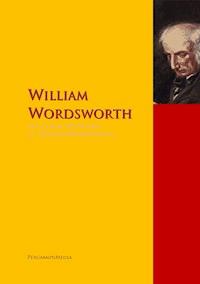
William Wordsworth's monumental poem, "The Prelude," is an autobiographical exploration of the poet's life, reflecting his development as an artist and his relationship with nature. Composed in blank verse and richly infused with Romantic ideals, the poem delves into themes of nature, imagination, and self-discovery. Wordsworth's masterful use of imagery and introspective language captures the profound spiritual connections he establishes with the natural world, presenting a philosophical inquiry into the essence of poetry and the human experience. The poem's structure, marked by a fluid narrative and episodic format, allows for a dynamic reflection on personal growth and creative evolution. William Wordsworth (1770-1850), a central figure in the Romantic movement, championed the use of everyday language and emotional depth in poetry. His profound experiences in the Lake District, alongside his friendship with Samuel Taylor Coleridge, significantly shaped his literary vision. Wordsworth's commitment to exploring the inner workings of the mind and the sublime beauty of nature drove him to articulate his search for identity and purpose, culminating in the creation of this seminal work. "The Prelude" is an essential read for anyone interested in the intersections of nature, art, and personal growth. Its lyrical quality and philosophical depth not only resonate with modern readers but also invite a timeless reflection on the beauty of finding one's path in the world. Wordsworth's introspective journey offers invaluable insights into the transformative power of the natural landscape, making this poem a cornerstone of English literature. In this enriched edition, we have carefully created added value for your reading experience: - A succinct Introduction situates the work's timeless appeal and themes. - The Synopsis outlines the central plot, highlighting key developments without spoiling critical twists. - A detailed Historical Context immerses you in the era's events and influences that shaped the writing. - An Author Biography reveals milestones in the author's life, illuminating the personal insights behind the text. - A thorough Analysis dissects symbols, motifs, and character arcs to unearth underlying meanings. - Reflection questions prompt you to engage personally with the work's messages, connecting them to modern life. - Hand‐picked Memorable Quotes shine a spotlight on moments of literary brilliance. - Interactive footnotes clarify unusual references, historical allusions, and archaic phrases for an effortless, more informed read.
Das E-Book können Sie in Legimi-Apps oder einer beliebigen App lesen, die das folgende Format unterstützen:
Veröffentlichungsjahr: 2022
Ähnliche





The Prelude
Table of Contents
Introduction
Through landscapes of crag and river, through lecture halls, lanes, and political weather, a solitary mind asks how lived moments—exhilarating, frightening, ordinary—can be gathered by memory and tutored by nature until they become imagination, the inner power that not only records experience but transforms it, guiding a vocation and steadying the self when fashions shift, friends differ, and the world outside surges with change, testing whether such shaping can withstand time’s pressure and leave, not mere record, but a living form of life.
The Prelude, by William Wordsworth, is a long autobiographical poem in blank verse composed across decades beginning in the late 1790s and first published after the poet’s death in 1850. Conceived as the opening movement to a larger, unfinished philosophical project he called The Recluse, it traces the formation of a poet from early childhood through youth and early manhood. Without relying on spectacle, it follows a mind discovering its calling, mapping the relations among memory, nature, and creative energy. It proceeds by linking scenes to reflection, setting forth a personal history that is also an inquiry into how poetry begins.
Readers have long regarded this work as a classic because it reimagines the epic not as a tale of martial conquest, but as an inward journey conducted in the measured music of English blank verse. Drawing on a line made authoritative by earlier masters, Wordsworth refits it for meditative narrative, balancing scene with reflection. The result established a model for autobiographical long poems, enlarged the scope of Romantic art, and confirmed the power of lyric introspection to carry philosophical inquiry. In doing so, it broadened the compass of what English poetry could attempt.
Its enduring themes remain immediately intelligible: the shaping force of childhood; the education of feeling; the dialogue between solitude and community; the restorative, sometimes chastening presence of the natural world; the role of memory in composing a self that endures across time. Rather than sentimentalize, the poem tests each claim about nature and mind against experience. It treats growth as labor, not accident, showing how attention, gratitude, and honest self-critique form companions to ambition and delight, and how personal endurance is braided with receptive wonder.
The poem’s canvas is the closing years of the eighteenth century and the early decades that followed, a period of artistic innovation and political upheaval in Britain and beyond. Wordsworth writes from a life rooted in the landscapes of the Lake District and shaped by schooling, travel, conversation, and reading. The narrative remains grounded in ordinary scenes as well as large public currents, yet its focus is consistently the inward consequences of those encounters for a developing imagination. In this way, concrete places become laboratories for thought.
Wordsworth began drafting this poem near the moment he and his contemporaries helped inaugurate English Romanticism, and he returned to it repeatedly, revising and reorganizing its materials for much of his career. He intended it to stand as the threshold to The Recluse, a projected philosophical poem that was never completed. He did not publish this work during his lifetime; the poem appeared in 1850, shaped by years of reflection and revision, and it immediately reframed his achievement. The long gestation is integral to its authority, since it embodies the processes it describes.
Formally, the poem marries the forward motion of narrative to the spiral of meditation. Its blank verse is supple, capable of naming precise physical detail and of rising to abstract speculation without losing conversational poise. Episodes of walking, learning, friendship, and travel are woven into longer passages where the speaker tries to understand what those episodes mean. The poem also addresses a trusted friend, modeling criticism and encouragement, and demonstrating that solitude and dialogue can coexist within one voice, each correcting and enlarging the other.
Central to the poem is an exploration of the faculties that make art possible. Perception, recollection, and imagination are treated not as fixed categories but as living powers that interact with place and history. The poem proposes that certain vividly remembered moments catalyze enduring insight, while also insisting that no insight is secure without renewed attention to the world. In this way, it offers a philosophy of poetic making that is inseparable from ethical self-examination, placing responsibility alongside inspiration and discipline beside fervor.
The work’s influence has been broad. It helped cement the Romantic conviction that the inner life can bear the weight of extended poetic structure, encouraging later writers to attempt large-scale autobiographical sequences and sustained nature-centered reflection. Its union of personal narrative with critical inquiry gave critics and poets a shared touchstone for discussing memory, growth, and the social responsibilities of art. As classrooms and readers returned to it, the poem shaped expectations for serious modern life-writing in verse, and for reflective long-form poetry.
Approaching this poem, readers will find a story without cliffhangers: the interest is not in what happens next, but in how the mind understands what has happened. The poem circles scenes from different vantage points, letting meanings ripen across time. Its length invites unhurried reading, and its music rewards being read aloud. Beginners can trust that clarity is part of the design; the poem frequently pauses to restate or test a claim, welcoming readers into its reflective cadence and drawing them into an ongoing conversation.
For these reasons the poem endures as a classic: it marries ambition to intimacy, wedding a local, known world to questions that exceed any single life. It renews a venerable metrical tradition while sounding recognizably human, and it proves that intellectual range need not exclude emotional candor. Over generations, editions, and interpretations, the work has remained a living encounter rather than a monument, because it asks each reader to measure experience against perception and to practice attentiveness that is both humane and rigorous.
Today, amid accelerations and distractions, the poem’s commitments feel freshly relevant. It models sustained attention to place, a responsible love of the natural world, and patience with the long work of becoming. It frames creativity as a discipline, not a flash, and understands education as the training of the whole person. By honoring memory without nostalgia and self-scrutiny without self-absorption, this book continues to speak to readers seeking meaning, resilience, and a durable art for changing times, confirming its lasting appeal.
Synopsis
The Prelude is a long autobiographical poem by William Wordsworth, composed across the late eighteenth and early nineteenth centuries and first published in 1850 after the poet’s death. Written in blank verse and conceived as a preface to an unfinished philosophical project, it is addressed to Samuel Taylor Coleridge and recounts the development of Wordsworth’s mind as a poet. The work proceeds broadly in chronological order while constantly pausing to analyze memory, perception, and imagination. Instead of a conventional plot, the poem assembles formative scenes and reflections, testing how external nature, social currents, and inward feeling shape a creative and ethical consciousness.
The opening books return to childhood in the English Lake District, where freedom of movement and close contact with rivers, hills, and seasonal changes nurture early powers of sensation and thought. Episodes such as nocturnal rowing and winter skating show delight tempered by awe, when beauty shades into something vast and unsettling. Nature is not a backdrop but an active companion, at times corrective, at times inspiring. The child’s spontaneous joy gradually acquires moral resonance, as the mind learns to read intimations in the landscape and to connect bodily exhilaration with reverence, restraint, and the first stirrings of responsibility.
Schooling follows, with scenes from Hawkshead and nearby countryside shaping habits of study, independence, and fellowship. Wordsworth portrays books and walks as complementary tutors: reading opens vistas, while solitary rambles and rustic labor teach attention to ordinary people and places. He experiments with early verse, feels the allure of companionship, and also cultivates self-reliance. The poem marks subtle transitions from simple delight to reflective awareness, as daily encounters with shepherds, farmers, and village life widen sympathy. Memory begins to organize experience, turning transient impressions into durable patterns, and the desire to discover a vocation quietly gathers momentum.
At Cambridge, the poet confronts institutional expectations and his own uncertainty. He neither wholly rejects nor fully embraces the academic regimen, depicting lectures, examinations, and social rituals alongside moments of disengagement. Periodic excursions to London introduce a counterworld of bustle, spectacle, and anonymity. The contrast between rural intimacy and urban variety sharpens questions about what kind of knowledge matters most, whether derived from books, nature, or human crowds. The poem’s narrative voice alternates between youthful immediacy and later critique, registering how exposure to diverse environments unsettles earlier certainties and tests the coherence of an emerging identity.
Travel on the Continent deepens this testing. Walking among mountain passes, especially in the Alps, Wordsworth recounts how large landscapes challenge facile responses and provoke a more strenuous apprehension of the sublime. Exposure to unfamiliar vistas trains the senses to notice gradations of light, scale, and sound, while also reminding the traveler of human limits. The poem uses these journeys to explore thresholds—physical borders, perceptual shifts, transitions between confidence and humility. Natural grandeur thus becomes an instrument of self-education, refining the imagination’s reach without allowing it to float free from concrete particulars or from the claims of experience.
The French Revolution occupies a central portion, recounted from the vantage of youth and later reassessment. Initial hope for political renewal draws the poet into sympathy with change and into close observation of events and people in France. As conflict intensifies and nations harden into opposition, enthusiasm gives way to anxiety, disappointment, and moral perplexity. Returning to England, he faces a crisis of confidence in public ideals and in his own powers of expression. The poem neither dramatizes sensational incident nor offers simple verdicts; it records an interior struggle to reconcile private feeling with historical upheaval and divided loyalties.
Recovery comes gradually through renewed intimacy with the natural world and through family companionship, particularly with his sister Dorothy. Settled again among familiar lakes and fells, the poet revisits childhood haunts, finding in their continuity a framework for repair. Memory becomes an active faculty, weaving past and present into a sustaining order. Nature’s quiet processes—weather, growth, and seasonal return—model patience and measure. The poem describes how perception becomes more meditative, how delight matures into gratitude, and how ethical awareness deepens. These chapters outline a restorative method grounded in attention, recollection, and trust in the mind’s capacity for balance.
The friendship with Coleridge sharpens purpose and widens ambition. Shared walking, discussion, and early collaboration affirm a belief that poetry can address ordinary life without forfeiting philosophical depth. The Prelude frames itself as part of that endeavor, clarifying aims and limits, and testing distinctions between imagination and other mental powers. Wordsworth reviews examples of error and correction, moments when fancy misleads or when conscience intervenes, to show how poetic making must answer to truth. The developing vocation is presented as communal as well as personal, sustained by fellowship, reading, and a disciplined responsiveness to nature and to language.
In its culminating books, a high ascent in the mountains offers a synthesizing perspective without closing inquiry. The poet articulates a steadier relation among perception, imagination, and the world’s independent presence, aligning inward freedom with order and restraint. The poem ends by reaffirming its project: to understand how a life, seen through memory, labor, and love of place, becomes capable of meaningful art. Its enduring significance lies in joining autobiography with a theory of poetic mind, inviting readers to consider how environments, history, and companionship shape thought. The Prelude remains a central Romantic meditation on formation rather than finality.
Historical Context
The Prelude emerges from late eighteenth- and early nineteenth-century Britain, a kingdom ruled by a constitutional monarchy and anchored by the Church of England, common law, and an elite educational system centered on Oxford and Cambridge. William Wordsworth—the poem’s author and subject—grew up in the northern Lake District and studied at Cambridge, moving between provincial rural life and national institutions. Britain’s expanding empire, commercial growth, and fiscal-military state framed his youth, while wars with revolutionary and Napoleonic France defined his adulthood. The poem’s narrative of a mind in formation is thus set against the powerful institutions of church, university, crown, and an increasingly modernizing economy.
The Lake District’s social fabric shaped Wordsworth’s earliest experiences. The region’s “statesmen” (small freeholders), customary rights to common land, and parish-based governance supported a distinctive rural culture. Hawkshead Grammar School, which he attended, exemplified a local educational tradition serving yeomen and professionals. Enclosure and market pressures, accelerating from the late eighteenth century, began eroding communal practices, though the Lakes remained comparatively rustic. Sheep farming, small-scale milling, and limited quarrying coexisted with household economies and seasonal labor. The Prelude’s attention to landscape, work, and community draws on this setting, registering the changing balance between customary rural life and the expanding cash economy of Britain.
Wordsworth matriculated at St John’s College, Cambridge, in 1787 and took his B.A. in 1791. At that time the ancient universities were Anglican institutions: college fellowships and degrees carried religious tests that excluded many Dissenters until reforms decades later. The curriculum emphasized mathematics, classics, and moral philosophy, reinforcing a gentlemanly, clerical, and administrative elite. Cambridge’s privileges, expenses, and social codes reflected national hierarchies. Wordsworth’s poem recollects undergraduate travel and intellectual curiosity but also implies estrangement from formal academic routines. His attraction to experiential learning—walking, observing, reading beyond the curriculum—anticipates The Prelude’s claim that a mind is formed not only in lecture halls but in the world’s varied scenes.
A new culture of touring helped define that world. Turnpike roads, improved coaching, and canal building broadened mobility in the later eighteenth century, while guidebooks popularized the “picturesque.” Writers like William Gilpin encouraged travelers to view landscapes as aesthetic compositions; the Lake District became a favored destination. Wordsworth’s walking tour of France and the Alps in 1790 fit this expanding travel culture. In The Prelude, the rhetoric of the sublime—formulated by Edmund Burke in the 1750s as responses to vastness, obscurity, and power—inflects mountain, river, and night journeys. The poem adapts the language of picturesque and sublime tourism to a deeper account of moral and imaginative education.
The French Revolution of 1789 transformed Europe and British political debate. Its early stages promised constitutional reform, civic equality, and the end of feudal privilege. In Britain, Thomas Paine championed revolutionary principles while Edmund Burke warned of social rupture. Wordsworth encountered France in 1790 and again in 1791–1792, when he stayed in Orléans and Blois and sympathized with republican hopes. The Prelude recalls this moment of youthful idealism as a historic and personal turning point. His investment in liberty and fraternity was real, and the poem preserves the memory of a time when Europe seemed poised to remake itself around universal rights and popular sovereignty.
Violence and war soon overtook those hopes. The Reign of Terror in 1793–1794, factional conflict within France, and mobilization against external enemies alarmed observers. Britain and France went to war in 1793, interrupting Wordsworth’s French ties and severely limiting travel. The experience of revolutionary excess, and Napoleon’s subsequent rise, reshaped British opinion. In The Prelude, the revolutionary arc becomes an inward drama: the poet acknowledges enthusiasm, disillusionment, and the painful reconsideration of political faith. The Peace of Amiens (1802) briefly reopened the Channel, allowing Wordsworth to visit France, before hostilities resumed in 1803 and continued across the Napoleonic Wars.
Britain’s domestic response to the 1790s crisis also matters. The government of William Pitt the Younger prosecuted radicals in treason trials (1794), suspended habeas corpus intermittently, and passed the Treasonable Practices and Seditious Meetings Acts (1795). Clubs advocating reform faced surveillance; printers and speakers risked prosecution. These measures constrained the public sphere and altered the tone of political discussion. For literary figures, the pen could be precarious. The Prelude’s turn toward inwardness and the ethical training of perception belongs to Romanticism, but it also reflects a climate in which public advocacy was policed and many writers sought alternative registers for political reflection.
Financial independence enabled Wordsworth to pursue poetry in this charged period. In 1795 Raisley Calvert bequeathed him funds that, together with family support, allowed him to live with his sister Dorothy and concentrate on writing. In 1798–1799, during a winter in Goslar, Germany, Wordsworth wrote intensively, producing verse that probed memory, solitude, and childhood experience; an autobiographical two-part poem from 1799 foreshadows The Prelude. German sojourns also exposed the group to continental thought and literature. These conditions—time, companionship, and distance from home—encouraged a mode of composition that made recollection and reflection central poetic acts.
Collaboration with Samuel Taylor Coleridge in 1797–1798 near the Quantock Hills shaped Romantic poetry’s emergence. Their joint volume, Lyrical Ballads (1798), proposed that everyday subjects and plain diction could carry profound feeling and thought; the expanded 1800 edition added Wordsworth’s influential Preface. Within this context Wordsworth conceived a larger philosophical project, The Recluse, a poem about nature, society, and mind. The Prelude was to serve as its “portico,” addressing Coleridge directly and explaining the poet’s formation. Though The Recluse was never completed as planned, the prelude to it became a major autobiographical epic in blank verse.
Place anchored the project when Wordsworth and Dorothy settled at Dove Cottage in Grasmere in 1799. The household, later joined by Mary Hutchinson after her marriage to Wordsworth in 1802, offered stability and a rural vantage. Dorothy’s journals record walks, weather, and neighborly exchange, registering the textures of Lake District life that saturate The Prelude. Wordsworth steadily drafted the poem, completing a thirteen-book version in 1805. He did not publish it, continuing revision for decades. Meanwhile, The Excursion (1814) appeared as a portion of the envisioned larger work, addressing rural poverty, faith, and the social consequences of modern change.
The Industrial Revolution altered the wider setting. In the North West, mechanized cotton spinning, steam power, and factory organization expanded from the late eighteenth century, aided by canals and turnpike improvements. Though the Lake District remained largely pastoral, quarrying, road building, and market integration connected it to industrial centers in Lancashire and the West Riding. Mail coaches accelerated communication; urban populations grew rapidly. The Prelude’s emphasis on quiet valleys and shepherd life reflects a world under pressure yet not yet transformed by railways. Nature’s restorative power, as depicted in the poem, becomes more charged against the noise and velocity of industrial modernity.
War intensified economic strains. The 1790s and early 1800s saw high grain prices, poor harvests, and riots; the Speenhamland system (from 1795) attempted to supplement wages through parish relief. Bread shortages around 1800–1801 deepened distress. After Waterloo (1815), the Corn Laws shielded domestic agriculture but contributed to postwar controversy and hardship. Protest movements, including Luddism (1811–1817) and later mass meetings, signaled a volatile public sphere. While The Prelude looks back on the making of a poet, its valuation of rural labor, mutual care, and moral education in nature implicitly weighs against a society organized by wage dependency, price shocks, and militarized geopolitics.
Religious culture formed another crucial backdrop. The Church of England remained established, shaping parish life, education, and national ceremonies, while Methodism and Evangelical Anglicanism expanded through lay preaching and charitable societies. Debates over conscience, doctrine, and social morality were intense. Wordsworth’s trajectory moved from early radical sympathies toward a more traditional Anglican outlook, especially after the 1810s. The Prelude renders spiritual growth through encounters with nature, a form of natural theology that sits alongside, but not always within, formal ecclesiastical frameworks. In an age of religious contention, the poem’s sacramental view of landscape offered a unifying moral language.
Philosophical and aesthetic currents fed this vision. Wordsworth wrote in Miltonic blank verse yet adapted it to conversational cadence. Burke’s theory of the sublime, the legacies of Rousseau on education and nature, and Coleridge’s engagement with German idealism furnished concepts for imagination as an active, shaping power. Natural history and early geology, increasingly popular among educated readers, invited new ways of reading rocks, rivers, and time. The Prelude construes mountains and storms as scenes where sensation becomes insight, insisting that perception is disciplined and enlarged by the mind’s own creative energies—an argument characteristic of Romantic-era epistemology.
Nation and empire also framed the poem’s horizon. The 1801 Act of Union forged the United Kingdom of Great Britain and Ireland, while naval supremacy and colonial commitments extended British power. The Napoleonic Wars demanded taxation, recruitment, and patriotic mobilization; victory in 1815 consolidated Britain’s global position. Wordsworth, who held a government post as Distributor of Stamps for Westmorland from 1813, reflected a broader shift from radical critique to cultural conservatism. In The Prelude, this change appears not as party politics but as a search for a stable moral center, with England’s landscapes imagined as a training ground for liberty without anarchy.
Tourism to the Lakes surged across the decades. Wordsworth contributed to this culture with his Guide to the Lakes, first issued in 1810 and expanded in later editions, which blended aesthetics, local history, and preservationist argument. By mid-century, railways approached the region; the Kendal–Windermere line opened in the 1840s, prompting Wordsworth’s protests against industrial encroachment on sacred scenery. Although The Prelude was largely composed earlier, its nature ethic resonated powerfully in a Britain where leisure travel, landscape consumption, and environmental change were accelerating, and where arguments for protecting vernacular architecture, traditional livelihoods, and viewsheds gained new urgency.
Publication history situates the poem within Romantic and Victorian print cultures. The Edinburgh Review and Quarterly Review shaped reputations, sometimes hostile to Wordsworth’s innovations. He withheld The Prelude during his lifetime, intending it to introduce the never-completed Recluse. A full thirteen-book manuscript existed by 1805; he kept revising. After Wordsworth’s death in 1850, his widow, Mary Wordsworth, arranged for publication under the title The Prelude; or, Growth of a Poet’s Mind in fourteen books. Victorian readers encountered a life-spanning autobiography in verse that also preserved the lost world of late eighteenth-century rural Britain and its moral imagination. The effect was retrospective and timely at once. The France trips, while not enumerated, align with societal exploration and glimpses of revolutionary change, deeply covered in the narrative’s assessment of political movements, cultural shifts, and imagination’s role in reflecting and shaping historical consciousness. Finally, technological changes altering the day-to-day, especially improved travel infrastructure and rising tourism, underscore the relevance and prescience of Wordsworth’s concerns in The Prelude and beyond impacting generation’s views on environment and society, especially with forthcoming railways and changing modes of witnessing nature. The poem offers both a mirror of its transformative era and a sustained critique of its excesses, ultimately positing that true progress is measured by the cultivation of perception, memory, and conscience.
Author Biography
William Wordsworth, active from the late eighteenth to the mid-nineteenth century, stands as a defining figure of English Romanticism. Known for uniting elevated reflection with everyday speech and rural experience, he transformed ideas about what poetry should notice and how it should sound. Closely associated with England’s Lake District, he made nature, memory, and the moral life of ordinary people central poetic subjects. His collaboration with Samuel Taylor Coleridge helped catalyze a new movement in British letters, and his eventual service as Poet Laureate affirmed his national stature. Across a long career, he developed a distinctive meditative mode that shaped lyric and narrative verse alike.
Educated at Hawkshead Grammar School, Wordsworth experienced early immersion in the landscapes that later structured his imaginative compass. He attended St John’s College, Cambridge, completing his degree without great distinction but with widening intellectual horizons. Reading in English poetry, especially Milton, and long excursions on foot encouraged a habit of observation and reflection that became foundational to his style. He prized close attention to natural forms and human voices encountered on the road or in rural communities. This training—part formal schooling, part self-directed study in the open air—fostered the plain yet resonant diction and ethical seriousness that would mark his mature work.
Travel on the Continent during the revolutionary decade intensified Wordsworth’s political imagination. An early sympathy with the French Revolution sharpened his sense of social justice and personal liberty, though subsequent turmoil tempered that enthusiasm. His first books, An Evening Walk and Descriptive Sketches (both 1793), display a young poet learning to fuse travel description, landscape meditation, and moral reflection. These volumes, while tentative, preview concerns that would recur throughout his career: the educative power of nature, the dignity of humble lives, and the effort to reconcile private feeling with public events. The experience of disillusionment also deepened his introspective themes.
In the late 1790s Wordsworth formed a momentous friendship with Samuel Taylor Coleridge. Their joint volume, Lyrical Ballads (1798), introduced experimental treatments of common life and imaginative wonder. Wordsworth’s contributions include “Lines Written a Few Miles above Tintern Abbey,” a touchstone of reflective blank verse that links memory, nature, and moral growth. The influential Preface to the expanded editions (1800 and 1802) set out a program for modern poetry: the language of ordinary speech, incidents from humble life, and “emotion recollected in tranquility.” Dorothy Wordsworth’s journals, attentive to weather, scenes, and daily talk, supported and sharpened his poetic practice.
Wordsworth’s middle period consolidated his reputation. Poems in Two Volumes (1807) offered key lyrics such as “I Wandered Lonely as a Cloud,” “The Solitary Reaper,” and the “Ode: Intimations of Immortality,” alongside narratives like “Michael.” While responses were mixed, readers increasingly recognized the originality of his focus and tone. His prose Guide to the Lakes (1810) combined topographical description with a philosophy of place, anticipating later conservation thinking. The Excursion (1814), conceived as part of a larger, never-completed project called The Recluse, extended his meditative blank verse to philosophical dialogues. A civil appointment in Westmorland provided stability that sustained continued literary labor.
Across decades Wordsworth shaped a major autobiographical poem, The Prelude, an inquiry into the growth of a poet’s mind. Circulating in manuscript and revised repeatedly, it appeared posthumously in 1850, completing the arc of his self-scrutiny. His later verse often adopted a more public and devotional register, with sonnets addressing national questions and the rapid industrial changes of his time. He voiced concerns about the encroachment of railways into the Lake District and argued for protection of its scenery. In recognition of his standing, he was appointed Poet Laureate in the 1840s, a role that affirmed his cultural authority.
In his final years Wordsworth remained in the Lake District, revising earlier work and reflecting on the aims of poetry. He died in 1850, leaving a body of verse and prose that reshaped English literary tradition. His example influenced generations—from Romantic and Victorian poets to modern writers attentive to place, memory, and the ordinary speech of communities. The Lake District endures as a literary landscape linked to his oeuvre, while manuscripts and journals associated with his circle continue to inform scholarship. Wordsworth’s emphasis on perception, childhood experience, and the ethical imagination keeps his work vital in contemporary reading and criticism.
The Prelude
INTRODUCTION.—CHILDHOOD AND SCHOOL-TIME
BOOK FIRST.
INTRODUCTION—CHILDHOOD AND SCHOOL-TIME.
O there is blessing in this gentle breeze[1q], A visitant that while it fans my cheek Doth seem half-conscious of the joy it brings From the green fields, and from yon azure sky. Whate'er its mission, the soft breeze can come To none more grateful than to me; escaped From the vast city, where I long had pined A discontented sojourner: now free, Free as a bird to settle where I will[2q]. What dwelling shall receive me? in what vale Shall be my harbour? underneath what grove Shall I take up my home? and what clear stream Shall with its murmur lull me into rest? The earth is all before me. With a heart Joyous, nor scared at its own liberty,I look about; and should the chosen guide Be nothing better than a wandering cloud, I cannot miss my way. I breathe again! Trances of thought and mountings of the mind Come fast upon me: it is shaken off, That burthen of my own unnatural self, The heavy weight of many a weary day Not mine, and such as were not made for me. Long months of peace (if such bold word accord With any promises of human life), Long months of ease and undisturbed delight Are mine in prospect; whither shall I turn, By road or pathway, or through trackless field, Up hill or down, or shall some floating thing Upon the river point me out my course?
Dear Liberty! Yet what would it avail But for a gift that consecrates the joy? For I, methought, while the sweet breath of heaven Was blowing on my body, felt within A correspondent breeze, that gently moved With quickening virtue, but is now become A tempest, a redundant energy, Vexing its own creation. Thanks to both, And their congenial powers, that, while they joinIn breaking up a long-continued frost, Bring with them vernal promises, the hope Of active days urged on by flying hours,— Days of sweet leisure, taxed with patient thought Abstruse, nor wanting punctual service high, Matins and vespers of harmonious verse!
Thus far, Friend! did I, not used to make A present joy the matter of a song, Pour forth that day my soul in measured strains That would not be forgotten, and are here Recorded: to the open fields I told A prophecy: poetic numbers came Spontaneously to clothe in priestly robe A renovated spirit singled out, Such hope was mine, for holy services. My own voice cheered me, and, far more, the mind's Internal echo of the imperfect sound; To both I listened, drawing from them both A cheerful confidence in things to come.
Content and not unwilling now to give A respite to this passion, I paced on With brisk and eager steps; and came, at length, To a green shady place, where down I sateBeneath a tree, slackening my thoughts by choice, And settling into gentler happiness. 'Twas autumn, and a clear and placid day, With warmth, as much as needed, from a sun Two hours declined towards the west; a day With silver clouds, and sunshine on the grass, And in the sheltered and the sheltering grove A perfect stillness. Many were the thoughts Encouraged and dismissed, till choice was made Of a known Vale, whither my feet should turn, Nor rest till they had reached the very door Of the one cottage which methought I saw. No picture of mere memory ever looked So fair; and while upon the fancied scene I gazed with growing love, a higher power Than Fancy gave assurance of some work Of glory there forthwith to be begun, Perhaps too there performed. Thus long I mused, Nor e'er lost sight of what I mused upon, Save when, amid the stately grove of oaks, Now here, now there, an acorn, from its cup Dislodged, through sere leaves rustled, or at once To the bare earth dropped with a startling sound. From that soft couch I rose not, till the sun Had almost touched the horizon; casting thenA backward glance upon the curling cloud Of city smoke, by distance ruralised; Keen as a Truant or a Fugitive, But as a Pilgrim resolute, I took, Even with the chance equipment of that hour, The road that pointed toward the chosen Vale. It was a splendid evening, and my soul Once more made trial of her strength, nor lacked Æolian visitations[1]; but the harp Was soon defrauded, and the banded host Of harmony dispersed in straggling sounds, And lastly utter silence! "Be it so; Why think of any thing but present good?" So, like a home-bound labourer I pursued My way beneath the mellowing sun, that shed Mild influence; nor left in me one wish Again to bend the Sabbath of that time To a servile yoke. What need of many words? A pleasant loitering journey, through three days Continued, brought me to my hermitage. I spare to tell of what ensued, the life In common things—the endless store of things, Rare, or at least so seeming, every day Found all about me in one neighbourhood— The self-congratulation, and, from mornTo night, unbroken cheerfulness serene. But speedily an earnest longing rose To brace myself to some determined aim, Reading or thinking; either to lay up New stores, or rescue from decay the old By timely interference: and therewith Came hopes still higher, that with outward life I might endue some airy phantasies That had been floating loose about for years, And to such beings temperately deal forth The many feelings that oppressed my heart. That hope hath been discouraged; welcome light Dawns from the east, but dawns to disappear And mock me with a sky that ripens not Into a steady morning: if my mind, Remembering the bold promise of the past, Would gladly grapple with some noble theme, Vain is her wish; where'er she turns she finds Impediments from day to day renewed.
And now it would content me to yield up Those lofty hopes awhile, for present gifts Of humbler industry. But, oh, dear Friend! The Poet, gentle creature as he is, Hath, like the Lover, his unruly times;His fits when he is neither sick nor well, Though no distress be near him but his own Unmanageable thoughts: his mind, best pleased While she as duteous as the mother dove Sits brooding, lives not always to that end, But like the innocent bird, hath goadings on That drive her as in trouble through the groves; With me is now such passion, to be blamed No otherwise than as it lasts too long.
When, as becomes a man who would prepare For such an arduous work, I through myself Make rigorous inquisition, the report Is often cheering; for I neither seem To lack that first great gift, the vital soul, Nor general Truths, which are themselves a sort Of Elements and Agents, Under-powers, Subordinate helpers of the living mind: Nor am I naked of external things, Forms, images, nor numerous other aids Of less regard, though won perhaps with toil And needful to build up a Poet's praise. Time, place, and manners do I seek, and these Are found in plenteous store, but nowhere such As may be singled out with steady choice;No little band of yet remembered names Whom I, in perfect confidence, might hope To summon back from lonesome banishment, And make them dwellers in the hearts of men Now living, or to live in future years. Sometimes the ambitious Power of choice, mistaking Proud spring-tide swellings for a regular sea, Will settle on some British theme, some old Romantic tale by Milton left unsung; More often turning to some gentle place Within the groves of Chivalry, I pipe To shepherd swains, or seated harp in hand, Amid reposing knights by a river side Or fountain, listen to the grave reports Of dire enchantments faced and overcome By the strong mind, and tales of warlike feats, Where spear encountered spear, and sword with sword Fought, as if conscious of the blazonry That the shield bore, so glorious was the strife; Whence inspiration for a song that winds Through ever changing scenes of votive quest Wrongs to redress, harmonious tribute paid To patient courage and unblemished truth, To firm devotion, zeal unquenchable, And Christian meekness hallowing faithful loves.Sometimes, more sternly moved, I would relate How vanquished Mithridates[3] northward passed, And, hidden in the cloud of years, became Odin, the Father of a race by whom Perished the Roman Empire: how the friends And followers of Sertorius, out of Spain Flying, found shelter in the Fortunate Isles, And left their usages, their arts and laws, To disappear by a slow gradual death, To dwindle and to perish one by one, Starved in those narrow bounds: but not the soul Of Liberty, which fifteen hundred years Survived, and, when the European came With skill and power that might not be withstood, Did, like a pestilence, maintain its hold And wasted down by glorious death that race Of natural heroes: or I would record How, in tyrannic times, some high-souled man, Unnamed among the chronicles of kings, Suffered in silence for Truth's sake: or tell, How that one Frenchman,(1) through continued force Of meditation on the inhuman deeds Of those who conquered first the Indian Isles, Went single in his ministry across The Ocean; not to comfort the oppressed,But, like a thirsty wind, to roam about Withering the Oppressor: how Gustavus sought Help at his need in Dalecarlia's mines: How Wallace fought for Scotland; left the name Of Wallace to be found, like a wild flower, All over his dear Country; left the deeds Of Wallace, like a family of Ghosts, To people the steep rocks and river banks, Her natural sanctuaries, with a local soul Of independence and stern liberty. Sometimes it suits me better to invent A tale from my own heart, more near akin To my own passions and habitual thoughts; Some variegated story, in the main Lofty, but the unsubstantial structure melts Before the very sun that brightens it, Mist into air dissolving! Then a wish, My best and favourite aspiration, mounts With yearning toward some philosophic song Of Truth that cherishes our daily life; With meditations passionate from deep Recesses in man's heart, immortal verse Thoughtfully fitted to the Orphean lyre; But from this awful burthen I full soon Take refuge and beguile myself with trustThat mellower years will bring a riper mind And clearer insight. Thus my days are past In contradiction; with no skill to part Vague longing, haply bred by want of power, From paramount impulse not to be withstood, A timorous capacity from prudence, From circumspection, infinite delay. Humility and modest awe themselves Betray me, serving often for a cloak To a more subtle selfishness; that now Locks every function up in blank reserve, Now dupes me, trusting to an anxious eye That with intrusive restlessness beats off Simplicity and self-presented truth. Ah! better far than this, to stray about Voluptuously through fields and rural walks, And ask no record of the hours, resigned To vacant musing, unreproved neglect Of all things, and deliberate holiday. Far better never to have heard the name Of zeal and just ambition, than to live Baffled and plagued by a mind that every hour Turns recreant to her task; takes heart again, Then feels immediately some hollow thought Hang like an interdict upon her hopes.This is my lot; for either still I find Some imperfection in the chosen theme, Or see of absolute accomplishment Much wanting, so much wanting, in myself, That I recoil and droop, and seek repose In listlessness from vain perplexity, Unprofitably travelling toward the grave, Like a false steward who hath much received And renders nothing back.Was it for this That one, the fairest of all rivers, loved To blend his murmurs with my nurse's song, And, from his alder shades and rocky falls, And from his fords and shallows, sent a voice That flowed along my dreams? For this, didst thou, O Derwent[2]! winding among grassy holms Where I was looking on, a babe in arms, Make ceaseless music that composed my thoughts To more than infant softness, giving me Amid the fretful dwellings of mankind A foretaste, a dim earnest, of the calm That Nature breathes among the hills and groves. When he had left the mountains and received On his smooth breast the shadow of those towers That yet survive, a shattered monumentOf feudal sway, the bright blue river passed Along the margin of our terrace walk; A tempting playmate whom we dearly loved. Oh, many a time have I, a five years' child, In a small mill-race severed from his stream, Made one long bathing of a summer's day; Basked in the sun, and plunged and basked again Alternate, all a summer's day, or scoured The sandy fields, leaping through flowery groves Of yellow ragwort; or when rock and hill, The woods, and distant Skiddaw's lofty height, Were bronzed with deepest radiance, stood alone Beneath the sky, as if I had been born On Indian plains, and from my mother's hut Had run abroad in wantonness, to sport A naked savage, in the thunder shower.
Fair seed-time had my soul, and I grew up Fostered alike by beauty and by fear: Much favoured in my birth-place, and no less In that beloved Vale to which erelong We were transplanted—there were we let loose For sports of wider range. Ere I had told Ten birth-days, when among the mountain slopes Frost, and the breath of frosty wind, had snappedThe last autumnal crocus, 'twas my joy With store of springes o'er my shoulder hung To range the open heights where woodcocks run Along the smooth green turf. Through half the night, Scudding away from snare to snare, I plied That anxious visitation;—moon and stars Were shining o'er my head. I was alone, And seemed to be a trouble to the peace That dwelt among them. Sometimes it befel In these night wanderings, that a strong desire O'erpowered my better reason, and the bird Which was the captive of another's toil Became my prey; and when the deed was done I heard among the solitary hills Low breathings coming after me, and sounds Of undistinguishable motion, steps Almost as silent as the turf they trod.
Nor less when spring had warmed the cultured Vale, Moved we as plunderers where the mother-bird Had in high places built her lodge; though mean Our object and inglorious, yet the end Was not ignoble. Oh! when I have hung Above the raven's nest, by knots of grass And half-inch fissures in the slippery rockBut ill sustained, and almost (so it seemed) Suspended by the blast that blew amain, Shouldering the naked crag, oh, at that time While on the perilous ridge I hung alone, With what strange utterance did the loud dry wind Blow through my ear! the sky seemed not a sky Of earth—and with what motion moved the clouds!
Dust as we are, the immortal spirit grows Like harmony in music; there is a dark Inscrutable workmanship that reconciles Discordant elements, makes them cling together In one society. How strange that all The terrors, pains, and early miseries, Regrets, vexations, lassitudes interfused Within my mind, should e'er have borne a part, And that a needful part, in making up The calm existence that is mine when I Am worthy of myself! Praise to the end! Thanks to the means which Nature deigned to employ; Whether her fearless visitings, or those That came with soft alarm, like hurtless light Opening the peaceful clouds; or she may use Severer interventions, ministry More palpable, as best might suit her aim.




