


Erhalten Sie Zugang zu diesem und mehr als 300000 Büchern ab EUR 5,99 monatlich.
- Herausgeber: Corvus
- Kategorie: Für Kinder und Jugendliche
- Serie: CHRONICLES OF THE TEMPUS
- Sprache: Englisch
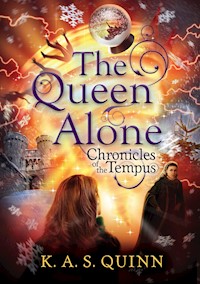
Katie Berger-Jones-Burg is a lonely New York teenager. It's Christmas, and with her pop-star mother away on a whirlwind tour, all is not well with Katie. She is having visions. She remembers... Katie is needed in another time. In 1860 it's Christmas too. Princess Alice is helping her father Prince Albert with his endless stream of work while the rest of the family - including Queen Victoria - are enjoying the wonderful snow. But the merry royal family are under a shadow. There is a plot - both political and supernatural - to bring down the Queen. A Britain without its Queen is weak, and where Britain stumbles, the rest of the world falls...
Sie lesen das E-Book in den Legimi-Apps auf:
Seitenzahl: 371
Veröffentlichungsjahr: 2014
Das E-Book (TTS) können Sie hören im Abo „Legimi Premium” in Legimi-Apps auf:
Ähnliche













![Tintenherz [Tintenwelt-Reihe, Band 1 (Ungekürzt)] - Cornelia Funke - Hörbuch](https://legimifiles.blob.core.windows.net/images/2830629ec0fd3fd8c1f122134ba4a884/w200_u90.jpg)



K. A. S. Quinn was born and raised in California and studied History and English at Vassar. For ten years she was the publisher of the Spectator. She has written for The Times, the Telegraph, the Independent and the Wall Street Journal, as well as appearing on Any Questions, A Good Read, Famous Lives and Broadcasting House for the BBC. An enthusiast of the Victorians, she enjoys speaking at schools on this topic, and the trials and joys of writing. She and her husband live in London with their two boys.
Also by K. A. S. Quinn
The Queen Must Die
The Queen at War
Published in paperback and e-book in Great Britain in 2014
by Corvus, an imprint of Atlantic Books Ltd.
Copyright © Kimberly Quinn, 2014
The moral right of Kimberly Quinn to be identified as the author of this work has been asserted by her in accordance with the Copyright, Designs and Patents Act of 1988.
All rights reserved. No part of this publication may be reproduced, stored in a retrieval system, or transmitted in any form or by any means, electronic, mechanical, photocopying, recording, or otherwise, without the prior permission of both the copyright owner and the above publisher of this book.
This novel is entirely a work of fiction. The names, characters and incidents portrayed in it are the work of the author’s imagination. Any resemblance to actual persons, living or dead, events or localities, is entirely coincidental.
10 9 8 7 6 5 4 3 2 1
A CIP catalogue record for this book is available from the British Library.
Paperback ISBN: 978 1 84887 056 7
E-book ISBN: 978 1 78239 454 9
Printed in Great Britain.
Corvus
An imprint of Atlantic Books Ltd
Ormond House
26–27 Boswell Street
London
WC1N 3JZ
www.corvus-books.co.uk
We begin with family and we end with them.
To my family:
Charles Sanders, Genevieve Sanders, Lugene Sanders Solomon, Marvin Solomon, Jennifer Solomon, Stephen Quinn…
… and with hugs and kisses to William Quinn and Lorcan Quinn
The Cast of Characters: Where three worlds meet . . .
Modern Day New York City
Katie Berger-Jones-Burg: A typical New York kid, who just happens to be part of the Tempus Fugit.
Mimi: Her mother.
Dolores: The housekeeper, but much more.
Reilly O Jackson: A new friend.
The Victorians
Queen Victoria: She reigns from 1837 to 1901. The emblem of a powerful industrial nation and a great empire – though as a person, she has her flaws . . .
Prince Albert: Also known as the Prince Consort. Queen Victoria’s husband.
Princess Alice: Queen Victoria and Prince Albert’s second daughter, and Katie’s best friend.
Bertie, Vicky, Louise, Leopold: Children of Queen Victoria.
Sir Brendan O’Reilly: Doctor O’Reilly, the Royal Household physician newly ennobled by Queen Victoria.
James O’Reilly: Sir Brendan’s son and an important friend to Katie and Princess Alice.
Jack O’Reilly: Sir Brendan’s eldest son and James’s brother, killed in the Charge of the Light Brigade.
Grace O’Reilly, Riordan O’Reilly: Other children of Sir Brendan.
John Reillson: As Civil War rages in the United States of America, he comes to London to promote the cause of the Northern States and the abolition of slavery.
Florence Nightingale: A national heroine due to her nursing during the Crimean War.
Mary Seacole: A Jamaican Creole, she ran a hotel in the Crimea during the war and nursed the sick and wounded.
Those Who Live in No Time
Lucia: The Leader of the Verus. She must keep history in balance, and make certain our world moves forward, in order to harvest our communication skills for her own people.
Lord Belzen: The Leader of the Malum. He longs for war, greed and violence. He and his followers feed off brute force. He has a way with snakes.
The Little Angel: The child who brings peace. She understands Katie and the Tempus.
The Man of All Time
Bernardo DuQuelle: Prince Albert’s Private Secretary, old flame of Lucia, tormentor and saviour of Katie. An enigma.
Contents
Prologue: Windsor Castle: 21 December 1860
Chapter One: The Core of Darkness: Lord Belzen
Chapter Two: New York City, 21 December: Here and Now
Chapter Three: The Doctor’s Office
Chapter Four: The Snow Globe
Chapter Five: Alice and James, 1861
Chapter Six: The War in America
Chapter Seven: South Street
Chapter Eight: The Ball at Windsor Castle
Chapter Nine: The Surprise Guests
Chapter Ten: Life or Death
Chapter Eleven: The Real Sir Brendan
Chapter Twelve: Snow Hill
Chapter Thirteen: The Call of Duty
Chapter Fourteen: On the Battlements
Chapter Fifteen: The Brink of War
Chapter Sixteen: Yankee Doodle
Chapter Seventeen: Into the Light
Chapter Eighteen: Exeter Hall
Chapter Nineteen: Hiding the Queen
Chapter Twenty: The Asylum
Chapter Twenty-One: The Secluded Villa
Chapter Twenty-Two: Miss Nightingale
Chapter Twenty-Three: The Truth
Chapter Twenty-Four: The Travellers
Chapter Twenty-Five: Learning to Fly
Epilogue: Another Christmas
Prologue
Windsor Castle: 21 December 1860
‘Thump!’ Princess Alice looked up from her writing to the wintry window. A snowball, she decided, the work of her brother Bertie. She glanced towards her father, but he continued to toil at his desk, stopping only to adjust the green shade of his lamp.
Christmas was coming, and it was snowing. The battlements of Windsor Castle were cloaked in soft white flakes, its towers transformed into fairytale turrets. It was bleak midwinter; the shortest day of the year, yet the snow captured what light there was, bathing the gardens in a moon-like glow. Outside there was ice-skating on the pond, sleigh rides and snowmen on the East Terrace. Inside, beech-log fires blazed in every room, adding to the cheer of the red carpets and damask curtains. There were whispery giggles as gifts were wrapped and shouts of joy as snowballs hit their targets. A dozen Christmas trees were hung with gifts and sweets. Down below in the kitchens, huge barons of beef were being prepared for the holiday feasts.
At Windsor Castle everyone was making merry – everyone except Princess Alice and her father, Prince Albert, the Prince Consort. Together they worked in the study facing the gardens. The Prince, at his desk, ploughed methodically through the papers filling a large red-leather box, embossed with the Royal Cypher of his wife, Queen Victoria. Occasionally he passed something to his daughter, murmuring ‘Alice, if you would . . .’ and she began the laborious task of copying, precisely and neatly. The day progressed; the snow still fell. At 4 p.m. the lamps were lit, yet their work went on, a stream of correspondence, memorandum, reports and petitions.
It was tedious work for a girl her age. But Alice needed to watch over her father. Prince Albert was not well. The handsome Prince the Queen had married at age twenty now looked older than his forty-one years. His face was puffy, his hair lank and receding. The Prince, once known for his fine figure and dignified carriage, stooped like a man of eighty. He had a noticeable paunch around the waist. Dark rings surrounded his eyes. ‘He is so tired,’ Alice thought. ‘He works much too hard.’ And she redoubled her own efforts, writing as fast as neatness would permit, in an attempt to lighten her father’s burden.
The red boxes with the work of the government never stopped arriving. Prince Albert was the Queen’s husband, friend, guide, moral compass and Private Secretary. He was the king in everything but name. For many years the people of Britain had resented him, a foreigner from the German states, marrying their queen and influencing her decisions. But he had begun to win the public over and was rewarded for his toils with a new title, Prince Consort. Princess Alice was proud of her father; but was it worth the sacrifice of his health? She stared at the paper before her until the words blurred, wondering.
A shout of merriment outside was followed by a hail of snowballs. Princess Alice shook off her worries and, rising, peeped out the window. Most of her family were enjoying the unusually heavy snowfall. The Queen was seated on a bench, snug in her furs, with her youngest child, little Beatrice, on her lap. Prince Leopold was swathed in blankets, his invalid’s bath chair under a tree. This was a rare treat. Leopold suffered from haemophilia, the bleeding disease, and was not usually allowed out in the cold.
But it was Bertie, Alice’s oldest brother, who led the fun. He darted about, pelting their sister Louise with snowballs. He shouted with joy as he caught Louise in the face, and she dashed up the steps of the East Terrace to hide behind a large snowman. As Bertie ran for more ammunition, he stumbled against the wheels of Leopold’s bath chair, tipping him into the snow. The Queen leapt to her feet. Leopold was so fragile; with even the tiniest cut or scrape he could become seriously ill.
‘Really, Bertie,’ the Queen exclaimed, ‘typical, typical, such immature, such unthinking behaviour . . .’ Bertie’s bright face clouded over. He was a constant disappointment to his mother.
‘I d-d-didn’t mean any harm,’ he stuttered, trying to pick his brother up, but dropping Leopold in his agitation.
Alice was about to run outside to help, when she saw that James O’Reilly was with them. James, the son of the Royal Physician, was certain to make things right. Indeed, he set to work immediately, brushing the snow from Leopold, checking him for cuts and bruises, and settling him comfortably back into the bath chair.
James had been raised within the Royal Court and Princess Alice had known him from infancy, perhaps the only commoner she really knew. ‘James is so competent, always quietly caring for others. I don’t know another person like him,’ Alice thought, not realizing she shared the same traits.
‘There’s no harm done, Mother.’ Leopold said, pulling the blankets close. ‘Please don’t make me go inside; the snow is so much fun.’ He begged until the Queen relented, though the shadows lengthened on the East Terrace and the sky began to glow as red as little Beatrice’s knitted cap.
Princess Alice pulled the heavy curtain shut and returned to her corner of the room. Her father heard no shouts of laughter. He had completely missed the crisis with Leopold. Wrapped up in his work, he had scant time for his wife and family. He’d forgotten Christmas, the decorated tree in his study, even his serious daughter working quietly in the corner – all forgotten, swept away in the onslaught of papers. Princess Alice was puzzled: was it just the work or was there something else? Was there some secret trouble that so absorbed her father?
Prince Albert sighed and rubbed his eyes. ‘Mein Kopf schmerzt so . . . oh, but my head does ache . . . this pain will be the death of me.’
Princess Alice was not the only person to hear her father. Standing in the doorway was Bernardo DuQuelle. He hardly cut a Christmas figure, with his ashen white face and sombre black clothing, yet DuQuelle came into the room with a jaunty step and an exaggerated low bow. Prince Albert looked up from his work, and winced. Bernardo DuQuelle was a useful Private Secretary, a brilliant man. He knew all of society’s secrets, every skeleton in every closet. The man was competent . . . eerily competent . . . and helpful . . . irritatingly helpful. He was not to be trusted.
How long had Bernardo DuQuelle been standing in the doorway? A Royal must never show weakness, and DuQuelle was certain to have heard Prince Albert’s complaints in both German and English. Language was no barrier. Bernardo DuQuelle had an unnerving ability with languages – he conversed in German, as well as French, Russian, Italian, Spanish, Portuguese, Mandarin, Cantonese, Arabic, Persian, Hindi, Urdu, Pashto and Tagalog. He could read and write in Latin, ancient Greek and Sanskrit. He was considered the world’s leading scholar on the ancient Hebrews. Prince Albert shuddered. There was something of the vampire in Bernardo DuQuelle’s greed for communication.
Yet Prince Albert could not rid himself of this man. Bernardo DuQuelle’s grasp of language and lack of morals meant he could flatter the Queen beyond every other courtier – and the Queen adored flattery. Prince Albert’s head pounded. At times like these he was acutely aware that he was the Consort, the Prince and not the ruler. He loathed Bernardo DuQuelle and yet he needed him, particularly now.
Prince Albert spoke stiffly, ‘DuQuelle, I wish to take you into my confidence.’ Neither man seemed to notice Princess Alice in her corner. Bernardo DuQuelle’s face was impassive, mask-like; yet Princess Alice could see a smile hovering at the corners of his mouth.
I wish to take you into my confidence the Prince had said, but DuQuelle knew perfectly well there were few things Prince Albert wished for less. DuQuelle bowed in response. ‘This is for me an honour.’
Prince Albert hesitated, growing more uncomfortable with each passing moment. He sometimes fancied that Bernardo DuQuelle could read his mind, that he understood his thoughts and feelings. Could DuQuelle see the mistrust, the uneasiness and the endless weariness? Prince Albert shook his head to dislodge this fancy. ‘I am so tired,’ he thought. ‘It is making me paranoid. I am so very tired.’
‘You are so very tired, Sir,’ DuQuelle echoed. ‘I am grateful for the opportunity to help.’
The Prince paused, and when he did speak, he knew he sounded defensive. ‘You, DuQuelle, are unique. Foreign to the ways of the court and yet you understand everyone. You have a gift for motive.’
DuQuelle remained silent and bowed his head to acknowledge – not quite a compliment – a recognition of his skills.
Prince Albert continued. ‘I have received a report from Sir Richard Mayne of the Metropolitan Police, which I would like you to consider. There has been a series of crimes. Ships set on fire at St Katharine Docks, burglaries in some of the foreign embassies and violence in the streets. They seem to be separate episodes, but Sir Richard is linking them to the United States of America. He thinks the crimes relate to potential civil war in that country.’
Bernardo DuQuelle examined the tip of his walking stick, as if the answers might be found there. ‘A civil war is the most terrible kind of war: the tearing of a country in two. Family will fight family, brother against brother. But the Northern States and the Southern States of America will not see eye to eye.’
Prince Albert rummaged through the red box and found a letter, embossed with the eagle and stars of the office of the President of the United States of America. ‘I feel for this newly elected President, Abraham Lincoln,’ he said. ‘He was elected because of his opposition to slavery, yet this very issue just might destroy his nation.’
DuQuelle sighed. ‘The enslavement of one man by another leaves a bad taste in the mouth. Yet without slaves, the American South could not produce cotton. Our own industry depends on this. Britain buys five million bales of cotton from the Southern States each year. Our textile mills in the North of England would grind to a standstill without the Southern Americans and their slaves.’
Prince Albert did not hesitate to reply. ‘Then our textile mills must stand still. Britain will not support slavery. I am the President of the Society for the Extinction of the Slave Trade. I take this position seriously.’
‘All right-thinking men abhor slavery,’ DuQuelle agreed. ‘Yet the South believes we will join them in war. The Southern States call themselves King – King Cotton. They think that Britain’s need for industry and love of money will force us to support them. You say you will not support the American South, but this does not mean you will support the American North.’ It was useless to withhold information from DuQuelle.
‘I am in favour of neutrality,’ the Prince admitted. ‘This coming war is not our war . . .’
‘That is not the opinion of the Prime Minster, Lord Palmerston. He is always up for war . . . and decidedly backs the American South,’ DuQuelle commented drily.
Prince Albert disliked the Prime Minister even more than he distrusted Bernardo DuQuelle. He had no desire to discuss one with the other.
‘For now, let us address the problem before us – this particular one in Sir Richard Mayne’s report,’ the Prince cut across Bernado DuQuelle. ‘I desire that you keep this as private as possible. The report is not pleasant reading.’
Prince Albert might have forgotten his daughter, but DuQuelle was all-seeing, all-knowing. He glanced towards her in the corner. She was pretending to write, but was listening with all her might. Bernardo DuQuelle admired Princess Alice as much as he could admire any human being. Best leave her quietly in the corner, without reminding the Prince.
Prince Albert flipped through the pages of the thick document. ‘Here is a most gruesome find, a body, floating in the Thames. The corpse was slit from chin to groin, the body filled with a toxic, tar-like substance. It took an age to identify; the doctors assigned to the corpse kept falling ill. The dead man turned out to be, like you DuQuelle, a Private Secretary – but to the American Ambassador. In his report, Sir Richard links this to a handful of crimes perpetuated against American ships, American residencies and American citizens. Some of them are quite distressing . . .’
Prince Albert’s voice trailed off at the horror of the story, but DuQuelle listened quietly, as if to a weather report, or the cricket scores. Prince Albert continued, ‘Maynes writes that he has seen this type of attack before.’ DuQuelle’s glance flickered to Princess Alice.
From her corner of the room, Princess Alice felt rising alarm. She knew what her father was talking about, and that no one would understand better than Bernardo DuQuelle. Yet DuQuelle feigned confusion, running his fingers through his black curls. ‘Let me think . . . can I remember . . . oh yes . . . Fräulein Bauer . . . and perhaps . . . Sir Lindsey Dimblock . . . wasn’t there a nasty incident on London Bridge? Hushed up, of course. I remember the tar like substance. It turned out to be quite toxic to the touch. Were there any witnesses?’ he spoke casually, but Alice knew this was not a casual question.
Prince Albert looked again at the report. ‘Maynes says the few witnesses are useless to the case, babbling idiots – practically out of their minds. They talk of “visions of pure evil”. They call it the “prelude to the end of the world”.’ He paused and glanced at the Christmas tree in his study, a golden angel crowning the top. ‘If I didn’t know better, I’d think there was some element to this that is beyond man . . . dare I say it . . . beyond God.’
Bernardo DuQuelle stood very still. The Prince Consort had hit the mark; these were not the crimes of man, but of someone, or something, far worse. DuQuelle again exchanged glances with Princess Alice, dread flickering deep in his green eyes. But only for a moment. Soon his face was its usual sphinx-like mask. It was best to underplay this situation, no matter how desperate it really was. The last thing anyone needed was panic.
‘They are noxious cases, but they are nothing more than violence, the baser instincts of mankind,’ DuQuelle finally answered. ‘There is no mystery . . . and I would take Sir Richard’s memorandum with a pinch of salt. This is, after all, the man who has just outlawed the throwing of snowballs by children in public areas.’
To DuQuelle’s relief, Prince Albert laughed. ‘I’d forgotten about the snowballs in public. Sir Richard can be a bit dramatic, and draconian, at times.’
A shrill squeal from outside caught the Prince’s attention, and for the first time he looked out of the window to the drifts of snow, shot through with a bright red sunset. ‘Sir Richard’s snowball laws,’ he continued chuckling. ‘I am afraid my own son will end up in prison. Bertie is pummelling Princess Louise at this very moment.’
He continued to watch his children in the snow. ‘There is so much work to do,’ he said to himself. ‘I had almost forgotten it is Christmas. What I would give to be a child again, playing with my brother Ernst at our home in Coburg. I cannot be a child again, but I have children of my own. I see them from this window, and they are growing up quickly. Yet there is still time for us to play together. A vigorous snowball fight might do much to clear my head and raise my spirits.’ Prince Albert’s back became straighter, his eyes brighter as he pulled on his coat and wrapped a scarf around his neck. Soon he was outside, laughing, running and throwing snowballs like a child himself.
Bernardo DuQuelle looked out of the window, at the large happy family playing in the snow. He did not smile, but shivered. Only now did he address Princess Alice.
‘You have heard,’ he said.
She nodded and asked, ‘Do you think my father knows?’
DuQuelle contined to watch as the Prince Albert ran across the terrace, sweeping his youngest daughter, Princess Beatrice, into his arms. ‘The Prince has a broad mind, but it does not extend to the more grotesque reaches of the imagination. He knows, but not enough – at least I hope that is the case.’ DuQuelle turned from the window and looked at Princess Alice. She had always seemed old for her age; she had such quiet purpose, such a sense of duty. Now he realized, with a pang of regret, that her childhood was almost over. ‘And what do you think of that memorandum from Sir Richard Maynes?’ he asked.
She countered with her own question. ‘You will know, better than any of us, for you are one of them. The Malum, Lord Belzen – are they back?’
DuQuelle looked at the Princess, with her soft brown hair and gentle face. He looked at the cosy room with its roaring fire, red carpets and evergreen Christmas tree. He looked out of the window at the dazzling snow and the laughing family. He took it all in, as if to record this moment in his memory.
‘Yes,’ he said. ‘Lord Belzen has returned. He leads the Malum. They are stronger than ever. We must talk and we must decide. You will find James O’Reilly outside with your family. If you please, bring him to me immediately. I fear we have little time.’
Chapter One
The Core of Darkness: Lord Belzen
‘Drip . . . drop . . . droplet.’ How could a place be so wet and yet so icy cold? The dark seemed limitless. There were no boundaries, there was no time; for in the dwelling of the Malum time did not exist. And there was certainly no Christmas. What did the birth of a baby matter in a place like this? As for snow, there was wet and ice enough to freeze the heart, but nothing as downy and dancing as snow. This was a place without fancy or merriment, a place only for brute force and aggression: those were what the Malum needed to exist.
Gathered in the core of darkness were Lord Belzen and his followers. Some were human, or had been. Some were shaped like people, but never would be human. Lord Belzen took a surprising form. He appeared to be an elegant aristocrat, wrapped in the finery of the upper classes, really very handsome. Yet there was something about him – the strange wavering sway of his slender body, the oddly blunted nose starting high in his forehead. His close-set glittering eyes were hypnotic; his slightly lisping voice could hold one captive. He bore a strong resemblance to the snakes that lolled and lapped about his polished boots. Lord Belzen was dangerous to know.
‘What stands in our way?’ he asked those around him; and, as usual, answered his own question. ‘It is Britain, a peaceful Britain.’ Lord Belzen hissed the word ‘peaceful’ as if it were repulsive to him. ‘And why must we suffer through peace? Again, the problem is Britain. A strong and unified nation which has become rich, with an expanding Empire abroad. All this strength, all this stability – it cannot halt the Malum, but it is slowing us down.’
Around him, a muted response stirred the chill air, hoarse muttered words mixed with yips and grunts and, underneath it all, a terrible hissing. It was the soundtrack to a nightmare.
Lord Belzen’s head jerked upwards, as if it had a life of its own, separate from his neck and torso. ‘And what is the key to this wonderful, growing, peaceful Britain? It is Prince Albert, the Prince Consort.’ He spat the words with venom. ‘A ridiculous man, with a ludicrous title. He thinks that with his pure white soul, his moral strength, his knowledge and his ceaseless toil, he can rule Britain wisely and bring his knowledge and influence to other nations. He can do much good in his world, but he has not considered that there are other worlds.’
The noise around him grew, an unnerving flapping and hissing and smacking of lips. Lord Belzen’s eyes glittered wetly.
‘The Prince is weakened already. All that goodness takes its toll.’ He was met with an appreciative laugh. ‘It will be easy to kill him off. We will be able to extinguish him and his good influence on the Queen. Then she is vulnerable. There is someone in her service, vain and weak, who is much in my debt. He can destabilize the Queen, subdue her. With such a fragile, insecure Queen, the Empire they are building will collapse into chaos. The effects will echo through the world. We will be able to lure Britain into war.’
With the word ‘war’, a jolt of power throbbed through the core of darkness. The fiends around him gasped with joy and the snakes writhed in ecstasy.
With a sweep of his long undulating arms, Lord Belzen sent a globe spinning above them. It whirled and leapt, lit from within – a replica of the earth, joining in the dance of death. It stopped at the Western Hemisphere, where an ugly red light pulsed through the United States of America. Belzen reached up and, taking the globe, traced the Americas with his long, webbed fingers. They left a glistening trail of wet behind. ‘There it is,’ he murmured, ‘The United States of America, spiralling down, down, down, into a civil war. Britain will enter this war, France and Russia will follow. We will set the entire world on fire with this war.’
The cries became louder, as they realized what this meant. ‘It will be most potent!’ one of them hissed.
‘Yes,’ Belzen responded, ‘the creation of brute force, the animal fierceness we need to survive. Our source of energy. We cannot be stopped. We will create unceasing war in this world. The Malum will harvest the ugly power of man, unchained from humanity.’
Lord Belzen had such authority; it was difficult to interrupt him. And most of his disciples made a point of agreeing. But one voice did speak out above the howls and jeers, the hissing in the chill darkness. ‘We can be stopped,’ it said. ‘She knows everything. She has thwarted us before. She and the Tempus Fugit, they are always a threat. And beyond that, there are her friends. They are beginning to understand. Just one or two, but that is dangerous enough. The Prince we so despise, he has his doubts. And then there is Bernardo DuQuelle, Lucia, Flo—’
Lord Belzen drew his breath in, dropping his attractive mask. His nostrils lengthened strangely, long dark slits cut into his face. The questioning voice was cut short and replaced by a sharp shriek of pain, as something whipped through the darkness and slashed at the speaker.
‘You are ridiculous,’ Belzen’s elegant voice became high and angry. ‘DuQuelle?’ he hissed. ‘A puppet. Lucia? She is blinded, paralysed by her beliefs. Both are ineffectual. The Verus and all their goodness, their futile attempts to make this world a place of peace – all for what? So that they can use words, take communication from this weak, silly world. We will wipe out the Verus with one swipe.’ There was another strange slap and yelp and the questioner was felled.
‘Are you such a coward, that she would scare you?’ Lord Belzen scoffed. ‘We will use her for our own advantage. It is easy enough to lure her here – under the pretence that her friends are calling. We know the words that will bring her. I will plant the seeds within her mind: doubt, jealousy and loneliness. She will come and we will make her ours.’
No one dared speak, but Belzen could feel the questions in the chill air. ‘She is no longer a child,’ he continued, ‘but she is still the child who can bring war or peace. We will make certain it is WAR she brings. She lives in America, the focus of war; if not in the same time, at least in the same place. America is the heart of her temporal life. We shall use this, and her, to lure Britain into her nation’s war. She will turn against her friends. When they ask for her help, she will refuse. This girl will weaken the Prince and help us destroy the Royal Family. Their heroine? Their saviour? Hardly. She will bring the war that ends the world.’
Whomever or whatever surrounded him in the dark liked what they were hearing, and voiced their approval in shrill cries and foul language.
For a moment Lord Belzen allowed himself to sway and hiss along with them. ‘This is only the beginning,’ he exhorted. ‘We must set the stage in the household of the Queen.’ He tossed the globe lightly into the air. Again it spun and flashed. Its walls transformed into clear glass.
Inside the globe, the entire world resolved into a single scene. It was a family, playing in the falling snow. A small plump woman smiled upon them and nodded her fur-trimmed bonnet, while her husband tossed their youngest daughter into the air. The small girl shrieked with joy and her red hood went flying. An older girl, with shining brown hair, caught snowflakes in her hand and brought them to her sickly brother in his bath chair. ‘See,’ she said, ‘no two snowflakes are alike.’
‘I know that,’ the boy replied with the pettish irritation of the invalid. But still, he looked at the flakes with interest and squeezed the girl’s hand. A young man shouted with laughter, and as he ran from flying snowballs, collided with a large grinning snowman.
Lord Belzen watched them all at play, within his circling glass globe, and then he reached out a webbed finger to give the globe a poke. The snow fell more heavily. The earth trembled, ever so slightly, beneath the feet of the playful family. ‘How happy they are,’ he hissed softly. ‘This year they are so happy. The Queen, how the Queen loves her Prince.’
Lord Belzen’s hissing voice transformed to the womanly tones of the Queen. ‘My precious Albert, he has made the Christmas season perfect,’ he cooed. ‘It is true Christmas and the dear, sweet children are beside themselves with the joy of the snow. Albert joins them with great spirit. Such a merry, joyful time, all due to my beloved Albert.’ Belzen’s mimicry had a cutting edge. ‘Albert! Oh, my dear Albert! You are everything to me!’
Around Belzen there was cruel laughter as he poked again, harder, at the floating snow globe. ‘Soon, little Queen, your everything will become nothing. This year there is Christmas cheer, but next year – grief. Your heart will be in darkness. The Malum shall prevail. Katie . . . Katie . . . the time has come to play your part . . . we are calling you.’
Raising his arm, Lord Belzen gave the globe a clout with the palm of his hand, leaving a wet mark. The snow globe shuddered. It was not just the little white flakes, but the people within that began to revolve. The Queen, Prince Albert and Princess Alice floated and swirled in chaos . . . and the dancing white flakes turned to black.
Chapter Two
New York City, 21 December: Here and Now
‘Hooonnnnkkkk!’ Was every taxi driver in New York City leaning on his horn? Katie Berger-Jones-Burg turned her head towards the terrace. The snow swirled outside the windows of Apartment 11C, looking almost black, as an early night set in. December 21st, the shortest day of the year. A day of panic. School had ended and time was running out – fast. Christmas was coming, at avalanche speed, and New Yorkers were bracing themselves. Trees needed to be decorated, lights hung in the windows, family feasts planned. Ahead lay the long car trips to Ohio or Virginia or Connecticut (even Long Island seemed an endless trip with the kids in the backseat, squabbling.) And of course there was the shopping, shopping, shopping, for nobody shops like a New Yorker.
They were crushed together on the sidewalks, scouring the stores for something, anything, to buy. It was a battlefield out there. The streets were wet and icy and crunched with salt and grit. The sidewalks became trenches, with huge mounds of dirt and snow on either side. Postal delivery vans were double-and triple-parked. Taxis honked, buses moved at a snail’s pace and the subway was a tangle of wet, exhausted, irritated passengers. It was a good day to stay inside. But Katie Berger-Jones-Burg would rather have been outside, with the crowds, with anyone. School was out, her mother Mimi was gone and she was the only New Yorker in the world with nothing to do.
She lay flat on her back on the big cream sofa. The window was boring, so she turned her eyes to the Christmas tree. Well, not really a Christmas tree. Her mother Mimi had given strict instructions; it was to be referred to, at all times, as the Tree of Peace. It was flocked in some kind of white spray-on junk. Miniature Menorahs, little Buddhas, and the Islamic star and crescent hung from the branches. Ribbon garlands carried Mimi’s favourite slogans: Give Peace a Chance! Just Say No! Live the LifeYou Imagined! And largest of all, the name of Mimi’s new fragrance: FOREVER YOUNG!
That morning, the tree had been photographed for a press release ‘Happy Holidays from pop’s eternal role model: Mimi rocks with her multi-cultural Tree of Peace.’
‘The Tree of Peace, my foot,’ Katie said to herself. The house was anything but peaceful. George, the doorman, buzzed up every five minutes with more and more packages. There were endless gifts . . . for Mimi. Bribes from fashion companies who wanted her to wear their size-zero creations, stacks of designer handbags, swathes of sandals with eight-inch heels that looked like instruments of torture – and barrels full of scented candles; it seemed this was the year that everyone introduced a scented candle.
Mimi greeted each gift with childlike enthusiasm. She loved stuff. An entire room in Apartment 11C was dedicated to Mimi’s clothes. A light- and temperature-controlled room. The handbags each had their own velvet-lined case, labelled with their names: The Sofia – Louis Vuitton, The Jackie – Gucci, The Granville – Dior, The Anya, The Kelly, the Birkin gold . . . the Birkin turquoise, the Birkin rose… Their housekeeper Dolores said Mimi’s handbags lived a better life than most of the world’s population.
Among the millions of Mimi gifts was the odd package for Katie. She knew already what would be inside. Technology. Endless techi-things. The latest, most talked about stuff on the market. Mimi hired someone to ‘handle her technology’ – ‘the nails darling, one must be very careful of the manicure . . .’ – but viewed Katie as the pioneer girl of the IT age.
‘This is your future,’ Mimi would lecture. ‘Life is so much easier with these . . . these . . . miracles of science! You don’t have to read, you don’t have to write, you don’t have to look things up or figure out where you are going. You’ll never have to decide on a restaurant, a shop, a friend. These wonderful things can do all this for you.’ Katie sometimes worried whether there was any thinking or personal choice in this wonderful new world of Mimi’s.
Katie rolled off the sofa, and began to rummage under the Tree of Peace. Maybe her father had sent her something she might like, or her stepfather, or her other stepfather . . . When your name is Katie Berger-Jones-Burg, there are a lot of fathers who might send you a sensible gift, maybe even a book . . . She pushed aside several glittering packages, stopping to snort at one in a clear acrylic case. It was a silver and crystal evening bag shaped like a microphone. ‘To Mimi: The Voice of Our Time’ the card read.
Dolores pushed open the door from the kitchen and, bustling through the room, began to pick up the litter of diet cola cans and crummy plates. She stopped briefly to stare at the package Katie held. ‘Those handbags!’ she snorted. ‘Mimi’s always going on about the poor. What’s that song she sings? “Feed the World”? Well, she could feed a village in Africa for a year out of the price of one of those handbags!’
‘“Feed the World” was a hit,’ Katie weakly defended her mother. ‘And she doesn’t buy the handbags. They just give them to her.’
‘Giving,’ Dolores harrumphed as she restacked the gifts under the tree. ‘There’s no such thing as giving in that world of Mimi’s. They get their money’s worth out of her.’
‘Mimi might give one of those handbags to you,’ Katie commented slyly. She’d seen Dolores dusting Mimi’s handbags with a sneaking look of admiration. Dolores was female, after all.
‘I don’t need no $10,000 handbag, I’ve got a perfectly serviceable black one for church already,’ Dolores said. ‘And I don’t want any more of Mimi’s cast-offs. Give me a handbag. I know Mimi’s idea of giving me a gift. She just switches cards on a couple of those packages. You remember last year? She gave me a mink jacket. A MINK JACKET. In size zero. With the lining personalized. Mimi it says, all embroidered in pink. She doesn’t buy gifts for people. She doesn’t pick them out. She doesn’t even hire one of those people of hers to buy ’em.’ Dolores did her Christmas shopping at Target. She lined up at 6 a.m. on a Saturday morning to get into the store before the crowds descended.
Katie flopped back on the sofa and closed her eyes. Even with the traffic and the bustle she could hear Dolores muttering . . . ‘mink, size zero, Mimi, really,’ as she swept back into the kitchen to tackle the ironing. Despite this, Katie felt that tiny bit more secure. Dolores might grumble, but she was the closest thing Katie had to a caring parent. She knew Dolores wasn’t going anywhere; there was no new ‘final tour’ with a pop band, no cheesy fragrance to launch. Dolores had been looking after Katie . . . and Mimi . . . for years. And though Katie might grow up (there was little hope for Mimi) Dolores had no intention of stopping – or holding her tongue.
Had there ever been a Mr Dolores? Not that Katie could remember. There was a son, Tyrell, and a daughter, Sonia. Katie often heard stories about them as she hung out in the kitchen. Tyrell spent time with his friends, was wild about computer games and basketball, pretty much a glorious human boy. He was about to go to college and study sports physiotherapy.
Sonia was a nurse and worked long hours. She was married, with children, and lived in the Bronx. Sonia and her husband were both good church-goers. Dolores thanked God for every night, on her knees. Sonia might have married early, but she’d finished nursing college. Tyrell didn’t belong to a gang and didn’t take drugs. Just a few more years for Tyrell and they’d both be in that safe harbour most mothers dream of.
Katie thought about Dolores. She seemed to be in charge of everyone . . . Sonia, Tyrell, Katie, Mimi. After finishing a long day in Manhattan, Katie knew Dolores took the train out to the Bronx and helped Sonia with the children. All this didn’t come without a lot of sacrifice. Mimi was a great believer in me time. Well, it seemed like Dolores only had you and you and you time. Dolores poked her head back around the kitchen door. ‘Honey, I hate to tell you, but you’ve got to get ready for that doctor’s appointment.’ This time her voice was soothing, though her face looked worried.
All was not right with Katie Berger-Jones-Burg. It had started with the attack. Their neighbour, ex-boyfriend of Mimi’s and resident psychopath Professor Diuman, had broken into Apartment 11C. Mimi had been brutally beaten. The police had found Katie locked in the bathroom. She seemed to have slept through the entire thing.
For once Mimi’s plastic surgery was necessary rather than voluntary. But she made a miraculous recovery. She looked great, and it had been a shot in the arm for her career. Plucky Mimi Fights off Attacker! The headlines had screamed. Mimi Recovers from Near Death Experience: Long Live Mimi! Katie had to admit, Mimi might not have much of a voice, but she had a terrific agent. They cut a deal with one of the big cosmetic firms and Mimi launched her own fragrance: FOREVER YOUNG! Between the television appearances, the endless interviews and the national tour, she was in seventh heaven.
Katie hadn’t suffered even a scratch from the attack, yet she wasn’t doing nearly as well. She just couldn’t seem to bounce back. She lacked Mimi’s exuberance, or perhaps it was Mimi’s lack of reflection. Katie was worried and anxious. No one understood why Professor Diuman had suddenly turned violent. Sure, he’d gone out with Mimi, years ago, but they’d maintained a perfectly good friendship. Diuman was incapable of explaining. He wasn’t in prison, but in Bellevue Mental Hospital – totally bonkers. He spent the day talking, talking, talking, until he lost his voice. ‘The walking stick . . .’ he cried over and over, ‘the walking stick!’
It was as Katie had suspected. The walking stick always spelled trouble. It had arrived at Apartment 11C years before, addressed to Katie Berger-Jones-Burg, with a card engraved with just two words: Aide-memoire. There was no name, no signature, and no explanation. Aide-memoire – to help her remember.
And the worst thing was, she could remember. Just snippets, flashes of memory. Strange things were going on in Katie Berger-Jones-Burg’s brain. Images and people, sights she’d never seen before and voices she’d never heard. She hated what was happening in her head. And she hated the effect it had on the people around her. Dolores was worried sick, she knew it. And Mimi – the enthusiastic, loud, dramatic Mimi – now became quiet, almost frightened, when her daughter was in the room.
Katie continued to lie on the sofa, eyes closed, worry lines etched between her brows. Dolores came in and stroked Katie’s head with her worn, warm hand. ‘Come on, sweetheart,’ she encouraged Katie. ‘Let’s get you up and out. Talking to that doctor, it really should help.’ But Katie had her doubts. Would anything really help?
Chapter Three
The Doctor’s Office
No matter how many times Katie sat in the doctor’s reception, it never got easier. She hated the tasteful light-brown leather sofa, the piles of National Geographic magazines and the latest copy of Vogue




