


3,99 €
Mehr erfahren.
- Herausgeber: Corvus
- Kategorie: Für Kinder und Jugendliche
- Sprache: Englisch
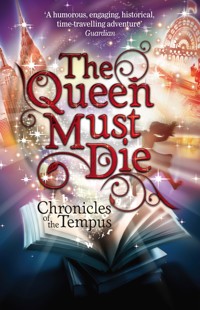
This is the story of Katie Berger-Jones-Burg. One minute, she's under the bed of her New York apartment... the next she's in Buckingham Palace, at the height of Queen Victoria's reign... A dangerous place to be. The Royal Family is in mortal peril. In the secret passages of the palace, a plot is afoot. Suspicious figures huddle in the gas-lit streets of London. And Katie is not the only time-traveller in the city...
Das E-Book können Sie in Legimi-Apps oder einer beliebigen App lesen, die das folgende Format unterstützen:
Veröffentlichungsjahr: 2014
Ähnliche















![Tintenherz [Tintenwelt-Reihe, Band 1 (Ungekürzt)] - Cornelia Funke - Hörbuch](https://legimifiles.blob.core.windows.net/images/2830629ec0fd3fd8c1f122134ba4a884/w200_u90.jpg)



K.A.S. Quinn was born and raised in California and studied History and English at Vassar College. For ten years she was the publisher of the Spectator. She has written for The Times, the Telegraph, the Independent and the Wall Street Journal, as well as appearing on Any Questions, A Good Read, Famous Lives and Broadcasting House for the BBC. She lives in London and has two small boys. She still reads children’s books in bed, after lights out, with a torch.
First published in Great Britain in 2010 by Atlantic Books, an imprint of Atlantic Books Ltd.
This paperback edition published in Great Britain in 2011 by Corvus, an imprint of Atlantic Books Ltd.
Copyright © K.A.S. Quinn, 2011.
The moral right of K.A.S. Quinn to be identified as the author of this work has been asserted in accordance with the Copyright, Designs and Patents Act of 1988.
All rights reserved. No part of this publication may be reproduced, stored in a retrieval system, or transmitted in any form or by any means, electronic, mechanical, photocopying, recording, or otherwise, without the prior permission of both the copyright owner and the above publisher of this book.
This is a work of fiction. All characters, organizations, and events portrayed in this novel are either products of the author’s imagination or are used fictitiously.
1 3 5 7 9 10 8 6 4 2
A CIP catalogue record for this book is available from the British Library.
ISBN: 978-1-84887-052-9 eBook ISBN: 978 0 85789 466 3
Printed in Great Britain.
Corvus An imprint of Atlantic Books Ltd Ormond House 26-27 Boswell Street London WC1N 3JZ
www.corvus-books.co.uk
Table of Contents
Cover
Title Page
Copyright
Dedication
Prologue: The Visions
Chapter One: Under the Bed
Chapter Two: Who Are You?
Chapter Three: Bernardo DuQuelle
Chapter Four: The Cloaked Intruders
Chapter Five: Prince Albert
Chapter Six: MacKenzie’s Cupboard
Chapter Seven: The Crystal Palace
Chapter Eight: Amongst the Girders
Chapter Nine: Lucia and Belzen
Chapter Ten: The Three Time Travellers
Chapter Eleven: The Cricket Match
Chapter Twelve: What’s To Be Done?
Chapter Thirteen: To Open Time
Chapter Fourteen: The Queen Must Die
Chapter Fifteen: God Save the Queen
Chapter Sixteen: Half Moon Street
Chapter Seventeen: The Verus and the Malum
Chapter Eighteen: Katie Finds Her Voice
Prologue: The Darkened Room
Chapter One: The Stranger in the Bed
To Stephen, William and Lorcan Quinn
Prologue
The Visions
Was she going insane? The visions were appearing with greater clarity and ever more frequency. Just yesterday, Katie had turned the corner to find a tall man in a black silk top hat. He seemed to be searching for someone amid the chaos of the 86th Street subway station. He was deathly pale, with creased, almost dusty skin – his pallor emphasized by his strange close-fitting black garments. The only colour about him was his eyes. They glittered green in the sun as he reeled around and strode towards Katie, raising his walking stick as if to strike her. He opened his mouth, but no sound came out. Instead, the word ‘SEEK’ formed in the air before him, floating above his head like the message of a sky-writer. And then he was gone – disappearing through the steam of the subway.
He wasn’t the first. There was the girl with the grey eyes and serious face. Katie had thought she might just be some new neighbour. But then Katie had noticed the long starched skirts, the high, buttoned leather boots and the ridiculous fur muff. She too spoke in these silent smoke signals. ‘I will serve,’ she declared, looking so kind and grave that Katie longed to hear her voice. Afterwards came a series of children. The one in rags, the tiny urchin girl, so pretty and so timid – ‘I will sacrifice’ hung over her like a pall. Such a frightened child, but Katie could never quite reach her. And then there was the small smug boy in velvet shorts and a ruffled shirt. Katie recoiled from his message: ‘I will slay.’ These children, these visions, whatever they were, they weren’t just in the wrong neighbourhood; they seemed to be in the wrong time. They had something to say, but Katie didn’t know what, or why. She tried to shake it off, shrug her shoulders and ignore it all, the way New Yorkers blank the freaks and weirdos of life. But today’s episode had changed everything.
Walking home from school, she’d come face to face with a small plump woman in fancy dress – pink satin swept off the shoulders with six inches of silver lace and an abundance of diamonds. The little lady’s pigeon eyes twinkled with pleasure as she talked and laughed with someone directly behind Katie. But when Katie turned around all she could see was a businessman talking on a cellphone. ‘Not another vision,’ Katie thought, her stomach lurching upwards. ‘There must be a rational explanation for this. Was it performance art? A carnival? A commercial?’ Katie scanned the streets for a camera.
Suddenly the little woman’s eyes bulged. Her mouth opened in a silent scream as she backed away and slid down the side of the building. Katie ran towards her, and then took a step back. A bright crimson stain was spreading over the bodice of the small woman’s pink dress. The woman held her arms out, as if pleading for aid, and then her eyes rolled back in her head. She slumped; lifeless in a heap of satin and blood. ‘Help,’ Katie cried, ‘help!’ The passers-by looked briefly at Katie and, deciding she was just another crazy person in the street, turned away. They kept walking, talking, drinking coffee out of paper cups and looking at their watches. One man, reading the newspaper, actually stepped through the woman and the growing pool of blood. And then the woman was gone, the sidewalk clean where there had been gore. Katie’s legs buckled, she’d have to sit down – right there on the sidewalk. She wiped her forehead. This habit of seeing things. This was not good. She’d have to tell someone, but who?
Chapter One
Under the Bed
It was filthy, sitting in the gutter, and the old Greek guy in the shoe repair shop was giving Katie suspicious looks. She got up and wiped the muck from the skirt of her school uniform. If Katie had been part of a normal family, she’d have rushed home to tell her parents. But Katie’s family wasn’t normal. Could she really tell her mother Mimi? Katie doubted it. Mimi was far too busy with her latest boyfriend to care about her daughter’s visions.
Katie Berger-Jones-Burg’s mother liked to get married. Katie had accustomed herself to this. It only really got to her on the first day of school. Calling attendance, the teacher ploughed through Alcott, Allen, Applebaum, Bayle… The class held their breath as the teacher paused, trying to string Katie’s names together in the correct order. In year two Miss Grant had got it spectacularly wrong and christened her ‘Boogerberg’. It had stuck for years. ‘Why doesn’t Mimi just live with them?’ Katie wondered. ‘Why do they all have to marry her? And adopt me?’ It had to do with morals, family values, Mimi had explained. And then she’d wept, embraced Katie tenderly, exclaiming at the great wonder of having a daughter, more like a sister, that she could always talk to. ‘Yeah, talk about yourself,’ Katie thought. But in her role as listener and number one fan, it wasn’t part of her job to actually say anything.
Katie’s mother had once been quite famous as a member of an all-girl pop group – Youth ’n Asia. They’d worn long black Chinese braids down their backs, and no one over the age of twenty was allowed into their concerts. Mimi was used to being the centre of attention and wasn’t about to give up this position. Katie thought about the meal Mimi would make of the visions: the visits to new age ‘doctors’, the consultations with therapists, the interview with the Pop Times. Perhaps most frustrating of all, it would stop being Katie’s problem and start being Mimi’s problem. Katie could just hear Mimi wailing away to some glossy magazine. ‘Had she failed Katie as a mother? As a friend? Perhaps the visions were visions of Mimi, in her different roles in Katie’s life?’
‘No,’ Katie sighed. ‘I just can’t bear the Mimi factor in this. I’ll talk to Dad next time I see him.’
Dad was the ‘Berger’ in ‘Berger-Jones-Burg’. Danny Berger had been her mother’s high school sweetheart. ‘We married young, very young,’ said Mimi, showing Katie a photograph of the two of them at a rock festival: Danny staring adoringly at Mimi, while Mimi stared adoringly at the camera. Katie thought her mother looked about the same – a bit thinner now and a lot less happy, but about the same – blonde hair, white toothy smile, turned-up nose. But the Danny Berger of Katie’s childhood looked nothing like the one in the photograph. The humorously thin young man with curly black hair had put on weight and lost his hair. He now looked old enough to be – not just Katie’s father, but Mimi’s father as well. ‘It’s because of the huge amount of money I have to pay to keep you in your posh private school,’ he griped. Katie sighed again. Now that Dad was remarried and had a new young family, he was tired all the time. Cranky, too. She’d have to keep the visions to herself for now.
The Greek guy in the shoe repair shop was now tapping on his window, so Katie moved on towards home. Mimi liked to keep her busy, as this kept Katie out of her way, but for once Katie didn’t have ballet lessons, tennis lessons, yoga or t’ai chi. She ducked under the awning of her apartment building, nodded to the doorman and punched the elevator button for the eleventh floor. As she turned the key in the lock, the sound of a Spanish soap opera greeted her, loudly. Mimi couldn’t possibly be home, if Dolores had the sound up that high. ‘Hey, Dolores,’ she called to their long-time housekeeper ‘Qué pasa? No Mimi?’ Dolores had set the ironing board up in the kitchen. In front of her was a small television, making big amounts of noise. On the screen was a young woman with a serious hairdo and lots of eye shadow. She was crying and screaming as two solid, expressionless policemen led her away. ‘What’s the crime?’ Katie asked. ‘Did she rob a bank? Or murder her boyfriend?’
‘This show is not for you,’ Dolores said, without taking her eyes off the screen. ‘It’s for grown-up people who know about these things. And don’t go saying “hey” to me. Hay is for horses. Mimi says you’re way too slangy.’
Katie looked in the refrigerator: macrobiotic crackers, Swedish seagrass yogurt, freeze-dried salt cod, and a jar of Mimi’s face cream. Turning from the fridge, she rummaged through Dolores’s handbag and found a Snickers bar.
‘Mimi’s not here,’ Dolores added.
‘That’s obvious,’ said Katie, ‘we’re both having way too much fun. So where is she?’
‘Well, baby,’ Dolores said. This was not a good sign. Dolores only called Katie ‘baby’ when she felt sorry for her. ‘Mimi’s gone.’
‘Gone?’
‘To Acapulco. You know that therapist she’s been seeing, Dr Fishberg? You know how she’s been saying, at last here’s a man who understands her? Well they seem to have become real good friends, and…’
Suddenly the Snickers bar didn’t taste that great. ‘Oh Dolores, she can’t run off to Acapulco and get married again!’ Then something even worse dawned on her. Katie Berger-Jones-Burg-Fishberg. Picking up her rucksack of books she fled to her bedroom. This one she could never live down.
Katie’s room looked nothing like Katie. While Katie was tall and awkward with her father’s bushy black curls, this was a room designed for a very different child: a small, delicate golden-haired child – the child of Mimi’s imagination. ‘Think pink!’ had been Mimi’s motto when briefing the decorator. The carpet, the lampshades, the curtains, the cushions spanned the hues from candy-floss pink to sunset rose – or, as Katie saw it, from pale vomit to inflamed sunburn. Katie could have lived with it, except for the wallpaper. Hundreds, but hundreds of whimsical fairies fluttered across Katie’s walls. These fairies were very busy indeed: waving their little sparkling wands, hovering over large (pink) flower blossoms, standing on tippy-toe and giving each other big wet kisses. Katie had spent endless hours, throwing a baseball against the wall, attempting to knock out the fairies one by one. While many of them sported a black eye or a broken wing, Katie had barely made a dent in their sweet little world. She looked at the carpet. It might be pink, but at least it didn’t have a bunch of fairies kissing on it.
‘Now, this Dr Fishberg,’ Dolores was yelling from the kitchen, ‘he doesn’t seem half bad. At least he’s not that yoga instructor she was mooning over last year. Breathing. All he ever talked about was breathing. As if we didn’t know how to breathe. We wouldn’t be alive if we didn’t know how to breathe.’
Dolores was right. Mimi’s men were as wide-ranging and temporary as the rest of Mimi’s enthusiasms. There had been the tennis pro, the enema expert, the guy with the flotation tank and then the professor upstairs – the one who went on and on about parallel being and the temporal psyche of history. But still – Fishberg!
Katie crawled under her bed, massively high, with a canopy, netting and the inevitable pink ribbons. Katie thought it was almost as bad as the fairies, but what was underneath her bed made everything else in the room – and her life – bearable. Because of its height, there was lots of room underneath. She called it ‘The Library’ and it was the only place in the whole apartment she could call her own. Mimi knew nothing about it, and Dolores left it alone – she wasn’t much interested in cleaning, aside from ironing in front of the television. The Library consisted, along with a great many dustballs, of a Peter Rabbit lamp left over from Katie’s baby nursery, a flashlight (just in case), her diary, a cardboard box filled with her treasures, a pillow and a crochet blanket from her grandmother – now dead. And, of course, the books – it couldn’t be a library without books. There were stacks and stacks of them, lining three sides of the bed. It was getting pretty cramped down there, but Katie couldn’t bear to part with even one of them.
Katie’s books were carefully organized: fiction, nonfiction, topic, author – and then that special category, importance to Katie. She didn’t share this interest with any of her friends. Dolores was told as little as possible. Mimi didn’t ask. Weak as her social antennae might be, Katie knew her book obsession was about as riveting to others as those boys at school who could tell you the exact subway route to get anywhere – yes, anywhere – in New York City. This was not the hobby of a popular girl.
And it got worse. It didn’t really matter what the books were about: Catcher in the Rye, The History of the Bee, Harry Potter, The Essays of Emerson, The Life of Jim Morrison, The Letters of Queen Victoria, Putt Your Way to Golf Perfection. Katie would read anything. ‘Why?’ her father had once asked her, years ago. ‘Reading’s a great thing, Katie-kid, but why so many books?’
Katie struggled to explain. ‘It’s like, like a trip away,’ she said slowly. ‘It’s like I’m really going someplace, I’m flying in my head, a journey, just me, my own mind. It belongs to me – I make it happen. And I get to make new friends – not just the people in the book, but the person who writes the book too, and the story, and…’ And then the phone rang. Her father left the room. When he returned, he’d forgotten what they were talking about.
Despite the books under the bed, Katie wasn’t really that much of a student. Her interests and that of her school just weren’t the same. The Neuman Hubris Progressive School was modern and cutting edge, with a vegetarian, anti-toxin cafeteria and interpretive dance during recess. They didn’t do a lot of books. Mostly it was internet stuff – downloading, Googling. When they did get assigned an old bulky, tree-destroying book, it had to contain some very current message. Neuman Hubris was all about the here and now. Dusty classics? Faded history? Face it – that was the past. Racist, sexist, Imperialist drivel. She pulled her satchel underneath the bed and took out her assigned reading. There on the cover was little Mashaka. His village had no water and he had to walk seven miles, barefoot, to school. Inadequacy flooded through Katie. How selfish was she? Here she was, with everything in the world she could possibly want, and she couldn’t even take the time to read about little Mashaka. Katie was not an uncaring person, and Mimi had drilled charity into her. She brought tinned goods to school on ‘Stop Poverty Now’ day. Her discarded toys and clothes went to charity shops. Mimi had once made an appeal on television with Youth ’n Asia:
Hold ’em
Feed ’em
Show ’em that you need ’em
You gotta adore
the poor…
Mimi had sung, tears welling in her luminous blue eyes. Katie hadn’t known whether to laugh or cry. She wanted to stop poverty too; she just didn’t see stopping poverty as a leisure activity.
She put the book back in her rucksack. Mashaka would probably get water and a ride to school by the end of the book. (Katie’s teachers were all for edgy realism, as long as it had a happy ending.) Instead she took out her own diary. Katie had been reporting on her life since she could string a sentence together in wobbly capital letters. There were half a dozen volumes of ‘The Life of Katie Berger-Jones-Burg’ under the bed already – dog-eared notebooks filled with the victories, defeats, joys and sorrows that made up her fairly average life. She flipped back several months, just as a kind of monitor to see how things had been going.
8 January
Mimi is smoking again – and it’s only a week since she gave it up. I found her in the kitchen with her head halfway out the window – puffing away. It looked like she had three cigarettes in her mouth at once. I mean it was snowing and she had her head out the window! She begged me not to tell Dolores. Said I couldn’t understand because I didn’t have a passionate addictive nature. Mimi thinks I’m boring because I don’t smoke or drink or take drugs or make out with boys. I really would, if I thought any of those things would be fun, but I just don’t see the point. And I know I’m boring, but when I try not to be, it doesn’t work, I just go all silly. ‘Get a grip,’ I told Mimi – ‘and stop leaning out the window, the neighbours will think you’re going to jump – and you’ve just had your streaks put in – you’re totally messing up your hair.’ That did the trick. Saw strange man in the street again today. I can’t figure him out. It’s like, he sees me, but he doesn’t see me. He’s looking for something. What is it? Really weird guy. I’m so creeped out.
11 January
Went to Phoebe Schneider’s birthday party. Their apartment is so big, they had a pony ride in the playroom – with a real pony. Phoebe had a hissy fit – says she’s too old for ponies and what was the party planner thinking? There was lots of cake – which the boys ate and the girls didn’t – and games and really good prizes – but right in the middle of the whole thing I said ‘I’m lonely’. Out loud. I didn’t know I was going to say it, but I did. A couple of other girls stared at me and moved away. I don’t blame them. What’s wrong with me? I’ve known everyone at school since I was really little. And it’s not like anyone picks on me. I mean, I’m not a cheerleader, and I’m not going to be class president – but I’m not the school lowlife either. I just feel so separate from everyone now – like there’s a big wall between me and the rest of them. Went home and looked in the mirror. My nose is definitely growing. Again.
13 January
‘Your eyes are like really nice when you laugh.’ That’s what Jonathan Cohen said to me today. He’s OK, Jonathan Cohen, even if he is really awful at baseball – he throws like a girl. Michael Fester ruined it by adding ‘if you can see them past her big nose’. I loathe Michael Fester, and I know he copies my algebra papers. We had a test today, so I wrote in all the wrong answers, waited until he’d copied them and then at the very end of the test period, crossed them out and put in the right ones. I do have OK eyes. I just wish there were more things that made me laugh. I used to laugh with Mimi, but not anymore. I kind of hate to write it, it sounds so stupid, but I’m seeing the people again. The girl in the costume followed me home from school today. It’s not like she’s scary or anything, she looks really nice. I wish she was my friend. She’s trying to talk to me, and her words appear, but not her voice. It’s like she’s following me, but doesn’t know it’s me. What’s with these people and these costumes?
14 January
Mimi’s worried about my weight, well, not so much my weight, but my bones – she says my bones are so big that they make me look heavy. She’s right. Between my big bones and my big nose I look like a horse. And not just any horse. Those horses that pull the big carts. Mimi thinks we should go on a diet together and jog together. Well, she’d jog, I’d have to trot. More weird people in weird clothes. A little boy in velvet shorts and a teenie tiny velvet jacket. Totally dorky outfit. And long blond curls to boot. I’d have killed Mimi if she’d dressed me like that. He looked really angry too, and shot me such a look. Like total hatred. It almost hurt me when he looked at me. Right behind him was a small girl with black curls. She was dressed in rags – but not homeless street rags. No – she was in dress-up rags – but the dirt on her clothes and face looked real enough. Poor thing – she was crying. Is this all going on in my mind? Or are these real people? I’ve just about had enough.
27 January
Spent the day with Dad and Tiffany and their new baby Angel. Angel! What a name! I wouldn’t ever tell Mimi, but I like Tiffany. She’s no brain box, but she’s, well, she’s nice – and is nice to Dad and thinks her baby is the greatest thing ever. Tiffany just seems to like being herself. I’m a lot smarter than Tiff, but I would like to learn what she knows – how to be happy being me. Is it possible? Mimi pounced when I got home – wanting to know everything about Dad and Tiff. She got out a calculator to figure out how much all the baby things have cost him – was furious that I didn’t know what ‘brand’ the pram was. Jesus.
Katie had to admit, aside from the people in strange clothes, it was not a riveting life but, flipping the page, she wrote in today’s date.
1 February
I’ve really had it. Turned around today and what do I see? A woman – dressed in old-fashioned costume – covered in blood. Well! I am sure now that they’re not real people, that it’s a mental problem. It’s confirmed: I AM GOING INSANE. I’ll try to cover it up as long as possible, live as normal a life as I can until… well, until total dementia sets in. To make things worse, Mimi has run off with fish-face Fishberg. I should have been watching her more closely, looking for the signs. I’ve had such a good track record lately – saved her from the tennis instructor, yoga master, I.T. guru… it’s those damned visions I’ve been having. I took my eye off the ball and now she’s bolted… Everything is a mess. What is the point of me?
Katie chewed on the end of her pen. The thought of herself as a gibbering lunatic in a straitjacket was bizarrely com-forting. She wouldn’t have to worry about her nose or her heavy bones, or what the other kids at school thought of her or how to guide Mimi through life with minimum catastrophe. She’d just dribble and shriek. Bliss. Stuffing her diary back in her rucksack, she took a look at the rest of the week’s school reading.
She found a book with a singularly striking cover. ‘Mummy, Say No!’ was emblazoned over a photograph of a child taking a hypodermic needle from her drug addict mother. This story did interest Katie. She was fascinated by illness and medicine. It was one of the things she liked to read about. Her library was peppered with books on disease. Typhoid, typhus – ‘not the same thing’ Katie would explain to anyone who would listen – cholera, dementia, haemophilia, and consumption could be found in her stacks. Katie was not just a nerd, she was a morbid nerd. One of Mimi’s boyfriends, the professor who rabbited on about parallel histories and healing and time – was it Professor Diuman? – he’d actually been interested in what Katie read, and gave her lots of books. Letters from hundreds of years ago, doctors’ essays, ancient newspaper clippings – it was fun, at least for Katie, and it was an easy relationship for Mimi, as he lived at 23c. But he made Mimi yawn, and then she’d found someone new, a mountaineer. It was Katie who had to break the news to the professor: Mimi was gone, this time to Everest.
Katie pulled a book from the pile propped against the wall. It was the letters of Queen Victoria’s daughters. Wasn’t there something about drug addiction in these letters? A letter to the Crown Princess of Prussia? Was it Von Bismarck? Was it morphine? Katie opened the book at random, and was immediately absorbed in a letter. It was from the Princess Alice, Queen Victoria’s second daughter, to her older sister Vicky, the Princess Royal:
My dearest Vicky,
Your journey to the North sounds so interesting. How lovely for you to be able to travel with your fiancé. I know that Mama and Papa find Frederick William to be everything a future son-in-law should be. A marriage of dynasty AND love. You are so fortunate, and will make a most wonderful Empress of Prussia. But I weep at the thought that you will be leaving us for foreign lands. We are all destined for such a future, though you are the first to fly the nest.
I was alarmed by what you said of Frederick William’s young nephew, Felix. It is terrible that he should develop such a high fever. I but hope that the fever will drop. Perhaps the boy should be sent back to London, though I have the highest confidence in your household’s attendance upon him. What are the doctors saying?
The tours of the new mills must have been most enlightening. To learn of the actually ‘doings’ of our people is so important. I look forward to hearing of your trip to the coal fields.
Last night we had ever so much fun. Our only sorrow was that you were not here to join in. After supper in the nursery, we were all brought down to Mother and Father. The poet Tennyson was there and had composed rhymes with each of our names in them! It ended in disaster though, as Bertie sneaked up behind me and whispered:
‘Poor dinky little Alice
Hates living in a Palace
She wants to live in a hovel
The palace fills her with malice.’
I couldn’t stop giggling and was sent to my room in disgrace. Today I am confined to the nursery as punishment, with Fräulein Bauer dozing at the door as sentinel. It is raining and so stuffy and the nursery still smells of new plaster. I think I will have to slip away just to stretch my legs. No one is ever in the North corridor flanking the quadrangle at this time of the day, so I should be safe there. But if Lehzen catches me… she’s already in such a temper…
It was stuffy under the bed too, and Katie became dozy as she read. Did the bit about drug addiction come before or after this letter? She had a fuzzy memory of reading it before. Poor young Felix was sent back to London, but died of scarlet fever on the way. Vicky did marry the Prussian Crown Prince Frederick William for both love and country – but that too had a tragic ending. And Alice, what could she remember about Princess Alice? From what she wrote, she seemed like a nice girl. Katie read the letter again, and everything around her – the bed, the books, the pink shag carpet – dropped away. The letters drew her on. She could see what she was reading. There was Princess Alice: skipping back and forth in the palace corridor, pausing on tiptoe and pushing back the green satin curtains to look out of the window at the rain-sodden courtyard, where the servants were unharnessing the horses, steaming from the rain and their fast trot… Alice is bored with the rain outside, she twirls on the polished floors, navigating her way between the many small tables, large urns and potted palms; she gets down on her knees to peek under the carved legs of a sofa… Katie’s eyes became heavy… she really was very sleepy… ‘I could use a nap,’ Katie thought and her head drooped into the book…
A ray of light from the setting sun flashed under the bed and woke Katie. ‘I’ve got to stop disappearing into my books. I can’t mess around with Princess Alice all day,’ she thought, shaking her head at her childish imaginations. ‘I’ve got tons of homework and I haven’t even started.’ As she turned her head, she realized the floor was cold under her cheek. And the dustballs were gone. Had Dolores actually cleaned under the bed? The television must have broken. Raising her head, she practically knocked herself unconscious on a wooden strut. The bed was high, but this was low. ‘What’s going on?’ thought Katie. At the sound of a small cry, she turned her head to see two serious grey eyes, wide with astonishment, staring directly at her.
Chapter Two
Who Are You?
The grey eyes narrowed. ‘Have you come to kill my mother?’
‘Kill your mother?’
‘Yes, an assassin. Are you an assassin? Why else would you be hiding under the sofa? The last one was about your age. The boy Jones. Tried and tried to get her. They had to ship him off to Australia in the end.’
Katie spoke aloud, to herself rather than the girl peering at her. She thought she knew who that girl was, and she definitely knew this was impossible. So Katie said as slowly, deliberately and loudly as she could, ‘I am not loony. I am under my bed, having a dream. I’ve been reading too much and am under some stress. I will now wake up and go into the kitchen and have a glass of milk. I will skip my homework and go directly to bed. No reading. Tomorrow everything will be OK.’
‘Oh please do keep your voice down,’ said the girl with the serious grey eyes. ‘If Lehzen finds you you’ll be marched off to Newgate prison in no time. And for your information, if you are an assassin, insanity is by far the best plea. It will keep you from hanging. They would probably flog you and assign you to hemp-picking, which is not too taxing, though it does make the fingers bleed.’ She backed away from Katie slightly. ‘Do not think I am trying to help you in your devilish plot. I love and revere my mother with all my heart. But I can tell by the look of you that you could never, ever have carried it out. You’re not English – what a strange accent you have. Are you part of a gang? Are they holding your family hostage and forcing you to act in this dreadful manner?’
Trying to still her panic, Katie opened her mouth to protest, but a sudden noise made them both stiffen. Footsteps were coming towards the corridor. The girl slid under the sofa next to Katie. ‘Shhhhh, Lehzen,’ she warned, ‘and MacKenzie too. This is double trouble.’
The footsteps rang across the marble floor – a man’s boots and a woman’s slippers appeared inches from Katie’s nose. Twisting her neck, she could see the two people, grotesquely foreshortened from her position. ‘I don’t think they’d look much better from any position,’ Katie thought. They were a most unattractive couple. The woman was in her sixties, but was dressed like a giddy young girl. She wore a long pink and lavender gown bunched awkwardly with ruffles and ribbons from the waist to the toes. Her dyed black hair was divided into three enormous puffs, one on the forehead and one behind each ear. Each puff was decorated with lace, bows and artificial flowers, which trembled and bobbed above her craggy features and yellowed teeth. ‘Mutton dressed as lamb,’ was Katie’s verdict, making a mental note to talk to Mimi about dressing her age.




