


1,99 €
Niedrigster Preis in 30 Tagen: 1,99 €
Niedrigster Preis in 30 Tagen: 1,99 €
Mehr erfahren.
- Herausgeber: Booksell-Verlag
- Kategorie: Gesellschafts- und Liebesromane
- Sprache: Englisch
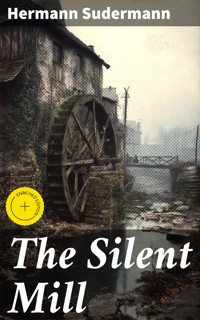
In "The Silent Mill," Hermann Sudermann intricately weaves a tale that explores the profound psychological landscapes of its characters against the backdrop of social and industrial change in late 19th century Germany. The narrative employs rich, evocative language and a lyrical prose style that blends realism with elements of naturalism, allowing Sudermann to delve deep into themes of despair, human connection, and the relentless passage of time. The mill serves as a poignant symbol of the industrial age, encapsulating both the hopes and disillusionments of a generation caught in the throes of modernization. Hermann Sudermann was a prominent figure in the German literary scene, known for his keen insights into human behavior and social critique. His experiences within a rapidly changing society, marked by the tensions between tradition and modernity, significantly influenced his writing. Sudermann's adeptness in portraying complex emotional states and societal nuances reveals his profound understanding of the individual's struggle within the collective zeitgeist, which is particularly evident in "The Silent Mill." This novel is highly recommended for readers interested in the intersections of industrialism, psychology, and existentialism. Sudermann's masterful storytelling invites an exploration of the human condition, making it a significant contribution to German literature and an enlightening read for anyone seeking depth in character-driven narratives. In this enriched edition, we have carefully created added value for your reading experience: - A succinct Introduction situates the work's timeless appeal and themes. - The Synopsis outlines the central plot, highlighting key developments without spoiling critical twists. - A detailed Historical Context immerses you in the era's events and influences that shaped the writing. - A thorough Analysis dissects symbols, motifs, and character arcs to unearth underlying meanings. - Reflection questions prompt you to engage personally with the work's messages, connecting them to modern life. - Hand‐picked Memorable Quotes shine a spotlight on moments of literary brilliance. - Interactive footnotes clarify unusual references, historical allusions, and archaic phrases for an effortless, more informed read.
Das E-Book können Sie in Legimi-Apps oder einer beliebigen App lesen, die das folgende Format unterstützen:
Veröffentlichungsjahr: 2021
Ähnliche








The Silent Mill
Table of Contents
Introduction
A stillness settles over a place and its people until the quiet begins to speak with the weight of guilt, desire, and memory, turning what is unsaid into the most powerful force in their lives.
The Silent Mill is a work of short fiction by Hermann Sudermann, a leading German novelist and dramatist associated with late nineteenth- and early twentieth-century realism and naturalism. Although the exact circumstances of its initial appearance are less central than its enduring mood, the story belongs to a period when Sudermann explored provincial life and moral tension with a close, sympathetic eye. Readers often encounter it in English within collections of his shorter prose, where it stands out for its concentrated atmosphere and emblematic setting that reflect the author’s interest in the social and psychological pressures shaping ordinary existence.
Without revealing developments beyond the opening premise, the tale orbits a mill whose pervasive quietness draws the community’s gaze, becoming a focal point for doubt, rumor, and hope. Sudermann’s narrative calibrates intimacy and distance: the mill’s hush frames a human drama that gradually comes into relief through everyday gestures, wary conversations, and charged encounters. The experience is one of mounting unease rather than overt shock, as the author guides readers through a landscape where the external calm unsettles as much as it soothes, and where personal choices gather consequence in the eddies of communal expectation.
Sudermann’s thematic preoccupations emerge in the interplay between silence and speech, conscience and reputation, the private self and the public gaze. The mill’s quiet suggests both protection and indictment, inviting questions about what communities permit themselves to believe and what they refuse to acknowledge. The story probes the costs of secrecy, the magnetic pull of judgment, and the moral ambiguities that arise when duty collides with longing. In this restrained crucible, silence is not emptiness but pressure, bearing down on people who must decide whether to accept inherited codes or risk themselves in the open light.
Stylistically, The Silent Mill blends careful realist detail with atmospheric suggestion. Sudermann’s prose favors patient observation: textures of work, weather, and routine anchor the scenes, while subtle symbolic motifs—light and shadow, motion and stillness—deepen them. The pacing is deliberate, inviting readers to inhabit pauses and glances as fully as spoken confrontations. The voice is compassionate yet exacting, alert to the dignity and frailty of its characters. The mood alternates between brooding and lucid, allowing each small shift in perception to carry weight, and creating a reading experience that rewards attentiveness to tone as much as to plot.
For contemporary readers, the story’s relevance lies in its portrayal of how communities negotiate truth, how reputations are made and unmade, and how silence can be complicit or courageous. It raises enduring questions: What do we owe to one another when facts are uncertain? How do fear and desire shape the narratives we accept? In an age sensitive to rumor, stigma, and the ethics of witnessing, Sudermann’s quiet drama invites a reflective pace. It asks readers to notice the moment when restraint becomes evasion, and when the refusal to speak either preserves a life or imperils it.
Approaching The Silent Mill with attention to its measured rhythms will bring out its strengths: the slow accretion of meaning, the moral intricacy of small choices, the double edge of communal care. Expect a sober, immersive atmosphere rather than melodramatic turns, and a psychological focus that privileges suggestion over declaration. The story offers the satisfactions of close listening—hearing what people do not say, and why. In its unforced clarity and ethical poise, Sudermann’s work remains an invitation to read with patience, to attend to nuance, and to consider how quiet places can concentrate the human heart’s most complicated truths.
Synopsis
The Silent Mill opens in the remote borderlands where marsh, river, and forest meet, and a once-busy watermill now stands mute. Its wheel is stopped, its sluice gates closed, and the villagers who pass along the towpath speak of ill luck and old grievances. The narrative establishes the mill’s silence as both a practical loss and a sign read by a superstitious community. Trade has dwindled, tempers have hardened, and the household within the mill keeps to itself. This mood of quiet tension frames the story’s concerns with work, honor, and the burdens that follow families across generations.
Attention turns to the miller’s household, whose prosperity has faded with the wheel. The miller is proud and guarded, determined to protect what remains of his rights and reputation. Around him, kin and servants move carefully, wary of village talk and of the stream whose levels seem to rise and fall with grudging will. The community hints at disputes over water rights and a past misfortune never fully spoken aloud. Into this tense equilibrium comes the prospect of change: a season of better flow, a call for repairs, and a stranger’s arrival, stirring hopes that the mill might yet awaken.
A newcomer seeking work presents himself, competent with timber and stone and respectful of the mill’s mysteries. His skill offers a practical path toward restoring the wheel, yet his presence also unsettles old habits. As he learns the lay of the millrace and the silted channel, he observes unspoken boundaries within the household and village. A tentative understanding forms between him and those who most want the mill revived, setting up a conflict between movement and stasis. The pragmatic tasks of shoring, scraping, and resetting timbers mirror the emotional readjustments that change demands from people reluctant to be altered.
The story broadens to the surrounding estates, where a neighboring landholder controls upstream gates and asserts competing claims. Formal petitions, measurements, and parish consultations bring simmering resentments into public view. At the inn, voices rise over who owns the current and who wronged whom in years past. When inspectors arrive, they find evidence that can be read in several ways, and no decision satisfies all. The miller’s pride collides with the neighbor’s certainty, while bystanders weigh advantage against conscience. Through these scenes, the narrative shows how law, custom, and livelihood are tangled, and how a river’s course can divide a community.
As seasons turn, the village marks a holiday with music and drink, and the mill’s affairs intrude on celebration. Glances harden, a careless remark lands too sharply, and a long-brewing quarrel breaks the surface. The newcomer, drawn by duty and perhaps by loyalty, steps into a dispute that is not fully his. The mill’s household stands exposed to judgments that blend gossip with grievance. What began as technical questions about sluices now carries personal weight. The sense grows that the mill, though silent, exerts a gravitational pull on choices, binding people to it by memory, obligation, and the need to be seen as right.
One night, with weather unsettled and the river running uncertain, events converge at the mill. Sounds in the dark, a lantern’s wavering arc, and hurried footsteps suggest a confrontation near the water. By morning, the wheel is still, the gates remain fast, and rumors move faster than facts. Some speak of an accident; others of recklessness or worse. The household closes ranks, the neighbor sets out his case, and the village splits along familiar lines. The mill’s quiet becomes fraught, as if it holds the missing piece of what happened, while practical matters—bread, contracts, winter stores—press on without mercy.
In the aftermath, officials and elders ask questions, seeking to separate what is known from what is feared. Testimony hinges on who stood where and when, on currents that swirl and then disappear. The newcomer’s role is weighed alongside longstanding grievances, and silence from the miller’s side is interpreted variously as dignity or concealment. The story remains measured, presenting how uncertainty breeds certainty in those who most desire clear blame. All the while, the mill, locked and idle, takes on the aspect of a witness that cannot speak, its stillness reflecting the reluctance of people to voice truths that could undo their standing.
A formal reckoning follows, shaped by custom and the need to move life forward. Material questions—repairs, rights, the distribution of loss—must be settled, even as emotions resist closure. Without disclosing decisive revelations, the narrative guides the parties toward a resolution that acknowledges both the river’s indifferent force and the human need for responsibility. Relationships shift: some ties are reaffirmed, others loosened. The newcomer’s future, the neighbor’s claims, and the miller’s authority are all recalibrated by what is admitted and what remains unsaid. The fate of the mill itself becomes a marker for whether the community chooses renewal or continued estrangement.
The closing movement returns to the mill as symbol and fact. Whether its wheel turns again or stays mute becomes less important than what the silence has taught: that livelihood, pride, and love are bound to the currents people cannot fully command. The story’s central message underscores how a community negotiates guilt and grace, and how restraint or confession can reshape shared life. Nature’s steady presence frames human volatility, reminding readers that even a stopped wheel belongs to a larger flow. The Silent Mill thus concludes with a tempered clarity, conveying consequence without spectacle and leaving space for reflection beyond the final page.
Historical Context
Set in the rural borderlands of East Prussia in the later nineteenth century, The Silent Mill unfolds amid river flats, alder swamps, and grain fields that feed small water- and wind-powered mills. This northeastern fringe of the Prussian state—around towns such as Tilsit (Sovetsk), Memel (Klaipeda), and Heydekrug (Silute)—was ethnically mixed, with German, Lithuanian, and Masurian communities, predominantly Lutheran in confession. Local society was stratified under the influence of nearby Junker estates, village headmen, and pastors, with customary law and seasonal rhythms governing life. The mill stands as an economic and social hub where grain, credit, gossip, and authority intersect in a world both isolated and tightly supervised.
A foundational backdrop is the Prussian agrarian transformation after the Napoleonic occupation. The Edict of Emancipation (October 9, 1807) and the Regulation Edict (September 14, 1811), associated with Stein and Hardenberg, abolished serfdom and enabled commutation of feudal dues into land or cash. In East Prussia this produced freehold peasants, but also landless laborers (Instleute) tied to annual contracts on Junker estates, while communal rights and manorial milling monopolies receded. This restructuring created chronic debt, litigation over boundaries, and class dependence. The Silent Mill reflects these legacies in its focus on land, obligation, and the power asymmetry between estate owners, millers, and smallholders negotiating survival.
The agrarian depression after the global crash of 1873 reshaped East Prussian grain economies. Influxes of cheap wheat from the United States and Russia lowered Central European prices through the 1870s–1890s, producing foreclosures, debt spirals, and rural unrest. Otto von Bismarck’s protectionist turn culminated in the grain tariffs of July 1879, intended to shield East Elbian Junkers and their dependents, while stabilizing state revenues after the end of the Franco-Prussian War indemnities. Tariffs did not erase volatility: mixed husbandry, rye cultivation, and potatoes remained vulnerable to price swings and blight. The Silent Mill mirrors this instability in its preoccupation with subsistence, bargaining, and the precarious trust networks that bind debtor, creditor, and broker around the millrace.
Demographic and labor shifts known as the Ostflucht accelerated from the 1870s, as rural East Prussians migrated west to the Rhineland and Berlin factories. Estates filled labor gaps with seasonal workers from Congress Poland and with local Lithuanian- and Masurian-speaking laborers, while the Instleute system persisted under tighter discipline. Agrarian politics grew militant: the Bund der Landwirte (Agrarian League), founded in 1893 in Marienwerder (Kwidzyn), lobbied for higher tariffs, anti-usury measures, and controls on grain trade. This tense labor regime and politicized agrarianism inform the book’s conflicts—authority figures assert order; dependent families weigh loyalty against hunger; and the mill becomes a stage where scarcity, bargaining power, and social coercion collide.
Borderland geopolitics left distinct marks. East Prussia abutted the Russian Empire, and the January Uprising in Congress Poland (1863–1864) sent insurgents and refugees across the border; Prussia’s Alvensleben Convention (February 1863) facilitated police cooperation with Russia. After 1864, the Russian ban on Lithuanian Latin-script printing (1864–1904) turned Tilsit and nearby East Prussian towns into clandestine publishing hubs (e.g., Martynas Jankus) for books smuggled by knygnesiai into Lithuania. Prussian authorities policed smuggling routes traversing rivers and forests. The Silent Mill echoes these realities through its atmosphere of surveillance, whispered transactions, and the moral ambiguities of a frontier economy where legality, livelihood, and ethnic solidarities often pull in different directions.
Industrialization transformed transport and milling. The Prussian Eastern Railway (Ostbahn) reached Koenigsberg in the 1850s and linked to Eydtkuhnen on the Russian border, while regional lines later tied Tilsit and Insterburg (Cernyakhovsk). Steam-powered urban mills in Koenigsberg and Memel could process larger volumes and access distant markets, undercutting many traditional water- and windmills. Rail spurred market integration but also exposed rural producers to distant price shocks. The novel’s quiet, archaic mill contrasts with the mechanized age, its silence suggesting both obsolescence and resistance: a holdout of community mediation and customary trust amid accelerating, impersonal commodity flows that reorder work, time, and neighborhood solidarities.
Political centralization after German unification (1871) tightened administrative and military oversight across Prussia. The Prussian constitution (1850) preserved strong executive authority; universal male conscription fed the army reforms of the 1860s, and rural communities were shaped by drill-like discipline and deference to officeholders. Tax collection, schooling laws, and forestry regulations emanated from distant centers, yet were enforced by local officials, pastors, and estate managers. Even where revolutionary fervor of 1848 had ebbed, the culture of obedience and petition remained. The book’s conflicts with magistrates, parish authority, and estate power reflect this governance style, where law, custom, and command meet in the quotidian negotiations of village life.
As social and political critique, the book discloses how economic modernization and state-building preserved, rather than erased, rural subordination. It exposes debt peonage, the nexus of landlord, pastor, and official, and the vulnerability of smallholders to market swings they cannot control. The silence around the mill figures enforced conformity: strategic muteness before authority, coded speech among the poor, and the suppression of dissent in a border zone watched by police and patrons. By dramatizing hunger, credit, and honor within a stratified countryside, the narrative indicts protectionism without protection, paternalism without care, and a national project that left peripheral communities negotiating survival in whispers.




