


Erhalten Sie Zugang zu diesem und mehr als 300000 Büchern ab EUR 5,99 monatlich.
- Herausgeber: Influx Press
- Kategorie: Abenteuer, Thriller, Horror
- Sprache: Englisch
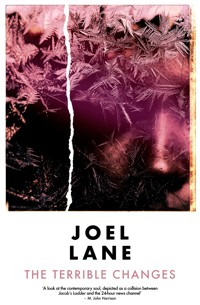
In midwinter, an aspiring politician finds himself suddenly deprived of human contact. Newcomers to a town are strangely reminiscent of people lost in a recent flood. Demonstrators on a peace march see the faces of sleeping children in the snow. A failed musician meets his own ancestors getting off a midnight train. The Terrible Changes is a journey through the shadow-realm between reality and dream, between clarity and madness, between the living and the dead. In Joel Lane's fiction, the weird is a symbolic language expressing the chilling beauty, sadness and mystery of real life, combining the supernatural with themes of human loss, passion, solitude and despair, in the tradition of Robert Aickman, John Ramsey Campbell, and M. John Harrison. From 'The Brand' (1983) to 'Alouette' (2008), these stories span a quarter-century of writing: urban horror tales, elegiac ghost stories, erotic reveries and psychological fugues. Long unavailable, The Terrible Changes is now back in print for a new audience, adding to Joel Lane's legacy as a true master of the weird.
Sie lesen das E-Book in den Legimi-Apps auf:
Seitenzahl: 230
Veröffentlichungsjahr: 2025
Das E-Book (TTS) können Sie hören im Abo „Legimi Premium” in Legimi-Apps auf:
Ähnliche
















iii
JOEL LANE
THE TERRIBLE CHANGES
Influx Press London
Contents
vii
For Steve Green And in memory of Ann Green –these my dreams are yours viii
Foreword
NO LANGUAGE BUT A CRY
The contents of this book were chosen from my previously uncollected short stories in the weird fiction genre. In the process, it ended up as a retrospective of a quarter-century of writing – but also a collection with its own particular territory and purpose.
My main criterion was that each story needed to have an internal narrative, not just a plot. It had to communicate something. A number of stories written for professional anthologies ended up meaning less to me than stories simply written because their themes wouldn’t leave me alone. I quickly found that the past stories of mine that I felt were worth reprinting were not the most horror-orientated ones, but the ones whose narratives meantsomethingto me.
As a result, this collection tends towards the more low-key and private side of my writing. These are stories that 2really needed their own collection – and having chosen them, I felt that they belonged together. They are not presented in chronological order, though you can see the date of each story on the acknowledgements page. I’ve slightly revised a few of the earlier ones, but not really updated them in terms of whatever progress my approach to narrative has made.
A number of these stories appeared in classic magazines of the British weird fiction small press, such as DarkDreams, Exuberance, SkeletonCrew, and Dementia 13. In those days, stories were retyped by the editor from typescripts, set by pasting strips of paper onto hardboard and illustrated with original line drawings – a far slower process than the integrated text-and-graphics package of desktop publishing, but one that gave each publication its own distinctive character.
When I started writing supernatural horror stories, it was under the influence of what I thought of as ‘visionary’ weird fiction: an approach I associated with such diverse writers as Arthur Machen, Walter de la Mare, Fritz Leiber, Robert Aickman, Harlan Ellison, Ramsey Campbell, and M. John Harrison. (And yes, I read stories by all of these writers in my teens. I was a deeply obsessive kid.) For all of these writers, the supernatural wasn’t just frightening: it was meaningful. It carried a symbolic weight, like dreams or hallucinations. The ‘unknown’ was what we most feared to know.
Such early stories of mine as ‘The Brand’ and ‘Tell the Difference’ were trying, however clumsily, to dramatise the idea of an ‘inner voice’ that told people things they needed to know, but could not work out at a conscious level. As human relationships began to appear in my stories, the 3problems of intimacy became part of the supernatural content. And when political issues – money, power, war, corruption – became the focus, the supernatural content echoed the painful mixture of truth and distortion that characterises political discourse.
That’s quite an agenda. In twenty-five years, I’ve hardly made a start.
By the early 1990s, I was beginning to gain a clearer sense of what I wanted to say in weird fiction. But the genre itself was starting to fragment. On the one side, many authors and fans seemed to be primarily interested in ‘how far’ they could go in terms of representing physical horror. That never greatly appealed to me. I’m quite squeamish, and whatever sexual taboos the genre imagined itself to be breaking had already been satisfyingly trashed by mainstream writers – Jean Genet, in particular, being a major influence on my writing.
On the other side, a new ‘traditionalism’ was forming that seemed to define itself largely through negative criteria. No violence! No sex! No ‘bad’ language! It didn’t seem to matter to the devotees of this strand of supernatural fiction that the likes of Poe, Bierce and Machen had been fiercely unconventional and intensely sexual. I don’t believe that sex and violence are equivalent in literary terms – to speak crudely (as one surely has a right to), sex is creative and violence is destructive. They are not part of the same agenda. As Ramsey Campbell has observed, much horror fiction makes violence a substitute for sex or even a punishment for it. Making weird fiction harmless and polite didn’t seem to me a particularly creative approach.4
Fortunately, I was able to tap into a rich new seam of what became known as ‘slipstream’ or ‘miserablist’ weird fiction, associated in particular with the great British independent press magazine TheThirdAlternative. While I didn’t like the label ‘slipstream’ – to me, the best weird fiction had always been literary in both content and style – I loved what that approach meant for supernatural horror. It meant more of what I had always valued within the genre, and less of what I saw as one-dimensional and predictable.
By the new century, the intrinsic creative logic of the weird fiction genre had reasserted itself right across the board. Writers of overt horror had become more thoughtful. Writers of ‘traditional’ ghost stories had become more ambitious. Writers of ‘slipstream’ had woken up to the fact that that they had been writing either science fiction or supernatural horror all along.
I stopped caring about where I belonged and started to focus with some intensity on what I really wanted to say. I could see things coming apart, both within my life and in the world at large. The ‘inner voice’ was one I badly needed to hear. But, as Tennyson reminds us, it has nolanguagebutacry.
Here are twelve previously uncollected stories, plus two brief new pieces. All were chosen primarily for what they try to say about the ‘unknown’ in our lives. Which, let’s face it, is most of what we are and what goes on around us. Ghosts and other supernatural entities are metaphors not just for what we hide inside ourselves, but what we do not or will not understand in the world – including the very real threats of disease, madness 5and death, which we cannot tame or sanitise, but which may become a little less terrifying if we can see them more clearly.
That, in the end, is the most powerful agenda of the weird fiction genre: to help us confront the darkness. These stories, whatever their limitations, are part of my own struggle towards that goal. If there’s nothing more to them than a cry, that’s a start.
Joel Lane6
After the Flood
Ironically for a town that had built its reputation on water, Leamington Spa had no provision for the flooding that took place on Good Friday 1997. Torrential rain caused the picturesque river that crossed the lower end of the town to overflow its banks, drowning several square miles of roads and surrounding fields. Commuters driving home for the bank holiday abandoned their cars in three feet of water. Houses, shops and restaurants were flooded out; cellars brimmed like teacups; bookcases exploded with the swollen volume of soaked paper. The battles over liability for the damage raged on for years.
Matthew had spent that weekend at his parents’ house in Cardiff. By the time he came back, the flood had drained away. Most of the shops around the train station were closed, shutters and blinds hiding the damage. His bedsit was nearer the north end of town, higher up. The 8house clearly hadn’t been affected. The newsagent at the end of the road told him: ‘Lucky you were nowhere near the station. Trains didn’t run all night. There’s people drowned, cars ruined, no end of pets gone missing.’ In the local paper, a Jehovah’s Witness was quoted as saying: It’saforetasteofthingstocome.Thistownmustpurgeitselfofthedecadencethatinfectsourstreets.
The house was quiet; most of the other tenants would be away for the whole Easter break. Matthew wanted to spend some time with Karen before the exam term got under way. She was his first proper girlfriend, and the passion they’d shared in the last couple of months had made it hard for him to focus on work. Karen wasn’t a student: she worked in a little bookshop off the Parade. They’d met at Warwick University cinema, after a screening of BladeRunner. She’d changed everything for him: Leamington, his studies, being alive. Everything glittered with fragile sunlight.
Karen lived with two friends in a flat in Russell Street, not far from the station. He’d better call and check she was okay. The telephone rang four times; then he heard Karen’s voice asking him to leave a message. He was about to speak when Sally broke in: ‘Hello? Who’s that?’
‘Matthew. Hi. How are you?’
‘Okay. Is Karen with you?’
‘No.’ He could still hear her voice in his head, wanted to answer it. ‘I’ve been away since Friday.’
‘So’s Karen. We don’t know where. Thought she might be with you. Her mum rang from Telford, so she’s not there.’ Sally breathed in anxiously. ‘Shit… I hope nothing’s happened to her. You know, the flood.’
9‘Jesus.’ Matthew felt like he was drowning. ‘Surely… surely by now… I mean…’ She’d have been found, he wanted to say. Didn’t want to say.
‘You’re right. Don’t worry. When she comes in, I’ll ask her to phone you straight away. If she’s not here tomorrow, I’ll go to the police. She’ll be here, though. I just know it.’
But she wasn’t. There were no leads to follow. No body was found. Sally talked to the police, who sent a DC to talk to Matthew. The young officer’s questions were polite, but very detailed; Matthew knew he was under suspicion. It was hard to talk about Karen. They’d got very close quite quickly. He’d never expected to have to make factual statements to a stranger about sleeping with Karen; it felt cold and alien, a code for loss.
At the end of the interview, the DC said: ‘We’ll keep you informed. Let us know if you remember anything that might be helpful.’ April slipped into May, and the police didn’t get back to him.
As the weather grew warmer, the damage to the south side of town was gradually repaired. Shops and restaurants closed for refurbishment; cellar contents were piled in skips; the smell of rotting wood and plaster hung in the air like the ghost of last night’s takeaway. Matthew was supposed to be preparing for his exams. But when the library closed, he’d drop off his books at home and then wander downtown towards the river. Maybe he’d pick up some clue about what had happened to Karen. But more, it was a way of keeping her alive.
One Friday evening, instead of having dinner, he drank four pints of Guinness at one of the pretentious new bars on the Parade. It was full of shouting Yuppies from local 10offices, grins like pale sharks. The bar was full of polished pseudo-rural artefacts: carvings, horseshoes, framed photos of show-jumping. The toilets were scented with pine. Staggering a little, Matthew walked down the Parade towards the River Leam where it came through Jephson Gardens. He’d expected the fresh air to clear his head; but it wasn’t fresh. It seemed heavy, polluted by the traffic that clogged the town like cholesterol in blood vessels.
On the bridge, he gazed down at the waterfall. The setting sun and the tainted air made it look slightly yellow. He remembered standing here with Karen, around the same time in the evening. Her arm linked through his. How she’d said: ‘I love rivers. They make me feel connected to the sea. It’s a part of us, the sea. It’s inside us.’ They’d kissed then, and walked down past the station into the industrial part of town.
The canal ran parallel to the river, a shadow of it, like a sepia photograph. In between was a fault line of ruined or condemned buildings. That evening, they hadn’t waited to get home. They’d found a bricked-up alley by the viaduct, out of sight of the road. The wall was tattooed with images and words. He remembered how she’d giggled when he’d stood on tiptoe to enter her: ‘You’re the wrong height.’ And the way she’d bit his shoulder through the cloth in the last feverish moments, drawing blood.
Remembering, he was painfully aroused. Which only made him feel more wretched. He walked stiff-legged down to the end of the Parade, and along the viaduct. There were huts in the arches, pigeons nesting on corrugated-iron roofs. Blue plastic sacks were fixed across the gaps. Here was the alley, paved with broken glass and used condoms. 11Graffiti covered the wall: PIGS SUCK, KERRY SMELLS OF EVERYTHING, COLIN IS FIT BUT HE TREATS GIRLS LIKE SHIT, GOTHS LIVE FOREVER. To one side, a wire fence was overgrown with some white flower he couldn’t name. It smelt bad here.
Further south of the river, away from the grand architecture and the gift shops, most of the buildings were post-war: tenement houses and blocks of flats, workshops and little factories. A lot of students lived here. Karen had told him that this was supposedly the bad part of town, where it wasn’t safe to be. It reminded him of the inner-city district where he’d grown up and gone to school. The ‘spa town’ part of Leamington – or, to give it its full Empire-building name, Royal Leamington Spa – left him cold. It made so much of its literary heritage; but the local branch of W.H. Smith’s didn’t stock a single literary journal. The town’s sense of civic identity was embodied by the dark statue of Queen Victoria opposite the Municipal Baths, and the omnipresent signs banning drinking out of doors. The local paper had recently announced, with some pride, that a gay club had been denied a licence. The town’s centre had a faintly decaying air of fifties pomposity that made him feel violent.
Out here, without a guidebook or tea-shop in sight, he was overwhelmed by thoughts of Karen. Her short reddish hair, pale blue eyes, freckles, conspiratorial smile. Her face on the pillow, asleep. Her frankness in bed: ‘You can do anything you like, but don’t make me pregnant. It’s not up to me to take precautions, it’s up to you.’ The fact that most of what he remembered about her was sexual depressed him. He began to walk back towards the station, thinking 12about the first night they’d spent together. They’d been to see a film, and she’d come back to his room for coffee. Suddenly they’d started kissing. Then she’d drawn back and asked him something about the film. Without thinking, he’d said: ‘Let’s discuss it later.’ She’d raised her eyebrows. ‘You mean in the morning?’ He’d wondered if he’d gone too far, and said awkwardly: ‘You’re reading my mind.’ Then she’d smiled, put her mouth to his ear and whispered: ‘No, just looking at the pictures.’
The weekend before his exams in June, Matthew decided to allow himself a Saturday night out. One of the tackier North Leamington bars was having a student night, with reduced prices and lots of gloomy 1980s music. He didn’t intend to find someone, just to get drunk with his friends. But he was so hyper from studying and loneliness that he drank a lot without feeling the effects, and ended up drifting back and forth through the long venue on his own. The music made his grief sustainable, made it part of a world where everyone wore black. It mattered less that he and Karen wouldn’t live together, have children, share a sunlit life.
There was a little bunch of Goths at the end of the bar, probably discussing whether it was worth the effort of forming a band. One of them glanced at him and smiled. She was short, stocky, with black hair and eyeliner – nothing like Karen. But in her brief smile, there was something that made Karen leap out of her face. He couldn’t look away. She joined him at the bar. ‘Are you having a bad night?’
‘It’s a long story. I’m okay.’ He had to see that smile again. ‘Are you in a band?’13
‘What, them?’ Her teeth were smaller than Karen’s; yet, somehow, the same smile. ‘Yes, but we haven’t put anything out yet. We’re still absorbing influences.’
‘What do you play?’
‘The bass. Sometimes I sing. We swap roles quite a bit. We all live in the same house, so it’s easy to work together.’
‘Are you at the uni?’
‘I work in the library.’ He supposed she was a little older than him, but not much. ‘You probably won’t have seen me there. I’m an archivist. I’ve got my own office.’ A graduate, then.
The barmaid was moving towards Matthew. ‘Do you want a drink?’ he said.
‘Bacardi. Thanks.’ They moved away from the bar. They talked about the university, his course, the bands that had played there recently. Her name was Terri. He couldn’t place her accent; there was a trace of West Country in it – a diet lilt, so to speak – underneath the flattened Midland vowels. She seemed in no hurry to rejoin her housemates. They sat down together in the twilight of the lower bar, where it was quieter. Suddenly he was telling her about Karen. Her hand on his arm. Her face blurred by the tears in his eyes, changing.
‘It must be dreadful,’ she said. ‘To lose someone and not even know where they are. But if you remember her, she hasn’t completely gone.’ Very gently, her fingers stroked a tear from his cheek. They looked at each other for a few seconds. Then they began to kiss.
Her mouth tasted of Bacardi. Like her smile, her kiss held faint echoes of Karen. He supposed that was how it always worked with new girlfriends. The same, but different. It didn’t matter that Terri was a stranger, or that 14doing this made him think of someone else. She probably felt the same way. Why else was she giving herself like this? He felt her tremble in his arms. ‘Are you all right?’ he said. Her eyes were shut.
When the lights came up, she asked him: ‘Do you want to come back with us?’ They walked together through the backstreets of shuttered shops and glowing restaurants; across the park, where the pale bandstand stood like an empty cage; and down Brunswick Street, over the dark ribbon of the canal. Terri’s housemates, two boys and a girl, walked with them – quiet, protective, almost like a family. Maybe he should get into this Goth thing. Terri gripped his hand. It was unusually quiet for this part of town: no dogs barking, hardly any traffic.
The house was one he’d walked past without really noticing. It had an overgrown front garden with poppies and hollyhocks. There was a small wooden gargoyle above the black front door. The windows were leaded. Inside, it seemed oddly formal: a hallway with a tiled floor, a bare staircase, blank walls. There was a peculiar smell of rotting wood and stagnant water, overlaid with chlorine like swimming baths. ‘Sorry about the smell,’ Terri said. ‘The cellar was flooded. We’re leaving it open to help it dry.’ She put an arm around Matthew’s shoulders. ‘Let’s go upstairs.’
Her room was almost as sparse as the hallway, though it had a double mattress under a duvet and a few Cure posters on the off-white walls. As he sat down, Matthew realised how drunk he was. The cracks in the ceiling were blurred. Terri bent down to kiss him. ‘Would you like some vodka?’ she asked. ‘Russian.’
‘I don’t want to get too drunk,’ Matthew said.15
Terri looked steadily at him. ‘Don’t worry. We can make love in the morning.’
Matthew felt himself blushing. ‘You can read my mind.’
Terri smiled. ‘No, I’m just looking at the pictures.’ Matthew felt a momentary chill. She took a bottle with a Cyrillic label from a small cupboard and filled two fluted glasses. It must be a line from some film they’d both seen. He kicked his shoes off.
The vodka tasted peppery and was exceptionally strong. It stung his lips. Gradually, he forgot the smell of the basement. They undressed each other in between sips of vodka. The tiny bedside lamp gave Terri a giant shadow, a face like paper over darkness. The room was cold; they slipped under the duvet, and Matthew fell asleep at once.
Towards dawn, he drifted in and out of sleep. There was a dripping tap somewhere, floorboards creaking, muffled voices. His limbs felt too heavy to move. He could hear Terri’s steady breathing, but couldn’t feel the warmth of her body. In his dream, he was walking down the house’s uncarpeted staircase. It was twisted into a spiral, and it seemed to go on for ever. People were climbing past him, but he couldn’t make out their faces. They seemed no more than shadows.
When he awoke, it was twilight. His muscles were tense, a reaction to the vodka. He was breathing fast. Terri slipped an arm across his chest and murmured: ‘Relax, darling. It’s all right. You’re with me.’ He lifted her onto him, and they kissed slowly. Her hand moved down his chest to his crotch.
‘Wait,’ he whispered, reaching for the packet of condoms he’d left beside the bed.16
‘Leave them,’ Terri said. She caught his hand, guided it back under the duvet, pressed it to her taut belly. ‘I want everything. Every trace of you. I can’t have children.’ He held her tightly; she was trembling again.
As the morning brightened outside, they made love furiously. Matthew was crying when they finished. A thousand sounds, movements and sensations reminded him of Karen. Was it his imagination, or was it always like this? The second time, it was easier to lose himself in the experience and forget what it meant. As he washed in the austere bathroom, he felt a sense of uneasy contentment. As if his loneliness hadn’t gone away, but had been subdued by some kind of local anaesthetic. Sunlight melted through the net curtains, making indefinable shapes.
Over breakfast, they talked about work. ‘I’ve got half a dozen books about narrative theory to look through for tomorrow’s paper,’ Matthew said. ‘You never get time to actually read primary sources. Might as well be studying organic chemistry.’
Terri shrugged. ‘What are you carrying books around for? This isn’t the nineteenth century. You can get all that stuff off the Web.’
‘I can’t stand reading off a screen,’ Matthew said. ‘You lose any sense of context. A printed book is more meaningful. The way it looks tells you things. Besides, the Internet’s making the use of sources totally confusing. At least before, to rip off somebody’s ideas, you had to write them out. Now you just cut and paste, nobody’s got any idea who’s written what.’
‘But what does it matter? It makes no difference whose words they are, if they’re the right ones.’17
They argued half-heartedly for a few minutes. In the kitchen, the alkaline smell from the cellar was hard to ignore. Matthew wished he’d got more sleep. ‘I’d better get back,’ he said. Their hands linked across the table. The shadows under Terri’s eyes reminded him of her make-up the night before. They agreed to meet on Friday, after Matthew’s last paper. In the dim hallway, they kissed goodbye with a passion he found almost frightening. She waved as he shut the garden gate and walked off in the burning, unreal sunlight.
All through the week, the staircase dream kept coming back. He never reached the foot of the stairs: they twisted down forever, past an unlit landing just a few steps away. Thoughts of Terri distracted him from work, especially in the library. His exams didn’t go very well. And behind it all he still felt the loss of Karen, like a silence that nothing could fill.
An hour after completing his last exam paper, Matthew was standing on the bridge at the bottom of Jephson Gardens. He felt exhausted, relieved and nervous at the same time. Nervous because he’d not seen Terri since the morning in her room. Would she want to cool it? After all, she’d had a week to find someone better-looking, more experienced, taller. But here she was, still dressed in black, waving as she came towards him through the gardens’ quilt of fertile colours. She embraced him. Their faces leaned together, hesitated, then kissed hard. The waterfall sang in his ears.
They walked along the riverbank, holding hands. Terri seemed less nervous than before; the sunlight had brought out a quiet energy in her face, a sense of self. Leaves cast faint, tattered shadows on the water. Up close, the yellow tinge of pollution was clear. He shivered. ‘Are you all right?’ she said.18
‘Yes. It’s just… I can’t seem to get away from water. Rivers, floods, canals.’
Terri gripped his arm. ‘We’re still in the sea,’ she said. ‘Wherever we are. Like crabs in pools. Just waiting for the tide.’ He turned and looked into her eyes. They were dark, murky, but with a skin of light where he could see trees reflected.
They went for a drink at the Station Inn, which was just beginning to fill up with office and shop workers making a start to the weekend. The buzz of conversation mingled with the bleeping of mobile phones and cyberpets. Terri said her band, Forbidden Janet, were playing at the Haunch of Venison on Thursday night. Matthew said he’d be there. They both knew he only had nine days left before he went back to Cardiff for the summer. Under the table, their feet carried out their own slow, nervous conversation.
As they left the pub, Matthew suddenly knew what was going to happen. He didn’t seem able to make decisions any more. They walked slowly to the crossroads at the foot of the Parade, and on to the canal and the traffic-blackened viaduct. The familiar smell of stagnant water. The broken glass in the alley. A scrap of torn plastic raised its head and flapped away. Terri backed against the wall, held him against her. As he lifted her in his arms, she giggled. ‘You’re the wrong height.’ They made love quickly, without foreplay. Matthew was shaking so much that he hardly needed to move. Terri bit his shoulder when she came. Her teeth were sharper than Karen’s.
They went back to Terri’s house, where they shared a bath and made love again, splashing in the antique claw-footed tub while steam drew ghostly figures in the mirror. Then Terri cooked them some pasta with mushrooms and 19shredded chicken. She seemed to sample food, eating a little bit of everything without getting through much; but she drank a lot of wine. They both did. At the back of his mind, Matthew thought he should ask Terri what she really knew about Karen. But he couldn’t find the right words. Instead, they talked about records. Terri’s favourite Cure album was Disintegration; Matthew’s was Faith. They both thought Nirvana’s InUterowas a better album than Nevermind.




