


Erhalten Sie Zugang zu diesem und mehr als 300000 Büchern ab EUR 5,99 monatlich.
- Herausgeber: Nine Arches Press
- Kategorie: Krimi
- Sprache: Englisch
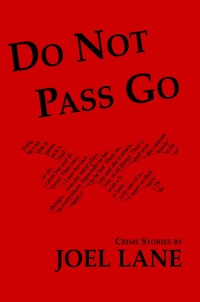
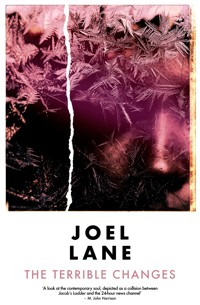
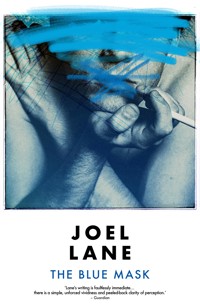
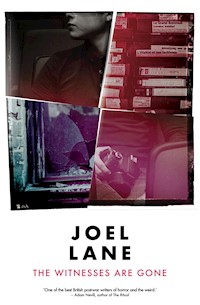
Do Not Pass Go by Joel Lane is the first Hotwire short story pamphlet from Nine Arches Press. These five crime stories dive into the shady undertow of Britain's second city, walking with characters you might well want to cross the road to avoid. Lane's prose is never less than deft, subtle and impressive, the stories taut and teeming with urban detail, always on the brink of either violence or revelation. "Joel Lane documents a life we don't quite live, in a city we can't quite find: half glimpsed and half imagined, we know it's out there somewhere. Waiting, maybe. Mixing fear with desire, reputation with regret. Touching the blood-beat of our secret hunger with the rhythms of a music that never felt alien till now. Wasted lives, with never a wasted word. It's an extraordinary achievement: vivid as neon, real as rain. Devastating." Chaz Brenchley, author of Shelter, Blood Waters, The Garden and other critically acclaimed works of crime fiction.Joel Lane lives in Birmingham and works as a journalist. He is the author of two novels, From Blue to Black and The Blue Mask; three collections of short stories, The Earth Wire, The Lost District and The Terrible Changes; a novella, The Witnesses are Gone; a chapbook, Black Country; and three collections of poetry, The Edge of the Screen, Trouble in the Heartland and The Autumn Myth. Joel has co-edited (with Steve Bishop) the crime and suspense fiction anthology Birmingham Noir. He has also edited an anthology of subterranean horror stories, Beneath the Ground; and co-edited (with Allyson Bird) an anthology of anti-fascist and anti-racist stories in the weird and speculative fiction genres, Never Again.
Sie lesen das E-Book in den Legimi-Apps auf:
Seitenzahl: 52
Veröffentlichungsjahr: 2013
Das E-Book (TTS) können Sie hören im Abo „Legimi Premium” in Legimi-Apps auf:
Ähnliche














DO NOT PASS GO
JOEL LANE
DO NOT PASS GO
CRIME STORIES
JOEL LANE
FOR MICK SCULLY,
A MASTER OF BIRMINGHAM NOIR
THIS NIGHT LAST WOMAN
It was in October last year. Not long after the terrorist attack on New York. Army shops all over the country had sold out of gas masks. People were scared. Nobody knew what was going to happen. Fortunately, it wasn’t the kind of pub where wannabe squaddies went to shout and smash glasses. By Acocks Green standards, it was quite a mixed crowd. That night, a young black guy sang ‘Everything I Own’ and reduced the whole pub to silence, then a storm of applause. An Irish girl sang ‘Zombie’, a sadder and much better version than the original.
As usual I was standing near the front, close enough to the bar that I could get a refill every two or three songs. They had an all-night cheap doubles offer. I always like to finish the drink before the ice has melted. To the right of the stage, a group of brightly-dressed youngsters were dancing and chatting. Behind me the older crowd, mostly women, were sitting around tables that were already covered with empty glasses. The standard AG types could be seen: young men with heads like light-bulbs, women with short jackets and hair tied back hard. Two black security lads were standing just inside the door, keeping an eye out for trouble. I’d been past this place once and everyone was standing outside while five police cars lined up along the road. But that wasn’t going to happen tonight.
The white-haired guy running the karaoke machine tried to alternate men and women. With the men, there was a certain kind of song you always got. Three generations of self-pity: Roy Orbison, Neil Diamond, Robbie Williams. The same lonely song, whatever the voice that carried it. The women were more resilient somehow. But as with the booze, it’s the cumulative effect that gets to you.
A little fat guy in front of me kept punching the air on the choruses. If he’d had a lighter, he’d have waved it. People were calling for the black lad who’d sung ‘Everything I Own’, but he’d gone to start a night shift. The karaoke ended with this girl singing ‘Fields of Athenry’, which I hadn’t heard in years. There was something about the idea of a prison ship that made me start crying. I can’t explain it.
As the last chords faded, there was a crackle of applause like the static on a poorly-tuned radio. I turned back to the bar to get another cheap double vodka. Something tugged at the corner of my eye. A pale face wrapped in shadows. I glanced at her, then looked away. A woman with black hair and a coat the colour of autumn leaves. Her eyes were shining, wet. Someone pushed past me to get to the bar. I felt a kind of vertigo, like there was a darkness around my head.
In front of me, two blokes were talking. I could change, one of them said. There was this night last woman. Made me feel like a different man. The way she was. All gets bright when you’re with someone. I wasn’t sure which of them was saying that. Or was it just a voice in my head? I decided to get that drink, but somehow turned back to the dark-haired woman. She was looking straight at me. Her black mascara had run at the corners. We stared at each other for a few seconds.
I’m always nervous about talking to women in pubs. If she brushed me off, I’d have a burning wire in my stomach the rest of the night. But there was something about her, a darkness in her eyes that held me. It felt like we’d already shared something. I crossed over to where she was standing and waited, looking past her at a couple kissing in the shadows. She didn’t move away. I looked at her, smiled. Looked at her mouth. She smiled back.
“So you like karaoke too,” I said.
“Yeah. You can’t beat those old songs.” She had a Black Country accent. I’d have guessed her age as early thirties. “Did you hear that black kid earlier? The Ken Boothe song?”
“Yeah, he was brilliant.” I noticed she wasn’t holding a glass. “Want a drink?”
“Vodka and lime. Cheers.”




