


1,49 €
Mehr erfahren.
- Herausgeber: BookRix
- Kategorie: Sachliteratur, Reportagen, Biografien
- Sprache: Englisch
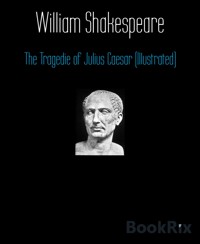
The Tragedy of Julius Caesar is a tragedy by William Shakespeare, believed to have been written in 1599. It portrays the 44 BC conspiracy against the Roman dictator Julius Caesar, his assassination and the defeat of the conspirators at the Battle of Philippi. It is one of several plays written by Shakespeare based on true events from Roman history, which also include Coriolanus and Antony and Cleopatra. Although the title is Julius Caesar, Julius Caesar is not the most visible character in its action; he appears in only five scenes. Marcus Brutus speaks more than four times as many lines and the central psychological drama is his struggle between the conflicting demands of honour, patriotism and friendship.
Das E-Book können Sie in Legimi-Apps oder einer beliebigen App lesen, die das folgende Format unterstützen:
Veröffentlichungsjahr: 2014
Ähnliche















The Tragedie of Julius Caesar (Illustrated)
BookRix GmbH & Co. KG81371 MunichActus Primus.
Scoena Prima.
Enter Flauius, Murellus, and certaine Commoners ouer the Stage.
Flauius. Hence: home you idle Creatures, get you home:
Is this a Holiday? What, know you not
(Being Mechanicall) you ought not walke
Vpon a labouring day, without the signe
Of your Profession? Speake, what Trade art thou?
Car. Why Sir, a Carpenter
Mur. Where is thy Leather Apron, and thy Rule?
What dost thou with thy best Apparrell on?
You sir, what Trade are you?
Cobl. Truely Sir, in respect of a fine Workman, I am
but as you would say, a Cobler
Mur. But what Trade art thou? Answer me directly
Cob. A Trade Sir, that I hope I may vse, with a safe
Conscience, which is indeed Sir, a Mender of bad soules
Fla. What Trade thou knaue? Thou naughty knaue,
what Trade?
Cobl. Nay I beseech you Sir, be not out with me: yet
if you be out Sir, I can mend you
Mur. What mean'st thou by that? Mend mee, thou
sawcy Fellow?
Cob. Why sir, Cobble you
Fla. Thou art a Cobler, art thou?
Cob. Truly sir, all that I liue by, is with the Aule: I
meddle with no Tradesmans matters, nor womens matters;
but withal I am indeed Sir, a Surgeon to old shooes:
when they are in great danger, I recouer them. As proper
men as euer trod vpon Neats Leather, haue gone vpon
my handy-worke
Fla. But wherefore art not in thy Shop to day?
Why do'st thou leade these men about the streets?
Cob. Truly sir, to weare out their shooes, to get my
selfe into more worke. But indeede sir, we make Holyday
to see Caesar, and to reioyce in his Triumph
Mur. Wherefore reioyce?
What Conquest brings he home?
What Tributaries follow him to Rome,
To grace in Captiue bonds his Chariot Wheeles?
You Blockes, you stones, you worse then senslesse things:
O you hard hearts, you cruell men of Rome,
Knew you not Pompey many a time and oft?
Haue you climb'd vp to Walles and Battlements,
To Towres and Windowes? Yea, to Chimney tops,
Your Infants in your Armes, and there haue sate
The liue-long day, with patient expectation,
To see great Pompey passe the streets of Rome:
And when you saw his Chariot but appeare,
Haue you not made an Vniuersall shout,
That Tyber trembled vnderneath her bankes
To heare the replication of your sounds,
Made in her Concaue Shores?
And do you now put on your best attyre?
And do you now cull out a Holyday?
And do you now strew Flowers in his way,
That comes in Triumph ouer Pompeyes blood?
Be gone,
Runne to your houses, fall vpon your knees,
Pray to the Gods to intermit the plague
That needs must light on this Ingratitude
Fla. Go, go, good Countrymen, and for this fault
Assemble all the poore men of your sort;
Draw them to Tyber bankes, and weepe your teares
Into the Channell, till the lowest streame
Do kisse the most exalted Shores of all.
Exeunt. all the Commoners.
See where their basest mettle be not mou'd,
They vanish tongue-tyed in their guiltinesse:
Go you downe that way towards the Capitoll,
This way will I: Disrobe the Images,
If you do finde them deckt with Ceremonies
Mur. May we do so?
You know it is the Feast of Lupercall
Fla. It is no matter, let no Images
Be hung with Caesars Trophees: Ile about,
And driue away the Vulgar from the streets;
So do you too, where you perceiue them thicke.
These growing Feathers, pluckt from Caesars wing,
Will make him flye an ordinary pitch,
Who else would soare aboue the view of men,
And keepe vs all in seruile fearefulnesse.
Exeunt.
Enter Caesar, Antony for the Course, Calphurnia,
Portia, Decius,Cicero,Brutus, Cassius, Caska,
a Soothsayer: after them Murellus and
Flauius.
Caes. Calphurnia
Cask. Peace ho, Caesar speakes
Caes. Calphurnia
Calp. Heere my Lord
Caes. Stand you directly in Antonio's way,
When he doth run his course. Antonio
Ant. Cæsar, my Lord
Caes. Forget not in your speed Antonio,
To touch Calphurnia: for our Elders say,
The Barren touched in this holy chace,
Shake off their sterrile curse
Ant. I shall remember,
When Caesar sayes, Do this; it is perform'd
Caes. Set on, and leaue no Ceremony out
Sooth. Caesar
Caes. Ha? Who calles?
Cask. Bid euery noyse be still: peace yet againe
Caes. Who is it in the presse, that calles on me?
I heare a Tongue shriller then all the Musicke
Cry, Caesar: Speake, Caesar is turn'd to heare
Sooth. Beware the Ides of March
Caes. What man is that?
Br. A Sooth-sayer bids you beware the Ides of March
Caes. Set him before me, let me see his face
Cassi. Fellow, come from the throng, look vpon Caesar
Caes. What sayst thou to me now? Speak once againe,
Sooth. Beware the Ides of March
Caes. He is a Dreamer, let vs leaue him: Passe.
Sennet
Exeunt. Manet Brut. & Cass.
Cassi. Will you go see the order of the course?
Brut. Not I
Cassi. I pray you do
Brut. I am not Gamesom: I do lacke some part
Of that quicke Spirit that is in Antony:
Let me not hinder Cassius your desires;
Ile leaue you
Cassi. Brutus, I do obserue you now of late:
I haue not from your eyes, that gentlenesse
And shew of Loue, as I was wont to haue:
You beare too stubborne, and too strange a hand
Ouer your Friend, that loues you
Bru. Cassius,
Be not deceiu'd: If I haue veyl'd my looke,
I turne the trouble of my Countenance
Meerely vpon my selfe. Vexed I am
Of late, with passions of some difference,
Conceptions onely proper to my selfe,
Which giue some soyle (perhaps) to my Behauiours:
But let not therefore my good Friends be greeu'd
(Among which number Cassius be you one)
Nor construe any further my neglect,
Then that poore Brutus with himselfe at warre,
Forgets the shewes of Loue to other men
Cassi. Then Brutus, I haue much mistook your passion,
By meanes whereof, this Brest of mine hath buried
Thoughts of great value, worthy Cogitations.
Tell me good Brutus, Can you see your face?
Brutus. No Cassius:
For the eye sees not it selfe but by reflection,
By some other things
Cassius. 'Tis iust,
And it is very much lamented Brutus,
That you haue no such Mirrors, as will turne
Your hidden worthinesse into your eye,
That you might see your shadow:
I haue heard,
Where many of the best respect in Rome,
(Except immortall Caesar) speaking of Brutus,
And groaning vnderneath this Ages yoake,
Haue wish'd, that Noble Brutus had his eyes
Bru. Into what dangers, would you
Leade me Cassius?
That you would haue me seeke into my selfe,
For that which is not in me?
Cas. Therefore good Brutus, be prepar'd to heare:
And since you know, you cannot see your selfe
So well as by Reflection; I your Glasse,
Will modestly discouer to your selfe
That of your selfe, which you yet know not of.
And be not iealous on me, gentle Brutus:
Were I a common Laughter, or did vse
To stale with ordinary Oathes my loue
To euery new Protester: if you know,
That I do fawne on men, and hugge them hard,
And after scandall them: Or if you know,
That I professe my selfe in Banquetting
To all the Rout, then hold me dangerous.
Flourish, and Shout.
Bru. What meanes this Showting?
I do feare, the People choose Caesar
For their King
Cassi. I, do you feare it?
Then must I thinke you would not haue it so
Bru. I would not Cassius, yet I loue him well:
But wherefore do you hold me heere so long?
What is it, that you would impart to me?
If it be ought toward the generall good,
Set Honor in one eye, and Death i'th other,
And I will looke on both indifferently:
For let the Gods so speed mee, as I loue
The name of Honor, more then I feare death
Cassi. I know that vertue to be in you Brutus,
As well as I do know your outward fauour.
Well, Honor is the subiect of my Story:
I cannot tell, what you and other men
Thinke of this life: But for my single selfe,
I had as liefe not be, as liue to be
In awe of such a Thing, as I my selfe.
I was borne free as Caesar, so were you,
We both haue fed as well, and we can both
Endure the Winters cold, as well as hee.
For once, vpon a Rawe and Gustie day,
The troubled Tyber, chafing with her Shores,
Caesar saide to me, Dar'st thou Cassius now
Leape in with me into this angry Flood,
And swim to yonder Point? Vpon the word,
Accoutred as I was, I plunged in,
And bad him follow: so indeed he did.
The Torrent roar'd, and we did buffet it
With lusty Sinewes, throwing it aside,
And stemming it with hearts of Controuersie.
But ere we could arriue the Point propos'd,
Caesar cride, Helpe me Cassius, or I sinke.
I (as Aeneas, our great Ancestor,
Did from the Flames of Troy, vpon his shoulder
The old Anchyses beare) so, from the waues of Tyber
Did I the tyred Caesar: And this Man,
Is now become a God, and Cassius is
A wretched Creature, and must bend his body,
If Caesar carelesly but nod on him.
He had a Feauer when he was in Spaine,
And when the Fit was on him, I did marke
How he did shake: Tis true, this God did shake,
His Coward lippes did from their colour flye,
And that same Eye, whose bend doth awe the World,
Did loose his Lustre: I did heare him grone:
I, and that Tongue of his, that bad the Romans
Marke him, and write his Speeches in their Bookes,
Alas, it cried, Giue me some drinke Titinius,
As a sicke Girle: Ye Gods, it doth amaze me,
A man of such a feeble temper should
So get the start of the Maiesticke world,
And beare the Palme alone.
Shout. Flourish.
Bru. Another generall shout?
I do beleeue, that these applauses are
For some new Honors, that are heap'd on Caesar
Cassi. Why man, he doth bestride the narrow world
Like a Colossus, and we petty men
Walke vnder his huge legges, and peepe about
To finde our selues dishonourable Graues.
Men at sometime, are Masters of their Fates.
The fault (deere Brutus) is not in our Starres,
But in our Selues, that we are vnderlings.
Brutus and Caesar: What should be in that Caesar?
Why should that name be sounded more then yours
Write them together: Yours, is as faire a Name:
Sound them, it doth become the mouth aswell:
Weigh them, it is as heauy: Coniure with 'em,
Brutus will start a Spirit as soone as Caesar.
Now in the names of all the Gods at once,
Vpon what meate doth this our Caesar feede,
That he is growne so great? Age, thou art sham'd.
Rome, thou hast lost the breed of Noble Bloods.
When went there by an Age, since the great Flood,
But it was fam'd with more then with one man?
When could they say (till now) that talk'd of Rome,
That her wide Walkes incompast but one man?
Now is it Rome indeed, and Roome enough
When there is in it but one onely man.
O! you and I, haue heard our Fathers say,
There was a Brutus once, that would haue brook'd
Th' eternall Diuell to keepe his State in Rome,
As easily as a King
Bru. That you do loue me, I am nothing iealous:
What you would worke me too, I haue some ayme:
How I haue thought of this, and of these times
I shall recount heereafter. For this present,
I would not so (with loue I might intreat you)
Be any further moou'd: What you haue said,
I will consider: what you haue to say




