


Erhalten Sie Zugang zu diesem und mehr als 300000 Büchern ab EUR 5,99 monatlich.
- Herausgeber: Pushkin Children's Books
- Kategorie: Für Kinder und Jugendliche
- Sprache: Englisch
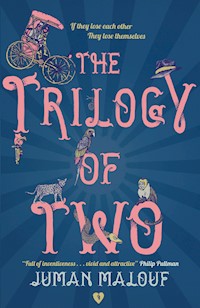
A highly original and acclaimed fantasy novel with eccentric characters, striking illustrations and a propulsive plot "[A] spellbinder"The Daily Beast "A sweeping tale. . . gorgeous illustrations"PopSugar Identical twins Sonja and Charlotte, twelve-year-old musical prodigies, learned to play before they learned to talk. They were born on All-Hallows-Eve and found one night by Tatty, the Tattooed Lady, in a pail on her doorstep with only a short note and a heart-shaped locket. They have been with her ever since, roaming the Outskirts with the circus company in a convoy of caravans, moving from place to place. Lately, mysterious things have begun to happen when the girls pick up their instruments. Movements, vibrations, changes in the weather. They begin to discover that they possess extraordinary powers. During one of their performances, they unintentionally levitate the entire audience-and word gets out. Soon, a troop of Enforcers from the city comes after them, and Charlotte and Sonja must embark on a perilous journey through enchanted lands in hopes of unlocking the secrets of their mysterious past. Juman Malouf, born in Lebanon, grew up in London. She has an MFA in set and costume design and has worked on a number of films including Wes Anderson's Moonrise Kingdom and The Grand Budapest Hotel. The Trilogy of Two is her first novel.
Sie lesen das E-Book in den Legimi-Apps auf:
Seitenzahl: 434
Veröffentlichungsjahr: 2018
Das E-Book (TTS) können Sie hören im Abo „Legimi Premium” in Legimi-Apps auf:
Ähnliche









![Tintenherz [Tintenwelt-Reihe, Band 1 (Ungekürzt)] - Cornelia Funke - Hörbuch](https://legimifiles.blob.core.windows.net/images/2830629ec0fd3fd8c1f122134ba4a884/w200_u90.jpg)


“The world [Malouf] creates, through her appealing prose and her positively addictive illustrations, feels weird and true, vivid as a dream but way more entertaining”
Michael Chabon, Pulitzer Prize-winning author of The Amazing Adventures of Kavalier & Clay
“Fans of Mievile’s Un Lun Dun will enjoy debut author Malouf’s intricate worlds, each teeming with its own customs and creatures, as well as her equally intricate pencil illustrations, which highlight the characters’ eccentricities… themes of sisterhood and believing in oneself will entrance readers”
Publishers Weekly
“A new YA novel that shuffles the teen-dystopia deck with some Narnia-style fantasy… Juman Malouf sets quite a few plates spinning in The Trilogy of Two, her first novel. She keeps it all whirling with aplomb and no broken crockery – a bit of a circus performer herself. Plus, her line drawings are exquisite”
Vanity Fair
“YA fiction’s new spellbinder… The book’s eccentric characters and the worlds-within-worlds they inhabit are richly illustrated… [Malouf’s] prose is lyrical and evocative”
The Daily Beast
“An imaginative fantasy adventure with a unique arts focus”
Booklist
“Quirky… with hints of L. Frank Baum’s Oz and C.S. Lewis’s Narnia”
School Library Journal
“Meticulously drawn and imaginative”
Vogue.com
“Juman Malouf brings her talent for conjuring the dark and whimsical to her debut young adult novel, The Trilogy of Two… [Malouf renders] every character in wonderfully moody and evocative pencil drawings. Filled with stray creatures of all kinds and nods to the occult… will comfort clever children of the same stripe”
Interview Magazine
“A work of deep and powerful imagination… The twins’ adventures are riveting, but they’re always connected to human traits: love, estrangement, treachery, wonder, and, above all, bravery. The exquisite pencil drawings are meticulous shaded, giving shape, with the utmost detail and wit, to the people, animals, and oddities that Juman has created”
Town & Country
“Charming… The lavishly illustrated fable of twin orphans growing up in a travelling circus in what Malouf calls a ‘futuristic Dickensian world’ was inspired by personal touchstones ranging from Charlotte Brontë to August Sander to her superstitious grandmother who believed in fortune-telling, and reflects Malouf’s distinctive sense of style, which seems vaguely late Victorian but ultimately unmoored to a time or place”
T Magazine
“The Trilogy of Two is going to be a stand-out”
Bustle
“[An] ambitious debut”
Kirkus Reviews
Contents
PROLOGUE
Rain City
IT WAS A BLACK NIGHT, AND THUNDER GROWLED OVER the peaks and pillars of Rain City. It had not stopped raining in years. Countless drops scored pits and holes all across the purple brick facades of the Million-Mile-High buildings. Pale-faced people in hooded raincoats pedaled carriages along a network of steel tracks.
Down at the bottom of the city, makeshift houses sat on bricks stacked like stilts above the flooded streets. The sound of shoes clipping against the wet cobblestones woke a beggarman, and he scrambled out of his tent. He crouched, the ends of his tattered jacket dipping into the water, and held out his hand.
“Something for the needy?” he croaked. A pair of perfect black-and-white patent leather pumps came to a stop in front of him.
“Good evening, my humble gentleman,” a voice replied. “Would you be so kind as to point us in the direction of the School for the Gifted?”
The beggarman looked up to see a tall figure in a black suit, a coat slung over his shoulders, and a brimmed hat tilted over one eye. A white Persian cat slunk around his feet, arched its back, and hissed.
“It’s the next street over, m’lord. Bishop’s Row—but for a coin I could show you to Mistress Quickly’s.” The beggarman wiped the rain from his brow with the back of his sleeve. “Real women with perfumed faces—”
“Perhaps another time,” the man said, taking a snort from a diamond-encrusted snuffbox. “Tonight, the voices of youth beckon me.”
He flipped a large metal coin into the air, and before the beggarman could catch it, the tall figure was briskly on his way, something sweeping behind him like a long, rippling cape. The beggarman fumbled in his jacket for a pair of cracked glasses and pressed them to his eyes. The cape looked to be a creature with a hundred heads: wet cats—dozens of them—spitting and snarling, clambered after the mysterious man as he turned the corner onto Bishop’s Row.
Book One
CHAPTER ONE
The Outskirts
A MILE FROM THE CITY, TWO SMALL FIGURES CROUCHED atop a massive pile of assorted junk. Their hazel eyes darted as they rummaged feverishly among rusty cans, old toys, crushed boxes, crumpled cartons, and broken bits of who-knows-what. A soft rain drizzled. Sirens blared in the distance. Humming lamps shone on the figures: identical twins with the same shoulder-length brown hair; the same long, lanky limbs; and the same ill-fitting red raincoats. Their names were Charlotte and Sonja, and the only way to tell them apart was the mole above Charlotte’s right cheek.
“We’d better go,” Sonja said impatiently. “It’s getting late.”
“Just a minute longer,” begged Charlotte. She picked up a miniature plastic arm and shoved it into a bag strapped over her shoulder. What she really wanted was a very simple thing: a piece of wood. But a spare piece of wood was an extremely rare thing in the Outskirts—or anywhere else for that matter.
“I don’t want to run into any Enforcers this time,” insisted Sonja.
Charlotte shrugged. “They never catch us.”
“One day they will, and we’ll be thrown into some juvenile prison filled with Scrummagers and other troublemakers.”
“Will you relax?” Sometimes Charlotte wondered how they could be sisters at all. Sonja had no guts.
A flashlight’s beam raked across the hills of trash. Charlotte froze.
“An Enforcer,” whispered Sonja.
A figure in a black slicker and rain goggles appeared on the wet asphalt below. He wore an armband with a lightning bolt emblazoned across it.
“I see you, Scrummagers!” he yelled. “This is city property!”
“Come on!” cried Sonja, grabbing Charlotte’s arm.
Charlotte did not budge. Something else had caught her eye. From a mass of smashed tiles and scrap metal, she snatched up a broken but solid oak table leg. She held up the piece of lumber, beaming. “Bingo!”
Sonja pulled Charlotte with a firm jerk. They slid to the ground, ran between the piles of junk, and slipped through a narrow gap in the fence. The Enforcer blew three short, sharp whistles and charged after them out of the yard.
The twins flew down the empty street past more junkyards and trash heaps. Rain City loomed in the distance. Many years before the girls were born, as the populations of the world’s cities grew to unprecedented sizes, an edict had been passed, and all the cities’ borders were walled and gated. The surrounding towns and villages were bulldozed to use as dumping grounds for the cities’ ever-growing waste, and now millions of homeless people, known as Outskirters, lived in the garbage, strictly patrolled and controlled by armies of Enforcers.
This was the world Charlotte and Sonja had been born into.
As the girls ran, another Enforcer emerged from the shadows and took off after them. Charlotte’s heart raced. She struggled for breath. Charlotte only pretended not to be scared of Enforcers. She had seen them do terrible things. Maybe she had finally pushed too hard and gone too far. She had coaxed her sister into sneaking into forbidden junkyards closest to the city, off-limits and extra-risky.
“This way!” yelled Sonja.
Charlotte hurried after her sister, but as they rounded the corner, she saw a band of scruffy boys in smashed bowlers and tattered suits.
“Lookie, dookie!” announced a boy with a rat on his shoulder. “Lil’ ducklin’s!”
“Those is them circus freaks!” yelled another, squinting in the rain.
The Scrummagers began to slowly circle the twins, swaying and sniggering.
Charlotte turned to Sonja and smiled. She knew they would certainly escape now.
A handful of Enforcers came clambering around the corner. One of the Scrummagers shouted, “Coppers!” and the gang scattered in every direction, the Enforcers chasing after them.
The twins dashed away and hid under an overturned incinerator. They waited, trembling, as the goggled men with clunky batons chased the ragged boys. A minute later, the street was quiet. Sonja peered through metal slats. “All clear,” she whispered.
Charlotte crawled out after her sister. “I’m sorry,” she muttered.
“You nearly got us caught—again!”
“But we weren’t, were we? And look what I found.” Charlotte held up the table leg. “It was worth it, wasn’t it?”
Sonja tried not to smile. “If it wasn’t for those Scrummagers, we’d be locked in the back of a van right now on our way to prison.”
“I hope they got away.”
“I hope they didn’t.”
Charlotte never could understand why Sonja hated Scrummagers so much. They were orphans, just like them. Before she could respond, an air horn blasted. Ten o’clock. They were late again.
CHAPTER TWO
Identical Twins
THE TWINS HURRIED THROUGH THE GATES OF A neglected cemetery. Half a dozen small booths had been assembled outside a large circus tent pitched among the crumbling gravestones. Posters advertised Dunk a Clown, Ride a Striped Pony, Kiss a Bearded Woman. Strings of colored lights crisscrossed overhead. A hand-painted sign read: PERSHING CRUM’S TRAVELING CIRCUS. Sonja sighed with relief. They were home.
Sonja and her sister had grown up in the circus, rumbling among the Outskirts in a long caravan, settling in one place after another, all of their lives.
A roar of laughter erupted from the big tent. Charlotte and Sonja ran across the yard and slipped through a pair of curtains into the changing room.
A broad-shouldered, soft-bodied woman with dyed-red hair and squinting green eyes blocked their way, arms crossed. She wore a sequined bikini and a rhinestone crown in her hair. Her oiled and tattooed skin shone even brighter than her sequins and stones.
“You’re late,” she said, frowning. On her shoulder sat a small honey-brown monkey munching on a stick of cotton candy. “Monkey and I were worried.”
She was Tatty Tatters, their adoptive mother, the Tattooed Lady of the circus. Every inch of skin from the top of her neck to the ends of her painted toenails was illustrated in full color: forests, mountains, lakes, deserts, islands, caverns, meadows—and animals and creatures of every size and shape. The script across her chest read The Seven Edens.
“Sorry, Tatty,” Sonja said, out of breath. “It was Charlotte’s fault.”
Charlotte rolled her eyes as the twins each hugged Tatty tightly, breathing in her familiar vanilla scent. Sonja’s beating heart calmed and slowed.
“I hope you didn’t go into forbidden junkyards again.” Tatty studied the girls as she helped them out of their wet jackets.
“Of course not,” Charlotte lied. She wriggled out of her dress and tights.
“How’s the audience tonight?” Sonja asked, changing the subject. She pulled two matching blue crushed-velvet tuxedos from the costume rack.
“A little jumpy,” said Tatty, “so be careful out there. We don’t want anything to happen again.”
“Nothing’s happened in weeks,” insisted Charlotte. She snapped on a red bow tie. “Uncle Tell said it was probably just a coincidence, anyway.”
At first, they had thought it was a ghost: curtains blew open, empty seats moved, candles ignited. But soon, the other circus performers noticed that the strange occurrences happened only when the twins were onstage.
Applause erupted. Sonja watched as three clowns stumbled into the dressing room—Balthazar, Toulouse, and Vincent. Balthazar, with a black smile painted on his face from ear to ear, growled, “You’re up!”
The ringmaster lurched in next. Pershing was seven feet tall but more like nine in his stovepipe hat. He wore a plastic flower pinned to his morning coat. “Ah, the last act is finally here.” He looked at the twins. “No funny business tonight, okay?”
“Of course not, Pershing,” Charlotte said boldly.
Sonja silently picked up a small black case. She did not feel as confident as her sister. In the past three months, even though the incidents were few and far between, they had grown worse: hats, umbrellas, and bags of popcorn had been catapulted into the air; lights had burst and showered the ring with glass; a thread-worn carpet had carried the Miniature Woman from backstage and flown her over the audience. After these incidents, the circus members no longer trusted the twins.
“Monkey and I will be waiting for you,” Tatty said, leading them to the curtain. She kissed them each on top of the head before they stepped out.
The girls walked hand in hand to center stage and stopped next to a piano on wheels.
Bright lights shone in their eyes. Sonja could smell the buttered popcorn as she looked out at a sea of doubtful faces. Scattered applause and chitchat faded away.
“Brings back the clowns!” cried a Scrummager with muddy knees.
Sonja cleared her throat. “Ladies and gentlemen! My sister and I were born on All Hallows Eve. We started playing music before we could walk. Allow us to entertain you!”
All her life, Sonja had dreamed of becoming a famous musician. Her idol was the great woodwind player Kanazi Kooks. She had read all about him: he was born in the Outskirts, grew up an orphan, and was discovered at age fifteen by a scout from the Schools for the Gifted, already a fully formed musical genius (and a bit of a heartthrob).
She flung open the case and pulled out a flute almost as long as her arm. Its metallic surface glinted in the light. She pressed it to her lips, tilted her head, and blew into the mouthpiece. A sharp note sounded.
Charlotte took her place at the piano and lifted the lid. She began to play. Her dark chords joined the melody of Sonja’s flute.
The audience grew quiet. The dirty-kneed Scrummager sat down. Charlotte and Sonja’s music was like nothing they had ever heard before. Even the twins themselves were lost in the bewitching tune. Their eyes were pressed shut and their heads bobbed slightly.
Charlotte’s fingers pounded the piano keys. Sonja’s bounced up and down rapidly along the length of the flute.
A rickety post shook, creaking, and the circus tent billowed from a sudden gust of wind. People in the back row turned to look behind them. People on the aisles looked to the sides. A boy up front squinted quizzically as his spiky hair danced on top of his head.
Then a swirling mist began to gather in the air at the top of the ring, and the audience watched in disbelief as the mist turned into a cloud, and from the cloud came rain. Umbrellas opened, and puzzled faces huddled beneath, murmuring. All at once, every seat in the tent slowly rose into the air. The audience was floating, shakily, ten inches off the ground. A woman screamed. A young girl started to cry. The Scrummager laughed hysterically.
The twins, oblivious, played on.
“Stop!” cried a voice.
Tatty was already in the middle of the stage, panicked, between the twins. Monkey leapt onto Sonja’s back and gripped her hair like a rope in two little fists. Sonja dropped her flute. It made a twang as it hit the ground. Charlotte brought her hands slamming down onto the black and white keys in a final thundering chord. She looked up, anticipating the applause.
What the two girls saw, instead, was a roomful of chairs and people floating in space for a last, terrified instant—then falling to the floor all at once with a banging, cluttering, clacketing crash. The circus tent exploded into commotion as people screamed and scrabbled toward the exit.
Sonja watched in terrified silence. Her head pounded. She felt hot all over. This was the worst incident yet.
The cloud disappeared.
The abandoned arena was littered with popcorn and rows of upturned chairs. Charlotte wiped the wet hair from her forehead. “Pershing’s going to throw a fit.”
A low voice answered, “You’re right about that.”
The ringmaster stood behind them with his arms crossed, glowering. “I’m canceling your act.”
Sonja picked up the flute and pressed it to her chest. Tears sprang to her eyes. Performing was everything to her. She could not live without it.
Charlotte pleaded, “It won’t happen again!”
“That’s what you said before, and this was ten times worse.” Pershing took off his top hat and shook it. Droplets flew from the brim. “People like it when we scare them a little—but not when they run screaming in fear for their lives. I don’t know what’s happening to the two of you, and I wish I did, but whatever it is, it’s bad for business.”
Sonja ran to him and grabbed his jacket. “Please, Pershing. It’s not our fault!”
The ringmaster shook his head. “There’s nothing I can do.”
Balthazar took a gulp from his bottle and smeared away his smile. He hiccupped. “I always knew they were witches.” The other two clowns nodded.
“It’s not true,” muttered Charlotte.
Pershing snatched the bottle out of the clown’s hand. “Clean up this mess, you clowns.”
The twins changed out of their wet tuxedos in the dressing room. Monkey scrambled under the makeup table, searching for crumbs.
“They’re ruined, aren’t they?” said Sonja, holding up her costume. It was black from the rain. She wondered if it mattered anyhow. They were fired. At this rate, she would never become famous like Kanazi Kooks.
“They’ll be fine.” Tatty hung the child-sized suits, dripping, on a costume rack crammed with sequined leotards, striped overalls, and a gold lamé cape. She put her arms around the girls’ shoulders. “We’d better go tell the old man what happened.”
Monkey scampered after them, his bulging little cheeks stuffed with popcorn.
CHAPTER THREE
Mr. Fortune Teller
AT THE EDGE OF THE CIRCUS CAMP, BESIDE A WITHERED tree, was a lonely caravan with a mosaic facade of mother-of-pearl and stained-glass windowpanes. Smoke puffed out of a small chimney and filled the air with the scent of burning herbs. A lantern hung on the door, illuminating a crooked sign that read MR. FORTUNE TELLER SEES YOUR FUTURE.
Charlotte hurried ahead of Sonja and Tatty to a horse with his head buried in a bucket of grain. “Hello, Rhubarb,” she whispered. The horse looked up and shook his zebra-striped head, then huffed and whinnied. His short, stiff white-and-black mane stuck up on end like the bristles of a brush. He blinked two large, melancholy eyes.
Mr. Fortune Teller had found Rhubarb in an abandoned zoo, and Charlotte had always been particularly attached to him. Like Rhubarb, Charlotte and Sonja did not know where they came from. And the way things were going, they would probably end up exhibited in a zoo just like Rhubarb had been. She brushed the flecks of grain from the horse’s cheeks. “It looks like freckles,” she said, smiling.
Just then the door swung open and a middle-aged woman burst out. A customer. Tear-stained tissues fell from her hands. “Don’t believe a word that old man says!” she yelled, pushing past Tatty and the twins and disappearing into the night.
“I guess she didn’t get the fortune she was hoping for,” sighed Tatty.
They stepped inside. Leaves and twigs crackled in a small stove. Bookcases lined the worn velvet walls. Charlotte saw Mr. Fortune Teller crouched over a small brass case with a glass top. When he looked up, candlelight flickered in his white eyes. His fading irises had nearly disappeared. Charlotte knew his sight was getting worse, and that one day soon, he would be blind.
“It happened again,” Tatty reported. “This time worse.”
“I lifted the whole audience off the ground,” moaned Sonja.
“I made it rain cats and dogs.” Charlotte stared at her shoes. She searched for the words. They were simple but strange: “Inside the tent!”
The old man chuckled. “You gave them a performance they’ll never forget.”
Mr. Fortune Teller was not much taller than the twins. He had a large, hooked nose and frizzy salt-and-pepper hair. He wore a checked wool suit and a matching bow tie. A hunk of tortoiseshell dangled from a foxtail chain around his neck. He was the wisest person the twins had ever met. He had taught them how to read and write and understand the world—as it was now, and as it had been before the cities had taken over.
The old man gestured for them to approach. “Come have a look.”
Monkey scaled the bookcases, scouring for hidden treats, as Tatty and the twins peered through the glass into the case. A colony of green caterpillars spun fluffy white cocoons—tiny oval clouds of silk. A single, smaller one whirled a completely different kind of thread: it sparkled bright gold. Its cocoon looked like a Turkish slipper.
Charlotte gasped. “How does she do that, Uncle Tell?”
“I injected her with a drop of your blood,” explained Mr. Fortune Teller. “I wanted to see if it was true.”
“If what was true?” asked Sonja.
“That you have magic in you.”
“You said it was a coincidence,” blurted Charlotte. They were already strange enough. They lived in a circus and had extraordinary musical talent. Other children were scared of them. This would only make it worse.
“When magic is released from the body, it appears gold.” The old man pointed at the cocoon. “There’s no doubt about it. You have magic in your blood.”
Charlotte remembered a time when they were very young, seeing a traveling magician make a pigeon disappear. Afterward, the girls had asked the old man if magic really existed. Mr. Fortune Teller explained that it was rare, but that there were people with true magic in them. Where did it come from? The old man did not know, but added that one thing was certain: magic always came hand in hand with Talent.
Sonja shook her head. “It can’t be true.”
“Let’s review the facts.” Mr. Fortune Teller sank into a tired leather armchair. “A year ago, it began. Little incidents here and there when you played. Everyone thought it was Helmut the Contortionist’s ghost.” He chuckled. “In the past three months, it’s happened four times, each incident bigger than the last. It sounds like tonight’s was the biggest.” His hands searched and fumbled across the desktop and settled onto a tin pipe. He stuffed it with wild sage and lit it with one of the candles. “Your magic is only growing stronger. It’s no coincidence.”
“What are we going to do?” moaned Charlotte. “Pershing’s banned us from the show!”
“The others won’t come near us,” Sonja said unhappily. “They’ll probably have us committed to some hospital to do experiments on our brains.”
“Come, Sonja. Sit down,” said Tatty, leading her to a divan. “You, too, Charlotte.”
“In time, you’ll learn how to control it,” Mr. Fortune Teller said, taking a slow, gentle puff on his pipe. “Like every fledging.” He leaned back into his armchair. A mist of scented smoke veiled his face. “At first, it falls to the ground or crashes into a tree, but eventually, it flies. It has no choice.”
Charlotte paused for a moment, thinking. “Does it have something to do with our parents?”
The old man put down his pipe and wiped his mustache with a handkerchief. “Possibly.”
Sonja stared at Mr. Fortune Teller blankly. “It does, or it doesn’t.”
The old man exchanged a silent look with Tatty. He shook his head. “I don’t know for sure. In the old texts, some say it’s inherited, others say it’s exposure. Whatever the case, you’ve got it. A lot of it. More than I’ve ever seen.”
Charlotte’s heart sank. Any dreams of one day having a normal life were rapidly slipping through her fingers. All she ever wanted was to make friends her own age, maybe even have a boyfriend. “Why is this happening?” she grumbled. “It’s not fair!”
“In a few years, I’ll be blind. Is that fair?” Mr. Fortune Teller shrugged. “Maybe not, but it’s helped me develop something else. An inner sight.” He walked over to the divan. Tatty and the girls stood up, and the old man placed a creased, sun-spotted hand on each of the girls’ shoulders. “One day, I promise, something good will come from these gifts. For now, you must practice every day. Don’t let the music take over. Learn to stay in control.”
Monkey began to snore. He was sprawled across a high shelf, fast asleep. An empty bottle of sweet wine lay beside him.
“That little rascal,” muttered Tatty, taking off her shoes. She stood on the divan and picked up the sleeping monkey and cradled him. She turned to the old man. “Sorry, Hieronymus.”
The old man chuckled. “Better him than me.” He walked them to the door and looked out at the faint blinking lights in the distance. “Rain City,” he mused. “The place of my youth. I remember when the buildings were only two stories tall and people used to walk in the streets.” He shook his head. “Nothing ever stays the same.”
They said their goodbyes to Mr. Fortune Teller and left him alone.
The old man listened for a moment as the footsteps trailed off across the camp. He hurried to his desk and pulled open a drawer. He unlocked a small jewelry box and took out a purple stone. He placed it delicately onto a little antique wooden stand. He rubbed the tortoiseshell pendant hanging from his neck, burnishing it, then pressed the face of it flat against the stone.
The stone lit up like a purple lightbulb and began to quietly pulse.
CHAPTER FOUR
Tabitha Tatters
CHARLOTTE AND SONJA LEANED OUT THEIR CARAVAN window side by side. The circus members were all in for the night. The clowns next door sang a melancholy Gypsy song. At a porch table, Pershing played chess against a woman the size of a table lamp. Silvery moonlight gleamed down through the clouds. Sonja waved to an old lady wearing a purple turban in the caravan opposite them. A pale boa constrictor was draped across the woman’s shoulders. She sneered at them and looked away.
Sonja sighed and yanked shut the two dish towels that served as curtains.
She remembered when the circus members used to fight over whose caravan would be parked closest to theirs. Most of them had never had children, and they loved being around the twins. They sang them songs, told them stories, and made them toys. As the girls grew older, and their musical abilities developed, the circus members grew more and more suspicious of them. Now they argued over whose caravan would be parked farthest away. Sonja felt rejected by the only friends she had ever had.
She looked around their tiny home. Thirty marionettes fashioned out of bits of wooden junk dangled from the caravan’s arched ceiling. They were creatures and animals from Tatty’s tattoos. Books, clothes, and old newspapers were piled over the floor, and stacks of musical compositions and flutes of various shapes and sizes lay scattered all around. Hanging against the peeling, flowered wallpaper were a cuckoo clock, a snapshot of Tatty and the twins, and a red accordion.
Sonja slumped alongside her sister at a table in front of the junk they had gathered, including the broken table leg. A book of sketches was propped open by two tin cans. There was a drawing of a man with wings and horns.
Sonja looked up at Tatty. “Are you scared of us like the others?”
“Don’t be ridiculous,” Tatty said, laughing. She plopped snoring Monkey into an open drawer.
Charlotte fiddled with the torso of an unfinished marionette. “I didn’t see Bea tonight. Where was she?”
“On a date.” Tatty cleared plates of half-eaten pancakes and carried them to a makeshift kitchen at the back of the caravan.
Of all the circus members, Bea had hurt Sonja the most. She had lived with them when she first joined the circus. They had loved her like an older sister. But she had changed, just like the others. Sonja looked from the drawing to the broken table leg to Charlotte. “I’ll do the horns,” she said matter-of-factly. “You can do the wings.”
“I found the wood,” Charlotte said stubbornly. “I’ll do the horns.”
Tatty stood over them. She wiped her hands on her robe. “Making a Tiffin?”
Sonja nodded sulkily. “We’ll have plenty of time, now that we’re banned.”
“Remember what Uncle Tell said. Once you learn how to control it, you can perform again.”
Charlotte sighed. “We haven’t missed a performance since we were three.”
“Except when you had the measles,” reminded Tatty. She slipped off her robe and tipped a bottle of vinegar onto a handkerchief. She rubbed the smelly white liquid across her oily chest, where animals within a dense wood were inked. “What do other children your age do?”
Charlotte shrugged. “How would we know? They don’t speak to us. Except Scrummagers.”
“Anyway,” said Sonja, “we don’t want to do what other children do. We want to do something great like Kanazi Kooks.” She took out a newspaper clipping from her jacket pocket. There was a photograph of a man with spiky hair and large, black-framed round glasses holding a flute. “He performs all over the world. In the biggest big-city auditoriums. He was born in the—”
“Outskirts,” interrupted Charlotte. “We know. We know. We know all about Kanazi Kooks, thank you. Well, you can count me out. I don’t want to go to some gifted school. And I definitely don’t want to be a city girl.”
Sonja crumpled the newspaper clipping. “They wouldn’t let the likes of us in anyhow.”
“Stop feeling sorry for yourself, Sonja, and help me,” ordered Tatty. Sonja reluctantly stood up and rubbed Tatty’s greasy shoulders with the vinegar-soaked handkerchief. She studied the tattooed images of sloping sand dunes, temples carved out of rock, and women hovering above the ground.
“Sometimes I think I should have sent you to live with Aunt Alexandria and Uncle Arthur,” said Tatty. “Maybe your lives would have been a little more normal.”
“Normal?” grunted Charlotte. “Are you kidding? They’re both crazy.”
“Alexandria’s a chain smoker and always smells like black gin,” Sonja said with a frown. “She’d make a terrible role model.”
“I wish you were nicer to her.”
“Nicer to her!” blurted Charlotte. “She’s not nice to us. She can’t even remember which one of us is which.”
“Remind me not to get on the wrong side of the two of you.” Tatty stood up and slipped a nightgown over her colorful skin, like drawing a shade over a bright landscape. “Come on, girls. Time for bed.”
The twins changed into mismatched pajamas and wriggled under the covers. Tatty climbed into bed next to them. She pulled the string above her head, and the light went out.
“Tatty?”
“Yes, Charlotte.”
“You’re sure you don’t think we’re freaks?”
“I’m sure.”
“Tatty?”
“Yes, Sonja?”
“You think we really have magic in us?”
“I can’t say.”
“Can’t or won’t?”
“Go to sleep.”
“First, the story,” said Sonja.
“You know all about that. You don’t need me to tell that story again. Besides, you girls are old enough, you can just tell it yourself.”
“No, Sonja’s right,” said Charlotte. “Tell it just to remind us.”
Tatty groaned. “Okay, but then sleep.”
“Agreed,” they said in unison.
Sonja held Charlotte’s hand under the covers. It was a habit they had formed as young children.
Tatty cleared her throat and began. “I was getting ready for bed one night when I heard a knock at my door—”
“It was your first week at the circus,” Charlotte interrupted. “You were scared to live alone in a caravan.”
Sonja chimed in, “You peeked outside, but nobody was there.”
Tatty nodded and continued: “Just as I was about to close the door, I heard a gurgling, gargling sound, and I looked down at the ground—and there you two were. Wrapped in one woolen shawl and stuffed into a milk pail. There was a note pinned to the shawl with your names and your birthday written on it, and a heart-shaped locket with a strand of brown hair curled inside it.”
Sonja opened the locket that lay on her chest. Inside, underneath the cloudy, scratched glass, was the curled lock of brown hair. The twins had a rule: they were not allowed to open the locket outside under any circumstances. They were scared of losing the only little piece of their mother they had.
“Tomorrow’s my turn to wear it,” whispered Charlotte.
“I had tried to have my own children,” continued Tatty, “but I never could. It was at that moment that I knew why. I was waiting for my dear girls to be delivered to me in a milk pail.” Tatty’s voice broke. It always did when she reached the end of the story.
Sonja pressed her toes against Tatty’s. Tatty tried her best to be a good mother, and even though she did not know how to read or write, or understand why the sky was blue or why the moon changed shapes, she made them laugh, comforted them when they were sad, and loved them with all her heart.
“Thank goodness we were orphans,” said Charlotte.
“We love you, Tatty,” said Sonja.
“And I love you, my dearies.”
Monkey grunted from the open drawer.
“And you, too, of course, Monkey.”
Sonja knew that Tatty had sacrificed everything for them. She had even sold her gold fillings to get them milk when they were babies. But as much as Sonja loved Tatty, she often found herself thinking, late at night, about the mother and father who had abandoned them and where they were now.
CHAPTER FIVE
The Seven Edens
A WHITESUNROSEABOVETHE OUTSKIRTS OF RAIN CITY. The gray smog hung low across the wide landscape. Rain pitter-pattered on the tin roofs of the circus caravans. Everyone was still asleep except for Charlotte and Sonja. They sat at the table in their pajamas, whispering and working. Charlotte had sawed the piece of wood into smaller blocks and was chiseling a miniature horn out of one. Sonja was carefully sticking little feather shapes made out of costume scraps onto cardboard wings.
“Once we’ve finished the Tiffin,” remarked Charlotte, “we’ll have all the creatures from Tatty’s tattoo. Then we’ll only need to paint the backdrops, and voilà: we’ll have our marionette show.”
Since the twins were very young, Tatty had told them stories about the Seven Edens and the characters who inhabited them. Tatty had learned the details from the tattoo artist himself all those years ago. The girls knew the legends inside and out and backward and forward. When Charlotte was bored, she would go through the seven lands and their inhabitants like a multiplication table:
“The Changelings are from the Forlorn Forest; the Albans are from the Golden Underground; the Tiffins are from the Land Where the Plants Reign; the Swifters are from the Lost Desert; the Foretellers are from the Vanishing Islands; the Bird Warblers are from the Crooked Peaks; the Pearl Catchers are from the Shifting Lakes.”
“It’s my turn to wear the locket, by the way,” Charlotte said to Sonja, sticking out her hand.
Sonja unfastened the thin gold chain from around her neck and dropped it reluctantly into Charlotte’s palm. It was warm from being worn all night. Charlotte believed the locket gave her good luck—and hoped that one day their real mother and father would know them by the little heart-shaped pendant dangling from her neck.
There was a knock at the door. Tatty put a pillow over her head and groaned.
“I’ll get it!” Charlotte called out brightly. She jumped up and opened the door.
It was the Miniature Woman. She was out of breath. “You’d better hide. There’s a team of Enforcers looking for you. Pershing’s with them right now. Some Outskirters complained about your act last night.”
Charlotte’s face fell. She peered out the window between the hanging dish towels. Pershing stood at the entrance of the cemetery with three Enforcers. He was shuffling through a stack of papers, pretending to search for his circus license.
Tatty leapt out of bed and got the girls dressed in a flash. Sonja threw a weathered tin pennywhistle on a string around her neck. Charlotte snatched up her accordion and strapped it onto her back, then grabbed a handful of marionettes.
“Don’t worry, I’ll hide the rest!” said Tatty. She pulled the twins to a bookcase at the rear of the caravan and fumbled along the side until she found a latch. The bookcase swung open. The girls had always known there was a door behind it, but they had never had to use it. “Go to the family tombs and stay there until I signal you.” Tatty shoved Monkey into Charlotte’s hands as she hustled them out. “Take him. You never know what they’ll do.”
The girls jumped out of the caravan and ran to the end of the cemetery, hopping over sunken gravestones. Charlotte looked back over her shoulder and prayed Tatty would be all right. The Enforcers hated Outskirters—especially travelers like them. They had orders to keep the Outskirts quiet, and they obeyed them with great brutality.
The twins reached what looked like a cluster of little houses, the family tombs of the old village. Sonja kicked open a door under the words carved in Latin: REQUIESCAT IN PACE. A blast of stale air whooshed out with a swarm of dizzy gnats. Charlotte pulled the door shut behind them, and they huddled in a corner on the dusty stone floor. Monkey, still asleep, curled into a ball on Sonja’s lap.
Charlotte looked around. The walls were inscribed with names of the dead: Augustus von Stralen, Magbeth von Stralen, Brigadier von Stralen. Spiderwebs hung like hair from sculpted busts. Light trickled through a dirty stained-glass window and dappled the girls in gloomy color. It was dead quiet except for the sound of Monkey’s breathing.
Charlotte shuddered. “This place gives me the creeps.”
“Me, too,” whispered Sonja.
They waited ten minutes in silence.
“I can’t stand the suspense,” said Charlotte, jumping to her feet. She climbed up onto a little altar and peeked out through the stained-glass window. In the distance, she saw the clowns: Balthazar clanging a pair of cymbals while being chased by an Enforcer, Vincent throwing empty food cans from the roof of their caravan, Toulouse making faces from inside as two Enforcers kicked at the locked door.
Charlotte sighed. “They’re still there.” She sat cross-legged on the floor, feeling guilty. It was their fault the Enforcers had come. Now everyone was going to hate them even more. “I can’t sit here doing nothing. It’ll drive me crazy.” She looped the straps of her accordion over her shoulders and pumped the bellows very gently. Her fingers wandered the keys. “If we play softly, they won’t hear us.”
Sonja hesitated, then blew gingerly into her pennywhistle. Her cheeks puffed in and out. A squeaky, pretty little song piped out of the crooked metal instrument.
They played together as quietly as they possibly could.
“Anything happening?” Charlotte asked. “Any magic?”
Sonja looked around. “Nothing so far.”
After a few songs, Charlotte relaxed. Maybe Uncle Tell was wrong. Maybe they were back to normal. That is all she wanted to be: normal.
“Don’t get too excited,” said Sonja. She dropped the pennywhistle from her mouth. “It might be a fluke.” She picked up one of the marionettes. A wooden stag dangled from six strings. She tilted the control up and down and left to right. The animal’s hooves clip-clopped across the marble floor. Its head cocked to one side.
Charlotte started to sing in a whisper as she played:
Hear me, hear me!
From a world of make-believe.
Hear me, hear me!
I sing of seven lands hidd’n from eyes to see.
Within an ancient forest,
Stalks a Changeling among the trees.
First a man, then a beast, either shape he’d like to be.
With two lives to be liv’d he growls, “You’ll never conquer me!”
Sonja picked up another marionette: a man wearing a fur cape and a necklace of antlers. She swung his pink plastic arms and bent his metal knees. Monkey, finally waking, stumbled to his feet and danced alongside the two marionettes.
Charlotte laughed and continued to sing:
Underwater from lake to lake
A Pearl Catcher swims,
Her long hair flowing, paddling her limbs—
“Hold it,” Sonja interrupted. She looked at the small pile of marionettes. “We didn’t bring her. Do the Swifters instead.” She held up three small puppets, fierce women with wild red hair and lightning bolts in their hands. Monkey covered his face. Charlotte went on darkly:
Across a sandy desert,
Float the Swifters, one, two, three.
Fiery-eyed, these spirits rise in an ancient breeze,
Bringing thunder, rain, and lightning,
Not caring whom they please.
Something hit the window.
The girls looked up, startled. Charlotte stopped playing, Sonja dropped the puppets, and Monkey hid behind the girls.
They sat perfectly still, dead silent, hearts racing.
The tomb door creaked open.
Three boys stood in the doorway, grinning.
“Yous ducklin’s gots us in trouble.”
It was the Scrummagers from the night before.
Sonja grimaced. “How were we supposed to know you’d be there?”
“Somes of us gots taken by coppers,” lisped the boy with the rat on his shoulder. His clothes were full of holes. They could see more skin than cloth.
“We’re really sorry about that,” apologized Charlotte, “but like my sister said—”
“Theys hurts ’em, yous know. Beats the daylights out of ’em.” The boy swung a thin club over his shoulder. A crooked nail stuck out from the end of it. “We’s thinkin’ ofs doin’ the sames to yous, circus freaks.”
A whistle blew. A booming voice exploded:
“Hold it right there, Scrummagers!”
And in a snap, the boys were gone.
The twins held their breath, waiting for the Enforcer’s footsteps.
None came.
Instead, they heard a soft voice call “Hello?”
Charlotte peered around the door. A boy about their age with curly brown hair sat on a gravestone. A violin lay on his lap. His clothes were worn but tidy. He smiled.
Charlotte stepped outside. She had never seen a boy with such kind, dancing eyes. She noticed a pin on his lapel: a rusty, old musical note.
“You scared us to death,” growled Sonja. “We thought you were an Enforcer.”
“Sorry. It’s the only way to get rid of Scrummagers.” He looked from sister to sister, his eyes widening. “I’ve never met identical twins before.”
Monkey leapt out of the tomb and jumped onto Charlotte’s shoulder.
“Or a monkey for that matter.” He held out his hand. “I’m Jack Cross.”
Charlotte stepped forward and shook his hand eagerly. “I’m Charlotte. This is Sonja. That’s Monkey. I was just saying to myself I wanted to meet some kids our own age.”
“I live in the Train Graveyard. Number seven seventeen. With my mother and brothers.” Charlotte watched as Jack Cross nestled the violin under his chin and began to play. The strings hummed under his sliding bow. After a moment, he put down his instrument and smiled. “I’m a musician. I practice out here sometimes.”
Charlotte’s face flushed a little. It was a difficult tune. The boy was showing off.
“We’re musicians, ourselves!” Charlotte said quickly. She could show off, too. She played a few bars from a tricky polka. Her fingers danced like crickets.
Jack Cross raised his eyebrows, surprised. “Not half bad!” He looked to Sonja. “What about you?”
“We’re twins, aren’t we?” Sonja reluctantly blew the first few verses of a medieval hymn.
The boy nodded, impressed. “You live here?”
“Sort of,” Charlotte said, her voice faltering.
“What she’s embarrassed to say,” interrupted Sonja, tucking away her pennywhistle, “is that we’re members of a circus.”
Jack Cross’ eyes lit up. “I’ve always wanted to join a circus. Travel the world. Meet people.”
Charlotte beamed. The boy did not care that they were circus folk. He seemed to like them even more for it.
“It’s not that great, traveling so much,” said Sonja. “Every Outskirt looks the same.”
“I imagine that’s true—but I don’t want to spend the rest of my life around here. I want to make something of myself.”
“Me, too!” Charlotte blurted. “I want to play in a big auditorium in one of the cities.”
Sonja scowled. “You said never in your life do you ever want to—”
Charlotte pinched Sonja hard in the arm before she could finish. Why did she always have to interfere? It was not the first time.
“Here’s a tip.” The boy leaned in. “There’s an audition today. In the Train Graveyard. For scholarships to the Schools for the Gifted. A real chance to leave the Outskirts behind.”
Just then, they heard shouting in the distance. The twins ducked behind a grave. “I think someone’s trying to signal you,” said Jack Cross. “A woman.” They peered over the top of the stone slab. It was Tatty, waving a pair of white underwear.
Charlotte’s face turned bright red. Couldn’t she have used something else to wave?
Sonja grabbed the marionettes and pulled Charlotte by the arm. “We’ve got to go.”
“Nice meeting you, Jack Cross!” Charlotte called, waving goodbye.
Jack Cross waved back. “Maybe I’ll see you at the auditions!” he shouted cheerfully after them.
Charlotte turned, following Sonja across the graveyard. She felt as though she could run and sing and laugh all at the same time. “Our first friend.”
“Hardly.”
“We’ve never had a friend our own age. Don’t you think it would be a good opportunity?”
“We don’t need friends. We have each other.”
“We don’t want to be like those weird twins who live alone together for their whole lives, do we?”
Sonja shrugged. “Why not?”
Charlotte stopped in her tracks. “What’s that?”
A white Persian cat stood in their path. Her frizzy tail swished from side to side. She held a crisp envelope in her pink mouth.
Sonja reached down and took it. A name was scrawled across the front. “It’s for Bea.”
“Thank you, kitty,” Charlotte crooned. She bent down to pet the cat. The creature’s orange eyes flickered. Her claws sprang out, and she swiped Charlotte’s hand.
“Ow!” shrieked Charlotte, jumping back. She watched, frozen, as the cat stared up at her with what looked like the faintest smile on her face—then turned away with a hiss and disappeared among the gravestones.
CHAPTER SIX
The Bearded Lady
THE TWINS STOOD IN FRONT OF THE PINK DOOR OF A pink caravan. Sonja knocked lightly. She knew Bea hated to be disturbed during her boudoir. After a moment, a pretty young woman with thick wavy hair—and a full-grown beard set neatly into rollers—stuck her head out, yawning.
“Everyone’s pretty upset about those Enforcers snooping around today. Luckily, they didn’t search in here.” She pointed at Monkey. “He can’t come in.”
Monkey stuck his tongue out, jumped to the ground, and scurried away. The twins followed Bea inside. She flopped onto her bed. Everything in the caravan was pink, including the crumpled bedsheets. “I heard you nearly brought the whole circus down last night.”
Sonja frowned. “We can’t help it. You’d think everyone would be a little more understanding.”
Bea opened a box of chocolates on her lap. She took a minuscule bite out of one and returned it to its wrapper. “One thing I’ve learned the hard way is you can’t depend on anyone for anything. Especially understanding.”
Sonja stared at Bea. She remembered how they used to stay up nights, hearing stories about Bea’s life before the circus, about how her parents had kicked her out of the house when they saw stubble on her chin. These days, Bea acted as if she were too mature for the girls. She hardly came to see them anymore.
Bea offered Charlotte and Sonja the box of chocolates. “Go on. Take one.”
Sonja noticed that each bonbon had a bite taken-out of it. She shrugged and popped a half-eaten one into her mouth. She chewed with her eyes closed. It had been a long time since she had tasted chocolate. She licked her fingers in case there was any trace left.
“They’re from the city,” boasted Bea. “My boyfriend gave them to me.”
Sonja rolled her eyes. Boyfriend this, boyfriend that. That’s all Bea talked about anymore.
“He’s a Richer, you know. Swimming in coins!”
“I don’t like Richers,” said Charlotte. “They’re all money and no heart.”
“What would you know?” Bea’s eyes darkened. She snatched away the box. “Why are you here, anyway?”
Sonja pulled out the letter. “It was delivered by a cat.”
“A cat?” Bea straightened. “A fluffy white one?”
Charlotte showed the cat scratches on the back of her hand. “She’s dangerous.”
Bea snatched the letter and tore it open. “He’s coming tonight!” she said, reading feverishly. “To my performance.” She jumped out of bed and pulled the rollers out of her beard. “I need to get ready.”
She ushered the twins out the door.
“But you have eight hours,” said Charlotte.
“Exactly!” Bea slammed the door behind them.
Sonja shook her head. “Pathetic. All that for some creepy Richer with a cat.”
“Let’s give him a chance. Maybe he’ll turn out to be nice.”
Sonja looked at Charlotte suspiciously. It was just like her: obsessed with love stories. Sonja had to stay sharp or Charlotte would end up running away with some idiot—like that boy in the cemetery. What was his name? Oh, yeah. Jack Cross.
The other circus members’ caravans were arranged in two rows of




