


Erhalten Sie Zugang zu diesem und mehr als 300000 Büchern ab EUR 5,99 monatlich.
- Herausgeber: Cinnamon Press
- Kategorie: Krimi
- Sprache: Englisch
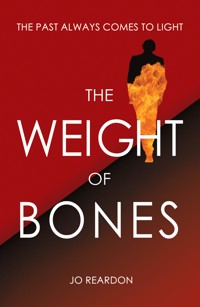
Frank Molinari faked his own death in a fire at the fairground he owned with his brother. Now he's back, in debt, and looking to be bailed out, but as fatal events spin out of control, the past and present weave with mounting tension. For DI Tom Fairfax, whose daughter, Susie, died in the original fire, ghosts and guilt return, while Susie's friend Leah, a local journalist consumed with blame, sees the mystery as an opportunity to escape the small Northern seaside town at last. Complicated by old grievances, dead ends, suspicion and hidden identities, The Weight of Bones is an exploration of the difficulty of finding either closure or justice in a world of intrigue and messy lives. What does Dolores, Frank's lover, who was with Tom when Susie died, really know and what will it cost her? Why does Leah want Frank's brother, Genaro, to be found guilty? How does Leah's flatmate, the Rumanian, Mati, fit into the story and what is his connection to the mysterious Eva, and hers to Frank? And why does the arrival of the arrogant Chief Inspector Robert Nardone only add to the confusion, forcing Tom to finally turn to Leah for help? As a story of a POW interment camp on Orkney and an old love triangle begin surface, another story of jealousy and greed accompany it, leading back to the fair ground and to the explosive finale. A tangled and beautifully textured tale of murder, fires, deceit, blame and guilt. Densely written, with distinctive characters and a mystery that hooks from the opening line to an ending that refuses to be neat, The Weight of Bones is a thrilling debut.
Sie lesen das E-Book in den Legimi-Apps auf:
Seitenzahl: 381
Veröffentlichungsjahr: 2020
Das E-Book (TTS) können Sie hören im Abo „Legimi Premium” in Legimi-Apps auf:
Ähnliche



















Contents
Title Page
Copyright
Acknowledgements
Author Biography
Dedication
Prologue
Monday 8 January 2007
1
2
3
4
5
Tuesday 9 January 2007
1
2
3
4
5
6
7
8
9
10
11
12
13
14
15
16
17
18
19
20
21
22
Wednesday 10 January 2007
1
2
3
4
5
6
7
8
9
10
11
12
13
14
15
16
Thursday 11 January 2007
1
2
3
4
5
Summer 2007
When he emerged from the ghost train
The Weight
of Bones
Jo Reardon
Published by Leaf by Leaf
an imprint of Cinnamon Press
Meirion House
Tanygrisiau
Blaenau Ffestiniog
Gwynedd, LL41 3SU
www.cinnamonpress.com
The right of Jo Reardon to be identified as author of this work has been asserted by her in accordance with the Copyright, Designs and Patent Act, 1988. Copyright © 2020 Jo Reardon
Print ISBN: 978-1-78864-910-0
Ebook ISBN: 978-1-78864-921-6
British Library Cataloguing in Publication Data. A CIP record for this book can be obtained from the British Library.
All rights reserved. No part of this publication may be reproduced, stored in a retrieval system, or transmitted in any form or by any means, electronic, mechanical, photocopying, recording or otherwise without the prior written permission of the publishers. This book may not be lent, hired out, resold or otherwise disposed of by way of trade in any form of binding or cover other than that in which it is published, without the prior consent of the publishers.
Designed and typeset by Cinnamon Press.
Cover design by Adam Craig © Adam Craig.
Cinnamon Press is represented in the UK by Inpress Ltd and in Wales by the Books Council of Wales.
Acknowledgements
Many thanks to the early readers of this book, George Green and Lee Horsley in particular who guided me through its beginnings through to a coherent end. Thanks also to: Jo Baker, Morgaine Merch Lleuad, Rhiannon Hooson, Elizabeth Preston, Jennie Owen and Richard Kenton Webb who read and commented on the book in its various stages.
I am grateful to have read Val McDermid’s Forensics, The Anatomy of Crime, Helen MacDonald’s Falcon and Stacey Horn’s The Restless Sleep in my research and for information on Orkney and the Italian Chapel the websites: Undiscovered Scotland and About Orkney. Any inaccuracies are mine alone.
But my thanks most of all to Jan Fortune, Rowan Fortune and Adam Craig and everyone at Cinnamon Press for their unending patience, support and attention to detail. It’s a joy to be part of this great publishing stable and an honour to be here.
The book is also dedicated to the memory of my schoolfriend Julie Godwin (née Stuttard) who was killed and taken from us far too young.
Author Biography
Jo Reardon is a writer of fiction, poetry and drama. Her short stories and poetry have been published alongside the work of contemporary artists at the Corinium Museum in Cirencester, Warrington Art Gallery and Burgh House Museum in Hampstead and her plays have been produced on BBC Radio 4. Her first novel, The Weight of Bones, was shortlisted for the Cinnamon Press Debut Novel Award. She is a lecturer for the Open University and lives in the North West of England on the Sefton coast.
Author website: joreardon.blog
To my mother and in memory of my father
Prologue
There’s a gap between death and the moment of dying and this is where Frank is.
He doesn’t know how he got here, what went wrong. But he knows it is too late to do anything about it. He’s tried to move, but his body won’t do what he wants it to. Only the pain tells him he’s still alive. The pain cuts through his head, down deep into his neck, to where his heart is. For now, it is still beating.
He’s lost track of time. It’s dark, a blackness that feels like morning. The only light comes from the reflection of the mirrors around him. He’s so cold he can’t feel anything but the slowing beat of his blood. He doesn’t want to die alone. She’ll come back. She won’t leave him like this.
Drifting between sleep and consciousness, every time he opens his eyes the day is still black and the cold still bitter. And he is still alone.
Monday 8 January 2007
1
Paris was empty.
Frank crossed the rue du Bercey and headed west until he reached la Bastille pulling the collar of his suit jacket high under his chin and thrusting his hands deep into his pockets. The florist on the corner of Henri IV and Saint Antoine was opening for the day and barely glanced up as he passed. The sweet dawn dampness of her flowers followed his footfall into the metro, the smell of rotting leaves and wet soil accompanying the heels of his shoes, which made the only sound, clicking their way with confidence down the steps and into the station.
The RER was three minutes late. He thought about a taxi but knew he’d have to hunt for one at this hour, so he waited one, two minutes more, undecided but knowing he was cutting it fine. Still, no need to panic. He watched the mouth of the underground tunnel breathe cold morning air onto the platform and willed the train to arrive. It did, moments later, sliding into the station smooth as a piston as though he had summoned it, and he strolled into a carriage like an early starter, keen to do his best. He took a seat by the window and watched the city evaporate behind him—across the river, past the black canals, the grey banlieues with their concrete towers and once bright port holed windows, painted in colours which had faded over time, then west towards the airport where beige apartment blocks, billboards and corporate neon took over, standing by the tracks like melancholy well-wishers—Tour Aczo, Michelin, Pepsi, the Sacré Coeur on its wedding cake hill. All watching him go.
At Charles de Gaulle the terminal was crammed.
Frank stood where he could see the queues, waiting for the girl to arrive. He bit the ends of his nails, felt their edges snag ragged on his tongue, looking like he had all the time in the world. This was the one thing he did not have. Fog was creeping in and, in an hour, maybe less, the runways would be closed and no one would be going anywhere. He’d seen this happen too many times before this winter—in France, no one would fly out in anything less than clear skies. The plane was leaving in fifty-three minutes and the girl still wasn’t there. She owed him five hundred Euros, what if she didn’t show? Christ he hadn’t even considered it; he was sure this time he had a good one and so far his intuition had held. Dolores had vouched for her, insisted he bring her and he couldn’t get a better guarantee than that.
He checked his watch, thinking he should have sent her on like the others, like he always did, but there was a reason for his going this time, which had nothing to do with the girl. He knew he was taking a risk, but it was worth it, so if this girl messed up… He counted the seconds and then, there she was, zigzagging the concourse like a ladybird, red t-shirt over black jeans. Her bony arms were dragging a suitcase on wheels. He saw a thin tattoo snaking, just visible, around her upper arm disappearing beneath the capped sleeve and into her body as though swallowing her from the inside. Her narrow heels were high and loud enough to click clack over the terminal floor. They made her seem much taller than she was. She had the canvas bag over her shoulder, the one he’d left in the locker for her with her ticket and her new passport. The Centre Pompidou logo bounced against her hip as she walked, making her look like a tourist on her way home. She didn’t know what he looked like, at least he didn’t think she did, but she might have been watching the locker waiting for him because as she walked by she came too close to where he was standing, glanced his way, just enough to let him know she knew, but not enough to betray any connection between them. She passed close enough for him to smell her perfume, full of earth and spice, and he was pulled back to the florist that morning, the fresh cut ends of her flowers. He marked the row of earrings circling all the way up to the top of the ear closest to him, the girl’s fair hair pulled back from her skinny face, which highlighted the whiteness of her skin. The ends of her hair were fringed with red fading up to black like the face of a baby fox. She wasn’t what he had expected, not the way Dolores had described her, not what he had expected at all.
She headed for the check-in desk, just like she’d been told. Frank waited as she handed the passport and ticket in at the desk, chatting with the airline girl about the weather, the fog and how spring would be a long time coming. He could hear her confident French from where he stood, a few words slipping here and there but fluid and fast with laughter thrown in for good measure. The two women looked for the world as if they had known each other for years. The girls he’d been sending over recently were older and sadder with families to keep at home somewhere in the centre of Europe. Their mothers would miss them and then forget them when the money came through so they stayed a little longer, hoped for a little more. He knew at once that this one had thicker skin. When she spoke French, her voice was hard but had a music to it, the sound of a finger running around the edge of thin glass. There was something about her—something he liked but also worried about. She was not going to be easy and that was never good.
He moved away from where he’d been watching her and went back to the locker. It was only a few corridors away, still enough time to get to the check-in line and join the queue for seats even though the screens were showing his flight as ‘now boarding’. He opened the locker, rolling the security numbers, and took out the day’s copy of Le Figaro that the girl had left behind in exchange for the ticket and passport. The paper was heavy, thick with the envelope that held his money. He flicked the pages back to check. A wad of Euro notes clung together gripped in a thick band of twine or string, he couldn’t quite tell, but he had to trust that it was all there. From the thickness and the smell, it felt like the right amount. He snapped the locker door shut, swished the combination of numbers back to zero and headed for the boarding gate. The flight was busy and she was just ahead of him in the line of seats where passengers were waiting to get the call to board the plane. He shook Le Figaro and turned to the racing pages at the back, where they always were no matter where you were in the world. He scanned the horses, riders, times and odds, working as he always did by instinct, and fancied a horse in the 15.30 at Vincennes. He looked at his watch, would he have time to put his money down? It was a superstition he had every time he did this, one girl delivered, one bet placed. The digital display on the departures board shuffled times and gates like cards on a black jack table, changing every few seconds or so, updating or delaying. Frank tapped his mobile and placed a bet just as his gate was called—the odds were 20 to 1 on a horse called Vixen. The girl who looked like a fox was just ahead of him in the boarding queue.
On the plane, Frank settled a few seats behind her, across the aisle where he could still keep her in his sight. She must know he was watching, he could sense it from the way she moved, carefully, smiling and humming to herself, earphones in her ears tapping her blue-nail painted fingers on the arm rest. She was doing that chatting smiling thing again with the stewardess, the one she’d done with the check in girl. She ordered two miniatures of Smirnoff, ice, no tonic. The small bottles always contained doubles so that was four shots in a row, and she made it look like she was drinking water. Frank ordered a coffee. The girl read a magazine, idly twirling the dial on her MP3 player looking like she hadn’t a care in the world. There was something about her, a defiance. He knew she was different but couldn’t put his finger on it. He had other things on his mind, the coffee missing the sweet spot, so he ordered a whisky, leaned back in his seat and fell asleep as the plane climbed high, high into the sky. Arriving towards England, it banked low over the channel, skirting the ragged edges of Cornwall and Wales and the wild brown waves lashing against the rocky coasts. It hugged the last drop of the land before curving towards the North West, the lights on the motorways and hillsides below, had he noticed them, easing themselves flat, curling their fingers towards him and beckoning him home.
They landed in Liverpool to a dank and indifferent Monday evening. January in the North West of England never matched the rose-tinted memories of snow and red-sunsets he carried in his head, the images that had got him through these past grey winter Paris months. Sometimes he remembered snow, but he was never sure if this was something that nagged the edge of his dreams or whether it had really happened. They passed through passport control at John Lennon Airport without a hitch and then entered the arrivals terminal passing under a sign that proclaimed: Above us only sky. A one-line sketch of John Lennon directed visitors to imagine this, his glasses round and smiling at them.Through the plate glass windows of the arrivals lounge Frank lookedat the sky, which was dark, glowering with the threat of sleet and rain. He realised now that his smart blue suit, woollen and specially tailored as it was, would not serve him well in this climate. He had already become an outsider, lacking the forethought of a native; his heavy overcoat was back in his Paris apartment. He shoved his cold hands into his pockets and thought: Welcome home.
2
Clemmie drove the car like she was driving a tank, slamming the gears and crunching the brakes while Tom tried to ignore the sound, staring out of the window at things that seemed submerged underwater. Distorted shoppers held their angled bodies against the sharp westerly wind and in the distance, over the sea, the sky was a thin line of pink and white, fixed on the horizon like coconut ice. He was so cold he couldn’t feel his feet because the car’s heater was broken and the front passenger window let icy air in through a gap that wouldn’t close. It was the first time he’d been in a vehicle since the accident; the ambulance didn’t count. His skull was contracting with pain, which pushed his eyes into the back of his head, and he wondered if he’d ever have the strength to help his mother lift the new TV into the car; it was the only reason he’d been persuaded to come out in the first place. His mother was too old, she said, to be shifting heavy stuff around and he was still ‘young’ enough to help. So here he was, doing nothing, a passenger in his mother’s car while his septuagenarian mother drove; that didn’t seem ‘young’ to him.
‘I’ll only be five minutes.’ Clemmie was pulling over to the kerb facing the wrong way up the road, outside Curry’s on the main high street. Her rally-driving father had taught her to drive and she’d never quite managed to shake off the skid and stop mentality that had characterised Tom’s earliest memories of being driven around by her as a child. She stopped on a yellow line.
‘You can’t stop here…’ he said, tried to say, but she was out of the car faster than he was able to move. ‘It’ll fit in the back,’ she threw over her shoulder and was gone. She left the engine running.
She disappeared into the shop, where TVs flashed in the window showing multiple clashing channels, pictures of newsreaders and sports pundits moving their mouths silently in sync. Kids who should have been at school whizzed past him balanced on BMX bikes dodging the buskers and parked cars, weaving in and out of the Styrofoam litter from McDonalds on the corner. Tom waited, counting the minutes as the sky over the sea, which he could just glimpse beyond the grey once-stately municipal town buildings, grew steadily darker.
The street was busy, the council were always intending to pedestrianize it but no one had the conviction to push it through. Buses and lorries fought with cars and cyclists for space on what must have once been a wide boulevard in Victorian times when the town was in its heyday, but was little more than a narrow street now. Hemmed in by traffic the tall shopfronts found themselves pushed back, their gothic windows covered in mesh to keep the pigeons out, a single concession to conservation. Tom found himself scanning back and forth along the street for traffic wardens. There was no sign of Clemmie. The car was freezing, made worse by the back seats in the old Volvo being folded down to make room for the new TV, a flat screen wonder that would give Clemmie access to pictures beyond her wildest dreams. He had no idea what his mother wanted it for, the other one was perfectly good and this would only be louder, brighter, more intrusive. He wanted peace, silence, the inside world, but Clemmie wasn’t concerned with what he wanted and for a while now he felt that he had overstayed his welcome. The TV might be her way of telling him to move on or, knowing his mother, her own way of making sure she was still moving into her own future.
A man came out with a large box on a trolley, followed by Clemmie giving instructions. Tom could sense the excitement in his mother’s voice, which had shifted up a notch, the curve of a laugh in it, the inch of a smile, and knew this was his cue. But he couldn’t move. He gripped the door handle, aware of the boot of the car behind him open to the cold air. Noise piled in from the High Street, deafening him, rooting him to the spot.
‘You giving us a hand then?’ Clemmie snapped.
The young man guided the TV, balancing it with one hand, manoeuvring expertly around pedestrians. He looked like he didn’t need anyone’s help, but with some effort Tom pushed the door wide and just caught it as a blast of wind barrelled down the street from the coastal end, meeting him off balance. He stood and staggered back down holding on to the door to save it. A cyclist in a flash and blur of bright colour clipped the door’s edge as she swerved.
‘Fucking watch what you’re doing wanker!’
The cyclist was brought to a halt; her back wheel twisted round to the front where a mass of contorted brake wires was locking the front wheel in place. He felt his hands shake, the blood throbbing above the artery in his neck. He registered the shock on the woman’s face, her eyes wide and the violent impact of the near-collision fixing her body rigid, hands gripping tight to the handlebars of the bike. She should have been more careful too and he should have moved across and got out the driver side rather than on to the road because of his mother’s careless parking. There was nothing he could do now but apologise.
‘I…’
‘You,’ the woman said, staring at him, her face beneath her helmet twisted into rage.
He looked at her; it took him a second to understand, but only a second—the yellow and black lycra, the fingerless gloves with the black nail varnish, thick eyeliner and bright, bright blue eyes. Still those blue eyes, only… Leah Barnes looked much older now. Her eyes were screwed up against the wind and the cold and showed tiny crow’s feet etched into the skin, which led out to her temples. The cheek strap of her helmet was tight against the glow of sweat on her skin, half of her face thrown into shadow. It wasn’t that long since he’d last seen her at his daughter’s funeral, only months ago really, the months of a year, but it could have been a lifetime.
‘You still alive then?’ she spat.
He stared without a word in his head.
‘Tom?’ Clemmie’s voice broke through whatever spell the sight of Leah Barnes had cast over him. She stood, hands on hips, looking between the two of them. The TV was in the car and the man with the trolley was gone.
‘Tom?’ she insisted as he heard the hiss of a tyre, the clang of a gear being kicked into place, upscaling as the bike took off and away from them. When he turned back from Clemmie to where Leah had been standing, there was nothing but the blur of yellow somewhere in the distance getting smaller and faster the further away it went, weaving angrily between buses and taxis. She blazed past a pedestrian who had stepped out into the street and yelled at her, she raised a finger in the air behind as a response and as quickly as she had appeared, Leah Barnes vanished.
‘Get back in the car.’ Clemmie said, starting the engine as he fell back on the seat and closed the door against the noise and the bitter cold outside. ‘That girl was never any good,’ she said, reaching for clichés because they had all, very long ago, run out of anything else to say about Leah Barnes.
The street seemed empty of colour as they drove at Clemmie’s erratic pace, no yellow, no black, nothing. Tom put his fingers to his eyes and closed them. He could no longer tell what was real and wasn’t. He should have stayed put inside for a while longer, he shouldn’t have been blackmailed by Clemmie’s emotional pull. His mother was perfectly capable of collecting the TV on her own; she was capable of doing everything she said she was unable to do. He should have learned that a long time ago. He leaned his head back and felt the world move away in the slipstream of Leah Barnes’s words. In his mind’s eye he saw her thin, furious body melting into her racing bike and heard in his head the way she spat those words at him—still alive, when inside he felt he’d never come back from the dead.
3
They took a bus to Hunts Cross, which was the first time Frank spoke to the girl, pretending that they’d just met as they went through passport control then on to the bus stop where he offered directions, helpful advice. And, because they took the bus together they sat on the train together, to the seaside—she with her suitcase and stylish Pompidou bag, and he with his smart holdall of Italian leather, just like a couple on a daytrip. An odd couple to be sure, he was at least twenty years older than her for a start, but he’d worn well in his sharp suit and salt and pepper George Clooney hair, which he was especially proud of. He caught a glimpse of himself in the train window, nothing flustered, nothing getting in the way of the smart way Papa had brought him up to present himself. You could never know what might happen, who you might meet. He already knew the girl’s name was Eva, but it sounded different when she said it to him.
‘I am Eva,’ she told him.
The name stuck to her lips like sugar on an apple and as she spoke, the sweetness of the sound came out in her strong but broken English, a singsong voice hiding the edge he’d heard when she’d spoken French at the airport. He wondered what she would sound like in her own tongue. She spoke French and English she told him because she had a good education in Rumania, but there was no money to earn in her country for clever girls like her. She had a degree in Economics, so over she comes to earn some money and plenty of kind people to help her. She lowered her eyes at this last bit and tapped her fingernails on the window ledge. She had added a leather bomber jacket to her outfit in a crazy kind of cornflour blue at the airport, against the cold and the English winter. As she leaned on the window, the startling gap of white skin in between the blue of her nails and the blue of the jacket made Frank think of a puppet, the wooden joints connecting the parts of its body like bones on a string. She wouldn’t stay long in England she was saying, three months at the most. That’s what they all say Frank thought, but he didn’t tell her this. The bright new chrome and black glass buildings being added to every corner of Liverpool’s dock front, merged into blackened warehouses, remnants of its darker past. Mountains of scrap metal ripened into rust in the weak sunlight, the sweet sticky smell of barley from the brewery came in through the window and hunger hit him for the first time. Frank watched Eva’s bright eyes scan the black dockland as it became sand dune, each a marker as the train pulled up the coast from the city. The train pulled north, taking Eva’s dreams and Frank’s plans with it.
Through the window Eva pointed at the sea when it peeped briefly between the dunes and the golf clubs, which ran in an unbroken line the length of the Sefton coast. She asked about the iron men rusting in the water on Crosby Beach; she wanted to know why couldn’t she see them and he told her it was a short walk from Blundell Sands station, maybe she should try it one weekend in the summer when the sun was out.
‘But I won’t be here in the summer,’ she said and smiled.
He couldn’t work out was behind the smile; it seemed to be daring him to respond. He looked away and watched the swathes of sea grass, which lined the coastal part of the route that signalled the approach to St Marie-by-Sea; the way it draped the dunes like bunches of thick, long uncombed hair. In the distance, across the water, there was Blackpool, the tripping dippers and flashing lights of the big fairground, which made St Marie look like a child’s playground. The harsh industry of Liverpool behind them, the town and the coast opened into a broad curving bay. A triangle of swans passed low over the train heading for open water and Frank felt he could hear the drumbeat of their wings through the window, beating in time to the blood in his heart. This was where he belonged, he’d been away far too long and the train couldn’t get him there fast enough.
As they drew closer, Frank found that he wanted Eva to be gone, they had both kept their side of the deal and now it was over, he needed to get on with what he came for. When they pulled into the station, he felt the weight of the day behind him. The hours of travelling had made his back ache and mouth dry, he needed a drink of something to steady his nerves before he tackled his brother because he knew, before he did anything at all, he had to let him know. He put Eva in a taxi, gave the driver an address he knew by heart, wished her luck. She was on her own now.
He waited until Eva and her taxi had gone then took his phone out, tapped a few keys scrolling down to Dolores; 10pm usual place, he texted, hesitating before he added, business with G first. Then pressed send.
It was still early; he had time for one drink before letting his brother see that he was still alive.
4
Clemmie was on a roll now, hooking the corner of Church Street without using her brake, never using third gear when second would do. The car screamed as she crashed the gears and people turned and looked, startled by the discordant grating of the engine that somehow managed to be louder than any other sound in the street. The Volvo ploughed its own path homewards and the box with the flat screen TV tapped a rhythm against the window as the car rode the speed bumps past the station where she swerved to take the short cut home.
Tom held the side of his head with his hands. If he took them away he felt as though the pain would seep out; pressing his temples with both thumbs numbed it for a while and held everything in place. It didn’t help that Clemmie had the radio tuned to local radio where some inane debate about the planned pier development had people ringing in to argue for seafront beauty over tourist tat. She said it would take his mind off how bad the pain was. He closed his eyes and wished she were right.
When he opened them again they were stopped at the lights near the train station where his eye was drawn to a man and a woman walking together towards the taxi rank. They looked incongruous, otherwise he wouldn’t have given them a second glance—the woman was small and bone-thin with kohl black eyes and hair the colour of an autumn fire startling against the porcelain of her skin. She wore pin-heeled ankle boots, a ridiculous small jacket in electric blue and pulled a suitcase behind her on wheels. The man was urging her along, guiding her, his hand cupped under the bend of her elbow even though she looked as though she didn’t need help at all. She was straining against his hurrying and smiling, shrugging him off with a smile and a shake of her head. At first the man had his back to Tom, but when he turned to hail the first taxi in the rank, he raised his arm and the flourish in his movement, gallant and elegant as he opened the door for her, made Tom look more closely. And what he saw was a dead man’s face. It couldn’t be… he felt himself pulled down into the darkness he’d been trying to claw his way out of for months. Impossible… he tried to swallow, the saliva sticking in his throat. It couldn’t be… the man looked like Frank Molinari, the woman he didn’t recognise at all.
The lights changed and they pulled away and when Tom looked back, the taxi had gone. The man was still there however, a phone in his hand, head bent over in concentration. Tom noticed the silvered grey on the crown of his head before he straightened and melted into the crowd as the car got further away. But he had Frank’s gait, Frank’s height. It couldn’t be…
‘Nearly there,’ Clemmie said even though they weren’t.
She stayed in third gear for the final half mile, the car dragged along the asphalt like a ship on a rusty chain as Tom clenched his teeth seeing only Frank’s dead face his head. He was hallucinating, he had to be, but he knew he wasn’t. First Leah Barnes and now Frank, he had to be hallucinating… The drugs—he knew they were strong and he was trying to wean himself off them because, in truth, he didn’t really need them anymore. They dulled the edge, shut the world out and now, now it had come back to find him. Frank was dead. Music had replaced the debate on the radio and Clemmie was humming, wittering on about how he’d have to set the TV up for her but he wasn’t listening, he was going over and over what he’d just seen, feeling his hold on the present slipping further away. The girl in her blue coat, Frank in his suit, he looked like he was carrying something, maybe a holdall, but where was he going? To his brotherof course,or to Dolores… They knew, all of them, all this time, they knew he wasn’t dead and the police had been played for fools chasing round after a killer who didn’t exist. Susie, at the back of all this was Susie, what had she thought she was doing that day, who had she thought she was rescuing, because it was clear now that it wasn’t Frank. And then the question he came back to, over and over again, why hadn’t he, her father, been there to save her?
5
The fairground at Pleasure Island was in Frank’s blood. He’d lived and breathed it his whole life and even though he could see the flash in the red lights from Blackpool’s big rides across the bay ripping the heart out of it, this was where he belonged. The yellow walls were like a breakwater against the ever-threatening sea just yards away. They hugged the perimeter of the fairground in an unbroken chain, meeting at the front, by the main gate, a Moroccan archway that marked the entrance into Pleasure Island. It was open, as it always was, and one glance told Frank the place was more forgotten and neglected than he’d expected. Here, at the front, the walls had faded to a mucky shade of ochre, bits of log flume and legs of iron from disconnected rides just visible over the top of the high wall. Pleasure Island looked tired, not just winter-tired waiting for a lick of paint and dust up, but dog-tired and forgotten like a battered toy truck thrown under a child’s bed. The sight made his memories miss a beat and for the first time his confidence wavered, threw what he intended to do into doubt. This wasn’t how he remembered it. The arch was a vast lumpen thing, built from fibreglass and plaster, peeling and chipping more each year as the wind ate it away, but once it looked like the real thing, or as close as they could get. It was intended to resemble the one Genaro had seen in Casablanca, a film where a man played a piano in a sun-blown bar while a beautiful woman stood by listening to the melody. The design of the fairground was supposed to bring a taste of the exotic to the faded gentility of this very English town. There was a gate of wood and rust, the fake plastic bolts that would in an ancient scenario have held off the marauding invaders, now hung off the wood like so many broken fingernails. The fairground wall, which had once seemed so impenetrable to Frank, now seemed vulnerable to any invader who cared to attack.
He stood there some minutes. He knew that as soon as he went through the arch and entered the courtyard, he would see his brother’s office so when he did move he moved as slowly as he could, not wanting to be seen. He edged forward, stepping around the puddles of freezing meltwater, the tarmac giving way to potholes. The office, in an old Portakabin, was still there, cramped in the corner of the small entrance courtyard. A faded sign hanging by a thread: Management, lending it an air of authority. The Portakabin was only ever intended to be temporary, but this would be its tenth year or more so it was clearly going nowhere. There was one main window, the blinds were never fully closed, and through the slats Frank saw his brother hunched over his desk, angle poise lamp shedding a cone of dim orange light. The desk was piled high with a chaos of papers and Genaro looked up now and then, his fingers on the top of his head. He’d been tapping time like this since he was a young boy, listening to music in his head that no one else could hear. On his way, in the taxi, Frank had intended to go straight in, get it over with, but watching this familiar gesture he found he couldn’t move. Now his return seemed like the act of madness it surely was. It hadn’t occurred to him someone might see him, recognise him again and what might happen if they did. He felt so changed, so altered beyond the man he once was that he had felt he could drift through this place where he was once so well known, unnoticed and unremarked. It was only now faced with his brother, with what he had come to ask of him, that he wondered if Genaro would see it the same way.
He felt the nudge of the airplane ticket and his passport in his inside top pocket. He could turn back right now, not attempt to reopen what was closed. Even from his vantage point hidden by the archway, he could see how tired his brother looked. In the pallid glow from the lamp in the window Genaro seemed shrunk to the size of a shadow in the lamp’s sad light and Frank was struck with the realisation that seeing his ‘dead’ brother come back to life like this could kill him. Frank hesitated and then, as he was about to turn, Genaro looked up and out of the window as though he knew Frank was waiting. His gaze was steady and strong, the light from the angle poise throwing his ragged face into relief and Frank knew he might have made a terrible miscalculation. There was something else he’d forgotten—Genaro could be unpredictable. Frank had seen it, not often, but enough to know fear of it. He stayed where he was, unable to move backwards or forwards, waiting, but Genaro did not move his gaze from where he stood.
He had made his decision the moment he stepped on that plane in Paris, there was no going back. Frank eased a foot out of the shadow and walked towards the Portakabin aware that Genaro was watching every step he took. Frank tried not to look at his brother, noticing instead everything around him trying to take in all the images he’d discarded while he’d been away. He felt as though he was committing them to memory, as though he would never see them again. The skeleton outlines of the high rides creaking in the darkness above, the snapped locks of the lower ride gates around him, the dodgem ride to his left, the canvas covers on the cars like hunched back assassins. And before him, the window of the Portakabin covered in stickers, fairground and circus posters, flyers, a crack jagged down the bottom corner of the glass, held together with brown masking tape, flapping in the wind. The sound of the angry tape was building in intensity with every step Frank took. Genaro did not move, not until Frank’s hand was on the door and opening it and he could feel the harsh warmth of a fan heater blasting out stale heat as the wind caught the flimsy door and slammed it shut behind him. Genaro was still standing by the window and not until Frank was inside and facing his brother did he look up.
‘Hello Franco,’ Genaro said. ‘I was wondering when you’d turn up.’
His voice was steady, a crack in the words like a whisper as though he’d been waiting to say them for a long time, igniting for a second the same fear Frank had felt as a kid cowering in a corner with Genaro’s rage screaming itself hoarse at someone who had dared to say the wrong thing. But then he smiled and the eyes that had watched Frank make that slow journey across the courtyard, softened as he moved out from behind the desk. Frank watched Genaro bending with effort, his back uncurling bone by painful bone as he picked up the bottle of whisky from an upturned crate behind his desk without a word. He rummaged for something to drink it in, opening the drawers of a metal filing cabinet beneath the desk, slamming them closed, the metallic ring grating in irritation. The movements were clearly giving him pain, his gestures jerky, uneven, like an awkward stop-frame animation. He swung round, bottle in hand and alighted on the ancient coffee machine in the corner where a cylinder of plastic held a line of polystyrene beakers. He shook the cylinder releasing two cups to the floor and Frank darted forward to retrieve them, handing them up to his brother.
‘I’m fine,’ Genaro said.
‘I…’
‘I can see you looking; is nothing.’
‘Your back again?’
Genaro pulled a blister pack from his pocket and jammed two of the pills into his mouth, swilling them down with a mouthful of water from a bottle on the desk.
‘This time, I have pills,’ he said. ‘They tell me it helps.’
He steadied himself and poured the whisky into the two cups Frank was holding out before him.
‘Highland Park,’ Frank said, noticing the label.
‘In honour of Papa…’ Genaro said replacing the bottle, tilting his cup to his brother’s. Frank took a sip, the whisky too sweet and cloying in the damp closeness of the room. ‘Sit, sit,’ Genaro urged him, smiling again.
Frank didn’t want to sit, he didn’t want the whisky, he didn’t understand this ‘welcome’ at all. Genaro moved some papers from a battered faux leather chair with a sweep of his hand. Clearly unable to bend lower to place them with care, he threw them on the floor with a gesture for Frank to sit and Frank felt he had no choice but obey.
‘What did you mean?’ Frank said. ‘Wondered when I’d turn up?’
Genaro manoeuvred himself back behind his desk, fell heavily into the chair and leaned so far back that the top of the chair touched the wall behind him and tilted his heavy frame. It seemed to ease him as he closed his eyes for a moment then opened them again looking straight at his brother.
‘I mean,’ he said, ‘I knew you would be back and now here you are like nothing has happened.’
‘A lot has happened…’
‘Sure it has, you are dead for one!’ Genaro laughed but Frank didn’t. Genaro reached across and poured himself another whisky.
Behind Genaro, Frank could see that the wall was covered in a single calendar planner, long red lines across weeks and months, highlighted dates and post-it notes stickered and fading. Everything had the air of trouble about it, the piles of paper, which looked like bills, a stack of outdated flyers spilling out of shrink-wrapped plastic on the floor. Even outside, the wind hammered round the edges of the flimsy building while inside the fan heater throbbed with air, rustling the towers of papers. Frank didn’t want any more to drink, he’d had enough in the pub; he wanted to leave. He could feel his hands sweat as he fiddled with the cup, destroying it in his fingers. Genaro leaned forward; Frank could smell the sweet tar of the whisky as he breathed out.
‘I know why you’re here,’ Genaro said, his voice sinking to barely above a whisper.
‘I came to see you…’
‘Not for money?’ There was a pause, then he added, more kindly, ‘I know you Franco, I always know.’
He looked at Frank, long enough for Frank to see that his brother would do what he had come to ask of him.
‘How is business?’ Frank said. He had to say something, anything.
‘Can you see how it is?’ Genaro gestured elaborately around him. In front of him was a cashbook, the pages curled and pressed with writing. Receipts were impaled on a long spike. Frank recognised it as the same spike his father had kept for the bills, unpaid mostly until summer came and the gold coins of punters rolled in.
Genaro leaned back again, his eyes fixed on Frank’s face, waiting for Frank to admit that yes he had come for money; it was always for money.
‘I need your help,’ Frank said. ‘Your… well, your advice.’
‘Advice?’ Genaro smiled. He was enjoying himself. ‘Up to your usual tricks I imagine?’
‘No.’ Frank’s answer came too fast. ‘No, not this time. This time it’s well… it’s different.’
‘So you are in trouble and yet you look good,’ Genaro said, ‘for a dead man.’
‘I like Paris,’ Frank said, Genaro’s tone encouraging him to try a smile.
‘It suits you.’




