


6,99 €
Mehr erfahren.
- Herausgeber: Corvus
- Kategorie: Abenteuer, Thriller, Horror
- Sprache: Englisch
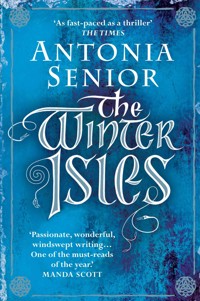
'One of the must-reads of the year.' Manda Scott I am Somerled. The summer warrior. What am I, if not a warrior? In twelfth-century Scotland, far removed from the courtly manners of the Lowland, the Winter Isles are riven by vicious warfare, plots and battles. Into this hard, seafaring life is born a boy called Somerled. The son of an ageing chieftain, Somerled must prove his own worth as a warrior. He will rise to lead his men into battle and claim the title of Lord of the Isles - but what must he sacrifice to secure the glory of his name? The Winter Isles is an astonishingly vivid recreation of the savage dynastic battles of medieval Scotland: an authentic, emotional, powerful read.
Das E-Book können Sie in Legimi-Apps oder einer beliebigen App lesen, die das folgende Format unterstützen:
Veröffentlichungsjahr: 2015
Ähnliche

















For Colin.
Coisichidh sinn eadar dà thonn far nach beir am muir oirnn.
‘Coisichidh Sinn’, Iain Mac a’ Ghobhainn
We will walk between two waves where the sea will not reach us.
‘We Will Walk’, Iain Crichton Smith
Part 1
1122 Somerled
How long had he been there?
Four days. A lifetime. Time stretched impossibly, bleeding slowly into the flat horizon. He sat perched on his rock, scanning. Nothing. A seal popped its head up and seemed to smile at him. How comical, to be stuck on this tiny rock. How absurd not to swim off, with a casual flick of a tail.
‘Bastard!’ he shouted at the seal. ‘Bastard!’ It slipped under the ruffled grey sea.
‘Sorry,’ he said. ‘Come back. Come back.’ He felt the weight of his solitude descend like a westerly squall.
The tide was out now, weed rippling across black rock where the sea had been. He should look for more food, though he had circumnavigated this fucking rock endlessly, stripping it bare. Limpets gouged out and forced down his gagging throat; mussels crushed under rocks so that the shells splintered into the rubbery flesh.
His stomach growled with hunger and nausea; he could no longer tell them apart. Most of what he had eaten had run right through him, streaming brown back into the sea.
He stood, the sudden movement sending him reeling like a drunkard. Light-headed with emptiness and misery. He could see right round the island, standing. A rock, really, with green scrub clinging obstinately to serrated black edges, and lichen creeping up the higher stones.
Boats had passed by. But they had been small craft – fishermen’s curraghs – hogging the shore like he should have done. Deaf to his wailing; blind to his waving. No deep-water craft. What would he do, anyway, if he saw a Norse knarr, kitted out for a sea voyage, its screaming prow beast turning empty eyes on him? Beg them for water and mercy, or sink into the hollows of the rock and pray they didn’t see him?
The boy had witnessed the Northmen’s mercy. Last summer, he and the priest were out hunting when they came across their leavings at a village high up the peninsula. A sheltered spot beneath a crag, with a waterfall streaming down its jagged face. They were far enough inland to fancy themselves safe, poor bastards. Stripped and flayed, burned and raped. Some left to twitch, skinless, in the sun’s heat while everywhere the midges swarmed and eddied in blood-drunk tides.
Afterwards, he had wept. Father Padeen had laid a hand on his shoulder and talked of souls and judgement. But the boy had wept for his own fascination with the horror, for the compulsion to look, to savour, where he should have been repelled.
Overhead, a gull shrieked. He looked across at the ruin of his boat, where it lay cracked open on the low-tide rocks like an egg. White water hissed around the split planks; the once taut hide of its skin was limp and wet, trailing in the waves.
He remembered the fierce joy of the wind at his back, and the island hovering beyond the steep curve of his bow wave. He remembered thinking, I can weather this, and the sense of mastery – the sea and the wind bending to him. He smiled now, to think of it. The gods were watching, laughing at his arrogance. Mocking him. The first scrape of wood on rock threw him to his knees. He held on to the planks as they broke and split. Spitting salt water and curses, the spray blinding him.
And now, he thought, here I am. Will I die here? Across the Sound he could see the mainland. On the cliff, crooked trees bunched together, reeling perpetually backwards in surrender to the wind. The slopes curled around the bay opposite, cradling the dunes that were so familiar to him. In that cleft on the left, he’d first kissed a girl.
They had played at going Viking, he and his friends, hiding and rolling through those sandy hummocks. He smiled, a little bitterly, to think of their innocence. Even the most inventive of the gang’s insect maimers could not have dreamt of the Vikings’ leavings in that village under the crag.
Standing, he swayed against the wind. He barely noticed it. A boy bred on this sea expects his hair to whip from his head, expects the sand to blow in his face like midge bites. He stretched and yawned, his dry lips cracking painfully. Perhaps I’ll die here, he thought. Thirteen years old, and to die in ignominy.
He imagined his bones bleaching white in the sun and salt spray, like the gannets on the beach or a lamb trapped in a fold of the rock. Would his soul float to heaven? Or to the warm hearths of Helgjafell, the Holy Mountain? Not Valhalla for him, at any rate. Not yet.
Sitting alone on his rock, he let his mind range across the gods competing for his soul: the white Christ of his father and the warrior lords of his mother. He was strung between two certainties, like linen flapping on the line. Hanging between two faiths, the boy thought, threw up the weaknesses in both. Perhaps bones were all that counted after all. They were the essence, the bare picked bones, and the rest so much weaving.
There was, the boy decided, only one sure, proven immortality. When a man died, he lived on in the minds of those who remembered him. Or in the songs of those who did not. But I have no songs, he thought, no name to skip down generations.
He shivered, lost in the misery of dying nameless.
‘Fool,’ he said aloud, shaking himself like a wet dog, and looked again for a ship. If I could swim, I would chance the rip tides, he thought. Better to die trying than slowly of the thirst and the boredom.
To the west, where the sun was beginning to set, some ugly clouds were bunching. He longed for rain, and feared it. He was cold enough out here at night without being wet. The golden autumn was a dry one – days between rainfall instead of the usual hours. He’d sucked the green stuff for moisture, but his throat was raw and his tongue lolled huge and dry.
At the top of the rock was a pool of water, which was once fresh, before time and the gulls had fouled it. He’d disdained it on the first day, and on the second. By the third he eyed it, and on the fourth he dreamt of it, for all that it was creamy with the birds’ dropping. Thirsty was not a word vast enough to cover it.
The seal’s head popped up in front of him, watching in that way they had. Wise souls trapped in playful bodies. It rested there, calmly bobbing, only its fathomless brown eyes and sleek grey pate above the waves.
‘Hello,’ said the boy. ‘I’m sorry to have shouted.’
The seal, speechless, watched him.
‘Answer me this, seal. Should I drink the droppings? What matters most? Pride or life? What is pride worth, if no one is watching?
‘The boys will call me Shit Guzzler. What if that becomes my name? Not The Mighty, or Fierce Beard, or Bloodaxe. And what if they don’t know and I do, seal? What matters most – the name you are given, or the one you call yourself in the night?’
He paused and held out a hand, as if trying to coax the seal further inshore. The seal floated casually on the swell.
‘But to die on this fucking rock through fear of name-calling seems a poor enough way to end it. That’s no path to Valhalla, seal. And we should do something with life, this life, before we seek heaven, should we not?’
The seal, seeming bored, slipped under the water, and the boy sat on his haunches, watching. Sure enough, the seal bobbed up again, a little closer, so that the boy could see the particular brown of his staring eyes.
‘So I ask you,’ said the boy. ‘Here I am on this rock. Am I the same boy as the one on land? Do the same codes apply if you’re wholly, entirely alone?’
The seal’s head seemed to jerk sideways, and the boy looked up to the horizon. The weather was swooping in on him. He could see the sun and rain playing tag across the sea, streaking it blue here, grey there, so that alone on the rock he felt like a spectator at the edge of the world. Clouds scudded overhead, dropping lower and lower until at last they engulfed him. Barely a rain, though; just a damping. A kissing rain, his mother called it. He raised his face to it and opened his mouth, letting the drizzle spritz his chapped lips. Barely enough for a swallow, but a blessed, glorious relief. He put out his tongue and recoiled from the pure salt of his falling tears.
~~~
They were following the gulls, the brothers from the Point. It was a desperate business to come this far out when the clouds were skimming the sea. But on shore there were eight hungry mouths open like gasping nestlings pushing them on to chase the herring.
They neared Scurry’s Rock, slow and careful, the younger conning from the bow. They had worked together too long for words. An incline of the head, a jerk of a finger was all it took for the elder to jiggle the steering oar. This patch bristled with underwater rocks, sharp and malevolent. The boat crept forward, close-reefed and cautious.
Inside a new cloud they blinked against the wetness, droplets falling on their searching faces like dew. The world seemed muffled white; the slapping of the sharp waves against wood, the rush and suck of the tide on the rocks, the cackling gulls. Beyond the dampened sound came something new. A thin bark, like a wounded seal pup.
The elder watched the back of his brother’s head as it cocked to one side. His hair was frazzled by the damp, springing in crinkled clumps from its long plait.
‘What—’ began the elder.
‘Shh.’ The younger shook his head, his impatience clear.
The barking fell into the silence between them. This time, the sound took shape. ‘Help. Help me.’ A thin, cracked whisper.
‘Jesus,’ whispered the younger.
‘Mary and Joseph.’ They both reached for the hollow at the base of their throats where Thor’s hammers used to lie, before the priest crushed them between two giant rocks.
When they hauled the boy into the boat, he gaped soundlessly at them, his parched mouth working. The younger brother held a flask of water to his lips, and the boy drank, spluttering fast.
‘Thank you,’ he said. The skin was drawn tight across his face. At first they only noticed his swollen, black lips, with cracks so deep you could see to the red beneath. But as he spoke, they looked at him, front on. The younger brother reached for his missing hammer as the boy turned his sun-bleached face on them. His green eyes held them, perfectly still. A man’s eyes staring from a sun-speckled boy’s face.
The brothers glanced at each other. The boy looked, like them, a half-blood. A foreign Gael. The reddish hue of the Gael leavened by the yellow of the north. ‘Take me to my father,’ said the boy. ‘He will reward you.’
‘But our catch, boy,’ said the elder, thinking of his wife. His brother smiled, thinking of her too, and the tongue on her if they came home bare-handed.
The boy stared at him; a level green stare.
‘Our catch,’ the elder mumbled again, drawing his arm around in a wide arc as if to point out that this was, in fact, a fishing boat. The boy ignored his arm, staring at him until the older man shrugged and looked at his brother.
The younger asked: ‘Who is your father?’
‘Gillebrigte. Son of Gilleadoman.’ They drew sharp breaths. ‘You know where to find him?’
They nodded in unison. The look on their faces, like brothers who had fished for herring and caught a shark, made him smile. His grinning seemed to unnerve them, so the boy lay down on the nets and turned his face to the sky, the tension and fear leaking out of him. His father’s name was like a talisman; a wind to carry him home.
He was cold, and wet and tired. The boat, a scrap of sail to keep her manageable, drifted into a patch of blue sea and sky. Lying on his back, he watched the clouds, higher now, stream through the sky. That one looked like a dragon, he thought, the wisping cloud trails its smoky breath. He heard the two men whispering to each other.
One, the grizzled elder, looked at some point behind the boy’s right ear. ‘We will take you, lord,’ he said. ‘Aye.’
The boy felt a blanket come over him. It was rough, and reeked of herring. He smiled as he closed his eyes, anticipating the warmth creeping back into his limbs. Safe now. A song floated across the waves from his past, the harmony sung by the creaking of the boat and the rustling of the sail.
His old nurse, with her thick accent of the Antrim glens, singing Patrick’s song, the deer’s cry:
I arise today
Through the strength of heaven:
Light of sun,
Radiance of moon,
Splendour of fire,
Speed of lightning,
Swiftness of wind,
Depth of sea,
Stability of earth,
Firmness of rock.
He heard speech, breaking through the remembered honey hues of his nurse’s song. The voice, harsh as pebble scratching on pebble, said from a great height: ‘And if you’re sleeping, little lord, how shall we name you to your father?’
‘Somerled,’ he said. ‘My name is Somerled.’
~~~
‘Lie back.’
‘Jesus wept.’
‘Boy!’
‘Sorry, Mother,’ he said, not sure if he was apologizing for the blasphemy, or the invocation of the Lord’s name.
Somerled watched her in the light from the fire as she bustled around. They were at the warm end of the hall, where the big fire was perpetually burning and pots of liquid hissed and steamed. He lay on a shaggy rug, and he idly picked and stroked at the strands, twisting and plaiting them.
Her hair was escaping, as usual, from its long plait. There was flour on her dress, and charcoal on her forehead. She was smudged and smeared, flustered and competent all at once. Her face, reddened from the fire and the thin threads of broken veins in her cheeks, was so familiar that, before the island, he had forgotten to look at it. But the days on the island seemed to have brought everything to a sharper focus, as if, before, he’d been watching the world through a skin of falling water. He looked at the yellow of her hair, and the freckles on her nose; the fresh lines scratched around her eyes and the crease in her forehead made from frowning – usually in concentration, not anger.
She muttered to herself in that way she had, a tangle of Gaelic commentaries, half-snatched songs in her native Norse, smatterings of proverbs. ‘Now, where was it . . . And the moon sang on the . . . Oh, here it is . . . Now then . . . And the great jarl came . . .’
‘Mother!’
‘Hmm?’ She stopped to stir something, and taste it. Turning to the slave girl, Aedith, she nodded. Aedith’s pale, thin face transformed itself with a smile so bright that Somerled felt an answering grin rising and his mother was moved to chuckle.
‘How long must I lie here?’
‘Until I and Father Padeen judge you are well enough,’ she said.
‘Can I not judge?’
‘No. Eat this.’
She handed over a bowl of stew, thick with meat and barley, and he fell on it. How he had eaten and drunk since the fisher brothers brought him home, carrying him up the stony beach at the head of the loch to the sound of screaming and weeping from the women. Her reaction to his being missing, and the shock of his return, was to feed him. She had slaughtered a hogget, and in the past few days they had steadily eaten it. First its livers, quick-cooked on sticks in the fire while the legs roasted and crisped. The smell filled every crevice of the hall with a promise so glorious that grown warriors near wept with hunger. Somerled slept, fill to sicking point with water from the burn, and the smell of the lamb sank into his dreams, so that he was riding a giant sheep through a bog when his sister woke him.
They had eaten the legs with the rump of his father’s war-band – the old and the tired ones – left here to guard the family while his father and the rest were off scouting.
He drained the last of the stew, biting a sliver of meat off the bone and sucking the marrow. He began to entertain the possibility that he might, finally, be full. Sated. Replete. He had thought, over the past two days, that he could never eat or drink enough; that he must be tied to this bed forever, swallowing and licking, quenching and devouring. But now, finally, he was full.
He lay back, warm and sleepy. His limbs felt heavy, as if they had finally lost that hollow brittleness bred by the island. His mother came over and sat next to him, crouching down on her haunches. She pushed his hair back from his forehead, and smiled. Near-death, the boy decided, was reason enough to allow this tenderness. At least when no one was watching. He grabbed her hand and kissed it. He could feel her bones shift under the skin as he pressed her hand.
‘I thought we’d lost you,’ she said.
‘Sorry.’
‘No matter, though you are lucky your father was not here. Who would be a woman, hey, my darling? We’re schooled from the womb to accept that our children may die, and I, who have escaped it so far, found that all the preparing is as naught. The world was made of grief when you were gone.’
She shuddered, and he saw that she was beginning to cry. She never cried, his mother. Not even in the days after they landed here first from Ireland, two years ago. The days when their initial rush at the usurpers had been rebuffed, and they had found themselves living in caves so cold that freezing water dribbled down the walls and icicles stood to attention at the entrance.
He squirmed at the sight of the tears.
‘Father Padeen says that children sit at Christ’s right hand,’ she said. ‘I told him he was using my grief to befuddle me with fairy tales. He said—’
‘And here he is himself,’ said Somerled, looking over her shoulder to the doorway, where the great bulk of the priest paused.
She turned and smiled at him, and he walked forward. Somerled could not fathom these two: priest and pagan. They spent their days wrangling endlessly. She clung to the gods of her grandfathers, resisting the near-universal pressure to convert. She was convinced that they had spoken to her, the gods, in a fever dream, when she was young and sick and expected to die. On her recovery, her faith had become unshakeable, despite the pressure of her mother and her husband, and the motley band of priests and wise men both had sent to fight repeatedly for her soul.
Yet they liked each other, Father Padeen and Sigrdrifa, the jarl’s natural daughter from Orkney. Somerled suspected that if ever he won the battle for her soul, Father Padeen would be disappointed at losing his sparring partner.
Father Padeen crouched by his side, sighing heavily as he eased into the squat.
‘And how is the Culdee himself?’
‘Don’t be filling his head with that nonsense, you oaf of a priest.’
‘What is a Culdee, Father?’ asked Somerled.
‘A holy man, boy. Who seeks to find God in the wilderness. Some live on islands like yours. For years, not just a few days.’
His mother grunted.
Father Padeen said: ‘They model themselves on the desert monks of the Great City.’
Somerled looked a question, and Padeen, his great moon face smiling, said: ‘Well, then. They believe, these godly men, that they can be closer to God in the quiet of the wilderness. Did not our Lord stay in the desert forty days and forty nights? The desert is hard to picture in this fruitful land of rain and bog. It is a place all of sand, where no rain falls. And the first and greatest of them all, boy, was St Simeon Stylites. He lived on top of a pole for forty years, praying and singing, and telling the Lord of his love.’
Fascinated in spite of herself, for she loved Padeen’s tales of life beyond the seas, Sigrdrifa listened. Aedith crept forward, keeping to the shadows.
‘A pole,’ said Father Padeen, ‘so wide.’ He held his hands as wide as a butter churn.
‘And how did he eat and drink?’ asked Sigrdrifa.
‘Forty years!’ whispered Aedith.
‘The people loved him, and they put food and drink in a basket and he hauled it up to the top of the pole.’ Padeen mimed the people watching the basket rising, necks craned. Aedith’s head followed, and she stared at the ceiling, where the meat hung in the smoke reaching the rafters, her mouth a great round O, the awe as real as if Simeon himself perched in the beams like a pious bat.
‘And then,’ said Sigrdrifa, ‘he shat on their heads.’ She laughed, a great roaring laugh that drew Aedith and Somerled in, and even Padeen’s face cracked a little, though he tried to look severe.
‘You are hopeless, and faithless, woman,’ he said.
‘True, true,’ she said. ‘But what a ninny. What a berk, sitting up there on that pole for forty years. If that God of yours has any sense, Padeen, he was pissing himself laughing. If you can show me proof that your tortured Christ found it funny, that stupid man wasting his life praying on top of a pole, then I will let you put the cross on my forehead.’
He spread his hands in defeat, and she moved back to poke at the fire, still laughing and muttering. ‘What a fool, what a fool!’
Padeen shook his head in exaggerated despair and turned to Somerled.
‘We were worried, boy.’
‘Sorry.’
‘No matter. And what have you learned?’
‘Learned?’
‘Yes. For what use are misadventures if we do not learn from them?’
Somerled thought for a moment. ‘That prayer comforts us. That I must not always trust my own judgement. I thought I could weather the island, and I was wrong. Desire to do it clouded my weighing of the risks.’
Padeen nodded. Silently the boy added: That left alone I am not as brave as I thought I was. That if no one watches, I weep like a girl. That I want songs to be sung of me. That fame and bravery go hand in hand; the two cannot exist without each other.
Aloud, he said: ‘But most of all, Father, I learned that I must learn how to swim.’
~~~
Padeen pulled the girl out from behind his back. She was, at first sight, unpromising.
‘They call her the Otter,’ said the priest.
Somerled eyed her. She was small and red, and fiercely freckled. One of the little ones he paid no heed to. Despite his father’s lack of progress in subduing his birthright, his followers remained with him, their families deposited here in the safest of the glens. A gaggle of children ran wild under the benign hand of Father Padeen, the distracted mothers and the few slaves left of those they had brought over the sea. Somerled ignored the littler ones, mainly. He ran with the boys, and, when they would let him, the older girls. This little sprite was one of his younger sister Brigte’s friends.
‘Your father?’
She twisted a little, and he thought her shy until he realized that she was squirming from the priest’s grasp. Level-eyed, she said: ‘My name is Eimhear. My father is Fhearghais, son of Fionn.’
He nodded. One of the lordless Antrim warriors who were following his father more in hope than expectation. If, by the grace of God, Gillebrigte won back these lands, despite the odds against him and despite, the boy whispered to his private heart, his weakness, then they would be rewarded. In the meantime, this little freckled otter was wearing a gown too small and a cloak so patched you could not tell what colour it started at. About nine, he thought. Ten perhaps.
‘And you can swim?’ he asked her.
‘Aye,’ she shrugged.
‘How?’
She raised her shoulders again. ‘If a seal can do it, how could I not? The daft creatures.’
Father Padeen laughed. ‘Watch this one,’ he said.
Together they walked towards the shore. With no preamble, she shrugged off her cloak and her dress and stood in her undergown, wind-whipped and tiny against the vastness of sea and sky, smudging together in shades of grey. She glanced at him and threw a silent challenge, then turned and ran straight at the surf. She skipped over the first few waves, and flung herself forward under the biggest, bobbing to the surface with an inarticulate shout to the sky.
‘Jesus.’
‘Somerled!’
‘Sorry, Father. Are you coming?’
‘If the good Lord had wanted us to swim, would he have walked on the stuff?’
Somerled stripped down to his tunic and started to walk in. ‘God’s bones, but it’s cold!’
Father Padeen began to laugh.
‘Go quicker!’ shouted the Otter. ‘It’s the only way.’
‘Wait until it reaches your balls, boy,’ said Father Padeen behind him, through great sobs of laughter.
He’s right, thought Somerled, fighting to keep going. Lord, but he’d like to run out again.
With the water at waist height, the pain of the cold began to ease.
‘Like this,’ she said, showing him. He flung himself at the water, only to sink in a whirl of bubbles and fear.
He felt a small hand grabbing his chin, pulling him up. She wasn’t laughing. Her fine-boned face was serious, contained. ‘Let’s float first,’ she said. ‘Imagine you’re made of driftwood. You’re just trying to bob. On your back, like this.’ Her freckled nose poked up from the water as she rippled on the waves. Clear brown eyes appraised him.
She held his head, and he lay back in the water.
‘Trust me,’ she rapped as he began to panic and twist. ‘Trust me. Just let every muscle relax. It only works if you give in to it. Listen to the sea. Can you hear it?’
He heard the scrape of the pebbles beneath the waves, and the rushing hiss of where the water met the land.
‘Lie still, Lord.’
She let go, and for a moment he felt suspended between sky and sea, his body undulating on the swell like seaweed. Then the strangeness overtook him, and he began to tense, caught between laughter and fear. He lost his sense of balance, his closeness to the sea, the waves. He began to turn and sink, the bubbles rising and the salt water rushing up his nose.
She pulled him up again, and this time she was smiling. ‘Do you fight better than you float, Lord Somerled?’
‘I find floating doesn’t answer when the swords are singing,’ he said, liking her. He wanted to keep her smiling, he realized. This strange otter child, with her solemn eyes and shining smile.
‘Shall we try again, Lord?’ He nodded and lay back, her small hands holding his head above the cold water.
~~~
By the end of that autumn, he could float unaided, swim confidently as long as the tide was with him and even, when the spirit took him, turn icy somersaults and come up laughing. The Otter liked to dive beneath the waves and jump up behind him when he was not expecting it. She turned back somersaults too, staying under to walk on her hands across the shingle, only her skinny white legs poking up above the waves. Sometimes she climbed up on to his shoulders and plunged into the water head first and arms extended.
They liked it best when the seals came to play. Soon Somerled was comfortable enough to swim beneath the water, his eyes open and salt-stung, watching the irresistible rippling of their underwater bodies. They would come close, the seals, so close. He watched the Otter once, treading water, as a young pup came so near their noses were almost touching, before it swam away and left her laughing so hard she had to fight to float. The seal would laugh if it could, he knew.
They swam until their lips turned blue and the shivering became uncontrollable. The evenings were the best time, after his lessons and her chores. He soaked away the Latin in the cold water, forgot the roll call of the ancestors and the great reams of poetry, the swordplay and archery. She left her spindle, forgot the hated loom; forgot even the plaque made of whalebone which she used to straighten the linen as it lay in damp mounds from the washing.
Until, at last, the days grew shorter and it was too cold even for the Otter. Then they had to make do with talking instead. They hid in the dunes, bunkering down where the wind did not reach. It was better to hide; the boys did not understand his friendship with the little girl. But they did not know her fierce, searching mind. They did not know that within the small freckled package sat a questing soul so insatiable for life, for knowledge, for experience that Somerled felt humbled when he allowed himself to think of it.
They travelled, those two, hunkered down in the hollows. They went to Vinland, the fabled land so far beyond the horizon a man could die of hunger on the way. They went to Miklagard, the Great City that the Franks call Constantinople, sharing tales of emperors and intrigues, of coups and decadence, of pleasure gardens and sewers. They tried to make sense of it by looking at the stars, that all those people could crowd into one small place, living on top of each other, side by side. They travelled to the lands of the Rus, and to the far north, where white bears ruled. They talked of Rome; of the fountainhead of their faith. And even of Jerusalem, where the Lord pulled down the Temple. But most of all of Miklagard, where the emperor ruled from a golden throne.
‘One day,’ he said. ‘One day, I’ll take you.’
And she looked at him, fierce and trusting all at once, so that he swelled with the pride of being the anointed one, the one who could take her roaming.
In the spring, their thoughts turned to the water again. One night, on the beach, waiting for the whistle home to bed, she said: ‘My father says that I am becoming too old for the swimming.’
‘You’re a scrap still, Otter. Tiny.’
‘He hates that I’m the Otter. Says a woman must stick to her given name.’
‘You are not yet a woman. Besides, men find their own names.’
‘Men find their own everything.’
‘Would you rather be a boy, Otter?’
‘Of course. Foolish question.’
‘Why?’
‘Who would not want to settle their own fate?’
‘I cannot, and I am a boy.’
‘Oh, I know. Poor, poor you. To be the chief’s son. To be the chosen one, the tanist. To be put in the way of fame and glory and riches.’
‘And failure.’
‘Pah. That’s what worries you? Don’t fail, then.’
‘What of you?’
‘They will marry me off to some fool who goes off raiding, leaving me at home to pray he is knocked on the head, while I spin and weave and pickle and smoke, until at last they bury me with my spindle, so I can spend eternity as well as this life being bored witless.’
The moon was bright, and he looked sideways at her. She scanned the skies with restless eyes. She took him off guard, this imp. He could not always tell when she was speaking seriously, or to amuse herself. She was so unlike the other ten-year-olds. He thought back to himself at ten; how simple and uncomplicated seemed this world, bordered by sea and moor, with all the joys in between.
He tried to explain it to her. How, that now he was growing, the world was becoming troublesome.
‘Is it me, or is it the world? Which is becoming complicated?’ he asked.
She turned her face to him, smiling and sad all at once.
‘It’s you, stupid. You’re learning to see the shadows.’
Eimhear
Last night, I thought about being young. I remembered Somerled promising to take me to Miklagard. How he turned to me in the darkness and said it with a solemnity that made sense under the stars. ‘I will take you,’ he said, and I believed him.
A blessing on that little freckled sprite that was me. One thousand kisses for her frowning brow; her trusting face. I can see her in my daughter. I love my child in her every mood, but the one that makes me jolt, that makes me think of falling backwards from a high cliff, is her serious face. That point of concentrated innocence. Absorbed in her letters, or her wool-work, she pushes her hair from her eyes. A single line, off-centre, creases her forehead. She is unaware of me, of the background hum of wave and wind. There is only the quick working of her hands and a quietness of soul. Her mother, standing unnoticed behind her, rages at the trials she will face, the scratches to skin and heart, the violent intent of the world to crush her grave joy.
Breathe, Eimhear, breathe. Perhaps she will be unscathed. Perhaps she will sail through the storms flecked with gold, the wind behind her, dolphins dancing in the bow waves. Perhaps.
What made me think of Somerled’s promise? We had a visitor last night. A pilgrim on his way to Iona. It was late and rough-waved when he arrived, and he stayed the night. Fussed over and cosseted by the women, who were desperate for news, for stories, for anything he could give.
He was old, tanned bronze from a stronger sun than ours. He had the unwarranted pomposity of a man who thinks himself clever among the clattering of women. But, after all, he had come from Miklagard. He was an envoy for the king over in Alba, he said. Sent to treat with the emperor. He shifted in his seat as he said this, and I caught Eua’s sliding eyes and we tried not to laugh openly at him. He was a servant to the envoy perhaps. Rough hands; a creaking way of talking, like a man unused to being heard.
Still, he had been to Miklagard in the past year. I have been to the beach on the far side of the island; and that only once. We listened to him talk, threading gold in our heads from his halting weave.
He told us of the size of it – he said it would take a day to walk from the first house to the last; and the houses all crowd on top of each other. Families live above families above families. We stared in wonder, and I tried to imagine it, but I couldn’t. How could that be? I looked up into the rafters and imagined a whole other floor beyond, and another beyond that. Like ants, they must be. But do they know themselves ants, or do they think themselves gods? If I lived in Miklagard, perched on top of other people’s souls, I would think myself a god.
He told us of gold, and silks. Of strange beasts with green spit and humped backs. He told us of men with black faces, of priests and warriors. Then he said: ‘There is a princess, there, named Anna. She is an abomination.’
How so? we asked, thinking salacious thoughts of a high-born whore. It was long since we had seen a man worth tupping.
He leaned forward, looking around at us, enjoying the pause. Doubtless imagining himself as the tupper.
‘She is more learned than any man in Christendom,’ he said, in a low and growling voice. ‘She fancies herself a philosopher. What is a man? she asks. What is God? She knows more about the stars than the priests. She does magic with numbers, thinks herself a healer. She has seven tongues, they say. She reads old poets; stuff where heathens boast about their false gods.’
He built each sentence on the tutting of the women, waiting for their disapproval before starting the next.
‘She is not even ashamed of this. She boasts of it. She parades herself as a scholar and a teacher. She runs a hospital, where she tends to sick people, even men.’
Exhausted at last by his invective, he sat back. I stood then, disorientated, a pitcher of hot water in my hands. I swayed and quivered with the urge to throw it at him, to douse the irritating, pompous bastard. I moved forward, feeling like the champion of this foreign princess, as if her honour rested with me. Lord help me, I would have done it too. But Eua, sensing something in my mood, stood suddenly between us, hands on ample hips.
I ran outside, pulling on my shawl, into the howl of the gale. What was I thinking? Rage against the pilgrim, though he was beneath it. Rage against her, too. That learned princess with slaves for her chores and a free mind that roamed and dug and roamed some more. A furious, violent envy. I looked behind to the hall. Dimly lit, a star-prick against the cavernous horizon. I felt the familiar press of hill and sea and sky, and thought that this time – this time – I would be crushed.
I found a hollow in the hill, curling myself into it, out of the wind. And I let myself think of Somerled, and when we were young.
~~~
‘Father, what are the stars?’
‘God made them, Eimhear.’
‘Yes, but what are they made of? Why do they shine only at night?’
He was combing out his long beard, and I saw the irritation in his face. I moved closer. ‘Let me do it.’
He grunted, and I climbed on to his knee, facing him. His face softened, as I thought it would. I took the comb and pulled it through the long hair, with its streaks of auburn and grey.
‘Plaited?’
He nodded.
I divided the hair into sections, and set to plaiting it. I was awkward with the maths of it; three strands, two hands. His eyes were smiling now; I soothed him with my incompetence.
‘Where do they go in the day?’
‘Jesus, Eimhear. Who knows? Maybe the fairies steal them. Why does it matter? It’s enough that they are there. It is enough that they help us know which way to go.’
‘Yes, but—’
His face hardened again, and I quietened. ‘No matter, Father. There, done.’ I hopped off his knee again, looking at his plaited beard. Lord, but it was rubbish. One thick, proud plait and one little one, like a rat’s tail.
‘I’m just . . . going walking,’ I stuttered.
‘Don’t be bothering the priest again while the boy is at his lessons.’
‘They won’t mind.’
‘Aye, but I do. Why can’t you be friends with the other girls?’
He pointed over to the long hall, to where two girls my age sat with their backs against the wall. I liked them well enough, but they would care less than Father what the stars were made of. I had to dip in and out of their talk about boys and gowns and marriage prospects – immersion in it would make my ears bleed.
‘I am.’ I ran over and kissed him. ‘I won’t be long.’
~~~
There was a moment in the walk up the hill behind the hall I always loved. The ground flattened and then sank down for ten paces, as if you were walking across the bottom of a bowl. In the hollow, the wind couldn’t find you. In the summer, the sun caught in the depression. You could lie in there and feel it seeping through to your bones; until the midges found you, of course.
They say that Somerled’s father once found himself betrayed by a man. He hunted him down and buried him to the waist in a sheltered spot, and let the midges turn his brain to a single scream.
The spring was the best, for lying in the hollow. No insects, just the trapped sun. You couldn’t see or be seen there, either. I loved that moment of feeling yourself alone. No eyes watching, no tongues gossiping, no close press of the jumble of families living all together hemmed in by hill and sea.
I walked on, up the steep back of the hollow. I could see the hall again, and some of the cleansing joy of being alone left me. On I went, following the path of the burn upwards.
I could hear them before I could see them. Padeen’s big laugh rumbled over the heather. I had a fear they wouldn’t want me, but when I came closer, they turned and smiled. Somerled was sitting on a wide rock, and he shifted over, the invitation clear. I ran the last few paces.
‘Father Padeen, what are the stars?’
‘And good morning to you, little Otter.’
‘It’s been burning me.’
Somerled grinned at me. ‘Go back to your weaving, little girl. Ow, you can’t hit me, I’m the lord’s son.’
‘You’re a fool. Father, please.’
‘Well, child. No one knows for sure. God’s mysteries are profound. They move across the skies. You must imagine a series of celestial spheres. The stars, which shine through God’s will, are set in these spheres like jewels in a torque. As the spheres move, the stars move.’
‘But who moves the spheres?’ asked Somerled.
‘Well, I corresponded once with a man who believed that they were moved by the angels in the Book of Revelations. But in truth, we do not know. God makes them move, and that is as far as we can go.’
I tutted, impatient with him.
‘It’s the answer to everything. God made it so.’
‘And that, my child, is because God is the answer to everything.’
Somerled thought about this. ‘But Father, even though that is true, you can see why Eimhear finds it frustrating. God made it so is the answer when we are ignorant, just as often as it is the answer when it is the true and only answer.’
‘But what else do we have? Life is frustrating, child.’
I knew that, but I said: ‘That’s the type of thing adults always say. Life is frustrating, life is not fair. Get used to it. Well I don’t want to. Why can’t we shape our own lives so they are not frustrating, so they are not unfair? And Father, if you tell me it is because God’s ways are mysterious, I shall jump in the burn.’
He laughed. ‘Well I shall remain silent then,’ he said. ‘Eimhear, we were talking of mathematics when you arrived. You may join us, if you forget to mention it to your father.’
I nodded, and settled into the borrowed lesson. Later, we walked back down the hill, the three of us, still talking. Dusk was falling, and the smoke was rising from the long hall. I found myself glad to be home, impatient to fight for my place by the fire and hear the gossip of the day. We raced the last yards, Padeen’s laughter chasing us down the hill.
~~~
He was rotten at swimming, at first. He didn’t always have the patience for learning difficult things. He wanted to be the best too quickly. The quickest, the fastest, the bravest. When he was not any of those things, he dropped out early and made a joke of it. When he was young, people underestimated him, I think. They thought him flippant. They thought him lightweight. They didn’t always see him coming.
With the swimming, however, he was determined to learn. He didn’t speak, often, of what happened to him when he was missing.
It happened before we were friends, but I felt his absence. Who could not? He already had a presence, even so young. When he was in a room, the air found him first. When he left, the light leached away. It was not just me who felt it. At least, I think not.
When he was missing, his mother walked the shore like one of the lost folk, holding in her giant scream of despair. The rest of us did the endless sums. Two days, three days, four. If he was wrecked on the mainland, how long would it take to walk back? How long could a body go without water before it shrivelled? Five days, six. Still she paced. I was envious of him, even when he was thought lost forever. It seemed to me, then, the most glorious thing in the world to have a mother’s mourning.
When they carried him up the beach, weak and pickled by wind and sun, he was smiling for her alone.
I asked him about it, later. Out there on the rock was scouring, he said. He had thought he would die, but that was not the worst of it. It was dying without a name that bothered him. Dying small and insignificant, so that, a hand-span of years later, only his mother would remember him. I would remember you, I told him. He smiled at me, and even then I knew that it was not enough for him. Not enough to be mourned by the woman who bore him and the girl who loved him.
The talks were snatched things, at first. We practised swimming until our lips were blue.
‘Hold still,’ I said, letting him go.
He sank, spluttering. I wrenched him up to the surface.
‘How am I ever to make you float?’
‘And why must I float, when it’s swimming I want to do? Jesus, I’m cold. Do you never feel it?’
I shrugged. ‘You have to float. It’s the basis of all of it. If you can’t float, you can’t swim.’
‘It’s all the staying still.’
I laughed at him. ‘It would be good for you to be still, sometimes.’
‘Show me again.’
I upended my legs, wondering not for the first time how something so easy, so very like breathing, could be so troubling. I loved to float. Finding the exact pitch of stillness within the muffled ruffling of the waves.
‘Now you,’ I shouted. My ears were deaf with water. I was absorbed in the undulation of my limbs.
‘I did it! I did it! Jesus, Otter. You weren’t even looking.’
‘Do it again, then.’
‘It’s too cold. Besides, I might not be able to.’
I splashed him. ‘Once you have done it once, you can do it again.’
He looked at me with his green eyes smiling and his bleached hair slick against his forehead. There was such trust in his expression it made me breathless.
Quickly he kicked his legs upwards and made himself still in the waves. I pushed myself up and next to him, reaching for his hand to keep us lashed together. Above, the different greys of the sky played tag. Rain threatened. We floated, Somerled and I.
1124 Somerled
The boy stared. Somerled stared back. Kill him. Do it. Oh Lord, help me kill. Mother Mary, give my sword arm strength enough. I am Somerled, the summer warrior. Deep thinker. Man-killer.
His legs began to quiver, a quick, uncontrollable pulsing that took him by surprise. It emphasized the curious detachment he felt of mind from body. While his mind barked orders and mumbled prayers, his body ignored the summons. It shook and procrastinated, fumbling and trembling. And there was the boy, lying still, staring.
He was a similar age. Fifteen, say. Clear-eyed. He had sleep clinging to his eyelid on one side, and smudges of dirt across his forehead. A snot trail from nose to chin, and reddened nostrils. He has a cold, thought Somerled. Mother would counsel a basin of hot water, swirled with honey. But a poke in the neck with a sharp sword would do the trick. He grinned, then retreated from the joke. Ashamed.
Perhaps it was his first time with the war-band, too. Perhaps this morning he too had sharpened his blade and practised his throwing, polished his helmet and checked his shield. Each detail necessary, and yet also a prevarication, a distraction from the essential business of being terrified. Perhaps he too had walked with exaggerated confidence, looking slant-eyed at the warriors to the side of him to check he was not dreaming a terrible and longed-for dream.
The boy looked whole. Unconcerned, almost. As if, walking on a warm day, he’d found a perfect bed of springy heather and settled down for a sun-baked nap. Yet further down, his hands scrabbled at his leaking stomach, as if he could repack the spilling, stinking mess and wish the skin whole again. Somerled looked down at his reddened blade, astonished at the colour. The longed-for, troublesome, vivid redness of it.
Why did God make blood red? he wondered. To bring out the contrasts? To signal that on the inside we are fire and heat, whatever our outward dull show? If blood were beige, like skin, would it be so shocking to see it spilt? Is it the colour that shocks or the fact of the blood? Why does is dry to be dark and dull?
Jesus. Get back to the task in hand. Somerled looked at the boy. That expression in his eyes, then. Was it fear, or incomprehension? Was he already halfway to eternal bliss, so that the sharp thrust of a sword would just help him along? Like the gust of a land breeze filling a limp sail, or the bite of oars as the caller wound up the pace. That was all. A sharp prick and it would be done. Over. A kindness.
Jesus. Mother Mary. St Colm Cille. He was whispering their names over and again, without registering the nervous fluttering of his lips.
He summoned his will. Commanded his body to obey. He changed the grip on his sword, ready for a downward strike. He nestled the point in the hollow place at the base of the boy’s throat. An inconsequential image came to him of Aedith, the slave girl, and how she arched her neck when he entered her, pushing the back of her head into the sand. The hollow flattened out as her neck stretched, and the contours changed, like dunes shifting in a gale.
Somerled shook his head. He hoped the boy would give him a sign: that it was all right – he was ready. That the angels were already singing lullabies and picking him off the bloodied peat. The boy’s eyes narrowed as if suddenly registering Somerled’s existence, and he jerked his head away. Too soon. Somerled wasn’t ready, and the point of the sword scored the boy’s neck, drawing beads of crimson blood across his white skin. A necklace.
‘Just do it, boy.’ Aed. The champion. He rasped it close to Somerled’s ear, his sour breath strong enough to overpower the stench of the boy’s inside-out stomach. ‘Quickly. Like a sheep.’
Like a sheep.
Somerled turned to glance at Aed. He saw the man’s great shaggy mass of hair, and the unkempt beard and the battle-mad eyes. He saw, as if at a distance, the champion watching the lord’s son, to see if he had the balls to take his first kill like a warrior. He imagined the Otter’s contemptuous face, questioning the code, mocking the men. She was right, perhaps, but . . . I am Somerled. The summer warrior. What am I, if not a warrior?
He changed the angle of the sword, and forcing his trembling legs to a kneel, he pulled the blade fast across the boy’s throat. He heard the boy gurgle and choke, and watched the blood spill. Like a sheep.
~~~
In the long hall, the warriors’ spears beat the time as they growled the songs. And at his father’s right hand, Somerled sang too, giddy with joy and mead. They sang of St Colm Cille, who’d given them the victory.
‘Leafy oak tree, soul’s protection, rock of safety, the sun of monks, mighty ruler, Colm Cille!’ They spat the words out, roaring through the epithets. The steady thump of the spear shafts on the hard-packed floor paced out the words, danced with the flames, pulsed with his heart, until he was lost in the roaring.
But in his head he sang his own song.
I am Somerled, summer warrior, man-killer, seal-tamer.
Over and again he repeated the refrain, until it became fixed and true as the North Star.
I am Somerled, summer warrior, man-killer, seal-tamer.
Suddenly they roared his name. The drinking horns were raised, and as they drank to his first kill, he saw the Otter looking at him from the far side of the hall. Something in her expression sobered him. He looked beside him to his father’s mead-washed face. His mouth hung open, laughing at some joke told by Iehmarc, his steward. Somerled saw the man’s mirthless smile, as Gillebrigte creased with laughter. He could see a sliver of gristle caught in his father’s far molar, and he turned away. The sudden sobering came in a rush of despondency that left him gasping for air in the hot, smug hall.
And what was it, after all? Cattle-rustlers, and not many of them. What was this frenzy of back-slapping, of congratulations? As if they had taken on the Fianna and beaten back the giant-slayers themselves.
How long had he known that his father was going to fail?
He remembered the war-band that had set off from Ireland; the galleys full of warriors, packed in like garrulous herrings. Their boasting filled the air, turned the clouds blue with curses and the sun pink with shame for their talk of the women they were leaving. The gulls shrieked overhead as if responding to the callers, a celestial waulking song, and the oars bit eagerly at the sea.
How passionately he wanted to be like them, the eleven-year-old boy, his blunted child’s sword hanging pathetically at his waist and his small fist pounding the planking in time with their roars. He remembered setting his high treble in competition with the deep basses, singing the rowing.
The fifteen-year-old Somerled looked back with fond contempt at his younger self.
His father. Gillebrigte of the Caves. He couldn’t shake the name. They had lived in the caves when they arrived on this coast, after their initial rushed assault had failed and they were beaten back into the hills. But they had carved out this sliver of territory, and built a hall. A small victory, sliced from the dreams of conquest and glory.
Gillebrigte looked the part, at a distance. With his sandy hair and firm chin, his broad shoulders and fine air. His unmistakable air of a man who should be heroic. He swaggered, and he talked and he bragged. In the practice, he was deft. His sword edge was blurred as it moved; his parries were firm, his attacks fierce. He could drink, and eat to keep up with huge Aed and his bottomless stomach. Several of his natural children ran around the hall; Gillebrigtes in miniature.
So why then did Somerled find that he pitied him? It was a slow burn, this pity. It had begun around the time of his rescue from the island, when his father and his war-band returned five men lighter with nothing to show for their trouble. And over the years, as the numbers began to shrink, and the victories came even less frequently, as the dream of recovering their ancient birthright receded, and as Somerled grew taller and wider, the feeling could not be mistaken.
He could no longer blame indigestion for his unease when his father called on Alfric the Bard to sing his second-rate songs about their ancestry. He watched his father’s face in the firelight, listening to the roll call of heroes stretching back to Colla Uais and the high kings of Ireland. Even the bard, thought Somerled, was rotten. A man of the clan that served their erstwhile host, the lord of Antrim, he had followed them across the sea, professing a love for adventure, suppressing his lack of any discernible musical talent. A man trapped by his birthright.
Somerled could no longer blind himself to the signs of his father’s inadequacies: the hesitation before the orders, the scrabbling at small details, the disastrous failure to play his men to their best ability. Gillebrigte misread them at every turn. He mistook sycophancy for cleverness, disagreement for rebellion. He was too prickly and yet too hearty, with forced attempts at overfriendliness that fooled no one but himself.
Soon he would have to admit that his self-appointed mission, which he had laden with boasts and empty prophecies, was a failure. That he, Gillebrigte, son of Gilleadoman, was a failure. That he was no Fionn mac Cumhail, nor even close. Just a small, unsuccessful man living in a leaky hall with reluctant retainers who were themselves out of options.
There were just twenty left of the forty who had set out from Ireland four years before. Gillebrigte of the Caves. It was a good name, for a man backed into a corner. A man riven by the chasm between his ambition and his abilities.
But Somerled owed him loyalty. And, he supposed, love. He watched his father with the little bastards, throwing them skywards until they giggled, tickling them, chasing them. It brought back memories as soft as dreams of his own infant-hood, before all the expectations of the clan fell on him – the only true-born son.
He turned away from his father, to Father Padeen on the other side. Padeen had welcomed him back from his first kill with a smile and a pat, and a reserve that had seemed excessive to the jubilant, elated boy. Now, with the warriors’ roaring turning sour for him, he sought the priest.
He leaned across to him, putting his head close to the priest’s ear. Without preamble he said: ‘What makes a leader?’
‘Lord, boy. And what a question. The ability to win fortune and glory for his followers.’




