


6,99 €
Mehr erfahren.
- Herausgeber: Corvus
- Kategorie: Für Kinder und Jugendliche
- Sprache: Englisch
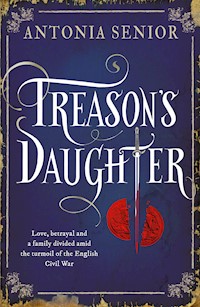
Love, betrayal and a family divided amid the turmoil of the English Civil War. London, 1640. Fifteen-year-old Henrietta Challoner dreams of adventure, of a life lived at the gallop, of the opportunities afforded to her brothers, Ned and Sam. She cannot know how devastatingly real these dreams will become, as the country slides towards vicious civil war... The crisis threatens to tear Henrietta's family apart. As religious and political tensions spill into the streets, they all must decide what comes first - their family, their country or their desires. But while she strives to maintain the peace at home, Henrietta becomes embroiled in a deeper plot: to hand London over to the King.
Das E-Book können Sie in Legimi-Apps oder einer beliebigen App lesen, die das folgende Format unterstützen:
Veröffentlichungsjahr: 2014
Ähnliche












![Tintenherz [Tintenwelt-Reihe, Band 1 (Ungekürzt)] - Cornelia Funke - Hörbuch](https://legimifiles.blob.core.windows.net/images/2830629ec0fd3fd8c1f122134ba4a884/w200_u90.jpg)




Treason’s Daughter
Antonia Senior is a writer and journalist. After many years at The Times, she is now freelance. She writes columns, book reviews and features for various national publications, including The Times, the Guardian and the Financial Times. Antonia lives in London with her husband and two children.
Published in trade paperback in Great Britain in 2014 by Corvus, an imprint of Atlantic Books Ltd.
Copyright © Antonia Senior, 2014
The moral right of Antonia Senior to be identified as the author of this work has been asserted by her in accordance with the Copyright, Designs and Patents Act of 1988.
All rights reserved. No part of this publication may be reproduced, stored in a retrieval system, or transmitted in any form or by any means, electronic, mechanical, photocopying, recording, or otherwise, without the prior permission of both the copyright owner and the above publisher of this book.
This novel is entirely a work of fiction. The names, characters and incidents portrayed in it are the work of the author’s imagination. Any resemblance to actual persons, living or dead, events or localities, is entirely coincidental.
10 9 8 7 6 5 4 3 2 1
A CIP catalogue record for this book is available from the British Library.
Trade paperback ISBN: 978 1 78239 264 4 E-book ISBN: 978 1 78239 265 1
Printed in Great Britain.
Corvus An imprint of Atlantic Books Ltd Ormond House 26–27 Boswell Street London WC1N 3JZ
www.corvus-books.co.uk
For my mother
Contents
Part One
Chapter One
Chapter Two
Chapter Three
Chapter Four
Chapter Five
Chapter Six
Chapter Seven
Chapter Eight
Chapter Nine
Part Two
Chapter Ten
Chapter Eleven
Chapter Twelve
Chapter Thirteen
Chapter Fourteen
Chapter Fifteen
Chapter Sixteen
Chapter Seventeen
Chapter Eighteen
Chapter Nineteen
Chapter Twenty
Part Three
Chapter Twenty-One
Chapter Twenty-Two
Chapter Twenty-Three
Chapter Twenty-Four
Chapter Twenty-Five
Chapter Twenty-Six
Chapter Twenty-Seven
Chapter Twenty-Eight
Chapter Twenty-Nine
Chapter Thirty
Chapter Thirty-One
Chapter Thirty-Two
Chapter Thirty-Three
Chapter Thirty-Four
Chapter Thirty-Five
Chapter Thirty-Six
Historical Note
PART ONE
CHAPTER ONE
January 1640
HENRIETTA KNOWS WHAT IS COMING. SHE WATCHES THE candle’s shadow dancing on the dressing table. She looks for the familiar patterns in the wood panelling on the walls, the knotted whorls that can be made into maps. Concentrate, she tells herself. Find the mountains, the valleys, river gorges, the great seas that stretch to America. But she cannot do it; she cannot block out the woman behind her and the eyes she is trying to avoid in the mirror.
Here it is, the relentless voice. Her mind scuttles sideways, trying to escape. But she is pushed into the chair by a firm hand, her limbs made heavy by a familiar misery. At last, as she always knew she would, she meets the eyes in the glass and watches them widen with triumph.
‘It was just there, young mistress, in that bed,’ says Nurse, jerking her head backwards to the bed behind them. ‘Oh, how she screamed and wailed, your mother. Didn’t bear it well, not like some I know. Hours she was at it, a’screaming and a’crying, and your poor father pacing up and pacing down while the screaming ran up and down the whole house. Never heard the like, we hadn’t. And then at last the middy came down to tell him – a boy! She shouts it out. “A boy!” he shouts, and his happiness ran up and down the corridors where the screaming had been afore.’
She is well practised in this bedtime story, and she winds herself towards the crescendo. Henrietta tries to escape again, into the gnarled patterns on the wall. That pitted panel is the desert, Sam says. Uncle crossed it on a camel, which swayed like a boat and turned to spit at him. Great green spit that slid down his face, Sam said, giggling. Henrietta smiles at the thought of his laughter. Nurse sees the smile in the mirror and she responds with a ferocious pulling of the hairbrush that snaps Henrietta’s head backwards.
Leaning in closer, so her breath creeps on Henrietta’s ear, she says: ‘And they thought she was fine, your poor mother, and delivered of a lil’ boy. A lil’ boy, Samuel, to grow in the shadow of his big brother, Edward, God bless his godly heart, and be a great merchant like his old daddy, with a doting ma to love him and a’cuddle him on his way. But something wasn’t right. “How’s my wife?” your poor father cried, and he saw the answer on the face of the middy, and he ran and knocked on the door, hollering for his love.
‘The screams didn’t die like they should have done, but stretched and stretched on and on, till your poor daddy was sobbing in sympathy, and his new minted boy all forgotten in a corner. And then they said to him, “There’s another coming”.’
Nurse stands up and moves over to the bed, pulling back the blankets. She gestures impatiently at Henrietta, who walks over to the bed and climbs in. Nurse pulls the blankets up around her, tucking them under her chin. She bends down and kisses Henrietta’s forehead with cool, dry lips. Bustling around the room, snuffing out lights and folding up clothes and prodding at the fire, she finishes her bedtime story.
‘“Another?” your poor daddy shouts. “But I got me beautiful boy and I want me beautiful wife.” But then there came another scream, a different one. The boy twin came in the world with a big smile on his little face, but this one came out crying and screaming. Perhaps she knew she were a girl. Perhaps she knew what were coming next.’
Henrietta pulls the blanket up over her head, but Nurse yanks it back. She folds the edges under the mattress, so the girl is held tightly in bed.
‘“A girl!” the middy shouted. “A girl?” your dad said. All quiet, like, and confused. “Yeh, a girl.” “Twins,” he said, wondering. “Yeh, twins.” One a bonny smiling boy, the other a screaming girl, all covered in little red blotches, like her skin’s in a rage from meeting the air. Then there’s another big old scream from your mother. Then there’s a rushing about. And then your old daddy hears wailing from his wife’s mother, and he knows then, my darling, that you killed your mother, you did. Dead, she was, with blood all over the mattress and some spattered up onto this old canopy.’
Nurse pats the roof of the four-poster.
Don’t look, don’t look.
It is too late. Hen looks up at the fat fingers lingering on the green silk. Nurse has won; they both know it. Yet she can’t resist a last shot, a final malicious dart.
‘Milly, little Milly as she was then, scrubbed and scrubbed, but the stains, they wouldn’t never come out. Never.’
She blows out the candle by Hen’s bed and picks up the last light. She carries the flame to the door, where it throws its golden glow on her face, softening it and rubbing out the lines.
‘Goodnight then, my darling child,’ she says as she closes the door, leaving Henrietta in the darkness.
She has looked for the blood in the daylight and never found it. She has inched all over this bed, half hoping, half fearing to see the stains. But at night-time, in the darkness, she knows the blood is there. She can feel it pressing damply through her nightclothes. Great ribbons of glistening blood cling to the roof of the bed, dripping down from the frame and onto the covers in soft, regular exhalations. Henrietta, fifteen years old and brave enough by daylight, lies in the darkness, trapped.
A scrabbling at the door; a whisper. She recognizes the voice and feels the misery lifting. The door opens, and Sam’s thin body flits into the room.
‘Don’t cry,’ he whispers. ‘Pox on her, the witch. Attack, Hen. Attack!’
‘How?’
‘That thing we’ve talked of. Sebastian and Viola. Sebastian and Cesario. I’ve brought clothes.’
‘We can’t.’
‘He’s out. She’s down in the kitchen talking about the Greatness of our Ned’s Blessed Soul.’
She grins, and he squeezes her hand.
Hen jumps from the ledge first, landing in a suck of mud. Sam lingers behind, wedging the window open with a knotted cloth. While she is waiting, she looks down the dark alley towards Fetter Lane and the bobbing lights beckoning them on. I spend hours waiting, she thinks. Waiting for Sam to come home, for Father to talk to me, for Grandmother to be like she used to. Waiting for the end of the day, and waiting for the morning to come, and all the while measuring out time, filling days, chopping the hours into bite-size chunks, like the gobbets of stale bread Cook leaves out for the birds. Not tonight. Not now.
A sense of limitless freedom fizzes inside her.
Sam lands beside her with a squelch, breaking into her reverie. He grabs her hand, pulling her towards the lights. They round into Fetter Lane and on into the hubbub of Fleet Street. A carriage creaks past, the horses’ hooves scraping on the stones. Beyond it, a huddle of apprentices, arms linked, pull back from the mud-spattering wheels, laughing. The linkboys jostle for business, their torches jumping and shaking. A pie-seller calls, ‘Hot and fresh’, and the smell of the stewed meat rises above the hum from the nearby piss-alley. A tub-preacher shouts his disapproval to indifferent drinkers, who spill in a jovial froth from the open doors of the packed-out Crown. There is more laughter and singing, and somewhere a voice raised in anger. After the quiet of Hen’s house, it is shockingly busy. Bewildering.
She stands for a pace, reaching out a hand to the brick wall to steady herself, letting the noise and the life wash over her. She is a pebble on the foreshore wanting to be sucked up by the mighty tide. It trembles in her again, this freedom, this fear-edged joy, and she turns to let Sam read it all in her wide grin.
He grins back at her, a mirror. They begin to run, feeling the call of a London night, its promise of adventure and danger, and the fug of coal and booze and chatter. After an initial stunned muteness, she hollers and whoops as she runs through the city’s glorious, rancid streets. Her call is lost in the mix, swallowed up in a London burr that rises to the coal-smeared sky.
They run and run, Sam ahead of her, showing her the way in the dusk. They follow the curve of the Thames as it wraps around the raucous city. Along Fleet Street, up Ludgate Hill, Henrietta inhales swirls of coal smoke as she fights for breath. Down Watling Street, past the spilling-out drunks at the inn at the bottom, past the shifty punters emerging blinking from the stews, past the scavenging urchins of the Blackfriars slums.
They run until her chest heaves, and she has to fight to keep Sam’s back in sight as he threads in and out of people, of horses, of carts, of puddles. Through the shadowy gaps in the torchlight, skipping through the pigs rooting in the filth that froths over the banks of the Wallbrook. The pigs squeal as they scatter, flicking mud and worse onto Hen’s stockinged legs. Still she runs, wanting to laugh, but too short of breath; wanting to stop, but desperate to run on and on. Until, at last, they come to the great bridge, and Sam stops, halfway across, and flings out his arms to catch her.
They lean over a low, soot-black wall on London Bridge, looking up the river towards home. At their backs, the masts of trading ships moored in the Pool jostle and sway, black against the darkening sky. The wind blows up the shivering river, bringing with it the smell of pitch from the shipyards and the fierce creaking and clanking of the working rigging.
Hen and Sam perch between rows of crooked houses in the space left by a fire – a sooted gash handmade for boys to hang out over the river and jeer at the boatmen’s attempts to shoot the bridge. No boats now. This late, they won’t attempt the bridge’s currents, but gather at the steps either side to fight and tout for customers. Hen leans over, a little too far, peering into the darkness of the river. She can just make out the flow and eddy of the water, and the bubbling white ferment where the Thames fights the legs of the bridge. The river is more beautiful than she has ever seen it. But she has rarely seen it by night, and always before she has been hurried past, swept along in a sedan chair or a coach. Now, revelling in the anonymity proffered by the city at its night-time play, she can savour it, dawdle, just look. Filthy and utilitarian by daylight, by night the great river reflects London’s tipsy beauty. Torchlight dances across its choppy black waves, and the cold night air subdues its stink.
Behind them, the Tower squats malevolently on the river’s edge. But in front of them the city stretches all the way to Temple, where lights dance in innumerable windows, at unimaginable cost. They can hear the roar of the crowd at one of the theatres on their left. The south side of the river is a place of the night: of artifice and theatricals, of punks and their pimps, of vicious dogs and fighting cocks. A man’s realm. And yet somehow, straddling the river between the raucous south side and the tumultuous north, Hen feels at peace. Her heart has stopped hammering in her chest. There is space to relish the beauty of the dark river and the torchlight. And there is Sam.
‘Is it always like this, at night?’ she asks him. He hears the barely suppressed excitement in her voice.
‘It is, it is!’ he cries, dropping into a low bow. She laughs and curtsies, and they both collapse to the squelching floor, helpless with happiness.
‘Oh, Sam,’ she says, when the laughter subsides. ‘Thank you for bringing me.’
‘S’all right. I shall get such a beating if we’re caught.’
‘Well, we must not be caught then.’
He rises to his feet and pulls her up from the floor. ‘We’d best get back.’
‘Yes. Slowly though, Sam. The long way round.’
‘You’d better let go of my hand. You’re supposed to be a boy, remember.’ He squeezes her hand before he drops it.
Sauntering home again, they are quieter. The wild joy has faded, and they find the time to stop and stare at small novelties: the gleam of a great glass vase in a shop front; the pendulous breasts of a doxy hanging out of a window, trying to distract potential customers from the syphilitic rotting of her nose; a dwarf lying drunk in the mud while two barefoot boys strip him of his silk-edged coat.
‘I hate to see you crying, Hen. Was it her again?’ he asks as they walk, the tower of St Paul’s guiding them home as they meander through narrow streets.
Hen nods. ‘Why does she hate me?’
‘You should tell Father.’
‘I did. He took her side. Said she was his nurse, and she loved all of us, and I should be grateful to her. The old bitch.’
‘Hen!’
‘She is.’
Hen explores the unfamiliar sensation of a boy’s clothes. She takes wide strides, watching her brother. She jumps over dark puddles and kicks at loose stones, delighted by her freedom from heavy skirts, which trail in the mud and filth. How she hates dressing in her best dresses, and the measures needed to protect the precious fabrics from London’s oozing streets. Dressed in her finery, she is forced to sit entombed in a sedan chair, heavy curtains blocking out the urban hubbub. Forced to totter on wooden platforms, which slip and slide in the mud, threatening to throw her to the floor. Free from all that, she jumps and lands with a delicious splash in the mud. Sam’s boots are encased with mud to the ankles.
Bells ring out from church towers all around them. Nine o’clock.
Sam grabs her hand suddenly. ‘I know something you’ll love,’ he says, pulling her down Fenchurch Street, in the opposite direction to their house. He ducks into an alley.
‘How do you know all these little streets?’
‘I explore by day, so I’ll know them by night. Rough, you being a girl. I’d howl with boredom if I sat at home all day. Here. We need to climb that wall. Can you hear anything yet?’
Hen can hear a low hum of chatter coming from the big building next to the wall Sam is now perched on top of. She scrambles up next to him.
‘Now, Hen, you have to lean over, holding out your arms, making an arch over the alley. Do you see?’ He falls away from her, his weight leaning on the wall opposite. Hen copies him and finds that she can see into the window of the building she is leaning against. Below her, a procession of rats stalks under their arched bodies.
Inside, at long benches, sit lines of men and women, red with warmth and wine, talking and laughing.
‘What is this place, Sam?’
‘Clothworkers’ hall,’ he says. ‘Wait, though. The best bit’s coming.’
The roar of scores of conversations suddenly dies to a hum. At the top end of the hall a man and a woman are standing, arms outstretched, demanding the attention of the diners. They are dressed ornately, and the woman’s hair is piled on her head in waves. Her dress is low-cut, aping the fashion at court. Unfashionably large breasts threaten to breach the scalloped edge of her bodice. She opens her mouth, and a sound of extraordinary beauty floats over the heads of the diners, across the hall, and through the gaps in the window, leading to where Hen, astonished, gazes on.
‘Is she an angel?’
Sam sniggers. ‘Of sorts. An angel of the punks. One who’ll let any rich, old man poke her. ’Tis just singing.’
Hen elbows him in the ribs. ‘Don’t laugh at me!’
Hen thinks back over the singing voices she knows: her grandmother’s creaking lullabies; her father’s bellow as he sits in the tin tub by the fire; apprentices, arms linked and weaving drunk beneath her window, singing of women and wine; Lucy Tompkins, sitting at a virginal, singing smugly in French. But this is a different sound entirely. And then the man joins in.
‘It’s like they’re dancing with each other, but just with their voices. Oh Sam, I’ve never heard anything so lovely.’
Sam is sitting on the wall, and he smiles up at her rapt face. ‘I thought you’d like it.’
They stay for the rest of the song, and the next. Hen realizes she is getting cold, and that the forehead she is pressing against the glass is numb. Sam is now lying on the wall, and she feels his impatience to be off. Reluctantly, she pushes herself back upright. Jumping down, they frighten the rats.
‘You have to promise me we can do this again, Sam, that I can hear it again. Or else I can’t bear to leave.’
‘I promise. You are a funny one.’
‘It’s better when you’re at home, Sam. Just four days until you go back to school. I can’t bear your leaving.’
‘Hush, Hen. You must bear it. I’ll write.’
‘You always say that, and then your letters stop. Who are your friends? What are you learning? What of the masters? You have all that is novel and exciting thrown at you, and I must sit staring at the walls, waiting for a letter that never comes.’
‘You should have been born a boy too, Hen. There was your error. You have the soul of a boy.’
‘Perhaps. But I’m not one, am I? I’m useless. A pointless thing.’
They turn a corner and a body hurtles itself from the darkness, pushing Hen over. She is on her knees, staring at Sam’s boots, shocked by the suddenness of it and the cold sliminess of the mud on her hands. Above her there is shouting, and she looks up to see a red-haired man raising bleeding fists, his legs planted wide in the filth.
A second man, the one who knocked her over, rushes at the fists, swearing in a continuous roar. Hen sees the punch coming, hears the crunch of fist on bone. The roar becomes a splutter of warm blood that falls on her upturned face.
Sam pulls her upright, back away from it. A small crowd has formed, goading and spitting. God is called upon, Jesus sworn to bear witness. The two men pound each other as Hen steps back against a wall. She has never seen blood gush with such venom and anger before; never seen how vivid it looks on pale skin, how dark it seems pooling on the floor. She watches the big man crumple, the spread of a battered triumph on the redhaired man’s face.
‘Come away,’ Sam says, but she shrugs him off. Repulsed? Mesmerized?
Sam peels her away, holding her by the wrist. As they pass a silversmith’s window, lit by a dozen lamps so that the wares sparkle and beckon in the gloom, she looks down at her shirt. Sam’s shirt. The material stretched across her bound and flattened breasts is spattered with blood and mud, and grimed with coal. She carries the marks of her adventure, of a life lived at the gallop, and she bounces on the balls of her feet like a dancer.
CHAPTER TWO
THE AIR IS HEAVY, FLAT. THE TINKLING OF SUGAR TONGS breaks the silence of Mrs Birch’s richly furnished hall. Hen sits still in the chair, knees pressed together. Her collar and cuffs feel too tight, and her hair is scraped back, pinching at her forehead. The teased ringlets at the front, which still smell a little acrid from the irons, are falling out of their curls and into her eyes. Mrs Birch watches her from above the hand that hovers perpetually over her ruined mouth. Henrietta can hear the crunch of Mrs Birch’s black teeth breaking into a sugared nut.
Lucy Tompkins is there, of course. Another motherless waif collected by Mrs Birch from among her husband’s business associates. Lucy sits by Hen, with perfect blonde ringlets, smiling sweetly at Mrs Birch. Her eyes only occasionally swivel sideways to find herself reflected in the window.
There is a strange woman present. Older than Lucy and Hen, nearing twenty, she is pale and plain. Her name is Mrs Price, and she is Lucy’s aunt, apparently. She is clearly godly. Hen notes her plain dress and severe hair.
‘Henrietta, do sit straight,’ says Mrs Birch. Hen stiffens her back and lifts her chin, eliciting a smile from the older woman.
‘Henrietta’s dear mother died while delivering her,’ Mrs Birch says to Mrs Price. ‘We, her father’s dear friends, do what we can to fill the void. Her grandmother lives with them, but she, poor wretch, is not much use, is she, Henrietta?’
Hen shifts in her seat, unwilling to agree, too polite to voice her disagreement. She will not betray the grandmother who was once so buoyant, so loving, before the last of her children died and she came to believe that she was one of the damned. Her poor grandmother. To hear, like perpetually pealing bells, the summoning of your demons.
‘An interesting name. Henrietta.’ The strange woman rolls the word around in her mouth, filling the syllables with venom. Her dark eyes narrow as she looks Hen up and down, trying to place her, to label her correctly.
‘I was born as His Majesty was courting the queen. Nearly sixteen years ago. Father named me after Her Majesty.’
‘A black day, indeed,’ says Mrs Birch, leaving sufficient ambiguity in the statement to make Hen uncomfortable. Lucy smirks. ‘The marriage, I mean, of course.’
‘That Catholic slut.’ Mrs Price spits out the words. Lucy nods.
How does Lucy manage, wonders Henrietta, to be pompous and simpering at the same time?
Mrs Birch reaches for another tart. ‘Of course, we all wish that our beloved king had married a good, godly girl. A German princess perhaps. All these years have scarcely blunted the pain of it, and those poor children to be raised by a papist,’ she says, between mouthfuls of burnt sugar. ‘But perhaps your words are a little harsh, Mrs Price?’
‘Harsh? My beloved brother, who some people call a great poet, although I leave such matters to God, is much at court, as you know. He tells me that just this January gone she put on a grand masque, dancing and acting the whore with her ladies.’
‘The poet?’ asks Hen.
Mrs Birch leans forward and speaks over her. ‘Tell us more, dear Mrs Price.’
‘I hardly like to, with young girls present.’
Mrs Birch, shifting in her seat with anticipation of the scandalous gossip, says: ‘They must face the horror like all of us. Papists fighting for the soul of our beloved king and his church. Let them hear the worst.’
‘Well,’ says Mrs Price, leaning forward, taut with a relished disapproval, ‘my brother, Edmund Waller, tells me that, at this masque, they went beyond the usual evil. The ladies of the court, led by our hussy queen, had a special finale. They bared their breasts to the men of the court.’
She is rewarded by a sharp inhalation from Mrs Birch and Lucy.
‘No! Oh, the papist hussy. She must be damned!’ Mrs Birch’s mouth falls open, revealing the rotting teeth she so assiduously tries to hide.
‘Of course she is damned, following the whore in Rome,’ says Mrs Price, eyes shining.
‘Mrs Price,’ says Hen, ‘Lucy and I were at the dress rehearsal. Lucy’s father took us – do you remember, Lucy? There were no breasts bared there. Although to be sure the costumes were low cut.’
‘And would my brother lie, miss?’
‘Would I? Lucy, you were with me.’
Lucy blushes, and mutters something about not daring to look at the scandals unfolding on stage. Hen remembers her eager, shining eyes at the masque, watching the queen and her ladies dancing, and the king’s grave face.
Silence settles, and Hen retreats into herself. The windows are covered with drapes, to protect Mrs Birch’s furniture from the evil rays of the sun. Only one sharp beam has found its way into the room, and small flecks of golden dust dance in its light.
If I could paint the voice of that lady from last night, thinks Hen, it would look like that.
She lets her mind drift back over the songs, trying to recreate the beauty in her mind. Dimly she is aware that Lucy is talking of embroidery.
‘And you, Henrietta?’ says Mrs Birch loudly.
Hen jumps out of her reverie. ‘Sorry, I . . .’
‘I was asking, Henrietta, if you had any little projects on, like dear Lucy.’
‘Yes,’ says Hen, eagerly. ‘That is, I’ve been working on a new translation of Ovid. In the vernacular, you see. I got the original in St Paul’s churchyard, and I just thought . . .’ She trails off, realizing from the expressions on the faces around her that she has committed yet another solecism she doesn’t understand.
Down the road, in the Swan, Sam is deep into his pint of wine, encouraged on by the two Birch boys, Robert and Thomas. Oysters are piled high on the table in front of him, wobbling white in their shells.
Richard Challoner, his father, drinks slowly. Sam watches how he raises his mug and tries to copy the motion. Tompkins and Birch, Challoner’s fellow merchants, are listening quietly to Oliver Chettle, a lawyer known as a rising man, despite his comparative youth.
‘I tell you, he has eroded the independence of the judiciary beyond bearing. He may be king but, for time immemorial, the judges and lawyers have been the lions checking the throne. He has made them into lap dogs. Yesterday, I tell you, yet another judge was bought off with a high office and a fat pension.’
The lawyer sits back in his chair.
Birch, who had been nodding his vociferous agreement, breaks in. ‘He’s not called a parliament since he made Laud his archbishop. They are pressing him to call a parliament, the godly peers. But will he listen? He listens to Strafford and that papist wife. A sliver of water between us and the powers of Europe bent on destroying our faith, yet she prances around Whitehall with a phalanx of popish priests.
‘He’s trying to fight the Scots with no money, and refusing to call a parliament to listen to the legitimate grievances of his people. Without Parliament’s money, how will he pay for this war? You, Tompkins, you, Challoner – you are men of the City; you know how the money works. Would you set off on a trading voyage with no money, no goods, no credit and a mutinous crew?’
‘I would not,’ says Challoner. ‘My Sam was barely breeched when he last called a parliament. Now look at him.’ The older men peer down the length of the table to where the younger three sit, playing an elaborate game of spinning coins. Sam looks up, disconcerted by the stares directed at him.
‘It’s all right, boy,’ says his father, smiling at him. ‘And your boys, Birch, were still in dresses. I agree he must call a parliament to raise the funds, but he must fight the Scots. They are rebelling against his authority.’
‘With reason,’ Chettle says, slamming the table with an open palm. ‘They are standing up to that papist Laud, and his attempts to corrupt the soul of their church. They show courage that we lack.’
‘So he wants them to love their bishops and pray at an altar rail? We may not agree with it, but what if that is the king’s will? Imagine I am back on that hypothetical ship. Imagine I tell the crew to sail past a port they have been longing for, full of doxies and wine. They may not like it, but I’d expect them to do it, and I’d flog the bastards if they refused.’
The boys, drawn from their game, are listening to the conversation at the other end of the table, wine and fire mingling in their veins.
‘Christ save me, and are we ignorant sailors to be flogged and abused?’ asks Birch, his face florid, oyster juice gleaming unnoticed on his chin. ‘Or are we Englishmen, who consent to be governed?’
‘Where has this idea come from?’ asks Challoner. ‘This idea that somehow the king needs our consent to govern us? The king’s mandate to be king comes from God, not man.’
‘Even more reason, then, for him and his advisors not to abuse that mandate,’ Tompkins says. He is calmer than the rest, and his even temper moderates the passions at the top end of the table.
Suddenly, at the bottom end, Sam lunges across the table, falling on Robert Birch. They tumble backwards, collapsing onto the floor, the wine following them and splashing the rushes. Sam, pinning his adversary to the ground, lands a punch before he is hauled off by the older men.
‘Samuel, you forget yourself!’ shouts his father. ‘What was that about?’
‘Nothing,’ says the boy, his eyes fixed firmly on the ground.
Later, as Sam emerges from his beating, white with pain and the effort of not crying, Hen asks the question.
‘What happened?’
‘Robert. He called Father a papist.’
‘You were right to hit him.’ She hugs her brother. ‘I’d have hit him if I’d been there, and not shut in that room with those terrible women. Why didn’t you tell Father?’
‘Tell him that’s what people think when he defends the king? He’d beat me harder. He’s in there sinking another bottle.’
When the bottle is gone, Richard Challoner is still furious. The children can hear him through the closed door.
‘God damn you, stop your spinning!’ he shouts, waving a fist at the churning fireplace. ‘God damn you to hell! D’you think I don’t know what you’re up to, you fox, you wolf?’
Harmsworth, his manservant, comes in with a small glass of wine. Hen slips in behind him and watches him bristle and mutter to himself as he hears his master’s words, the blasphemy grating on his ironclad godliness. Harmsworth says nothing as he places the tray at his master’s side, but his simmering anger seems to pierce Challoner’s wine fog.
‘Plague take you, Harmsworth. You hate me, don’t you?’ Challoner says, smiling and jabbing his finger at the man. ‘You think I’m a fucking papist. That I’m a Laudian grates on you. You think Archbishop Laud and his evil acolytes are out to get you.’
Harmsworth says nothing, but his hands shake as he places the glasses on the table.
‘’Tis a constant and nagging torment to you that I have the effrontery to breathe the same air as you,’ says Challoner. ‘Because I believe that Laud’s in the right. That a little pomp and a little ceremony are good for the soul.’
The manservant kneels down to pick up a napkin that has fallen to the floor. With slow, deliberate actions he folds it back along the crease and returns it to his master’s lap. As he bends over, Challoner grabs at his lapel, pulling him in. Their faces are close; Challoner’s red and triumphant, Harmsworth’s white and taut.
‘Hail Mary, eh, Harmsworth? God bless all bishops. God love the Pope in all his purple glory.’
Harmsworth brings up a hand to wipe away a fleck of his master’s spittle, but still he says nothing. Challoner lets him go. Harmsworth straightens and takes a step backwards, putting some distance between them.
‘Will that be all, sir?’
Cheated by the old man’s refusal to react, Challoner raises a grumpy hand. ‘I’m no God-cursed papist, plague take you,’ he says to his servant’s retreating back. ‘God rot the whore in Rome,’ he says as the door closes behind Harmsworth.
There is a thud and a whispering from beyond the closed door. Harmsworth has fallen to his knees and is praying for forgiveness. The sound makes Challoner laugh, the ripples of his amusement quivering through his belly. Then he looks up at the walls.
‘God damn you. Did I tell you to spin? Did I?’ He ignores the water and reaches for the wine. ‘God damn you!’ he cries again.
Henrietta crosses the room and slips her hand into his. ‘Why, Hen!’ he says, happy-drunk at once. ‘Oh, my darling, why are you up? ’Tis late.’
‘Harmsworth is crying in the hall.’
‘Crying, is he? And praying, I’d wager.’
She nods as she sits on the floor by his chair, then lays her head on his knee. ‘Why do you tease him, Father?’
‘Godliness. I hate it. Snivelling cullys. Foolish scabs. So pleased with themselves, the scrubs. I’m elect, they say, long-faced and so smug. What if you’re not, eh? What then? Harmsworth’s been through all the self-loathing, all the repenting. It’s funny, to make yourself so miserable for God. Does He demand that of us, pudding? That we hate ourselves?’
‘We’re sinners, Father.’
‘What have you ever done, child? I’m a sinner, maybe. At least I had some fun while I sinned.’ He smiles; remembrance trumping repentance. ‘Does the Lord begrudge me that, hey, pudding? But Harmsworth, the goat. Hates me, wants to see me burn. Wants to get paid too, and fed. So he squirms and mutters, and I laugh at his dilemma. Otherwise I’d have to fire him, or hit him. Loathing each other on parallel tacks!’
She puts her arms round his legs, glad that he’s smiling, whatever the cause.
‘Does he think I love my God any less than he his?’ her father says quietly, his hand stroking the hair back from her forehead in slow, rhythmic movements.
‘Are you a papist?’ She tenses, fearing a slap. But the question is out now.
‘No, Hen, I am not.’ He sounds sober suddenly, and subdued. ‘For all that you’re a clever cat, puss, we don’t talk overmuch about these matters. I’d wager you know more about the Niceaen Councils than the current strife. All those ancients bashing each other about the head with theology, hey, Hen, and not so much about the current japes?’
‘Tell me then,’ she says, looking up at him.
‘Well then, I shall sing, my angel, of the wrath of the godly. Now you know, of course, that across the Channel the papists have been waging a long and nasty war with the true believers. The Spanish and the Holy Emperor set against the various armies of the Palatinate, with the Danish and Swedes swinging in and out as the mood takes the bastards, and the good Protestants of France keeping their king busy with rebellions here and there.’
Hen nods impatiently. ‘And you were with Sir Horace de Vere in the Palatinate, to support the king’s sister and her husband in their claim to the Bohemian throne.’
‘Aye, some twenty years ago now, little one.’
‘So it’s history,’ she says with a shrug.
‘Well, keep it in your noddle, for you will need it. Without it, the rest makes no sense.’ Challoner stands up, less unsteady than he should be given the quantity of wine he has taken. He pokes at the fire with sharp, vicious actions.
‘So to now. When the old queen died, God bless her, we looked to the Scottish king to be ours because he was a good Protestant with healthy Protestant sons. All to the good. One Protestant son died and, between you, me and the walls, Hen, he was the better prince. But here we are with King Charles and he likes his church with bells and whistles. He likes the Latin, and the priest to be one step removed from the people, with an altar rail between them. And Laud, his archbishop these seven years, likes these things even more. And the whiff of incense to the godly is like musk to a maid, little one: drives them to Bedlam and back.’
‘Why?’
‘The outward forms of worship are important, pudding, in part because they just whiff a bit of popery, but in the main for what they represent: the Church as arbiter between man and his God. Throw predestination into the mix and the godly are wild with fury.’
‘You mean the Arminian question?’
‘Aye, that’s it, puss. So the godly believe that you are marked from the start, elect or non-elect to join Christ in heaven. Arminians – and I count myself one – believe ’tis all gammon. A man’s deeds must tell in the reckoning. Lord how we fight about it, as if our places in heaven were settled by rhetoric and noise alone.’
‘All played out against the example, in the Continent, of how it could all turn to ruin.’
‘Exactly, clever puss.’ He pats her head, and she pulls back, annoyed by the gesture. ‘So we fear the foreign wars and hurtle towards them, because our fearing them makes us fight with each other all the more. It’s a pickle, puss, and it’s coming to a head over the prayer book.’
‘Why is Laud so insistent on everyone using it, Father, if it’s so unpopular?’
‘He wants a common church, love. Total uniformity across the two nations. And the Scots ain’t happy. Crawling with godly and insects, that place. So though it looks like we’re fighting the Scots over a book, it’s about a whole heap more.’
‘But if the Scots are willing to bear arms against the king over the book, what about our godly?’
‘That’s what the king’s party is fearful of. Some of the godly want to paint their faces blue and join the mad bastards. But mostly they want to bring down Laud, for all the king loves him. Even those not so caught in the theology are cross with the midget Laud. The king’s not called a parliament since he was made archbishop. Without Parliament, the king can’t raise taxes like a Christian, but must creep about like a Moor, taking levies where he can. Forced loans and arbitrary levies for his ships, all aided by his favourite counsellor, Strafford. So those with God in their hearts curse Laud, as those with imps rootling in their coffers curse Strafford. And some call the no-Parliament years a personal rule, and some call it a tyranny.’
‘And what about you, Father? Where do you stand?’
‘On my own, largely, puss, with a glass in hand.’ He laughs at his own joke, an infectious, rolling sound. He drinks again. ‘Well, but I am no papist, love. But neither am I strict in following Calvin, you know that. Each man must find his own path to God, and mine is one that avoids extremes. A higgledy path to salvation. But I’ll get there, perhaps.’
He stands quickly. ‘Pudding cat, we’re too serious, you and I,’ he says, and he picks her up and whirls her round in a circle, their hands clasped tight. She laughs as they spin, round and round, until at last they collapse into a chair, Hen sitting on his lap as she used to. She lays her head on him, sinking into the familiar perfume of wine and tobacco, timing her breathing to match the rise and fall of his chest.
CHAPTER THREE
April 1640
THE CROWD IS CLOSELY PACKED AND RAUCOUS. BEHIND HER, a group of tipsy apprentices sing. They lurch to one side, and the people surrounding them are forced sideways, like fish haplessly caught in the current. There is a feverish air. A new parliament has been called at last. At last!
‘Sorry, pudding,’ shouts Challoner. ‘I tried to find a place in a window. But it was no good. All gone.’
She shrugs and grips his arm more tightly. She hears Sam’s voice shouting overhead. She looks up to see him perched with assumed nonchalance on top of the sign for the Swan, his feet dangling over the bird’s fading beak.
‘They’re coming,’ he cries, and points over the heads of the crowd. She can’t see much, wedged in the third row. She peers through gaps in the tightly packed bodies to where the king’s men are marching past, from page up to privy counsellor. There is good-hearted cheering from the crowd. But then the whistles and boos erupt, and she thinks it must be the archbishop, or perhaps Strafford stalking past, the crowd’s fury breaking on his head.
Now a full-throated cheer, and here is the king. He is mounted, and she can see his head, strangely disembodied, bobbing above the crowd. His face is a mask. In the masque it could be worn to play Dignity or Disdain. She looks up to see Sam cheering, waving his hat in the air, the Swan sign swinging wildly as he kicks it with his feet.
As the king passes, the cheers move along with him. The crowd is subdued for a little while, until another roar builds away to their right. It ripples along with the procession until it engulfs them.
‘Hampden!’ roars Hen’s father in her ear. It must be the MPs then, thinks Hen – John Hampden, the hero of the remonstrance against ship money, and his colleagues. The crowd thins now, as the last of the procession wanders by.
Hen’s father sees Sam now and shakes a fist at him. ‘God’s lid, boy, you’ll break your neck!’ He stands under the sign and Sam slips down onto his shoulders. Challoner gives a theatrical stagger, and then kneels for the boy to climb down.
‘Small, the king, ain’t he?’ says Sam. ‘But what a horseman! Oh my blood, did you see how he had that great beast calm and high-stepping through the shouting?’
‘We don’t see enough of His Majesty,’ says Challoner, an arm round each twin, shepherding them through the remaining people. ‘Not like his father, always pimping himself out to the mob. I daresay we made a radiant spectacle for James after the bow-backed Scots.’
They make their way home, stepping over the detritus of the thinning crowd, the piecrusts and the empty flasks.
‘But it wasn’t his choice to parade for us, was it?’ asks Hen. ‘The king had to process for the opening of a new parliament, did he not, Father?’
‘It is tradition. Mind, it is tradition to call a parliament before now. Eleven years since the last.’
‘Why did he have to call it, Father?’ Hen threads her arm through his.
‘Because, my darling, he’s broke. Utterly, miserably lean of pocket. And all the little tricks and teases he’s been using to winkle money out of us are wearing thin. So, at last, he’s going cap in hand to ask for the proper raising of taxes.’
‘And then,’ says Sam, ‘he’ll smash the Scots. Huzzah!’
‘Perhaps,’ says Challoner, smiling at him. ‘But it won’t be so simple as he thinks, I fear. There’s scores of MPs lined up to say their ha’penny worth, and they’ve been bottling it all up for eleven years. We’ve some fun in sight.’
Challoner doesn’t look as if he’s enjoying the spectacle over the coming days, as Parliament stutters. One morning, with the new parliament barely two weeks old and clearly failing, he finds Hen sitting, as usual, in the library.
‘Pudding, how do you fancy a trip?’
‘To where?’ Lord! To escape these walls, just for a while. The thought is intoxicating. She grips her father’s sleeve. ‘Where, Papa?’
‘My brother, near Oxford. The family came here once, if you remember. There’s a girl your age, and a boy Edward’s, and sundry others whose ages I forget. Perhaps you were too young to remember them.’
‘To Oxford? Yes, Papa, yes! When shall we go? How shall we get there? What about Grandmother? For how long?’
He throws up his arms as if she is striking him.
‘Whoa there, my pudding. I thought you would be pleased. I’ll take you, just the two of us. Sam cannot come – he must pretend to be at his schooling. Not a bad time to be out of the city. Have you felt the mood?’
‘I have.’
‘There’s a fever abroad, and it’s too godly and too streaked with chaos for your father, kitten.’ She watches him force himself to brighten, and she smiles to help him.
‘No matter,’ he says, his answering smile growing easier. ‘We leave at dawn. So go to it!’
‘So, Grandmother, I’m to be away. For a month, probably.’
The old lady watches the fire. Hen sits beside her, taking one dry, thin-boned hand in her own.
‘To meet the cousins. On my own. Somewhere new, Grandmother – can you imagine that! No nurse.’
‘You should be married,’ says the old woman abruptly.
‘Oh? And who to, exactly? Besides, I am not sure I want to be married.’
Her grandmother turns at that, as she hoped she would, looking at her and not the flames.
‘Don’t be stupid, Henrietta. It doesn’t suit you. Of course you must have a husband. It is boring enough, and miserable enough, to be a woman married. Try being a spinster, my darling child.’
‘It doesn’t sound so bad. No one to tell you what to do.’
Her grandmother smiles. The fire is warm, and Hen settles contentedly, her head resting on the old woman’s shoulder.
‘And how would you live? On your brothers’ charity? Edward is more godly by the year, my posy. He would demand a high price in conduct to look after you. You would argue.’
‘Sam – he would see me right.’
‘A second son? He will have enough to do to keep himself. And what of his wife?’
Hen smiles to think of Sam married.
‘She may not like you. My love, she will doubtless hate you for your closeness to Sam. And he will be hard-pressed then to help you. No, child. There is little joy to be found in poverty.’
‘Well then, Grandmother. What must I hope for?’
‘A widow,’ says the old lady, smiling down at her. ‘Yes, my lovely face, that’s the best thing for a woman to be. Unless she’s a poor widow. So fall in love with a young pauper if you must, my darling, but marry a rich, old man.’
‘Grandmother!’
The old lady laughs, but then a cloud settles over her. Hen watches her grandmother shrinking. ‘But don’t have children,’ the old lady says, her voice quivering. ‘You’ll lose them, and it will break you. Five I’ve lost. Five. Not counting the ones that died in me, or died leaving me.’
Hen holds on tight to her grandmother’s hand, as the old lady begins to cry. ‘Grandmother, you must sleep,’ Hen says.
‘Sleep? How can I sleep? Oh, I am damned, my darling, damned to hell. And Judgement Day will come, and I will beg and plead, and I will be told “no”. It has been destined.’
‘But Father says that predestination is absurd,’ says Hen, desperately paraphrasing her father’s measured doubts about the orthodoxy, trying to pierce her grandmother’s faith in her own damnation. ‘He says that our place in the afterlife must be governed by our actions.’
‘He would think that, my darling. But are all the preachers wrong, and he is right? Is the faith I have worshipped all my life wrong? Did my grandfather resist the bloodlust of that papist bastard Mary for no reason? It is the great whore in Rome talking through your father. The devil whispers in his ear. Don’t listen to him. It has already been decided, and I am chosen.’
The old lady pulls a blanket up round her chin, wrapping herself up into a bundle. Her hands work at the edges of the fabric, pulling it in tighter round herself.
‘I hear it in my heart, child. I am damned. Damned to the place of the weeping and gnashing of teeth. And the smoke of my torment will rise for ever and ever.’
The tears roll down her cheeks, and she looks earnestly at Hen, as if the child can convince her that she is wrong.
‘Why must you dwell on it, Grandmother, on death and damnation? You are alive now. Can’t you concentrate on that? Why do you think on the rest?’
‘How can I not? What else matters? This is all a poor rehearsal for the everlasting life to come.’
Hen wipes away her grandmother’s tears with the corner of her dress. The old lady doesn’t register the action; she just stares at the fire with wide, frightened eyes.
‘Don’t look at the fire, Grandmother. Look at me. Please.’ Hen pulls her grandmother’s face round by the chin until the old lady is facing her. But her eyes slide past Hen, so she lets go, watching as her grandmother’s head swivels round again to face the fire.
‘There are demons, darling child, and monsters. I will sit with the witches and the papists and I will burn. You have never been to a burning, have you, child? You smell the hair first, and then the skin crisping. And all the time you hear the screaming.’
‘But how do you know that is what you face? You are one of God’s chosen people, Grandmother.’
‘Child, He knows my heart. He tested me. He killed my children. And He knows how I cursed Him. And it was decided at my birth that I would be damned, and that He would take my children from me. One by one, He took them.’
Her voice rises, edging towards the point of hysteria where there will be no soothing her. ‘And He is so good, so loving, child. He has made a hell of this life, so I may better endure the fires of the next one. Oh, but I am still so frightened of the fire, child. So frightened.’
‘Shh, shh.’ Hen begins to repeat the litany, her voice rising and falling rhythmically. ‘Listen, Grandmother, to the children you will meet in heaven. First there was Auntie Georgiana, the youngest, who died of the fever, just five. She was beautiful as the sun, and spirited as the moon.’
‘Yes, yes!’ Her Grandmother nods.
‘Auntie Sarah, who was beaten to death by her husband, though he was a man of God, and he claimed it was an accident and that she fell down the stairs. She too was beautiful, like the first crocus of the year, full of hope and life.
‘And then Uncle George, the merchant, who sailed off towards the rising sun carrying your heart and who was never seen again by an Englishman, dead or alive. And he was handsome, and strong, with a laugh so beautiful it would make angels weep.
‘And then my mother, who died bringing Sam and me into the world, and who loved us enough to fill the oceans with her tears when she had to leave us. And she was beautiful, like a star, and I must watch for her in the darkest hour of the night, watching me.’
She strokes her grandmother’s hair. The old lady is leaning on her now. She hates doing Uncle Charles. She remembers him, and how he was running to fat, and laughed too long and too loud at poor jokes, and had a defeated air. It makes her question the rest of the litany her grandmother has taught her.
‘And then Uncle Charles, who was taken by the evil sickness, though he had been so strong and hale. And he was the handsomest man who walked through the Exchange, and was fair set to become the richest merchant in all the City.’
Her grandmother is calm now. She turns away from the fire and leans on Hen, breathing quietly. Beyond the window Hen hears the bellman walk past jangling his bell insistently. ‘Past nine of the clock, and a cold night ahead.’ I am leaving all this for a while, thinks Hen, and her relief is mired in guilt.
She steps from the dusky carriage, limbs aching from sitting for so long. She can see a pretty brick house with a lawn in front of it. Somewhere near, a river rushes past. The door of the house opens, and a red-faced man spills out, followed by a woman Hen guesses must be her aunt. A couple of smaller children run about, whooping, and a dog chases its tail round and round in an ecstasy of excitement. Standing sullenly on the steps of the house is a girl of Hen’s age.
‘Aha, aha!’ shouts the red-faced man. ‘Richard, dear one.’ They clasp each other in a fierce hug, drawing back and looking into each other’s face. There is a reckoning of new lines, of hair greying and hair lost, and then another delighted clasp.
‘Robert, Robert.’ Hen’s father says the name like a benediction. ‘And Martha, good Martha.’ He turns to Hen’s aunt, smiling still.
‘And this, dear brother, dear sister, is my little pudding cat, all grown up, or very nearly.’
Hen sees the girl at the top of the steps smirk. She feels her cheeks turn crimson. To hide her confusion, she drops into a bow, murmuring: ‘Henrietta, ma’am, if you please.’
‘Well, well,’ says Uncle Robert loudly. He seems incapable of any other vocal register. ‘Well, well! Such a beauty. So like her mother.’
His wife shoots him a maddened look. ‘Never mind that, Robert. Come here, child. You must be tired after your journey. I’ll show you where you can tidy up. And this, my dear, is your cousin Anne. I am sure you will be great friends.’
Hen looks up to smile at her cousin and sees only disdain.
‘What news, what news from London?’ Uncle Robert’s voice booms behind her. ‘The parliament, brother. How we’re longing to hear of it.’
‘Give me a glass of your finest claret, Robert, and you shall hear all the news.’
‘So good to have visitors. Such a raising of the spirit you bring, such a quickening of the temper, and you shall fill this country air with news from London. What joy!’ says Robert as they walk through the hall.
Anne sullenly shows her cousin up the stairs.
‘You’re to share with me,’ she says, pushing open a door to a small wood-panelled room. ‘Smaller than you’re used to, I expect, compared to London. And you’ll have to sleep on the trestle.’
Hen just nods. She walks to the window, where cushions make a seat of the broad sill. The last of the afternoon sun glows gold around the black leading of the pane. Outside, a perfect lawn runs down to a small river. A willow tree curls over the water, the wind ruffling its leaves.
‘What a wonderful room.’ She turns to her cousin and is surprised to see the hint of a smile.
‘I like it,’ Anne says. ‘Not grand enough for you, I should think.’
Hen shrugs. ‘It’s the quiet that worries me. Is it always so quiet?’
‘I suppose so. I hadn’t thought about it.’
‘I can’t imagine sleeping with all this silence for background noise.’
‘How can silence be background noise?’
Hen shrugs again, and they are silent. They look each other up and down, weighing each other: the young girl’s automatic reckoning of relative prettiness. Anne is shorter than Hen, and fair. Her curves show up Hen’s lean frame. She has the Challoner green eyes, set in a round and dimpled face. Pretty, thinks Hen. Prettier than me?
‘You’re fifteen,’ says Anne.
‘Yes. You?’
‘Sixteen. Ever been kissed?’
‘No.’
‘I have.’
‘Who?’
‘Have you read Romeo and Juliet?’ Anne sits down next to her at the window, pulling a cushion into a close hug. ‘He quoted it to me. “It is the East,” he said, “and my Anne is the sun.”’
‘What’s it like?’
‘What’s what like?’ Anne laughs. ‘I can’t tell you more. You might tell. You must earn the rest of the tale.’
‘How?’
‘Come.’ Anne stands up and walks towards the door. ‘Let’s go down. We’ve been waiting for you to eat, and I am starved.’
The girls walk down the stairs, towards the sound of Uncle Robert’s big laugh. Hen can smell roasting meat, and suddenly she realizes she is famished. They sit – Hen and her father, Anne and her parents – at a long table, and Hen lets the talk fade to a hum while she sets about the food. Her aunt sits at the top of the table, triumph and worry fighting over her stern features. The table is spread with dishes: fruit tarts, two whole roasted chickens, a side of beef, stewed carp, a bowl of purslane stalks, and a small dish of salted anchovies. Some buttered new potatoes sit nearest Hen, and a pile of spinach, black-flecked with nutmeg.
She begins to eat, a morsel of beef and a wing of chicken taking the edge off her hunger. Her fingers are sticky with the fat glaze from the skin, and she wipes them on her shoulder napkin, resisting the urge to lick them clean as she would at home. She hears a sharp intake of breath from her uncle and looks up. Her father has the triumphant look of one who has broken news of import.
‘Yes,’ he says. ‘The parliament looks set to fail.’
Uncle Robert lets out a low whistle. ‘Yet how long has it been since the last one?’
‘Eleven years of personal rule,’ says her father.
‘Some would call it tyranny, brother.’
‘Aye, many do, and indeed have to his face in Parliament. Still, he must hear it. He’s desperate for money, they say.’
‘Despite the ship money, and the sundry other taxes he’s ripped out of us honest merchants?’
‘We’ve not done all badly. Those inside the monopolies have reason to love the king. But the Scots are proving hard to put down, and costly.’




