


Erhalten Sie Zugang zu diesem und mehr als 300000 Büchern ab EUR 5,99 monatlich.
- Herausgeber: Pushkin Children's Books
- Kategorie: Für Kinder und Jugendliche
- Sprache: Englisch
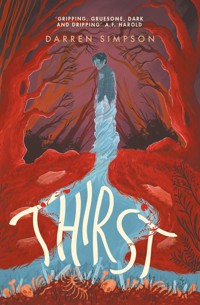
'Gripping, gruesome, dark and dripping' A.F. Harold Nobody talks about the strange happenings in Maimsbury. No one speaks of the hooded figures glimpsed in the woods, nor the children's game that went so horribly wrong. But most of all, nobody dares whisper their doubts about the river they have worshipped for centuries. Like everyone in Maimsbury, Gorse is used to the sacrifices made every spring to the River Yeelde. The life of a farm animal - in return for a year of plenty - seems a fair trade. That is, until a tragedy leads Gorse to a blood-curdling discovery. Because this year is a Brim Year, and after giving so much, the river needs more than an animal's life to sate its thirst... PRAISE FOR THIRST: 'A gripping tale infused with dark secrets and superstitions' Phil Hickes, author of The Haunting of Aveline Jones 'What a story! Properly creepy Wicker Man vibes with seemingly effortless world building and characters you'll take to your heart. Loved it' Jennifer Killick, author of Crater Laker 'This gruesomely imagined folk horror is the most brilliantly dark and dangerously fun book I've read all year' Keith Gray, author of Creepers
Sie lesen das E-Book in den Legimi-Apps auf:
Seitenzahl: 316
Veröffentlichungsjahr: 2025
Das E-Book (TTS) können Sie hören im Abo „Legimi Premium” in Legimi-Apps auf:
Ähnliche












![Tintenherz [Tintenwelt-Reihe, Band 1 (Ungekürzt)] - Cornelia Funke - Hörbuch](https://legimifiles.blob.core.windows.net/images/2830629ec0fd3fd8c1f122134ba4a884/w200_u90.jpg)



1
‘This gruesomely imagined folk horror is the most brilliantly dark and dangerously fun book I’ve read all year’
Keith Gray, author of The Climbers
‘One of those rare novels that is utterly transportive, that feels somehow familiar yet fresh and distinctive. A modern classic in the making. I loved it’
Liz Hyder, author of The Twelve
‘A most excellent slice of folk horror, and a dark morality tale too’
Nicola Penfold, author of Where the World Turns Wild
‘This gloriously dark tale about an insatiable blood-thirsty river and the town held within its grip had me at the first chapter!’
A.M. Howell, author of The Garden of Lost Secrets
2
3
5
For those we sacrifice.
6
Contents
Gorse felt the scratch of thorn, the trickle of blood. But still he ran on, ducking along the undergrowth and diving through bramble. The forest’s canopy rolled by above his head, and though his breaths came loud and hard, he could hear his pursuer gaining on him, kicking through shrubs not far behind.
“Hop with haste, oh little hare,” sang a panting voice. “This hungry hound your flesh will tear.”
Gorse couldn’t outrun Burdock—he’d always been the slower of the two—so he tried to outmanoeuvre him by gripping a low branch and swinging himself around its tree. He was sprinting suddenly in the opposite direction, and Burdock—skidding to a stop as Gorse whipped by—swore and stretched out his fingers. He grasped at empty air, just short of Gorse’s sleeve. 10
Gorse thought he’d gained a decent lead until a misjudged step sent him staggering across some roots. He cursed himself for tripping—he knew these woods so much better than that—and tried to recover his pace. Burdock howled, his laughter growing shriller as the distance shrank between them. Gorse heard a grunt, felt hands grasp his ankle. Burdock had thrown himself forward to grab his leg; they tumbled together through dirt and scrub.
“Got you!” cackled Burdock.
Gorse laughed with him—the music of boys not quite a decade of age. Still floored on the mossy ground, he tried to pull his leg free. But Burdock held fast.
“Sing it,” said Burdock. “I won’t let go ’til you sing it. You know the rules.”
Sighing, Gorse sang the old song. “Oh hungry hound, tear the ears from my skull. Together as dogs these hares we’ll cull.”
“That’s right.” Burdock let go and slapped Gorse’s arm as they got to their feet. “You’re a hound now. We need to find the last hare.”
Gorse turned on the spot, searching the dimming woods. “Tansy,” he said, then felt Burdock touch his cheek. He glanced across to see Burdock tilting a finger towards him. A streak of blood was glistening on its tip.
“You’ve cut yourself,” said Burdock, a note of concern in his voice. His eyes were wide beneath his ruffled hair, which had a touch of strawberry to it, compared to the blonde of Gorse’s long curls.
“Just brambles,” said Gorse. He dabbed his stinging cheek, then eyed the blood before sucking it from his finger. The taste was like copper on his tongue.
“Looks deep. Does it hurt?” 11
“A bit. It’ll heal.” Gorse shrugged. “Let’s get Tansy.”
The pair of them scanned the forest. While they stood back to back, the chirps of birds, the sighs of leaves and all the rustling of creatures unseen filled the lull between the boys.
“She ran the opposite way,” said Burdock, “when I found you both hiding in the ferns. That way.” He pointed deeper into the woods, which stirred with shadows as the sun continued to fall.
“No.” Gorse nodded in the direction of Maimsbury. “That way. Back towards the village.”
“You think so?”
“I do.”
His friend scoffed. “Then you’re a fool and you’ve got stones for brains.”
“Let’s split up, then. And if we don’t have Tansy before the day’s near done, we’ll holler a truce and get home.”
Burdock’s eyes flashed with his grin. “Keen to get back, are you?” He peered theatrically over both shoulders, then wriggled his eyebrows at Gorse. “You scared Dandyclogs’ll get you?” He mimed the slicing of a blade across Gorse’s chest, hissing all the while.
Gorse gave him a shove. “Even if Dandyclogs were real, I’d be more scared of my mother. She told me to stay home tonight. She’ll be mad enough that I snuck out to play—and all the madder if I’m out after dark.”
Burdock shrugged. “Let’s get a-hunting, then.”
With that, the old friends exchanged grins. Gorse dashed one way, back towards the forest’s edge, while Burdock ran the other, deeper into the woods. 12
*
A short spell had passed; Burdock was already sure he’d prove Gorse a fool. He’d found a trail left fresh in someone’s wake, marked by disturbed leaves and twigs on the ground, and by ruffles and folds in the bracken and ferns. These tracks were too big for the forest’s boars, badgers and deer. They could only belong to Tansy.
The snap of a stick pierced the forest’s whispers. Burdock peered ahead, searching for the source of the sound.
There. Quite some distance away. Just the briefest flash of a face, pale against the gloom of trees, and gone as quickly as it came. Burdock didn’t quite catch its features but was sure he’d glimpsed long, dark hair.
He’d have Tansy soon enough.
So Burdock began to run—though not as quickly as he could. He wanted to draw out the chase. At least for a little while.
“Hop with haste, oh little hare,” he sang again. “This hungry hound your flesh will tear.”
*
Gorse continued slowly in the opposite direction. The sun had sunk further, its bronze speckles now dimming on the forest floor. So Gorse listened intently, relying as much on his ears as his eyes while stepping across ivy and roots. He breathed as softly as he could, taking in the scents of earth, sap, blooms and wild garlic.
He tried Tansy’s usual hiding places as he went. The hollow in the oak tree with the swing on a rope. Beneath the ivy on Fable’s Hill. The tunnel of briars by the lichen-flecked cairn, which locals said would crumble were it ever given a name. Nothing. 13
Something darted over Gorse’s head, fluttering between leaves, and he looked up to see a rook watching him from a nearby branch. Gorse gave it a respectful nod, raised his finger to his lips. And when the rook blinked its beady eye, Gorse smiled to himself; he’d just thought of somewhere else to look.
*
Burdock was still heading deeper into the woods, though he’d slowed to a trot and then to walking pace, for something bothered him about the trail he was following.
He crouched by a patch of ground clear enough to allow a footprint. And indeed, there was a print. It wasn’t as he’d expected, though, for it had the faint outline not of a shoe but of a bare foot. And not only that—the footprint was damp.
That’s what had been puzzling Burdock. Though twilight now wove its way between trees, there was light enough for him to see the water drops scattered along Tansy’s trail, darkening the earth and glimmering on brambles. But it hadn’t rained in days.
He put a finger to the footprint, felt the wetness in its heel. Why was Tansy barefooted and wet?
No matter. The darkness was thickening, and the forest’s sounds had started to change, the way they always did when nightfall came. An owl hooted in the distance. Insects toiling out of sight started buzzing all the louder.
Time was running out, and Burdock was determined to catch his hare before dusk forced a truce. He’d caught Gorse and would have Tansy too. 14
*
Gorse skulked, quiet and low, closing in on a ring of trees known as the Seven Druids. He was careful to avoid any twigs that might snap beneath his feet, for he was eager to catch Tansy and end this game, and even the slightest sound of approach—assuming she was in the bowl of roots between those trees—would see Tansy fleeing like a mouse from a fox.
He knew he’d have to give her warning. Those were the rules of the game. He’d have to sing the song. But the closer he got before doing so, the less of a lead she’d have.
When he glimpsed dark hair between those circling alders, he almost gave himself away with a sigh of relief. This game would soon be over; not long now before he’d be heading home. He might get back before his mum returned from wherever it was she’d rushed to. Perhaps his dad hadn’t noticed he’d slipped away.
Perhaps he’d get away with this. His mum had been particularly stern about Gorse staying home tonight, even though she’d been too distracted to give him a reason why. It didn’t seem fair to Gorse, to be trapped indoors without good cause. But he knew his mother would take it badly if she found out he’d disobeyed.
Gorse was close now. He could see Tansy crouched in the hollow. Luckily she had her back to him while she kept a lookout between two trunks. Gorse resisted singing until he was right next to the trees. “Hop with haste, oh little hare,” he began, already launching himself from his haunches. “This hungry hound your flesh will tear!”
Rather than tackle the hollow’s roots, Gorse dashed around the circle’s rim, just quick enough to grab Tansy’s waist while she scrabbled over the cavity’s edge. “Got you!” he cried, and Tansy laughed, wriggling in his arms. 15
“Fine,” she giggled. “Fine! You got me.” When she finally stopped squirming, Gorse let go.
Getting to her feet, Tansy clapped the soil from her summer dress and hands. “Is that all the hares caught?” she asked.
“It is,” replied Gorse, before joining her in the song that declared the game’s end. “Hounds we’ll all be, for the hares are dead. Anon we’ll find prey to hunt in their stead.”
As soon as they’d finished, Tansy frowned at Gorse’s cheek. “What happened to your face?”
Gorse touched the cut. It was sticky now, just starting to crust. “Caught a thorn. It’s nothing.”
Tansy shrugged. “If you’re sure.” She glanced about. “So where’s Burdock?”
“He was convinced you’d run the other way. Went looking in the other direction.”
Tansy frowned. “Really? He’d better be heading back by now. It’s almost dark.”
“Almost. Come on.” Gorse led the way, back on the course he’d come from. “Hopefully he’s given up and we’ll meet in the middle.”
So Gorse and Tansy left the Druids behind, calling out for Burdock as they went.
*
Burdock couldn’t hear his friends’ cries. He was too deep in the woods, still following a trail left damp between trees.
It wasn’t merely distance that swallowed his friends’ calls. A new sound now filled Burdock’s ears. The hiss and gush of water. 16
Burdock knew the River Yeelde was a little way ahead, and wondered why Tansy had strayed so far from the usual bounds of their game. It seemed an odd thing to do, especially so late in the day. Maimsbury’s children were encouraged to be well out of the woods by dusk.
As Burdock peered about, he realized he’d let nightfall creep up on him. Only the faintest light remained now. The air beneath the branches was a dim blueish purple, the trees as black as coal. Burdock could just make out the bats that flitted above his head.
He stepped into a clearing and saw the stony slope that led to the river. The rocks were of the same slate that climbed the waterfall to the right. The waterfall wasn’t particularly tall, but the Yeelde’s broad width—about two dozen yards from one side to the other—meant the span of falling water drowned out the forest’s sounds. Burdock no longer heard the trilling of birds and the humming of bugs. There was only the sound of the waterfall.
Burdock moved forward onto the rocks. He had to step carefully, for the crags were wet, even though these rocks were too far from the Yeelde to be touched by its spray. Burdock’s confusion grew as he continued across the stones, observing that the rocks here—still some way from the river itself—were dotted with rotting flora. Duckweed, crowfoot, bladderwort—plants that didn’t belong on these barren stones.
Something moved by Burdock’s shoe—a black water rat scrabbling up the rocks, probably headed for the burrows that scarred much of the bank.
Burdock was close enough now to see the river, its foam and froth pale in the dusk. It took him a moment to spot the whitish face in the water, not far from the rocky bank. 17
“Tansy!” shouted Burdock, waving his arms and continuing along the stones. “Get out of there! What are you doing?”
Burdock could tell she’d seen him. She was too far away for him to make out her features, but he could see that her eyes were fixed in his direction. She didn’t move at all, though, let alone respond. She just stayed where she was, her head barely out of the river, with its black current flowing around her chin.
“Tansy! Get out! The game’s over. You win!”
Burdock drew closer to the bank, though the slippery weeds made his progress slow. And still, Tansy didn’t move.
Burdock could just about see the long hair that floated around her head, pulled and buoyed by the Yeelde’s steady flow. But it was the only part of her that moved. That pale face was still fixed upon him, its dark eyes not even blinking.
“Tansy?” croaked Burdock, for he was no longer sure who this was in the water. He was almost close enough to make out the girl’s features. He edged forward, slowing now, blinking in the gloom, trying to focus.
And then he stopped.
The face in the water wasn’t Tansy’s. It belonged to a woman he’d never seen before. A young woman who’d be beautiful—in that haughty, alluring way he often saw in girls nearing adulthood—if her expression wasn’t so entirely devoid of life.
Every one of Burdock’s instincts told him to get away—to flee from this stranger with her clouded dark grey eyes. But the moment he took a trembling step backwards, the woman swept forward and clawed her way onto the rocks.
Burdock span and clutched at stones, pulling himself desperately up while his feet skidded against weeds. His breaths came in bursts and his heartbeat filled his ears. He’d made it a 18little way up the slope and glanced over his shoulder when he heard the woman closing in. Her face—white, nymph-like and lifeless—was still fixed on him while she moved quickly—so horribly quickly—up the bank. A white dress streaked with weeds clung to her body. She scuttled with ease as if she knew every rock, every hollow—almost flowed upwards against the bank—while Burdock skidded and struggled and felt his lead slip away.
Burdock screamed. There were no words in the sound; just a bewildered, terrified, animal cry. And as he gulped wildly for breath, he caught the rank stench that filled the air. He smelled putrid flesh and stagnant weeds and could almost feel the hunger of the thing that slipped breathlessly up the slope.
He tried to scream again but the cry never left his throat, for the thing had wrapped its damp, swelling fingers around his nostrils and mouth. That fetid stench filled his nose and sent bile up his throat.
His cries were muffled while the woman dragged him backwards down the slope. He struggled with every ounce of his strength against the grip that pinned his arms, but the woman was too strong.
Burdock saw the slope rising away, heard the slosh of water, felt the river seeping into his shoes, soaking his legs, his waist, his chest. While the woman pulled him deeper into the current, he managed to twist his neck, just enough to glimpse that face—delicate and pale and marbled by veins, with eyes as dark as the river itself. Small movements seemed to swell beneath her skin, rippling up her throat to raise the sides of her lips. It was almost a smile.
Still Burdock struggled, trying to kick at the legs behind his own. But the deepening water slowed his thrashing and 19sapped his strength. The stars blinked out when his head disappeared beneath the surface.
Burdock held his breath as the darkness pulled him down, still kicking feebly while sinking in the woman’s embrace. But the more he sank, the less he kicked. A heavy tiredness took hold.
And still they were sinking, down and down, deeper than Burdock thought was even possible. Down and down into that cold abyss.
Burdock’s lungs strained and burned. He no longer had a choice. He thought of his mother. He thought of his father. He thought of his friends. And he thought of Speck, his ever-loyal dog, who would at this very moment be waiting for him at the cottage door.
Burdock breathed in. His tears were lost to the Yeelde.
And while the river filled his lungs, he tipped his head downwards to glimpse impossible, sunken things, before closing his eyes for the very last time.
*
Later that night, Gorse and Tansy weren’t alone in the search for their friend. The entire village was in the forest with them, searching that wild, ancient darkness with their lanterns and lamps, and calling Burdock’s name in increasingly worried tones.
A village of hounds in search of a hare. 20
Almost Five Years Later22
Faye stared upwards into the gloom. She’d been watching a streak of moonlight inch its way across the ceiling, creeping from one timber beam to the next. She’d been pricking her ears too, listening closely to the sounds of the cottage.
She could hear Benjamin snoring softly in the bunk below. Her little brother always slept soundly—perhaps because he was only six and tended to get the better share of supper—so Faye didn’t think he’d stir when she made her move. It was more her mother she was worried about.
Faye’s eyes, now long-adjusted to darkness, went to the bedroom door. All seemed silent, all seemed still. She hadn’t heard anything from beyond that door for at least two hours. So she wriggled out from her eiderdown and climbed down the bunk.
The stone felt cool against her knees as she reached beneath the bed to pull out some clothes. She’d snuck them from the 24chest in her parents’ room while her mother and Benjamin were out fetching wood for the stove.
Wincing with every rustle, Faye slipped on the shirt and dungarees and rolled up their hems and sleeves. She was tall for her fifteen years, though not as tall as her father, who’d worn these clothes for work when he was alive.
She caught herself sniffing the straps and linen, hoping to catch some ghost of his scent. But all she could smell was musty cloth.
After putting an ear to the door, Faye grasped the brass doorknob. Then she faltered, crept back to the bed and kissed Benjamin’s forehead. He whimpered, stirring slightly. Faye stroked his hair—mouse-brown like her own, though nowhere near as long—and hushed until he settled back down.
Returning to the door, Faye eased it open and eyed the doorway on the other side of the kitchen. It was the door to her mother’s bedroom and was thankfully shut.
Faye’s mother, Damaris Bawden, used to sleep well. And her slumbers were all the deeper for a while, after her husband, Peter Bawden, died on Dauntley’s farm. In those dark and solemn days, Damaris spent most of her time in bed, leaving Faye as a surrogate mother to Benjamin, who wasn’t yet three seasons old. So yes. Sleep had once been deep for Damaris Bawden.
But over the last few months, she’d slept in fits that arose either from the hunger pangs Faye knew all too well, or from a gnawing fear that she’d let her children down and that the three of them might go Peter’s way if the weight continued to fall from their bones.
Faye knew her mother hadn’t let them down. It wasn’t Damaris’s fault that the harvest had suffered last summer from the rains, and looked set to suffer a further summer too, 25from the blight that had killed so much of the crop. It wasn’t Damaris’s fault that bread had become so costly and scarce. Lamb and poultry too, what with the livestock slaughtered for lack of feed. And it wasn’t Damaris’s fault that the household’s trade—sewing and seaming was all they could offer—had petered out while locals pinched their pennies.
Faye stared at her mother’s door.
No. None of this was Damaris’s fault. But as their pantry became increasingly bare, and with the charity of neighbours ebbing away, Faye sensed that her mother blamed herself. She could tell by the way she got up from the sewing machine sometimes, her eyes welling as she quickly left the room. Or by the way she held her daughter and son so closely now, wincing at the feel of their bones through their clothes. Or by the way she left herself so little to eat when serving their dwindling meals—not only to preserve her children, Faye suspected, but also because of some sense of deserving less.
Faye stepped cautiously into the kitchen, which was dimly lit by the embers in the stove. She looked fondly at the oak table and chairs and raised her eyes to the clothes rack suspended from the ceiling. She took in the ceramic sink with its familiar cracks and stains; the old dresser and what remained of its crockery; the jugs on the windowsill, still bristling with the blooms they’d picked the previous day; and her father’s armchair, where he used to smoke his pipe after a long day on the fields.
Faye pulled a slip of paper from her pocket. She’d written the note shortly after filching her father’s clothes. It promised that she’d return as soon as she’d earned enough money. And it ended with a heartfelt apology, for Faye wasn’t usually one to disobey her mother. 26
She’d asked Damaris many times whether she could venture away from the village—just for a spell—to find wages elsewhere, much like some of Dauntley’s men had done. And Damaris forbade it every time—not only because those men rarely returned with wages, but also because it was a man’s game. There was no such thing, insisted Damaris, as good, fair, virtuous work for young girls like Faye. And even if there was, girls like Faye were helpless against the dangers that prowled the roads beyond Dauntley.
Faye didn’t care about the dangers beyond Dauntley. And she didn’t care for being told she was helpless, nor for any nonsense about men’s and women’s games. What she cared about was that the pantry was almost empty. What she cared about was that grain, vegetables and fruit were so hard to come by these days, and that the crops being planted this spring—in a rushed attempt to make up for the blight—might be just as cursed as the ones sown before.
When Faye propped the note against the sewing machine, her mother’s dressmaking scissors caught her eye. She considered them for a moment before slipping them into her dungarees. Then she made for the front door, stopping only to glance at the pantry. She’d been tempted to take some supplies—a jar of pickled fruit, perhaps—but decided against it. She wouldn’t deny her family even a speck of food.
The thought of Damaris having one less mouth to feed quickened Faye’s step. She lingered by the front door to take her father’s cardigan from its hook. As she slipped it over her shoulders, she swore she could smell tilled earth, and perhaps a touch of tobacco, in its wool.
Faye let herself out. 27
*
She moved stealthily through Dauntley, checking carefully for locals or lights in windows. Every cottage was dark. Every street was empty. Even the tavern looked deserted. Faye judged that it was well after midnight.
As she passed the church in which so many prayers had gone unanswered, Faye paused and thought again of her father, who’d been buried six years ago in the neighbouring graveyard. She was lost momentarily in thought until the sound of footsteps made her glance anxiously over her shoulder.
She half-expected to see her mother storming after her in a nightgown, but the streets were empty. The sound must have come from one of Dauntley’s stray dogs. Nevertheless, Faye ducked her head and started to run—not only because she feared being stopped, but because a part of her wanted to be stopped. That way she’d have no excuse but to stay with her family. She was missing Damaris and Benjamin already.
Dauntley was soon behind her. As was Dreer Lake, in which she’d taught Benjamin to swim so they could dive for minnows and carp. Not that they’d had much success.
Faye stood alone on a road of mud and stone, bordered by fields of failing crops. Swathes of dying wheat stirred and nodded with the wind, and while Faye studied the road ahead, she found herself thinking of the stories Damaris had told her about the world beyond Dauntley. Stories of bandits who’d steal your every possession and leave you in a ditch. Tales of loons who’d sneak out from bushes, tie you to a post and prick you with knives, just to see you bleed. 28
Travelling roads alone, apparently, wasn’t a young girl’s game. So Faye took the scissors from her father’s dungarees and chopped her long brown locks until all that remained was a scruffy, boyish bob. She crouched to bury her hair at the road’s edge and—with her mind still on bandits and loons—returned the scissors to her pocket, in case the need arose to cut more than hair.
And then, after lifting the cardigan’s hem to her nose and breathing in deep, Faye started down the road.
For all the colour and bustle of Maimsbury’s village square, Gorse had eyes only for Tansy.
It had barely gone seven, but the sun was already bright enough to send the maypole’s shadow across cobbles. The pole wouldn’t be ribboned for another couple of months but had been freshly painted in stripes of white and green. The entire square had been scrubbed and polished for Yeldthanc. The windows of the shops glistened, and even their thatched roofs—which had begun to dull with winter’s end—looked fresh. Magpies and sparrows sang from chimney tops, their ditties carried by a fragrant breeze.
Without a doubt, spring had sprung.
Tansy was part of a throng of villagers at the other end of the square, not far from the wattle-and-daub village hall. They were gathered around a large, shaggy ram, whose frightened bleats 30broke occasionally through the happy chatter and birdsong. The beast tried to buck and flee, but was held firm by several men from Orris Granger’s farm, along with Larch Skinner, the village tanner. Two of the men grasped the ram’s horns, while Comfrey Leech—Maimsbury’s sole physician—stroked and soothed the animal, encouraging it to eat the herbs from his palm. And all the while, Tansy Cartright looked cheerily on, dressed in the flowers and finery of the Yeldthanc Queen.
“I can’t get it on,” came a small voice from below.
Gorse glanced down to see Plum Bowdler—six-year-old daughter of Maimsbury’s blacksmith—looking up at him with her large green eyes.
She raised an old woolly glove towards his face. “It won’t go on, Gorse. Can you do it?”
Gorse gave an apologetic smile. He’d gotten distracted from the job of supervising the children. “Sure, Plum,” he said, taking the glove. “Let’s have a go.”
He crouched beside this Yeldthanc’s straw man, who’d been woven into being by the farmhands’ wives, and who was now being dressed by a gaggle of eager children. While a young boy propped a hat on the effigy’s head, Gorse fidgeted with Plum’s glove until it covered the straw fingers. He smiled at the mismatched glove on the other hand.
“Will that do, Plum?”
Plum nodded earnestly, then got to work on the straw man’s waistcoat.
As he got up, Gorse found his gaze drawn again across the square. The ram had stopped its bucking now; it stood docile while villagers threaded ribbons and flowers through its wool. Tansy was draping daisy chains and blossoms across its gnarled, curving horns. 31
Before Gorse knew it, the call went up from Sorrel Alderman, Maimsbury’s most senior Elder, that it was time for the procession to begin. Children squealed and adults cheered, and all soon formed a parade along the main street, with Tansy and the ram at the fore.
Gorse lifted the straw man, which was surprisingly heavy with morning dew. He eased it into a wheelbarrow draped with ivy, then trundled his way into the moving crowd. Some of the children skipped beside him; others scarpered to join their parents. A scrap of melody caught Gorse’s ear, and he smiled as he took up the song.
“Said River Meers to River Yeelde
Through waters long and fast she wield
‘Your breadth and stride be pithy and small
Much lesser than mine, near nothing at all.’”
More villagers joined in to send the tune travelling up the procession, gathering power with every voice.
“Said River Yeelde to River Meers
‘You waste your breath on shallow jeers
For though your length be long and flowing
My depths be deep beyond all knowing.’”
They passed Maimsbury’s small constabulary office, and then the tanner’s and tinker’s shops. To the left was the Kingfisher Inn, its walls as decked with blooms as every other building on the street. Still singing, the villagers turned left at the cobbler’s and were soon in the meadow, following a path worn smooth by centuries of Yeldthancs. 32
“My depths be deep,” sang Gorse in another round, traipsing to the right to get a look at Tansy. She still led the ribboned ram, which Gorse noticed was staggering a little, succumbing to the hemlock, poppy and nightshade that made up Leech’s dwale.
Twelve nights ago, the Elders had boiled a cauldron of river water by the Yeelde’s banks. The cauldron held nine stones—one for each village girl aged fourteen. And while eight of the stones remained sunk, the ninth rose in the Yeelde’s bubbling water. It was Tansy’s.
Gorse was pleased with the Yeelde’s choice. Tansy wore her crown of blooms so well, and the gown hugged her waist in a way that made his throat feel warm.
As if sensing him watching, Tansy glanced over her shoulder and met Gorse’s gaze. She looked so regal, so proud—a million miles from the girl he’d known since they were young enough to dress straw men. Her face was almost as white as her lace gown, bringing out the red in her lips, the blue in her eyes. She’d combed the usual unruliness out of her hair, which shone darkly beneath pear blossoms and violets.
The grace left Tansy’s features, lost to a mischievous smile more familiar to Gorse. He smiled back and sensed from his hot cheeks that he was blushing. He looked away quickly, fixing his gaze on the lonely, reddish ruins to the procession’s left—once an ancient church, now a roofless shell inhabited by weeds.
Gorse cursed himself. He never used to blush around Tansy Cartright—not in all the years they’d been close friends.
The children skipped and laughed, taking up a new tune.
“Oh cool and flowing River Yeelde
So kind to fisher, farm and field
We reap your grace and stem your flood
With alms of beast and grain and blood.” 33
The sky was lost, and the air began to cool; they’d entered the shade of Maimsbury Forest. While the parade followed the path that wound between trees, Gorse caught sight of a fox skulking through ferns—saw a song thrush darting from one branch to another. Early bluebells pushed keenly through the undergrowth.
He’d been lost in his thoughts when someone touched his back. “Happy Yeldthanc, Gorse.”
It was his mother, Rose Cutler, who’d drifted backwards along the parade and slowed to match his pace. His dad, Stewart Cutler, strolled beside her, his smile dappled with the light that fell between leaves.
“Happy Yeldthanc, Mum.”
“I can’t believe you’re pushing the barrow! I still remember when you were dressing the straw man. It feels like only yesterday.”
“It was years ago.”
Rose sighed. “It was. You’ve had your shorning now. And even that was—” She frowned momentarily, calculating in her head—“A whole year ago! Where did my little boy go?”
Gorse’s smiled tightened. He usually tried not to think about his shorning; about the day he, like any other Maimsbury lad turning thirteen, removed his hair with shears and threw it into the Yeelde. It should have been a happy day—and for the most part, it was. But so many of its moments were tinged with loss. Burdock was due his shorning that year, too. 34
As boys, they used to speak so excitedly about their shorning—about the day they’d finally become men. But Burdock’s shorning was never to be.
Rose touched his back again. “Are you alright?” She looked uneasy. Her eyes were soft beneath the curls—blonde as hay and wild as wind—that she’d passed on to her son.
Gorse swallowed, smiling again. “I’m fine. This ground’s a bit tricky for the barrow, that’s all.”
“Well, you’re almost done. There’s the Yeelde.”
Gorse peered ahead to see the crowd spreading along the riverbank. As he drew nearer, he saw the Yeelde glitter and foam, its dark waters coursing gently through the woods. Trees of willow leant as if in reverence over the waters, their branches bright with dyed scraps of cloth.
Two villagers were waiting on the bank, their shoes already removed, eager to step into the Yeelde’s embrace: Poppy Ellerman, no doubt keen for the waters to ease her arthritis; and Rowan Lister, who Gorse guessed wanted the shingles washed from his legs.
The pair would have to wait, though, for custom said Elders were always first in line for the river’s grace, and Mullein Greave had only just entered the water to bathe his swollen joints.
Gorse had felt the benefit of the river’s waters himself. They’d rinsed away his pox as a child and always healed the silvery rash that rose occasionally, not just on his own skin, but on his mother’s and grandfather’s, too.
Villagers were now pouring wine into the water or tossing in trinkets and dolls. While children gathered to heave the straw man from its barrow, Gorse took a red ribbon from the pocket of his corduroys: a wish band he’d prepared the night before. 35
He saw his mother watching him closely, sadness etched into her brow. “Are you wishing again for Burdock?”
Giving a nod, Gorse peered over Rose’s shoulder to see Burdock’s parents—Spruce and Olive Thacker—tying their own wish band to the branch of a willow. Their family dog, a scruffy Jack Russell by the name of Speck, watched from Olive’s side, and Gorse found himself thinking fondly of all the times he and Burdock had taken Speck to the meadow to play fetch. Burdock had truly loved that dog.
“You shouldn’t ask too much of the Yeelde,” said Rose gently. “Don’t get your hopes up.”
“I won’t.”
Gorse noticed little Plum Bowdler watching their exchange. He cocked his head at her. “Shouldn’t you be sending the straw man down the Yeelde?”
Plum shuffled meekly from one foot to the other. “My brother says it’s not true.”
“What’s not true?”
“Burdock didn’t run away. He was—”
“Snatched by Dandyclogs and skinned to make shoes?” Gorse knew the whispers that travelled between Maimsbury’s young folk. He’d passed on similar whispers as a child. “Dandyclogs isn’t real, you know. He’s just a bogeyman.”
“Then why’d Hops Spencer see him asleep in the weedy church?” Plum raised her chin. “And why did Mother say he’d drag me into the woods if I didn’t finish my supper?”
Rose shook her head. “Hops and your mother should know better, Plum. Now away with you. Go help the others.”




