


0,49 €
Niedrigster Preis in 30 Tagen: 1,99 €
Niedrigster Preis in 30 Tagen: 1,99 €
Mehr erfahren.
- Herausgeber: Booksell-Verlag
- Kategorie: Fantasy und Science-Fiction
- Sprache: Englisch
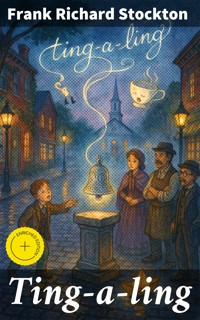
In Frank Richard Stockton's enchanting story "Ting-a-ling," readers are invited into a whimsical world where the supernatural intertwines with human emotion. The narrative unfolds through a blend of humor and fantasy characteristic of Stockton's style, marked by playful language and an engaging tone that appeals to both children and adults alike. Set against the backdrop of a seemingly idyllic town, the plot revolves around a magical bell that holds the power to grant wishes, prompting reflections on desires and the unforeseen consequences of their fulfillment. Stockton's adept use of personification and vivid imagery propels the reader through a delightful and thought-provoking journey, inviting contemplation on the nature of happiness and satisfaction. Frank Richard Stockton, a prominent figure of 19th-century American literature, is well-known for his contributions to humor and fantasy genres. His upbringing in a family steeped in storytelling, coupled with a fascination for the fables of his time, informed his literary voice. Despite facing early challenges with conventional storytelling, Stockton's innovative approach'—favoring playful absurdities over traditional plots'—led him to craft tales that resonate with both youthful curiosity and adult introspection, as seen in "Ting-a-ling." This charming tale is a must-read for those who appreciate narratives infused with humor and reflection. Stockton's masterful weaving of fantasy and moral insight not only entertains but also encourages readers to ponder deeper themes related to desire and fulfillment. "Ting-a-ling" is an excellent choice for anyone looking to explore a classic work that balances whimsy and wisdom, making it a delightful addition to any literary collection. In this enriched edition, we have carefully created added value for your reading experience: - A succinct Introduction situates the work's timeless appeal and themes. - The Synopsis outlines the central plot, highlighting key developments without spoiling critical twists. - A detailed Historical Context immerses you in the era's events and influences that shaped the writing. - A thorough Analysis dissects symbols, motifs, and character arcs to unearth underlying meanings. - Reflection questions prompt you to engage personally with the work's messages, connecting them to modern life. - Hand‐picked Memorable Quotes shine a spotlight on moments of literary brilliance. - Interactive footnotes clarify unusual references, historical allusions, and archaic phrases for an effortless, more informed read.
Das E-Book können Sie in Legimi-Apps oder einer beliebigen App lesen, die das folgende Format unterstützen:
Veröffentlichungsjahr: 2019
Ähnliche













Ting-a-ling
Table of Contents
Introduction
At its heart, Ting-a-ling celebrates the moment when everyday certainty loosens its grip and imagination steps forward as a friendly guide, leading readers through playful dilemmas where wit outpaces force, kindness tempers impulse, and the familiar world is tilted just enough to expose fresh possibilities, so that each brief adventure becomes a gentle test of judgment and wonder, a reminder that thinking curiously can be as practical as it is delightful, and that the pleasures of make-believe—handled with lightness, humor, and a respect for consequence—can reveal truths that ordinary talk alone might overlook for readers young and old alike.
Frank Richard Stockton’s Ting-a-ling belongs to the tradition of nineteenth-century American children’s literature, a realm in which fantasy and moral reflection meet without heavy-handedness. The work is best understood as a collection of short, fantastical pieces for young readers, first appearing in the late 1860s in a periodical context and subsequently gathered into book form around 1870 under the title Ting-a-Ling Tales. Its settings shift from the recognizable to the invented, refusing a single geography in favor of fluid, story-shaped worlds. Within this historical frame, Stockton crafts narratives that balance entertainment and thought, echoing the era’s aim to engage children’s minds while delighting their senses.
Readers encounter an array of compact adventures that begin with clear premises, pivot on surprises, and end with a sense of rightness rather than spectacle. The experience is playful and brisk: a narrator’s steady, companionable voice proposes an unusual situation, explores its consequences with straight-faced logic, and draws the curtain before overstaying the welcome. The mood is bright and buoyant, colored by affectionate irony and a faith in resourcefulness. Stockton’s style favors clarity and momentum, keeping the prose light on its feet. The result is an inviting, episodic journey—well suited to reading aloud—where curiosity is rewarded and flights of fancy land with satisfying coherence.
Stockton’s voice is notable for its courtesy toward the reader’s intelligence. He builds impossibilities with sensible sentences, inviting acceptance through reasoned play: if this small premise is granted, the rest follows—surprisingly, but cleanly. Humor arises from this careful straightness, not from mockery, and the tone resists scolding. The stories proceed with an economy that feels conversational yet artful, making room for a wry aside or a well-placed pause before the next turn. Even when events grow extraordinary, the language remains grounded, enabling children to follow the action while allowing older readers to appreciate the understated craft and the balance between caprice and consequence.
Themes surface gently through action rather than proclamation. Curiosity operates as a virtue, testing the edges of rules to discover their purposes. Ingenuity often prevails over strength, and fairness is presented as a living question rather than a fixed decree. Responsibility travels alongside freedom, reminding characters—and readers—that choices ripple outward. The tales put perspective in motion, asking how outcomes look from another vantage, and they encourage the habit of asking what if as a tool for empathy as much as for problem-solving. Without heavy moralizing, the book invites reflection on how imagination can clarify motives, reshape obstacles, and illuminate paths that literalism might miss.
For contemporary readers, Ting-a-ling offers a refreshing model of how stories can entertain while nurturing flexible thinking. Its scenarios promote skeptical curiosity—testing premises, tracing consequences—without dimming wonder. Families and educators will find it amenable to shared reading, since the episodes prompt natural conversation about fairness, creativity, and the responsible use of cleverness. The book also provides a window onto a formative moment in American children’s publishing, when writers sought to honor young readers with lively, idea-rich narratives. In an age crowded with noise, Stockton’s light touch suggests that sturdy pleasures lie in lucid prose, measured surprises, and the steady companionship of a trustworthy narrator.
Approached today, the collection feels both antique and fresh: antique in its courteous cadence and tidy design, fresh in its agile imagination and respect for the reader’s judgment. It invites a leisurely pace—one or two pieces at a time—so that each setup and turn can be savored. Rather than demanding immersion in a single arc, it offers many small doorways, each opening onto a different pattern of delight and inference. This mosaic quality makes the book easy to return to and to share across ages. Ting-a-ling remains, above all, a friendly guide to looking at the world as if it could always hold one more bright surprise.
Synopsis (Selection)
Ting-a-ling by Frank R. Stockton is a collection of fanciful tales linked by the presence of a diminutive, quick-witted sprite who delights in guiding listeners into unexpected adventures. The book opens with a framing encounter that introduces Ting-a-ling as both narrator and companion, inviting a childlike audience to follow wherever curiosity leads. The tone is playful and conversational, and the settings shift easily from parlors and village greens to forests, seas, and airy heights. This introduction establishes the rules of the book’s world: everyday objects can turn marvelous, promises carry weight, and good sense must walk hand in hand with wonder.
The earliest episodes explore the hazards and opportunities of wish-making and quick solutions. Characters discover that desires, once granted, rarely behave as expected, and the outcomes emphasize attention, patience, and proportion. Ting-a-ling acts as a catalyst, nudging impulsive children and earnest adults to consider the second and third effects of their choices. Obstacles arise from innocent misunderstandings rather than malice, and the resolutions favor clear thinking over force. These tales set a pattern the collection revisits: each marvel presents a test of judgment, and each test draws out a modest lesson about measuring hopes against responsibilities.
As the journey broadens, Ting-a-ling leads listeners into communities where customs differ from familiar habits, turning travel into a series of lively comparisons. A town that prizes one quality to excess, a household that runs by reversed rules, and a court where literal interpretations govern decisions all provide stages for humorous confusion. The narrative highlights how perspective shapes value, prompting characters to seek fairness that accounts for more than their own convenience. The adventures remain brisk and self-contained, yet recurring motifs—hospitality, gratitude, and the value of asking questions—create continuity from one scene to the next.
Several middle tales revolve around problems of logic that children can grasp and enjoy. A promise interpreted too strictly, a bargain that seems perfect until its condition is revealed, and an experiment whose results overturn assumptions are presented as games of cause and effect. Ting-a-ling offers guidance without dictating answers, giving protagonists room to discover outcomes. The humor comes from precise reasoning pushed just a step too far, then gently brought back to balance. Each episode ends with circumstances restored, not by punishment, but by better understanding of how rules work in ordinary life.
Other episodes center on friendship and the obligations that arise when help is offered or requested. Characters encounter strangers who need small acts of courage, creatures whose oddities mask simple needs, and neighbors who must learn to speak plainly. Conflicts hinge on pride, secrecy, or shyness rather than cruelty, keeping the stakes suitable for young readers while still engaging. Ting-a-ling’s interventions are light, often consisting of a timely hint or a surprising shortcut that the characters must still traverse themselves. The emphasis stays on cooperation, patience, and honesty as the surest paths to making marvels useful.
Later stories introduce challenges that test a broader range of virtues, including perseverance and fairness when outcomes cannot satisfy everyone. Appearances prove slippery: impressive displays yield small results, while modest efforts accomplish more than expected. The tales dwell on listening carefully, weighing evidence, and acknowledging mistakes. Magical devices sometimes complicate matters before they solve them, reminding readers that tools are only as good as the intentions that guide them. Here the book’s pattern becomes clear: imaginative premises invite practical conclusions, and each conclusion leaves characters a little more capable of managing both wonder and routine.
A quiet arc draws together earlier threads as a final group of adventures asks characters to apply what they have learned without prompting. Ting-a-ling steps back, allowing choices to carry consequences that feel earned rather than imposed. The problems are slightly larger in scope—affecting a family, a village custom, or a shared resource—but they remain personal enough to resolve through conversation and insight. By staging these dilemmas without sharp peril, the narrative maintains its lightness while signaling growth. Solutions place emphasis on fairness that includes all parties, and satisfaction arises from mutual recognition rather than triumph.
The closing chapters slow the pace to reflect on where stories come from and how they travel between tellers. Ting-a-ling renews the frame by revisiting earlier scenes, pointing out changes that seemed small at the time, and offering farewells that leave doors ajar for further visits. The final moments prefer resonance over finality: characters return to daily life, confident that they can meet surprise with sense, and the listener is encouraged to find marvels in familiar places. The sprite’s departure feels like a courteous step aside, making room for readers to continue the play.
Across the collection, the core message is steady: imagination is most rewarding when paired with clear judgment, empathy, and a willingness to learn. Stockton’s stories rely on simple premises turned a quarter turn to reveal unsuspected angles, inviting readers to test ideas rather than accept them. Without sermon or scold, the book presents small, repeatable ways to act well—ask questions, notice others, keep promises with care, and revise plans when facts change. Ting-a-ling serves as a cheerful emblem of possibility, linking disparate episodes into a coherent promise that everyday life can hold delightful sense.
Historical Context
Ting-a-ling, a collection of fantastical children’s tales by Frank R. Stockton first gathered in book form in 1870, is set in indeterminate fairy-tale geographies: unnamed kingdoms with courts and castles, deep forests, and bustling village markets. Its episodes often unfold in a vaguely medieval or early-modern European ambience, yet the moral atmosphere, humor, and social cues are recognizably nineteenth-century American. Because the stories were written for and serialized to U.S. readers in the late 1860s, their imaginative settings coexist with the social realities of Reconstruction-era America. The narrative world becomes a safe, playful stage on which contemporary concerns about authority, fairness, and community are refracted through fairy logic.
The American Civil War (1861–1865) and its immediate aftermath form the crucial historical backdrop to the book’s creation and early reception. The war’s human cost—commonly estimated at 620,000–750,000 deaths—reshaped families, communities, and national ideals. Emancipation advanced through the Emancipation Proclamation (1863) and the Thirteenth Amendment (1865). In the late 1860s, public discourse emphasized reconciliation, civic virtue, and humane conduct. Stockton’s tales—where quarrels are resolved by wit and compassion rather than force—echo a postwar hunger for concord. Though not about soldiers or battlefields, they encode the period’s ethical turn: power is legitimate only when tempered by mercy, and differences are bridged by imaginative sympathy.
Reconstruction (1865–1877) introduced sweeping legal and social changes: the Freedmen’s Bureau (established 3 March 1865) aided formerly enslaved people; the Reconstruction Acts (1867) set terms for readmission of former Confederate states; the Fourteenth (1868) and Fifteenth (1870) Amendments expanded citizenship and suffrage. Public debates about equal rights and just governance permeated newspapers and parlors. Stockton’s fables mirror these currents by dramatizing equitable rule: kings who listen, judges who weigh circumstances, and children who recognize the claims of those overlooked. The emphasis on fairness, due consideration, and the dignity of the humble reflects an era attempting—imperfectly—to align institutions with egalitarian principles.
The late 1860s were also marked by rapid industrialization and infrastructural integration. The transcontinental railroad was completed at Promontory Summit, Utah, on 10 May 1869, joining the Union Pacific and Central Pacific and reducing coast-to-coast travel from months to about a week. U.S. railroad mileage expanded from roughly 30,000 miles in 1860 to over 50,000 by 1870; telegraph networks blanketed commerce. Stockton lived and worked in Washington, D.C., as a government clerk during these years, absorbing a culture fascinated by systems, mechanisms, and improvement. His stories’ comic contraptions, procedural puzzles, and orderly resolutions resonate with a society learning to trust clever design and practical ingenuity over brute force.
Children’s print culture expanded dramatically after the war. Compulsory schooling spread in Northern states (Massachusetts led in 1852), and families sought morally wholesome, amusing reading. Riverside Magazine for Young People (Boston/New York, 1867–1870), edited by Horace E. Scudder, serialized Stockton’s Ting-a-ling pieces before their 1870 collection. The periodical’s blend of instruction and delight, supported by wood-engraved illustration, situated Stockton’s tales within a didactic yet playful pedagogy. Contemporary titles such as The Youth’s Companion and, slightly later, St. Nicholas (launched 1873 under Mary Mapes Dodge) formed a national juvenile reading network. Stockton wrote for this audience, shaping plots that rewarded curiosity, kindness, and civic-minded cleverness rather than status or lineage.
Several overlapping developments most decisively shaped Ting-a-ling: Reconstruction’s moral vocabulary, the parlor-centered culture of juvenile reading, and the institutionalization of public education. First, Reconstruction redefined legitimacy. Citizenship and rights—anchored in the Fourteenth (1868) and Fifteenth (1870) Amendments—foregrounded fairness as a public virtue. Stockton’s stage of miniature kingdoms tests rulers by how they treat the small, the foreign, the powerless; just as state governments were judged by adherence to national standards, his fairy courts gain legitimacy by equitable conduct. Second, the rise of children’s magazines created a disciplined yet imaginative reading environment. Riverside Magazine for Young People (1867–1870) under Horace E. Scudder curated narratives that could be read aloud in parlors and classrooms, encouraging collective discussion. Stockton’s episodes—often structured as problems solved by prudence and empathy—fit the magazine’s didactic amusement ethos, offering models of deliberation that mirrored civic debate. Third, public schooling’s spread in Northern states produced heterogeneous classrooms where ethical instruction mingled with literacy. Texts that taught cooperation across difference were prized. Stockton’s use of tiny fairies, humble artisans, and ordinary villagers to correct pompous nobles translates civic egalitarianism into child-scaled drama. In the wider culture, infrastructural feats such as the Golden Spike ceremony at Promontory (10 May 1869) symbolized national reconnection; Ting-a-ling’s recurrent theme of bridges—between ages, classes, and sizes—echoes that unifying ideal. Meanwhile, Washington’s bureaucratic routines, familiar to Stockton as a federal employee, surface in his gentle satire of officious heralds, rule-bound courtiers, and the absurdities of red tape—a comic veil over contemporary anxieties about efficient, honest governance. Together, these forces furnished both the content and the moral grammar through which the tales invite young readers to imagine a fairer polity.
The early Gilded Age’s corruption scandals sharpened public sensitivity to abuses of power. In New York City, the Tweed Ring dominated Tammany Hall (circa 1868–1871), diverting an estimated tens of millions of dollars; exposure by the New York Times and Thomas Nast’s cartoons in Harper’s Weekly helped topple William M. Tweed in 1871. Nationwide patronage and graft eroded trust. In Ting-a-ling, comic portraits of vain kings, self-serving courtiers, and pomp without purpose refract these anxieties. The tales contrast honest commoners and clear-eyed children with inflated authority, offering a child-friendly parable of accountability at a moment when citizens demanded transparency and restraint from public officials.
As social and political critique, the book deploys fantasy to test power’s claims without naming parties or policies. By rewarding rulers who listen and punishing those who delight in ceremony over service, it indicts arbitrary hierarchy and endorses a civic ethos grounded in fairness and practical benevolence. Scenes in which the small instruct the mighty challenge class pretensions and naturalize equality before just rules—an echo of Reconstruction’s legal reforms. The stories model nonviolent conflict resolution, generosity toward outsiders, and skepticism toward bureaucratic fussiness, thus exposing the era’s most persistent failings: moral complacency in the face of inequality, the seductions of graft, and the fragility of rights without empathy.




