


Erhalten Sie Zugang zu diesem und mehr als 300000 Büchern ab EUR 5,99 monatlich.
- Herausgeber: epubli
- Kategorie: Geisteswissenschaft
- Sprache: Englisch
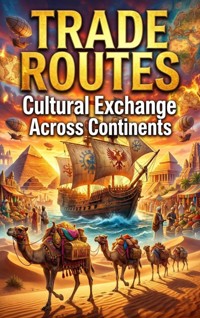
Long before globalization, a network of paths united East and West in a flow of goods, ideas, and beliefs. Trade Routes traces the evolution of the Silk Road and its maritime counterparts, exploring how merchants, pilgrims, and scholars connected empires across Asia, Africa, and Europe. Using archaeological discoveries, historical records, and travelers' accounts, the book reveals how silk, spices, and art shaped civilizations from China to Byzantium. It highlights not only commerce but also cultural dialogue—the spread of religions, technologies, and philosophies that transformed societies. This richly detailed history captures the wonder of an interconnected ancient world whose legacy continues to echo through today's global exchanges.
Sie lesen das E-Book in den Legimi-Apps auf:
Seitenzahl: 233
Veröffentlichungsjahr: 2026
Das E-Book (TTS) können Sie hören im Abo „Legimi Premium” in Legimi-Apps auf:
Ähnliche


















Table of Contents
Chapter 1: The Origins of Trade Routes
The Historical Context of Trade Routes
Motivations for Trade: Goods and Resources
The Quest for Knowledge and Cultural Exchange
Primitive Trade Networks: Examples from Early Civilizations
Social Structures and the Impact of Trade
Language and Communication Along Trade Routes
Chapter 2: The Silk Road: A Thread of Connection
The Origins of the Silk Road
Major Cities Along the Silk Road
The Flow of Goods: More Than Just Silk
Cultural Exchanges and the Spread of Ideas
The Legacy of the Silk Road Today
Chapter 3: Maritime Trade Routes: The Oceans as Highways
The Origins of Maritime Trade
The Phoenicians: Masters of the Sea
The Indian Ocean: A Hub of Cross-Cultural Exchange
Impact of Maritime Trade on Societies
Decline and Legacy of Maritime Trade Routes
Chapter 4: Goods of the East: The Allure of Spices and Silk
The Origins of Silk
The Journey of Spices
The Cultural Impact of Spices and Silk
The Economics of Luxury Goods
The Legacy of Silk and Spice Trade
Chapter 5: Religious Pilgrimages: Faith on the Move
The Role of Pilgrimage in Ancient Societies
The Spread of Buddhism through Pilgrimage
The Journey of Islam: From Mecca to the World
Christian Pilgrimages: Routes of Faith in the Medieval Era
Chapter 6: Cultural Exchange: Beyond Commerce
The Artistic Tapestry of Trade
Literature Without Borders
Technological Innovations on the Move
Religion: The Spiritual Exchange
Chapter 7: The Role of Women in Trade
Women as Traders
Artisans and Craftswomen
Women in Religious and Cultural Exchange
Women’s Legal Rights and Economic Independence
Notable Women in Trade History
The Legacy of Women in Trade
Chapter 8: Archaeological Discoveries: Shadows of the Past
Unearthing Trade Centers
Artifacts of Exchange
Religious Relics and Cultural Dialogue
The Impact of Maritime Discoveries
Challenges in Archaeological Interpretation
Legacy of Archaeological Findings
Chapter 9: The Influence of the Byzantine Empire
Byzantium: The Heart of Trade
Cultural Melting Pot
The Silk Trade
The Spread of Ideas
Chapter 10: The Age of Exploration: New Routes, New Exchanges
The Dawn of New Routes
Impact on Indigenous Populations
Economic Shifts and Trade Networks
Exchange of Ideas and Innovations
Chapter 11: Technologies of Transportation and Communication
The Evolution of Transportation Technologies
Communication Advances that Shaped Trade
The Role of Navigation in Trade
Caravan Culture and Overland Trade
Chapter 12: The Spice Routes of the Indian Ocean
Overview of the Spice Trade
Key Spice-Producing Regions
The Influence of Traders
The Cultural Legacy of Spice Trade
Chapter 13: The Legacy of Trade Routes: Echoes in Modern Times
Historical Foundations of Modern Trade
Cultural Impact of Trade on Modern Society
Globalization and its Roots in Trade
Technological Advancements: Past and Present
Preservation of Cultural Legacies
The Future of Trade and Cultural Exchange
Chapter 14: Contemporary Cultural Exchange: Globalization Revisited
Defining Contemporary Cultural Exchange
Trade and Cultural Interaction in the Global Marketplace
The Role of Tourism in Cultural Exchange
Media, Art, and Cultural Representation
Religion and Philosophy: Modern Interactions
Lessons from History: Shaping Future Exchanges
Chapter 15: Challenges and Opportunities in Trade Today
The Landscape of Modern Trade
Trade Barriers and Their Impact
Sustainability in Trade Practices
The Role of Technology in Trade
Future Opportunities for Cultural Exchange
Chapter 16: The Future of Cultural Exchange
The Digital Silk Road
Reviving Ancient Practices
The Role of Climate Change
Innovations in Transportation
Bridging the Past and Future: The Legacy of Trade Routes
Chapter 1: The Origins of Trade Routes
This chapter explores the beginnings of trade routes that crisscrossed the ancient world. Long before they became the highways of commerce we recognize today, these paths served as vital links connecting distant cultures. We will examine the early motivations behind these exchanges, including the quest for goods, resources, and the desire for knowledge. Understanding these origins lays the foundation for how cultures interacted and transformed one another.
The Historical Context of Trade Routes
This section discusses the historical backdrop in which early trade routes developed. These routes emerged not simply by chance, but were influenced by various factors including geography, climate, and the organization of societies. Understanding this context is key to recognizing why certain paths became significant in connecting cultures.
The role of geography in shaping trade
Geography played a fundamental role in the development of trade routes across ancient civilizations. The physical characteristics of the land dictated the pathways merchants would take, influencing their choices and routes. Mountain ranges, rivers, and deserts acted as both barriers and facilitators of trade. For example, the Himalayas limited overland routes but also prompted the establishment of vital passages through mountain valleys.
Major rivers, such as the Nile and the Indus, served as natural highways for transporting goods, while plateaus and plains provided fertile ground for settlements. The availability of resources also dictated trade points; regions rich in specific commodities, like silk from China and spice from the Malabar coast, became significant trading hubs. Thus, understanding geography is essential to comprehending how cultures began to intermingle and forge connections across vast distances.
Climate influences on the movement of goods
Climate significantly impacted trade routes by affecting the types of goods that could be produced and transported. Regions with mild and temperate weather allowed for a longer growing season, supporting the farming of valuable items like grains, fruits, and textiles that became integral to trade. On the other hand, arid and tropic climates determined which crops were cultivated and the types of goods available for exchange.
Additionally, seasonal weather patterns influenced travel times. Monsoons in the Indian Ocean, for instance, were crucial for the maritime Silk Road, allowing for more predictable sailing schedules. Through an understanding of climate, one can appreciate how this natural factor not only dictated what was traded but also influenced the very rhythms of ancient economies and cultural exchanges.
The impact of early societies and their needs
The needs of early societies were pivotal in shaping trade routes. As communities developed, their hunger for raw materials, luxury goods, and essential resources drove them to seek out distant partners. Societies such as the Babylonians, Egyptians, and Chinese recognized the value of trade in enhancing their wealth and cultural prestige.
This quest for resources led to the establishment of networks where not only goods but also ideas and innovations were exchanged. Thus, the needs of these early civilizations not only influenced their survival but also enriched their cultural landscapes, helping lay the groundwork for the complexity of future trade relationships that would span continents.
How political stability facilitated trade
Political stability was a crucial factor in the facilitation of trade routes. When empires and states maintained stability, trade flourished due to the establishment of secure pathways and protection for merchants. Powerful empires like the Roman and Han were noted for their political order, which provided safety for traders and fostered trust in economic transactions.
This security encouraged the movement of goods and cultures, allowing ideas such as warfare tactics and religious beliefs to spread efficiently along these routes. Moreover, when regions enjoyed relative peace, they could invest more in their infrastructure, further supporting trade through the construction of roads and ports. Hence, political stability not only stabilized trade but also fostered a rich tapestry of cultural interaction and cooperation, shaping the interconnected world of antiquity.
Motivations for Trade: Goods and Resources
Trade routes were initially developed out of a necessity for goods and resources. Cultures sought items that were scarce in their regions, creating a demand that drove trade. This section examines specific goods that motivated early exchanges, highlighting their importance in the development of trade networks.
The allure of luxury items: silk and spices
The ancient trade routes were significantly influenced by the allure of luxury items such as silk and spices. Originating from the East, silk quickly became a symbol of status and wealth in many cultures, especially in the Roman Empire and later in Byzantium. The intricate process of silk production was closely guarded by the Chinese, making it a highly prized trade commodity. It was not merely the fabric’s aesthetic appeal that drove its demand; it also held cultural significance and was associated with sophistication and elegance.
Similarly, spices from the Indian subcontinent and Southeast Asia played a crucial role in trade. They were sought not only for culinary purposes but also for medicinal uses and preservation of food. The intense desire for these luxury commodities catalyzed extensive trading networks. Merchants transported silk and spices along the Silk Road and maritime routes, forging connections between diverse civilizations, spurring economic interactions, and enriching cultural exchanges.
Resource requirements: metals, textiles, and food
While luxury items captured the imagination, the foundational motivations for trade often lay in the essential resources such as metals, textiles, and food. Early civilizations required metals like gold, silver, and copper for currency and tools, marking them as critical components of trade. Regions rich in minerals quickly emerged as key trading partners, fostering interdependence among cultures. For instance, the availability of Mediterranean timber and tin paved the way for vibrant trade with regions needing such resources.
Textiles, including wool and cotton, also boosted trade interactions, addressing the basic needs of clothing and shelter among diverse populations. Furthermore, food items served as one of the foremost motivators for trade. The exchange of staple crops, such as grains, fruits, and vegetables, ensured food security across regions with varying agricultural outputs. This intertwining of necessity and resource availability laid the groundwork for burgeoning trade networks that connected remote cultures.
Demand-driven trade relationships
Trade routes were fundamentally molded by demand-driven relationships that emerged between disparate cultures. As societies recognized their resource scarcity, they sought to establish connections with other cultures that could supply what they lacked. This interdependency developed trade relationships characterized by mutual benefit, as producers and consumers engaged in negotiations. The rise of demand-driven trade led to specialization—certain areas became renowned for producing specific goods, further delineating trade paths.
As merchants navigated these routes, they transformed commodities into currencies of culture. Items exchanged were not just economic transactions; they conveyed stories, traditions, and innovations from their respective homelands. Such relationships encouraged the exchange of ideas and practices, which transcended basic trade and allowed for a vibrant cultural dialogue between East and West. Thus, trade evolved beyond mere bartering, establishing the foundations for diplomatic and economic ties that would persist over centuries.
The establishment of trade hubs for resource distribution
The establishment of trade hubs became a pivotal aspect of resource distribution along early trade routes. Cities such as Samarkand and Baghdad emerged as significant centers where goods, ideas, and cultures converged. These thriving hubs facilitated the exchange of various products, allowing traders to capitalize on the excess products of neighboring regions. They became melting pots of diversity, where merchants from different backgrounds would meet, creating a dynamic environment for trade and cultural interaction.
Trade hubs played a critical role in organizing the flow of goods, providing necessary infrastructure to support commerce, such as marketplaces, warehousing, and transport facilities. Their strategic locations often acted as corridor points between distant empires, enabling rapid movement of goods. As a result, these centers not only bolstered local economies but also nurtured the diffusion of knowledge, technologies, and religious beliefs, thus enhancing the interconnectedness of ancient civilizations.
The Quest for Knowledge and Cultural Exchange
Beyond material goods, trade routes also served as conduits for knowledge and cultural exchange. This section explores how merchants and travelers shared ideas, technologies, and beliefs, leading to mutual influence among cultures. This process of exchange was as vital as the trade of tangible goods.
The spread of philosophies along trade routes
Trade routes were not only conduits for goods but also pivotal channels for the dissemination of philosophies. The Silk Road, for instance, facilitated the movement of ideas between the East and West, allowing different belief systems to influence each other. Philosophers such as Confucius and Zoroaster had their teachings traversed along these paths, merging with local thoughts and traditions.
Across various cultures, merchants and travelers engaged in dialogues that enabled the cross-pollination of ideas. The introduction of Hellenistic thought to Chinese scholars enriched local intellectual debates, prompting new interpretations of ethics and governance. In reverse, Buddhism traveled from India to Central Asia and beyond, reshaping mental landscapes with its emphasis on compassion and mindfulness.
This intellectual exchange fostered an enriched cultural tapestry, as insights shared along trade routes laid the groundwork for diverse schools of thought, weaving the philosophical threads that remain integral to contemporary life.
Technological advancements facilitating trade
Technological innovations played a crucial role in enhancing trade across ancient routes. Innovations such as the compass and improved ship designs transformed maritime trade, allowing for longer and safer voyages across oceans and seas. Similarly, the introduction of the stirrup and wheeled carts improved overland travel, making it easier to transport goods over challenging terrains.
Moreover, advancements in navigation, including the use of astrolabes and celestial mapping, enabled traders to traverse vast distances with greater accuracy. These technologies not only sped up trade but also facilitated the exchange of ideas and cultures, leading to enhanced interaction between different civilizations.
The impact of these advancements extended beyond commerce; they catalyzed the sharing of scientific knowledge and technological practices, illustrating how trade routes became vital arteries of progress and connection between societies.
The intertwining of religions across cultures
Trade routes served as fertile grounds for the intertwining of various religions, promoting dialogue and mutual respect among different faiths. As traders and pilgrims journeyed from one region to another, they brought with them not only goods but also their spiritual beliefs. The Silk Road, in particular, allowed for the spread of major religions such as Buddhism, Islam, and Zoroastrianism.
The dissemination of these beliefs fostered cross-cultural interactions, leading to shared rituals and syncretism in practices. For example, Buddhism incorporated elements of local religions in regions it spread to, adapting to cultural contexts while maintaining core teachings.
This religious exchange contributed to a greater understanding of diverse spiritual philosophies and helped forge alliances between cultures, making trade routes not merely pathways for commerce but important corridors for spiritual and cultural development.
The role of scholars and pilgrims in knowledge exchange
Scholars and pilgrims were instrumental in the exchange of knowledge along trade routes. As individuals embarked on journeys not merely for trade but for enlightenment, they played a critical role in transferring knowledge among civilizations. Universities and centers of learning, particularly in Islamic regions, welcomed scholars from diverse backgrounds, who then traveled across vast distances, sharing their expertise in fields like mathematics, astronomy, and medicine.
Pilgrimage routes, such as those to Mecca or sacred Buddhist sites, also became hotbeds for cultural exchange. They allowed travelers from disparate backgrounds to congregate, share stories, and discuss philosophical ideas, resulting in a rich intercultural dialogue.
Overall, the interplay of scholarly endeavors and spiritual journeys was fundamental to the intellectual growth of societies, reinforcing that knowledge and beliefs were as valuable as the goods transported along these routes.
Primitive Trade Networks: Examples from Early Civilizations
This section presents examples of early trade networks that showcase the connections between civilizations. It highlights notable trade routes and provides insights into how they functioned, underscoring their role as the precursors to more structured trade systems.
The significance of the Indus Valley trade networks
The Indus Valley Civilization, thriving around 2500 BCE, established one of the earliest known trade networks, which significantly influenced regional commerce. This civilization extended across modern-day Pakistan and northwest India, forging connections with Mesopotamia and beyond. Archaeological discoveries, including seals and weights, suggest that the Indus traders engaged in intricate commercial exchanges, primarily involving cotton textiles, semi-precious stones, and metals.
The use of standardized weights and measures indicates a sophisticated level of organization and trade regulation. In particular, the trade of goods such as lapis lazuli and carnelian beads was prevalent, demonstrating not only economic interactions but also the cultural exchanges that took place. Moreover, the discovery of artifacts resembling Mesopotamian items within the Indus Valley emphasizes the interconnectedness of ancient societies. This trade network laid the groundwork for future commercial paths across Asia, showcasing the pivotal role of the Indus Valley in a broader economic landscape.
Mesoamerican trade routes and cultural connections
Mesoamerica, encompassing regions from southern Mexico to Central America, featured complex trade networks that flourished among diverse civilizations such as the Olmecs, Mayans, and Aztecs. These civilizations exchanged a variety of goods, including cacao, textiles, and obsidian, as well as cultural ideas and practices. The extensive trade routes emphasized the importance of strategic geographic locations, such as the Gulf Coast and highland plateaus, which facilitated the exchange of goods and knowledge.
The establishment of marketplaces within major cities, such as Tenochtitlán, allowed for vibrant economic and cultural interactions, where merchants and craftspeople played a vital role in society. Notably, the trading of cacao beans was not merely for sustenance but also had ceremonial significance, highlighting its value in both economic and cultural realms. As trade flourished, it contributed to the diffusion of religious beliefs, artistic styles, and technological innovations, ultimately fostering a sense of unity and shared identity among Mesoamerican cultures.
The Mediterranean trade networks among ancient civilizations
The Mediterranean Sea acted as a bridge facilitating trade among various ancient civilizations, including the Greeks, Romans, and Phoenicians. As a result of its strategic location, a vibrant network developed that connected Europe, Asia, and Africa, allowing for the exchange of goods such as oil, wine, metals, and grain. The maritime routes were essential for transporting goods efficiently, which catalyzed cultural interactions and the spread of ideas.
Phoenician traders, recognized for their seafaring skills, established trade settlements along the Mediterranean coast, promoting contacts between cultures. Significant cities like Carthage served as commercial hubs where diverse goods and ideologies thrived. The impact of this trade is evident in the diffusion of art styles and religious practices, as well as the adaptation of technologies across civilizations. Thus, the Mediterranean trade routes not only enhanced economic prosperity but also fostered a rich cultural tapestry that would shape future generations.
Case studies on specific goods exchanged along these routes
Examining specific goods exchanged along early trade routes reveals much about the civilizations involved and their cultural values. For instance, silk from China was highly prized along the Silk Road; it symbolized prestige and luxury, prompting demand that transcended borders. The routes facilitated not just the flow of silk but also the exchange of technological innovations, such as papermaking techniques that traveled westward.
Another example is the spice trade, which functioned significantly in Mesoamerican and Mediterranean contexts. Spices like pepper and cacao were not only culinary treasures but also served as indicators of wealth and social status. The trade in spices contributed to the discovery of new routes and fostered relationships between traders of diverse backgrounds. By analyzing these goods, we gain insight into the socio-economic dynamics and cultural exchanges that characterized early trade networks, illustrating their profound influence on the development of civilizations across continents.
Social Structures and the Impact of Trade
Trade routes not only facilitated the movement of goods and ideas but also impacted social structures within societies. This section explores how trade relationships influenced social hierarchies, community interactions, and even the roles of women and merchants in society.
The changing roles of merchants and artisans
Throughout history, merchants and artisans have played pivotal roles in the dynamics of trade routes. Initially, merchants were merely facilitators, moving goods from one region to another. However, as trade expanded, their roles evolved significantly. They became crucial intermediaries, not only exchanging products but also sharing cultural ideas and innovations.
Artisans, too, were influenced by trade. They began to specialize their crafts for both local markets and distant buyers, leading to an increase in the diversity of goods available. This shift resulted in a higher demand for unique products, corresponding to different cultural tastes along trade routes. Consequently, the status of both merchants and artisans rose, as they became essential players in the economic landscape.
The development of guilds, especially in medieval Europe, reflects this change. These organizations established standards for products, protected fellow artisans, and created networks for sharing knowledge. Thus, merchants and artisans transitioned from marginal figures to respected societal members, shaping economic and cultural exchanges across continents.
Social mobility through trade opportunities
Trade routes opened avenues for social mobility that were previously unavailable. Individuals from humble beginnings could elevate their status by engaging in commerce and establishing trade connections. The ability to access goods from distant lands often meant the accumulation of wealth, which, in many cases, translated into higher social standing.
As merchants acquired wealth, they often invested in education and cultural pursuits, further enhancing their status. The rise of wealthy merchant families led to the creation of influential social groups, such as patricians in Renaissance Europe, who wielded power comparable to that of traditional nobility.
Moreover, this newfound social mobility often transcended rigid class structures. It provided instances where talented individuals, regardless of background, could navigate into elite circles—an essential aspect of the evolving social fabric shaped by trade. By facilitating these opportunities, trade routes encouraged a more fluid society where status was increasingly determined by commerce rather than lineage.
The impact of trade on gender roles
Trade significantly influenced gender roles throughout history, particularly by providing women with new opportunities for participation in economic activities. In various cultures, women emerged as active players in trade, often managing family businesses or engaging in markets. Their involvement shifted traditional perceptions about women’s roles, showing that they could contribute economically.
For example, in some Asian cultures, women took on roles as merchants and wholesalers, reflecting their importance in facilitating local and international trade. Additionally, as societies became wealthier due to trade, women found increased access to education and could influence social and economic decisions.
Nevertheless, these changes were not uniform across all cultures. In some instances, traditional norms persisted, and the benefits of trade were unevenly distributed. Nonetheless, the presence of women in trade challenged existing norms and gradually transformed perceptions, contributing to a long-term redefinition of gender roles in various societies.
The emergence of new social classes based on trade wealth
The flourishing of trade routes led to the rise of new social classes, particularly those centered around wealth generated from commerce. As cities along trade routes expanded, a prosperous merchant class emerged, distinct from the landholding nobility and the agrarian workforce. This class not only accumulated wealth through trade but also gained influence, impacting governance and social structures.
The rise of these merchant classes brought about the concept of 'bourgeoisie' in Europe, identifying those who benefited substantially from trade and urban economic activities. Such individuals often played key roles in political affairs, pushing for reforms that reflected their interests.
Moreover, these new social classes promoted greater interaction among diverse groups, further homogenizing cultural practices and ideas. The stratification of society based on commercial wealth ultimately contributed to the evolution of various civilizations, underscoring the power of trade in shaping not just economies but also the very structure of societies.
Language and Communication Along Trade Routes
Communication was essential for successful trade, no matter the era. This section focuses on how language evolved in trade contexts and the impact of multilingualism on cultural exchanges. Understanding communication methods reveals another layer of complexity in the interactions among diverse peoples.
The development of pidgins and trade languages
As trade expanded across continents, the need for effective communication led to the emergence of pidgins—simplified languages that blended vocabulary and grammar from different cultures. These linguistic innovations were crucial for facilitating trade among merchants who spoke various native tongues. Pidgins enabled the articulation of basic concepts related to commerce, allowing traders to negotiate deals, describe products, and navigate the complexities of exchange.
In significant trade hubs, such as ports and caravanserais, pidgin languages became essential. They provided a communal linguistic platform through which diverse ethnic groups could interact. For example, the Lingua Franca, a pidgin language that incorporated elements from Italian, Arabic, and Spanish, became a vital means of communication across Mediterranean trade routes. Such trade languages laid the groundwork for deeper cultural exchanges by fostering mutual understanding and cooperation among traders.
Importance of interpreters in trade contexts
Interpreters played a crucial role in the success of trade across cultural boundaries. As merchants from different regions convened, their diverse languages could have resulted in significant barriers to successful transactions. Skilled interpreters, often multilingual themselves, were instrumental in bridging these gaps. By translating not only words but also cultural nuances, they facilitated the flow of information essential for negotiating terms of trade and establishing trust.
Furthermore, interpreters acted as cultural ambassadors during exchanges, providing insights into local customs and practices. Their work extended beyond mere translation; they often helped merchants navigate complex social landscapes, ensuring that both parties were comfortable and respected. This human connectivity fostered stronger relationships and long-lasting trade partnerships, highlighting the integral role of interpretation in facilitating commerce across different civilizations.
The role of written communication in marketing goods
Written communication became increasingly important as trade expanded and evolved. Merchants began employing various forms of written language to advertise their goods, create contracts, and maintain records. The use of inscriptions, scrolls, and even early forms of printed material allowed traders to reach a wider audience beyond immediate conversations. This transition to written communication demonstrated a burgeoning recognition of the importance of documentation in trade.
In cities along major trade routes, such as Tarsus or Alexandria, markets thrived as merchants utilized written notices to attract buyers. These advertisements often included descriptions of goods, pricing information, and unique selling propositions that highlighted the quality or rarity of products. As written language became standardized, it enhanced the reliability of transactions. This trend emphasized the complexity of trading networks and how understanding written communication was vital to the success of commerce in an interconnected world.
Language as a barrier and facilitator of trade
Language can function simultaneously as both a barrier and a facilitator in trade scenarios. On one hand, linguistic differences create challenges that can hinder understanding among traders from disparate backgrounds. Miscommunication or misunderstandings can lead to disputes over pricing, product quality, and delivery terms. These potential conflicts underscore how essential effective communication is to successful trade.
Conversely, when language is handled adeptly—whether through the use of pidgins, skilled interpreters, or written communications—it becomes a potent facilitator of commerce. Shared linguistic frameworks allow for negotiations to proceed smoothly and encourage the establishment of trust between trading partners. The dynamic relationship between language and trade reveals a crucial aspect of cultural exchange, highlighting the need for adaptability and innovation in overcoming communication barriers within diverse trading contexts.
Chapter 2: The Silk Road: A Thread of Connection
The Silk Road is perhaps the most famous trade route in history. In this chapter, we look at its vast network, which connected the East and West, facilitating not just the trade of silk but also the flow of ideas, religions, and cultures. We will discuss significant cities along the route and how they became crossroads of civilization.
The Origins of the Silk Road
The story of the Silk Road begins long before it was officially named. This ancient trade route evolved from paths that facilitated the exchange of goods, cultures, and ideas across vast distances. Understanding the origins helps us appreciate the significance of this network.
The role of early trade in establishing connections between East and West
The genesis of the Silk Road was deeply intertwined with early trade practices that set the foundation for future interactions between East and West. As communities began to form, the need for resources that were not locally available drove them to establish trade relationships. This exchange was not just about goods; it also facilitated cultural and knowledge transfers.




