


0,49 €
Niedrigster Preis in 30 Tagen: 1,99 €
Niedrigster Preis in 30 Tagen: 1,99 €
Mehr erfahren.
- Herausgeber: DigiCat
- Kategorie: Poesie und Drama
- Sprache: Englisch
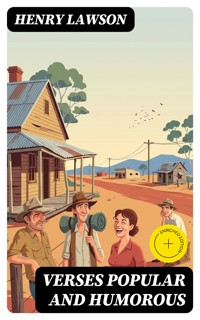
In "Verses Popular and Humorous," Henry Lawson presents a collection of poems that encapsulate the intricacies of Australian life with remarkable wit and keen observation. This work reflects his unique literary style, characterized by colloquial language and a sardonic humor that underscores both the realities and absurdities of rural existence. Lawson adeptly employs verse as a medium to engage with themes of identity, social disparity, and the Australian sense of place, inviting readers to experience the vibrant tapestry of the country's diverse landscapes and its multifaceted populace. Henry Lawson, often regarded as one of Australia's most significant literary figures, draws upon his own experiences of hardship and an ever-evolving society. His early life, marked by challenging circumstances as the son of a selector, shaped his acute awareness of social injustices and fueled his desire to articulate the struggles and resilience of the Australian populace. Lawson's background allows him to navigate the line between humor and pathos, bringing forth a genuine connection to his subjects that resonates profoundly with readers. I highly recommend "Verses Popular and Humorous" to those interested in Australian literature or anyone seeking a rich portrayal of the human experience. Lawson's ability to weave humor with poignant social critique offers a compelling read that is as enlightening as it is entertaining. In this enriched edition, we have carefully created added value for your reading experience: - A comprehensive Introduction outlines these selected works' unifying features, themes, or stylistic evolutions. - A Historical Context section situates the works in their broader era—social currents, cultural trends, and key events that underpin their creation. - A concise Synopsis (Selection) offers an accessible overview of the included texts, helping readers navigate plotlines and main ideas without revealing critical twists. - A unified Analysis examines recurring motifs and stylistic hallmarks across the collection, tying the stories together while spotlighting the different work's strengths. - Reflection questions inspire deeper contemplation of the author's overarching message, inviting readers to draw connections among different texts and relate them to modern contexts. - Lastly, our hand‐picked Memorable Quotes distill pivotal lines and turning points, serving as touchstones for the collection's central themes.
Das E-Book können Sie in Legimi-Apps oder einer beliebigen App lesen, die das folgende Format unterstützen:
Veröffentlichungsjahr: 2022
Ähnliche







Verses popular and humorous
Table of Contents
Introduction
Verses popular and humorous is a single-author gathering of Henry Lawson’s poems, first issued in 1900 by Angus & Robertson in Sydney. Drawn chiefly from pieces that had circulated in periodicals during the 1890s, the volume presents the strand of Lawson’s work that took hold with a wide reading and reciting public: direct, memorable, and made for the ear. While the emphasis is on popular and comic effects, the selection also includes meditative and elegiac notes, reflecting the breadth of Lawson’s concerns. This edition brings the poems together as a coherent portrait of the writer at the turn of the century, poised between bush legend and emerging city life.
Scope and purpose here are circumscribed and clear: this is not a complete poetical works, nor a miscellany of stories or essays, but a curated collection of verse. The contents range across ballads, songs, dramatic monologues, and brief satirical squibs, often designed for public recitation. They sit alongside a Preface and a suite of illustrative Vignettes by Frank P. Mahony, whose drawings companioned Lawson in print and contribute a visual counterpoint to the poems’ scenes. Together they showcase the author’s most approachable modes without attempting an exhaustive survey, offering readers an entry to the cadence, humour, and pathos that underpin his reputation.
Many pieces turn on the realities of rural labour and travel, shaping an informal chronicle of bush work and movement. The shearing-shed cycle — including The Boss Over the Board, The Ballad of the Rouseabout, When the Ladies Come to the Shearing Shed, and The Green-Hand Rouseabout — captures camaraderie, hierarchy, and the comic misadventures of seasonal employment. The transport poems, from Song of the Old Bullock-Driver to The Lights of Cobb and Co., map the tracks that bound remote lives together. Elsewhere, Reedy River, Old Stone Chimney, and The Song of the Darling River evoke place with compressed narrative and a distinctively Australian idiom.
The maritime and the metropolitan share equal footing with the inland. The Ports of the Open Sea and The Outside Track frame the ache of departure and the cosmopolitan margins where ships and migrants intersect. Sydney-Side and The Captain of the Push pivot to streets, lanes, and larrikin camaraderie, examining the humour and hazards of city life without ornament. Years After the War in Australia looks at public memory amid changing towns, while The Days When We Went Swimming recalls childhood freedoms along suburban waterholes. Taken together, these poems widen Lawson’s canvas beyond bush myth, anchoring it in harbours, pubs, and rowdy meeting-places.
Satire and social critique course through the volume. Second Class Wait Here studies the everyday choreography of class and exclusion. The Bursting of the Boom and Antony Villa: A Ballad of Ninety-three register the aftershocks of the 1890s crash, while The Men We Might Have Been and The Way of the World weigh aspiration against circumstance. In The God-Forgotten Election and The Boss’s Boots, politics and employment are read at ground level, with humour used to puncture pretension rather than to scorn the vulnerable. The tone is sympathetic, sceptical, and often wry, attentive to systems as well as to individual fates.
Lawson’s stylistic signatures are consistent: an economy of phrase; spoken rhythms suited to campfire, platform, or pub; and a diction rooted in everyday speech. He reflects on craft and reception within the book itself, as in The Uncultured Rhymer to His Cultured Critics, The Writer’s Dream, My Literary Friend, and Written Afterwards, where the figure of the working poet faces taste, fashion, and fatigue. Elsewhere, playful addresses and friendly nods to contemporaries appear without pedantry. Across the whole, humour and melancholy are interleaved, and the music of the ballad form carries narratives that are clear without being simplified.
Verses popular and humorous endures because it binds vivid particularity to recognisable human contours: loyalty and rivalry in The Men Who Come Behind, convivial blessing in Here’s Luck!, ethical imagination in The Christ of the ‘Never’, stoic resilience in The Ships That Won’t Go Down, and satire tempered by compassion throughout. As a single volume it offers an essential map of Lawson’s poetic terrain, balanced between bush and city, jest and judgment. It remains a touchstone for understanding how Australian experience was rendered in verse at the cusp of nationhood, and how a plain voice could carry lasting literary weight.
Historical Context
Published by Angus & Robertson in Sydney in 1900, Verses Popular and Humorous gathered poems Henry Lawson had written during the turbulent 1890s. The collection appeared on the eve of Australian Federation (1901), amid a surge of cultural nationalism championed by the Bulletin under J. F. Archibald and critic A. G. Stephens. Lawson, born in 1867 on the NSW goldfields and raised near Mudgee, brought a rural worker’s idiom to city readers. Frank P. Mahony’s accompanying vignettes linked the book to the Bulletin’s visual style, situating Lawson among the “Bulletin school” realists who sought a distinctly Australian voice grounded in everyday experience.
Many poems arise from the wool industry that dominated colonial exports from the 1860s to the 1890s. Shearing sheds, rouseabouts, jackaroos, and droving camps provided Lawson with settings to explore mateship, hierarchy, and seasonal hardship. The unionisation wave culminating in the great shearers’ strikes of 1891 and 1894, and the consolidation of the Australian Workers’ Union in 1894, frame pieces such as The Boss over the Board and The Ballad of the Rouseabout. Against the squatter–selector conflict and itinerant labour markets, Lawson’s vernacular lines honour skill while criticising exploitation, reflecting a labour movement that increasingly linked bush experience to democratic reform.
The severe 1890s depression shapes Lawson’s urban and rural portraits. The 1890 Maritime Strike, followed by the banking collapse of 1893 and mass unemployment, shattered the “Marvellous Melbourne” boom and humbled Sydney speculation. Poems like The Bursting of the Boom, Antony Villa: A Ballad of Ninety-three, and Second Class Wait Here register economic dislocation, class stigma, and the humiliations of cheap travel and pawnshops. The swaggie of hard times moves through this landscape alongside failed speculators and shopkeepers. Lawson’s irony targets boom-time bravado and official indifference, aligning his verse with radical newspapers and the emerging Labor Party’s critique of finance.
Changing transport and communications underwrite Lawson’s sense of distance and change. Cobb & Co., the coach company founded in 1853, had linked inland townships before railways spread in the 1880s–90s; The Lights of Cobb and Co. memorialises a system eclipsed by steam. Bullock teams and river steamers persist in Song of the Old Bullock-Driver and The Song of the Darling River, evoking an economy moving wool and stores across difficult country. Ports of the Open Sea and coastal pieces note the coastal trade that connected Sydney, Brisbane, and the southern colonies, while the telegraph and timetable compress bush isolation into nostalgia.
Environmental extremes give the collection its harsh weather and stoic tone. The “Federation drought” of roughly 1895–1903 devastated stock and river traffic, especially on systems like the Darling; Lawson’s River poems, and vignettes such as Rain in the Mountains and A May Night on the Mountains, balance scarcity against fleeting relief. Reedy River and The Cattle-Dog’s Death register intimate costs borne by workers and animals. The Christ of the ‘Never’ invokes the remote “Never-Never” of northern and western interiors as both ordeal and moral measure, extending Lawson’s argument that endurance, not triumphal pioneer myth, constitutes the settler ethic.
Urban transformation in Sydney supplies a counterpoint to bush realism. Rapid population growth, slum districts around The Rocks and Surry Hills, and casual wharf labour after the 1890 strike shape portraits in Sydney-Side, The Captain of the Push, and pieces about petty courts and constables. Larrikin “pushes,” active from the 1870s, appear with their rough codes and street theatre, while pub culture colours Old Jimmy Woodser and Here’s Luck! Railway class divisions in Second Class Wait Here and comic contests in At the Tug-of-War reflect leisure under hardship. Lawson’s sympathy for working-class communities tempers satire with civic intimacy.
The collection emerges from the 1890s “Bulletin debate” over bush representation, pitting Lawson’s grim realism against A. B. “Banjo” Paterson’s romance. Allusions in The Man from Waterloo (With kind regards to “Banjo.”) and the defiant The Uncultured Rhymer to His Cultured Critics position Lawson within a populist, anti-pretension stance. Ballad metres suited recitation in sheds, pubs, Mechanics’ Institutes, and union halls, widening his audience beyond literati. A. G. Stephens’s advocacy and Angus & Robertson’s marketing of local authors reinforced a claim that vernacular speech, satire, and class consciousness could constitute literature, not merely newspaper filler or bush doggerel.
By 1900 readers readily recognised Lawson’s types—shearers, rouseabouts, larrikins, and weary swagmen—because they mirrored national debates about work, citizenship, and belonging. The approach to Federation, imperial wars abroad, and drought at home sharpened interest in voices that stressed solidarity over grandeur. Verses Popular and Humorous consolidated Lawson’s reputation as a spokesman for the ordinary, helped by Mahony’s images and accessible pricing that extended circulation across the colonies. Its mixture of satire, elegy, and workplace anecdote shaped classroom recitation and union culture alike, anchoring an enduring mythos of mateship and irony that would inform Australian letters well into the twentieth century.
Synopsis (Selection)
Opening Materials (Preface; Vignettes by Frank P. Mahony)
The preface frames a compact program: to catch popular and humorous slices of Australian life in clear, workmanlike verse.
The vignettes signal an illustrative, snapshot approach that aligns with Lawson’s sketch-like brevity and eye for everyday types.
Sea Roads and Wanderlust (The Ports of the Open Sea; The Outside Track; The Rovers; Foreign Lands; The Dons of Spain; The Ships That Won't Go Down)
These pieces follow ships, ports, and the restlessness of rovers, lingering on partings and the magnet of distant coasts.
Ballad rhythms and rueful clarity balance freedom’s romance with loneliness, resilience, and the stubborn will to keep afloat.
Sydney-side and the Push (Sydney-Side; The Captain of the Push; Billy's 'Square Affair'; A Derry on a Cove; Constable M'Carty's Investigations; At the Tug-of-War; The Boss's Boots; Here's Luck!)
Urban sketches bustle with larrikin codes, pub spectacles, and small-time scrapes under the watch of dubious authority.
Lawson’s dry humor and streetwise vernacular celebrate camaraderie while pricking pretension and petty power.
Shearing Sheds and Station Work (The Boss Over the Board; When the Ladies Come to the Shearing Shed; The Ballad of the Rouseabout; The Green-Hand Rouseabout; The New Chum Jackaroo; The Shakedown on the Floor)
On the shearing board and in rough quarters, bosses, rouseabouts, and greenhands navigate seasonal graft and comic upsets.
Brisk yarns and slangy cadence honor craft and mateship while deflating heroics with social awkwardness and bush etiquette.
Pioneers, Roads, and Settlement (How the Land Was Won; Song of the Old Bullock-Driver; The Lights of Cobb and Co.; Old Stone Chimney)
Pioneer transport and homestead remnants chart the carving of roads and the fading of households to a single chimney.
The tone is elegiac yet unsentimental, weighing toil, movement, and memory against the stark ledger of what endures.
Rivers, Rains, and Ranges (Reedy River; The Paroo; The Song of the Darling River; Rain in the Mountains; A May Night on the Mountains)
River-voiced ballads and mountain vignettes center drought, flood, and rare, cleansing rain as characters in their own right.
Nature’s beauty remains indifferent, and Lawson’s steady music turns landscape into a moral backdrop for endurance.
Mateship, Faith, and Creatures (The Old Jimmy Woodser; The Christ of the 'Never'; The Cattle-Dog's Death; The Stranger's Friend; Saint Peter)
Portraits of solitary drinkers, humble saviors, faithful dogs, and unexpected benefactors test the ethics of companionship.
Plain diction and gentle irony seek grace in rough settings while questioning sanctimony and formal piety.
Wars, Work, and the Public Square (Years After the War in Australia; The God-Forgotten Election; Rise Ye! Rise Ye!; Second Class Wait Here)
These civic pieces glance at veterans, remote elections, protest, and classed queues to show institutions grinding ordinary lives.
Skeptical rather than grand, they call for fairness and solidarity in the same breath that punctures pomp.
Booms, Busts, and Battlers (The Bursting of the Boom; Antony Villa (A Ballad of Ninety-three); The Way of the World; The Battling Days; Written Afterwards; The Men We Might Have Been; But What's the Use)
Economic ballads dissect overreach and collapse, then sift through fatigue, hindsight, and stubborn survival.
Stoic and sardonic, they trace luck and class with Lawson’s spare cadence, circling what was lost and what must be borne.
Love, Class, and Social Comedy (Mary Lemaine; Mary Called Him 'Mister'; Rejected; O'Hara, J.P.; A Little Mistake; A Study in the "Nood"; The Ballad of Mabel Clare)
Courtships, refusals, and misread signals collide with class decorum and small-town authority’s foibles.
The comedy ranges from gentle to barbed, exposing vanity and convention while sparing the fallible with a wry shrug.
Mateship: Rifts and Rites (Bill and Jim Fall Out; The Jolly Dead March)
These poems map quarrels and reconciliations, then the ritual cheer that binds the living to the remembered dead.
Pathos is tempered by pub-wit and restraint, showing bonds that fray, mend, and finally persist in ceremony.
Literary Masks and Arguments (The Uncultured Rhymer to His Cultured Critics; The Writer's Dream; My Literary Friend; The Men Who Come Behind; A Word to Texas Jack; The Man from Waterloo (With kind regards to "Banjo."))
Meta-poetic sallies defend popular verse, lampoon pretension, and spar with rivals through parody and persona.
Combative yet playful, they assert vernacular authority and debate legacy within the bush-ballad tradition.
Sport, Stunts, and Pub Antics (The Grog-an'-Grumble Steeplechase)
A farcical bush steeplechase turns drink-fueled bravado into communal chaos and comic spectacle.
Fast patter and colloquial punchlines celebrate rough sport while winking at its self-mythologizing.
Homestead, School, and Youth (The Professional Wanderer; Trouble on the Selection; The Old Bark School; The Days When We Went Swimming)
Wanderers, selectors, pupils, and swimmers reveal bush upbringing, household struggle, and the rites of learning and leisure.
Nostalgic but clear-eyed, these pieces prize resilience and shared memory over romance, shaping identity from country life.




