


1,49 €
Mehr erfahren.
- Herausgeber: Atlantic Books
- Kategorie: Für Kinder und Jugendliche
- Sprache: Englisch
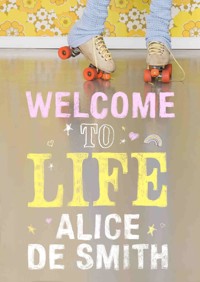
In politically correct middle-class Cambridge at the tail end of the 1980s, Freya's nouveau riche parents are, well, different. Millie, her mum, doesn't have a maternal bone in her body. Self-obsessed, driven, and never far from a glass of Chardonnay, she seems to care more about her career than she does about Freya. Hugh, her dad, made his money as a property developer, but when the recession bites he slumps into what proves to be a terminal malaise. And things get even stranger when Edward moves in and it slowly dawns on Freya that he may sleeping in beds other than his own... Welcome to Life is a coming-of-age story with a twist - a sparkling, darkly humorous and provocative novel about family dysfunction, friendship and finding love in all the wrong places.
Das E-Book können Sie in Legimi-Apps oder einer beliebigen App lesen, die das folgende Format unterstützen:
Veröffentlichungsjahr: 2009
Ähnliche








![Tintenherz [Tintenwelt-Reihe, Band 1 (Ungekürzt)] - Cornelia Funke - Hörbuch](https://legimifiles.blob.core.windows.net/images/2830629ec0fd3fd8c1f122134ba4a884/w200_u90.jpg)





Welcome to Life
Alice de Smith was born in Cambridge, but now lives in Newcastle-upon-Tyne. She is a playwright who has also worked as a features and travel writer for national newspapers. Welcome to Life is her first novel.
Welcome to Life
Alice de Smith
Atlantic Books
LONDON
To my mother, Barbara
First published in hardback and export and airside trade paperback in Great Britain in 2009by Atlantic Books, an imprint of Grove Atlantic Ltd.
This electronic edition published in 2009 by Atlantic Books, an imprint of Grove Atlantic Ltd.
Copyright © Alice de Smith, 2009
The moral right of Alice de Smith to be identified as the author of this work has been asserted by her in accordance with the Copyright, Designs and Patents Act of 1988.
All rights reserved. No part of this publication may be reproduced, stored in a retrieval system or transmitted in any form orby any means, electronic, mechanical, photocopying, recordingor otherwise, without the prior permission of both the copyright owner andthe above publisher of this book.
This novel is entirely a work of fiction. The names, characters and incidents portrayed in it are the work of the author's imagination and not to be construed as real. Any resemblance to actual persons, living or dead, events or localities, is entirely coincidental.
A CIP catalogue record for this book is available from the British Library.
ISBN 978 184887 314 8
Atlantic Books An imprint of Grove Atlantic Ltd Ormond House 26–27Boswell Street London WC1N 3JZ
www.atlantic-books.co.uk
Contents
One
Two
Three
Four
Five
Six
Seven
Eight
Nine
Ten
Eleven
Twelve
Thirteen
Fourteen
Epilogue
Acknowledgements
One
Now that my mother is dishonoured and has been variously denounced as degenerate, irresponsible, a lush and a whore, it's hard to believe that once she ruled my life with whimsied severity. Every night Millie wrote me a list, which she placed at the end of my bed. She could easily have confined herself to daily tasks, such as swim, feed rabbits, pick up repeat prescription. But she couldn't help but include not-very-nice suggestions for personal development – smile more, stand up straight. No comeback or discussion was permitted. The year was 1989, the time we stopped listening for the four-minute warning and instead started worrying if we'd ever get a job. I, aged fourteen, had a long wait ahead before I could deal my mother her comeuppance.
We were supposed to throw the lists away, but I preferred to keep them, items left ostentatiously unticked. Hugh says he married Millie because of her lists, but he has to be lying. No one would choose a wife like that. As for me, I wished for a single day when I could just wake and breathe. Maybe she'd get bored. She'd realize it was stupid to corral our universe and control of our lives would be devolved to us at last. The tiny scraps of paper, written on the backs of envelopes, Post-it notes and fast-food menus, penned in her curlicued hand, lie desiccating in my bedroom, like so many leaves of filo pastry. Even now, years later, when I come in the front door, I half expect to find a querulous message printed across a piece of junk mail, insisting I declog the drain in the upstairs bathroom.
Those lists were permanent proof of Millie's state of mind. Other parents could pretend they'd never promised to buy a pony or cancel Christmas. But even at fourteen I could cross-reference anything my mother said to an irrefutable, contemporaneous document. I never drew her attention to inconsistencies, however. I simply took note of them, knowing that one day I'd be able to call her to account. Sadly, I waited too long for this day of reckoning. I missed my chance.
Now that I'm older, I've started reading and rereading the lists, questing for subtext. The subject matter is revealing: for example, she emphasized the importance of swimming. I believe she was urging me away from her own bad habits. My mother couldn't make it to the newsagent's and back without getting breathless. 'Everyone's got their own idea of fun,' she'd say. 'Yours, Freya, is a crime scene or something. God knows. Nothing normal, at any rate. Mine's a bit more traditional – booze and fags. S'not like I'm hurting anyone.' Safe to say, she wasn't like other people's mothers.
When I'd ask my father why she was different, he always said the same thing: 'Can't be helped, sweetheart. It's because she used to be working class.'
When she wrote 'Feed rabbits', she was encouraging me to nurture – never her favourite activity. I'd taken on the rabbits in question so I could investigate the Harmisteads next door. Mrs H. dressed like Lady Di and whistled through her teeth when she spoke. Her husband was a doctor who wore navy-blue blazers. 'He's not a very good doctor,' Millie told me. 'Only an anaesthetist. They don't really count.' The Harmisteads' rodents were a new addition, since their youngest son had gone to university. 'Only a redbrick. Just goes to show,' said my mother, unimpressed, as per. When we went round their house for Christmas drinks, the Harmisteads talked about congestion on the A14 and other road routes. My parents joined in with enthusiasm, like they were in a boring contest, with cash prizes.
Mrs H. had decided to keep rabbits instead of children and to sell them through small ads in the Cambridge Evening News. I'd only have them in the back garden for a week, while she and her husband were off on a fly-drive to Canada, but the animals didn't like being trapped in a cage and I wasn't allowed to set them free. The bunnies, with their half-blind vulnerability, made me queasy. I was scared to touch them in case somehow they'd be crushed. I wanted to cuddle them, but they were the wrong size. They didn't have the chunky robustness of a cat or a dog.
'You poor little thing.' Mrs H. ruffled my lank hair. 'No brothers, no sisters, no pets. Bit of bunny love – that's what you need.' Mrs H. hadn't noticed that I was 5'8" and could already get served in pubs. She'd have been shocked if she knew what I thought when I watched Sasha, the best-looking boy in town, cycle down the main road. Just seeing him gliding past, no hands on the handlebars, made me feel funny all over. But still, the rabbits were a nice thought. I couldn't help wishing they were something more manageable, that gave me a better return on my emotional investment. My father taught me the importance of investing wisely, in all areas of life. It was a knack he'd picked up in the property game. 'When there's a recession on, you have to keep an eye on the figures,' he'd say. I just wish he'd listened to his own advice. If he had, then none of what I'm about to tell would've happened.
Some of Millie's directives were totally unfair. 'Be less scary', for instance. How could I be less scary when no one feared me? I even got 'pleasant disposition' on my last report card, along with 'consistently cooperative attitude'. But she found me inscrutable and therefore sinister. She thought, as if by magic, when I hit adolescence we'd become the bestest gal pals, all gossip and home manicures, even though she chewed her cuticles and I bit my nails to the quick. Still, I can't say she never taught me a thing or two. She advised me that car exhaust fumes melted fifteen-denier tights and when I wore foundation, not to forget the tip of my nose. This was pretty much the limit of her feminine wisdom, though. She hung out in pubs, not restaurants. She preferred football to tennis and could crack open a walnut with one hand. That was my mother for you.
Her lists were just the beginning of the records I kept. I took note of my family's bank statements and numbers most frequently dialled. I knew which songs they whistled without even realizing it, and that while Hugh trimmed his own nose hair on a daily basis, his eyebrows were Millie's responsibility. Hugh said I was like one of those children who denounced their parents to the Stasi for muttering sedition in their sleep. He called me Miss Moneypenny, which was him trying to be nice, but which I considered insulting, because she was only a secretary and never went on any missions.
The problem with my so-called care-givers was that being so accessible, they were barely worth the effort of investigation. They seldom left the house except to go to work and they spent their evenings reading middle-brow novels or watching TV detective series. They were nearly as dull as the Harmisteads. Whatever social lives they had took place outside of the home, apart from each other and unobservable by me, in the form of after-work drinks. The boredom and disappointment they selfishly inflicted upon me forced my attention towards better parents, other lives.
The Glinkas lived half a mile down the road from us, where the city petered out, in a grotty farmhouse they'd bought on the cheap. There was no point them doing it up, since they didn't even own the land it was built on. The yellow brick exterior looked like it'd been chewed by a giant rat. 'Very poor investment,' said Hugh, as he passed his hand over his closely cropped grey scalp. The gesture looked as though it dated from some past time, when his hair had been longer and more luxuriant.
The Glinkas' was a domestic Shangri-La, a buffer between school and home. It was always Mrs Glinka I talked to – never Roman, her husband. I'd never have dreamt of speaking to Sasha, her son, because every time he came near me I could feel my blood cells crashing against each other like erotically charged dodgems. But that Tuesday afternoon at the fag-end of the summer term, on a day so hot that steam rose from the Fens, I got the attention I craved. For a moment, at least.
Roman Glinka had once been Russian, the distant descendant of a poet I'd never heard of. He was also a poet, but not a famous one, or one who made any money. He'd arrived in Cambridge during the 1970s, when his recitals got standing ovations, even though the audience didn't understand a word. Now there were no more ovations. Mr Glinka ran a dress shop in town which sold clothes for the larger lady.
Mrs Glinka came from somewhere horrible like Lowestoft, and spoke with a faint East Anglian accent. You could hear it most when she said noice instead of nice. With her baroque earrings and hair the colour of melted sunshine, it was her not her husband who was Slavic and mysterious. Her father had been a minor nobleman from Tallinn, stranded in England after the revolution. He married the daughter of a sub-postmaster and together they'd run an unsuccessful chicken farm. In her union to Roman, Mrs Glinka was restoring the family to its former eminence.
She wore full dark skirts and tight synthetic blouses. When she got emotional, the blouse buttons strained and burst open, even. She often spoke with her husband's grammar, in choppy little sentences, forgetting to use 'a' and 'the'. 'Just because you ask question, doesn't mean you get answer' – that's what she told me when I overstepped the mark.
I could always find her in her tiny, gadget-free kitchen, with its Formica furniture and cast-iron stockpots. Here she cooked, sewed, embroidered and cleaned. She was constantly in motion, feet gliding, arms jerky. She'd have been perfectly at home telling the hour in a clock in Austria.
'You'll see.' She fixed her stern dark eyes upon me. 'When you have kiddie winkies of your own. Home – that's what counts. I was going to be a lawyer, or finish my Ph.D. But soon as I held little Sasha in my arms, that was it. I knew I'd spend the rest of my life at home with my ryebyonok.' But now her ryebyonok was eighteen years old and Mrs Glinka was starting to look a bit mad. But then, if I'd ever held her Sasha in my arms, I might have felt the same.
Sasha, like his father, was functionally mute and I almost hoped he'd stay that way. He was boy-band beautiful, with white blond hair and a honeyed tan. Whenever he walked into the kitchen, he saw me and didn't see me – both at the same time. He possessed the doleful grey eyes of a prince bereft of his kingdom. In my mind, the unspoken bond between us was so powerful, that if ever we got round to having an actual conversation, the sky might splinter. I'm not sure what he thought of me. He probably didn't think of me at all. He most likely thought about motorbikes or beer.
I knew Sasha by sight long before I ever actually met him. His blondness, his confidence, his ubiquity – that made him unmissable. Sasha was special. Mr Cambridge, Jessica called him. He was always lounging in the corner of Berlucci's, my favourite café, cadging a free slice of torta al cioccolato off of Rosalina the waitress. His laughs, dank and sooty, were pitched just under the general noise of the café. He'd pick stuff up off the table – a salt cellar, a wallet, a hat, and juggle with them – sometimes one-handed. I tried juggling at home but I couldn't, not even with only two objects and using both hands. Where had he learned to convey such confidence? Even if he was just copying some style from a mag or a bloke he'd seen walking down Carnaby Street, Sasha was, as Miss Gillis, my Classical Civilization teacher, would say, sui generis.
That afternoon, Mrs Glinka snowed her kitchen table with flour. She kneaded bread which was soft and plump as her bare arms. 'This,' she said, as she punished the dough with furious hands, 'this is happiness. Caring for family. Most important job in the world. Total fulfilment.'
While she glazed the loaves with an egg wash, she told me that unemployment was high because young people were lazy. When I asked her about the global economic downturn, she just said glasnost was a stupid idea which would end up with England being flooded by low-class Soviets who spat in the street. Pre-marital sex was a sin, she said. She was Catholic and her husband was pravoslavni, but on this matter, they were in agreement. 'Atalanta,' she said. 'There's a role model for you. Be like Atalanta. Running fast fast, beating all the boys. Only no stopping to pick up the apple.' Mrs Glinka had a degree in Classics – the real thing, not Class. Civ. like we did at school – but it wasn't like she'd done anything with her education. My parents, who'd hardly an exam between them, got to make important decisions and drive nice cars, but Mrs Glinka stayed home not working, making no money, influencing nothing.
During those moments of stillness while we waited for the bread to rise, she told me about her menopause, about posture, about men's carnality. She thought poor people should have their benefits taken off of them, that dogs shouldn't be castrated, that tramps should be given a clear choice – sober up, or voluntary euthanasia. I admired the fact that Mrs Glinka had bothered to think through the problems of society: it was just her solutions that I didn't like. I smiled and didn't listen, but that didn't seem to bother her. She'd work on me slowly, like rain on a stone. Recently, it had occurred to me that Mrs Glinka might be rather old-fashioned, even by East European standards. Yugoslavia, after all, had just won the Eurovision Song Contest, and although the band hadn't been cool in any way, they'd looked and sounded pretty up to date for people who lived behind an Iron Curtain. I suppose it didn't matter that Mrs Glinka disapproved of humanity in general and modern Western mores in particular. At least she approved of me.
That afternoon she took a lock of my hair in her hands. 'Beautiful, beautiful,' she murmured. But I knew my hair was not beautiful. It was neither dark like my mother's nor fair like hers. Mine was somewhere in between, as if God had simply not bothered to make me descript. Sitting at her kitchen table, though, I knew I was being treated as I should be, with total concentration. My own mother noticed only if I was home or not, clean or dirty, fed or hungry. Mrs Glinka, though, she massaged my shoulders when they grew stiff. She remembered everything I told her.
'How's school?' she asked.
'OK,' I lied. 'Millie got me a new skirt. I don't like it.'
She stared at my new uniform. 'A-line! Unbelievable. You're ten years out of date. Take it off. I'll fix it.'
I hesitated. I wasn't sure I wanted to take fashion advice from such a dubious source. Ever since I had first met Mrs Glinka two years previously at a Saturday morning screening of Andrei Rublev, where we were the only two members of the audience, I'd never known her to pay the teensiest bit of attention to what she wore. Not like Millie, who bought new outfits each season, saying, 'Otherwise, I'll look like a freak.'
Mrs Glinka must have seen me scanning her ten-year-old coordinating separates. 'At my age and size, you find a style you can fit into and stick with it. Do as I say, not as I do.'
Even if I let her change my skirt, I didn't want to be sitting in my undies. What if Mr Glinka or, God forbid, Sasha came home? But in this, as in other matters, Mrs Glinka gave me no choice. 'Off! Off! I'll fix it. Won't take a minute.'
She whipped my skirt away to the sewing machine in the corner where she stitched two new seams, one down each side of the burgundy serge. I sat on a cold chair in my pants while she urged the pedal up and down. At the kitchen window, out of the corner of my eye, I could see the blur of a face. Sasha. Had to be. I blushed at the thought of him looking at me with my bare legs, dressed in only a shirt and a pair of navy cotton knickers. He should know when not to look. I turned my head to meet his gaze, head on. For a slow second our eyes met. I crossed my legs. I waited to feel my inevitable, shameful blush, but my skin stayed cool and pale and my stare remained fixed. Only the sick astonishment in my mouth told me what a very terrible thing was happening. It couldn't be real that he was standing there watching me and that I was letting him. Then he pressed his nose to the window, turning it into a nasty porcine snout. I must have looked like a pig myself just then, with my thighs splayed out on the seat of the chair, which would make them look much fatter than they actually were. I laughed, even though he wasn't funny.
Soon as she saw my mouth twitch, Mrs Glinka shot a glance towards the window. But Sasha had already disappeared, leaving only a smudge of grease and breath where his face had been.
Ten minutes later, my skirt, updated, hugged my legs. I modelled, to Mrs Glinka's applause.
'I had legs like yours,' she said, 'when I used to be a dancer. Just like yours. Don't you dance? You must! You were born to dance. Anyone can see that.'
I knew if I stayed I'd get hot bread dipped in runny home-made jam. I could smell the loaves in the oven, sending my stomach crazy, but they'd not be done for an hour yet, and Millie liked me there when she got home from work. When the late afternoon made the cornfields rusty, I said my goodbyes.
I wheeled my bike out along the dirt track which led to the main road. Sasha was lolling on the front lawn, reading a motorbike magazine. His fringe flopped in front of his eyes, so he kept having to brush it aside, slowly, lazily. He was naked except for a pair of khaki shorts. Above the waistband, on his lower back, the sunlit fuzz was brittle as spun sugar. As he propped himself up on his elbows, I had an uninterrupted view of his chest, with its subtle undulations of muscle and bone.
'Hey,' he said.
'Hey.' I stood in front of him, shielding my eyes from the sun. His voice, just the sound of one syllable, gave me vertigo.
'Want to see something, Freya?' He rose to his feet and gestured towards the garden shed.
No one had ever invited me behind a shed before. At primary school, boys had looked inside each other's shorts. Girls weren't really allowed, though, because they'd get into trouble, which seemed unfair, because the boys never did. Then in senior school the girls went behind the classroom to have a fag and they thought no one knew, but anybody with half a nose could tell what they'd been up to. Eighteen-year-olds like Sasha must be doing far worse behind sheds than looking down shorts or having a puff or two of Silk Cut.
He took my silence as a yes. He threw down his magazine and strolled away from the house. I hesitated for a few numbed seconds, then I laid my bike down on the path and followed him.
Behind the shed we were hidden both from the house and the road. He leaned against the lichened woodwork, took a tin from his pocket, pulled out a pre-rolled cigarette and offered it to me.
I shook my head. 'I don't smoke.'
He leaned closer. He smelled of alcohol from where he'd been lying on the half-fermented grass. He rolled the cigarette between his forefinger and thumb, like he was testing the rustle of a half corona.
'It's not a cigarette,' he said.
'A rollie, then.'
'Nah-uh. You a div or something? Can't you work it out?'
I should've replied with a laugh or a witty riposte, but I didn't know what I was riposting. He tore off the twisted end of his roll-up, then lit it. He dragged on the filter, inhaled deeply, exhaled slowly. The smoke had the same aniseedy whiff that hung around the Strawberry Fair on Midsummer Common.
When he offered it to me, I shook my head.
'One drag.'
'Not interested.'
He smiled. 'No fun alone. One drag, and I won't tell my mum on you.'
'What d'you mean?'
'How you've turned up here, trying to corrupt me with illegal substances.'
'She won't believe you.'
'She can see your dark side. She's got the power. Rumours're all true – witchcraft alive and well. Me, though, I am without stain. The chosen one. I can do no wrong.'
'Dob me in, then,' I said. 'Nothing to tell.'
He paused, then grinned. 'You're right. Even if there was – something to tell, I mean – I still wouldn't. Not a dickie bird.' He leaned yet an inch closer. 'Perfect gentleman, me.'
'I'm not doing it.'
'Well, don't then. But think about it. You're bound to try spliff eventually, because everybody does. Even the Queen and Prince Philip and stuff.'
'They do not.'
'Don't be so naive. You might as well try it while you're in safe hands, not pissed at a party or in some stinky tent at Glastonbury or a dodgy caff in Amsterdam.'
I couldn't imagine myself pissed at a party, let alone the other scenarios. Sasha's reasoning was just like my mother's about alcohol – that administered by a knowledgeable adult, intoxicating substances lost their power to harm.
He held the joint to my lips.
I knew I'd be able to smoke it, because I'd have inherited the genetic ability from my mother. I'd watched her smoke for years. How hard could it be? I had no curiosity about the drug or its effects. I was sure – just like booze or anything else – it made people more stupid, and there was no need for that when people were really quite stupid already. But if I said no absolutely then Sasha might never speak to me again. Just a little try, just me pretending, that was all I'd need to do to keep the conversation going.
I took a tiny drag. I waited to feel choked, to cough and flounder. But instead, I gently let go of my breath. The merest thread of smoke unfurled from my parted lips.
'Clean lungs,' he said. 'Soaked it up like a sponge. Very nice.'
Beyond the shed, particoloured fields splayed flat before us – muzzy saffron tufts of oilseed rape. I could feel him next to me, his skin now only millimetres away from the fragile nylon of my shirt. He reached out his hand, then ran his forefinger up the back of my neck, stroking the hairs the wrong way, so that every follicle prickled.
'Sasha! Phone!' Mrs Glinka shouted from inside the house.
He pushed me out into the sunlight. 'Go do your homework.'
I was blinking, dazed.
'Go on. Shovey offy.' He made a shooing gesture towards my bike. 'Go home to your own mummy. You do have one, don't you?'
He turned on his heel and ambled towards the house.
He thought he'd got the better of me, but I didn't care. I'd seen the same thing in him that I felt in me: he was lonely.
I cycled down towards the main road, propelling myself as fast as I could along the raised centre between the ruts in the earth. Stones jolted the wheels beneath me, but I kept my balance. I didn't look back.
Sasha, I reminded myself, only had one over on me because he was half grown up already and could do what he liked. Apart from that, everything about me was better. He might have an IQ of 168, but because of his emotional problems, he couldn't even pass his exams. His mother had told me that. Plus my parents were richer, with a better house. Where you lived was very important – maybe the most important thing of all. Hugh was right about that.
Chez Hugh stood white and proud near the utmost edge of the city, where country gave way to town. The neighbours complained when we built it, but my father had a friend in the council planning office.
'I know!' he said. 'So out of sync with all the Edwardian round about. Bit naughty, really. But that's what makes it such very good fun.'
The most vital thing for my father was that our home should be tasteful. We had nothing furry or fluffy and absolutely no animal prints. No amateur stencilling around the walls, no furniture that wasn't either black, white or made of wood, and no carpets, wallpaper or radiators, even, because our heating came from beneath quarry floor tiles. Our walls weren't plastered. Exposed brick, it was called, painted white and shiny.
'Very smart,' according to Hugh. The wallpaper, fitted carpets and chandeliers preferred by our donnish neighbours – these were not smart.
On the rare occasions we entertained, everyone told Hugh how contemporary he was. How amazing! How surprising! They were jealous, obviously. Sometimes they made nasty comments. Heating must cost a fortune. But you don't have any storage space. Doesn't look very lived in. Gorgeous, yes, but not really a family home.
'But what is a family?' said Hugh. 'What is a home?'
That shut them up. My father was the expert. He understood what people really wanted and no one ever gave him credit for that.
I ran up into my bedroom, slipped off my shoes and flopped down on the bed. The humidity in the room squeezed against my ears. Sasha, I decided, was insignificant. It was his mother I came to see, not him. He had nothing to do with anything.
Downstairs the front door slammed. Millie's high heels clunked as she threw them on the floor and changed into the clogs Hugh hated because they reminded him of dinner ladies. Her footsteps, at first deafening, softened as she shuffled into the kitchen. I knew she'd be taking a bottle of wine from the fridge, then popping it open. Bin-end Chardonnay she was guzzling back then, which was a bit of a come-down. A few years before, when Hugh was raking it in, she drank only champagne.
The back door opened then banged shut. My mother liked to sit outside on the lawn, luxuriating in her first proper drink of the day. She wouldn't come find me for ages yet: she needed her quiet time. Then she screamed. The noise was faint at first, distant, like the yelling in a swimming pool. Then I heard the back door flung open again. The noise grew louder.
'Freya!' she shouted.
I didn't move. I'd wait till she stopped her noise. I was still replaying Sasha's teasing. I'd forgive him, I supposed, because at least he'd spoken to me. And he'd given me drugs and he'd seen me without a skirt on and stroked my neck, which was more excitement really than I'd ever had in my life. I wished there was someone at school I dare tell about it.
'FREYA!' she shouted louder.
I got up slowly and walked downstairs, the wooden steps sticky against my bare feet.
She stood in the hallway. 'I'm sorry, sweetheart. So sorry.'
She reached out her hands. At first, I thought she was going to hug me, even though she never hugged me because that was my father's job. Then I saw how her fingers were smudged with blood. The blood looked wrong. My mother never handled meat because she didn't like the feel of it. If we had mince, she plonked it straight from the packet into the pan. Even when I was little and cut myself, she dabbed on antiseptic with cotton wool so everything was clean, soon as. She never kissed it better. She must be sick or she's hurt herself, and I wished Hugh was there. My mother was terrible when she was ill. She'd never stay in her bedroom. She lay on the sofa in the sitting room, moaning and writhing. My father didn't mind getting her drinks and aspirin, but I hated it because I thought she was putting it on. So why the blood on her hands? What if she'd hurt herself on purpose so I'd feel guilty? Slit her wrists so I knew what a bad daughter I was? I wanted her to disappear.
'A dog must have got them,' she said. 'A fox, perhaps. Don't go out.'
'What d'you mean?'
'The … the outside. The rabbits.'
As I walked past her she tried to block my path, but I ducked underneath her arms, ran through the kitchen and out of the back door. I was cross with her then, because she should have just told me what'd happened. And she should never have tried to bar my way. I didn't care about the rabbits, but they were mine to look after. She'd no business interfering.
Out in the garden, the first thing wrong was their cage lying open. Then the air, which should have been loud with rabbity scratching, was silent. The rabbits could've run, but they hadn't. Most were still lying in the cage, quiet and still. One of them just looked like it was sleeping, but when I touched it, its fur was cold.
The grass round the cage was covered with blood and fur and baby rabbits with their heads bitten off, or their bottom halves missing. I couldn't remember how many of them there'd been. I didn't know if it was worth putting them back together again, trying to work out if perhaps just one of them had escaped the carnage.
I closed my eyes. I thought when I looked again, the scene might have changed and they'd still be alive. But when I raised my eyelids, they were still lying there, mauled and terrified.
I felt the heat of my mother's body as she stood behind me. Her breath was harsh. I waited for her to lay her hand on my shoulder, letting me know that whatever had happened, I was still her little girl. Instead, she inched back minutely, as if she'd thought of touching me, but changed her mind.
I never even fed them that morning. I'd forgotten, even though it was on my list. Perhaps it didn't matter. The fox came in the night, so in the morning they were already dead, before I left for school.
But what if the fox came later? Then the rabbits had died hungry.
My mother sighed and said, 'At least they had a nice life, while it lasted. I expect you'll still be wanting your dinner.'
Two
Cambridge in summer looks nice enough on postcards, all punting down the river and Granchester cream teas, straw boaters and floppy sun hats – but none of that meant anything to me. From June to September, tourists clogged the pavements. They sat on any available bench or piece of wall, occupied every seat in every café, turning my town into a place to be looked at and not one where people did things. My family never went punting because we didn't know how. My father, I think, was too scared to try in case he looked like an idiot. In summer, 'specially since we had outdoor space as well as indoor, we retreated even further than usual into our own territory. This was supposed to be fun for me, because children liked gardens, but how, at my age, was I supposed to get excited by an anthill or a ladybird? Nevertheless, soon as the evenings grew light, my mother, father and I would sit outside during the televisual vacuum between the six o'clock news and dinner, bracing ourselves against the chill with cardigans and car rugs. My mother regarded our alfresco moments as a luxury of middle-class life, which she could only dream of when she was growing up.
It's all very well for me to do her down, but Millie never had any privileges. Not to make allowances for that would just be churlish. She'd left school without any qualifications.
'Never did me any harm,' she said. 'Now, I suppose, you need a degree to scrub a bloody floor.' She never spoke of her schooldays, except to highlight some occasional horror. 'We went on a trip to the V and A. Had to bring a packed lunch. Bread and dripping, my mother gave me. Everybody laughed.' When she talked about her childhood, she was all hints and anecdotes. She came from London, where we hardly ever went, even though I thought it was brilliant. 'Spend enough time in Rotherhithe,' she said, 'and you'll change your mind.'
My parents weren't Cambridge people and there was nothing they liked about university life. They couldn't believe that people could go out to a lecture and call that entertainment. Even so, they'd decided that Cambridge was better than where they'd come from.
Hugh would say, 'You might not appreciate it here, but London's a shit-hole. You've had a lucky escape.'
Whatever had happened to them in our nation's capital, they couldn't go back. They were refugees, almost as bad as Mr Glinka. Millie's family left London after her father died, which was before I was born.
'Liver cancer,' she told me. 'Does awful things to your breath. The old boy snuffed it six weeks later. Never complained. Never said he was in pain. Just told us he loved us, then he lay down and died.' Her dad collected toy cars and my mother wanted one to keep – nothing pricey – just a little London bus or something. But my grandma sold the whole lot to some bloke who came to the funeral.
When I asked about my grandma, my mother said things like, 'Oh, she's marvellous. You'd love her. In fact, you remind me of her a bit.' But Millie hadn't spoken to her in years.
Hugh once said, when he was pissed, 'Your grandma, I'm afraid, is a bit of a bitch.' He'd only met her the once. 'She had dyed hair – squirrel red. Put her hand on my knee.' He paused to wink. 'Like mother like daughter.'
After Grandpa died, Grandma decided to have some fun. She sold the family house and went off and did things which Millie didn't like. Now she lived abroad, in Spain, maybe, but Millie always denied having her address or phone number. Perhaps I'll go see her one day. My mother had a brother and a sister too, Uncle Dave and Auntie Karen. I met them when I was little, but I couldn't remember them. 'Lucky you,' said Millie.
On the anniversary of her father's death, when she remembered, she bought a bottle of Scotch, even though she didn't like it, and drank it, because that's what her father would have wanted. She had her first drink when she was five, when her mother put brandy in her bedtime milk. Then, when her aunties came round, she'd have a sip of their port and lemon. Later, when she was my age, she started going out on her own. No one noticed because her father was on shifts, while her mother worked in a restaurant, taking reservations. Millie wishes she hadn't gone out now. She wishes she'd stayed in and done her homework. That's why I had to be different. Grandpa didn't like having a wife who worked, but working is what women in my family do.
'You've got to work,' said Millie. 'Otherwise, how d'you get your running-away money? My mum had hers stashed under the bed. Half her friends did 'n' all.'
I'd looked under her bed and knew there was nothing there. 'Where's your running-away money?' I asked.
She laughed. 'There are other ways.'
I wondered, if she ran away, would she take me with her?
My mother grew up fast, like I did. When she was my age she wore her mum's clothes. Then she went out to pubs and never needed any cash because the men bought her gin and tonics. In those days, no one ever expected a woman to put her hand in her pocket, she told me. 'By the time you're grown up, it'll probably be the other way around. Blokes'll be sat there, looking pretty, while you're the one going to the bar.'




