


0,49 €
Mehr erfahren.
- Herausgeber: DigiCat
- Kategorie: Gesellschafts- und Liebesromane
- Sprache: Englisch
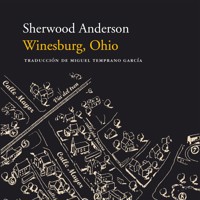
In "Winesburg, Ohio," Sherwood Anderson crafts a mosaic of interconnected short stories, portraying the lives of various residents in a fictional Midwestern town. With a modernist style that emphasizes psychological depth and symbolic meaning, Anderson explores themes of isolation, longing, and the human condition. The narratives are often introspective, employing a candid voice that delves into the characters' innermost thoughts and emotions, reflecting the early 20th-century American experience and laying the groundwork for the future of American literature. Sherwood Anderson, a pivotal figure in American literature, draws from his own experiences growing up in small towns to inform the rich tapestry of characters in his acclaimed work. Finely tuning observations of small-town life and the peculiarities of human relationships, Anderson channels his understanding of the complexities of solitude and community. His personal struggles, notably with alienation and artistic expression, resonate throughout the text, making it a profound exploration of the self. "Winesburg, Ohio" is a must-read for anyone seeking to understand the intricacies of human behavior and the subtle interactions within a community. Its profound insights and innovative narrative style make it not only a cornerstone of American literature, but also an enduring testament to the universal experiences that unite us all. In this enriched edition, we have carefully created added value for your reading experience: - A comprehensive Introduction outlines these selected works' unifying features, themes, or stylistic evolutions. - A Historical Context section situates the works in their broader era—social currents, cultural trends, and key events that underpin their creation. - A concise Synopsis (Selection) offers an accessible overview of the included texts, helping readers navigate plotlines and main ideas without revealing critical twists. - A unified Analysis examines recurring motifs and stylistic hallmarks across the collection, tying the stories together while spotlighting the different work's strengths. - Reflection questions inspire deeper contemplation of the author's overarching message, inviting readers to draw connections among different texts and relate them to modern contexts. - Lastly, our hand‐picked Memorable Quotes distill pivotal lines and turning points, serving as touchstones for the collection's central themes.
Das E-Book können Sie in Legimi-Apps oder einer beliebigen App lesen, die das folgende Format unterstützen:
Veröffentlichungsjahr: 2022
Ähnliche






Winesburg, Ohio
Table of Contents
Introduction
This single-author collection presents Sherwood Anderson’s Winesburg, Ohio—subtitled A Group of Tales of Ohio Small-Town Life—in its entirety and in the author’s designed sequence. Rather than a miscellany, it is a unified cycle of interrelated narratives focused on the fictional community of Winesburg. The book’s scope is intimate: portraits of townspeople whose ordinary routines conceal private urgencies. Read together, the tales form a composite view of place, memory, and character. The inclusion of an introductory piece, followed by the opening sketch The Book of the Grotesque, establishes the frame within which subsequent stories unfold, guiding readers toward patterns that accumulate across the collection.
Comprising interlinked short stories and character sketches, the collection is best described as a story cycle or novel-in-stories. Its contents range from brief vignettes to multi-part narratives, notably the four sections gathered under Godliness. Each piece stands as a discrete portrait while contributing to a cumulative design. No poems, essays, or letters appear; the book’s materials are wholly narrative prose. The chapters named for individual figures—such as Wing Biddlebaum, Doctor Reefy, Elizabeth Willard, and others—signal the focus on interior lives. Episodes centered on George Willard, a young reporter, supply connective tissue, tracing how one listener becomes a witness to a town.
Across these tales runs a humane yet unflinching inquiry into isolation, desire, and the difficulty of speech. The introductory sketch proposes a guiding metaphor: people shaped—sometimes warped—by a single idea they cling to, which Anderson names the grotesque. Subsequent narratives depict men and women struggling to express longings stifled by convention, fear, or habit. The small-town setting sharpens the paradox of nearness without understanding, as neighbors observe one another yet rarely communicate fully. Moments of attempted confession and glimpses of connection chart the fragile routes by which private feeling seeks a public voice without the certainty of being heard.
Anderson’s style is notable for plain diction, spare sentences, and rhythmic repetition that builds quiet intensity. He privileges the psychology of ordinary people over elaborate plotting, shaping scenes around small objects and gestures—hands, scraps of paper, windows, streets—that gather symbolic weight. The narrative voice often draws close to a character’s perception, then steps back to frame the town as a shared horizon. Dialogue is economical, the silences resonant. Together these techniques invite readers to supply what remains unspoken, producing a suggestive realism that feels both intimate and elliptical, and that suits a book concerned with the limits of telling.
Many chapters bear the names of individual residents, signaling character studies that intersect through shared places and occasional encounters. George Willard, working at the Winesburg Eagle, recurs as listener, confidant, or observer, giving the book a subtle through-line. Certain figures reappear, creating echoes that reward sequential reading: Doctor Reefy, Elizabeth Willard, and Helen White weave through multiple tales; The Strength of God and The Teacher together explore linked crises of conscience and desire. Godliness widens the canvas across four movements, while Sophistication and Departure bring the town’s young people to a threshold moment without dissolving the book’s essential openness.
Winesburg, Ohio first appeared in 1919 and is widely recognized as a landmark of American short fiction and an early expression of literary modernism in the United States. Its composite form, psychological focus, and plainspoken style helped define the possibilities of the story cycle for later writers. Anderson’s example influenced authors who developed spare prose and community portraits in their own ways; his mentorship and impact are part of the history of twentieth-century American narrative. The book remains a touchstone in discussions of how fiction can honor ordinary lives, making quiet crises and tentative connections the center of artistic attention.
This edition gathers the complete sequence so readers can experience its gradual accretion of meaning: each tale is accessible on its own yet deepened by its neighbors. The book invites a measured pace, attentive to the relation between scene and silence, confession and reserve. While set in a particular Midwestern town, its concerns with loneliness, intimacy, and moral self-scrutiny have lasting resonance. As you move through the portraits—from tentative awakenings to passages of restraint—the collection encourages empathy without insisting on resolution. What endures is Anderson’s conviction that the ordinary contains mysteries worth attending to, and that attention itself matters.
Historical Context
Composed between 1915 and 1919 and published just after World War I, Winesburg, Ohio reflects the transformation of the American Midwest from the 1890s through the 1910s. Northern Ohio towns like Clyde—Anderson’s boyhood home and the collection’s acknowledged model—were reshaped by railroads, small factories, and new commercial habits that narrowed older artisan networks. Population moved steadily toward Cleveland, Toledo, and Chicago, yet provincial rituals persisted. That tension between mobility and rootedness informs the book’s portraits of stasis and yearning. The volume’s episodic design mirrors how small-town lives intersected in public spaces—depots, hotels, and Main Street storefronts—while remaining privately constrained by reputation and memory.
Equally decisive was the urban literary milieu Anderson entered after leaving business in 1912 and relocating to Chicago. The city’s “Chicago Renaissance” fostered experimental prose and social realism through magazines, salons, and little presses, including Poetry (founded 1912) and The Little Review (1914). Editors and critics such as Harriet Monroe and Floyd Dell encouraged departures from genteel plot conventions toward looser, voice-driven forms. Published in 1919 by B. W. Huebsch, a champion of American modernists, Winesburg adopted impressionistic vignettes, recurrent motifs, and a psychologically unified setting, aligning the book with contemporaneous efforts to portray consciousness rather than strictly event-centered narratives.
Early twentieth-century American fascination with psychology provided a language for the collection’s inwardness. Translations of Sigmund Freud by A. A. Brill (beginning 1912) and popular works by William James had introduced readers to repression, habit, and the subconscious. The Progressive Era’s mental hygiene movement, launched by Clifford Beers in 1909, further normalized discussion of neurosis and breakdown. Anderson’s figures often cling to a single “truth,” a pattern consistent with contemporary case-study discourse. Rather than melodramatic sin, Winesburg frames anxiety, sexuality, and shame as psychic residues of family, work, and town surveillance, echoing the period’s therapeutic, diagnostic ways of seeing character.
Religious life in the Midwest was being reconfigured by the Social Gospel, revivalism, and rising scientific secularism. Protestant clergy struggled to reconcile biblical authority with Darwinian science and modern psychology, while congregations enforced visible respectability. The coincident temperance crusade culminated in nationwide Prohibition in 1919, legislated by the Eighteenth Amendment and the Volstead Act. That convergence sharpened small-town moral scrutiny and conflated private behavior with civic virtue. Winesburg’s preachers, clerks, and boarders inhabit that climate, where desire and drink are policed as symptoms of spiritual failure. The stories trace how piety, restraint, and public shame organize intimacy, secrecy, and confession.
Simultaneously, debates over gender reshaped expectations for women in small towns. The suffrage movement, culminating in the Nineteenth Amendment’s ratification in 1920, and Progressive reforms associated with Jane Addams’s Hull House broadened public roles for women as teachers, typists, and social workers. Yet reputational vulnerability remained acute in communities where gossip served as informal regulation. Anderson’s women attempt self-direction—emotionally, professionally, or sexually—within constricted opportunity structures. Their aspirations reflect wider conversations about the “New Woman,” companionate marriage, and courtship norms altered by wage labor and street culture. Winesburg registers how such currents unsettled intimate choices while rarely dissolving structural dependence.
Economic change also redirected life cycles in northern Ohio. Mechanized agriculture, mail-order retail, and small-scale manufacturing compressed traditional crafts and intensified wage dependence. The Lake Shore and Michigan Southern lines linked rural counties to Cleveland and Chicago, making seasonal or permanent migration plausible for restless youth. During and after World War I, labor volatility and strike waves added uncertainty to small proprietors’ fortunes. In Winesburg, ambition is frequently imagined as departure, and the local newspaper—like countless Midwestern weeklies—mediates between provincial horizons and national events. The book’s recurring departures and returns mirror a region negotiating mobility without reliable pathways to advancement.
Journalism’s expanding influence anchors the collection’s social texture. The Progressive era had elevated reporters as arbiters of civic truth, from national muckrakers like Ida Tarbell and Lincoln Steffens to county correspondents who chronicled farm prices, scandals, and church suppers. Technological shifts—Rural Free Delivery (1896), parcel post (1913), the telephone—accelerated information flow while blurring private boundaries. A young reporter such as George Willard thus stands at a nexus of observation and rumor, obligated to record while reluctant to wound. Anderson uses the newsroom and pressroom gossip to explore ethical ambiguity in publicity, a theme sharpened by contemporaneous debates over privacy and reform.
Although most episodes evoke prewar years, the book appeared amid the unsettled aftermath of 1918—armistice, influenza mortality, and a red scare—conditions that heightened its mood of vulnerability. Critics linked Winesburg to cycle-structures already admired in Joyce’s Dubliners (1914) and Edgar Lee Masters’s Spoon River Anthology (1915), yet noted its gentler, psychologically intimate method. Its candor about sex, loneliness, and spiritual exhaustion challenged the American “genteel tradition” and found early champions among modernists. Small-town readers sometimes bristled at perceived exposure. Nevertheless, the collection soon influenced Ernest Hemingway, William Faulkner, and others, cementing Anderson’s reputation as a pioneer of American narrative modernism.
Synopsis (Selection)
Winesburg, Ohio (A Group of Tales of Ohio Small-Town Life)
An interconnected sequence of small-town portraits follows a young reporter, George Willard, as he becomes the confidant to neighbors whose private desires and fears rarely surface in public life.
Spare, lyrical sketches explore loneliness, repression, and fleeting connection, returning to motifs of touch, windows, weather, and the shaping idea of the grotesque to trace a quiet coming-of-age and a town’s emotional map.
Framing Pieces (Introduction; The Book of the Grotesque)
The opening meditations present an aging writer and a guiding idea: people distorted by clinging to single truths, which sets the lens for viewing Winesburg’s inhabitants.
The tone is hushed and reflective, establishing Anderson’s plainspoken, image-driven style and recurring motifs of bodies, rooms, and guarded speech.
First Faces of Winesburg (Hands; Paper Pills; Mother; The Philosopher)
These early character studies reveal solitary figures—marked by shame, hoarded memories, and eccentric thought—who gravitate toward George Willard for recognition.
Tactile images (notably hands and crumpled scraps) and intimate narration evoke desire constrained by gossip, fear, and the inertia of habit.
Secrets, Faith, and Longing (Nobody Knows; Godliness; A Man of Ideas; Adventure)
Private impulses—sexual, spiritual, and intellectual—unfurl in secrecy, producing fervor, odd rituals, and risky gestures that seldom find understanding.
Anderson balances dark satire with empathy, showing how belief and yearning can warp ordinary days into moments that feel mythic yet isolating.
Disillusion and Small Epiphanies (Respectability; The Thinker; Tandy; The Strength of God; The Teacher)
These tales probe moral rigidity, adolescent abstraction, and uneasy awakenings around sexuality and vocation through interlinked encounters among townspeople and mentors.
Glimpses through windows, overheard fragments, and contested names crystallize brief recognitions without resolving deeper estrangements.
Solitude and Misfit Identity (Loneliness; An Awakening; Queer; The Untold Lie)
Characters wrestle with self-image and the fear of being set apart, prompting impulsive moves and retreats into fantasy or withholding.
Embarrassment mingles with tenderness as unspoken advice, thwarted desire, and self-misreading redirect courses of life.
Toward Parting (Drink; Death; Sophistication; Departure)
Gentle rites of initiation and confrontations with mortality draw George Willard toward a clearer, more sympathetic understanding of himself and others.
The mood turns elegiac and lucid, fusing the book’s recurring motifs—night walks, changing weather, tentative touch—into a subdued leave-taking.
Winesburg, Ohio (A Group of Tales of Ohio Small-Town Life)
Chapter 1 INTRODUCTION
I must have been no more than fifteen or sixteen years old when I first chanced upon Winesburg, Ohio. Gripped by these stories and sketches of Sherwood Anderson's small-town "grotesques," I felt that he was opening for me new depths of experience, touching upon half-buried truths which nothing in my young life had prepared me for. A New York City boy who never saw the crops grow or spent time in the small towns that lay sprinkled across America, I found myself overwhelmed by the scenes of wasted life, wasted love—was this the "real" America?—that Anderson sketched in Winesburg. In those days only one other book seemed to offer so powerful a revelation, and that was Thomas Hardy's Jude the Obscure.
Several years later, as I was about to go overseas as a soldier, I spent my last weekend pass on a somewhat quixotic journey to Clyde, Ohio, the town upon which Winesburg was partly modeled. Clyde looked, I suppose, not very different from most other American towns, and the few of its residents I tried to engage in talk about Anderson seemed quite uninterested. This indifference would not have surprised him; it certainly should not surprise anyone who reads his book.
Once freed from the army, I started to write literary criticism, and in 1951 I published a critical biography of Anderson. It came shortly after Lionel Trilling's influential essay attacking Anderson, an attack from which Anderson's reputation would never quite recover. Trilling charged Anderson with indulging a vaporous sentimentalism, a kind of vague emotional meandering in stories that lacked social or spiritual solidity. There was a certain cogency in Trilling's attack, at least with regard to Anderson's inferior work, most of which he wrote after Winesburg, Ohio. In my book I tried, somewhat awkwardly, to bring together the kinds of judgment Trilling had made with my still keen affection for the best of Anderson's writings. By then, I had read writers more complex, perhaps more distinguished than Anderson, but his muted stories kept a firm place in my memories, and the book I wrote might be seen as a gesture of thanks for the light—a glow of darkness, you might say—that he had brought to me.
Decades passed. I no longer read Anderson, perhaps fearing I might have to surrender an admiration of youth. (There are some writers one should never return to.) But now, in the fullness of age, when asked to say a few introductory words about Anderson and his work, I have again fallen under the spell of Winesburg, Ohio, again responded to the half-spoken desires, the flickers of longing that spot its pages. Naturally, I now have some changes of response: a few of the stories no longer haunt me as once they did, but the long story "Godliness," which years ago I considered a failure, I now see as a quaintly effective account of the way religious fanaticism and material acquisitiveness can become intertwined in American experience.
Sherwood Anderson was born in Ohio in 1876. His childhood and youth in Clyde, a town with perhaps three thousand souls, were scarred by bouts of poverty, but he also knew some of the pleasures of pre-industrial American society. The country was then experiencing what he would later call "a sudden and almost universal turning of men from the old handicrafts towards our modern life of machines." There were still people in Clyde who remembered the frontier, and like America itself, the town lived by a mixture of diluted Calvinism and a strong belief in "progress," Young Sherwood, known as "Jobby"—the boy always ready to work—showed the kind of entrepreneurial spirit that Clyde respected: folks expected him to become a "go-getter," And for a time he did. Moving to Chicago in his early twenties, he worked in an advertising agency where he proved adept at turning out copy. "I create nothing, I boost, I boost," he said about himself, even as, on the side, he was trying to write short stories.
In 1904 Anderson married and three years later moved to Elyria, a town forty miles west of Cleveland, where he established a firm that sold paint. "I was going to be a rich man… . Next year a bigger house; and after that, presumably, a country estate." Later he would say about his years in Elyria, "I was a good deal of a Babbitt, but never completely one." Something drove him to write, perhaps one of those shapeless hungers—a need for self-expression? a wish to find a more authentic kind of experience?— that would become a recurrent motif in his fiction.
And then, in 1912, occurred the great turning point in Anderson's life. Plainly put, he suffered a nervous breakdown, though in his memoirs he would elevate this into a moment of liberation in which he abandoned the sterility of commerce and turned to the rewards of literature. Nor was this, I believe, merely a deception on Anderson's part, since the breakdown painful as it surely was, did help precipitate a basic change in his life. At the age of 36, he left behind his business and moved to Chicago, becoming one of the rebellious writers and cultural bohemians in the group that has since come to be called the "Chicago Renaissance." Anderson soon adopted the posture of a free, liberated spirit, and like many writers of the time, he presented himself as a sardonic critic of American provincialism and materialism. It was in the freedom of the city, in its readiness to put up with deviant styles of life, that Anderson found the strength to settle accounts with—but also to release his affection for—the world of small-town America. The dream of an unconditional personal freedom, that hazy American version of utopia, would remain central throughout Anderson's life and work. It was an inspiration; it was a delusion.
In 1916 and 1917 Anderson published two novels mostly written in Elyria, Windy McPherson's Son and Marching Men, both by now largely forgotten. They show patches of talent but also a crudity of thought and unsteadiness of language. No one reading these novels was likely to suppose that its author could soon produce anything as remarkable as Winesburg, Ohio. Occasionally there occurs in a writer's career a sudden, almost mysterious leap of talent, beyond explanation, perhaps beyond any need for explanation.
In 1915-16 Anderson had begun to write and in 1919 he published the stories that comprise Winesburg, Ohio, stories that form, in sum, a sort of loosely- strung episodic novel. The book was an immediate critical success, and soon Anderson was being ranked as a significant literary figure. In 1921 the distinguished literary magazine The Dial awarded him its first annual literary prize of $2,000, the significance of which is perhaps best understood if one also knows that the second recipient was T. S. Eliot. But Anderson's moment of glory was brief, no more than a decade, and sadly, the remaining years until his death in 1940 were marked by a sharp decline in his literary standing. Somehow, except for an occasional story like the haunting "Death in the Woods," he was unable to repeat or surpass his early success. Still, about Winesburg, Ohio and a small number of stories like "The Egg" and "The Man Who Became a Woman" there has rarely been any critical doubt.
No sooner did Winesburg, Ohio make its appearance than a number of critical labels were fixed on it: the revolt against the village, the espousal of sexual freedom, the deepening of American realism. Such tags may once have had their point, but by now they seem dated and stale. The revolt against the village (about which Anderson was always ambivalent) has faded into history. The espousal of sexual freedom would soon be exceeded in boldness by other writers. And as for the effort to place Winesburg, Ohio in a tradition of American realism, that now seems dubious. Only rarely is the object of Anderson's stories social verisimilitude, or the "phoographing" of familiar appearances, in the sense, say, that one might use to describe a novel by Theodore Dreiser or Sinclair Lewis. Only occasionally, and then with a very light touch, does Anderson try to fill out the social arrangements of his imaginary town—although the fact that his stories are set in a mid-American place like Winesburg does constitute an important formative condition. You might even say, with only slight overstatement, that what Anderson is doing in Winesburg, Ohio could be described as "antirealistic," fictions notable less for precise locale and social detail than for a highly personal, even strange vision of American life. Narrow, intense, almost claustrophobic, the result is a book about extreme states of being, the collapse of men and women who have lost their psychic bearings and now hover, at best tolerated, at the edge of the little community in which they live. It would be a gross mistake, though not one likely to occur by now, if we were to take Winesburg, Ohio as a social photograph of "the typical small town" (whatever that might be.) Anderson evokes a depressed landscape in which lost souls wander about; they make their flitting appearances mostly in the darkness of night, these stumps and shades of humanity. This vision has its truth, and at its best it is a terrible if narrow truth—but it is itself also grotesque, with the tone of the authorial voice and the mode of composition forming muted signals of the book's content. Figures like Dr. Parcival, Kate Swift, and Wash Williams are not, nor are they meant to be, "fully- rounded" characters such as we can expect in realistic fiction; they are the shards of life, glimpsed for a moment, the debris of suffering and defeat. In each story one of them emerges, shyly or with a false assertiveness, trying to reach out to companionship and love, driven almost mad by the search for human connection. In the economy of Winesburg these grotesques matter less in their own right than as agents or symptoms of that "indefinable hunger" for meaning which is Anderson's preoccupation[1q].
Brushing against one another, passing one another in the streets or the fields, they see bodies and hear voices, but it does not really matter—they are disconnected, psychically lost. Is this due to the particular circumstances of small-town America as Anderson saw it at the turn of the century? Or does he feel that he is sketching an inescapable human condition which makes all of us bear the burden of loneliness? Alice Hindman in the story "Adventure" turns her face to the wall and tries "to force herself to face the fact that many people must live and die alone, even in Winesburg." Or especially in Winesburg? Such impressions have been put in more general terms in Anderson's only successful novel, Poor White:
All men lead their lives behind a wall of misunderstanding they have themselves built, and most men die in silence and unnoticed behind the walls. Now and then a man, cut off from his fellows by the peculiarities of his nature, becomes absorbed in doing something that is personal, useful and beautiful. Word of his activities is carried over the walls.
These "walls" of misunderstanding are only seldom due to physical deformities (Wing Biddlebaum in "Hands") or oppressive social arrangements (Kate Swift in "The Teacher.") Misunderstanding, loneliness, the inability to articulate, are all seen by Anderson as virtually a root condition, something deeply set in our natures. Nor are these people, the grotesques, simply to be pitied and dismissed; at some point in their lives they have known desire, have dreamt of ambition, have hoped for friendship. In all of them there was once something sweet, "like the twisted little apples that grow in the orchards in Winesburg." Now, broken and adrift, they clutch at some rigid notion or idea, a "truth" which turns out to bear the stamp of monomania, leaving them helplessly sputtering, desperate to speak out but unable to. Winesburg, Ohio registers the losses inescapable to life, and it does so with a deep fraternal sadness, a sympathy casting a mild glow over the entire book. "Words," as the American writer Paula Fox has said, "are nets through which all truth escapes." Yet what do we have but words?
They want, these Winesburg grotesques*, to unpack their hearts, to release emotions buried and festering. Wash Williams tries to explain his eccentricity but hardly can; Louise Bentley "tried to talk but could say nothing"; Enoch Robinson retreats to a fantasy world, inventing "his own people to whom he could really talk and to whom he explained the things he had been unable to explain to living people."
In his own somber way, Anderson has here touched upon one of the great themes of American literature, especially Midwestern literature, in the late nineteenth and early twentieth centuries: the struggle for speech as it entails a search for the self. Perhaps the central Winesburg story, tracing the basic movements of the book, is "Paper Pills," in which the old Doctor Reefy sits "in his empty office close by a window that was covered with cobwebs," writes down some thoughts on slips of paper ("pyramids of truth," he calls them) and then stuffs them into his pockets where they "become round hard balls" soon to be discarded. What Dr. Reefy's "truths" may be we never know; Anderson simply persuades us that to this lonely old man they are utterly precious and thereby incommunicable, forming a kind of blurred moral signature.
After a time the attentive reader will notice in these stories a recurrent pattern of theme and incident: the grotesques, gathering up a little courage, venture out into the streets of Winesburg, often in the dark, there to establish some initiatory relationship with George Willard, the young reporter who hasn't yet lived long enough to become a grotesque. Hesitantly, fearfully, or with a sputtering incoherent rage, they approach him, pleading that he listen to their stories in the hope that perhaps they can find some sort of renewal in his youthful voice. Upon this sensitive and fragile boy they pour out their desires and frustrations. Dr. Parcival hopes that George Willard "will write the book I may never get written," and for Enoch Robinson, the boy represents "the youthful sadness, young man's sadness, the sadness of a growing boy in a village at the year's end [which may open] the lips of the old man."
What the grotesques really need is each other, but their estrangement is so extreme they cannot establish direct ties—they can only hope for connection through George Willard. The burden this places on the boy is more than he can bear. He listens to them attentively, he is sympathetic to their complaints, but finally he is too absorbed in his own dreams. The grotesques turn to him because he seems "different"—younger, more open, not yet hardened— but it is precisely this "difference" that keeps him from responding as warmly as they want. It is hardly the boy's fault; it is simply in the nature of things. For George Willard, the grotesques form a moment in his education; for the grotesques, their encounters with George Willard come to seem like a stamp of hopelessness.
The prose Anderson employs in telling these stories may seem at first glance to be simple: short sentences, a sparse vocabulary, uncomplicated syntax. In actuality, Anderson developed an artful style in which, following Mark Twain and preceding Ernest Hemingway, he tried to use American speech as the base of a tensed rhythmic prose that has an economy and a shapeliness seldom found in ordinary speech or even oral narration. What Anderson employs here is a stylized version of the American language, sometimes rising to quite formal rhetorical patterns and sometimes sinking to a self-conscious mannerism. But at its best, Anderson's prose style in Winesburg, Ohio is a supple instrument, yielding that "low fine music" which he admired so much in the stories of Turgenev.
One of the worst fates that can befall a writer is that of self-imitation: the effort later in life, often desperate, to recapture the tones and themes of youthful beginnings. Something of the sort happened with Anderson's later writings. Most critics and readers grew impatient with the work he did after, say, 1927 or 1928; they felt he was constantly repeating his gestures of emotional "groping"— what he had called in Winesburg, Ohio the "indefinable hunger" that prods and torments people. It became the critical fashion to see Anderson's "gropings" as a sign of delayed adolescence, a failure to develop as a writer. Once he wrote a chilling reply to those who dismissed him in this way: "I don't think it matters much, all this calling a man a muddler, a groper, etc… . The very man who throws such words as these knows in his heart that he is also facing a wall." This remark seems to me both dignified and strong, yet it must be admitted that there was some justice in the negative responses to his later work. For what characterized it was not so much "groping" as the imitation of "groping," the self-caricature of a writer who feels driven back upon an earlier self that is, alas, no longer available.
But Winesburg, Ohio remains a vital work, fresh and authentic. Most of its stories are composed in a minor key, a tone of subdued pathos—pathos marking both the nature and limit of Anderson's talent. (He spoke of himself as a "minor writer.") In a few stories, however, he was able to reach beyond pathos and to strike a tragic note. The single best story in Winesburg, Ohio is, I think, "The Untold Lie," in which the urgency of choice becomes an outer sign of a tragic element in the human condition. And in Anderson's single greatest story, "The Egg," which appeared a few years after Winesburg, Ohio, he succeeded in bringing together a surface of farce with an undertone of tragedy. "The Egg" is an American masterpiece.
Anderson's influence upon later American writers, especially those who wrote short stories, has been enormous. Ernest Hemingway and William Faulkner both praised him as a writer who brought a new tremor of feeling, a new sense of introspectiveness to the American short story. As Faulkner put it, Anderson's "was the fumbling for exactitude, the exact word and phrase within the limited scope of a vocabulary controlled and even repressed by what was in him almost a fetish of simplicity… to seek always to penetrate to thought's uttermost end." And in many younger writers who may not even be aware of the Anderson influence, you can see touches of his approach, echoes of his voice.




