


0,49 €
Niedrigster Preis in 30 Tagen: 1,99 €
Niedrigster Preis in 30 Tagen: 1,99 €
Mehr erfahren.
- Herausgeber: Booksell-Verlag
- Kategorie: Fantasy und Science-Fiction
- Sprache: Englisch
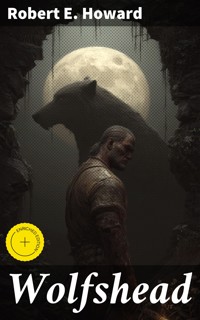
In "Wolfshead," Robert E. Howard weaves a gripping tale that marries the raw energy of adventure with profound philosophical musings on the nature of man and beast. The narrative follows a young man caught in a sordid web of fate and the relentless wilderness, exploring themes of primal instincts and existential struggle. Howard's prose is distinctly vivid, characterized by his signature blend of heroic fantasy and visceral realism, which transports the reader to a world where the boundaries between civilization and savagery blur. As a part of Howard's broader oeuvre that includes iconic characters like Conan the Barbarian, "Wolfshead" encapsulates the essence of early 20th-century pulp fiction, emphasizing the hero's journey in a brutal and often unforgiving landscape. Robert E. Howard, a pivotal figure in American literature, is best known for popularizing the sword and sorcery genre. Born in 1906 in Texas, his experiences in the American Southwest profoundly influenced his writing, providing a backdrop of rugged landscapes and storied histories that permeate his work. Howard's tumultuous life and struggles with his mental health often found reflection in his characters, infusing them with a depth that transcends mere escapism and speaks to the human condition. Readers seeking an exhilarating plunge into a world of adventure and introspection will find "Wolfshead" a compelling read. Howard's robust storytelling captivates while inviting profound reflection on our primal selves, making it a must-read for fans of fantasy, folklore, and literary exploration alike. In this enriched edition, we have carefully created added value for your reading experience: - A succinct Introduction situates the work's timeless appeal and themes. - The Synopsis outlines the central plot, highlighting key developments without spoiling critical twists. - A detailed Historical Context immerses you in the era's events and influences that shaped the writing. - An Author Biography reveals milestones in the author's life, illuminating the personal insights behind the text. - A thorough Analysis dissects symbols, motifs, and character arcs to unearth underlying meanings. - Reflection questions prompt you to engage personally with the work's messages, connecting them to modern life. - Hand‐picked Memorable Quotes shine a spotlight on moments of literary brilliance. - Interactive footnotes clarify unusual references, historical allusions, and archaic phrases for an effortless, more informed read.
Das E-Book können Sie in Legimi-Apps oder einer beliebigen App lesen, die das folgende Format unterstützen:
Veröffentlichungsjahr: 2021
Ähnliche




















Wolfshead
Table of Contents
Introduction
A man carries the beast within him into a world that thinks itself civilized. From that stark premise, Wolfshead unfolds as an atmosphere-drenched journey through dread, desire, and the fragile rules that keep people from tearing one another apart. Robert E. Howard uses the ancient terror of the werewolf not as mere spectacle but as the shape of an inner fracture, a relentless test of identity. The tale strains against borders—geographical, moral, and psychological—until they blur and buckle. What results is a narrative that feels both primal and precise, an encounter with darkness staged under the thinnest veil of order.
Wolfshead endures as a classic because it distills the appeal of early twentieth-century pulp into something lean, haunting, and unshakably human. Howard’s blend of momentum and menace showed that popular fiction could be both visceral and thoughtful, rooting its thrills in recognizable fears. The story’s influence radiates through horror and dark fantasy, where conflicted protagonists and morally shadowed landscapes are now standard. Its economy of scene and surge of feeling became a template for countless tales that follow violence to its moral edge. Above all, its themes remain legible across generations, ensuring it is revisited, debated, and admired.
The author is Robert E. Howard, an American writer who worked primarily during the 1920s and 1930s, a period dominated by pulp magazines and eager readerships seeking potent, compact narratives. Wolfshead dates from the mid-1920s, early in Howard’s career, and showcases the range he brought to horror as well as adventure. The book centers on a werewolf narrative conceived not as a simple monster yarn but as a character-driven conflict. Without divulging outcomes, it is fair to say Howard’s purpose was to press enduring folklore into modern consciousness, marrying relentless pace to an inquiry into fear, fate, and responsibility.
At its core, the story follows an outsider burdened by a curse that isolates him even as it draws danger to those around him. A remote enclave becomes the crucible where suspicion gathers, desire tangles with dread, and the line between human and beast is tested by pressure and circumstance. The setting amplifies the sense of estrangement—far from the comforts of home and the protections of familiar law. Howard uses these conditions to tighten the narrative, so that every glance, footfall, and whispered rumor contributes to the rising tension, while the broader myth of lycanthropy lends the tale an ageless, fated gravity.
Howard wrote for readers who demanded immediacy, and Wolfshead answers with a prose style that moves like a quickening heartbeat. Yet the velocity never smothers the atmosphere. He layers twilight hush, the closeness of heat and shadow, and the press of unspoken fears into a palpable mood. The story’s design is simple enough to be swift but intricate enough to be suggestive, leaving spaces where implication does the heaviest lifting. That balance, rare even now, reflects an intention to entertain without condescension, to fold philosophy into action, and to confront the old lore of the wolf-man without domestication or easy consolation.
The book’s classic status also rests on how confidently it inhabits contradiction. It is both folklore and modern tale, both chase and meditation. It grants the reader the pleasures of pursuit, confrontation, and narrow escapes, while insisting that such thrills carry a moral weight. The werewolf becomes not only a terror from outside but a mirror turned inward. Howard’s sentences, taut and vivid, anchor each turn of plot in sensory detail—a rustle in brush, a cold glint in an eye—so the story’s abstractions are always felt in the body. This earned physicality keeps the myth close, immediate, and unnervingly plausible.
In literary history, Wolfshead stands at a crossroads where Gothic inheritance meets the brisk cadence of American pulps. It anticipates the hybrid forms that would later define dark fantasy and sword-and-sorcery, uniting brooding introspection with direct, kinetic narrative. While Howard is celebrated for swashbuckling heroes, this tale displays the same hard clarity in a different key, proving that his concern with civilization’s thin shell and the lure of savagery ran across genres. Its reputation persists because it does not feel like a relic; it feels like a prototype, outlining narrative strategies others would refine, echo, and reinterpret through the decades.
Subsequent authors found in Howard’s method a way to fuse mythic symbols with practical stakes, to let action carry philosophical tension without becoming didactic. Wolfshead’s influence can be traced in stories that treat the monstrous double as a psychological and social reality rather than mere curse mechanics. The emphasis on place as pressure, on community suspicion as a force, and on the fragile agency of compromised protagonists is now a familiar palette. Even readers who meet the werewolf trope elsewhere will recognize, in this book, an early demonstration of how brisk plotting and stark imagery can support a deeper inquiry into selfhood.
Themes of duality and alienation shape every scene, not as decoration but as motive force. The cursed figure is compelled to navigate identity with limited choices, raising questions about guilt, consent, and the boundaries of moral accountability. The surrounding society, wary and volatile, dramatizes how fear can harden into prejudice as quickly as conscience can waver into complicity. Nature, for Howard, is not a neutral backdrop but an active participant that heightens peril and promise alike. The book’s imagination thrives in liminal zones—edges of night and day, safety and peril, law and impulse—where inner conflict becomes outward fate.
Howard’s craft turns suspense into a structure rather than a mere mood. Scenes tighten like coils, then release with sudden ferocity, only to re-tighten in a slightly different configuration. That rhythm keeps the narrative honest; nothing lingers beyond its power, and nothing erupts without a seed planted earlier. Sensory detail carries weight—heat, scent, and sound become cues that the body recognizes before the mind admits what they mean. The result is a reading experience that feels both inevitable and unstable. Even without dwelling on gore, the story remains visceral, proving that suggestion paired with decisive action can be as bracing as spectacle.
For contemporary readers, the book’s appeal lies in its clarity about fracture—between who we are and who we fear we might become, between private guilt and social judgment. Its questions resonate with modern conversations about control, trauma, and the long shadow of violence. The prose still reads fast, the stakes remain personal and sharp, and the atmosphere rewards attention. Howard’s refusal to dilute conflict for comfort makes the tale feel fresh, while his empathy for the embattled outsider prevents it from slipping into mere alarm. Wolfshead invites reflection without sacrificing urgency, a balance that keeps readers returning.
In sum, Wolfshead offers a compact, enduring meditation on identity under pressure, rendered through the urgent machinery of pulp storytelling. Its main ideas—duality, exile, accountability, and the fragile covenant of civilization—cohere in imagery that is immediate and indelible. The book’s significance rests on both its historical place and its lived effect: it pioneered a mode of horror-adventure that still guides the genre, and it continues to move readers who find their own contradictions mirrored in its central conflict. That is why the work holds its ground as a classic—lean, fierce, and permanently alive to the danger within and without.




