


1,99 €
Niedrigster Preis in 30 Tagen: 1,99 €
Niedrigster Preis in 30 Tagen: 1,99 €
Mehr erfahren.
- Herausgeber: DigiCat
- Kategorie: Religion und Spiritualität
- Sprache: Englisch
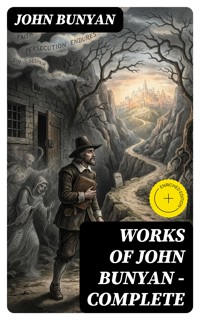
The 'Works of John Bunyan — Complete' encapsulates the rich tapestry of Bunyan's theological writings, allegories, and sermons, crafted in the 17th century during a time of intense religious upheaval and personal tribulation. Notably, the collection includes the seminal 'The Pilgrim's Progress,' a profound allegory of spiritual journey framed in accessible, yet evocative prose. Bunyan's plain style—characteristic of Nonconformist literature—skillfully employs allegory and dialogue to explore deep moral and spiritual themes, engaging readers in a dialectic that resonates across time and tradition. His works emerge from the context of Puritanism, navigating the struggles against religious discrimination and personal sin, which imbue his narratives with both urgency and universal resonance. John Bunyan, an English Baptist preacher born in 1628, drew upon his own experiences of imprisonment and inner conflict to inform his writings. His remarkable journey from a tinker to a revered theologian unfolded against a backdrop of persecution for his nonconformity, solidifying his commitment to express faith through the written word. With a prolific output that reflects his struggles and convictions, Bunyan became a significant figure in theological literature. Readers seeking a deep exploration of faith and human experience will find 'Works of John Bunyan — Complete' an invaluable addition to their literary and spiritual libraries. Bunyan's insight into the human condition and the mechanics of faith offers timeless wisdom, making his works essential not only for scholars but for anyone navigating the complexities of spiritual belief. In this enriched edition, we have carefully created added value for your reading experience: - A comprehensive Introduction outlines these selected works' unifying features, themes, or stylistic evolutions. - The Author Biography highlights personal milestones and literary influences that shape the entire body of writing. - A Historical Context section situates the works in their broader era—social currents, cultural trends, and key events that underpin their creation. - A concise Synopsis (Selection) offers an accessible overview of the included texts, helping readers navigate plotlines and main ideas without revealing critical twists. - A unified Analysis examines recurring motifs and stylistic hallmarks across the collection, tying the stories together while spotlighting the different work's strengths. - Reflection questions inspire deeper contemplation of the author's overarching message, inviting readers to draw connections among different texts and relate them to modern contexts. - Lastly, our hand‐picked Memorable Quotes distill pivotal lines and turning points, serving as touchstones for the collection's central themes.
Das E-Book können Sie in Legimi-Apps oder einer beliebigen App lesen, die das folgende Format unterstützen:
Veröffentlichungsjahr: 2022
Ähnliche




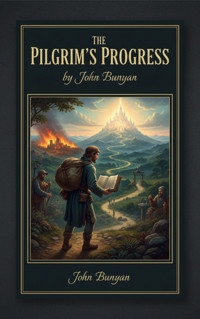




Works of John Bunyan — Complete
Table of Contents
Introduction
Works of John Bunyan — Complete assembles the extant writings of John Bunyan, the English Nonconformist preacher and author, in one continuous collection. It gathers allegorical narratives, doctrinal treatises, pastoral manuals, catechetical pieces, and scriptural verse, together with prefatory letters, memoirs, and editorial advertisements that historically accompanied many printings. The purpose is to present his literary and ministerial labors as a unified witness: to expound Scripture, encourage holiness, and guide ordinary readers in the life of faith. Retaining paratexts such as To the Reader and The Author to the Reader preserves the texture of publication and contemporary modes of introduction.
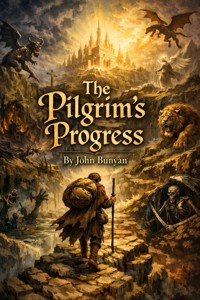
At the heart of the collection stand Bunyan’s allegories. The Pilgrim’s Progress follows a traveler, named for his vocation, who departs the City of Destruction to journey toward the Celestial City. A Relation of the Holy War presents a martial fable of a beleaguered city and its rightful prince. The Holy City; or, The New Jerusalem meditates on the scriptural promise of a renewed community. The Heavenly Footman, though briefer, issues a vigorous call to earnestness. These narratives display Bunyan’s capacity to embody doctrine in story, using emblematic characters and scenes to make spiritual realities vivid without demanding prior learning.
Bunyan’s doctrinal and polemical writings anchor the theological core of this collection. A Defence of the Doctrine of Justification by Faith in Jesus Christ clarifies the grounds of pardon. Of the Law and a Christian examines the believer’s relation to divine command. Of Antichrist surveys scriptural warnings about opposition to Christ. Questions About the Nature and Perpetuity of the Seventh-Day Sabbath probes the continuance of sacred time. Of the Trinity and a Christian confesses Trinitarian faith in practical terms. A Confession of My Faith, and A Reason of My Practice, together with A Reason of My Practice in Worship, state convictions and their ecclesial consequences.
Other works aim at the conscience and conduct of ordinary believers. Instruction for the Ignorant introduces foundational truths in a straightforward manner. A Holy Life the Beauty of Christianity argues that doctrine flowers in visible obedience. Of the Love of Christ and The Saints’ Knowledge of Christ’s Love; or, The Unsearchable Riches of Christ dwell on the transforming knowledge of the Savior’s charity toward sinners. Such books, pastoral in tone and plain in style, combine exhortation with comfort, calling readers to repentance and steadiness while assuring them of God’s readiness to receive those who come in faith.
The collection also preserves Bunyan’s scriptural verse and expository pieces. Under Scriptural Poems appear meditations that engage biblical subjects, joined by works on The Book of Ruth, The History of Samson, Christ’s Sermon on the Mount, The Prophecy of Jonah, The Life of Joseph, taken out of the latter part of the Book of Genesis, and The General Epistle of James. Whether in rhythmic lines or in plain exegesis, Bunyan’s method is consistent: to follow the text closely, to draw moral and doctrinal uses, and to invite readers to inhabit the narrative world of Scripture with attentiveness and reverence.
The variety of formats reflects Bunyan’s vocation as both preacher and writer. Catechetical question-and-answer, brief tract, extended treatise, and full-length narrative each serve the same end: to instruct the conscience and fortify faith. Paratexts including The Epistle writ by Mr. Burton, minister at Bedford, A Premonition to the Reader, and The Author to the Reader attest to customary means of pastoral introduction and commendation. Editorial materials such as Prefatory Remarks by the Editor and Advertisement by the Editor are preserved as witnesses to the reception and framing of these texts across successive printings.
Ecclesiology and charity in controversy are notable throughout. Differences in Judgment about Water Baptism, No Bar to Communion argues for fellowship across disagreements about the mode or subjects of baptism. A Confession of My Faith, and a Reason of My Practice; or, With Who, and Who Not, I Can Hold Church Fellowship, attends to the terms of communion. Some Questions to the Quakers, or a few queries to those who are possessed with a spirit of delusion in this generation engages dissenters in a question-driven format. Even when addressing contention, Bunyan writes as a pastor aiming to protect consciences, preserve peace, and keep Christ central.
Eschatology and consolation thread many pages. Of the Resurrection of the Dead focuses attention on the Christian hope and its ethical implications. The Holy City reflects on the promise of a renewed dwelling of God with his people. Of Antichrist reads present trials in light of scriptural warnings and ultimate assurance. These works do not indulge curiosity for its own sake; rather, they are designed to steady believers under pressure, teaching vigilance, patience, and joy rooted in the certainty of God’s purposes revealed in Scripture and fulfilled in Christ.
Certain stylistic hallmarks distinguish Bunyan’s voice. He writes in plain, vigorous English shaped by the pulpit and saturated with biblical phrases and parallels. Allegory serves clarity, not ornament; characters and places embody moral and spiritual states to make doctrine concrete. He leans on familiar images from daily labor and travel, permitting readers of modest education to grasp difficult truths. His treatises, while argumentative, proceed by close citation and practical inference. Across genres, the same cadence is audible: urgent, compassionate, and aimed at the heart as much as the understanding.
Unifying themes emerge from this variety. Pilgrimage frames the believer’s life; spiritual warfare describes the struggle against sin and deception; church fellowship locates discipleship within a visible community; law and gospel are distinguished yet harmonized in the obedient freedom of faith; and above all the love of Christ motivates, sustains, and perfects. Whether expounding James, recounting Jonah, urging holiness, or defending justification, Bunyan attends to repentance, assurance, perseverance, and hope. In these pages, doctrine becomes direction, and narrative becomes nourishment for prayer, worship, and daily obedience.
The collection also preserves the historical scaffolding around the texts. Memoir of John Bunyan, together with advertisements and prefaces by editors, records how later readers introduced his life and writings to new audiences. Such materials offer context without displacing the primary works. They clarify occasions of publication, intended readerships, and the use of certain pieces in congregational or family settings. By keeping these voices alongside Bunyan’s own, the volume allows readers to see how his books were received, recommended, and republished, and how they circulated within communities shaped by Scripture.
Gathered here, Bunyan’s oeuvre can be approached as a whole rather than in isolated favorites. Allegory, sermon, tract, confession, catechism, and poem illuminate one another, revealing a coherent pastoral and imaginative project. The arrangement enables readers to trace recurring concerns and developing emphases across genres without sacrificing the integrity of individual works. It is presented to invite careful study and regular devotion, to serve scholars and general readers alike, and to sustain the long, fruitful conversation that these books have conducted with generations seeking to live, worship, and hope under the word of God.
Author Biography
John Bunyan (1628–1688) was an English Nonconformist preacher and author whose plain yet vivid prose helped shape Protestant devotion and the development of English narrative. Raised in Bedfordshire amid civil conflict and religious change, he became the most influential allegorist of the Puritan tradition. Best known for The Pilgrim’s Progress, he also produced doctrinal treatises, biblical expositions, pastoral manuals, and verse. His life spanned the English Civil Wars, the Commonwealth, and the Restoration, and his ministry unfolded under laws that alternately permitted and punished dissent. Across these pressures, Bunyan wrote to console troubled consciences, defend evangelical belief, and instruct ordinary believers in practical godliness.
Bunyan’s formal schooling was slight, and he learned a craft as a tinker, moving among villages near Bedford. He served as a soldier during the English Civil War, experiences that sharpened his sense of mortality and providence. Afterward, intense spiritual conflict drew him toward the Nonconformist congregation at Bedford, where he was nurtured under capable pastoral care and encouraged to preach. Scripture remained his supreme authority, and Reformation teaching—especially on justification by faith—marked his convictions. He read widely in accessible Protestant authors, and his sermons, later distilled into books, reveal a pastor formed by the Bible, by disciplined self-examination, and by the pressures of public controversy.
Bunyan’s preaching soon brought him into conflict with Restoration-era laws regulating religious assembly. Arrested for unauthorized ministry, he spent about twelve years in prison during the 1660s, with a brief return to confinement in the 1670s. These hardships deepened his experiential theology and honed his craft as a writer for ordinary readers. In confinement he began shaping the allegory that became The Pilgrim’s Progress and wrote pastoral and polemical works such as The Saints’ Knowledge of Christ’s Love; Of the Law and a Christian; Of the Trinity and a Christian; Some Questions to the Quakers; and A Defence of the Doctrine of Justification by Faith in Jesus Christ.
The Pilgrim’s Progress, first circulated in the late 1670s, quickly gained wide readership for its memorable characters, homely diction, and searching portrayal of the Christian life. Bunyan extended his allegorical vision in A Relation of the Holy War and pursued prophetic and ecclesial themes in The Holy City; or, The New Jerusalem. He also wrote guides to devotion and perseverance, including The Heavenly Footman and Instruction for the Ignorant. His scriptural imagination ranged broadly: he versified and expounded biblical narratives and texts in Scriptural Poems, The Book of Ruth, The History of Samson, The Prophecy of Jonah, The Life of Joseph, and an exposition of The General Epistle of James.
At the heart of Bunyan’s theology stood justification by faith, assurance grounded in Christ, and the necessity of a holy life. He argued for principled charity in church practice; Differences in Judgment about Water Baptism, No Bar to Communion defends open communion among true believers. A Confession of My Faith, and A Reason of My Practice; and A Reason of My Practice in Worship set out his ecclesiology and worship convictions. He addressed contemporary debates on sabbaths in Questions about the Nature and Perpetuity of the Seventh-Day Sabbath; surveyed last things in Of the Resurrection of the Dead; warned against spiritual tyranny in Of Antichrist; and urged practical piety in A Holy Life the Beauty of Christianity.
After his release, Bunyan resumed pastoral leadership among Bedford Nonconformists and travelled to preach when permitted. Periods of toleration enabled him to obtain a preaching license and oversee a steady flow of publications, many accompanied by his characteristic addresses “To the Reader.” The present collection preserves such paratexts alongside editorial prefaces and advertisements that trace his works’ reception and dissemination. Bunyan continued revising, expanding, and applying earlier sermons for print, pursuing the same aims he served from the pulpit: to teach, warn, comfort, and direct believers through clear doctrine, lively illustration, and direct appeal to conscience.
Bunyan died in 1688 in London, closing a ministry that linked popular preaching with enduring literature. His legacy rests on a union of doctrinal clarity and narrative power: he could open a text of Scripture, fence a controversy, and turn spiritual experience into compelling story. The Pilgrim’s Progress remains one of the most translated and read books in English, while works such as A Relation of the Holy War, The Holy City, The Heavenly Footman, and his many expositions continue to instruct readers. Together these writings secure his place as a pastor to the common reader and a craftsman of the English religious imagination.
Historical Context
The works gathered in Works of John Bunyan — Complete span the convulsions of seventeenth‑century England and the later ages that transmitted them. They were forged amid the English Civil Wars, the Commonwealth and Protectorate (1649–1660), and the Restoration (from 1660), when struggles over sovereignty and conscience redefined church and state. Nonconformist Protestantism—Independents, Baptists, Quakers, and others—competed to shape English piety under shifting regimes of tolerance and repression. These texts also bear the marks of later evangelical editing and mass reprinting in the nineteenth century, when new reading publics encountered Bunyan through prefatory notices and advertisements that framed his voice for industrial Britain’s religious culture.
John Bunyan (1628–1688), a tinker’s son from Elstow near Bedford, experienced conversion within an Independent congregation in the early 1650s and soon began lay preaching. He briefly served in Parliamentarian forces during the civil wars, absorbing the scriptural militancy of Puritan England. After the Restoration, his refusal to cease unlicensed preaching led to intermittent imprisonment (notably 1660–1672), under laws later remembered as part of the Clarendon Code and reinforced by Conventicle Acts. In jail and out, he wrote pastoral, polemical, and allegorical works that sought to strengthen conscience, explain doctrine, and comfort the persecuted—aims that recur throughout this collection.
The collection’s paratexts—Memoir of John Bunyan, prefatory remarks, and repeated Advertisements by the Editor—testify to the long afterlife of Bunyan’s writings. Nineteenth‑century editors, such as George Offor and others associated with evangelical publishing, collated texts, supplied notes, and addressed readers shaped by Sunday schools and tract societies. Their framing positioned Bunyan as a model of plain‑style godliness for a mass readership created by expanding literacy, cheaper paper, stereotype printing, and rail distribution. At the same time, Bunyan’s own Author to the Reader pieces preserve his seventeenth‑century pastoral address, revealing a writer attentive to audience, censorship pressures, and the risks and opportunities of dissenting print.
Bunyan’s doctrinal center emerges in A Defence of the Doctrine of Justification by Faith in Jesus Christ and A Confession of My Faith, and a Reason of My Practice. These respond to Restoration debates about grace and obedience, notably his engagement with Edward Fowler’s The Design of Christianity (1671), which Bunyan thought blurred justification by faith. The polemics unfolded within a complex Nonconformist landscape where Baptists, Independents, and Presbyterians negotiated confessions and church order. By tethering assurance to Christ’s righteousness, Bunyan offered persecuted believers a stable ground for worship outside the Church of England, while urging charity in secondary matters that threatened to fracture congregational life.
Some Questions to the Quakers reflects mid‑1650s controversy with a fast‑growing movement associated with George Fox. In the wake of civil‑war radicalism and episodes like James Nayler’s 1656 Bristol entry, critics feared enthusiasm that displaced Scripture with inward revelation. Bunyan opposed what he understood as Quaker denials of outward ordinances and their approach to Christ’s person, yet he argued by appeal to Scripture rather than coercion. The tract exemplifies the polemical pamphlet culture of the Interregnum, when itinerant preachers battled through presses and pulpits, and it anticipates later Restoration disputes over the bounds of orthodoxy within a persecuted Nonconformist community.
Of the Law and a Christian and Bunyan’s exposition of The General Epistle of James address the enduring question of law and gospel in Reformed pastoral theology. English Protestants worried that antinomianism would dissolve moral restraint, while others feared a “new law” (neonomianism) that compromised grace. Bunyan steers between these charges, describing the law’s condemning function and the gospel’s liberating power, and treating works as fruit rather than foundation of acceptance with God. His handling of James, much discussed since the Reformation, situates ordinary believers in this doctrinal tension, offering ethical guidance without surrendering the Reformation’s central claim about justification.
Of the Trinity and a Christian answers seventeenth‑century challenges to Nicene doctrine. Anti‑Trinitarian, “Socinian,” or Unitarian views—associated in England with figures like John Biddle—provoked sustained responses from orthodox Protestants. Bunyan’s brief, plain statement insists that the doctrine of the Trinity is not an abstraction for scholars but vital to Christian prayer, assurance, and worship. This reflects a wider Nonconformist strategy: defend ancient creedal essentials while maintaining congregational independence on secondary practices. Such works also indicate how dissenters, often caricatured as merely oppositional, saw themselves as custodians of catholic truth against both Rome and radical heterodoxy.
Questions About the Nature and Perpetuity of the Seventh‑Day Sabbath enters disputes with Sabbatarian Baptists and others who argued for Saturday observance. Seventeenth‑century England wrestled with sabbatarian discipline, from Puritan sabbath reform under the Long Parliament to Restoration backlash against “precisian” strictness. Bunyan defends first‑day Lord’s‑day worship while pleading for unity among believers who differ. The tract pairs with Differences in Judgment About Water Baptism, No Bar to Communion, where he argues for open communion in the Bedford church. Together they display a pastoral politics of forbearance: firm on gospel foundations, flexible on rites liable to divide embattled congregations.
Of Antichrist and The Holy City; or, The New Jerusalem reflect the Protestant “historicist” reading of apocalyptic texts that dominated English polemics. Many identified the papacy, and sometimes coercive state‑church systems, with Antichrist—an interpretation sharpened by fears stoked during the Popish Plot scare (1678) and the Exclusion Crisis (1679–1681). Bunyan’s expositions avoid date‑setting but urge the faithful to resist spiritual tyranny and to hope for Christ’s reign. The Holy City draws on Revelation’s vision to comfort dissenters under pressure, translating millenarian expectation into pastoral consolation rather than political revolt, especially significant after Fifth Monarchist excesses alarmed authorities.
Of the Resurrection of the Dead anchors hope in bodily resurrection and final judgment, doctrines often affirmed in Reformed confessions but contested at the edges by mortalist and materialist currents that circulated in radical circles. The tract rehearses scriptural proofs and practical uses of the doctrine, countering both skepticism and speculative curiosities. In Restoration England, where plague, prison, and persecution brought mortality close, such teaching offered more than dogmatic closure; it framed suffering within a narrative of vindication. Bunyan’s approach typifies Nonconformist catechesis: concise, text‑laden, and aimed at fortifying laypeople to endure hardship without surrendering to despair or doctrinal novelty.
Devotional treatises like The Saints’ Knowledge of Christ’s Love and Of the Love of Christ translate high theology into consolation for ordinary Christians. They grew from pastoral visitation, prison meditation, and the experience of religious minorities living under surveillance. Assurance—how one knows Christ’s love—is not treated as a psychological trick but as a Spirit‑given grasp of scriptural promise. Written in the plain style prized by Puritans, these works contributed to an experiential piety that later evangelicals cherished. Their circulation in cheap editions ensured they accompanied believers in workshops and kitchens as much as in meetinghouses, shaping English Protestant inwardness across centuries.
Instruction for the Ignorant uses a question‑and‑answer format familiar from Reformation catechisms, adapted for households, apprentices, and those with little schooling. It reflects a world in which many learned doctrine orally and by repetition, and where dissenters often organized teaching outside parish structures. In an era before compulsory education in England, catechisms functioned as both theological and moral primers. Bunyan’s version complements A Holy Life the Beauty of Christianity by binding belief to behavior without collapsing gospel into moralism. These texts illustrate the Nonconformist effort to build resilient communities through habits of memory, domestic devotion, and congregational discipline.
The Pilgrim’s Progress, first published in 1678 with a second part in 1684, exemplifies the dream‑vision allegory repurposed for Protestant devotion. While conceived within the pressures of imprisonment and nonconformist ministry, its geography and characters transcend immediate politics to map a believer’s journey through trial to hope. It thrived in a marketplace newly receptive to narrative piety, aided by woodcuts, abridgments, and later translations. Its rapid reprints signal how Restoration readers—artisans, servants, and gentry—found in it both entertainment and instruction. After the Toleration Act (1689), its reach widened further as dissenting presses operated with greater security.
A Relation of the Holy War adapts siege and campaign imagery familiar to a society recently scarred by civil war. Without narrating specific events, it converts collective memory of fortresses, councils, and betrayals into an allegory of spiritual conflict. The book addresses questions about authority, conscience, and the corruption of power that outlived the 1640s. Its martial metaphors resonated with readers taught to examine their hearts as a contested territory. Together with Pilgrim’s Progress, it demonstrates Bunyan’s mastery of narrative forms that carry doctrinal freight accessibly, a hallmark that helped his works outlast contemporary polemics and become staples of English‑language religious literature.
The Heavenly Footman, urging readers to “run” for the prize, draws on Pauline athletic metaphors that seventeenth‑century preachers used to communicate urgency and discipline. Composed in an England marked by Restoration court libertinism and popular entertainments that many Puritans distrusted, the tract calls for focused perseverance rather than ascetic retreat. It exemplifies Bunyan’s capacity to compress doctrinal motives—grace, calling, perseverance—into a practical summons. A Holy Life the Beauty of Christianity complements it by insisting that piety must be visible in ordinary dealings, reflecting the Nonconformist ambition to reform everyday life as a counter‑culture to fashionable irreligion.
Bunyan’s Scriptural Poems and his expositions on The Book of Ruth, The History of Samson, The Prophecy of Jonah, The Life of Joseph, Christ’s Sermon on the Mount, and The General Epistle of James embody Puritan habits of close reading and typology. By versifying narratives and commenting on moral instruction, he brought biblical stories into the cadence of common speech. Such treatments equipped families to read Scripture devotionally and drew analogies between ancient trials and contemporary persecution or providence. They also reflect a print economy where metrical paraphrase and plain exposition met the needs of readers with limited leisure, linking literary form to pastoral function.
The epistolary materials—To the Reader, A Premonition to the Reader, and The Epistle writ by Mr. Burton, Minister at Bedford—illuminate the networks that authorized a lay preacher in a credential‑conscious age. John Burton’s early endorsement in the 1650s located Bunyan within the Bedford congregation’s oversight and helped legitimize his first publications. Such prefatory letters mediated trust between authors, printers, and readers wary of heresy or sedition. They also register how Nonconformist texts navigated licensing and surveillance, signaling orthodoxy and communal accountability while advancing arguments that often cut against the grain of Restoration ecclesiastical policy. Their survival contextualizes the genesis of several works here collected. The polemics around baptism and communion—Differences in Judgment About Water‑Baptism, No Bar to Communion and A Reason of My Practice in Worship—arose from disputes with Particular Baptist leaders such as William Kiffin over closed membership and sacramental boundaries in the 1670s. Bunyan’s Bedford church practiced believer’s baptism yet received to fellowship some who differed, arguing that visible faith, not uniformity in rites, should govern communion. These debates mirrored a broader Nonconformist challenge: how to maintain discipline and identity without replicating the coercive uniformity dissenters opposed. The controversy sharpened Bunyan’s ecclesiology and influenced later Baptist conversations about “open” versus “closed” communion practices. Restoration politics shadow all these writings. The Declaration of Indulgence (1672) briefly eased repression, allowing Bunyan to receive a preaching license, while its withdrawal, the Test Acts, and the Exclusion Crisis kept dissent vulnerable. Under James II (reigned 1685–1688) a new indulgence again relaxed enforcement, though motives were contested. Bunyan died in 1688, just before the Glorious Revolution and the Toleration Act (1689) legalized many dissenting meetings. Posthumous editions of his works proliferated in the comparatively freer press environment after the Licensing Act lapsed in 1695, ensuring that texts first penned under duress became fixtures of Protestant reading. Eighteenth‑ and nineteenth‑century reception reshaped the corpus. Evangelical revivals in Britain and America embraced Bunyan’s experiential piety; editions multiplied, often illustrated, abridged, or adapted for children. Industrial printing, cheap paper, and railways extended distribution to new urban audiences. Missionary societies circulated The Pilgrim’s Progress in translation across the British Empire. Editors’ advertisements in this collection mark that era’s desire to standardize texts, provide moral commentary, and claim Bunyan for a broad, interdenominational Protestant identity. The works thus became both historical artifacts and living tools of devotion. Read together, the collection forms a commentary on seventeenth‑century struggles over conscience, authority, and community, while also revealing how later ages domesticated and redeployed Bunyan. His defenses of justification, appeals for charity in secondary matters, apocalyptic warnings against oppressive religion, and pastoral guides for the unlearned trace the pressures of war, restoration, and persecution. The nineteenth‑century framing shows how new publics, technologies, and reform movements refracted those messages. Across these layers, the works continue to invite readers to weigh liberty and discipline, doctrine and practice, in changing social and political landscapes.
Synopsis (Selection)
Memoir of John Bunyan
This biographical sketch traces Bunyan’s spiritual formation, pastoral labors, and periods of hardship that shaped his preaching and writing. It foregrounds his conversion, conscience-driven nonconformity, and deep reliance on Scripture, setting the lens through which his allegories and treatises are best read. The tone is reflective and edifying, inviting readers to see doctrine embodied in a lived pilgrimage.
Allegorical Narratives: The Pilgrim’s Progress and The Holy War
The Pilgrim’s Progress presents the Christian life as a perilous journey from ruin to rest, populated by vivid personifications and testing waystations. A Relation of the Holy War reimagines the soul as a besieged city, exploring deception, siege, surrender, and restoration under a righteous prince. Together they sharpen Bunyan’s signature blend of plain style and imaginative theology, highlighting perseverance, spiritual warfare, and the consolations of grace.
Evangelical Appeals and Practical Exhortations
The Heavenly Footman and An Epistle to All the Slothful and Careless People urge spiritual diligence, casting salvation as a race that tolerates no indifference. A Holy Life the Beauty of Christianity and Instruction for the Ignorant translate doctrine into practice and catechesis, pressing for visible obedience, repentance, and steady habits of devotion. The voice is urgent yet pastoral, full of homely images and direct appeals to conscience.
Devotional Treatises on Christ’s Love
The Saints’ Knowledge of Christ’s Love (including the variant title that speaks of the unsearchable riches of Christ) and Of the Love of Christ meditate on the breadth and depth of the Savior’s mercy toward sinners. They weave Scripture into pastoral counsel, showing how assurance grows as believers learn to rest in a love that precedes and sustains obedience. The tone is warm, adoring, and exhortative, emphasizing comfort without relaxing the call to holiness.
Doctrine, Church Order, and Liberty of Conscience
A Defence of the Doctrine of Justification by Faith, Of the Law and a Christian, and Of the Trinity and a Christian set out core convictions about salvation by grace, the believer’s relation to the moral law, and worship grounded in a trinitarian confession. Questions about the Nature and Perpetuity of the Seventh-Day Sabbath, Differences in Judgment about Water Baptism, No Bar to Communion, A Reason of My Practice in Worship, and A Confession of My Faith (including its abridged variant) debate how churches should order their life while protecting liberty of conscience. These writings are scripturally argued and irenic yet firm, privileging clear exegesis over tradition and seeking unity without compromise.
Controversy and Correction: Antichrist and Quaker Queries
Of Antichrist diagnoses errors and corruptions that obscure the gospel and oppress consciences, calling readers to discernment and fidelity. Some Questions to the Quakers confronts a contemporary movement with pointed queries meant to expose confusion and recall people to apostolic teaching. The tone is combative but pastoral, aiming to guard the flock through testing of spirits and appeal to Scripture.
Eschatology and the City of God
Of the Resurrection of the Dead offers a sober, hope-filled account of bodily renewal and final judgment, drawing out the ethical implications of future glory. The Holy City; or, The New Jerusalem unfolds a panoramic vision of the church’s consummation and purity, using the imagery of a descending city to explore identity, worship, and promise. Both pieces comfort embattled believers with the durability of God’s purposes and the certainty of ultimate restoration.
Scripture Retellings, Expositions, and Poems
Through Scriptural Poems and narrative treatments of Ruth, Samson, Jonah, Joseph, as well as expositions on the Sermon on the Mount and the Epistle of James, Bunyan retells and applies biblical history and teaching to everyday discipleship. He highlights providence in adversity, the cost of compromise, the call to meekness and mercy, and the fruits of tested faith. The style is plain and applicatory, turning stories and sayings into mirrors for conscience and guides for conduct.
Authorial and Editorial Paratexts: Prefaces, Advertisements, and Epistles
Items titled Prefatory Remarks, Preface, Advertisements by the Editor (including bracketed notices), The Author to the Reader, To the Reader, A Premonition to the Reader, and an epistle written by a minister at Bedford frame the main works with aims, cautions, and appeals. They orient readers to the scope and method of the pieces that follow, mark live controversies, and request charitable, attentive reading. Collectively, these addresses clarify audience and intention, offering signposts to the themes that dominate the collection.
Works of John Bunyan — Complete
WITH AN
INTRODUCTION TO EACH TREATISE, NOTES,
AND A
SKETCH OF HIS LIFE, TIMES, AND CONTEMPORARIES.
VOLUME FIRST.
EXPERIMENTAL, DOCTRINAL, AND PRACTICAL.
EDITED BY
GEORGE OFFOR, ESQ.
MEMOIR OF JOHN BUNYAN
THE FIRST PERIOD.
THIS GREAT MAN DESCENDED FROM IGNOBLE PARENTS—BORN IN POVERTY—HIS EDUCATION AND EVIL HABITS—FOLLOWS HIS FATHER'S BUSINESS AS A BRAZIER—ENLISTS FOR A SOLDIER—RETURNS FROM THE WARS AND OBTAINS AN AMIABLE, RELIGIOUS WIFE—HER DOWER.
'We have this treasure in earthen vessels, that the excellency of the power may be of God, and not of us.'—2 Cor 4:7
'For my thoughts are not your thoughts, neither are your ways my ways, saith the Lord.'—Isaiah 55:8.
'Though ye have lien among the pots, yet shall ye be as the wings of a dove covered with silver, and her feathers with yellow gold.'—Psalm 68:13.
When the Philistine giant, Goliath, mocked the host of Israel, and challenged any of their stern warriors to single combat, what human being could have imagined that the gigantic heathen would be successfully met in the mortal struggle by a youth 'ruddy and of a fair countenance?' who unarmed, except with a sling and a stone, gave the carcases of the hosts of the Philistines to the fouls of the air, and to the wild beasts of the earth.'
Who, upon seeing an infant born in a stable, and laid in a manger, or beholding him when a youth working with his father as a carpenter, could have conceived that he was the manifestation of the Deity in human form, before whom every knee should bow, and every tongue confess Him to be THE ETERNAL?
Father Michael, a Franciscan friar, on a journey to Ancona, having lost his way, sought direction from a wretched lad keeping hogs—deserted, forlorn, his back smarting with severe stripes, and his eyes suffused with tears. The poor ragged boy not only went cheerfully with him to point out his road, but besought the monk to take him into his convent, volunteering to fulfill the most degrading services, in the hope of procuring a little learning, and escaping from 'those filthy hogs.' How incredulously would the friar have listened to anyone who could have suggested that this desolate, tattered, dirty boy, might and would fill a greater than an imperial throne! Yet, eventually that swine-herd was clothed in purple and fine linen, and, under the title of Pope Sixtus V., became one of those mighty magicians who are described in Rogers Italy, as
'Setting their feet upon the necks of kings, And through the worlds subduing, chaining down The free, immortal spirit—theirs a wondrous spell.' [1]
A woman that was 'a loose and ungodly wretch' hearing a tinker lad most awfully cursing and swearing, protested to him that 'he swore and cursed at that most fearful rate that it made her tremble to hear him,' 'that he was the ungodliest fellow for swearing that ever she heard in all her life,' and 'that he was able to spoil all the youth in a whole town, if they came in his company.' This blow at the young reprobate made that indelible impression which all the sermons yet he had heard had failed to make. Satan, by one of his own slaves, wounded a conscience which had resisted all the overtures of mercy. The youth pondered her words in his heart; they were good seed strangely sown, and their working formed one of those mysterious steps which led the foul-mouthed blasphemer to bitter repentance; who, when he had received mercy and pardon, felt impelled to bless and magnify the Divine grace with shining, burning thoughts and words. The poor profligate, swearing tinker became transformed into the most ardent preacher of the love of Christ—the well-trained author of The Jerusalem Sinner Saved, or Good News to the Vilest of Men.
How often have the Saints of God been made a most unexpected blessing to others. The good seed of Divine truth has been many times sown by those who did not go out to sow, but who were profitably engaged in cultivating their own graces, enjoying the communion of Saints, and advancing their own personal happiness! Think of a few poor, but pious happy women, sitting in the sun one beautiful summer's day, before one of their cottages, probably each one with her pillow on her lap, dexterously twisting the bobbins to make lace, the profits of which helped to maintain their children. While they are communing on the things of God, a traveling tinker draws near, and, over-hearing their talk, takes up a position where he might listen to their converse while he pursued his avocation. Their words distil into his soul; they speak the language of Canaan; they talk of holy enjoyments, the result of being born again, acknowledging their miserable state by nature, and how freely and undeservedly God had visited their hearts with pardoning mercy, and supported them while suffering the assaults and suggestions of Satan; how they had been borne up in every dark, cloudy, stormy day; and how they contemned, slighted, and abhorred their own righteousness as filthy and insufficient to do them any good. The learned discourses our tinker had heard at church had casually passed over his mind like evanescent clouds, and left little or no lasting impression. But these poor women, 'methought they spake as actually did make them speak; they speak with such pleasant as of Scripture language, and with such appearance of grace in all they said, that they were to me as if they had found a new world, as if they were people that dwelt alone, and were not to be reckoned among their neighbors' (Num 23:9).
O! how little did they imagine that their pious converse was to be the means employed by the Holy Spirit in the conversion of that poor tinker, and that, by their agency, he was to be transformed into one of the brightest luminaries of heaven; who, when he had entered into rest would leave his works to follow him as spiritual thunder to pierce the hearts of the impenitent, and as heavenly consolation to bind up the broken-hearted; liberating the prisoners of Giant Despair, and directing the pilgrims to the Celestial City. Thus were blessings in rich abundance showered down upon the church by the instrumentality, in the first instance, of a woman that was a sinner, but most eminently by the Christian converse of a few poor but pious women.
This poverty-stricken, ragged tinker was the son of a working mechanic at Elstow, near Bedford. So obscure was his origin that even the Christian name of his father is yet unknown:[2] he was born in 1628, a year memorable as that in which the Bill of Rights was passed. Then began the struggle against arbitrary power, which was overthrown in 1688, the year of Bunyan's death, by the accession of William III. Of Bunyan's parents, his infancy, and childhood, little is recorded. All that we know is from his own account, and that principally contained in his doctrine of the Law and Grace, and in his extraordinary development of his spiritual life, under the title of Grace Abounding to the Chief of Sinners. His birth would have shed a luster on the wealthiest mansion, and have imparted additional grandeur to any lordly palace. Had royal or noble gossips, and a splendid entertainment attended his christening, it might have been pointed to with pride; but so obscure was his birth, that it has not been discovered that he was christened at all; while the fact of his new birth by the Holy Ghost is known over the whole world to the vast extent that his writings have been circulated. He entered this world in a labourer's cottage of the humblest class, at the village of Elstow, about a mile from Bedford.[3] His pedigree is thus narrated by himself:—'My descent was of a low and inconsiderable generation, my father's house being of that rank that is meanest and most despised of all the families in the land.'[4] Bunyan alludes to this very pointedly in the preface to A Few Sighs from Hell:—'I am thine, if thou be not ashamed to own me, because of my low and contemptible descent in the world.'[5] His poor and abject parentage was so notorious, that his pastor, John Burton, apologized for it in his recommendation to The Gospel Truths Opened:—'Be not offended because Christ holds forth the glorious treasure of the gospel to thee in a poor earthen vessel, by one who hath neither the greatness nor the wisdom of this world to commend him to thee.'[6] And in his most admirable treatise, on The Fear of God, Bunyan observes—'The poor Christian hath something to answer them that reproach him for his ignoble pedigree, and shortness of the glory of the wisdom of this world. True may that man say I am taken out of the dunghill. I was born in a base and low estate; but I fear God. This is the highest and most noble; he hath the honour, the life, and glory that is lasting.'[7] In his controversy with the Strict Baptists, he chides them for reviling his ignoble pedigree:—'You closely disdain my person because of my low descent among men, stigmatizing me as a person of THAT rank that need not be heeded or attended unto.'[8] He inquired of his father—'Whether we were of the Israelites or no? for, finding in the Scripture that they were once the peculiar people of God, thought I, if I were one of this race, my soul must needs be happy.'[9] This somewhat justifies the conclusion that his father was a Gipsy tinker, that occupation being then followed by the Gipsy tribe. In the life of Bunyan appended to the forged third part of the Pilgrim's Progress, his father is described as 'an honest poor labouring man, who, like Adam unparadised, had all the world before him to get his bread in; and was very careful and industrious to maintain his family.'[10]
Happily for Bunyan, he was born in a neighbourhood in which it was a disgrace to any parents not to have their children educated. With gratitude he records, that 'it pleased God to put it into their hearts to put me to school to learn both to read and to write.' In the neighbourhood of his birthplace, a noble charity diffused the blessings of lettered knowledge.[11] To this charity Bunyan was for a short period indebted for the rudiments of education; but, alas, evil associates made awful havoc of those slight unshapen literary impressions which had been made upon a mind boisterous and impatient of discipline. He says—'To my shame, I confess I did soon lose that little I learned, and that almost utterly.'[12] This fact will recur to the reader's recollection when he peruses Israel's Hope Encouraged, in which, speaking of the all-important doctrine of justification, he says—'It is with many that begin with this doctrine as it is with boys that go to the Latin school; they learn till they have learned the grounds of their grammar, and then go home and forget all.'[13]
As soon as his strength enabled him, he devoted his whole soul and body to licentiousness—'As for my own natural life, for the time that I was without God in the world, it was indeed according to the course of this world, and the spirit that now worketh in the children of disobedience. It was my delight to be taken captive by the devil at his will: being filled with all unrighteousness; that from a child I had but few equals, both for cursing, swearing, lying, and blaspheming the holy name of God.'[14]
It has been supposed, that in delineating the early career of Badman, 'Bunyan drew the picture of his own boyhood.'[15] But the difference is broadly given. Badman is the child of pious parents, who gave him a 'good education' in every sense, both moral and secular;[16] the very reverse of Bunyan's training. His associates would enable him to draw the awful character and conduct of Badman, as a terrible example to deter others from the downward road to misery and perdition.
Bunyan's parents do not appear to have checked, or attempted to counteract, his unbridled career of wickedness. He gives no hint of the kind; but when he notices his wife's father, he adds that he 'was counted godly'; and in his beautiful nonsectarian catechism, there is a very touching conclusion to his instructions to children on their behaviour to their parents:—'The Lord, if it be his will, convert our poor parents, that they, with us, may be the children of God.'[17] These fervent expressions may refer to his own parents; and, connecting them with other evidence, it appears that he was not blessed with pious example. Upon one occasion, when severely reproved for swearing, he says—'I wished, with all my heart, that I might be a little child again, that my father might learn me to speak without this wicked way of swearing.'[18] In his numerous confessions, he never expresses pain at having, by his vicious conduct, occasioned grief to his father or mother. From this it may be inferred, that neither his father's example nor precept had checked this wretched propensity to swearing, and that he owed nothing to his parents for moral training; but, on the contrary, they had connived at, and encouraged him in, a course of life which made him a curse to the neighbourhood in which he lived.
In the midst of all this violent depravity, the Holy Spirit began the work of regeneration in his soul—a long, a solemn, yea, an awful work—which was to fit this poor debauched youth for purity of conduct—for communion with heaven—for wondrous usefulness as a minister of the gospel—for patient endurance of sufferings for righteousness' sake—for the writing of works which promise to be a blessing to the Church in all ages—for his support during his passage through the black river which has no bridge—to shine all bright and glorious, as a star in the firmament of heaven. 'Wonders of grace to God belong.'
During the period of his open profligacy, his conscience was ill at ease; at times the clanking of Satan's slavish chains in which he was hurrying to destruction, distracted him. The stern reality of a future state clouded and embittered many of those moments employed in gratifying his baser passions. The face of the eventful times in which he lived was rapidly changing; the trammels were loosened, which, with atrocious penalties, had fettered all free inquiry into religious truth. Puritanism began to walk upright; and as the restraints imposed upon Divine truths were taken off, in the same proportion restraints were imposed upon impiety, profaneness, and debauchery. A ringleader in all wickedness would not long continue without reproof, either personally, or as seen in the holy conduct of others. Bunyan very properly attributed to a gracious God, those checks of conscience which he so strongly felt even while he was apparently dead in trespasses and sins. 'The Lord, even in my childhood, did scare and affright me with fearful dreams, and did terrify me with dreadful visions.'[19] 'I often wished that there had been no hell, or that I had been a devil to torment others.' A common childish but demoniac idea. His mind was as 'the troubled sea, when it cannot rest, whose waters cast up mire and dirt.' 'A while after, these terrible dreams did leave me; and with more greediness, according to the strength of nature, I did let loose the reins of my lusts, and delighted in all transgression against the law of God.' 'I was the very ringleader of all the youth that kept me company, into ALL MANNER of vice and ungodliness.'[20]
Dr. Southey and others have attempted to whiten this blackamore, but the veil that they throw over him is so transparent that it cannot deceive those who are in the least degree spiritually enlightened. He alleges that Bunyan, in his mad career of vice and folly, 'was never so given over to a reprobate mind,'[21] as to be wholly free from compunctions of conscience. This is the case with every depraved character; but he goes further, when he asserts that 'Bunyan's heart never was hardened.'[22] This is directly opposed to his description of himself:—'I found within me a great desire to take my fill of sin, still studying what sin was yet to be committed; and I made as much haste as I could to fill my belly with its delicates, lest I should die before I had my desire.' He thus solemnly adds, 'In these things, I protest before God, I lie not, neither do I feign this sort of speech; these were really, strongly, and with all my heart, my desires; the good Lord, whose mercy is unsearchable, forgive me my transgressions.' The whole of his career, from childhood to manhood, was, 'According to the course of this world, according to the prince of the power of the air, the spirit that now worketh in the children of disobedience' (Eph 2:2).
These reminiscences are alluded to in the prologue of the Holy War:—
'When Mansoul trampled upon things Divine, And wallowed in filth as doth a swine, Then I was there, and did rejoice to see Diabolus and Mansoul so agree.'
The Laureate had read this, and yet considers it the language of a heart that 'never was hardened.' He says that 'the wickedness of the tinker has been greatly overcharged, and it is taking the language of self-accusation too literally to pronounce of John Bunyan, that he was at any time depraved. The worst of what he was in his worst days is to be expressed in a single word, the full meaning of which no circumlocution can convey; and which, though it may hardly be deemed presentable in serious composition, I shall use, as Bunyan himself (no mealy-mouthed writer) would have used it, had it in his days borne the same acceptation in which it is now universally understood;—in that word then, he had been a blackguard.
The very head and front of his offending Hath this extent—no more.'[23]
The meaning of the epithet is admirably explained; but what could Dr. Southey imagine possible to render such a character more vile in the sight of God, or a greater pest to society? Is there any vicious propensity, the gratification of which is not included in that character? Bunyan's estimate of his immorality and profaneness prior to his conversion, was not made by comparing himself with the infinitely Holy One, but he measured his conduct by that of his more moral neighbours. In his Jerusalem Sinner Saved, he pleads with great sinners, the outwardly and violently profane and vicious, that if HE had received mercy, and had become regenerated, they surely ought not to despair, but to seek earnestly for the same grace. He thus describes himself:—'I speak by experience; I was one of those great sin-breeders; I infected all the youth of the town where I was born; the neighbours counted me so, my practice proved me so: wherefore, Christ Jesus took me first; and, taking me first, the contagion was much allayed all the town over. When God made me sigh, they would hearken, and inquiringly say, What's the matter with John? When I went out to seek the bread of life, some of them would follow, and the rest be put into a muse at home. Some of them, perceiving that God had mercy upon me, came crying to him for mercy too.'[24] Can any one, in the face of such language, doubt that he was most eminently 'a brand snatched from the fire'; a pitchy burning brand, known and seen as such by all who witnessed his conduct? He pointedly exemplified the character set forth by James, 'the tongue is a fire, a world of iniquity, set on fire of hell' (James 3:6). This was as publicly known before his conversion, as the effects of the wondrous change were openly seen in his Christian career afterwards. He who, when convinced of sin, strained his eyes to see the distant shining light over the wicket-gate, after he had gazed upon
—'The wondrous cross On which the Prince of glory died,'
became a luminous beacon, to attract the vilest characters to seek newness of life; and if there be hope for them, no one ought to despair. Far be it from us to cloud this light, or to tarnish so conspicuous an example. Like a Magdalene or a thief on the cross, his case may be exhibited to encourage hope in every returning prodigal. During this period of his childhood, while striving to harden his heart against God, many were the glimmerings of light which from time to time directed his unwilling eyes to a dread eternity. In the still hours of the night 'in a dream God opened' his ears[25]—the dreadful vision was that 'devils and wicked spirits laboured to draw me away with them.' These thoughts must have left a deep and alarming impression upon his mind; for he adds, 'of which I could never be rid.'[26]
The author of his life, published in 1692, who was one of his personal friends, gives the following account of Bunyan's profligacy, and his checks of conscience:—'He himself hath often, since his conversion, confessed with horror, that when he was but a child or stripling, he had but few equals for lying, swearing, and blaspheming God's holy name—living without God in the world; the thoughts of which, when he, by the light of Divine grace, came to understand his dangerous condition, drew many showers of tears from his sorrowful eyes, and sighs from his groaning heart. The first thing that sensibly touched him in this his unregenerate state, were fearful dreams, and visions of the night, which often made him cry out in his sleep, and alarm the house, as if somebody was about to murder him, and being waked, he would start, and stare about him with such a wildness, as if some real apparition had yet remained; and generally those dreams were about evil spirits, in monstrous shapes and forms, that presented themselves to him in threatening postures, as if they would have taken him away, or torn him in pieces. At some times they seemed to belch flame, at other times a continuous smoke, with horrible noises and roaring. Once he dreamed he saw the face of the heavens, as it were, all on fire; the firmament crackling and shivering with the noise of mighty thunders, and an archangel flew in the midst of heaven, sounding a trumpet, and a glorious throne was seated in the east, whereon sat one in brightness, like the morning star, upon which he, thinking it was the end of the world, fell upon his knees, and, with uplifted hands towards heaven, cried, O Lord God, have mercy upon me! What shall I do, the day of judgment is come, and I am not prepared! When immediately he heard a voice behind him, exceeding loud, saying, Repent. At another time he dreamed that he was in a pleasant place, jovial and rioting, banqueting and feasting his senses, when a mighty earthquake suddenly rent the earth, and made a wide gap, out of which came bloody flames, and the figures of men tossed up in globes of fire, and falling down again with horrible cries, shrieks, and execrations, whilst some devils that were mingled with them, laughed aloud at their torments; and whilst he stood trembling at this sight, he thought the earth sunk under him, and a circle of flame enclosed him; but when he fancied he was just at the point to perish, one in white shining raiment descended, and plucked him out of that dreadful place; whilst the devils cried after him, to leave him with them, to take the just punishment his sins had deserved, yet he escaped the danger, and leaped for joy when he awoke and found it was a dream.'
Such dreams as these fitted him in after life to be the glorious dreamer of the Pilgrim's Progress, in which a dream is told which doubtless embodies some of those which terrified him in the night visions of his youth.
In the interpreter's house he is 'led into a chamber where there was one rising out of bed, and as he put on his raiment he shook and trembled. Then said Christian, Why doth this man thus tremble? The Interpreter then bid him tell to Christian the reason of his so doing. So he began and said, This night, as I was in my sleep I dreamed, and behold the heavens grew exceeding black; also it thundered and lightened in most fearful wise, that it put me into an agony. So I looked up in my dream, and saw the clouds rack at an unusual rate, upon which I heard a great sound of a trumpet, and saw also a man sit upon a cloud, attended with the thousands of heaven—they were all in flaming fire; also the heavens were in a burning flame. I heard then a voice saying, "Arise, ye dead, and come to judgment;" and with that the rocks rent, the graves opened, and the dead that were therein came forth. Some of them were exceeding glad, and looked upward; and some sought to hide themselves under the mountains. Then I saw the man that sat upon the cloud open the book, and bid the world draw near. Yet there was, by reason of a fierce flame which issued out and came from before him, a convenient distance betwixt him and them, as betwixt the judge and prisoners at the bar. I heard it also proclaimed, "Gather together the tares, the chaff, and stubble, and cast them into the burning lake"; and with that the bottomless pit opened just whereabout I stood, out of the mouth of which there came, in an abundant manner, smoke and coals of fire, with hideous noises. It was also said, "Gather my wheat into the garner"; and with that I saw many catched up and carried away into the clouds, but I was left behind. I also sought to hide myself, but I could not, for the man that sat upon the cloud still kept his eye upon me; my sins also came into my mind, and my conscience did accuse me on every side. Upon that I awaked from my sleep.'
No laboured composition could have produced such a dream as this. It flows in such dream-like order as would lead us to infer, that the author who narrates it had, when a boy, heard the twenty-fifth chapter of Matthew read at church, and the solemn impression following him at night assisted in producing a dream which stands, and perhaps will ever stand, unrivalled.
Awful as must have been these impressions upon his imagination, they were soon thrown off, and the mad youth rushed on in his desperate career of vice and folly. Is he then left to fill up the measure of his iniquities? No, the Lord has a great work for him to do. HIS hand is not shortened that he cannot save. Bunyan has to be prepared for his work; and if terrors will not stop him, manifested mercies in judgments are to be tried.
'God did not utterly leave me, but followed me still, not now with convictions, but judgments; yet such as were mixed with mercy. For once I fell into a creek of the sea, and hardly escaped drowning. Another time I fell out of a boat into Bedford river, but mercy yet preserved me alive. Besides, another time, being in the field with one of my companions, it chanced that an adder passed over the highway, so I, having a stick in my hand, struck her over the back; and having stunned her, I forced open her mouth with my stick, and plucked her sting out with my fingers; by which act, had not God been merciful unto me, I might by my desperateness have brought myself to my end.
'This also have I taken notice of, with thanksgiving. When I was a soldier, I, with others, were drawn out to go to such a place to besiege it; but when I was just ready to go, one of the company desired to go in my room, to which, when I had consented, he took my place; and coming to the siege, as he stood sentinel, he was shot into the head with a musket bullet, and died.'[27]
In addition to these mercies recorded by his own pen, one of his friends asserts that he acknowledged his deep obligations to Divine mercy for being saved when he fell into an exceeding deep pit, as he was traveling in the dark; for having been preserved in sickness; and also for providential goodness that such a sinner was sustained with food and raiment, even to his own admiration.
Bunyan adds, 'Here were judgments and mercy, but neither of them did awaken my soul to righteousness'; wherefore I sinned still, and grew more and more rebellious against God, and careless of mine own salvation.'[28]
That such a scape-grace should enter the army can occasion no surprise. His robust, hardy frame, used to exposure in all weathers—his daring courage, as displayed in his perilous dealing with the adder, bordering upon fool-hardiness—his mental depravity and immoral habits, fitted him for all the military glory of rapine and desolation. In his Grace Abounding he expressly states that this took place before his marriage, while his earliest biographer places this event some years after his marriage, and even argues upon it, as a reason why he became a soldier, that 'when the unnatural civil war came on, finding little or nothing to do to support himself and small family, he, as many thousands did, betook himself to arms.'[29] The same account states that, 'in June, 1645, being at the siege of Leicester, he was called out to be one who was to make a violent attack upon the town, vigorously defended by the King's forces against the Parliamentarians, but appearing to the officer who was to command them to be somewhat awkward in handling his arms, another voluntarily, and as it were thrust himself into his place, who, having the same post that was designed Mr. Bunyan, met his fate by a carbine-shot from the wall; but this little or nothing startled our too secure sinner at that time; for being now in an army where wickedness abounded, he was the more hardened.'
Thus we find Bunyan engaged in military affairs. There can be no doubt but that he was a soldier prior to his marriage, and that he was present at the siege of Leicester; but it is somewhat strange (if true) that he should have preferred the Parliamentary to the Royal army. Although this is a question that cannot be positively decided without further evidence than has yet been discovered, there are strong reasons for thinking that so loyal a man joined the Royal army, and not that of the Republicans.
The army into which Bunyan entered is described as being 'where wickedness abounded,' but, according to Hume, in this year the Republican troops were generally pious men.




