


2,49 €
Mehr erfahren.
- Herausgeber: Wayne Kyle Spitzer
- Kategorie: Gesellschafts- und Liebesromane
- Sprache: Englisch
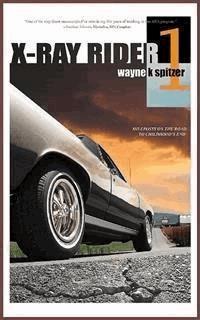
Jonesing for a drive-in theater and a hotrod El Camino?It’s the dawn of the 1970s and everything is changing. The war in Vietnam is winding down. So is the Apollo Space Program. The tiny northwestern city of Spokane is about to host a World’s Fair. But the Watergate Hearings and the re-entry of Skylab and the eruption of Mount Saint Helens are coming…as are killer bees and Ronald Reagan.Enter ‘The Kid,’ a panic-prone, hyper-imaginative boy whose life changes drastically when his father brings home an astronaut-white El Camino. As the car’s deep-seated rumbling becomes a catalyst for the Kid’s curiosity, his ailing, over-protective mother finds herself fending off questions she doesn’t want to answer. But her attempt to redirect him on his birthday only arms him with the tool he needs to penetrate deeper—a pair of novelty X-Ray Specs—and as the Camino muscles them through a decade of economic and cultural turmoil, the Kid comes to believe he can see through metal, clothing, skin—to the center of the universe itself, where he imagines something monstrous growing, spreading, reaching across time and space to threaten his very world.Using the iconography of 20th century trash Americana—drive-in monster movies, cancelled TV shows, vintage comic books—Spitzer has written an unconventional memoir which recalls J.M. Coetzee’s Boyhood and Youth. More than a literal character, ‘The Kid’ is both the child and the adult. By eschewing the technique of traditional autobiography, Spitzer creates a spherical narrative in which the past lives on in an eternal present while retrospection penetrates the edges. X-Ray Rider is not so much a memoir as it is a retro prequel to a postmodern life—a cinematized “reboot” of what Stephen King calls the “fogged out landscape” of youth.Want to go for a ride?
Das E-Book können Sie in Legimi-Apps oder einer beliebigen App lesen, die das folgende Format unterstützen:
Veröffentlichungsjahr: 2017
Ähnliche



X-Ray Rider 1: Mileposts on the road to childhood's end
The X-Ray Rider Trilogy, Volume 1
Wayne Kyle Spitzer
Published by Hobb's End Books, 2017.
While every precaution has been taken in the preparation of this book, the publisher assumes no responsibility for errors or omissions, or for damages resulting from the use of the information contained herein.
X-RAY RIDER 1: MILEPOSTS ON THE ROAD TO CHILDHOOD'S END
First edition. November 25, 2017.
Copyright © 2017 Wayne Kyle Spitzer.
Written by Wayne Kyle Spitzer.
10 9 8 7 6 5 4 3 2 1
Table of Contents
Title Page
Copyright Page
Chronoscope | 1966—1972
I | The Sound of Trouble
II | The Starlight
“THE LEGEND OF BOGGY CREEK: A TRUE STORY” | PLUSCO-HIT!HUGHBEAUMONT “THE MOLE PEOPLE” | ONLY $2 A CARLOAD!
III | Last Kid on the Moon
IV | Dagora-Carcinoma
V | World’s Fair
Greatest illusion of the century! Apparently see bones thru skin, see thru clothes, etc. Amaze and embarrass everyone! | Regular size glasses with built-in optical illusion. | X-RAY VISION SPECS...$1.85 per Pair.
VI | There Might Be Klingons
VII | Shifting Gears
VIII | The Wasps in the Window Well
IX | Catalyst
To be continued in | X-RAY RIDER 2
Chronoscope | 1966—1972
HE LIVES in Spokane, Washington, a smudge of town just off the railway, a place rust-brown by day and elm-dark by night, filled with grain elevators and dim orange streetlamps; a place still without a freeway even in the late ‘60s. His immediate family consists of a mother and father, both in their forties, a brother, who is three years older, and himself. Because he is the youngest of seven boys—four from his mother’s first marriage and a still-born between he and his brother—everyone calls him ‘the Kid.’
They have a ritual which begins at the Phillips 66, in the late afternoon or twilight, where his mother buys him and his brother Cokes and candy cigarettes—Cokes in tall, swirly glass bottles, candy cigarettes in delicate cellophane wrappers. Often she buys them comic books—she calls them ‘funny books’—such as Porky Pig and Daffy Duck, picked from a tall newsstand that squeaks when rotated. He is enchanted by their covers, by the slick, glossy paper and vivid colorizations, the pictures between filmy, rough-edged pages that he can follow, and in a sense, ‘read.’ But what affects him the most, what he wants most to know better, are those things he can see and touch and hear but not read—the marks laid out in tidy rows within the body of the pictures; the roll of the cash register’s tumbler as his mother pays for the books; the runes ticking past on the gas pump as his father fills the tank.
“Thirty-six cents a gallon,” his father always says, shaking his head.
“And 10 cents for a funny book!” says his mother.
Then, as father turns the key and they rattle onto the road in the old Chevy work truck, Elvis takes over, singing “Suspicious Minds.”
And they go riding.
THEY RIDE EVERYWHERE, but he can only imagine what goes on in the farmhouses and the office buildings they pass. He imagines that technicians, who work underground in cramped rooms—rooms full of control panels and television screens—operate traffic lights. That they go in and out through manholes and work down there day and night. He imagines them in gray coveralls with patches on the sleeves—three solid circles, red, yellow, and green. He imagines that The Creature from the Black Lagoon was filmed in Spokane’s Manito Park, on a boat in Mirror Lake, across from his grandmother’s house, and that manhole covers steam because the traffic technicians’ rooms—like those of the submarine on Voyage to the Bottom of the Sea—are pressurized.
But the ride is not always wonderful. When his parents buy a Ford station wagon in 1970 the family celebrates by going to an all-you-can-eat Chinese buffet, where he gorges himself on cheese mussels, which he loves but cannot digest. He christens the new car by vomiting all over its rear storage compartment, the result of which is a carpet of cheese-mussel vomit—drying on the upholstery, and on the groceries, cracking. His mother thinks it is an isolated case of motion sickness, brought on by the excitement of the new car, and by loving cheese mussels too much. They pull over at a Phillips 66 station where she cleans it all up.
Because the wagon has a back seat he starts bringing along his Marx play-sets—Marx's Prehistoric Scenes, Marx's Modern Farm, Marx's Service Station, Marx's Cape Kennedy, all in tin cases with vinyl handles, like attachés. He opens them on his lap, unfolding new worlds—worlds filled with fences and tractors and service stations, but also cycad trees, dinosaurs, Saturn V rockets—four-color comic book worlds of cyan, magenta, yellow, and black.
One afternoon they are riding along Trent Avenue when the light of the setting sun is blocked by an enormous sheet-metal building. The building looks like an aircraft hangar and bears a massive logo high above its daylight windows—sleek yellow letters on a starry black field—like the titles at the beginning of Star Trek.
It is obvious to him that this is where they film the show. He supposes they have the entire ship in there, illuminated by huge lights, supported by lattices of scaffolding. For the first time he thinks of the future—not his future, not tomorrow or the next day or the day after—the future, a future colored Astronaut White, Galaxy Gold, and Re-entry Red. A future his mother and father say will be here before he knows.
I | The Sound of Trouble
Lesen Sie weiter in der vollständigen Ausgabe!
Lesen Sie weiter in der vollständigen Ausgabe!
Lesen Sie weiter in der vollständigen Ausgabe!
Lesen Sie weiter in der vollständigen Ausgabe!
Lesen Sie weiter in der vollständigen Ausgabe!
Lesen Sie weiter in der vollständigen Ausgabe!
Lesen Sie weiter in der vollständigen Ausgabe!
Lesen Sie weiter in der vollständigen Ausgabe!
Lesen Sie weiter in der vollständigen Ausgabe!
Lesen Sie weiter in der vollständigen Ausgabe!
Lesen Sie weiter in der vollständigen Ausgabe!




