


Erhalten Sie Zugang zu diesem und mehr als 300000 Büchern ab EUR 5,99 monatlich.
- Herausgeber: Musaicum Books
- Kategorie: Wissenschaft und neue Technologien
- Sprache: Englisch
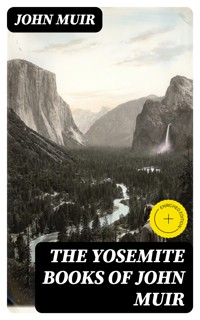
In 'Yosemite' by John Muir (Illustrated Edition), readers are taken on a vivid journey through one of America's most iconic national parks. Muir's descriptive writing style beautifully captures the awe-inspiring natural landscapes of Yosemite, providing detailed accounts of the flora, fauna, and geological features that make the park unique. His use of vivid imagery and poetic language immerses readers in the beauty of the wilderness, showcasing the importance of conservation and appreciation for the natural world. This book serves as both a travelogue and a call to preserve the environment for future generations. John Muir, a Scottish-American naturalist and environmentalist, was a key figure in the preservation of wilderness areas in the United States. His firsthand experiences in Yosemite inspired his writing and activism, leading to the creation of national parks and the conservation movement. Muir's deep connection to nature is evident in his writing, as he conveys a sense of reverence and wonder for the natural world. I highly recommend 'Yosemite' by John Muir to readers who are passionate about nature, conservation, and exploring the great outdoors. Muir's timeless prose and advocacy for environmental protection make this book a must-read for those who appreciate the beauty and significance of America's national parks. In this enriched edition, we have carefully created added value for your reading experience: - A comprehensive Introduction outlines these selected works' unifying features, themes, or stylistic evolutions. - The Author Biography highlights personal milestones and literary influences that shape the entire body of writing. - A Historical Context section situates the works in their broader era—social currents, cultural trends, and key events that underpin their creation. - A concise Synopsis (Selection) offers an accessible overview of the included texts, helping readers navigate plotlines and main ideas without revealing critical twists. - A unified Analysis examines recurring motifs and stylistic hallmarks across the collection, tying the stories together while spotlighting the different work's strengths. - Reflection questions inspire deeper contemplation of the author's overarching message, inviting readers to draw connections among different texts and relate them to modern contexts. - Lastly, our hand‐picked Memorable Quotes distill pivotal lines and turning points, serving as touchstones for the collection's central themes.
Sie lesen das E-Book in den Legimi-Apps auf:
Seitenzahl: 947
Veröffentlichungsjahr: 2017
Das E-Book (TTS) können Sie hören im Abo „Legimi Premium” in Legimi-Apps auf:
Ähnliche



Yosemite by John Muir (Illustrated Edition)
Published by
Books
Table of Contents
Introduction
This illustrated collection gathers John Muir’s most sustained Yosemite writings into a single, navigable volume designed for readers, students, and travelers. By assembling two book-length works alongside selected articles focused on the valley and its surroundings, the edition presents a comprehensive portrait of Muir’s thinking about Yosemite—its geologic origins, living communities, and public value. The visual material is intended to accompany, not overshadow, the prose, helping modern audiences follow his descriptions of cliffs, glaciers, trees, and seasons. The result is both a literary companion to the landscape and a documentary record of how one author helped shape the idea of Yosemite as a national treasure.
The scope is deliberately focused rather than exhaustive. It includes the books The Yosemite and Our National Parks, where Muir establishes his most detailed Yosemite narratives and arguments, and six articles that illuminate particular themes: advocacy for park protection and boundaries, comparisons with neighboring valleys, inventories of scenic riches, glacial interpretation, and seasonal portraiture. While Muir wrote widely beyond the Sierra Nevada, the works gathered here trace a single author’s sustained engagement with one region. Together they capture Yosemite as a field laboratory, sanctuary, and civic responsibility, showing how observation, explanation, and persuasion converge in Muir’s non-fiction.
The genres represented are varied but unified by purpose. The Yosemite is a monograph that blends travel writing, natural history, and topographic guidework. Our National Parks is a collection of essays that survey several reserves, with Yosemite as a touchstone for the national parks idea. The accompanying articles range from policy advocacy to scientific exposition and seasonal sketches. Across these forms, Muir writes as a naturalist, interpreter, and public advocate, joining descriptive prose with accessible explanation. The mixture of genres allows readers to see Yosemite from multiple vantage points—scientific, experiential, and civic—without fracturing the coherence of his vision.
The Yosemite distills decades of walking, climbing, and study in the Sierra Nevada into a single, organized account. It describes the valley’s walls and domes, its waterfalls and meadows, its forests and flowers, and the routes by which a traveler might encounter them. Muir’s explanations emphasize processes—especially glaciation—that shaped the landscape’s forms and textures. He writes with the assurance of firsthand observation, guiding readers from sweeping outlooks to minute, botanical details. The book’s premise is straightforward: to acquaint visitors and armchair readers with Yosemite’s character, while showing how careful, joyful attention can reveal the laws and life of the place.
Our National Parks widens the lens. While it includes Yosemite, it also situates the valley within a broader system of reserves, arguing for their scientific, aesthetic, and public importance. The essays reveal how parks function as classroom, refuge, and common heritage, and they chronicle Muir’s encounters with wildlife, forests, and mountain weather across the American West. For readers of this collection, the book provides context: Yosemite is not an isolated spectacle but part of a network whose purpose is preservation and enjoyment. In these pages, Muir refines the case for protection by inviting people to know and value what they might otherwise overlook.
Two articles here—the advocacy piece on features of a proposed Yosemite National Park and the comparison with a “rival” valley—show Muir’s practical conservation work on the page. The first addresses boundaries and protections suited to the landscape’s natural units. The second celebrates a nearby valley often measured against Yosemite, emphasizing its parallel grandeur and the need for comparable care. These essays exemplify Muir’s habit of joining close observation with public argument: to protect a place, he first makes it vivid, then connects its fate to a broader standard of stewardship.
Other articles expand the descriptive and scientific record. The treasures essay inventories notable features—cliffs, cascades, groves, and alpine gardens—while the piece on glaciers interprets landforms through evidence of past and present ice. In these works, Muir treats the valley as a text written by natural forces that can be read by attentive travelers. He favors explanations rooted in field observation, translating technical matters into images and sequences that a general audience can follow. The effect is cumulative: Yosemite’s forms are not static scenery but traces of active processes still legible in rock, water, and soil.
The seasonal sketches—on winter and spring—bring time into focus. Winter reveals stillness, crystalline air, and the altered voices of water and wind; spring shows the valley’s quickening, with floods, flowers, and new leaf. Muir presents weather, light, and phenology as chapters in the same story, encouraging readers to meet the park repeatedly rather than once. These essays also underscore his belief that access and patience are interpretive tools: the same cliff or river yields different knowledge in different months, and a full portrait of Yosemite requires attention to cycles as well as forms.
Across all these pieces, several stylistic hallmarks emerge. Muir’s voice is simultaneously precise and exuberant, pairing careful naming with metaphors that animate stone, ice, and trees. He writes in long, flexing sentences that move from intimate observation to broad inference, and he favors verbs of motion that keep the reader walking beside him. Personification serves not to domesticate the wild but to acknowledge its agency. At the same time, he maintains a scientist’s discipline, organizing text by watershed, ridge, or process so that lyricism never displaces clarity.
The unifying themes are consistent and resonant. Muir insists that beauty and knowledge are allies: the more one understands the sources of a landscape’s form, the more fully one delights in it. He sees public lands as a trust that demands both policy and personal visitation. Wilderness is not empty but abundant, a community in which humans can practice humility and citizenship. And Yosemite, in particular, functions as exemplar and teacher: its rocks and rivers articulate principles that apply beyond the valley, instructing readers how to look, walk, and care elsewhere.
Muir’s historical significance is twofold. As a writer, he helped define American nature writing, showing how narrative, observation, and advocacy can coexist without dilution. As a conservationist, he shaped public understanding of national parks and the ethical case for preserving them. He was a founder of the Sierra Club, reflecting a commitment to organized protection as well as literary persuasion. The works in this volume demonstrate how persuasive a carefully witnessed place can be: these pages influenced readers who would never see Yosemite, and they continue to inform discussions about parks, access, and protection.
This illustrated edition aims to serve both newcomers and returning readers. The images clarify descriptions that can be hard to visualize from prose alone, while the arrangement—from comprehensive books to focused articles—lets one proceed from overview to detail, or browse by interest. The collection does not try to be the whole of Muir, but rather his Yosemite in full dimension: landscape, science, season, and civic meaning. Read consecutively, the pieces form a continuous walk through stone and time; read selectively, each offers a complete vista, opening onto Muir’s enduring invitation to know and keep a remarkable place.
Author Biography
John Muir was a Scottish-born American naturalist, writer, and conservation advocate whose work in the late nineteenth and early twentieth centuries helped define the idea of national parks in the United States. Best known for his long engagement with the Sierra Nevada and Yosemite Valley, he combined careful field observation with a lyrical, persuasive prose style. Through books such as The Yosemite and Our National Parks, and a steady stream of articles on the region’s geology, seasons, and scenic values, he brought remote mountain landscapes into the national conversation. His writings argued that wild places were both scientifically significant and morally necessary for a modern society.
Educated informally through wide reading and fieldwork, Muir also attended the University of Wisconsin, where courses in botany and geology encouraged habits of close observation he practiced throughout life. Mentored by the educator Jeanne Carr and inspired by the nature-centered philosophy associated with Ralph Waldo Emerson, he developed a viewpoint that joined empirical study to a reverent appreciation of the living world. This blend of science and moral sentiment is visible in his Yosemite essays, in which careful notes on rocks, trees, snow, and light become arguments for preservation. His early training made him skeptical of mere sentimentality, but equally wary of purely utilitarian resource schemes.
Upon reaching California and exploring the high country, Muir began publishing articles that introduced Yosemite to a wide readership. Pieces such as Yosemite Glaciers, Yosemite in Winter, Yosemite in Spring, The Treasures of the Yosemite, and A Rival of the Yosemite present a landscape observed across seasons and from multiple disciplines. He traced storm tracks, watched avalanches, followed flowerings, and mapped ice-polished surfaces, always connecting detail to large patterns. These essays established recurring themes: glacial origins of the valley, the ecological integrity of connected watersheds, and the educative power of sublime scenery. They also marked him as a trustworthy guide to a then-largely unfamiliar mountain world.
In his Yosemite Glaciers research and related writings, Muir documented evidence that moving ice had sculpted the valley and surrounding uplands. He sought striations, moraines, and erratics, tracked seasonal ice behavior where he could, and traced the likely courses of vanished rivers of ice. At a time when competing explanations existed for Yosemite’s dramatic walls and domes, he argued that glaciation, acting over long intervals, best accounted for the forms and soils he observed. The persuasiveness of his field-based case lay in its clarity: readers could picture processes as he described them, and then see the same signatures on the ground during their own visits.
From observation he moved to advocacy. Features of the Proposed Yosemite National Park set out not just the need for protection but the logic of boundaries that would safeguard meadows, forests, and the high country feeding the valley. He criticized overgrazing and ill-planned resource extraction as threats to soil, water, and scenery, urging a stewardship that preserved ecological function. A Rival of the Yosemite extended this argument by calling attention to comparable valleys and urging that their grandeur warranted similar care. These articles exemplify his method: describe the place with precision, explain its processes, and conclude with practical steps that public policy should take.
His books consolidated the case. Our National Parks gathered reports from several protected areas into an accessible narrative that introduced broad audiences to the purposes and pleasures of preservation. The Yosemite offered a focused, book-length portrait of the valley and its environs, with chapters on geology, waterfalls, trees, weather, and trails. Both texts epitomize Muir’s fusion of science writing and persuasive essay, joining catalogues of species and landforms to invitations for respectful visitation. Their reception expanded his influence beyond California, helping teachers, travelers, and lawmakers imagine national parks as laboratories, sanctuaries, and civic assets whose benefits extended far beyond their boundaries.
In later years he continued to write, lecture, and organize on behalf of parks and wilderness, helping to found a conservation organization that amplified these campaigns. Though specific policy struggles could be contentious, his enduring legacy lies in a vocabulary and vision that made protection of wild places a public good. Yosemite remained the touchstone of his thought, and his seasonal essays on the valley still serve readers as both field notes and invitations. Today The Yosemite, Our National Parks, and the related articles continue to inform debates on land use, access, and climate, reminding audiences that careful attention can guide principled action.
Historical Context
John Muir’s Yosemite writings emerged from the late nineteenth and early twentieth centuries, when the United States was industrializing rapidly and the American West was being incorporated into national markets and imagination. Romantic and Transcendental currents, popularized earlier by Emerson and Thoreau, blended with new scientific inquiry and mass-circulation magazines. Conservation—both preservationist and utilitarian—became a visible political cause. The pieces gathered here, from early articles through Our National Parks (1901) and The Yosemite (1912), chart that shifting terrain. They document how scenic wonder, science, and policy converged around a single landscape while showing Muir’s evolution from solitary observer to nationally recognized advocate for federal protection of wild places.
Yosemite’s national prominence predated Muir. After a violent military incursion during the Mariposa Indian War (1851), news of the valley reached Euro-American audiences. Photographs by Carleton Watkins in the early 1860s and paintings by artists like Albert Bierstadt helped persuade Congress to pass the Yosemite Grant (1864), signed by Abraham Lincoln, which set aside Yosemite Valley and the Mariposa Grove for California’s management. This unusual reservation—preceding Yellowstone’s creation as a national park in 1872—established Yosemite as a proving ground for scenic preservation. The rising flow of tourists, stage roads, and hotels made the valley both famous and contested long before Muir’s books appeared.
Muir, a Scottish-born immigrant (1838–1914) who arrived in California in 1868 after wide travels, first entered Yosemite that year. He spent extended periods in the Sierra Nevada during the late 1860s and early 1870s as a shepherd, sawmill worker, and independent researcher. Those seasons established the observational habits, botanical knowledge, and mountaineering experience that inform Yosemite in Winter and Yosemite in Spring. The essays convey the rhythms of storms, thaw, and flowering he recorded from high-country bivouacs. Their close attention to seasonal change situates Muir within nineteenth-century natural history while preparing the public voice he later used to argue for legal protection of landscapes.
The valley’s origins were a central scientific controversy when Muir began publishing. The California Geological Survey, led by Josiah Dwight Whitney, promoted a catastrophic subsidence theory for Yosemite’s formation. Muir, drawing on fieldwork in the early 1870s, argued instead that glaciers had carved the valley and surrounding canyons. Yosemite Glaciers presents observations of moraines, striations, and living ice in the high Sierra, extending contemporary glacial theory into California. Although professional geologists initially resisted Muir’s conclusions, subsequent research broadly affirmed glacial processes. The debate mattered beyond geology: it framed Yosemite as a dynamic, legible natural system, strengthening claims that scientific value warranted its protection.
Mass magazines amplified such arguments. During the 1870s–1890s, journals like Overland Monthly and The Century circulated western landscapes to eastern readers and policymakers. Editor Robert Underwood Johnson of The Century invited Muir to write about threats to the Sierra. The Treasures of the Yosemite and Features of the Proposed Yosemite National Park, both published in 1890, combined lyrical description with direct policy advocacy. They helped build public pressure for a larger, federally administered reserve around the state-held valley. This print culture—illustrations, engravings, and carefully staged rhetoric—functioned as a political technology, turning remote canyons into national issues debated in Congress and newspapers.
Congress responded by creating Yosemite National Park in 1890, surrounding but not including Yosemite Valley and the Mariposa Grove, which remained under California’s control. The arrangement produced overlapping jurisdictions and persistent conflicts over grazing, logging, and development. Sheep herds—Muir’s “hoofed locusts”—had damaged meadows throughout the high country. Federal officials struggled to enforce protections across vast terrain. The U.S. Army soon patrolled the new park seasonally, while state-appointed guardians managed the valley. Muir’s articles from this period register both achievement and frustration: a reserve existed, yet its integrity depended on administration, funding, and public opinion still being assembled.
Institution-building followed. Muir and colleagues founded the Sierra Club in 1892 to support preservation and promote public appreciation of the Sierra Nevada. The conservation movement broadened nationally in the 1890s and early 1900s: the Forest Reserve Act (1891) authorized federal forest withdrawals; national forests expanded under presidents Harrison, Cleveland, and Theodore Roosevelt; and a utilitarian conservation philosophy, articulated by Gifford Pinchot, emphasized managed use of resources. Muir, by contrast, stressed the spiritual and scientific value of intact landscapes. The tension between “wise use” and preservation frames debates echoed in Our National Parks and in Muir’s Yosemite-focused essays.
Our National Parks (1901) gathers and revises magazine essays to present a systemwide argument for preservation. Published as national forests and parks were multiplying, the book introduces broad audiences to Yosemite and other reserves, warning against grazing, logging, and unrestricted tourism while inviting readers to visit respectfully. It appeared months before Theodore Roosevelt assumed the presidency, at a moment when executive authority over public lands was expanding. The book’s vivid set pieces, often grounded in Yosemite experience, supplied policymakers and citizens a shared vocabulary of wonder that could justify protective laws and budgets in the Progressive Era.
By the time The Yosemite appeared in 1912, several political milestones had reshaped the valley. After sustained lobbying by Muir, Robert Underwood Johnson, and others, the state relinquished control of Yosemite Valley and the Mariposa Grove to the federal government in 1906, unifying management with the surrounding national park. The book consolidates decades of observation—geology, botany, weather, waterfalls, and trails—into a comprehensive portrait, written for general readers and prospective visitors. Coming near the end of Muir’s life, it reflects both scientific confidence in glacial interpretation and the practical lessons learned from two decades of contested park administration.
A Rival of the Yosemite celebrates Hetch Hetchy Valley in the Tuolumne watershed as equal in grandeur to the more famous Yosemite Valley. When San Francisco sought a municipal water supply, proposals to dam Hetch Hetchy intensified after the 1906 earthquake and fire. Muir’s earlier praise for the valley’s beauty became a central text in arguments against inundation. The national controversy culminated in the Raker Act (1913), authorizing the O’Shaughnessy Dam. Muir opposed the project to his death in 1914. The episode sharpened philosophical divisions within conservation and remains a touchstone in discussions of preservation, public utilities, and reparative restoration.
Seasonal essays such as Yosemite in Winter and Yosemite in Spring belong to a nineteenth-century tradition of phenological description, recording snowpack, river conditions, wildlife behavior, and flowering sequences. They also reflect shifting patterns of visitation: winter journeys were uncommon, while spring was celebrated for waterfalls at peak flow. By presenting the park as an all-season scientific and aesthetic resource, these pieces advocated for careful access while educating readers about hazards and etiquette. Their measured attention to storms, avalanches, and meltwater dovetailed with Muir’s glacial analyses, offering readers vivid, repeatable observations of cyclical processes rather than single, sensational events.
The Treasures of the Yosemite exemplifies a Century Magazine strategy that linked literary prestige, illustration, and policy outcomes. Published in 1890 amid a coordinated editorial campaign, it cataloged the valley’s scenic and scientific assets while publicizing threats from grazing, logging, and unregulated concession development. Such essays targeted eastern lawmakers who had never seen the Sierra but could be persuaded by engravings and carefully marshaled facts. They also mobilized western readers—club members, scientists, and civic leaders—who could lobby state and federal officials. The piece thus occupies an intermediate zone between travel writing and legislative briefing, characteristic of conservation advocacy at the time.
Features of the Proposed Yosemite National Park addressed the boundaries and management principles of the reserve Congress eventually established in 1890. It argued for protecting high-country watersheds and meadows essential to the valley’s health, anticipating modern landscape-scale conservation. The article’s emphasis on enclosing headwaters echoed broader Progressive Era concerns about floods, irrigation, and municipal water. By making hydrology central to scenic preservation, Muir and his editors aligned Yosemite advocacy with contemporary debates about western reclamation policies—even as they resisted projects that would sacrifice wilderness to reservoirs within park boundaries.
Yosemite’s human history extends far before federal designations. Indigenous peoples, including Southern Sierra Miwuk and Paiute-affiliated communities often referred to as the Ahwahneechee, inhabited and managed the region for generations. Mid-nineteenth-century violence, notably the 1851 Mariposa Battalion incursion, precipitated dispossession and removal. Early park policies restricted traditional practices and residence. Muir’s writings rarely center these histories and sometimes reflect the biases of his time. Later scholarship has emphasized Indigenous land stewardship and ongoing connections to Yosemite. Contemporary readers approach the collection with this fuller context, recognizing both the power of Muir’s prose and its omissions.
Illustration and photography were integral to Yosemite’s public life. Wet-plate images by Carleton Watkins in the 1860s, later photographs by Eadweard Muybridge and others, and wood-engraved reproductions in magazines created a visual canon that complemented Muir’s texts. Advances in halftone printing in the 1880s–1890s allowed photographs to appear more widely in periodicals and books, magnifying their persuasive reach. An illustrated edition of Muir’s Yosemite writings continues that tradition, reminding readers that American conservation was mediated not only by laws and reports but also by images that traveled faster and farther than travelers could.
Transportation networks reshaped Yosemite advocacy and experience. Railroads connected California to national markets and carried tourists toward the Sierra. Stage roads from Mariposa, Big Oak Flat, and Wawona delivered visitors to valley hotels and campgrounds by the late nineteenth century. As visitation expanded, so did concerns about trail erosion, litter, and wildlife harassment—issues Muir addressed repeatedly. Automobiles were admitted to Yosemite in 1913, promising broader access and new management challenges. Against this backdrop, Our National Parks and The Yosemite sought to guide the conduct and expectations of visitors while arguing that access must be balanced by robust protection.
Administration evolved unevenly. Before the National Park Service was created in 1916, the U.S. Army patrolled several western parks, including Yosemite’s high country, to deter poaching, grazing, and timber theft. In 1903, President Theodore Roosevelt camped in Yosemite with Muir, an event widely reported at the time and later credited with strengthening the case for unified federal control; Congress transferred Yosemite Valley and the Mariposa Grove from California to the federal government in 1906. Muir’s books reflect these changes, alternating between celebration of progress and insistence that permanent institutions and appropriations were needed to secure lasting protection.」「Muir’s Yosemite works influenced American letters and policy. They helped define a national genre of nature writing that fused field science with spiritual and aesthetic claims. Educators, club leaders, and legislators quoted them to justify park appropriations and watershed protections. Their preservationist stance stood in productive tension with utilitarian conservation, sharpening debates about the purposes of public land. In the decades after Muir’s death, the National Park Service professionalized interpretation, and later writers—scientists, poets, and photographers—built on his rhetoric while questioning its limits, particularly regarding Indigenous exclusion and the uneven social access to “wilderness.”」「Taken together, the collection functions as a commentary on its periods: Reconstruction-era curiosity about the West; Gilded Age industrial pressures; Progressive conservation reforms; and early twentieth-century battles over water and access. Its essays and books show how science, art, and politics intertwined to create—and contest—the idea of a national park. Later readers revisit these texts amid ongoing debates about ecological restoration, climate change impacts on Sierra snowpack and glaciers, and proposals to reconsider dam sites such as Hetch Hetchy. The writings remain central documents for understanding how Americans learned to see, value, and govern Yosemite.
Synopsis (Selection)
The Yosemite
Muir’s sustained portrait of Yosemite Valley and the surrounding Sierra Nevada interweaves field observation, mountaineering episodes, and natural history. He traces how water and ice shaped cliffs, meadows, and forests, while guiding readers through plant and animal communities and notable landmarks. The tone blends precise geology with devotional awe, establishing themes of humility before wild processes and the moral imperative to keep such places unspoiled.
Our National Parks
This work broadens the focus from one valley to a national mosaic, presenting vivid accounts of multiple parks and their wildlife. It advances a clear case for preservation and public access, framing parks as classrooms for natural history and nurseries for civic responsibility. The voice is expansive and reformist, pairing lyrical description with reasoned advocacy for a continent-scale conservation vision.
Advocacy and Preservation Essays (Features of the Proposed Yosemite National Park; A Rival of the Yosemite)
These essays move from close description to concrete proposals, outlining the distinguishing features of a proposed Yosemite National Park and justifying protective boundaries. In parallel, the comparison with a rival canyon or valley underscores that Yosemite’s virtues belong to a larger Sierra heritage worth safeguarding. The tone is persuasive and strategic, translating aesthetic and ecological value into arguments for law and public will.
Yosemite Landscapes and Geology (The Treasures of the Yosemite; Yosemite Glaciers)
Focusing on the valley’s riches and its icy origins, these pieces catalog scenic, botanical, and hydrological wealth while clarifying the role of glaciers in shaping the region. Muir synthesizes on-the-ground notes with accessible explanations of geomorphic forces to connect what visitors see to how it formed. The result reads as both guide and primer: poetic in cadence, exacting in detail, and intent on deepening ecological literacy.
Yosemite Seasonal Sketches (Yosemite in Winter; Yosemite in Spring)
Paired studies of winter and spring reveal the valley’s transformations—from snow silence and crystalline light to thundering meltwater, fresh growth, and returning wildlife. Muir treats weather, water, and seasonal timing as structuring rhythms, showing how renewal emerges from apparent rest. The mood is intimate and immersive, urging attention to cycles rather than isolated spectacles.
Yosemite by John Muir (Illustrated Edition)
Books
THE YOSEMITE
Affectionately dedicated to my friend, Robert Underwood Johnson, faithful lover and defender of our glorious forests and originator of the Yosemite National Park.
Table of Contents
Chapter 1 The Approach to the Valley
When I set out on the long excursion that finally led to California I wandered afoot and alone, from Indiana to the Gulf of Mexico, with a plant-press on my back, holding a generally southward course, like the birds when they are going from summer to winter. From the west coast of Florida I crossed the gulf to Cuba, enjoyed the rich tropical flora there for a few months, intending to go thence to the north end of South America, make my way through the woods to the headwaters of the Amazon, and float down that grand river to the ocean. But I was unable to find a ship bound for South America--fortunately perhaps, for I had incredibly little money for so long a trip and had not yet fully recovered from a fever caught in the Florida swamps. Therefore I decided to visit California for a year or two to see its wonderful flora and the famous Yosemite Valley. All the world was before me and every day was a holiday, so it did not seem important to which one of the world's wildernesses I first should wander.
Arriving by the Panama steamer, I stopped one day in San Francisco and then inquired for the nearest way out of town. "But where do you want to go?" asked the man to whom I had applied for this important information. "To any place that is wild," I said. This reply startled him. He seemed to fear I might be crazy and therefore the sooner I was out of town the better, so he directed me to the Oakland ferry.
So on the first of April, 1868, I set out afoot for Yosemite. It was the bloom-time of the year over the lowlands and coast ranges the landscapes of the Santa Clara Valley were fairly drenched with sunshine, all the air was quivering with the songs of the meadow-larks, and the hills were so covered with flowers that they seemed to be painted. Slow indeed was my progress through these glorious gardens, the first of the California flora I had seen. Cattle and cultivation were making few scars as yet, and I wandered enchanted in long wavering curves, knowing by my pocket map that Yosemite Valley lay to the east and that I should surely find it.
The Sierra From The West
Looking eastward from the summit of the Pacheco Pass one shining morning, a landscape was displayed that after all my wanderings still appears as the most beautiful I have ever beheld. At my feet lay the Great Central Valley of California, level and flowery, like a lake of pure sunshine, forty or fifty miles wide, five hundred miles long, one rich furred garden of yellow Compositœ. And from the eastern boundary of this vast golden flower-bed rose the mighty Sierra, miles in height, and so gloriously colored and so radiant, it seemed not clothed with light, but wholly composed of it, like the wall of some celestial city. Along the top and extending a good way down, was a rich pearl-gray belt of snow; below it a belt of blue and dark purple, marking the extension of the forests; and stretching along the base of the range a broad belt of rose-purple; all these colors, from the blue sky to the yellow valley smoothly blending as they do in a rainbow, making a wall of light ineffably fine[1q]. Then it seemed to me that the Sierra should be called, not the Nevada or Snowy Range, but the Range of Light. And after ten years of wandering and wondering in the heart of it, rejoicing in its glorious floods of light, the white beams of the morning streaming through the passes, the noonday radiance on the crystal rocks, the flush of the alpenglow, and the irised spray of countless waterfalls, it still seems above all others the Range of Light.
In general views no mark of man is visible upon it, nor any thing to suggest the wonderful depth and grandeur of its sculpture. None of its magnificent forest-crowned ridges seems to rise much above the general level to publish its wealth. No great valley or river is seen, or group of well-marked features of any kind standing out as distinct pictures. Even the summit peaks, marshaled in glorious array so high in the sky, seem comparatively regular in form. Nevertheless the whole range five hundred miles long is furrowed with cañons 2000 to 5000 feet deep, in which once flowed majestic glaciers, and in which now flow and sing the bright rejoicing rivers.
Characteristics Of The Cañons
Though of such stupendous depth, these cañons are not gloom gorges, savage and inaccessible. With rough passages here and there they are flowery pathways conducting to the snowy, icy fountains; mountain streets full of life and light, graded and sculptured by the ancient glaciers, and presenting throughout all their course a rich variety of novel and attractive scenery--the most attractive that has yet been discovered in the mountain ranges of the world. In many places, especially in the middle region of the western flank, the main cañons widen into spacious valleys or parks diversified like landscape gardens with meadows and groves and thickets of blooming bushes, while the lofty walls, infinitely varied in form are fringed with ferns, flowering plants, shrubs of many species and tall evergreens and oaks that find footholds on small benches and tables, all enlivened and made glorious with rejoicing stream that come chanting in chorus over the cliffs and through side cañons in falls of every conceivable form, to join the river that flow in tranquil, shining beauty down the middle of each one of them.
The Incomparable Yosemite
The most famous and accessible of these cañon valleys, and also the one that presents their most striking and sublime features on the grandest scale, is the Yosemite, situated in the basin of the Merced River at an elevation of 4000 feet above the level of the sea. It is about seven miles long, half a mile to a mile wide, and nearly a mile deep in the solid granite flank of the range. The walls are made up of rocks, mountains in size, partly separated from each other by side cañons, and they are so sheer in front, and so compactly and harmoniously arranged on a level floor, that the Valley, comprehensively seen, looks like an immense hall or temple lighted from above.
But no temple made with hands can compare with Yosemite. Every rock in its walls seems to glow with life. Some lean back in majestic repose; others, absolutely sheer or nearly so for thousands of feet, advance beyond their companions in thoughtful attitudes, giving welcome to storms and calms alike, seemingly aware, yet heedless, of everything going on about them. Awful in stern, immovable majesty, how softly these rocks are adorned, and how fine and reassuring the company they keep: their feet among beautiful groves and meadows, their brows in the sky, a thousand flowers leaning confidingly against their feet, bathed in floods of water, floods of light, while the snow and waterfalls, the winds and avalanches and clouds shine and sing and wreathe about them as the years go by, and myriads of small winged creatures birds, bees, butterflies--give glad animation and help to make all the air into music. Down through the middle of the Valley flows the crystal Merced, River of Mercy, peacefully quiet, reflecting lilies and trees and the onlooking rocks; things frail and fleeting and types of endurance meeting here and blending in countless forms, as if into this one mountain mansion Nature had gathered her choicest treasures, to draw her lovers into close and confiding communion with her.
The Approach To The Valley
Sauntering up the foothills to Yosemite by any of the old trails or roads in use before the railway was built from the town of Merced up the river to the boundary of Yosemite Park, richer and wilder become the forests and streams. At an elevation of 6000 feet above the level of the sea the silver firs are 200 feet high, with branches whorled around the colossal shafts in regular order, and every branch beautifully pinnate like a fern frond. The Douglas spruce, the yellow and sugar pines and brown-barked Libocedrus here reach their finest developments of beauty and grandeur. The majestic Sequoia is here, too, the king of conifers, the noblest of all the noble race. These colossal trees are as wonderful in fineness of beauty and proportion as in stature--an assemblage of conifers surpassing all that have ever yet been discovered in the forests of the world. Here indeed is the tree-lover's paradise; the woods, dry and wholesome, letting in the light in shimmering masses of half sunshine, half shade; the night air as well as the day air indescribably spicy and exhilarating; plushy fir-boughs for campers' beds and cascades to sing us to sleep. On the highest ridges, over which these old Yosemite ways passed, the silver fir (Abies magnifica) forms the bulk of the woods, pressing forward in glorious array to the very brink of the Valley walls on both sides, and beyond the Valley to a height of from 8000 to 9000 feet above the level of the sea. Thus it appears that Yosemite, presenting such stupendous faces of bare granite, is nevertheless imbedded in magnificent forests, and the main species of pine, fir, spruce and libocedrus are also found in the Valley itself, but there are no "big trees" (Sequoia gigantea) in the Valley or about the rim of it. The nearest are about ten and twenty miles beyond the lower end of the valley on small tributaries of the Merced and Tuolumne Rivers.
The First View: The Bridal Veil
From the margin of these glorious forests the first general view of the Valley used to be gained--a revelation in landscape affairs that enriches one's life forever. Entering the Valley, gazing overwhelmed with the multitude of grand objects about us, perhaps the first to fix our attention will be the Bridal Veil, a beautiful waterfall on our right. Its brow, where it first leaps free from the cliff, is about 900 feet above us; and as it sways and sings in the wind, clad in gauzy, sun-sifted spray, half falling, half floating, it seems infinitely gentle and fine; but the hymns it sings tell the solemn fateful power hidden beneath its soft clothing.
The Bridal Veil shoots free from the upper edge of the cliff by the velocity the stream has acquired in descending a long slope above the head of the fall. Looking from the top of the rock-avalanche talus on the west side, about one hundred feet above the foot of the fall, the under surface of the water arch is seen to be finely grooved and striated; and the sky is seen through the arch between rock and water, making a novel and beautiful effect.
Under ordinary weather conditions the fall strikes on flat-topped slabs, forming a kind of ledge about two-thirds of the way down from the top, and as the fall sways back and forth with great variety of motions among these flat-topped pillars, kissing and plashing notes as well as thunder-like detonations are produced, like those of the Yosemite Fall, though on a smaller scale.
The rainbows of the Veil, or rather the spray- and foam-bows, are superb, because the waters are dashed among angular blocks of granite at the foot, producing abundance of spray of the best quality for iris effects, and also for a luxuriant growth of grass and maiden-hair on the side of the talus, which lower down is planted with oak, laurel and willows.
General Features Of The Valley
On the other side of the Valley, almost immediately opposite the Bridal Veil, there is another fine fall, considerably wider than the Veil when the snow is melting fast and more than 1000 feet in height, measured from the brow of the cliff where it first springs out into the air to the head of the rocky talus on which it strikes and is broken up into ragged cascades. It is called the Ribbon Fall or Virgin's Tears. During the spring floods it is a magnificent object, but the suffocating blasts of spray that fill the recess in the wall which it occupies prevent a near approach. In autumn, however when its feeble current falls in a shower, it may then pass for tears with the sentimental onlooker fresh from a visit to the Bridal Veil.
Just beyond this glorious flood the El Capitan Rock, regarded by many as the most sublime feature of the Valley, is seen through the pine groves, standing forward beyond the general line of the wall in most imposing grandeur, a type of permanence. It is 3300 feet high, a plain, severely simple, glacier-sculptured face of granite, the end of one of the most compact and enduring of the mountain ridges, unrivaled in height and breadth and flawless strength.
Across the Valley from here, next to the Bridal Veil, are the picturesque Cathedral Rocks, nearly 2700 feet high, making a noble display of fine yet massive sculpture. They are closely related to El Capitan, having been eroded from the same mountain ridge by the great Yosemite Glacier when the Valley was in process of formation.
Next to the Cathedral Rocks on the south side towers the Sentinel Rock to a height of more than 3000 feet, a telling monument of the glacial period.
Almost immediately opposite the Sentinel are the Three Brothers, an immense mountain mass with three gables fronting the Valley, one above another, the topmost gable nearly 4000 feet high. They were named for three brothers, sons of old Tenaya, the Yosemite chief, captured here during the Indian War, at the time of the discovery of the Valley in 1852.
Sauntering up the Valley through meadow and grove, in the company of these majestic rocks, which seem to follow us as we advance, gazing, admiring, looking for new wonders ahead where all about us is so wonderful, the thunder of the Yosemite Fall is heard, and when we arrive in front of the Sentinel Rock it is revealed in all its glory from base to summit, half a mile in height, and seeming to spring out into the Valley sunshine direct from the sky. But even this fall, perhaps the most wonderful of its kind in the world, cannot at first hold our attention, for now the wide upper portion of the Valley is displayed to view, with the finely modeled North Dome, the Royal Arches and Washington Column on our left; Glacier Point, with its massive, magnificent sculpture on the right; and in the middle, directly in front, looms Tissiack or Half Dome, the most beautiful and most sublime of all the wonderful Yosemite rocks, rising in serene majesty from flowery groves and meadows to a height of 4750 feet.
The Upper Cañons
Here the Valley divides into three branches, the Tenaya, Nevada, and Illilouette Cañons, extending back into the fountains of the High Sierra, with scenery every way worthy the relation they bear to Yosemite.
In the south branch, a mile or two from the main Valley, is the Illilouette Fall, 600 feet high, one of the most beautiful of all the Yosemite choir, but to most people inaccessible as yet on account of its rough, steep, boulder-choked cañon. Its principal fountains of ice and snow lie in the beautiful and interesting mountains of the Merced group, while its broad open basin between its fountain mountains and cañon is noted for the beauty of its lakes and forests and magnificent moraines.
Returning to the Valley, and going up the north branch of Tenaya Cañon, we pass between the North Dome and Half Dome, and in less than an hour come to Mirror Lake, the Dome Cascade and Tenaya Fall. Beyond the Fall, on the north side of the cañon is the sublime Ed Capitan-like rock called Mount Watkins; on the south the vast granite wave of Clouds' Rest, a mile in height; and between them the fine Tenaya Cascade with silvery plumes outspread on smooth glacier-polished folds of granite, making a vertical descent in all of about 700 feet.
Just beyond the Dome Cascades, on the shoulder of Mount Watkins, there is an old trail once used by Indians on their way across the range to Mono, but in the cañon above this point there is no trail of any sort. Between Mount Watkins and Clouds' Rest the cañon is accessible only to mountaineers, and it is so dangerous that I hesitate to advise even good climbers, anxious to test their nerve and skill, to attempt to pass through it. Beyond the Cascades no great difficulty will be encountered. A succession of charming lily gardens and meadows occurs in filled-up lake basins among the rock-waves in the bottom of the cañon, and everywhere the surface of the granite has a smooth-wiped appearance, and in many places reflects the sunbeams like glass, a phenomenon due to glacial action, the cañon having been the channel of one of the main tributaries of the ancient Yosemite Glacier.
About ten miles above the Valley we come to the beautiful Tenaya Lake, and here the cañon terminates. A mile or two above the lake stands the grand Sierra Cathedral, a building of one stone, sewn from the living rock, with sides, roof, gable, spire and ornamental pinnacles, fashioned and finished symmetrically like a work of art, and set on a well-graded plateau about 9000 feet high, as if Nature in making so fine a building had also been careful that it should be finely seen. From every direction its peculiar form and graceful, majestic beauty of expression never fail to charm. Its height from its base to the ridge of the roof is about 2500 feet, and among the pinnacles that adorn the front grand views may be gained of the upper basins of the Merced and Tuolumne Rivers.
Passing the Cathedral we descend into the delightful, spacious Tuolumne Valley, from which excursions may be made to Mounts Dana, Lyell, Ritter, Conness, and Mono Lake, and to the many curious peaks that rise above the meadows on the south, and to the Big Tuolumne Cañon, with its glorious abundance of rock and falling, gliding, tossing water. For all these the beautiful meadows near the Soda Springs form a delightful center.
Natural Features Near The Valley
Returning now to Yosemite and ascending the middle or Nevada branch of the Valley, occupied by the main Merced River, we come within a few miles to the Vernal and Nevada Falls, 400 and 600 feet high, pouring their white, rejoicing waters in the midst of the most novel and sublime rock scenery to be found in all the World. Tracing the river beyond the head of the Nevada Fall we are lead into the Little Yosemite, a valley like the great Yosemite in form, sculpture and vegetation. It is about three miles long, with walls 1500 to 2000 feet high, cascades coming over them, and the ever flowing through the meadows and groves of the level bottom in tranquil, richly-embowered reaches.
Beyond this Little Yosemite in the main cañon, there are three other little yosemites, the highest situated a few miles below the base of Mount Lyell, at an elevation of about 7800 feet above the sea. To describe these, with all their wealth of Yosemite furniture, and the wilderness of lofty peaks above them, the home of the avalanche and treasury of the fountain snow, would take us far beyond the bounds of a single book. Nor can we here consider the formation of these mountain landscapes--how the crystal rock were brought to light by glaciers made up of crystal snow, making beauty whose influence is so mysterious on every one who sees it.
Of the small glacier lakes so characteristic of these upper regions, there are no fewer than sixty-seven in the basin of the main middle branch, besides countless smaller pools. In the basin of the Illilouette there are sixteen, in the Tenaya basin and its branches thirteen, in the Yosemite Creek basin fourteen, and in the Pohono or Bridal Veil one, making a grand total of one hundred and eleven lakes whose waters come to sing at Yosemite. So glorious is the background of the great Valley, so harmonious its relations to its widespreading fountains.
The same harmony prevails in all the other features of the adjacent landscapes. Climbing out of the Valley by the subordinate cañons, we find the ground rising from the brink of the walls: on the south side to the fountains of the Bridal Veil Creek, the basin of which is noted for the beauty of its meadows and its superb forests of silver fir; on the north side through the basin of the Yosemite Creek to the dividing ridge along the Tuolumne Cañon and the fountains of the Hoffman Range.
Down The Yosemite Creek
In general views the Yosemite Creek basin seems to be paved with domes and smooth, whaleback masses of granite in every stage of development--some showing only their crowns; others rising high and free above the girdling forests, singly or in groups. Others are developed only on one side, forming bold outstanding bosses usually well fringed with shrubs and trees, and presenting the polished surfaces given them by the glacier that brought them into relief. On the upper portion of the basin broad moraine beds have been deposited and on these fine, thrifty forests are growing. Lakes and meadows and small spongy bogs may be found hiding here and there in the woods or back in the fountain recesses of Mount Hoffman, while a thousand gardens are planted along the banks of the streams.
All the wide, fan-shaped upper portion of the basin is covered with a network of small rills that go cheerily on their way to their grand fall in the Valley, now flowing on smooth pavements in sheets thin as glass, now diving under willows and laving their red roots, oozing through green, plushy bogs, plashing over small falls and dancing down slanting cascades, calming again, gliding through patches of smooth glacier meadows with sod of alpine agrostis mixed with blue and white violets and daisies, breaking, tossing among rough boulders and fallen trees, resting in calm pools, flowing together until, all united, they go to their fate with stately, tranquil gestures like a full-grown river. At the crossing of the Mono Trail, about two miles above the head of the Yosemite Fall, the stream is nearly forty feet wide, and when the snow is melting rapidly in the spring it is about four feet deep, with a current of two and a half miles an hour. This is about the volume of water that forms the Fall in May and June when there had been much snow the preceding winter; but it varies greatly from month to month. The snow rapidly vanishes from the open portion of the basin, which faces southward, and only a few of the tributaries reach back to perennial snow and ice fountains in the shadowy amphitheaters on the precipitous northern slopes of Mount Hoffman. The total descent made by the stream from its highest sources to its confluence with the Merced in the Valley is about 6000 feet, while the distance is only about ten miles, an average fall of 600 feet per mile. The last mile of its course lies between the sides of sunken domes and swelling folds of the granite that are clustered and pressed together like a mass of bossy cumulus clouds. Through this shining way Yosemite Creek goes to its fate, swaying and swirling with easy, graceful gestures and singing the last of its mountain songs before it reaches the dizzy edge of Yosemite to fall 2600 feet into another world, where climate, vegetation, inhabitants, all are different. Emerging from this last cañon the stream glides, in flat lace-like folds, down a smooth incline into a small pool where it seems to rest and compose itself before taking the grand plunge. Then calmly, as if leaving a lake, it slips over the polished lip of the pool down another incline and out over the brow of the precipice in a magnificent curve thick-sown with rainbow spray.
The Yosemite Fall
Long ago before I had traced this fine stream to its head back of Mount Hoffman, I was eager to reach the extreme verge to see how it behaved in flying so far through the air; but after enjoying this view and getting safely away I have never advised any one to follow my steps. The last incline down which the stream journeys so gracefully is so steep and smooth one must slip cautiously forward on hands and feet alongside the rushing water, which so near one's head is very exciting. But to gain a perfect view one must go yet farther, over a curving brow to a slight shelf on the extreme brink. This shelf, formed by the flaking off of a fold of granite, is about three inches wide, just wide enough for a safe rest for one's heels. To me it seemed nerve-trying to slip to this narrow foothold and poise on the edge of such precipice so close to the confusing whirl of the waters; and after casting longing glances over the shining brow of the fall and listening to its sublime psalm, I concluded not to attempt to go nearer, but, nevertheless, against reasonable judgment, I did. Noticing some tufts of artemisia in a cleft of rock, I filled my mouth with the leaves, hoping their bitter taste might help to keep caution keen and prevent giddiness. In spite of myself I reached the little ledge, got my heels well set, and worked sidewise twenty or thirty feet to a point close to the out-plunging current. Here the view is perfectly free down into the heart of the bright irised throng of comet-like streamers into which the whole ponderous volume of the fall separates, two or three hundred feet below the brow. So glorious a display of pure wildness, acting at close range while cut off from all the world beside, is terribly impressive. A less nerve-trying view may be obtained from a fissured portion of the edge of the cliff about forty yards to the eastward of the fall. Seen from this point towards noon, in the spring, the rainbow on its brow seems to be broken up and mingled with the rushing comets until all the fall is stained with iris colors, leaving no white water visible. This is the best of the safe views from above, the huge steadfast rocks, the flying waters, and the rainbow light forming one of the most glorious pictures conceivable.
The Yosemite Fall is separated into an upper and a lower fall with a series of falls and cascades between them, but when viewed in front from the bottom of the Valley they all appear as one.
So grandly does this magnificent fall display itself from the floor of the Valley, few visitors take the trouble to climb the walls to gain nearer views, unable to realize how vastly more impressive it is near by than at a distance of one or two miles.
A Wonderful Ascent
The views developed in a walk up the zigzags of the trail leading to the foot of the Upper Fall are about as varied and impressive as those displayed along the favorite Glacier Point Trail. One rises as if on wings. The groves, meadows, fern-flats and reaches of the river gain new interest, as if never seen before; all the views changing in a most striking manner as we go higher from point to point. The foreground also changes every few rods in the most surprising manner, although the earthquake talus and the level bench on the face of the wall over which the trail passes seem monotonous and commonplace as seen from the bottom of the Valley. Up we climb with glad exhilaration, through shaggy fringes of laurel, ceanothus, glossy-leaved manzanita and live-oak, from shadow to shadow across bars and patches of sunshine, the leafy openings making charming frames for the Valley pictures beheld through gem, and for the glimpses of the high peaks that appear in the distance. The higher we go the farther we seem to be from the summit of the vast granite wall. Here we pass a projecting buttress hose grooved and rounded surface tells a plain story of the time when the Valley, now filled with sunshine, was filled with ice, when the grand old Yosemite Glacier, flowing river-like from its distant fountains, swept through it, crushing, grinding, wearing its way ever deeper, developing and fashioning these sublime rocks. Again we cross a white, battered gully, the pathway of rock avalanches or snow avalanches. Farther on we come to a gentle stream slipping down the face of the Cliff in lace-like strips, and dropping from ledge to ledge--too small to be called a fall--trickling, dripping, oozing, a pathless wanderer from one of the upland meadow lying a little way back of the Valley rim, seeking a way century after century to the depths of the Valley without any appreciable channel. Every morning after a cool night, evaporation being checked, it gathers strength and sings like a bird, but as the day advances and the sun strikes its thin currents outspread on the heated precipices, most of its waters vanish ere the bottom of the Valley is reached. Many a fine, hanging-garden aloft on breezy inaccessible heights owes to it its freshness and fullness of beauty; ferneries in shady nooks, filled with Adiantum, Woodwardia, Woodsia, Aspidium, Pellaea, and Cheilanthes, rosetted and tufted and ranged in lines, daintily overlapping, thatching the stupendous cliffs with softest beauty, some of the delicate fronds seeming to float on the warm moist air, without any connection with rock or stream. Nor is there any lack of colored plants wherever they can find a place to cling to; lilies and mints, the showy cardinal mimulus, and glowing cushions of the golden bahia, enlivened with butterflies and bees and all the other small, happy humming creatures that belong to them.
After the highest point on the lower division of the trail is gained it leads up into the deep recess occupied by the great fall, the noblest display of falling water to be found in the Valley, or perhaps in the world. When it first comes in sight it seems almost within reach of one's hand, so great in the spring is its volume and velocity, yet it is still nearly a third of a mile away and appears to recede as we advance. The sculpture of the walls about it is on a scale of grandeur, according nobly with the fall plain and massive, though elaborately finished, like all the other cliffs about the Valley.
In the afternoon an immense shadow is cast athwart the plateau in front of the fall, and over the chaparral bushes that clothe the slopes and benches of the walls to the eastward, creeping upward until the fall is wholly overcast, the contrast between the shaded and illumined sections being very striking in these near views.
Under this shadow, during the cool centuries immediately following the breaking-up of the Glacial Period, dwelt a small residual glacier, one of the few that lingered on this sun-beaten side of the Valley after the main trunk glacier had vanished. It sent down a long winding current through the narrow cañon on the west side of the fall, and must have formed a striking feature of the ancient scenery of the Valley; the lofty fall of ice and fall of water side by side, yet separate and distinct.
The coolness of the afternoon shadow and the abundant dewy spray make a fine climate for the plateau ferns and grasses, and for the beautiful azalea bushes that grow here in profusion and bloom in September, long after the warmer thickets down on the floor of the Valley have withered and gone to seed. Even close to the fall, and behind it at the base of the cliff, a few venturesome plants may be found undisturbed by the rock-shaking torrent.
The basin at the foot of the fall into which the current directly pours, when it is not swayed by the wind, is about ten feet deep and fifteen to twenty feet in diameter. That it is not much deeper is surprising, when the great height and force of the fall is considered. But the rock where the water strikes probably suffers less erosion than it would were the descent less than half as great, since the current is outspread, and much of its force is spent ere it reaches the bottom--being received on the air as upon an elastic cushion, and borne outward and dissipated over a surface more than fifty yards wide.
This surface, easily examined when the water is low, is intensely clean and fresh looking. It is the raw, quick flesh of the mountain wholly untouched by the weather. In summer droughts when the snowfall of the preceding winter has been light, the fall is reduced to a mere shower of separate drops without any obscuring spray. Then we may safely go back of it and view the crystal shower from beneath, each drop wavering and pulsing as it makes its way through the air, and flashing off jets of colored light of ravishing beauty. But all this is invisible from the bottom of the Valley, like a thousand other interesting things. One must labor for beauty as for bread, here as elsewhere.




