


7,49 €
Mehr erfahren.
- Herausgeber: Rob Botwright
- Kategorie: Wissenschaft und neue Technologien
- Sprache: Englisch
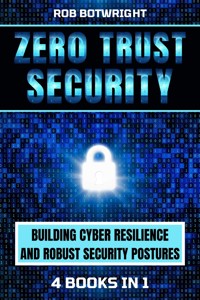
🔒 Introducing the "Zero Trust Security" Book Bundle: Building Cyber Resilience & Robust Security Postures! 🔒
In an age of digital transformation, securing your digital world has never been more crucial. The "Zero Trust Security" book bundle is your comprehensive guide to revolutionize your cybersecurity strategies, from beginners to seasoned experts.
📚
Book 1 - Zero Trust Security: A Beginner's Guide to Building Cyber Resilience: Discover the foundational principles of Zero Trust. Learn how to challenge conventional cybersecurity models and embrace a "never trust, always verify" approach.
🔒
Book 2 - Zero Trust Security in Practice: Strategies for Building Robust Security Postures: Move beyond theory with real-world scenarios and case studies. Implement Zero Trust principles practically, from network segmentation to identity management.
🚀
Book 3 - Advanced Zero Trust Architectures: Cyber Resilience and Expert Strategies: Unlock the secrets of advanced architectures and expert strategies. Explore cutting-edge concepts like micro-segmentation and decentralized identity for unbeatable security.
🌐
Book 4 - Mastering Zero Trust Security: Cyber Resilience in a Changing Landscape: Adapt and thrive in the ever-evolving cybersecurity landscape. Gain the knowledge and strategies needed to navigate dynamic threats with confidence.
🛡️
Why This Bundle Matters:
- Fortify your cybersecurity defenses
- Stay ahead of emerging threats
- Empower your organization with expert insights
- Master Zero Trust principles and applications
- Ensure the resilience of your digital assets
This bundle is your roadmap to building cyber resilience and creating robust security postures. Whether you're an individual enhancing your cybersecurity skills or an organization safeguarding your digital assets, these books are your trusted companions.
🔥 Get Started Today: Don't wait for the next cyber threat to strike. Secure your digital future with the "Zero Trust Security" book bundle. Order now and embark on your journey to cyber resilience!
Protect your digital world. Master Zero Trust. Achieve cyber resilience.
Das E-Book können Sie in Legimi-Apps oder einer beliebigen App lesen, die das folgende Format unterstützen:
Veröffentlichungsjahr: 2023
Ähnliche















ZERO TRUST SECURITY
BUILDING CYBER RESILIENCE & ROBUST SECURITY POSTURES
4 BOOKS IN 1
BOOK 1
ZERO TRUST SECURITY: A BEGINNER'S GUIDE TO BUILDING CYBER RESILIENCE
BOOK 2
ZERO TRUST SECURITY IN PRACTICE: STRATEGIES FOR BUILDING ROBUST SECURITY POSTURES
BOOK 3
ADVANCED ZERO TRUST ARCHITECTURES: CYBER RESILIENCE AND EXPERT STRATEGIES
BOOK 4
MASTERING ZERO TRUST SECURITY: CYBER RESILIENCE IN A CHANGING LANDSCAPE
ROB BOTWRIGHT
Copyright © 2023 by Rob Botwright
All rights reserved. No part of this book may be reproduced or transmitted in any form or by any means, electronic or mechanical, including photocopying, recording, or by any information storage and retrieval system, without permission in writing from the publisher.
Published by Rob Botwright
Library of Congress Cataloging-in-Publication Data
ISBN 978-1-83938-527-8
Cover design by Rizzo
Disclaimer
The contents of this book are based on extensive research and the best available historical sources. However, the author and publisher make no claims, promises, or guarantees about the accuracy, completeness, or adequacy of the information contained herein. The information in this book is provided on an "as is" basis, and the author and publisher disclaim any and all liability for any errors, omissions, or inaccuracies in the information or for any actions taken in reliance on such information.
The opinions and views expressed in this book are those of the author and do not necessarily reflect the official policy or position of any organization or individual mentioned in this book. Any reference to specific people, places, or events is intended only to provide historical context and is not intended to defame or malign any group, individual, or entity.
The information in this book is intended for educational and entertainment purposes only. It is not intended to be a substitute for professional advice or judgment. Readers are encouraged to conduct their own research and to seek professional advice where appropriate.
Every effort has been made to obtain necessary permissions and acknowledgments for all images and other copyrighted material used in this book. Any errors or omissions in this regard are unintentional, and the author and publisher will correct them in future editions.
TABLE OF CONTENTS – BOOK 1 - ZERO TRUST SECURITY: A BEGINNER'S GUIDE TO BUILDING CYBER RESILIENCE
Introduction
Chapter 1: Understanding the Zero Trust Paradigm
Chapter 2: The Evolution of Cybersecurity
Chapter 3: Key Principles of Zero Trust Security
Chapter 4: Identifying and Authenticating Users and Devices
Chapter 5: Micro-Segmentation: Securing the Perimeter and Beyond
Chapter 6: Monitoring and Analytics in a Zero Trust Environment
Chapter 7: Implementing Zero Trust in the Cloud
Chapter 8: Zero Trust and Mobile Security
Chapter 9: Zero Trust in Practice: Case Studies
Chapter 10: Future Trends in Zero Trust Security
TABLE OF CONTENTS – BOOK 2 - ZERO TRUST SECURITY IN PRACTICE: STRATEGIES FOR BUILDING ROBUST SECURITY POSTURES
Chapter 1: The Foundations of Zero Trust Security
Chapter 2: Planning Your Zero Trust Journey
Chapter 3: Identity and Access Management in Zero Trust
Chapter 4: Network Segmentation and Least Privilege Access
Chapter 5: Implementing Zero Trust Controls
Chapter 6: Monitoring and Incident Response in Zero Trust Environments
Chapter 7: Cloud Adoption and Zero Trust
Chapter 8: Integrating Zero Trust with Existing Security Frameworks
Chapter 9: Real-world Case Studies of Successful Implementations
Chapter 10: Continuous Improvement: Evolving Your Zero Trust Strategy
TABLE OF CONTENTS – BOOK 3 - ADVANCED ZERO TRUST ARCHITECTURES: CYBER RESILIENCE AND EXPERT STRATEGIES
Chapter 1: Foundations of Advanced Zero Trust Security
Chapter 2: Deep Dive into Zero Trust Architectures
Chapter 3: Zero Trust and Threat Intelligence Integration
Chapter 4: Advanced Identity and Access Management Techniques
Chapter 5: Cutting-edge Network Segmentation Strategies
Chapter 6: Endpoint Security in Advanced Zero Trust Environments
Chapter 7: Advanced Monitoring and Threat Detection
Chapter 8: Zero Trust in Cloud-Native Environments
Chapter 9: Zero Trust for Critical Infrastructure
Chapter 10: Cyber Resilience and Future-Proofing Your Zero Trust Strategy
TABLE OF CONTENTS – BOOK 4 - MASTERING ZERO TRUST SECURITY: CYBER RESILIENCE IN A CHANGING LANDSCAPE
Chapter 1: The Evolution of Cyber Threats and the Need for Zero Trust
Chapter 2: Advanced Principles of Zero Trust Security
Chapter 3: Zero Trust as a Cornerstone of Cyber Resilience
Chapter 4: Advanced Identity and Device Authentication
Chapter 5: Advanced Network Segmentation and Policy Enforcement
Chapter 6: Advanced Threat Detection and Response
Chapter 7: Cloud-Native Security with Zero Trust
Chapter 8: Securing IoT and Critical Infrastructure in a Zero Trust World
Chapter 9: Cyber Resilience Strategies for a Changing Threat Landscape
Chapter 10: The Future of Zero Trust Security: Trends and Innovations
Conclusion
Introduction
In an era where digital transformation has reshaped the very fabric of our lives, cybersecurity has become paramount. The interconnected world we live in has opened up unprecedented opportunities, but it has also exposed us to ever-evolving and sophisticated cyber threats. In response to these challenges, a revolutionary approach has emerged—one that has transformed the cybersecurity landscape and set a new standard for safeguarding our digital existence. This approach is known as Zero Trust Security.
Welcome to the world of "Zero Trust Security: Building Cyber Resilience & Robust Security Postures." This comprehensive book bundle delves into the principles, strategies, and advanced architectures that collectively form the foundation of Zero Trust—an approach that challenges conventional notions of cybersecurity and empowers organizations to take control of their digital destiny.
In this four-book collection, we embark on a journey that spans from the fundamentals of Zero Trust to its most advanced and innovative applications. Whether you are new to the concept or a seasoned cybersecurity professional seeking to master the intricacies of Zero Trust, this bundle offers a wealth of knowledge and practical guidance.
Book 1 - Zero Trust Security: A Beginner's Guide to Building Cyber Resilience: Our journey begins with the basics, as we introduce the core principles of Zero Trust. We lay the groundwork by questioning the traditional perimeter-based security model and advocating for a "never trust, always verify" approach. Beginners and enthusiasts alike will find this book to be an essential primer for building a solid foundation in cybersecurity.
Book 2 - Zero Trust Security in Practice: Strategies for Building Robust Security Postures: Moving beyond theory, our second book brings the concept of Zero Trust to life. Through real-world scenarios and case studies, we demonstrate how organizations can practically implement Zero Trust principles. From network segmentation to identity management, readers will gain insights into the strategies that drive robust security postures.
Book 3 - Advanced Zero Trust Architectures: Cyber Resilience and Expert Strategies: As our understanding of Zero Trust deepens, we explore advanced architectures and expert strategies. In this book, we unveil cutting-edge concepts such as micro-segmentation, immutable infrastructure, and decentralized identity. Advanced practitioners will discover innovative approaches to fortifying their cybersecurity defenses against the most formidable threats.
Book 4 - Mastering Zero Trust Security: Cyber Resilience in a Changing Landscape: The cybersecurity landscape is in a perpetual state of flux, with new challenges and threats constantly emerging. In our final book, we address the evolving nature of cybersecurity and equip readers with the knowledge and strategies needed to adapt and thrive. By mastering Zero Trust, organizations can navigate this dynamic landscape with confidence and resilience.
This book bundle is not just a compilation of knowledge—it's a roadmap for building cyber resilience and creating robust security postures. Whether you are an individual looking to enhance your cybersecurity expertise or an organization seeking to fortify its defenses, the insights contained within these pages will serve as your guiding light.
We invite you to embark on this transformative journey through the world of Zero Trust Security. As you delve into these books, may you gain the wisdom and tools needed to safeguard your digital assets and embrace the future of cybersecurity with confidence and resilience.
BOOK 1
ZERO TRUST SECURITY
A BEGINNER'S GUIDE TO BUILDING CYBER RESILIENCE
ROB BOTWRIGHT
Chapter 1: Understanding the Zero Trust Paradigm
Zero Trust Security is a revolutionary approach to cybersecurity that challenges traditional network security paradigms. It operates on the fundamental principle of "never trust, always verify." In other words, it assumes that threats can come from both inside and outside the network, and trust is never granted by default. Instead, every user, device, and application must continuously authenticate and validate their identity and permissions.
This shift in mindset is crucial in today's ever-evolving threat landscape, where traditional perimeter-based security models are no longer sufficient. With Zero Trust, the focus shifts from securing the perimeter to securing individual assets and resources within the network. This approach recognizes that threats can breach the perimeter, and therefore, security must extend to the data and systems themselves.
Zero Trust encompasses several core concepts that are essential to its implementation. One of the key principles is "least privilege access," which means granting the minimum level of access necessary for a user or device to perform its tasks. This reduces the potential attack surface and limits the damage that can be done if a breach occurs.
Another core concept is "micro-segmentation," which involves dividing the network into smaller, isolated segments or zones. Each segment has its own security policies and controls, making it more difficult for attackers to move laterally within the network if they manage to breach one segment.
Continuous monitoring is also integral to Zero Trust. Rather than relying solely on perimeter defenses, organizations implement real-time monitoring and analysis of network traffic and user behavior. Suspicious activities can be detected and responded to promptly, minimizing the dwell time of threats within the network.
Zero Trust Security also emphasizes the importance of "user and device authentication." This means that all users and devices, whether they are inside or outside the network, must prove their identity and meet security requirements before they are granted access to resources. This verification occurs continuously throughout a user's session, ensuring that trust is never assumed.
Furthermore, "encryption" plays a critical role in Zero Trust. Data should be encrypted both in transit and at rest to protect it from unauthorized access or interception. This ensures that even if an attacker gains access to data, it remains unintelligible without the proper decryption keys.
Adaptive access control is another important concept in Zero Trust. It involves dynamically adjusting access permissions based on changing factors such as user behavior, location, and the security posture of the device. This ensures that access remains appropriate and secure as conditions evolve.
Zero Trust is not a one-size-fits-all approach; it can be tailored to an organization's specific needs and risk profile. Implementation may involve a phased approach, starting with critical assets and gradually expanding to cover the entire network.
In summary, Zero Trust Security challenges traditional security models by assuming that trust should never be granted by default. It encompasses core concepts such as least privilege access, micro-segmentation, continuous monitoring, user and device authentication, encryption, and adaptive access control. This approach is designed to address the dynamic and evolving nature of modern cybersecurity threats, providing a more robust and resilient defense strategy.
The Evolution of Cyber Threats and the Need for Zero Trust
The evolution of cyber threats over the years has been nothing short of remarkable. From early computer viruses and worms to sophisticated nation-state-sponsored attacks, the threat landscape has grown in complexity and scale. This evolution has necessitated a corresponding evolution in cybersecurity strategies, leading to the emergence of Zero Trust Security as a crucial paradigm shift.
In the early days of computing, cybersecurity was primarily concerned with defending against simple viruses and malware. The focus was on perimeter security, with firewalls and antivirus software being the primary defense mechanisms. However, as technology advanced, so did the capabilities of cyber attackers.
The rise of the internet brought about new attack vectors, such as phishing and distributed denial-of-service (DDoS) attacks. Cybercriminals began targeting valuable data and financial assets, leading to data breaches and financial losses on a massive scale.
As organizations moved to the cloud and embraced mobile devices, the attack surface expanded further. Traditional security models struggled to keep pace with the dynamic nature of these environments. Attackers exploited vulnerabilities in software, hardware, and human behavior, highlighting the limitations of perimeter-based defenses.
Nation-state actors and organized cybercrime groups added another layer of complexity to the threat landscape. Their motivations ranged from espionage and political agendas to financial gain and disruption. Advanced persistent threats (APTs) became a significant concern, as they demonstrated the ability to infiltrate and persist within targeted networks for extended periods.
The need for a new approach to cybersecurity became evident. Zero Trust Security emerged as a response to these evolving threats. It recognized that the traditional perimeter-based security model was no longer sufficient, as threats could come from within and outside the network.
Zero Trust advocates for the continuous verification of trust, regardless of a user or device's location. It challenges the assumption that once inside the network, everything is safe. Instead, it enforces the principle of "never trust, always verify."
By adopting Zero Trust principles, organizations can address the challenges posed by modern cyber threats. It requires them to rethink their security architecture, implementing controls such as micro-segmentation, least privilege access, and continuous monitoring. These measures help organizations detect and respond to threats more effectively, reducing the risk of data breaches and cyberattacks.
In a world where cyber threats continue to evolve and grow in sophistication, Zero Trust Security provides a proactive and adaptive approach to cybersecurity. It acknowledges that the need for security goes beyond the perimeter and recognizes that trust should never be assumed. Instead, it must be continuously verified to ensure the protection of critical assets and data.
Advanced Principles of Zero Trust Security
Building on the foundational principles of Zero Trust Security, advanced concepts and strategies are essential for organizations looking to implement a robust and effective Zero Trust model. These advanced principles go beyond the basics and require a deeper understanding of the threat landscape and the intricacies of modern cybersecurity.
One of the advanced principles of Zero Trust is the concept of "threat intelligence integration." Organizations must not only focus on verifying the trustworthiness of users and devices but also stay informed about the latest threats and vulnerabilities. Threat intelligence feeds provide valuable information about emerging threats, enabling organizations to proactively adjust their security policies and controls.
Advanced Zero Trust models also emphasize the importance of "dynamic access controls." In addition to static access policies, dynamic controls consider factors such as user behavior, device health, and real-time threat intelligence. Access permissions can be adjusted in real-time based on changing conditions, ensuring that users have the appropriate level of access at all times.
Furthermore, "zero trust analytics" plays a critical role in advanced Zero Trust Security. This involves the use of machine learning and behavioral analytics to identify anomalous user behavior and potential security threats. By continuously monitoring user activities and network traffic, organizations can detect suspicious activities and respond promptly.
Another advanced concept is "application-level security." In addition to securing the network, Zero Trust extends its focus to securing individual applications and services. This includes implementing strong authentication, encryption, and access controls at the application level to protect critical data and services.
"DevSecOps integration" is also a crucial aspect of advanced Zero Trust. By integrating security practices into the DevOps process, organizations can ensure that security is a priority throughout the development and deployment of applications and services. This reduces the risk of vulnerabilities being introduced during the development lifecycle.
Additionally, "zero trust visibility" is essential in advanced Zero Trust Security. Organizations must have complete visibility into their network, users, and devices to effectively monitor and enforce security policies. Advanced visibility tools provide insights into network traffic, user behavior, and potential threats.
In summary, advanced principles of Zero Trust Security expand on the foundational concepts by incorporating threat intelligence integration, dynamic access controls, zero trust analytics, application-level security, DevSecOps integration, and zero trust visibility. These advanced strategies empower organizations to enhance their cybersecurity posture and respond effectively to the evolving threat landscape.
Zero Trust as a Cornerstone of Cyber Resilience
Cyber resilience is a critical aspect of modern cybersecurity. It refers to an organization's ability to withstand and recover from cyberattacks while maintaining its essential functions and data integrity. In an era of persistent and sophisticated cyber threats, cyber resilience is not just a desirable goal; it is a necessity.
One of the cornerstones of cyber resilience is the adoption of Zero Trust Security principles. Zero Trust aligns closely with the goals of cyber resilience by emphasizing continuous verification of trust, even within the network. It operates on the assumption that threats can breach the perimeter, and trust should never be granted by default.
In a cyber-resilient organization, the implementation of Zero Trust principles is fundamental. The organization recognizes that cyber threats are not a matter of "if" but "when," and it prepares accordingly. It employs advanced authentication mechanisms, such as multi-factor authentication (MFA), to ensure that only authorized users and devices gain access to critical resources.
Micro-segmentation, a key component of Zero Trust, also contributes to cyber resilience. It divides the network into smaller, isolated segments, limiting the lateral movement of attackers. Even if a breach occurs, the attacker's ability to traverse the network is restricted, minimizing the potential damage.
Continuous monitoring is another crucial aspect of both cyber resilience and Zero Trust. By constantly analyzing network traffic and user behavior, organizations can detect and respond to threats in real-time. This proactive approach reduces the time it takes to identify and mitigate cyberattacks, minimizing their impact.
The integration of threat intelligence into the Zero Trust framework enhances cyber resilience further. Threat intelligence feeds provide information about emerging threats and vulnerabilities, enabling organizations to adjust their security posture accordingly. This proactive stance helps prevent attacks and reduces the likelihood of successful breaches.
Furthermore, encryption is a vital component of both cyber resilience and Zero Trust. Encrypting data both in transit and at rest ensures that even if attackers gain access to it, they cannot use it without the encryption keys. This protects sensitive information and maintains data integrity during and after a cyber incident.
In summary, Zero Trust Security serves as a cornerstone of cyber resilience by aligning with its core principles. It emphasizes continuous verification of trust, employs advanced authentication mechanisms, implements micro-segmentation, embraces continuous monitoring, integrates threat intelligence, and utilizes encryption to protect critical assets and data. Together, these elements contribute to an organization's ability to withstand and recover from cyberattacks while maintaining essential functions and data integrity.
Advanced Identity and Device Authentication Techniques
Identity and device authentication are fundamental components of Zero Trust Security, and advanced techniques in these areas are crucial for strengthening security in a Zero Trust environment.
One advanced authentication technique is "biometric authentication," which uses unique physical or behavioral traits, such as fingerprints, facial recognition, or voice patterns, to verify a user's identity. Biometrics provide a high level of security as they are difficult to replicate or steal.
"Behavioral authentication" is another advanced approach that assesses user behavior patterns, such as typing speed and mouse movements, to verify identity. Deviations from the established behavior can trigger alerts, indicating potential unauthorized access.
"Continuous authentication" is a key concept in Zero Trust Security. Instead of a one-time login, continuous authentication monitors the user's activities throughout their session. This technique ensures that trust is continuously verified, and access is revoked if suspicious behavior is detected.
"Device fingerprinting" is a method used to uniquely identify and authenticate devices accessing the network. It creates a profile of each device based on characteristics like hardware, software, and configuration, making it more difficult for unauthorized devices to gain access.
"Smart card authentication" involves the use of physical or virtual smart cards that store cryptographic keys and certificates. Users must present the smart card, along with a PIN or biometric authentication, to access resources, adding an extra layer of security.
In addition to advanced authentication techniques, device authentication is equally crucial in a Zero Trust environment. "Device attestation" verifies the integrity and security posture of a device before granting access. It ensures that devices meet security standards before being allowed onto the network.
"Device trust scores" assign a numerical score to each device based on its security posture. Devices with lower trust scores may have limited access or additional authentication requirements, while trusted devices enjoy broader access.
Advanced identity and device authentication techniques enhance the security posture of a Zero Trust environment, ensuring that only authorized users and devices gain access to critical resources while continuously monitoring for suspicious behavior.
Cutting-edge Network Segmentation Strategies
Network segmentation is a foundational component of Zero Trust Security, and advanced segmentation strategies are essential for creating robust security postures.
One cutting-edge strategy is "application-aware segmentation." Instead of segmenting the network solely based on IP addresses or subnets, this approach takes into account the specific applications and services being accessed. Access policies are defined based on the application's role and importance.
"Software-defined segmentation" leverages software-defined networking (SDN) to dynamically adjust network segments based on changing conditions. It allows for greater flexibility and adaptability in response to evolving threats and requirements.
"User-centric segmentation" focuses on segmenting the network based on user roles and permissions. Users are granted access only to the resources necessary for their tasks, reducing the attack surface and minimizing lateral movement in the network.
"Adaptive segmentation" uses real-time threat intelligence and behavioral analytics to adjust segmentation policies dynamically. If suspicious activity is detected, the segmentation policies can be tightened to isolate potentially compromised areas.
Additionally, "zero trust segmentation" aligns closely with the core principles of Zero Trust Security. It assumes that trust should never be granted by default and enforces strict segmentation policies even within the network. This approach reduces the risk of lateral movement by attackers who manage to breach one segment.
"Micro-segmentation" is a key concept in advanced network segmentation. It involves dividing the network into small, isolated segments, each with its own security policies. This granularity ensures that even if an attacker gains access to one segment, their ability to move laterally is severely restricted.
"Segmentation orchestration" uses automation to manage and enforce segmentation policies dynamically. Policies can be adjusted in real-time based on user behavior, device health, and threat intelligence, ensuring that access remains appropriate and secure.
Advanced network segmentation strategies are crucial for implementing Zero Trust Security effectively. They reduce the attack surface, limit lateral movement, and provide granular control over access to critical resources, strengthening the overall security posture.
Endpoint Security in Advanced Zero Trust Environments
Endpoint security is a critical component of Zero Trust Security, and advanced strategies in this area are essential for protecting organizations in today's dynamic threat landscape.
One advanced approach is "endpoint detection and response (EDR)." EDR solutions continuously monitor endpoints for suspicious activity, providing real-time threat detection and response capabilities. They collect and analyze endpoint data to identify and mitigate threats quickly.
"Next-generation antivirus (NGAV)" represents an evolution beyond traditional antivirus solutions. NGAV solutions use advanced techniques such as behavioral analysis and machine learning to detect and prevent known and unknown threats.
"Zero Trust endpoint security" aligns with the core principles of Zero Trust Security. It ensures that endpoints are never trusted by default and continuously verifies their security posture. Even within the network, trust is never assumed, and access is granted based on strict policies.
To truly understand the principles and significance of Zero Trust Security, it's helpful to explore its historical context. While the term "Zero Trust" itself may be relatively recent, its foundational ideas can be traced back to the early days of computer networking and cybersecurity.
In the early years of computing, security was a relatively simple concept. Networks were often closed, isolated, and largely based on trust. The prevailing belief was that if you could secure the perimeter and keep unauthorized users out, your network and data would be safe. This led to the development of perimeter-based security models, where the network boundary was fortified with firewalls, access controls, and other security measures.
However, as technology evolved and the internet became a ubiquitous part of our lives, this traditional security model faced significant challenges. The emergence of remote work, mobile devices, and cloud computing expanded the attack surface beyond the traditional network perimeter. Attackers began to target vulnerabilities not only in the network but also in applications, devices, and human behavior.
The shift from closed, on-premises networks to open, interconnected ecosystems brought about a paradigm shift in cybersecurity. Traditional perimeter-based defenses struggled to adapt to this new reality. Cyber threats were becoming more sophisticated, often bypassing perimeter security and targeting vulnerabilities within the network.
One pivotal moment in cybersecurity history was the rise of "Advanced Persistent Threats" (APTs). APTs are long-term, targeted cyberattacks carried out by skilled adversaries with specific objectives, such as espionage or data theft. These attacks often involve multiple stages and can persist undetected within a network for extended periods. The traditional perimeter-based security model proved inadequate in defending against APTs, as attackers found ways to infiltrate networks and evade detection.
Around the same time, a series of high-profile data breaches and cyberattacks garnered significant attention. Organizations across various industries fell victim to cybercriminals who exploited vulnerabilities in their security defenses. The costs of these breaches, both in terms of financial losses and damage to reputation, were staggering.
In response to these evolving threats and challenges, a group of cybersecurity experts and thought leaders began to advocate for a new approach to security. This approach rejected the traditional notion of trust and advocated for a paradigm shift. It challenged the assumption that once inside the network, everything could be trusted. Instead, it promoted the idea that trust should never be granted by default and should be continuously verified.
This new approach became known as "Zero Trust Security." The term was coined by John Kindervag, a cybersecurity analyst at Forrester Research, in a 2010 research paper. Zero Trust challenged organizations to reevaluate their security postures and adopt a more proactive and dynamic mindset.
The core tenets of Zero Trust Security are rooted in the belief that threats can come from both inside and outside the network. It advocates for the principle of "never trust, always verify." In practice, this means that every user, device, and application, whether inside or outside the network, must continuously authenticate and validate their identity and permissions.
The shift to Zero Trust requires a departure from the traditional perimeter-centric model of security. Instead, the focus shifts to securing individual assets and resources within the network. Security is applied at the granular level, with strict access controls and policies governing every interaction.
To implement Zero Trust Security effectively, organizations must embrace several key principles. These include "least privilege access," which means granting the minimum level of access necessary for a user or device to perform its tasks. By reducing the attack surface, this principle limits the damage that can be done if a breach occurs.
Micro-segmentation is another fundamental concept in Zero Trust. It involves dividing the network into smaller, isolated segments or zones, each with its own security policies. This approach makes it more difficult for attackers to move laterally within the network if they manage to breach one segment.
Continuous monitoring is integral to Zero Trust. Instead of relying solely on perimeter defenses, organizations implement real-time monitoring and analysis of network traffic and user behavior. Suspicious activities can be detected and responded to promptly, minimizing the dwell time of threats within the network.
Zero Trust Security also emphasizes the importance of "user and device authentication." This means that all users and devices, whether they are inside or outside the network, must prove their identity and meet security requirements before they are granted access to resources. This verification occurs continuously throughout a user's session, ensuring that trust is never assumed.
Furthermore, "encryption" plays a critical role in Zero Trust. Data should be encrypted both in transit and at rest to protect it from unauthorized access or interception. This ensures that even if an attacker gains access to data, it remains unintelligible without the proper decryption keys.
Adaptive access control is another important concept in Zero Trust. It involves dynamically adjusting access permissions based on changing factors such as user behavior, location, and the security posture of the device. This ensures that access remains appropriate and secure as conditions evolve.
Zero Trust is not a one-size-fits-all approach; it can be tailored to an organization's specific needs and risk profile. Implementation may involve a phased approach, starting with critical assets and gradually expanding to cover the entire network.
In summary, the historical context of Zero Trust Security is a story of evolution in response to a changing threat landscape. It acknowledges the limitations of traditional perimeter-based security models and advocates for a paradigm shift that prioritizes continuous verification of trust. Zero Trust Security challenges organizations to rethink their security postures, adopt granular access controls, and embrace a proactive and dynamic approach to cybersecurity.
Chapter 2: The Evolution of Cybersecurity
Before delving deeper into the principles and practices of Zero Trust Security, it's essential to explore the landscape of cybersecurity that existed before the emergence of the Zero Trust paradigm. These pre-Zero Trust cybersecurity models, while foundational in their own right, laid the groundwork for the evolution of security practices and the need for a more proactive and dynamic approach.
In the early days of computer networking, cybersecurity was a relatively nascent field, and the threats faced by organizations were vastly different from those encountered today. Traditional security models were grounded in the belief that a well-fortified network perimeter could keep adversaries at bay. This approach came to be known as "perimeter-based security."
Perimeter-based security operated on the premise that once an organization's network perimeter was secure, the internal environment could be trusted. Access controls and security measures were primarily focused on defending the perimeter from external threats. Firewalls, intrusion detection systems, and access controls were the primary tools of the trade.
One of the fundamental concepts within perimeter-based security was the notion of a "trusted network." Organizations considered their internal networks as safe zones where trust was implicitly granted to all devices and users inside the perimeter. While this model worked reasonably well in simpler and less interconnected environments, it had inherent limitations.
As the internet expanded, remote work became more common, and organizations embraced cloud computing, the concept of a well-defined network perimeter began to erode. Remote employees needed access to corporate resources, and cloud services extended beyond the traditional boundaries of an organization's data center. This shift introduced new challenges to the established security model.
Cyber adversaries were quick to exploit these evolving trends. They realized that rather than attempting to breach the fortified perimeter, they could target vulnerabilities within the network itself. Spear-phishing attacks, zero-day exploits, and targeted malware became prevalent tools in the attacker's arsenal. These threats often bypassed perimeter defenses, compromising internal systems and data.
The rise of Advanced Persistent Threats (APTs) represented a significant turning point in the cybersecurity landscape. APTs are sophisticated and well-funded attacks carried out by nation-state actors or organized cybercrime groups. They operate stealthily, often infiltrating networks and maintaining a persistent presence for extended periods, evading detection by traditional security measures.
The limitations of perimeter-based security became evident as organizations faced increasingly sophisticated and persistent threats. Cybersecurity incidents, data breaches, and the associated financial and reputational costs highlighted the need for a new security paradigm. It was in this evolving landscape that the concept of Zero Trust Security began to take root.
Zero Trust challenged the traditional assumption of trust within the network and advocated for a proactive and continuous verification of trust, regardless of the user's location or the device they were using. This marked a significant departure from the traditional model, which granted implicit trust to devices and users within the network perimeter.
As organizations recognized the limitations of the existing security paradigm, they started to embrace the principles of Zero Trust Security. They understood that trust could no longer be assumed, and security measures needed to adapt to the evolving threat landscape. Zero Trust became a guiding philosophy, emphasizing the importance of continuous authentication, strict access controls, and real-time monitoring.
The journey from perimeter-based security to Zero Trust was not without challenges. It required a shift in mindset, a reevaluation of existing security practices, and a willingness to adopt new technologies and strategies. However, the benefits of enhanced security, reduced attack surface, and improved threat detection made the transition worthwhile.
In summary, the landscape of cybersecurity before the emergence of Zero Trust Security was characterized by perimeter-based models that assumed trust within the network. These models faced significant challenges as technology evolved, threats became more sophisticated, and the network perimeter eroded. The rise of Advanced Persistent Threats (APTs) highlighted the shortcomings of traditional security paradigms. Zero Trust Security emerged as a response to these challenges, advocating for continuous verification of trust, adaptive access controls, and a proactive approach to cybersecurity. It marked a fundamental shift in how organizations approached security in an ever-changing threat landscape.
In the dynamic and interconnected world of today, the landscape of cybersecurity has become increasingly complex and challenging. As we navigate this digital age, it's essential to understand the modern cybersecurity challenges that individuals, organizations, and society as a whole are facing.
One of the foremost challenges in modern cybersecurity is the rapid evolution of cyber threats. Cybercriminals and malicious actors continually adapt and refine their tactics, techniques, and procedures. They exploit vulnerabilities in software, hardware, and human behavior, making it challenging for cybersecurity professionals to keep pace.
The sophistication of cyber threats has reached unprecedented levels. Advanced Persistent Threats (APTs), which are typically state-sponsored or organized cybercrime group attacks, can remain undetected within a network for extended periods, conducting espionage, data theft, and sabotage. These APTs are often well-funded and possess advanced capabilities, posing a severe risk to organizations and nations.
Another critical challenge is the expanding attack surface. The proliferation of internet-connected devices and the adoption of emerging technologies like the Internet of Things (IoT) have significantly increased the attack surface. Each connected device represents a potential entry point for cyber attackers, demanding robust security measures.
Cloud computing, while offering numerous benefits, introduces its own set of cybersecurity challenges. Organizations store sensitive data and run critical applications in the cloud, raising concerns about data security, compliance, and access control. Misconfigurations and inadequate security practices can lead to data breaches and service interruptions.
The trend toward remote work, accelerated by global events, has further complicated cybersecurity. Remote employees connect to corporate networks from various locations and devices, making it challenging to enforce consistent security policies and monitor network traffic effectively. Cyber attackers exploit these remote work scenarios, targeting remote access solutions and vulnerable endpoints.
Phishing attacks have evolved from simple email scams to highly targeted and convincing campaigns. Cybercriminals use social engineering tactics to deceive individuals and gain access to sensitive information. Phishing attacks are often the initial entry point for more extensive cyberattacks, emphasizing the importance of user awareness and education.
Ransomware attacks have become a pervasive and lucrative threat. Attackers encrypt an organization's data and demand a ransom for its release. The financial incentives behind ransomware attacks have led to the development of increasingly sophisticated ransomware strains, posing a severe financial and operational threat to businesses.
Data privacy and regulatory compliance have also become significant concerns. Governments worldwide have enacted stringent data protection regulations, such as the European Union's General Data Protection Regulation (GDPR) and the California Consumer Privacy Act (CCPA). Organizations must navigate complex compliance requirements while safeguarding sensitive customer and employee data.
Supply chain attacks have gained prominence as attackers target the software and hardware supply chain. Malicious actors compromise trusted vendors or insert malware into software updates, potentially impacting a wide range of organizations. Such attacks underscore the importance of vetting and securing the entire supply chain.
Cybersecurity skills shortages pose a persistent challenge. The demand for cybersecurity professionals has outpaced the supply of skilled experts. Organizations struggle to find and retain cybersecurity talent, leading to resource constraints in managing and mitigating cyber risks.
The inherent vulnerabilities in emerging technologies like artificial intelligence (AI) and the lack of comprehensive cybersecurity frameworks for these technologies present novel challenges. Adversarial machine learning techniques, for example, can undermine the reliability of AI systems, impacting critical decision-making processes.
The sheer volume of security alerts and data generated by modern cybersecurity tools has overwhelmed security teams. Security Information and Event Management (SIEM) systems, threat intelligence feeds, and automated detection tools produce massive amounts of data, often resulting in alert fatigue and the potential for critical alerts to be overlooked.




