



0,49 €
Niedrigster Preis in 30 Tagen: 0,00 €
Niedrigster Preis in 30 Tagen: 0,00 €
Mehr erfahren.
- Herausgeber: Musaicum Books
- Kategorie: Gesellschafts- und Liebesromane
- Sprache: Englisch
Marie Corelli's 'Ziska' is a captivating Gothic classic that delves into themes of the supernatural, romance, and historical mystery. The novel features richly descriptive prose, creating a hauntingly atmospheric setting that will transport readers to ancient Egypt. Corelli's literary style combines elements of horror and romance, making 'Ziska' a truly unique and engaging read within the Gothic genre. The story is filled with twists and turns, keeping readers on the edge of their seats till the very end. Set in an exotic locale and filled with mystical occurrences, 'Ziska' is a must-read for fans of Gothic literature. Marie Corelli's ability to blend historical elements with supernatural themes adds depth and complexity to the narrative, making it a standout work in the genre. 'Ziska' is a timeless tale that will leave readers enchanted and eager for more from this talented author. In this enriched edition, we have carefully created added value for your reading experience: - A succinct Introduction situates the work's timeless appeal and themes. - The Synopsis outlines the central plot, highlighting key developments without spoiling critical twists. - A detailed Historical Context immerses you in the era's events and influences that shaped the writing. - A thorough Analysis dissects symbols, motifs, and character arcs to unearth underlying meanings. - Reflection questions prompt you to engage personally with the work's messages, connecting them to modern life. - Hand‐picked Memorable Quotes shine a spotlight on moments of literary brilliance. - Interactive footnotes clarify unusual references, historical allusions, and archaic phrases for an effortless, more informed read.
Das E-Book können Sie in Legimi-Apps oder einer beliebigen App lesen, die das folgende Format unterstützen:
Veröffentlichungsjahr: 2020
Ähnliche









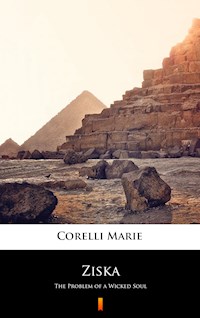





Ziska (Gothic Classic)
Books
Table of Contents
Introduction
Where desire struggles to possess what history refuses to surrender, Ziska transforms a fashionable winter in Cairo into a theater of disturbance in which art, ambition, and longing collide with the insistent pressure of an older, darker memory, so that every glance becomes a summons from the past, every compliment a challenge to conscience, and every elegant social ritual a fragile veil draped over forces that will not stay buried, asking readers to question whether the living choose their passions or are chosen by them when the echoes of ancient wrongs, half believed and half denied, rise to claim attention.
Marie Corelli’s Ziska, first published in 1897, is a late-Victorian Gothic romance infused with occult preoccupations, set chiefly in Cairo during the cosmopolitan winter season when Europe’s curious and wealthy converge on Egypt. Written by one of the era’s best-selling British novelists, the book draws on contemporary fascinations with Egyptology and spiritualism, yet remains unmistakably a work of popular fiction rather than scholarly treatise. It frames its uncanny events within salons, hotels, archaeological tours, and river vistas, situating readers at the intersection of fashionable leisure and the aftershocks of antiquity, where the city’s spectacle becomes both backdrop and catalyst for moral unease.
The premise follows a celebrated European artist who comes to Cairo for inspiration and diversion, only to encounter a mesmerizing woman called Princess Ziska, whose serene confidence and disquieting allure begin to dominate the social circle around them. Among the onlookers are worldly travelers and a skeptical scholar of antiquity, each bringing a different vocabulary to the strange coincidences and shivers of recognition that accumulate. Rumors of old lives and unfinished debts thread through parties and excursions, while the air of polite conversation frays under mounting pressure. The narrative keeps events intelligible yet suggestively slanted, favoring ambiguity over spectacle and dread over shock.
Corelli writes in an opulent, rhythmic prose that relishes color, scent, and light, allowing Cairo’s hotels, gardens, and antiquities to glow with theatrical intensity. Dialogues crackle with aphoristic certainty and satire, poking at social pretensions even as the book courts sensational pleasures. The tone oscillates between romantic intoxication and moral indictment, producing a reading experience at once glamorous and claustrophobic. Readers encounter set pieces of ravishing description interrupted by sudden turns of menace or revelation, yet the novel consistently withholds definitive explanations. The result is a sensation novel’s pace braided to a metaphysical whisper, urging reflection without relinquishing narrative momentum.
At its core, Ziska explores obsession, culpability, and the possibility that passion may be a form of remembrance rather than novelty. The novel weighs reincarnation against psychological haunting without committing fully to either, and in doing so probes the ethics of desire, especially the entitlement of celebrated men who treat others as subjects for art or conquest. It interrogates the gaze—who looks, who is looked at, and who commands the scene—while staging an encounter between European modernity and an imagined Egypt freighted with projections. Skepticism and belief contend throughout, raising questions about evidence, intuition, and the narratives people choose to inhabit.
Contemporary readers will find in Ziska a provocative mirror for ongoing debates about cultural representation, tourism, and the afterlife of empire, as well as a trenchant study of how charisma manipulates attention and excuses harm. Its fascination with the return of buried histories resonates with conversations about memory and accountability, while its critique of the glamour surrounding artistic genius anticipates current interrogations of celebrity. The novel’s treatment of gendered power—who pays for pleasure, who writes the story of desire—keeps its moral argument vivid. As Gothic fiction, it also delivers the enduring satisfactions of atmosphere, menace, and the magnetism of the unknowable.
Approach Ziska as both an intoxicating entertainment and a cultural artifact: a fin-de-siècle bestseller that channels the era’s hunger for marvels and its anxieties about progress. Read for the glittering surfaces—the banter, the vistas, the cascades of fabric and light—but listen for the undertow carrying characters toward choices that feel foreordained. The book rewards attention to motif and repetition, and its restraint with overt supernaturalism invites multiple interpretations. Without demanding specialist knowledge, it opens doorways to conversations about art, ethics, and the stories civilizations tell about themselves when faced with ruins. Its power lies in how the past keeps knocking.
Synopsis
Marie Corelli’s Ziska: The Problem of a Wicked Soul (1897) is a Gothic romance set in Cairo during the winter tourist season. Balancing social satire with occult intrigue, the novel follows fashionable Europeans whose amusements are disrupted by an encounter with a woman who seems to belong to another age. Corelli frames the story as a study in moral causation and the persistence of personality, drawing on Egypt’s monuments and legends to examine desire, guilt, and fate. The narrative’s surface glitter—hotel salons, desert excursions, musical evenings—conceals a mounting unease, as the past presses upon the present and polite curiosity hardens into obsession.
Among the visitors is Armand Gervase, a celebrated French painter acclaimed for brilliant portraits and worldly charm. He mingles with a circle that includes Dr. Dean, an erudite inquirer into psychic phenomena; Denzil Murray, a sensitive young Englishman; and figures of comic vanity such as Sir Chetwynd Lyle and Lady Fulkeward. Their excursions to the pyramids and temples are accompanied by debates about memory, heredity, and the possibility of reincarnation. What begins as fashionable chatter assumes weight when each traveler feels an inexplicable pull toward antiquity, as if the sands were stirring old patterns beneath their steps and the Nile were bearing messages upstream.
The group’s attention converges on a mysterious beauty known as Princess Ziska, a glamorous and reserved woman whose origin seems both modern and immemorial. Her appearance electrifies Cairo society, but her most intense effect falls upon Gervase, whom she invites to paint her portrait. In the studio’s confined space, he becomes fixated on her features and the unnerving calm with which she meets his gaze. Rumor attributes to her strange knowledge and influence; servants whisper, and rival admirers bristle. A distinctive ornament, a dancer’s poise, and a hushed authority give her the aspect of an emblem raised from a tomb.
As sittings proceed, the canvas acquires an uncanny vitality, and Gervase experiences dreams that map onto reliefs and frescoes glimpsed in ancient halls. Ziska’s pose and profile seem to belong to a figure already immortalized in stone. Dr. Dean, observing their entanglement, tests his theories about survivals of character and cycles of return, while Denzil Murray’s poetic infatuation complicates a budding rivalry. Scenes of Cairo’s cosmopolitan life—receptions, carriage drives, expeditions by moonlight—contrast with a gathering intensity in the studio, where the portrait becomes a lens focusing desire, shame, and recognition. The city itself appears to conspire, aligning modern faces with ancestral shadows.
Ziska intimates that her purpose is not admiration but reckoning, speaking to Gervase with the intimacy of prior acquaintance and the detachment of a judge. She leads him to sites where the stones seem to remember, setting terms that test his vanity and nerve. The young Englishman’s ardor and the painter’s seasoned cynicism sharpen into conflict, while comic observers reveal their brittle values when danger intrudes. Dr. Dean collects impressions from servants, dragomans, and guests, arguing that certain souls bear debts that will be exacted, whether one believes in it or not. Honor, jealousy, and fear begin to govern choices once made lightly.
The action narrows toward chambers cut from rock, ceremonial music, and sudden desert weather, where the distance between eras collapses. Corelli arranges her symbols—the Sphinx, a mirrored likeness, the completed portrait—to stage a crisis that tests each character’s account of selfhood. Revelations arise that recast playful flirtation as a long rehearsal and the tourist season as a summons. The polite screen of European sociability tears, leaving stark motives exposed. Without disclosing outcomes, the closure turns on the notion of moral law operating beyond courts and fashions, and on how recognition, once granted, compels consequence for those who thought themselves free of the past.
Ziska endures as a fin-de-siècle fusion of Gothic mood, occult speculation, and worldly satire, expressing late-Victorian anxiety about decadence, empire, and the authority of scientific skepticism. Its portrait of Egypt is shaped by exoticism typical of its era, yet it captures the period’s fascination with reincarnation and with the idea that beauty may both enchant and accuse. The novel critiques the cult of sensation and the commodification of art, while imagining memory as a force that outlives fashion. Read today, it remains notable for the way it binds personal responsibility to a grand historical backdrop, letting the desert judge where courts cannot.
Historical Context
Published in 1897, Marie Corelli’s Ziska is set largely in Cairo during the British occupation of Egypt. In the 1890s the Khedivate remained nominally Ottoman but was governed under British control after the 1882 intervention, with Lord Cromer as British Agent and Consul-General. Cairo’s winter season drew European visitors who congregated in hotels such as Shepheard’s and the Mena House, took Cook’s Nile steamers, and toured ancient sites on organized excursions. This cosmopolitan milieu—tourists, expatriates, dragomans, and officials—provides the novel’s social backdrop. Corelli places European artists and dilettantes amid Cairo’s colonial amusements, using the setting to frame moral questions around fascination, luxury, and power.
Ziska appears at the height of Egyptomania fed by archaeology’s rapid advances. The Egyptian Antiquities Service, founded by Auguste Mariette, was directed in the mid‑1890s by Jacques de Morgan, while the national collection, moved from Bulaq to Giza in 1890, attracted throngs of visitors. Excavators such as Flinders Petrie professionalized methods, and the Egypt Exploration Fund, co‑founded by Amelia B. Edwards, financed surveys and digs. Howard Carter began work in Egypt in 1891 as a tracer and inspector. Public lectures, guidebooks, and museum displays popularized mummies and hieroglyphs, supplying vivid material culture that Corelli recasts into Gothic atmosphere, fatal beauty, and ideas about survival after death.
Late‑Victorian Britain teemed with interest in spiritualism and occult science. The Society for Psychical Research was founded in 1882 to investigate telepathy and apparitions; the Theosophical Society, established in 1875, promoted reincarnation and esoteric syntheses; and the Hermetic Order of the Golden Dawn, founded in London in 1888, popularized ritual magic. Mesmerism and hypnotism were studied by physicians such as Jean‑Martin Charcot and Ambroise-Auguste Liébeault, filtering into popular discourse about trance and suggestion. Corelli, a moralizing Christian mystic, harnesses these currents to question materialist skepticism. The novel’s preoccupation with memory across lifetimes and psychic influence reflects contemporary debates about unseen forces and conscience.
The 1890s saw intense debate over decadence, aestheticism, and social decline. Max Nordau’s widely read Degeneration (1892–93) condemned modern art and literature as morbid, while Oscar Wilde’s 1895 trials crystallized anxieties about aesthetic excess. Medicalized theories of hereditary “degeneracy,” criminology, and hysteria circulated through journalism and salons. In fiction, exotic femme fatales and colonial settings dramatized desire and doom, as in H. Rider Haggard’s She (1887). Corelli writes within this climate, portraying beauty as perilous and pleasure as ethically charged. Her narrative converts fashionable languor into a cautionary spectacle, aligning Gothic sensationalism with a defense of moral responsibility against fin‑de‑siècle ennui.
Nineteenth‑century Orientalism shaped how European artists and readers imagined Egypt. Painters such as Jean‑Léon Gérôme and Frederick Arthur Bridgman produced polished scenes of bazaars, dancers, and desert ruins that circulated widely in engravings and exhibitions. Travel guides and photographic albums fixed the tourist gaze on pyramids, tombs, and staged street life. Against this backdrop, Corelli centers a European artist whose aesthetic pursuit of an enigmatic woman echoes the period’s fascination with the alluring “East.” The novel both uses and questions this visual vocabulary, exposing how desire, collecting, and looking intertwine within colonial leisure, and suggesting the moral costs of exoticized possession.
Debates about women’s autonomy and sexuality animated the 1890s. The “New Woman” entered fiction and journalism through writers like Sarah Grand and Mona Caird, challenging marriage norms and double standards. At the same time, the fin‑de‑siècle celebrated and feared the femme fatale, from Gustave Moreau’s and Aubrey Beardsley’s Salomé imagery to popular reimaginings of Cleopatra on stage. Corelli, who criticized fashionable decadence yet commanded a vast female readership, positions her heroine within these cross‑currents. The character’s charisma and control disturb male certainties, while the narrative insists on ethical accountability, reflecting contemporary tensions between fascination with female agency and anxieties about erotic power.
Egypt’s political order frames the book’s social patterns. After suppressing the 1881–82 ‘Urabi revolt, Britain controlled Egyptian finances and administration through the British Agency, with Evelyn Baring (Lord Cromer) dominant for decades. Abbas II Hilmi, Khedive from 1892, ruled under this constraint. Mixed Courts adjudicated disputes between foreigners and Egyptians, and hotels like Shepheard’s functioned as informal colonial clubs for officials, soldiers, journalists, and guides. Thomas Cook organized much of the tourist traffic up the Nile. Corelli situates drawing rooms and excursions within this hierarchy, showing how casual conversation and sightseeing rest on imperial privilege even as the story turns toward inward, supernatural reckonings.
Marie Corelli was the most commercially successful British novelist of the 1890s, outselling many contemporaries through circulating libraries and the mass press. Following the sensation of The Sorrows of Satan (1895), she continued to attack scientific materialism and fashionable skepticism with melodramatic, spiritual plots. Ziska channels readers’ appetite for Egypt while interrogating decadence, male vanity, and the ethics of desire. Its Cairo salons, museum visits, and desert vistas mirror Anglo‑Egyptian routines of tourism and display, yet the work insists that historical glamour cannot mask moral consequence. In this way, Corelli’s Gothic romance both epitomizes fin‑de‑siècle obsessions and critiques the age that fostered them.
Ziska (Gothic Classic)
CHAPTER I.
It was the full "season" in Cairo[1q]. The ubiquitous Britisher and the no less ubiquitous American had planted their differing "society" standards on the sandy soil watered by the Nile, and were busily engaged in the work of reducing the city, formerly called Al Kahira or The Victorious, to a more deplorable condition of subjection and slavery than any old-world conqueror could ever have done. For the heavy yoke of modern fashion has been flung on the neck of Al Kahira, and the irresistible, tyrannic dominion of "swagger" vulgarity has laid The Victorious low. The swarthy children of the desert might, and possibly would, be ready and willing to go forth and fight men with men's weapons for the freedom to live and die unmolested in their own native land; but against the blandly-smiling, white-helmeted, sun-spectacled, perspiring horde of Cook's "cheap trippers[1]," what can they do save remain inert and well-nigh speechless? For nothing like the cheap tripper was ever seen in the world till our present enlightened and glorious day of progress; he is a new-grafted type of nomad, like and yet unlike a man. The Darwin theory asserts itself proudly and prominently in bristles of truth all over him—in his restlessness, his ape-like agility and curiosity, his shameless inquisitiveness, his careful cleansing of himself from foreign fleas, his general attention to minutiae, and his always voracious appetite; and where the ape ends and the man begins is somewhat difficult to discover. The "image of God" wherewith he, together with his fellows, was originally supposed to be impressed in the first fresh days of Creation, seems fairly blotted out, for there is no touch of the Divine in his mortal composition. Nor does the second created phase-the copy of the Divineo—namely, the Heroic—dignify his form or ennoble his countenance. There is nothing of the heroic in the wandering biped who swings through the streets of Cairo in white flannels, laughing at the staid composure of the Arabs, flicking thumb and finger at the patient noses of the small hireable donkeys and other beasts of burden, thrusting a warm red face of inquiry into the shadowy recesses of odoriferous bazaars, and sauntering at evening in the Esbekiyeh Gardens, cigar in mouth and hands in pockets, looking on the scene and behaving in it as if the whole place were but a reflex of Earl's Court Exhibition. History affects the cheap tripper not at all; he regards the Pyramids as "good building" merely, and the inscrutable Sphinx itself as a fine target for empty soda-water bottles, while perhaps his chiefest regret is that the granite whereof the ancient monster is hewn is too hard for him to inscribe his distinguished name thereon. It is true that there is a punishment inflicted on any person or persons attempting such wanton work—a fine or the bastinado[2]; yet neither fine nor bastinado would affect the "tripper" if he could only succeed in carving "'Arry" on the Sphinx's jaw. But he cannot, and herein is his own misery. Otherwise he comports himself in Egypt as he does at Margate, with no more thought, reflection, or reverence than dignify the composition of his far-off Simian ancestor.
Taking him all in all, he is, however, no worse, and in some respects better, than the "swagger" folk who "do" Egypt, or rather, consent in a languid way to be "done" by Egypt. These are the people who annually leave England on the plea of being unable to stand the cheery, frosty, and in every respect healthy winter of their native country—that winter, which with its wild winds, its sparkling frost and snow, its holly trees bright with scarlet berries, its merry hunters galloping over field and moor during daylight hours, and its great log fires roaring up the chimneys at evening, was sufficiently good for their forefathers to thrive upon and live through contentedly up to a hale and hearty old age in the times when the fever of travelling from place to place was an unknown disease, and home was indeed "sweet home." Infected by strange maladies of the blood and nerves, to which even scientific physicians find it hard to give suitable names, they shudder at the first whiff of cold, and filling huge trunks with a thousand foolish things which have, through luxurious habit, become necessities to their pallid existences, they hastily depart to the Land of the Sun, carrying with them their nameless languors, discontents and incurable illnesses, for which Heaven itself, much less Egypt, could provide no remedy. It is not at all to be wondered at that these physically and morally sick tribes of human kind have ceased to give any serious attention as to what may possibly become of them after death, or whether there IS any "after," for they are in the mentally comatose condition which precedes entire wreckage of brain-force; existence itself has become a "bore;" one place is like another, and they repeat the same monotonous round of living in every spot where they congregate, whether it be east, west, north, or south. On the Riviera they find little to do except meet at Rumpelmayer's at Cannes, the London House at Nice, or the Casino at Monte-Carlo; and in Cairo they inaugurate a miniature London "season" over again, worked in the same groove of dinners, dances, drives, picnics, flirtations, and matrimonial engagements. But the Cairene season has perhaps some advantage over the London one so far as this particular set of "swagger" folk are concerned—it is less hampered by the proprieties. One can be more "free," you know! You may take a little walk into "Old" Cairo, and turning a corner you may catch glimpses of what Mark Twain calls "Oriental simplicity," namely, picturesquely-composed groups of "dear delightful" Arabs whose clothing is no more than primitive custom makes strictly necessary. These kind of "tableaux vivants" or "art studies" give quite a thrill of novelty to Cairene-English Society—a touch of savagery—a soupcon of peculiarity which is entirely lacking to fashionable London. Then, it must be remembered that the "children of the desert" have been led by gentle degrees to understand that for harboring the strange locusts imported into their land by Cook, and the still stranger specimens of unclassified insect called Upper Ten, which imports itself, they will receive "backsheesh[3]."
"Backsheesh" is a certain source of comfort to all nations, and translates itself with sweetest euphony into all languages, and the desert-born tribes have justice on their side when they demand as much of it as they can get, rightfully or wrongfully. They deserve to gain some sort of advantage out of the odd-looking swarms of Western invaders who amaze them by their dress and affront them by their manners. "Backsheesh," therefore, has become the perpetual cry of the Desert-Born—it is the only means of offence and defence left to them, and very naturally they cling to it with fervor and resolution. And who shall blame them? The tall, majestic, meditative Arab—superb as mere man, and standing naked-footed on his sandy native soil, with his one rough garment flung round his loins and his great black eyes fronting, eagle-like, the sun—merits something considerable for condescending to act as guide and servant to the Western moneyed civilian who clothes his lower limbs in straight, funnel-like cloth casings, shaped to the strict resemblance of an elephant's legs, and finishes the graceful design by enclosing the rest of his body in a stiff shirt wherein he can scarcely move, and a square-cut coat which divides him neatly in twain by a line immediately above the knee, with the effect of lessening his height by several inches. The Desert-Born surveys him gravely and in civil compassion, sometimes with a muttered prayer against the hideousness of him, but on the whole with patience and equanimity—influenced by considerations of "backsheesh." And the English "season" whirls lightly and vaporously, like blown egg-froth, over the mystic land of the old gods—the terrible land filled with dark secrets as yet unexplored—the land "shadowing with wings," as the Bible hath it—the land in which are buried tremendous histories as yet unguessed—profound enigmas of the supernatural—labyrinths of wonder, terror and mystery—all of which remain unrevealed to the giddy-pated, dancing, dining, gabbling throng of the fashionable travelling lunatics of the day—the people who "never think because it is too much trouble," people whose one idea is to journey from hotel to hotel and compare notes with their acquaintances afterwards as to which house provided them with the best-cooked food. For it is a noticeable fact that with most visitors to the "show" places of Europe and the East, food, bedding and selfish personal comfort are the first considerations—the scenery and the associations come last. Formerly the position was reversed. In the days when there were no railways, and the immortal Byron wrote his Childe Harold, it was customary to rate personal inconvenience lightly; the beautiful or historic scene was the attraction for the traveller, and not the arrangements made for his special form of digestive apparatus. Byron could sleep on the deck of a sailing vessel wrapped in his cloak and feel none the worse for it; his well-braced mind and aspiring spirit soared above all bodily discomforts; his thoughts were engrossed with the mighty teachings of time; he was able to lose himself in glorious reveries on the lessons of the past and the possibilities of the future; the attitude of the inspired Thinker as well as Poet was his, and a crust of bread and cheese served him as sufficiently on his journeyings among the then unspoilt valleys and mountains of Switzerland as the warm, greasy, indigestible fare of the elaborate table-d'hotes at Lucerne and Interlaken serve us now. But we, in our "superior" condition, pooh-pooh the Byronic spirit of indifference to events and scorn of trifles—we say it is "melodramatic," completely forgetting that our attitude towards ourselves and things in general is one of most pitiable bathos. We cannot write Childe Harold, but we can grumble at both bed and board in every hotel under the sun; we can discover teasing midges in the air and questionable insects in the rooms; and we can discuss each bill presented to us with an industrious persistence which nearly drives landlords frantic and ourselves as well. In these kind of important matters we are indeed "superior" to Byron and other ranting dreamers of his type, but we produce no Childe Harolds, and we have come to the strange pass of pretending that Don Juan is improper, while we pore over Zola with avidity! To such a pitch has our culture brought us! And, like the Pharisee in the Testament, we thank God we are not as others are. We are glad we are not as the Arab, as the African, as the Hindoo; we are proud of our elephant-legs and our dividing coat-line; these things show we are civilized, and that God approves of us more than any other type of creature ever created. We take possession of nations, not by thunder of war, but by clatter of dinner-plates[2q]. We do not raise armies, we build hotels; and we settle ourselves in Egypt as we do at Homburg, to dress and dine and sleep and sniff contempt on all things but ourselves, to such an extent that we have actually got into the habit of calling the natives of the places we usurp "foreigners." WE are the foreigners; but somehow we never can see it. Wherever we condescend to build hotels, that spot we consider ours. We are surprised at the impertinence of Frankfort people who presume to visit Homburg while we are having our "season" there; we wonder how they dare do it! And, of a truth, they seem amazed at their own boldness, and creep shyly through the Kur-Garten as though fearing to be turned out by the custodians. The same thing occurs in Egypt; we are frequently astounded at what we call "the impertinence of these foreigners," i.e. the natives. They ought to be proud to have us and our elephant-legs; glad to see such noble and beautiful types of civilization as the stout parvenu with his pendant paunch, and his family of gawky youths and maidens of the large-toothed, long-limbed genus; glad to see the English "mamma," who never grows old, but wears young hair in innocent curls, and has her wrinkles annually "massaged" out by a Paris artiste in complexion. The Desert-Born, we say, should be happy and grateful to see such sights, and not demand so much "backsheesh." In fact, the Desert-Born should not get so much in our way as he does; he is a very good servant, of course, but as a man and a brother—pooh! Egypt may be his country, and he may love it as much as we love England; but our feelings are more to be considered than his, and there is no connecting link of human sympathy between Elephant-Legs and sun-browned Nudity!
So at least thought Sir Chetwynd Lyle, a stout gentleman of coarse build and coarser physiognomy, as he sat in a deep arm-chair in the great hall or lounge of the Gezireh Palace Hotel, smoking after dinner in the company of two or three acquaintances with whom he had fraternized during his stay in Cairo. Sir Chetwynd was fond of airing his opinions for the benefit of as many people who cared to listen to him, and Sir Chetwynd had some right to his opinions, inasmuch as he was the editor and proprietor of a large London newspaper. His knighthood was quite a recent distinction, and nobody knew exactly how he had managed to get it. He had originally been known in Fleet Street by the irreverent sobriquet of "greasy Chetwynd," owing to his largeness, oiliness and general air of blandly-meaningless benevolence. He had a wife and two daughters, and one of his objects in wintering at Cairo was to get his cherished children married. It was time, for the bloom was slightly off the fair girl-roses—the dainty petals of the delicate buds were beginning to wither. And Sir Chetwynd had heard much of Cairo; he understood that there was a great deal of liberty allowed there between men and maids—that they went out together on driving excursions to the Pyramids, that they rode on lilliputian donkeys over the sand at moonlight, that they floated about in boats at evening on the Nile, and that, in short, there were more opportunities of marriage among the "flesh-pots of Egypt" than in all the rush and crush of London. So here he was, portly and comfortable, and on the whole well satisfied with his expedition; there were a good many eligible bachelors about, and Muriel and Dolly were really doing their best. So was their mother, Lady Chetwynd Lyle; she allowed no "eligible" to escape her hawk-like observation, and on this particular evening she was in all her glory, for there was to be a costume ball at the Gezireh Palace Hotel—a superb affair, organized by the proprietors for the amusement of their paying guests, who certainly paid well—even stiffly. Owing to the preparations that were going on for this festivity, the lounge, with its sumptuous Egyptian decorations and luxurious modern fittings, was well-nigh deserted save for Sir Chetwynd and his particular group of friends, to whom he was holding forth, between slow cigar-puffs, on the squalor of the Arabs, the frightful thievery of the Sheiks, the incompetency of his own special dragoman, and the mistake people made in thinking the Egyptians themselves a fine race.




