


6,99 €
Mehr erfahren.
- Herausgeber: No Exit Press
- Kategorie: Krimi
- Sprache: Englisch
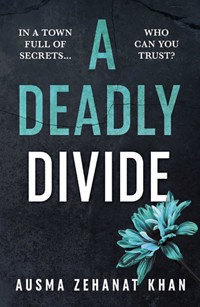
IN A TOWN FULL OF SECRETS, WHO CAN YOU TRUST? In a town full of secrets, who can you trust? In the aftermath of a mass shooting in a mosque, small town tensions run high. Clashes between the Muslim community and a local faction of radical white nationalists are escalating, but who would have motive and opportunity to commit such a devastating act of violence? Detectives Esa Khattak and Rachel Getty from Canada's Community Policing Unit are assigned to this high-profile case and tasked to ensure the extremely volatile situation doesn't worsen. But when leaked CCTV footage exposes a shocking piece of evidence, both sides of the divide are enraged. As Khattak and Getty work through a mounting list of suspects, they realise there's far more going on in this small town than anyone first thought... A Deadly Divide is a piercingly observed, highly topical thriller by human rights law professor and award-winning author Ausma Zehanat Khan.
Das E-Book können Sie in Legimi-Apps oder einer beliebigen App lesen, die das folgende Format unterstützen:
Veröffentlichungsjahr: 2020
Ähnliche













Join the No Exit Press eBook Club
The publishing industry has changed dramatically over the last thirty years and now, more than ever, we value our relationship with you, our readers. That’s why we launched theNo Exit Press eBook clubin which we aim to give you the best value for money across our entire catalogue.
Subscribe to theNo Exit eBook cluband get 30% off our entire catalogue. Click here to find out more
PRAISE FOR AUSMA ZEHANAT KHAN
‘Issues of religion, culture, and racism take centre stage in this outstanding novel’ –Publishers Weekly
‘A thought-provoking, intelligent plot’ –Daily Mail
‘Zehanat Khan is to be applauded for tackling such an important subject in a police procedural’ –Daily Express
‘Tells the truths that non-fiction would struggle to communicate… presents a world where crime-solving is part of deeper and more substantive global issues’ –Globe and Mail
‘A potent antidote to the simplistic and stereotypical portrayal of Muslim citizens of the West’ –Hindu
‘In Khan’s hands, mysteries carry powerful messages’ –Booklist
‘A Deadly Divide feels like a homecoming, but to a home that’s no longer a safe space. I can’t recommend this urgent and timely read enough’ –Lithub
For Summer and Casim,
my chandni and
my chand ka tokra
I pass the torch into your hands.
‘I learned that the Canadian government was going to take more refugees who couldn’t go to the United States, and they were coming here. I saw that and I… lost my mind. I don’t want us to become like Europe. I don’t want them to kill my parents, my family. I had to do something… It was something that tortured me.’
– Alexandre Bissonnette, the shooter in the 2017 Québec mosque shooting
‘I do not know why I committed such a senseless act.’
– Alexandre Bissonnette, Statement of Guilt, March 2018
Prologue
The watcher followed Esa Khattak home, observing the detective in the dark. For all his skills and aptitude, Khattak didn’t know. He’d never known that he was being followed because signs of pursuit had been cleverly disguised.
There had been moments when the temptation to leave a calling card had been nearly too much to resist. The furtive delight to be gained from witnessing Khattak’s response. Of tasting his sudden panic at how close the threat had come.
But the watcher’s patience was limitless. The moment to act would be soon. And when it came, it wouldn’t be decided by a note left at Khattak’s door. The endgame was playing out; the climax would be profound.
Just outside the door to his house, Khattak answered his phone.
He had seemed tired when he’d searched for his keys, but now his features softened, a smile curving his lips, as he set down his case at his side.
It would be the woman, then. The woman Khattak had left in Greece, the one he’d since come to love. The woman was intriguing because she mattered to him. Tracking her travels abroad had posed a new kind of challenge, but Khattak was by far the more riveting of the pair.
The watcher kept waiting for a misstep. For a sign that Khattak was someone other than he seemed. But his private face was not all that different from his public one, except where women were concerned.
That was when the detective finally let down his guard, just as he was doing now, laughing with the woman on the other end of the phone.
He was warm, expressive… perhaps even emotional.
Words not often used to describe Inspector Khattak.
But now there were next steps to be considered. Wait for Khattak to leave his house in the morning, or return to Greece to resume surveillance there? Or do neither of those things, and head west to the home of Sergeant Rachel Getty, a woman of significance in Esa Khattak’s life.
There were other possibilities, too. But these were the most compelling.
The strike, when it came, would be hard.
A moment of decision, now.
The watcher rubbed a cold steel weight with careful, clever hands. Pausedfor the space of a breath.
Then held it up to shoot.
1
Blood saturated the walls, thestink of it creeping into his nostrils. By any measure, the scene was sickening. It was more devastation at a single crime scene than Esa Khattak had ever witnessed. From the green tinge to Rachel’s skin, he could see it was the same for her. Their eyes met across the hall, sharing the moment of horror. They’d been called at once, and had arrived as quickly as possible after the shooting, a mere matter of hours.
Rachel was at the door canvassing the mosque’s parking lot. Khattak had been permitted access to the narrow cordon set up by crime scene technicians in the midst ofthe dead. He wore a protective forensic suit, Superintendent Martine Killiam at his side. He photographed the scene methodically, finding it easier to deal with the sight of bodies through the distancing mechanism of his lens. He made the count to himself. Two bodies in the corner had fallen back against the small shelf of books. Two more were slumped sideways in the main prayer space, where the green and white carpeting was soaked through. Another body was pitched against the mihrab, its white robe spattered with starbursts of blood. The delicately tiled niche had been damaged by a spray of bullets, its shards scattered over the carpet. A tiny turquoise flower lay inches from Khattak’s feet.
He turned in the opposite direction to the scene he’d put off photographing to the end. Two bodies close enough to touch and farthest from the door, one huddled inside the protective embrace of the other. A father and his small son. The assailant had targeted both.
A small community, a small mosque, with seven dead in the prayer hall.
And there was one more. Killed in the small passageway that led from theimam’s office to the main hall, this time by a single gunshot to the head, assailant and victim facing each other.
The man who Khattak presumed had shot them was sitting on a chair at the far end of the hallway, a semi-automatic weapon cradled in his lap. It was an AR-15. He was surrounded by Sûreté officers who spoke to him in French, patient with his bewilderment.
Khattak glanced at him once, a comprehensive glance. Long enough to see the small gold cross he wore on a chain at his neck. And to note the details of his clothing: a gray cardigan worn over a blue shirt. Black trousers and formal dress shoes, slightly scuffed at the toes. The man in the chair seemed slight and insignificant, his thin patch of hair compensated for by a full-grown beard, his eyes wide and dazed. His clothes, hands, and face were free of blood spatter, but his hands were locked around the weapon.
A powerfully built man with an air of command was speaking to the man with the gun in a surprisingly gentle voice, his tone respectful and kind. Esa couldn’t make out his words, but after a few minutes, the gun was released into the hands of the technicians. A moment later, the man in the chair was helped to his feet and escorted from the mosque through a side entrance.
Khattak turned to Killiam. The heat inside the mosque was stifling, yet he found his hands were cold. He put away his phone.
‘No handcuffs?’ he asked her, fighting the tremor in his voice.
Killiam shook her head. She’d made her own inventory of the scene, her sharp gray eyes missing nothing. She was wearing her dress uniform, the stripes at her shoulders indicative of her rank, and after a minute, the man in charge of the scene nodded at her in acknowledgment. She nodded back.
Brusquely, she said to Khattak,‘That’s Christian Lemaire, a homicide detective with the SQ – the Sûreté du Quebec. The man with the rifle isÉtienne Roy, he’s the priest at the local church. He holds a position of considerable influence. More than that, he is dear to the people of this town. They won’t insult the church by cuffing him. My guess is Inspector Lemaire won’t arrest him tonight.’
Khattak glanced at her sharply. ‘He was found with the weapon in his hand.’
‘And what do you conclude from that?’
Khattak took a moment to think it through. Killiam had requested the presence of Community Policing detectives on site for a reason. She’d accompanied him personally and not only because she expected Esa to do damage control in the small community that attended the mosque. Their relationship had progressed beyond that.
‘He didn’t look as though he’d ever held a gun in his hands. There’s no blood trail leading from the prayer hall, his shoes are clean – and where’s the gun?’
‘Inspector Lemaire’s team has confiscated it.’
‘I mean the gun used to kill the victim in the hallway. It wasn’t the AR-15. From the exit wound, I’d say it was a handgun. Has it been recovered from the scene?’
Killiam looked at him approvingly. ‘No.’
‘So either there’s a second shooter, or the priest was not involved.’
A new team had gathered at the entrance to the mosque. Lemaire went over to speak to them. Killiam straightened her jacket, speaking to Khattak in an undertone.
‘Then why was the rifle in his hands?’
‘Maybe the priest came to the mosque in the aftermath of the shooting. Perhaps he tried to help some of the victims. Or it could be he wrestled the rifle away from the assailant.’
Killiam was watching Lemaire, a faint frown settling between her eyebrows.
‘There’s no evidence he did anything of the kind. And if hewasengaged in a scuffle, why wasn’t he shot?’
Lemaire looked back over his shoulder, fixing them with a penetrating glance.
Khattak didn’t have the answer.
What he did have was questions raised by the way the priest had been dressed. He was about to raise this when Killiam swore under her breath. Khattak followed her line of sight, to Lemaire and his efforts to coordinate the various branches of police insisting on access to the scene. His voice cut cleanly across the clatter.
But it wasn’t Lemaire who had drawn Killiam’s attention.
In the flickering light cast by ambulances and police cars, a hastily constructed platform had been arranged. A coterie of reporters were gathered in a circle around a neatly dressed woman in her thirties.Other press huddles had begun to form as well demanding the attention of local officials.
‘We need to control how this shooting is covered from the outset.’ Killiam sounded worried, a rare emotion for her.
‘Lemaire should get out there, then,’ Khattak said.
But when Killiam glanced back at him, her gray eyes frankly assessing, he understood at last why he and Rachel had been allowed access to the crime scene, and more importantly, why Community Policing had been called to assist at this shooting at a mosque in Québec.
She was expecting him to manage the public response to the crisis – to give it Community Policing’s sanction. And to fulfill the CPS mandate, which was to play a mediating role between minority communities and law enforcement where violent crime had occurred.
But looking across at the gathering of reporters, he knew that nothing about the shooting would be easy to manage or suppress. Because one of his chief adversaries was speaking even now.
2
WOLF ALLEGIANCE CHAT ROOM[English language page]
SUBJECT:MOSQUE SHOOTING
COMMENTS OPEN
WHITEVICTORY:TOO MANY ATTACKS BY ‘REFUGEES’ THE GOVERNMENT LETS IN WITHOUT EXTREME VETTING. WE’RE FIGHTING BACK AND IT’S ABOUT TIME!!!!
NINEINCHNAILS:YEAH BUT I WANNA KNOW HOW THEY GOT THE AR-15.
FRENCHKISSER:AN ASSAULT RIFLE?
NINEINCHNAILS:JUST WHAT I HEARD SOMEWHERE.
FLAYALLTHEPLAYERS:WE HAVE TO PROTECT OURSELVES.
NOHA TEHERE:I THINK YOU MAY HAVE READ A DIFFERENT NEWS REPORT. THE PEOPLEINSIDETHE MOSQUE ARE THE ONES WHO NEED PROTECTION.
WHITEVICTORY:FUCK OFF, ALIZAH.
BROADSWORDBEN:I SECOND THAT.
NOHA TEHERE:THOUGHT THIS WAS AN OPEN FORUM. NICE TO HEAR FROM YOU AGAIN, BEN, BY THE WAY.
BROADSWORDBEN:SCREW THAT AND SCREW YOU. HOW THE FUCK DID THEY GET AN AR-15. THEY’RE ILLEGAL AS FUCK.
FRENCHKISSER:WHO CARES AS LONG AS THEY’RE USED TO FIGHT ISLAM.
NOHA TEHERE:YOU MIGHT CARE WHEN THERE ARE KIDS WITH GUNS IN THIS TOWN. ESPECIALLY SINCE THE GUNS BRING GANGS.
FRENCHKISSER:OTHER WAY AROUND. I’D RATHER HAVE GANGS THAN MOSLEMS. QUÉBEC IS GIVING YOU A MESSAGE. YOUR. NOT. WELCOME.
NOHA TEHERE:*YOU’RE*
NINEINCHNAILS:COPS HAVEN’T FIGURED OUT WHO DID IT, BUT THE FIRST THING YOU HERE IS ‘AREN’T WE ALL HUMAN’ AND ‘LOOK HOW PEACEFUL THEY ARE.’
FLEURDELIS:DON’T KNOW HOW MANY THEY TOOK OUT BUT IT’S A START.
NINEINCHNAILS:ALLAHU SNACKBAR!!!
BROADSWORDBEN:ALLAH FUCKBAR!!!
NOHA TEHERE:DO YOU EVEN HEAR YOURSELVES? YOU’RE CHEERING ON MASS MURDER.
GOODGUYWITHAGUN:I CAN’T READ FRENCH. WHO THE HELL IS THE SHOOTER? AN ARAB OR SOME ANGRY QUÉBÉCOIS WHO’S HAD ENOUGH OF THIS SHIT?
NOHA TEHERE:YOU SHOULD MAYBE CHANGE YOUR USER ID.
GOODGUYWITHAGUN:MAYBE WHAT I SHOULD DO IS COME LOOKING FOR YOU.
NOHA TEHERE:YOU’D HAVE TO LEAVE YOUR MOTHER’S BASEMENT FIRST.
GOODGUYWITHAGUN:YOU TALK BIG BEHIND A SCREEN.
NOHA TEHERE:ALSO ON THE RADIO AND IN REAL LIFE.
GOODGUYWITHAGUN:GOOD TO KNOW WHERE I CAN FIND YOU.
NOHA TEHERE:OVERCOMPENSATE MUCH?
NINEINCHNAILS:I HEARD 4-5 MUSLIMS GOT SHOT.
FLAYALLTHEPLAYERS:NOT ENOUGH.
BROADSWORDBEN:IT’S NEVER ENOUGH, MAN. WE NEED A FUCKING CIVIL WAR. WE NEED TO EXTERMINATE THEM ALL.
FLEURDELIS:WHAT WE NEED IS BETTER AIM. HE MISSED LIKE 10-15 OTHERS.
NINEINCHNAILS:I SALUTE THE BROTHERS OF THE ALLEGIANCE WHO MADE THIS HAPPEN.
NOHA TEHERE:THE WOLF ALLEGIANCE?
BROADSWORDBEN:WHO ELSE HAS THE FUCKING BALLS?
NOHA TEHERE:THANKS FOR CLARIFYING. NOW I CAN REPORT YOU FOR INCITEMENT.
WHITEVICTORY:GET THE FUCK OUTTA HERE.
BROADSWORDBEN:GO DARK. EVERYONE GO DARK.
NOHA TEHERE:TURN OFF YOUR LAPTOPS, YOU MEAN. DON’T FORGET TO CLEAR YOUR HISTORIES.
BROADSWORDBEN:YOU’LL GET YOURS, BITCH.
NOHA TEHERE:PEOPLE LIKE YOU ARE THE REASON FOR THE SHOOTING AT THE MOSQUE.
BROADSWORDBEN:THANKS FOR GIVING ME THE CREDIT.
NOHA TEHERE:THOUGHT YOU WERE GOING DARK.
BROADSWORDBEN:WAIT UNTIL YOU FIGURE OUT JUST HOW DARK I AM.
3
Surrounded by the warmth ofa sweltering summer night, Rachel Getty removed the jacket she’d thrown onwhen CPS had gotten the call. Though based in Toronto, Community Policing had national jurisdiction and had worked the Ontario townships in the past, but this was the first time they’d been summoned to Québec. The shooting at the mosque was a somber fit with their mandate.
They’d immediately flown to Ottawa to meet with Superintendent Killiam, then driven the short distance across the Québec border tothis small town on the fringes of Gatineau Park. In daylight, under the warm wash of sunlight, the town’s charm would have been apparent: gabled houses and stone cottages jumbled together along narrow, cobblestoned streets. And at two opposite ends stationed on rolling green hills, the university and the church, the secular and sacred, each carving out a sphere of influence.
But somewhere between these stalwarts of tradition, a small, bright mosque had taken root, modestly asserting its presence and offering a promise of belonging to its small congregation. It was a newly renovated building, and the architect had given the mosque a distinctly French character – Rachel couldn’t have said how,but she recognized it in the pattern of stone and the gallery of windows. Almost as an act of self-defense, the blue and white provincial flag of Québec flew from a staff in the parking lot. There was no accompanying Canadian flag, and no display of a crescent or a star. No exterior arches, no dome or minaret. A uniquely Québécois mosque? Or the sign of a community in hiding?
With the pavement bathed in the glow of police lights, and the yellow tape cordoning off the scene from onlookers who were arriving in increasing numbers, the town became like any other in Rachel’s experience, its individuality flattened by the banality of procedure. She was no longer seeing shopfronts and cafés, she was checking lines of sight, modes of egress, suspicious faces in the crowd hovering too close to the cordon.
Her attention was caught by a woman motioning to a group of reporters. The woman brushed back her hair, straightened the lapels of her stylish coat, and readied herself to speak. She’dchecked with Khattak, who’d told her that the woman who’d set up the press conference was Diana Shehadeh. She was the head of a civil liberties association, renamed and reconstituted after a smear campaign against an earlier iteration of the same group had rendered it defunct. The new organization she fronted would be busier than ever, now.
Before Shehadeh could speak, a giant of a man cut his way through the crowd and waved the reporters off. She recognized him as Inspector Christian Lemaire.
‘We’ll have news for you soon, but this isn’t the moment, and this woman, whoever she is, is not authorized to give you information about a local crime scene.’
A babble of voices erupted. Lemaire fixed them with an icy blue glare until they subsided, retreating to their vehicles to make contact with their desks. There was no story yet. But they knew there would be soon.
Khattak and Killiam cut across the parking lot, not to join the man who’d shut down the press conference, but to join the woman who was making a fuss over being silenced. Rachel continued to snap photographs of onlookers, of faces in the parking lot, of movement in and out of the mosque, trying to make herself useful until Khattak called her to his side. Technically, she was his junior at Community Policing, yet they most often worked collaboratively as partners.
An urgent conference was taking place between Khattak and the others. Rachel was so intent on it that she was taken by surprise when the tall man stalked over to her and grabbed her phone from her hand.
‘Who the hell are you?’
Instantly antagonized by the kind of manner she detested, Rachel glared back at him coldly. Though his six-foot-plus frame was packed with muscle, and his bright blue eyes were hostile, Lemaire didn’t intimidate her. Far from it. She’d honed her skills as an officer facing down men like Lemaire. Men like her father, Don Getty.
Without a word, she removed her police ID from her bag and held it up under his nose. She was tall and strongly built herself; she didn’t back up a single step.
‘Community Policing?’ His head swiveled in Khattak’s direction, then his penetrating blue eyes were back on Rachel’s face. ‘Who’s he, then? God’s gift to the SQ?’
Rachel looked Lemaire over.‘What’s the matter? Been hoarding that title to yourself?’
There was a short pause and then Lemaire laughed, emphasizing the crow’s feet at the corner of his eyes. He made the same survey of Rachel that she’d just made of him, taking note of the jacket she had folded over one arm.
‘You don’t like being stuffed into a suit any more than I do.’
She supposed that was true. His jacket was straining the seams of his shoulders, and his tie had been yanked loose to hang around his collar.
She shrugged. ‘It’s just another kind of uniform.’ After a moment, she added, ‘Inspector.’
He made an impatient gesture, his eyes searching past her head, taking note of the growing chaos at the edges of the cordon.
‘Call me Lemaire, everyone does.’ He pushed Rachel’s phone back into her hand. ‘Never seen anything like this, though Christ knows we’ve been heading to this moment for a while.’ His eyes flicked across Rachel’s face, making an assessment he didn’t share. He nodded at the far edge of the parking lot where two trailers had been set up head to head, bracketed by ambulances. The blue and red lights cut across the parking lot, the sirens long since silenced.
‘Incident room,’ he snapped. ‘Team meeting. Join us, Sergeant Getty.’
He was scrupulously attentive to her rank considering he’d just told her to call him by his name. She wondered how much training he’d had to undergo when it came to interacting with women officers. She was also curious about his lack of an accent. He spoke like an anglophone, but his name was distinctively French. Christian Lemaire. A bearish brute of a man with a weathered face and an undisciplined mane of hair, but one she would be wise not to underestimate. She followed him to the incident room, reserving judgment for the moment.
4
Christian Lemaire was a forcefulpresence on a unit bristling with egos. Within hours of the shooting, command of the operation had been assumed by the provincial Integrated National Security Enforcement Team known as INSET. Officers from other law enforcement agencies, including Rachel and Khattak from Community Policing, and members of theSûreté, had now been seconded to INSET, to function as a single unit. In a room crowded with men jockeying for position, Killiam and Rachel were the only women.
Every woman who served in law enforcement was used to similar circumstances. Killiam took control of the room without noticeable effort, and when she was finished, the officers in the room were taking notes. Her voice brisk, she laid out the operational procedures to be followed.
‘What we must determine upfront is whether we are investigating a mass shooting or conducting a counter-terrorism operation.’ She nodded at Lemaire. ‘Inspector Lemaire remains in command and all findings are to be channeled to me through him. Nothing gets leaked to the press, I repeat, nothing.’ She examined each face in the room. ‘We have had no issues with unreliable team members in English Canada, I expect no less from officers in Québec.’
Well, Rachel thought, that was one way of dealing with simmeringanglo-franco tensions. Dealing it a death blow at the start with a challenge to national pride.
Killiam called Khattak and Rachel up to the front of the room and introduced them. Letting her glasses slip to the tip of her nose, she examined each man in the room, ending with Christian Lemaire.
‘These Community Policing officers are here to deal with a community in grief and to head off an extremely volatile situation. You’ve seen Diana Shehadeh outside. She represents the Muslim Civil Liberties Association, and she will be waiting for us to make our first mistake. She’ll tryto control the narrative of this shooting but our priority is to find out who is responsible and to hold them to account. Now.’ Killiam placed a firm hand on Rachel’s shoulder. ‘Make no mistake. These are my officers. They representme. Inspector Khattak is second in command, and he will be working closely with Inspector Lemaire. Any obstruction of his work or questioning of his loyalties will not be tolerated. Understand that this shooting is a crimeagainstthe Muslim community in Saint-Isidore-du-Lac, have I made myself clear?’
There was a rumble of assent.
Killiam turned the meeting over to Lemaire.
‘I leave it in your capable hands.’ She pointed at Rachel. ‘Come with me.’
Quashing her sense of alarm, Rachel followed Killiam to the exit.
‘Are you taking me off this?’ she asked, when they were alone.
Like Killiam, she kept her back to the trailer and her gaze focused on the crowds. Family members were in the lot, their grief and heartbreak palpable. Rachel scanned the crowd. To the west of the parking lot a trio of young women dressed in identical trench coats pressed against the cordon. A pair of female officers held them back. Two of the young women were strikingly similar in appearance with long fair hair and blue eyes. The third woman’s hair was cut in choppy black wavesthat were subdued by a rhinestone headband.
Killiam cleared her throat. ‘Far from it, Sergeant Getty. I want you to monitor every aspect of the situation and report back to me. If there is insubordination of the kind Inspector Khattak faced over the case in Algonquin, I want to know it immediately. No incident is too small for you to bring to my attention. This is not a case where I expect either of you to fail.’
‘Understood, ma’am.’ Rachel tipped her head, considering.‘Are you expecting trouble from Inspector Lemaire?’
‘Not at all. I paired Khattak with Lemaire deliberately. I can’t think of an officer in whom I have more faith.’
Rachel was glad to hear it. It made a nice change from working under a cloud, even if she and Lemaire had gotten off to a bad start.
‘That’s not all, Sergeant Getty. I want you to report to me about Inspector Khattak.’
Rachel frowned. ‘I’m not spying on Khattak for you.’
Killiam’s response was freezing. ‘I’m not asking you to. I’m asking you to consider whether this particular investigation may be more difficult than others assigned to your unit. More personal for Inspector Khattak. He would never ask to be reassigned.’ She sighed. ‘He treats each case like personal penance. If it seems to you to be weighing on him too deeply, that’s something I want to know. We have plans for Khattak. We don’t want to burn him out.’
She didn’t elaborate further and Rachel didn’t dare ask. She was taken aback by the trust being placed in her,and was eager to prove herself worthy of it. Seeing her commitment in her face, Killiam unbent to say, ‘Rachel. There may be some unexpected – unpleasantness – on this team. I know you’ve been there before, but as your superior officer, I’ll treat any complaint you make with utmost seriousness. No matter who it’s against.’
A hesitant smile broke across Rachel’s face. She’d never had a woman at her back.
‘Thank you, ma’am, that means a lot.’ She glanced across at the crowd, some of whom were holding placards that featured appalling statements. ‘But that’s not where I suspect most of the trouble will be.’
5
ÉLISEDOUCET’S BLOG[Translated from the French]
ÉLISEDOUCET
Montréal, Québec
To insist on a responsible immigration policy is not racist. We have a right to know who is coming here and what they stand for. Is it fair to bring people here and put them in detention centers at public expense when we can’t even care for our own? There are people who need government services more than ever, the elderly, the disabled… meanwhile those who hate us come to live hereon our dime.
Our government brings them and then tells us we must be the ones to adapt when they refuse to respect us.Theymust adapt tous: to our culture, our language, our values. Does saying this make me racist or does it make me a responsible citizen of Québec?
You asked about the Muslims. I am only against the extremists, the ones who hide their faces. I am not a radical. I am not for La Meute or the Sons of Odin or the Storm Alliance, though I do wish we could work together… maybe have a dialogue.
The people of Québec are always kind and generous. But when you make fools of us we get angry.And that’s when we fight back.
COMMENTS:
CANDLELITVIGIL:100% respect to you for your words. I am not racist either. I am someone who doesn’t want to lose everything I love.
EDITH SAUCIER:I agree that we should not fight amongst ourselves. We need La Meute and Storm Alliance, and now that this has happened in Saint-Isidore, the Wolf Allegiance needs to start talking with them again. What is your position on the Wolves?
ÉLISEDOUCET:I am for whoever wants to work to build a better Québec.
EDITHSAUCIER:They are decent French boys who have been shamefully maligned.
ABEAUTIFULMERCY:Decent French girls, too.
ÉLISEDOUCET:In the new Québec, everyone’s a racist.
CANDLELITVIGIL:We need to change that. We need to change the way they talk about us.
ABEAUTIFULMERCY:The change has already come.
6
The vast machinery of lawenforcement was put to work. There were crime scene technicians on the scene, mortuary vans waiting to take bodies to the morgue, grief counsellors keeping family members of those who hadn’t returned home away from the scene using a wait-and-see vocabulary, senior officers conferring in government offices with local and provincial politicians, guards at the local station with strict instructions on the transfer of the priestÉtienneRoy, others at the hospital with those who had been wounded in the shooting and taken away before Esa and Rachel’s arrival, and armed guards outside the room of one victim in particular.
Killiam was dealing with politicians. Khattak and Rachel were en route to the hospital with Lemaire.
‘There’s more,’ Lemaire told them abruptly, leaning on his horn to clear the road ahead.
Rachel leaned forward in her seat. ‘More what?’
‘There’s another crime scene. Well, it’s part of the same scene, but we cleared it before you got here. That’s why the press arrived so quickly. That’s why your friend, Diana Shehadeh, is here.’ He said this to Khattak, but the words didn’t have the effect Rachel was anticipating; she thought Khattak might interpret them as an insultand choose to respond in kind. Instead, his face had gone pale – but then, he often made connections that weren’t apparent to Rachel.
‘The shooter began in the women’s section?’
Lemaire turned left, his car slowing down on the long climb up the hill.
‘How did you know that?’ He made no effort to mask the unease in his voice.
‘We were called to the scene because of our expertise.’
Khattak’s tone and words were neutral, but Rachel knew the undercurrents all too well.
‘Yes, the women’s section. It’s in the basement. Four more bodies. We processed them first. They’re already at the morgue.’
‘So the shooter came in the side entrance.’
Khattak’s voice had thickened slightly. He turned to look out the window.
‘Back entrance. This is not the most enlightened community.’ Lemaire made no apology for his statement. When Khattak didn’t react, neither did Rachel. She’d learned to hold her tongue, to wait for the opportune moment to speak. And she kept Martine Killiam’s assessment of Lemaire in mind. She’d called him an excellent police officer, one of the best she knew. So Rachel wouldwait to see if that were true. She asked a different question, hoping to confound Lemaire’s expectations.
‘If the shooter hit the women’s prayer area first, why didn’t the men have enough time to escape?’
Lemaire drew into the hospital’s parking lot. The receiving area was clogged with ambulances, their lurid lights flashing against the gray concrete. It struck Rachel that for a scene of such urgency and chaos, there was a cathedral hush around events.
‘Christ,’ Rachel whispered. ‘How many were wounded in the shooting?’
‘Another dozen. The chief surgeon has warned us that many of them will die. You know what an assault rifle does to a person’s body – the wounds are too severe. And to answer your other question, the basement is insulated. It has no windows, and the door and rafters are solid.’
Khattak shook his head. ‘They would still have heard an assault rifle.’
Lemaire’s interest in Khattak sharpened.
‘You’re right,’ he said. ‘But each of the four women in the basement was killed execution style. A single gunshot to the head.’
‘Back or front?’ Khattak asked.
‘Front. Just like the one in the upstairs hallway.’
‘It was personal, then. The shooter wanted to look them in the eye. Do you have anything else in terms of victim profile?’
Lemaire had locked his vehicle and they were headed to the hospital concourse, slipping past the cordon set up by team members to hold back non-essential personnel.
‘Too soon. It’s too soon for any of that. The women were different ages, different backgrounds. The only thing they have in common is that they all wore the veil.’
‘Headscarf or face veil?’
At the elevator, Lemaire paused to consider her. He didn’t say, as she expected, ‘what difference does it make?’ He rocked back on his heels in the lift.
‘So that’s why they called you. Because of the politics here.’
‘That’s not an answer, sir.’
‘Lemaire,’ he reminded her. ‘I don’t let anyone call me sir.’ He went on to answer her question. ‘We could see their faces, so I suppose they wore headscarves. Possibly that made them a target, or maybe they were just in the wrong place at the wrong time.’
‘No.’ Khattak’s response was definitive. ‘A headscarf worn in the mosque doesn’t necessarily translate into one worn outside the mosque. We’ll need to check that outas it could speak to targeting. But execution-style killing is personal, regardless. We can assume the man in the hallway was killed in the same manner to buy the shooter… or shooters… time to use the assault rifle. Which brings us to the subject of your priest, a subject we need to discuss.’
The elevator doors opened onto a scene of chaos. Though triage was still taking place in the emergency department, the surgical ward was packed with medical staff, police officers and family members.
Lemaire cut the discussion short.
‘You think this is a hate crime, eh?’ There was something needling about his tone.
Khattak replied evenly. ‘I think it’s an act of terror. That’s why INSET is here.’
Lemaire ran his hand over the bristles on his chin. He nodded at a passageway that led off the main reception area. At its end, four armed guards were stationed outside a door.
‘What on earth –’
It was Rachel’s turn to be cut off.
‘We have a suspect under guard in a hospital room. He’s being treated for shock.’ He shifted his body closer to Khattak, sizing him up head to head. ‘We caught him running from the mosque after police arrived at the scene and began lockdown. When we caught him, he had blood all over his clothes, and on his face and hands.’ He jabbed Khattak’s chest with a finger. ‘If this was a hate crime, or an act of terrorism as you say, why was he shoutingAllahu Akbar?’
Khattak took a step back. But he did so in a way that suggested nothing more than distaste at Lemaire’s unwarranted encroachment.
‘Who was he? Who did you arrest when it was yourpriest who was found with the rifle in his hands?’
‘A young black man we’ve identified as Amadou Duchon.’
‘Youidentified him?’
Despite the press of people waiting to speak to him, Lemaire’s attention focused on Khattak. ‘Fine, then. He identified himself to police.’
Khattak was shaking his head. He pulled Lemaire a little aside.
‘So you’ve arrested a young black man, while the priest you found with the weapon in his hands hasn’t been processed or arrested?’
Lemaire fired up, at once. ‘There’s no prejudice here. Not in my department. The boy ran, he was arrested.’ He caught the sharp edge of Khattak’s smile, the instant of recognition, and his eyes flared in response. He nodded to himself, clasping his large hands together.
‘All right. You’ve made your point, Inspector Khattak. I won’t make assumptions about you, and you won’t make them about the Sûreté du Québec.’ He glanced over at Rachel. ‘You should have warned me about your boss.’
Rachel flashed him an insincere smile.
‘The superintendent said you’re good at what you do. I figured you’d find out for yourself.’
Khattak interrupted. ‘Amadou Duchon. Where is he?’
Lemaire pointed to the door under guard. ‘He’s been cautioned and interviewed.’
‘By you?’ Khattak’s eyebrows went up.
Lemaire looked wary. ‘Preliminary intake only.’
‘And did he confess?’
‘No.’
‘Then I’d like to speak to him. Alone.’
Khattak was heading toward the room under guard when a commotion broke out at the elevator. A young woman’s voice called out Rachel’s name.
Rachel turned at once. For a moment, memory slashed through her, sharp and sickening, of a beautiful, blank face on a table at the morgue.
The face looking back at her was just as beautiful but very much alive.
She hurried over to the elevator and clasped the young woman’s hand urgently in her own.
‘Alizah,’ she whispered, shaken by a surge of joy. Sometimes the past was less like a weapon that wounded you, and more a harbor from pain.
She wasn’t alone in feeling it. Alizah reached out and hugged her tightly. Then both women turned at the sound of Khattak’s voice.
‘Alizah,’ he echoed softly.
Alizah stood still, her arms dropping to her sides.
She tilted up her chin, eyeing Khattak with an expression Rachel couldn’t interpret. Until she spoke, her voice rich with undertones of regret.
‘I’ve missed you,’ she said to Khattak, as if the admission surprised her.
Khattak regarded her gravely, his green eyes steady on hers.
With a sigh of defeat, he said, ‘Not as much as I’ve missed you.’
Then he seemed to remember where he was. ‘Give us a few moments,’ he said. ‘We’re in the middle of something.’ He gestured at the reception desk and reluctantly, she moved away.
When he began to head off to Amadou Duchon’s room, Lemaire stepped into his path. Rachel’s eyes widened at Lemaire’s confrontational air.
‘How do you knowher?’ he asked.
Something in Khattak’s face softened.
‘From a case some time ago in Waverley. From the murder of Miraj Siddiqui.’
From his expression, it was clear Lemaire was familiar with the case. A young woman had been found murdered on the pier in the Ontario township of Waverley – a case that had made the national news as the first in a string of so-called honor killings.
Lemaire swore loudly in French. ‘You worked that case? Meaning you have a prior relationship?’
Khattak’s eyes narrowed in suspicion. ‘I didn’t know she was here. I haven’t spoken to her in some time. How doyouknow her, Lemaire?’
‘She’s been a goddamned thorn in my side since the day she moved to this town. She’s a graduate student at the Université Marchand. Ajournalismstudent. You watch her, Khattak. And I don’t care what your relationship with her is, you don’t tell her anything about Amadou Duchon.’
He glanced back at the reception desk and groaned. Next to Alizah, a smartly dressed blonde woman was waving to Lemaire from the other side of the corridor. He raised a hand in half-hearted greeting.
‘Merde. She’s already here.’
The woman was so attractive that Rachel was taken aback by Lemaire’s reaction.
‘Who is she?’
‘Isabelle Clément. Press liaison for the premier. He sends her to represent the province when matters like this occur. I’ll need to speak to her.’ His eyes moved to Rachel’s face. ‘Let me speak to her first, then I’ll introduce you.’
It would have been good to know how the premier of Quebec was planning to spin this tragedy – as a premeditated hate crime or the act of a deranged lone wolf? But the players were just beginning to assemble, so Rachel agreed to wait.
7
Khattak didn’t view Lemaire asa problem. Lemaire’s posturing was standard, officers of different jurisdictions usually had different priorities when they were thrown together and expected to make it work. This was just the process of working out the kinks. Any judgment he passed on Lemaire wouldn’t happen until they’d mapped out preliminary work on the shooting – then the boundaries would be clear, along with any lines Lemaire was prepared to cross.
Until that happened, Khattak was trying to treat the crime scene like any other, though if he’d understood Lemaire correctly, the total number of dead would make the shooting the deadliest of its kind in the nation’s history. And that it had happened inside a mosque by a man shouting ‘God is greatest’ made no sense at all. The province of Québec had a unique relationship with its minority populations, a status enhanced by the province’s distinctive cultural and linguistic heritage. And he knew whatever else happened during the course of their secondment to INSET, he and Rachel would be unraveling that relationship piece by piece.
Beginning with what had happened to Amadou Duchon.
Having seen him with Lemaire, the guards outside the room were prepared to wave Khattak through. Khattak showed them his ID; he wanted to be sure they checked that anyone who sought access to the room had the appropriate credentials. There were journalists waiting in the hospital concourse, and there might be a shooter at large who had specifically targeted worshippers at the mosque.
When he entered the room, Amadou was sitting propped up in his bed. He was dressed in a hospital gown that flapped loosely against his deep brown skin under an air-conditioning vent. His clothes were not in the room; one of his arms was handcuffed to the bedrail. At first he didn’t appear to be injured, but when he shifted forward under the fluorescent lighting, Khattak noticed the swelling along one cheekbone.
When he saw Khattak, he sat up straighter, brushing his free hand over his hair in a reflexive gesture.
‘Alhamdulillah,’ he breathed. ‘You’ve come.’
Khattak hooked a chair closer to the bed. One eyebrow raised, he asked, ‘You were expecting me? Does that mean you know who I am?’
‘Alizah and I are friends, she told me you would come. She told me she knew you well. And I’ve been watching you on the news. We all have.’
His eyes were fixed on Khattak, warm and liquid dark. He spoke with a Québécois accent tinged with West African overtones, his voice melodic and rich. Khattak couldn’t pinpoint it, but he thought the young man’s first name suggested a link to Gambia or Cameroon.
There was a glint of hope in his eyes, his wariness replaced by a frank expression of trust. And if Amadou Duchon trusted him before he’d begun his interview, it said a great deal about what Alizah must have told him about their past relationship. He wished he could extend that same trust in return, but he’d have to clear the ground first.
‘Were youexpectingan attack on the mosque, Amadou?’
Amadou blinked rapidly. ‘You can’t think that’s what I meant. You may not know what’s been happening in Saint-Isidore, but you must know what it’s been like here in Québec. An attack like this was only a matter of time.’
Giant tears welled up in his eyes, spilling down his cheeks to disappear into the paper-thin neck of his gown. ‘I didn’t think I’d be in the middle of it.’
Khattak reached for Amadou’s hand and squeezed it. He asked if he understood his rights, and whether he wanted a lawyer.
Amadou gripped his hand with surprising force.
‘Ya Allah,’ he said. ‘As God is my witness, I don’t need one.’
‘But youwerethere?’ Khattak prodded. ‘You saw the attack take place? Do you feel up to telling me about it?’
Amadou’s head fell back against his pillow. He swallowed back a sob.
‘I wasn’t inside when it happened. I’d gone to the mosque to pray, then I planned to head back to campus. I was on my way when I remembered that I’d forgotten to speak to my friend Youssef about a meeting. I heard the sound of gunfire as I made the turn back to the mosque. I’m the one who called police.’
His breath was coming faster as he spoke. Khattak murmured a consolation to him in Arabic.
‘Take your time, there’s no rush.’
‘I parked and ran back in after I made the call. Maybe there was something I could do, so I made myself go in. There were so many bodies, so much blood. People were calling out, crying. I didn’t know what to do, where to start, I helped those I could – and then I looked for Youssef.’
‘Where was Youssef?’
‘In the main hall. Near Abubekr and his son, Adam. It was – they were – it was clear they were dead. Both of them. And Youssef had been shot, too. More than once.’ Amadou released Khattak’s hand to gesture at his back. ‘Here. All over here. I had my kit. I did some preliminary treatment.’
‘Your kit?’
Amadou nodded vigorously. ‘I’m training to be a paramedic. So I worked on Youssef. I told him to hold on.’
‘But you weren’t with Youssef when the ambulance arrived. Inspector Lemaire told me you were arrested running from the scene of the attack.’
Amadou showed the whites of his eyes.
‘My God, they’ll say anything and expect you to believe it.’
Khattak flinched a little and Amadou softened his tone.
‘I was the only uninjured person inside the mosque. People were still alive and I didn’t hear any sirens. I ran outside to flag down help. I was calling out to the police, showing them where to go, when one of their officers tackled me. He brought me to the ground.’
He showed Khattak his bruised cheek. ‘They did this to me while I wascalling for help.’
Exactly the scenario Khattak had feared. He leaned forward, watching Amadou intently.
‘They said you were running from the scene shoutingAllahu Akbar.’
Amadou closed his eyes.
‘No, no,’ he said. ‘I cried outAllahu Alam. They just don’t know the difference.’
Because they couldn’t imagine therewasa difference, Khattak thought, any more than they could interpret all the nuances of meaning encompassed by a single phrase. It didn’t make sense that a person would shoutAllahu Akbarat the scene of a terror attackagainsta Muslim congregation. The way the phrase had been continually linked to terror was in distinct contrast to its daily importance in the lives of members of Amadou’s faith. It could be used in any context – to witness an act of beauty, to marvel, to praise, to express gratitude or deepest joy. To use it to mark the murder of co-religionists was an act only thinkable to an extremist fringe. For members of the faith like Khattak, there was no phrase that offered more grace.
Allahu Alammeant only‘God knows best.’
In Amadou’s case, it had served to warn of despair.
He didn’t leap to Lemaire’s conclusion that Amadou was guilty of mass murder. No weapon had been found on Amadou’s body or in his car. He’d done what he could to help, risking his own life to save the life of his friend.
Khattak studied Amadou’s smooth young face, the earnestness of his expression, the hair he wore closely shorn to the skull. The flimsiness of his hospital gown didn’t diminish the elegance of his strong black body, too often seen as a threat. As witnessed by one simple fact.
Amadou had been roughed up, then handcuffed to a hospital bed, whilethe priest who had been found with a weapon at the crime scene had been graciously escorted from the mosque.
If word got out to Diana Shehadeh and the civil liberties group that she ran, the investigation would turn on its axis, evolving into something that would end up hindering their work. Yet Khattak knew he would have to speak to her and somehow warn her – try to bring her on board.
While watching out for Amadou.
‘Amadou. When you made your way inside the mosque, did you see who opened fire?’
The young man squeezed his eyes shut. ‘If I had, he would be here instead of me.’
‘You didn’t see anyone else enter the mosque after you did? Think carefully.’
Amadou’s eyes shot open. ‘Why? Who else was there?’
Khattak leaned in closer. ‘Just tell me.’ He was considering the nature of the shooting, the speed with which it had been carried out.
‘No, no one.’
‘How many entrances are there to the mosque? Do you know it well enough to say?’
His head bobbed rapidly. ‘Sisters’ entrance at the back. I just fixed the lights out there myself. Main entrance in front of the parking lot. And a small side door that leads to the office. That’s the door the imam uses.’
‘Are any of the doors kept locked?’
‘Not until late at night, after Isha prayer.’
So the gunman could have come from any of three entrances, though the back entrance was the most likely in terms of how Lemaire had described the order of events. But what if there had been a second assailant? They knew there was another gun, a gun that was missing from the scene. Lemaire’s men were conducting a perimeter search but the mosque wasn’t far from the lake that bordered the townor from the creek that fed into it. The search would take time, and in the end it might not prove conclusive.
And something else was bothering Khattak. He wondered if Rachel had caught it, too.
‘When did you fix the lights at the sisters’ entrance?’
Amadou turned his head. He was looking for something on the nightstand beside his bed. Whatever it was, it wasn’t there.
‘They took my phone? I could tell you from my calendar if you need an exact time, but it was sometime last night. Sometime aftermaghrib.’ His voice choked a little. ‘Almost the same time as… tonight.’
No one was feeling the weight of it yet, Khattak knew. They were still in shock, and would remain that way for some time – investigators, medical staff, family members… witnesses. He’d examined the scene thoroughly, seen the bloodmarks that desecrated a house of worship – a place of sanctuary – but he’d done so as a trained investigator, shutting everything else away. When he would pray, when hecouldpray, he’d think of what this meant.
Amadou was still speaking. ‘Alizah mentioned it two days ago, so I came prepared to fix the lights. I handle these kinds of jobs at the mosque.’
‘Officially?’
Amadou’s smile was gentle. ‘Non, Inspector. Just as an act of service. I thought the lights needed to be changed because they’d gone out.’
That prickle of warning stirred along Khattak’s spine. ‘They hadn’t?’
‘They were smashed. That’s when I realized why Alizah was worried.’
Khattak left the young man with a few additional words of caution. Amadou needed a lawyer without further delay, and shouldn’t speak to the police again without one present. He was back to navigating a familiar set of tensions that came with the job he’d taken on, but in this case he didn’t hesitate. He was disturbed by the instant focus on Amadou when there were other, more logical avenues to pursue. He hadn’t ruled Amadou out as a suspect, but he was wary of a rush to judgment. He’d speak to Diana Shehadeh to ensure Amadou received fair treatment.
The entire team would be working around the clock for the next few days, following every lead, reconstructing the moments of the attack – everything that had led up to it, and everything that followed now. It was time for him to deal with what he’d been sent here to do.
He found Rachel in the hallway leaning against the wall as Lemaire spoke with the press liaison he had mentioned earlier.Rachel was watching them, but her presence wasn’t intrusive. Her hair was combed into a ponytail, and her clothes were a mix of everyday and professional that let her melt into the background.
‘Anything?’ she asked at once.
Khattak shook his head. ‘It’s not him.’
‘Sir.’ Her tone was chiding.
Khattak tried not to smile. He knew what she was warning him of, what she never failed to warn him of.
‘Fine. I don’t think Amadou Duchon is our man.’
He summarized what he’d learned from Amadou, and Rachel’s thick eyebrows climbed halfway up her forehead. She’d dumped her blazer on a nearby hospital bed, and now she rubbed her arms as she thought. Her ponytail swung over her shoulder as she flashed Lemaire a quick look. He was too far away to hear them.
Lowering her voice, she said, ‘Lends credence to the idea that the shooter entered from the back. The broken lights suggest recon to me. Someone knew they’d be entering the mosque from the back, so they knocked out the lights.’
Khattak had considered this. ‘Amadou replaced them before the attack.’
Rachel shrugged.‘So they didn’t have a chance to come back and do it again. But there’s something else, sir. Something strange. Don’t know if these guys have caught it yet, but if Amadou re-entered the mosque to help the victims, that’s who he sees inside, right?’
‘Go on.’
‘Then he’s back outside and he gets tackled to the ground. But even then, there’s someone he doesn’t see. Either inside or outside in the parking lot.’
Khattak had known she would get there. The strange thing was that Lemaire hadn’t. Or maybe there just hadn’t been enough time for Lemaire to have told them everything he’d picked up. Lemaire had made a fair offer: withholding judgment at the outset of an investigation was necessary in any case.
He put a hand on Rachel’s arm to silence her. Lemaire and the premier’s press liaison were headed in their direction.
‘Sir,’ Rachel whispered. ‘We need to figure out the timing of events here. When exactly Amadou went outside to flag down help, when he went back in, and so on.’
‘Why, specifically?’
‘Because Amadou didn’t mention seeing Étienne Roy. And if Amadou didn’t see him, we need to know where Roy was when the shooting was taking place.’
8
Isabelle Clément possessed the understatedglamor and effortless chic that Rachel associated with French women. She wore a dark plum dress that flattered her pale complexion and a pair of black heels that would have crippled Rachel in her job. She showed no sign of finding them difficult to manage. Her make-up was discreet, her ash-fair hair swept up neatly in a low chignon. Instead of a briefcase or a purse, she carried an electronic tablet. She was petite and very beautiful with a mildly critical manner.
Lemaire introduced them, a glint of sardonic amusement in his eyes as he watched Rachel give the press liaison the once-over, smoothing a hand over her own blouse. Rachel ignored him. Another woman on the scene wasn’t competition – she was a colleague of sorts.
And if it came to it, what the hell did Lemaire think she was in competition for? There was a crowing masculinity about the man that set Rachel’s teeth on edge. She had found something like it in nearly all the men she had trained with, until she’d come to work for Khattak. Her instincts told her that Lemaire was a brute of a cop compared to Khattak’s restraint, but she was annoyed with herself for wasting even a little of her time rising to his bait.
Clément didn’t smile at either of them, and her response to Khattak wasn’t what Rachel had learned to expect. Clément glanced at him, her attention briefly caught by the shadow of Khattak’s dark beard, then her attention returned to the tablet she held in her hands. She seemed competent but worried.
‘I’ve spoken to Inspector Lemaire. We’ve outlined the statement the premier is prepared to make.’




