


Erhalten Sie Zugang zu diesem und mehr als 300000 Büchern ab EUR 5,99 monatlich.
- Herausgeber: Sallux Publishing
- Kategorie: Religion und Spiritualität
- Sprache: Englisch
About Relationships and Climate ChangeThe challenge of climate change is one of the defining issues the world is facing at the start of the 2020s. It has mobilised a whole new generation of social activists, some of whom are going to extreme lengths to confront the public and especially political leaders with the threat that climate change makes to their future and the planet as a whole.Arguments about the causes of climate change are usually underpinned by the assumption that more human beings living on the planet are inevitably bad for the environment and climate. However, a careful biblical reflection on these issues yields a more nuanced and hopeful view, and this report seeks to stimulate fresh conversations about how best to respond to Climate Change now and in the future.
Sie lesen das E-Book in den Legimi-Apps auf:
Seitenzahl: 130
Veröffentlichungsjahr: 2022
Das E-Book (TTS) können Sie hören im Abo „Legimi Premium” in Legimi-Apps auf:
Ähnliche

















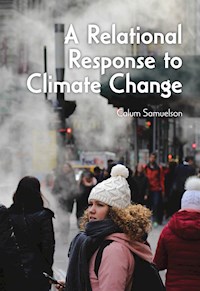
A Relational
Response to Climate Change
Calum Samuelson
COLOPHON
A Relational Response to Climate Change
Calum Samuelson
© 2022 Jubilee Centre. All rights reserved. No part of this publication may be reproduced, stored in a retrieval system, or transmitted, in any form or by any means, electronic, mechanical, photocopying, recording or otherwise, without the prior permission of the publisher.
Unless otherwise stated, scripture taken from The Holy Bible,
New International Version® (Anglicised), NIV®. Copyright © 1979, 1984, 2011 Biblica, Inc. Used by permission of Hodder & Stoughton Limited, a division of Hachette UK. All rights reserved worldwide. “New International Version” and “NIV” are registered trademarks of Biblica, Inc. Used by permission.
Contact data:
Sallux Publishing
EPub format: ISBN 978-94-92697-24-0
Cover design and lay-out: Reproserve
Cover images: Petrin Express and Karsten Wurth.
About
The Jubilee Centre
The Jubilee Centre offers a biblical perspective on social, economic and political issues, and equips Christians to be salt and light in the public square.
We believe the Bible describes a coherent vision for society that has enduring relevance for the UK and the world in the twenty-first century. At the heart of this social vision is a concern for right relationships. We seek to study, disseminate and apply this vision in order to provide a positive response to the challenges faced by individuals, communities and policy makers.
Sallux | ECPM Foundation
Sallux is the political foundation for the European Christian Political Movement (ECPM). Sallux means “Salt and Light” and we want to spark a salted debate where needed and shed light on the issues we face. We present solutions by organising events and distributing relevant publications and will not stay on the safe side of the status quo.
Address
Bergstraat 33
3811 NG Amersfoort
The Netherlands
www.sallux.eu
Disclaimer
Since 2011, the activities of Sallux have been financially supported by the European Parliament. The liability for any communication or publication by Sallux, in any form and any medium, rests with Sallux. The European Parliament is not responsible for any use that may be made of the information contained therein.
About the author
Calum Samuelson is an ordained minister from Seattle, USA who has opted to live in intergenerational households for the past several years with his wife and son. He is the author of several Jubilee Centre publications, including Just Pay (2019) and Artificially Intelligent? (2019) and holds two master’s degrees in historical theology.
Acknowledgements
The author would like to thank the numerous people who have contributed to the research, drafting and editing of this report, especially Ben Crelin, Ralph Lee, Charlee New, Martin Wilde, Mercedes Williams and Jonathan Tame. They would also like to thank Sallux for their grant towards the costs of the research and for publishing the final report.
FOREWORD
Concern over climate change and care for the environment seem to have become victims in an ever-expanding cultural clash between liberal-progressives and conservatives. For many a concern over climate change and the environment equals an individualist liberal cultural attitude and a leftist political agenda. Subsequently our common future, in terms of natural resources and survival of ecosystems, has sadly been politicized on too many occasions.
This publication demonstrates that there is a more fruitful way forward. One that starts with life itself. As Sallux we take the fact that life is relational as the starting point for any policy making.
To say Life is relational means that our life is inherently related and dependent on our fellow human beings and all natural life. As a Christian organisation we believe that we are related to our Creator, our neighbour and family as well as all of creation. But from a secular point of view it is an undeniable fact that an individual life is not autonomous but embedded in each social context and in natural environment. The relational point of view is ultimately grounded in the notion that all life is valuable. As Christians we see that this value is rooted in the love of our Creator for all of creation. That is why this publication offers an in-depth reflection on how Christian faith is connected to sustainability.
The EU states in article one of its own Charter of fundamental rights that ‘Human dignity is inviolable. It must be respected and protected.’ This is also the foundation for article 37 of the same Charter stating that: ‘A high level of environmental protection and the improvement of the quality of the environment must be integrated into the policies of the Union and ensured in accordance with the principle of sustainable development.’ We see that both the Christian and secular point of view are grounded in the notion that life has inherent value. As Sallux we consider that the secular embrace of the inherent value of life is historically rooted in the Christian understanding of the world; this shows that although we have differences in religious convictions, we can share a relational outlook on life.
This starting point means that a positive attitude to family and community and an emphasis on the dignity of human life is not juxtaposed or in contradiction with care for the environment. A liberal attitude in the cultural sense of the word is not required to stand for the protection of all creation. This publication argues that it is almost the opposite. Namely that valuing family and community is helpful for sustaining our environment and that autonomous individualism can be harmful for our planet.
Much of today’s consumerism is focused on ‘creating you own experience’ or ‘designing your own life’. One can see how consumerism and the idea of the autonomous individual are intertwined. The autonomous individual defines its existence through what it consumes. Interestingly this combination drives many people to seek their fulfilment in exactly the same consumerist way as many other people (for example resulting in Instagram mass-tourism). If we instead try to find the fulfilment of life in our relations instead of the accumulation of individual experiences and possessions, we create a different lifestyle that is far less demanding on our planet.
The critique of this publication is that the green movement currently lacks an analysis that digs deeper to how consumerism is driven by our culture and how that impacts our economy. There are encouraging signs in parts of the green movement to connect community and sustainability, but this change does require a critical reflection on the impact of autonomous individualism. It is our hope that the green movement will find the courage to go deeper in this direction.
In essence, when loving your neighbour, community and caring for family are at the core of our lives, that can translate into much less pressure on our ecosystems. Putting relations first includes the environment.
This has massive implications for our economy. Consumerism is by and large needed to satisfy the demand for increasing profits. A reasonable profit is needed to sustain any business. That is however something very different from the pressure on companies to generate ever higher profits to satisfy the shareholders and other investors. The maximisation of shareholder-value creates a harmful pattern in our economy that is juxtaposed with real sustainability. Maximizing shareholder value not only has adverse effects on the workplace, it is equally draining for our planet. We are in every sense in need of a relational economy.
An economy that is focused on sustaining life instead of maximization of shortterm profits is indeed a very different economy than what we have at the moment. That is why it is fitting that this publication closes with ‘crafting a relational economy’. Ultimately we are in need of an economy that is socially and ecologically responsible. We need an economy in which meeting the needs of all humanity is deemed more important than increasing profits for the happy few. We encourage you to explore other Sallux publications on the economy to gain a broader understanding of how we think that our economy can be reformed.
This is a unique publication that connects all these dots. As Sallux we are therefore most grateful to Calum Samuelson as main writer of this publication as well as to Jubilee Centre and all co-writers who together created this final result. We thank them for the cooperation and their hard work in delivering this excellent result.
It is our sincere hope that this publication will help to build bridges in our societies through creating a broader understanding of what care for our environment means and what it implies. Ultimately we are stewards of God’s creation and it is our responsibility to the next generations to ensure that this remains a liveable planet for all.
Johannes de Jong
Director, Sallux
PREFACE
The challenge of climate change is one of the defining issues the world is facing at the start of the 2020s. It has mobilised a whole new generation of social activists, some of whom are going to extreme lengths to confront the public and especially political leaders with the threat they perceive climate change makes to their future and the planet as a whole.
Some blame Christianity for the problem – arguing that the Bible’s teaching about the return of Christ and the judgment of the earth gives a licence for irresponsibility. Others insist that the Christian faith gives us the richest understanding of human responsibility and the strongest motivation to steward the planet for future generations.
Meanwhile governments and policy makers must manage the tension between responding to short-term social and economic needs, especially those aggravated by the Covid-19 pandemic, and the longer-term costs of mitigating climate change.
What is needed is a framework that can connect these two challenges in a holistic way, one which helps to align the needs of present and future generations, and which encourages every person to be part of the solution. This report for Sallux introduces one such framework, and argues that the biblical vision for relationships is the key to both human and environmental flourishing.
It is far from the last word on the matter, but it can at least be the first word, one which launches a conversation about our values, lifestyle and worldview when it comes to responding courageously to the challenges of climate change.
Jonathan Tame,
Director, Jubilee Centre, June 2021
INTRODUCTION
In early 2019, a young woman named Blythe Pepino launched a movement born out of a desire to effect urgent climate change. This movement, known as BirthStrike, involves individuals who are serious about combatting climate change to commit to not giving birth to children. The logic behind the initiative is that this would curb the environmental impact of the rapid growth of the human population.
BirthStrike is just one example of many groups that are confronting climate change in creative and radical ways.1 However, while other climate activists concentrate on issues such as economic systems, farming methods or personal lifestyles, BirthStrike stands out for its emphasis on new human life as being in and of itself an environmental burden.2 Although this approach may not be widely endorsed at present, it is indicative of growing popular concern about adding to the population in the midst of acute climate change3 that increasingly, young people accept the idea that the worst thing you can do for the planet is to have children.
If approached from the narrow perspective of resource consumption, this conviction carries significant weight. However, this report fundamentally contests the notion that having children is merely a lifestyle choice and, more importantly, that choosing not to have children is a productive way to confront climate change. In fact, we will argue that viewing people as individual ‘choosers’ is a hollow approach that can only create piecemeal solutions that may end up being counterproductive to the health of the global environment in the long term.
Behind this initiative also lies a mood of increasing despair, not only due to concerns about climate change but also because of the political and social divisions that are obstructing progress on this issue. While the increasing sophistication of science and the greater accessibility of climate change data could potentially unite humanity against climate threats, both globalization and social media campaigns instead serve to highlight seemingly irreconcilable ideological differences and accentuate disagreements.
While it is vital to acknowledge and understand the severity of the challenges facing our world today, it is also critical that any response to climate change be built upon a foundation of hope rather than despair. As a result, this report seeks to cast a more hopeful perspective that points towards measurable, attainable flourishing for both people and planet. It emphasises the enormous value of human relationships expressed through families and households as societal institutions and therefore stands in direct contrast to the prevailing culture of despair.
Furthermore, we argue that the basic diagnosis of the BirthStrike movement is fundamentally flawed and propose that it is individualistic consumerism that lies of the heart of the issue. Adopting a relational lens grounded in the biblical narrative provides a unique and hopeful vision for real change, generative of green policies and greater health for society.
OUR APPROACH
‘Where there is no vision, the people perish.’ – Proverbs 29:18
Effective Christian social engagement requires both perceptive analysis and creative solutions to social dilemmas, drawing on biblical principles. In this report our ultimate goal is to cast an informed narrative of hope based on three key elements:
The primary argument of Chapter 1 is that the underlying architecture of the current capitalist economic systems in the West is not designed for true human and environmental flourishing.
This chapter wrestles with the reality of unsustainable resource usage and the various solutions being attempted by analysing four different contributing factors: geopolitical, economic, ideological/sociodemographic, and technological. It argues that it is vital for societies to understand that individualist and consumeristic approaches tend to create and perpetuate the very problems that they seek to solve.
Chapter 2 draws upon Scripture to explore the concepts of Identity, Place, and Mission. These concepts radically challenge the current accepted precepts of Western culture and enable both pro-relationship and pro-environment goals to be addressed simultaneously. These biblical concepts recognise that both human communities and natural environments are divine gifts that are designed to enrich each other rather than to exist in competition.
The linchpin of Chapter 3 is the concept of a relational economy.4 Crucially, this values humanrelationships as the supreme ‘resource’ responsible for the ultimate flourishing of all life. It argues that life-giving human relationships – starting with the family and expressed more widely within and between local communities – are better at fostering well-being than individualistic consumerism, which encourages the environmentally-destructive accumulation and absorption of resources. This final chapter explores possibilities for intergenerational relationships within three areas: Connection, Belonging, and Purpose.




