


Erhalten Sie Zugang zu diesem und mehr als 300000 Büchern ab EUR 5,99 monatlich.
- Herausgeber: JABberwocky Literary Agency, Inc.
- Kategorie: Abenteuer, Thriller, Horror
- Sprache: Englisch
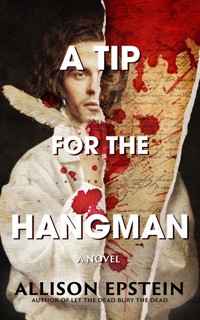
"A Tip for the Hangman is simultaneously moving, unsettling, hilarious, and tragic—a debut that will linger long after the last page is turned." —Kate Quinn, New York Times bestselling author of The Alice Network An impious charity scholar dreaming of becoming a playwright, Christopher Marlowe keeps well clear of politics. Between lingering looks at golden-haired Tom Watson and his own penchant for recklessness, he has enough distractions to threaten his studies already. Then the queen's spymaster arrives at Cambridge, enlisting Kit's help to take down a plot that threatens civil war. With little choice in the matter, Kit begins a secret career in codebreaking, deception, conspiracy, and death. He must deceive everyone around him, from queens to scullery maids, and gain the trust of people he will betray. The horrible fates of the guilty haunt him, even as he delights in the thrill and challenge of the work. But as he risks his life for crown and country, Kit snatches victories for himself as well, writing scandalous dramas that make him the most celebrated playwright in London and chasing a daring happiness alongside Tom. But when a new threat rises just as Kit and Tom are most vulnerable, Kit will be tested as never before… With high-stakes intrigue and effortless immersion into the time period, Allison Epstein translates the story of one of early modern England's most compelling personalities into a novel bursting with humor, anguish, and heart. Praise for A Tip for the Hangman: "Epstein presents Marlowe as supremely capable, something of a trickster, a consummate liar, a fiendish lover – and someone capable of murder . . . The suspense is palpable, as is the sense of doom, as Marlowe finds himself in thrall to a devil's bargain." —The New York Times Book Review "[T]hrilling and romantic . . . Epstein successfully evokes both the beauty and the brutality of 16th-century England." —Historical Novel Society "This is easily one of 2021's best historical fiction books to date." —The Michigan Daily "Stunning. With wit and humor, Epstein expertly weaves in authentic social, political and religious details, creating a compelling and evocative story that soars. Fans of thrilling historical fiction will be highly engaged by this fast-paced read." —Susanna Calkins, author of the award-winning Lucy Campion historical mysteries "Debut author Allison Epstein delivers an absolute tour de force. This masterfully researched, beautifully written novel takes the reader inside the spy networks, taverns, theatres, and halls of power of Tudor England, with the irreverent Christopher Marlowe as our guide. Epstein is a talent to watch!" —Alyssa Palombo, author of The Borgia Confessions "Allison Epstein's imaginative take on Christopher Marlowe is virtuoso on many levels. Her London is perfectly rendered in all its pungence and pageantry. But the double-crossing, the moral ambiguity, and the bloodlust all give fresh legs to a literary mystery that has as much Philip as Kit Marlowe in it." —Lee Irby, author of Unreliable "Anyone who likes Elizabethan bad boys, theater, spies, high intrigue, suspense, and sex is going to be delighted by A Tip for the Hangman." —Delia Sherman, author of The Porcelain Dove "The Christopher Marlowe book we've been waiting for! Here is the sexy, witty, self-destructive genius who can't stay out of trouble, blazing through an Elizabethan period that comes vividly to life in Epstein's well-researched novel." —Ellen Kushner, author of Swordspoint
Sie lesen das E-Book in den Legimi-Apps auf:
Seitenzahl: 570
Veröffentlichungsjahr: 2024
Das E-Book (TTS) können Sie hören im Abo „Legimi Premium” in Legimi-Apps auf:
Ähnliche



















A Tip for the Hangman
Copyright © 2021 by Allison EpsteinAll rights reserved.
Published as an ebook in 2024 by JABberwocky Literary Agency, Inc.Originally published by Doubleday in the U.S. in 2021.
Cover design by Tara O’Shea
ISBN 978-1-625677-43-3 (ebook)
This book is a work of fiction. Names, characters, businesses, organizations, places and events are either the product of the author’s imagination or are used fictitiously. Any resemblance to actual persons, living or dead, events or locales is entirely coincidental.
JABberwocky Literary Agency, Inc.
49 W. 45th Street, Suite #5N
New York, NY 10036
http://awfulagent.com
TABLE OF CONTENTS
Title Page
Copyright
Table of Contents
Dedication
Part I
Chapter 1
Chapter 2
Chapter 3
Chapter 4
Chapter 5
Chapter 6
Chapter 7
Chapter 8
Chapter 9
Chapter 10
Chapter 11
Chapter 12
Chapter 13
Chapter 14
Chapter 15
Chapter 16
Chapter 17
Chapter 18
Chapter 19
Chapter 20
Chapter 21
Chapter 22
Chapter 23
Chapter 24
Part II
Chapter 25
Chapter 26
Chapter 27
Chapter 28
Chapter 29
Chapter 30
Chapter 31
Chapter 32
Chapter 33
Chapter 34
Chapter 35
Chapter 36
Chapter 37
Chapter 38
Chapter 39
Chapter 40
Chapter 41
Chapter 42
Chapter 43
Chapter 44
Chapter 45
Chapter 46
Chapter 47
Chapter 48
Chapter 49
Chapter 50
Author’s Note
Acknowledgments
About the Author
Also by Allison Epstein
To Laura Hulthen Thomas,for setting the scene
PART I
Queen of Fire
OCTOBER 1585–FEBRUARY 1587
GUISE: What glory is there in a common goodThat hangs for every peasant to achieve?That like I best that flies beyond my reach.Set me to scale the high Pyramides,And thereon set the diadem of France,I’ll either rend it with my nails to naught,Or mount the top with my aspiring wings,Although my downfall be the deepest hell.
The Massacre at Paris, 2.40–47
One
Without tobacco, Kit knew, he would never survive Cambridge. The university would have destroyed him otherwise: the relentless pace, the always-rising stakes. One arcane lecture after another, endless pages of Greek readings that became no less bewildering with time. And beneath it all, the pervasive fear of falling behind, of falling to pieces, of publicly confirming what the fellows all privately believed: that whatever scholarship the master of the college had conferred upon him, Kit Marlowe didn’t belong here, should never have come. But once a wisp of smoke curled up in his lungs, none of that mattered. At least for the night.
Tobacco unwound his nerves like a worn shirt, turned soft and loose, trailing easy threads to nowhere. It changed nothing, of course. Kit’s presence at Corpus Christi College remained as provisional as ever, the fellows’ condescension as irritating. But as the smoke drifted between his lips and up to the ceiling, a shimmer in the setting sun, that seemed peripheral, manageable even. He settled against the bedpost with a sigh. Through the haze, his room felt more like Elysium than the half-furnished dormitory of a master’s student.
Particularly given the company.
Tom slouched on the other end of Kit’s bed, his back against the wall beside the window. Leaning sideways, he grasped for the dark glass bottle resting against Kit’s thigh. The movement brought him into the beam of sunlight and made his almost-silver hair shine gold. His outstretched fingers missed his target by half an inch.
“Come on,” Tom said, voice strained with the stretch. “Don’t make me beg.”
When Kit passed the bottle over, the ends of Tom’s fingers brushed Kit’s palm, causing a momentary thrill that Kit tried hard not to think about. Tom took a healthy swallow, then grimaced and looked at Kit as if he’d been tricked into drinking piss.
“God’s blood, this is terrible.”
Kit laughed. Tom was more right than he knew. “You want better, you buy it,” he said, letting his next drag linger.
He expected Tom to resume his former slouch against the wall, now he’d realized the bottle wasn’t worth sharing, but Tom, intentionally or not, had instead moved closer. He sat with one leg bent to his chest, his biceps on his knee, watching the bottle with suspicion. With his back against the window now, the light cast his face in shadow but illuminated his edges, making him look like a fresco or a gilded saint. There remained less than a foot between them. If Kit hadn’t known better, he’d swear Tom was doing this on purpose, just to toy with him. He couldn’t think straight like this.
“Do you know what this tastes like?” Tom said, addressing the bottle.
Kit did. He grinned. “Salvation?”
Tom blinked. “Communion wine,” he said. “Honestly.”
“God’s blood indeed,” Kit said. He ducked the half-hearted blow Tom aimed at his head. “If Rector Harvey doesn’t notice, what’s the harm?”
“You wouldn’t,” Tom said. “You’re lying.”
“I never.” Kit pressed one hand to his chest in melodramatic offense.
Tom raised his eyebrows.
“All right,” Kit said, ceding the point. “But I wouldn’t lie with you.”
The words had barely left his mouth before Kit wanted to die for having said them. What right did he have to consider himself a poet when he couldn’t even form a sentence to his best friend without courting disaster? His ungodly handsome best friend. The one sitting six inches from him, backlit in gold.
As Tom tilted his head, the shadows on his face shifted, leaving one plane in shadow and one bathed in yellow. “Wouldn’t you?” he asked. “Never took you for a man with scruples. I’d lie with you, if I had to.”
Kit flushed. He didn’t know if this was from embarrassment or something else, and he refused to interrogate the question. Tom’s expression was unreadable, as if he had never heard of such a thing as double entendre.
God and Christ. To be tortured by a preposition.
“I …” Kit began, praying he’d find the end of the sentence once he started it.
The door opened without a knock. Kit swore through a cloud of tobacco smoke and leapt off the bed, widening the distance between them from six inches to five feet. Tom lunged across the mattress and seized the bottle of wine. He’d stashed it between his back and the wall by the time the door opened fully, admitting a copper-haired young man who seemed taken aback by the violence of Kit’s glare. Kit would have given anything not to have this particular student in his room at this moment, but he took a measured sort of hope in noting that Tom looked as annoyed by the interruption as he felt.
“For God’s sake, Nick,” Kit said. “Man invented doors for a reason.”
“Good to see you too, Kit,” Nick said. He pushed past Kit and pulled out the room’s sole chair, straddling it backward. “Tom. I didn’t mean to interrupt.”
“And yet …” Tom abandoned the attempt to hide the bottle and took an exasperated drink.
Kit directed his eyes heavenward. Granted, the evening had been a disaster long before Nick Skeres showed up, but at least that disaster had potential. Leaving the door open—lest Nick forget the way back out—Kit perched on the desk and folded his legs beneath him.
“I thought you were going to town,” Tom said.
“I will,” Nick agreed. “First, Kit is lending me his essay on the Life of Pyrrhus.”
“I am?”
If Kit had ever made such a promise, he had no memory of it, but Nick’s presumption wasn’t surprising. The scholarship that had allowed Kit to attend Cambridge these past five years amounted to a sort of eternal probation. Fall behind and the college would rescind his funds, which would find him out on the street in a week. Nick, knowing this, read Kit’s diligence as a standing invitation to swipe passages from any given essay.
“Yes,” Nick said. He leaned his forearms on the back of the chair and rested his chin on them with an expectant air. “Now, come on. I have places to be.”
“Who is it this time?” Tom asked, without interest. “Susanna? Joan?”
“Eleanor.” Nick winked, which only strengthened Kit’s urge to punch him. “So I’m in a hurry. Let me look at yours, and I’ll be gone in a minute.”
Tom and Kit exchanged a glance. If you really would lie with me, Kit’s side of the glance said, start now, because I intend to lie like you’ve never seen. Tom smiled, a half expression Nick didn’t notice, and nodded.
“I haven’t started,” Kit said to Nick with a shrug.
Nick stared. “This is the essay due in twelve hours, yes?”
“Kit and I are a little behind,” Tom said, picking up the lie.
Kit nodded, with a stab at a self-deprecating smile. Self-deprecation was well out of his range, usually, but at a stretch he could fake it. “We were settling in for a night of Greek and—”
“Wine and tobacco?” Nick frowned, looking from the bottle in Tom’s hand to the pipe in Kit’s.
Kit’s liar’s code was predicated on a single rule: conviction. People believe a confident liar before they believe a nervous honest man. “Yes,” he said, without missing a beat. “Call it inspiration.”
Nick scowled. His chin slumped down farther until his arm obscured the bottom half of his face. “Don’t do this to me, Kit,” he said, voice muffled from within his own elbow. “Just let me copy out the less-brilliant bits. I’ll pay you, if that’s what you want.”
Kit felt his shoulders tense without meaning them to. Money. That was all gentlemen’s sons like Nick thought about. As if Kit’s mind could be whored out for two groats a night because his father made shoes. Cambridge life had changed him after all: not long ago, he’d have punched Nick for the insinuation.
“I don’t want your money,” Kit said. “If you deserved help, I’d give it.”
Tom, the tips of his ears reddening, had found something fascinating on the back of his left hand. Kit wanted to believe his discomfort came from sympathy, but it was more likely that Tom wanted a graceful way to exit before this sniping devolved into a genuine fight.
“I—” Nick began.
Tom raised a hand, cutting him off. “Listen.”
Through the open door, rapid footfalls sounded against the stone beyond. Someone was coming. Someone with a purpose, judging by the pace, and someone close.
For God’s sake. The smoke must have drifted through the open door. If Nick got them expelled, Kit’s ghost would haunt Nick’s across the centuries. “Open the window,” he said.
Tom twisted around to fling open the window, while Nick snatched the bottle from him and dropped to his knees. He nearly vanished beneath the bed, re-emerging empty-handed seconds later. Kit leaned over and thrust the smoking end of his pipe into the washbasin. The scent of cheap tobacco languished on the air. He coughed, clearing smoke from his throat.
“Kit,” Tom said sharply. Paler than thirty seconds ago, he nodded over Kit’s shoulder.
Kit turned. Then he came to a quick and vibrant conclusion: either he was dreaming or he was about to be expelled.
A tall, gray-haired man in scholar’s robes now stood silhouetted in the doorway. His severe Roman face was expressionless beneath his precise beard, which retained more black than his hair. His impeccable posture gave the impression that his spinal column had been replaced with a lance.
Kit pushed himself off the desk. “Master Norgate,” he said. Whether shock or fear made his voice crack was anyone’s guess. At twenty-one, he thought he’d outgrown that, but there were surprises to be had every day.
“Skeres. Watson.” The head of Corpus Christi College nodded at Nick and Tom in turn, then fixed his light brown eyes on Kit.
Kit could count on one hand the times he’d spoken to Master Norgate in person. It wasn’t the master’s nature to mingle with students while they drowned in a sea of Pliny and Virgil. He was elusive, appearing for ceremonial purposes only. The fact that he stood here now could mean many things, none of them good. Opening the window had done nothing to dispel the drifting haze of tobacco.
Norgate’s lips narrowed. “Marlowe, if you would follow me.”
It wasn’t a request. “Yes,” Kit said, unnecessarily. “Of course.”
He looked to Tom in a wordless plea for help and received a sympathetic wince in return. It was touching that Tom Watson cared whether Norgate had Kit murdered and thrown into the river, though admittedly it was more touching than helpful. But everything would end for the best, if Kit could maintain his composure. There was no reason to be afraid. He’d done nothing wrong.
There, if anywhere, was a lie for the ages.
Norgate ushered Kit down the hall toward the outer courtyard, walking fast and in silence. They passed the chapel, long emptied of stragglers from evening services. Two or three servants remained within, sweeping down the slate floor before the next morning’s call to prayer. The setting sun streamed through the leaded windows to carve out jeweled shadows across the floor. It gave the servants the look of figures in a mosaic, Byzantine and impersonal.
“Marlowe, once,” Norgate said, rounding a corner. “Just once, I would appreciate not having a vague sense of malaise where you are concerned. Do you think you can manage that?”
“I don’t know what you mean, sir,” Kit said, lengthening his stride to keep up. It wasn’t easy—Norgate towered eight inches above him. “Unless it’s the chapel wine, in which case—”
Norgate frowned. “What wine?”
Ah. Damn. “I have no idea.”
The master sighed. “Marlowe, I’m trying to help you. I’ve taken a liking to you, against my better judgment.”
Kit stared. Well, that was certainly news. Although then again, perhaps there was something to it. Corpus Christi accepted two poor scholars a year at most, perhaps only one in a lean term. For Kit to walk through these doors—let alone with funding for both an undergraduate degree and the master’s he’d complete in seven months—Norgate must have taken some sort of interest. There was a world of difference, though, between an interest and a liking.
“There’s no reason to look surprised, Marlowe,” Norgate said testily. “Why did you think I let you in at all?” The master had sped up, somehow.
“Some sort of penance, I thought, sir,” Kit said.
Norgate ignored this. “I remember your application. It isn’t often a boy of sixteen submits something that remarkable, and Master Seymour tells me you haven’t disappointed. Your skills in rhetoric and disputation are stunning, if morally flexible.”
No secret what that referred to. Two weeks ago, Master Seymour, dean of poetics, had pitted Kit against a fourth-year master’s candidate to debate the spiritual imperative of a celibate clergy. Kit, assigned the affirmative position, bested Francis Masterson in two minutes. When Masterson whined that Kit’s obvious position gave him the advantage, Kit flipped sides without missing a beat and spent five minutes explaining why England’s priests ought to fuck widely, loudly, and well. His logic had been impeccable, though Seymour sighed like the north wind when he awarded Kit victory.
“Your writing, too, is exceptional,” Norgate went on. “Leaving you in the care of an illiterate shoemaker who spends half the year in prison would have been a crime.”
Kit clenched his fists to keep from speaking. Leave it to a Cambridge master to conceal an insult in a forest of compliments. Granted, Kit owed Norgate everything, and the master hadn’t said anything Kit hadn’t heard before, or said himself a hundred times. But calling your own father an ignorant peasant was one thing, hearing the head of the college do it quite another. If this was Norgate’s attempt to remind Kit to stick to his place and be grateful, he didn’t need to hear it. Why bring up …
Oh. That was why.
God damn it all. Not again.
Likely—more than likely—his father’s drinking and debts had caught up with him, landing him back in debtor’s prison. But what could Kit do about it? Leave Cambridge and plead John Marlowe’s case before the court, as he’d done as a schoolboy in Canterbury? Manipulating a magistrate wasn’t the glorious purpose he’d envisioned for his new-lauded skills in rhetoric.
Norgate stopped walking. Though he’d never stated their destination, Kit supposed this must be it. He glanced at the closed door between them and identified it with a despairing lack of surprise. The master’s office. This could not end well.
“I know prudence is not your best quality, Marlowe,” Norgate said, “but please do not do anything stupid.”
So saying, the master turned and knocked three times on the office door. Kit barely had time to consider the strangeness of it—under what circumstances did a man knock on his own door?—before a voice Kit didn’t know answered from inside.
“Come in.”
The two men looked at each other. While the master was not the companion Kit would have chosen for such a meeting, he dreaded entering that room alone.
Kit stepped into the office. The latch clicked as Norgate closed the door behind him.
Two
Kit had never been inside the master’s office. Though he’d accumulated a considerable number of offenses at Cambridge, they had always been minor enough for the fellows to arbitrate themselves. Petty theft. Private blasphemy. Showing up to recitation with the stink of the alehouse on your breath, wearing the same clothes as the day before. It took something more to earn a summons to this office, something irreversible.
The room looked no different from any other modest study. Dark walnut bookshelves lined the walls, packed with volumes in Greek, Latin, and German. Two tall windows divided the shelves on the far wall. They opened onto a view of the green, where three first-form boys tossed a tennis ball in the dying light. Before the window stood a large oak desk, leafy vines carved around the legs and into the sides. Kit could imagine Norgate reading Petrarch’s sonnets there, or annotating a Latin sermon. A scholar could be happy here, away from the daily irritation of academic affairs.
But instead of Norgate, a strange dark-eyed man leaned his elbows on the desk. Short hair inclining toward gray, beard fastidiously trimmed. Hands folded before him in a poor imitation of patience. His eyes, black rather than brown, turned down at the corners like a greyhound’s. Kit knew the look in those eyes well enough. It was the look he saw in accountants and lawyers who frequented the same taverns as Cambridge’s students, men who made their fortunes on slipped figures and miscalculations. Those eyes knew more about him than he had any cause to expect, or any reason to doubt.
“Sir,” Kit said, and bowed.
“Marlowe,” the man said. His heavy brow and low forehead lent him an air of permanent disapproval.
“Yes, sir.” Kit rose and glanced at the chair in front of the desk, but the man gave no indication he might sit.
“Do you know why you’re here?” the man asked.
“No, sir,” Kit said. Yes, sir. No, sir. In twenty seconds, this stranger had done what five years of university studies could not: he’d taught Kit manners.
The man pressed the tips of his fingers together and pointed the resultant triangle at his audience of one. “My name is Sir Francis Walsingham,” he said. “Royal secretary to Her Majesty Queen Elizabeth.”
“Oh.” And here Kit was, fingers stained with ink and clothes smelling of tobacco. Norgate might at least have given him a hint.
What in God’s name had his father done to merit the attention of the queen’s secretary? Kit couldn’t imagine. John was a rat, he’d be the first to admit it, but a lioness didn’t concern herself with rats without good reason. His mind raced with possibilities, each more absurd than the last. Smuggling. Blackmail. Murder. Kit had just escalated to sedition when Walsingham spoke again, severing his thoughts.
“My time is in high demand, as you can imagine,” he said. “So you may take my presence as a sign of how seriously I regard this matter.”
The uncertainty was more than Kit could stand. If he needed to negotiate John’s escape from prison, or the Tower by the sound of it, he wanted to know the worst. “Sir,” Kit said, “I swear, if my father has—”
Walsingham raised his eyebrows. Kit fell silent. With that one gesture, he knew he was fathoms out of his depth. “What the devil does your father have to do with it? My concern is with you.”
Him? Kit was a student. A poet. The son of a shoemaker. To the queen and those who kept her counsel, he was nobody. A nuisance, maybe, but monarchs didn’t send their secretaries across the country to condemn nuisances. Walsingham must be looking for someone else. William Morley, that third-year undergraduate whose father hunted deer with the lord mayor of London. Anyone.
“You must be mistaken, sir—” Kit began.
“It’s my job not to be mistaken,” Walsingham said, cutting him off. “You are Christopher Marlowe. The eldest son of John Marlowe, second-rate Canterbury cobbler. A poor scholar at Corpus Christi in your fifth year of study. Skilled in rhetoric and disputation, disgraceful in geography and geometry. You’ve been smoking all evening and hoped I wouldn’t notice. And you are no fool, so do not pretend to be.”
Kit stared. His mind had stopped providing thoughts germane to the situation. By the light of Christ, what did this man want?
“How much do you know of the royal secretary’s duties?” Walsingham asked, ignoring Kit’s evident shock.
Direct questions with simple answers were all Kit could cope with at this juncture. “Exactly as much as I should, sir,” he said, “and no more.”
Walsingham gave him a withering look. “Don’t be clever. In addition to my public duties as Her Majesty’s head of state, I am engaged in more sensitive matters. And that,” he said with finality, “is why I asked Norgate to bring you to me. Between the ripples from Bartholomew’s Day and the growing nest of Jesuits within our borders, we are spread thin enough. I can no longer afford to be discriminating in my choices.”
There was an insult in the phrase, Kit was certain, but he hadn’t grasped the situation well enough to be offended. He willed himself to stop fidgeting.
Though he had no idea what Walsingham meant by my choices, the first half of the phrase was clear. Kit’s evenings in the White Stag with a smoke and a knack for eavesdropping had been as instructive as those in the library with Tacitus. The massacre of Saint Bartholomew’s Day was more than a decade in the grave, but the taverns of both Canterbury and Cambridge still buzzed with stories of armed Catholics filling the streets of France with burning corpses. It was only a matter of time, or so the tavern rumors claimed, before England’s Jesuits and papists took up arms and did the same. Kit listened to these stories with the interest of a theatergoer, not the concern of a loyal subject. The idea of armed religious zealots, though alarming on its face, had nothing to do with him. As for personal belief, Kit’s primary spiritual conviction was that any god who began services at six in the morning was too cruel for a sane man to worship. But Kit’s spiritual convictions didn’t seem to interest Walsingham.
“My informants have provided thorough and reliable suggestions about papist movements within our borders,” Walsingham said. “But—”
Wait. Informants?
“I’m sorry, sir,” Kit interrupted. Walsingham’s greyhound eyes widened a fraction. Astounded, perhaps, that Kit had dared. “Are you telling me—”
“That I am Her Majesty’s spymaster?” Walsingham interrupted, as if to say, See how you like it. “Yes, Marlowe. That is what I’m telling you. Do keep up.”
Walsingham had still not offered Kit the chair, but if he dropped one more revelation of that nature into this conversation, Kit’s knees would give out on their own. Spies. Double-dealing. Lies and half-truths. Papists and massacres. It sounded like madness.
“I don’t understand,” he said, tasting the sharp bitterness of understatement.
The corners of Walsingham’s mouth inched upward. In other men, it might have been a smile. Here, it was a geographical rearrangement of facial features. “As the Catholic threat grows,” he said, “we have more enemies than I have agents to monitor them. And each time we eradicate one, ten more take their place.” He raised one finger for each name as he spoke them. “Robert Southwell. William Stafford. Henry Garnet. The list,” he said, abandoning the count with a curt wave of his hand, “continues. And so we have begun turning to the universities to recruit. Intelligent, discontented young men with farcical and expensive degrees, facing poverty and uselessness. I’m sure you understand.”
It was not the most diplomatic opinion ever voiced about a university education, but diplomacy had been thrown out the window five minutes ago.
“When I asked Master Norgate to recommend a student who might serve, he spoke of you at length. Of your ambition. Your persuasive rhetoric. Your inability to follow basic rules of conduct, manifested everywhere from the chapel to the alehouse.”
Kit stayed silent, unsure of the proper response. It was decidedly unclear whether Walsingham intended this as a compliment or an insult.
“I don’t wish to interfere with your education.” Walsingham made the word sound like a crude bodily function. “But in addition to your work at Cambridge, I am proposing further employment.”
To hell with it. Kit gripped the back of the chair in front of him. Nothing else would keep him upright. Maybe the tobacco had been headier than he thought. There was no other way to explain what he’d heard. “You want me to be a spy, sir?”
To his alarm, Walsingham did not correct him. “You will have time to prepare for your first operation,” he said. “My associate will brief you before you are dispatched.”
Kit flinched at the word dispatched—in it, he heard the swish of an axe. He hadn’t forgotten the Jesuit Edmund Campion’s execution, or how the Catholic conspirator Francis Throckmorton’s eyes were said to have roved for half a minute while his head lay two feet from his neck. It was treason Walsingham sought out. Condemning men to the Tower. The metal rolls of the rack, coated with copper rust. The creaking branch of the gallows. Iron pikes on London Bridge, entering one end of a crimson-stumped head and soaring out through the crown. This was the world Walsingham proposed. This was a world men died in.
“Sir,” he began, “I think, I, I’m not …”
Walsingham’s look was that of a demon told in the midst of brokering for a man’s soul that his customer wished to seek a second opinion. He paused, during which time Kit forced himself to stop stammering. “I understand,” he said at last. “It is a great deal to absorb at once. And with so much at stake, I do not wish to employ an ambivalent man.”
Kit tried and failed to meet Walsingham’s eye. Instead, he looked out the window, at the shadows drowning the courtyard as Walsingham continued speaking.
“I will give you time to consider. But under no circumstances will you speak of this meeting to anyone. My associate will contact you in the next few days. Once you have met with him, we will discuss how to proceed in this business.”
Business. Was that the word for it? Perhaps to Whitehall. When was the last time a courtier said what he meant? Honesty paved a sure path to the scaffold, everyone knew that. Lies were sterling, misdirection more valuable than gold. Business. Perhaps.
“Here.”
The sound of five gold coins striking the desk drove all other thoughts from Kit’s mind.
Gold crowns sounded different against wood than silver. Their echoes were louder, more persuasive. Kit had never seen so much gold in one place, and he had no doubt that, to Sir Francis Walsingham, these five crowns were nothing. He looked to Walsingham for clarification. Walsingham absorbed Kit’s shock without shifting his expression.
“Consider this an advance,” Walsingham said. “In expectation of services rendered.”
It never occurred to Kit to refuse the money. It chilled the inside of his palm as he swept it up. An advance. Five crowns. And how much would a scholar earn in a year? How much would a shoemaker?
“You may go,” Walsingham said.
His attention had already passed to a sheaf of papers resting on the desk. Kit’s mute bow went unnoticed.
* * *
Alone in the corridor, Kit leaned his back against the closed door. He felt light-headed, as if he’d run five miles instead of walking fifteen feet. Without thinking, his hand traveled to his thigh, where Walsingham’s five crowns weighted his pocket. He could still see their brazen glint on Norgate’s desk, the queen’s etched portrait watching him with her golden glare. Shoemakers’ sons didn’t receive crowns, let alone pledge loyalty to a head that wore one. What kind of service could he offer, a man like him?
The door behind him felt too near, the mouth of a cave with a sleeping wolf inside. Kit shivered and began the slow walk back to his dormitory. His steps echoed through the deserted halls. Had it always been so silent? Had Corpus Christi always been so small? The first day he’d walked through the university’s doors, it had seemed like a palace. King’s School, his grammar school, could have fit inside its walls six times. But Walsingham had pulled aside an invisible curtain, revealing a world of impossible size and a host of eyes watching him from the dark.
And why not?
He paused outside his door, hand halfway to the handle. Walsingham’s proposition, overwhelming at first, had taken several minutes to penetrate, but it had done so now. Why not him? Who else, here? Hadn’t Norgate said …
Norgate. That was something else. How long had the master been watching Kit, judging, evaluating, before writing to Whitehall and putting the game in motion?
Too many questions for one night. He would answer none of them haunting his own room here in the corridor. He opened the door and stepped into the room, darker now as the sun sank lower.
Tom and Nick looked up at his entrance. Kit winced. He’d forgotten he wouldn’t be alone, and the thought of navigating this conversation without revealing what had happened was exhausting. He couldn’t tell them a word, but it was all he wanted to do, to have someone else share the whirling disarray of his thoughts.
He took a deep breath, then let it out. Two seconds, to stitch together some semblance of calm. Judging from the way both Tom and Nick watched him—one with concern, the other with curiosity—two seconds had been both too long and not long enough.
“Are you all right?” Tom asked. He frowned as Kit took up his abandoned seat on the desk. “You look like hell.”
Kit didn’t doubt it. “Fine,” he said, convincing no one. “Tired. A long day.”
“What did Norgate want?” Nick pressed, ignoring Tom’s warning look.
“To discuss my scholarship,” Kit said. The answer came with more speed than confidence. Tom looked at him askance. Some spy he would make, when he couldn’t even lie to his friends.
It was too much. Nick opened his mouth to say something, ask some question, a question Kit didn’t trust himself to answer. Time. He needed time. An hour, two, to think. After that, he could spin equivocations like a Jesuit. But now …
“I’m sorry.” For once, the hitch in his voice played to his advantage. “I’m feeling ill.” It was a convincing performance. Ought to be—the situation did make him feel sick to his stomach.
Tom’s frown deepened. “You’ll find me if you need me?”
For the first time, Kit wished Tom were less kind. “I’m fine.”
“Christ, Tom,” Nick said. “Don’t go on like you’re his wet nurse. If you won’t help me, Kit, I have work to do. Thanks for nothing.” He spun the chair back to face the desk and left. Tom lingered a moment, then followed him without a word.
Empty now, the room seemed darker, smaller. The slanting golden light was supplemented by a sputtering candle someone had lit in Kit’s absence. Probably Nick; Tom knew how little Kit could afford to spend on candles. Before Walsingham and his five crowns, in any case. The evening shadows flickered and wavered, stretched beyond their normal bounds except for an untouched, quivering circle of light around the desk.
The small leather bag of tobacco waited in a drawer, the pipe on the desktop. Sinking into the chair, he rested the bowl against the candle and breathed in the scent of flames catching the leaves. It was a moment for intoxication, but where drink would leave him slow and useless, smoke smoothed the edges of his panic. In its place grew a foggy space of not-quite-calm, not-quite-fear, but something in between, parts of both and neither.
But in addition to your work at Cambridge, I am proposing further employment.
No. He wouldn’t think about that now.
Kit would give anything to silence his thoughts with sleep, but it was only early evening yet, and his mind would not quiet so easily. Years of working late and sleeping later had primed him to be most productive between eleven and three, a fact that drove Tom into fits of almost parental consternation. There were hours yet to fill, and thoughts not to think.
Well, he knew one way to stop thought.
Kit took from the drawer a pen, ink, and a sheaf of paper bearing the messy, blotted beginnings of a speech in verse. With another deep pull of tobacco, he read back through the top page, letting the rhythm of the words slow his thoughts. Almost without thinking, his lips moved to form silent syllables, ghosting the poetry into half life. The play had hovered in various stages of incompletion for years, riddled with problems and gaps. But though he wouldn’t finish it tonight, the act of writing was more important than the result at the moment.
The queen, Walsingham, that could wait until morning. For tonight, he would think of Tamburlaine. Of Persia, Scythia, of flashing swords and blinding sun-beat fields. Of this.
The candle burned lower. Only the drip of wax and the scratch of pen on page broke the silence. The hours passed like tides, and evening turned to night, which slipped away into the weak gray of morning.
Three
Arthur Gregory glanced over his shoulder. The corridor was deserted, all the dormitory doors closed, as he’d expected. He hadn’t chosen this hour for nothing. Five in the morning, when the students of Corpus Christi weren’t expected at morning services until six. Gregory’s hand hovered a moment, a hair away from knocking, before he lowered it again and shook his head. Somehow, he hoped the boy would be expecting him. That he’d be watching the door, alert and waiting, having sensed Gregory’s presence from some slight noise in the corridor. If these young university wits needed warning to know someone was coming, they weren’t the sort of people Whitehall wanted, no matter how dearly Walsingham needed more men.
He entered the room without a sound.
Ah, by the devil’s fiery cock. This was worse than he’d feared.
The young man sprawled on his stomach across the bed, both arms wrapped around the pillow. He might have been dead, if not for the gentle undulation of his breathing under the blankets. One leg dangled off the mattress, his bare foot brushing the floor. At this rate, it would take the opening of the seventh seal to wake him.
He’s young and inexperienced, Walsingham had said, before he and Gregory left London for Cambridge. But the master of the college speaks highly of his potential. I think you’ll find him useful.
Gregory leaned against the closed door and scowled. Useful. If England’s universities could produce no better than this, Her Majesty should shut them down like her father had the monasteries. So much for the glorious superiority of the learned. Drunk men slept like this in half the public houses of London.
Well, he thought, make do with the useless shit the Lord provides.
Gregory coughed. The boy shifted and mumbled something but didn’t wake. A dozen sheets of crumpled paper littered the floor, cast aside in frustration sometime during the night. Gregory stooped down, picked one up, and pitched it hard at the sleeping boy’s head.
His aim was excellent.
The boy jerked upright with a gasp, the blanket fluttering down to his hips. Horror replaced confusion as he realized he sat in bed, naked to the waist, in the presence of a total stranger. He seized the blanket and yanked it back up, scanning the dim room for his clothes.
Walsingham paid Gregory well, but not nearly well enough for this.
“Good morning, Marlowe,” he said.
Marlowe located his shirt, balled up on the floor, and pulled it over his head. “What time is it?”
“Is that really the question you want answered?”
He could see the laborious process Marlowe underwent to string a thought together—not a morning person, it seemed. Marlowe combed his fingers through his hair in a doomed effort to salvage his first impression. “Who are you?” he tried again.
“Arthur Gregory,” he said. “Here at Walsingham’s request.”
This was the nudge Marlowe’s brain had needed. He rose from bed and stepped into his boots. To Gregory’s profound relief, he had slept in breeches. “Pleasure to meet you, sir.”
“I wouldn’t be so sure.” Gregory turned toward the door. He could sense Marlowe’s hesitation, trying to screw up the courage to follow. If there was one thing Gregory didn’t have patience for—though truth be told there were several—it was hesitation. “Come on,” he said. “Unless you want to explain me to the rest of Cambridge when they wake.”
The boy might be a disappointment, but at least he could follow orders. With Marlowe on his heels, Gregory left the room.
God’s blood, Walsingham, he thought. I hope you know what you’re doing.
Four
From Gregory’s diction, Kit knew he wasn’t a Cambridge man, but he knew his way around the college as if he were. Within five minutes, Gregory in the lead, they reached the green and started north toward town. Maybe that was a required skill for a spy: locating and employing the nearest exit. It seemed like a bad omen in Kit’s view.
Kit chanced a glance back over his shoulder at the college. Corpus Christi loomed above, a disapproving monument glaring daggers into his back. Its two steeples stood erect on either side of the hall’s enormous window: twin guardians of the college, like two professors flanking a lecture hall. Its brown stone and clear glass were beautiful, in their own oppressive way. In that moment, Kit would have given anything to go back. At least there, he knew where he stood.
Gregory led him across the river Cam and into the aptly named Magdalene Street, leaving Cambridge’s academic buildings behind. Kit frowned, following. Even with his limited understanding of royal protocol, he’d expected their destination to be somewhat less …
Well, less surrounded by whorehouses.
A woman in a low-cut dress whistled at Kit and Gregory from an open shop window. Kit looked away. It was too early for this. Surely a man could pretend to be virtuous at least until seven.
He swallowed his nerves. “Are you lost?” he asked.
Gregory gave the woman in the window a rude one-handed gesture. “Do I look it?”
They continued their gradual drift north, the stagnant smell of the river faint in the distance. Here, the buildings leaned over the road, heavy wooden signs and rough-shingled awnings deepening the shadows. Fetid water pooled in the gutters, bringing a scent of decay and algae to mix with the musk of whole hogs’ heads leering at passersby in the butcher’s window. It was not yet six in the morning and a Thursday besides, so the district was empty of its traditional drunks, gamblers, and prostitutes, but their ghosts still haunted these streets.
Kit looked at the house before them and cocked his head to one side, considering. The White Stag was an unconventional choice for an early meeting, but he saw the utility of it. In its back rooms, a man could count on being left alone. That is, unless he paid for company.
“Kit!”
The call sounded before Gregory closed the door. Kit grinned, a scrap of confidence returning. Being on first-name terms with the matron of Cambridge’s least-reputable tavern might not be the best impression he could make on an associate of the royal secretary, but her voice was familiar, and in a world gone as mad as this, familiarity meant a great deal.
“Mistress Howard,” he said. “Radiant as ever.”
She crossed the room toward them, an older woman with coarse gray hair and the canny look of a merchant. “So you’re my early morning appointment?” she said, laughing. “As I hope to be saved, I expected someone important, from the way this fellow went on,” she added, jerking her thumb at Gregory.
“I live to disappoint,” Kit said.
“That’s as may be, but you haven’t come round to disappoint my girls in ages.” Mistress Howard regarded Gregory with mild interest. “Is this fellow more your type these days?”
“Mistress Howard, we’re here on business,” Gregory said, very red about the ears. His enunciation seemed to sharpen as his embarrassment did. “You promised me that Marlowe and I could have some professional intercourse without being disturbed.”
She gave them a knowing smile. “Right you are. We’ve a private room round the back, and there’s no judgment in my house. You’re welcome to carry on with your … intercourse.”
Kit dissolved into laughter, earning a glare from Gregory. Ah, well. Some things couldn’t be helped.
Without a word, Gregory turned from the tavern keeper, Kit trailing behind, and entered the small room she’d indicated behind the bar. Nothing much: a dirty-looking bed, an uneven table and two chairs, a window with the shutters closed and locked. Gregory shut the door and faced Kit with potent disgust.
“Do you always draw so much attention to yourself?” Gregory’s voice made up in venom what it lacked in volume.
“It’s a curse,” Kit said, straight-faced. “What kind of intercourse did you have in mind, exactly?”
If Kit had been wondering where the line was, he’d found and crossed it.
Gregory strode to the table and sat down heavily. “A piece of advice, boy,” he said. “The only people who succeed doing this job are the ones who shut up and keep their heads low. Do you know why?” He drummed his fingers against the table, subdividing his pointed silence. Kit said nothing. “Because if the wrong person learns your name, your face, and your business, you’re dead.” Gregory’s full hand dropped on the table at the word. The resultant thud was quiet, but it made Kit flinch nonetheless. “You want to stay alive? When you enter a room, you’re furniture. Decoration. Empty air. Understood?”
Kit inclined his head. “Perfectly.”
He took the chair opposite Gregory, feeling not unlike a swordsman at a duel. Something to remember in the future: never come to a meeting with a spy unarmed. With a curt movement, Gregory removed a page from his doublet and pushed it across the table. Kit hesitated.
“What’s this?” he asked.
“The terms of your service.” Gregory took pen and ink from the drawer. “Should you agree to them.”
Kit took the page in one hand. Under Gregory’s cold, mocking eyes, he fought to swallow the panic pooling in his throat. He took a deep breath, which caught on something as he exhaled. This was mad. Dangerous. More than dangerous. Stupid. A spy? Him? Walsingham thought Kit was qualified, but Walsingham had known him for less than ten minutes. He’d be dead in a week.
But then Kit thought of the money. Of Nick’s casual disdain, of the insults the fellows slipped amid their praise, of the holes in his shoes. If he wanted to make something of himself—move to London, take his poetry out of his dormitory and onto the stage—how would he do it? How could he, with nothing but a useless degree and more ambition than prospects?
And the men Walsingham tracked were traitors. Threats to the crown. Now wasn’t the time to come down with a conscience. What were a few lies, to build a future?
“Marlowe?” Gregory prompted.
It was one thing to make a decision, another thing to sign to it. Anxiety rising, Kit gripped the side of the chair for balance. A jutting nail pressed hard against his palm, the sharp pain keeping him focused. A wild image of Saint Francis of Assisi flickered through his mind. If this was God’s sign that he, too, was destined to suffer, he hardly appreciated the creativity. The least-devout stigmata he’d ever heard of.
Don’t think, he told himself. Do it. Heart racing, hand steady, Kit scratched a slanted signature across the bottom of the page.
Gregory nodded. The distaste in his expression had not less-ened. Kit suspected Gregory had hoped he’d lose his nerve and refuse the commission, leaving Gregory free to seek out someone else. Older, more experienced—someone Gregory wouldn’t roll his eyes at like an ungovernable child. Well, that decided it. Kit would do this job, and he would do it well, if for no other reason than to wipe the sneer off Arthur Gregory’s face. It wasn’t a noble motive, but great achievements didn’t always require noble motives. Just look at the Church of England.
“Right,” Gregory said. “Now then. To business.”
* * *
Walsingham’s spies usually received two months of training, Gregory explained. An immersive program, often overseen by Walsingham himself. But the queen’s agents were short of men and pressed for time, so Gregory was forced to abridge. Two weeks, not two months. It wasn’t ideal, but then, as Gregory enjoyed reminding him, choosing Kit hadn’t been ideal either. They’d make do.
Kit and Gregory met in the back rooms of the White Stag daily, at unpredictable hours. Though less reputable than Cambridge’s trivium and quadrivium, their curriculum was no less rigorous. Gregory drilled Kit in basic codes and ciphers. How to open private letters without disturbing the seal. Lock picking—though Kit had known that since he was seven. Names and facts and state secrets, all spilling one after the other. Practical applications as well. One Friday evening, Gregory set Kit a test: eavesdrop on the room where the house’s whores took their clients, then report every word to Gregory without notes. Attention, memory, and silence, the spy’s trinity. In this manner, Kit learned more about Nick Skeres and the fair Eleanor than he’d ever wanted to know. He couldn’t meet Nick’s eyes for days.
One morning, early, they convened in their usual room. Kit leaned against the wall, arms folded and one leg crossed over the other. Gregory stood a few feet off, firing conversation like cannonballs. He’d switched languages three times in ten minutes: English to Dutch, Dutch to French, French to German, without pause or warning. Where he’d learned them, God knew. In the field, maybe. Gregory sounded too harsh and too fluent for classroom learning. The idea of the exercise was to test Kit’s suitability for foreign deployment, but it felt like a cruel joke. It was seven in the morning, and Kit hadn’t dealt with German declensions in years.
“No one will ever believe you, with a German accent that poor,” Gregory said in perfect Greek.
Kit stared. Unless his first mission was to assassinate the ghost of Socrates, what would he need with Greek? Besides, Kit’s Greek was rusty, as his recent marks in philosophy would attest. “I’ll remember that next time I’m around a judgmental German,” he said, conjugating abysmally.
Gregory, not listening, threw a punch straight at Kit’s head.
Kit didn’t think. His body moved by itself, lunging sideways and out of range. He watched his own hand fly up, catch Gregory by the forearm, and twist, wrenching the arm behind Gregory’s back. Though half a foot taller and two stone heavier, Gregory yelped, both in surprise and pain.
Kit was as surprised as Gregory. He let go, breathing hard. “What in hell was that for?”
Gregory shook out his arm. “Making sure you’re paying attention,” he said. His voice had regained its usual pitch. “Your enemies won’t give warning either. Your reflexes are good.”
“They should be,” Kit said. He’d spent sixteen years in his father’s house, waiting for John to stumble home drowned drunk and angry. Kit—small, bookish, and insolent even then—had made an easy target for his father’s fists. At this point, he certainly hoped he knew how to duck.
“Don’t get too confident,” Gregory said, still in Greek. “Confidence has killed better men than you.” But a change had come over the spy’s face. Not in his expression, but somewhere beneath it. Kit smirked.
Gregory, for the first time, was impressed.
* * *
It went on this way for two weeks, enough time for Kit to fall into a rhythm. If intelligence work was no more than this, a series of endless drills and isolated tests, it might be the right path for him after all. He’d always been like this: no interest at all in subjects he couldn’t see the practical use of, but once he set out to learn something he’d work night and day to master it, and if someone suspected he couldn’t do it he’d work twice as hard. It brought a sense of petty satisfaction, watching someone who doubted you adjust their expectations. Yes, if it had continued like this, it might even have been a pleasure.
But he’d known, really, that this part wouldn’t last.
Two weeks after their first interview, Kit strode into the White Stag and made directly for their usual back room. Mistress Howard didn’t look up as he passed; even the most curious practices became routine with enough repetition. Usually, Gregory would greet him with a silent nod or a terse insult, and before Kit had taken a seat would launch into whatever exercise he had planned. Today, though, Gregory was silent. He beckoned Kit over and nodded at the chair opposite. The table between them was empty except for a single piece of paper.
“Congratulations,” Gregory said, and if there was no real enthusiasm in his voice, at least there was no sarcasm either.
“For what?”
“For completing your training.”
Elation and terror blended in the pit of Kit’s stomach. He’d known this was coming, but he’d hoped that when it did, he’d feel as if there was nothing left for him to learn. Two weeks had barely scratched the surface of everything he wanted to know. But then, this was spy work, not a master’s degree. The point wasn’t to drown yourself in theory; it was to take what you knew and use it, fast.
“Both of us will be on our way before the end of the week,” Gregory said. “I have another new recruit in Rheims I need to look after.”
Kit would have laughed if his mind hadn’t been so occupied with the phrase both of us. Rheims was virtually synonymous with the English College: an institution that was part Catholic seminary, part recruiting ground for malcontent recusants trying to bring the pope’s influence back to England. It wasn’t at all surprising to hear that Walsingham had agents in Rheims, but it was something else to hear Gregory admit it, like having Odysseus confirm the trick with the bow and the dozen axes.
“I’m flattered you didn’t think I could pass as a seminarian,” Kit said.
Gregory sighed. “I’m not in the mood for jokes, Marlowe. Point of fact, it’s safest to assume I’m never in that mood. Walsingham and I both knew you wouldn’t have lasted a day with the priests.”
“So where are you sending me, then?”
“To her,” Gregory said, pushing the piece of paper across the table.
Kit pulled the paper forward, bringing it closer in the dim light. To his surprise, the page did not hold another practice cipher or map or list of names. Instead, the sketched portrait of a woman looked back at him. No one he knew. But someone he wanted to.
She was the queen’s age, he thought, or a few years younger. Beautiful? Perhaps not, though she might once have been. Age had spread her features with lines and a softness that looked new, a woman whom time had weathered faster than her years. But even in pencil, those black-and-white eyes gazed straight through him. Sharp. Perceptive.
Dangerous.
“Do you know who that is?” Gregory asked.
Kit shook his head.
“Lady Mary Stuart,” Gregory said. “Once the queen of Scots. You’ll get to know her better than you might like. But ideally not for long.”
Five
“Tom, don’t be angry,” Kit said. He sat on the end of his bed, watching Tom pace the length of his tiny room. The rain tapped against the window in double time to his footsteps.
Tom glared at him. “I’m not angry.”
Kit said nothing. He bit his tongue, letting Tom work through his thoughts alone. If Kit could have told him the truth, maybe then Tom would understand. He’d know that leaving Cambridge in the middle of term hadn’t been Kit’s choice. He’d know that when Arthur Gregory told you to ship out to Yorkshire to spy on the erstwhile queen of Scotland, you didn’t ask him to choose a more convenient time.
But Kit couldn’t tell Tom that. Couldn’t tell him anything but the same lie he’d told Norgate that morning. That John Marlowe had been arrested for disorderly conduct, the kind involving four pints of beer and a pistol. That Kit had to return to Canterbury to settle with the landlord and help his mother negotiate the courts. Lying to Norgate had been simple. For all Kit knew, he might even have been telling the truth. He hadn’t spoken to his father in years; God knew what John had been up to.
Lying to Tom was harder, though. It always was.
“They’ll have you thrown out.” The way Tom stood now, chin high as if preparing to deliver a verdict in court, was not an improvement on the pacing. “It would save them money. And half the fellows hate you. You know that.”
Kit sighed. “Tom. What do you want me to do?”
Tom shook his head and glanced out the window. The freezing drops battered against the pane, soliciting entrance. Not quite snow, not yet, but soon. “Your father’s a hundred miles away. He can’t expect you to take care of him forever.”
“I think you’ll find he can,” Kit said, taking his bag from the bed beside him. He had to leave. He was only making this worse by staying.
“Let me come with you, then.”
Kit froze.
Tom’s startled expression mirrored Kit’s. He seemed as surprised to have said this as Kit was to have heard it. They were close enough now that Kit could see the small hooked scar at the corner of Tom’s eye, an injury from a fencing lesson in adolescence. Not for the first time, Kit wanted to reach out and brush his fingers against it, trace them down to Tom’s lips, those handsome lips Tom now bit in worry. Not for the first time, Kit placed his hands in his pockets instead. It was a friendly offer, he told himself. Nothing more.
An offer no one else at Cambridge would make. An offer he wanted from no one but Tom.
“The road’s not safe after dark.” Tom’s voice gained confidence as he spoke. “And you’re useless with a blade.”
Kit’s social rank forbade him to own a sword, true, but he didn’t need one—he could take most of Cambridge with his fists if the need arose. But though he’d have bristled at the observation from anyone else, that wasn’t remotely Tom’s point.
“I can keep you safe,” Tom finished.
Kit’s mind shuddered to a stop. Nothing remained but Tom’s eyes, dove gray and earnest, and the echo of his words: I can keep you safe. Kit needed to leave, but his body ached to stay, stay and find safety here with Tom in this untouchable space, this little room guarded from the rain.
Don’t, he told himself. He couldn’t afford to think that way. Face burning, he looked to the floor. “I have to go.”
Tom had been Kit’s closest friend since their first year at Cambridge. By now, he could read Kit’s silences like speech. At last, he sighed and stepped to the side, clearing Kit’s path to the door. Kit was halfway out before Tom’s strained voice stopped him.
“Kit.”
He paused, turned back. “Yes?”
Tom hesitated. “Be careful.” This was clearly not what he wanted to say.
Kit couldn’t trust himself another moment. Without answering, he slung his bag over one shoulder and pushed through the door. He didn’t look back.
He strode through the halls with his head down—the same path he’d taken with Gregory three endless weeks before. Five years he’d known Tom. Five years he’d overinterpreted innocent gestures and spun nothings into significance. And now, Tom had …
No, he told himself, and opened the door. A buffet of rain slapped him, but he barely felt it. It meant nothing. He wouldn’t think about that now.
* * *
Soon, Kit burst into the taproom of the White Stag, drenched and piqued. Damn the rain, he thought, shaking his arms in irritation. A shower sluiced off his doublet, puddling on the floor. He looked around and forced his mind to focus.
The White Stag was more crowded than when he and Gregory first met, but that didn’t surprise him. No one expected a public house to do a roaring trade at six on a Thursday morning. Now, on a Friday evening, most of the tables were full. The room glowed with flickering light from the hearth and the thick heat of close bodies and overlapping voices. A handful of men tipped their heads at Kit when he entered, which he ignored. He had spent enough evenings here to run into an acquaintance on any given Friday, but that wasn’t his concern at present.
He stopped Mistress Howard as she bustled past, holding a leather purse from a paying customer. “Did anyone leave a message for me?” he said.
“Your friend arranged a horse for you around back,” she answered. “And also said if you make an idiot of yourself, there’ll be hell to pay. So,” she added, tucking the purse into the bosom of her dress, “I would recommend against that.”
If Gregory reminded him once more not to be an idiot, Kit thought, he might start taking offense.
“Another pint, mistress!” came a voice from across the room.
Heeding her battle cry, she disappeared into the crowd. Each of them had business to attend to. She would remain inside, on the dry side of the soot-stained window. Kit, on the other hand, ducked back through the front door, into the wind.
Adjoining the tavern, the stable was dark, padded with straw dyed a dingy brown from the rain. A groom, wielding a pitchfork against a sizable pile of shit, looked up as Kit entered. “Gregory’s man?” he asked.
Kit nodded. Already a man without a name. That hadn’t taken long.
“You’re late,” said the groom.
“I’m aware.”




