


0,99 €
Mehr erfahren.
- Herausgeber: Metaphorosis Publishing
- Kategorie: Fantasy und Science-Fiction
- Sprache: Englisch
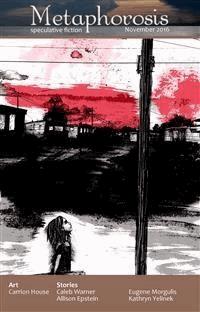
Beautifully written speculative fiction from Metaphorosis. All the stories from the month, plus author biographies, interviews, and story origins. Table of Contents The Cartographer – Caleb Warner My Last Summer at Camp Unterlaken – Eugene Morgulis Pandemonium – Allison Epstein Hearts and Roses – Kathryn Yelinek Cover art by Carrion House.
Das E-Book können Sie in Legimi-Apps oder einer beliebigen App lesen, die das folgende Format unterstützen:
Veröffentlichungsjahr: 2018
Ähnliche


















Metaphorosis
November 2016
edited by B. Morris Allen
ISSN: 2573-136XISBN: 978-1-64076-070-7 (e-book)
Metaphorosis
Neskowin
Table of Contents
Metaphorosis
November 2016
The Cartographer
It came from Caleb Warner
A question for Caleb Warner
About Caleb Warner
My Last Summer at Camp Unterlaken
It came from Eugene Morgulis
A question for Eugene Morgulis
About Eugene Morgulis
Pandemonium
A question for Allison Epstein
About Allison Epstein
Hearts and Roses
It came from Kathryn Yelinek
A question for Kathryn Yelinek
About Kathryn Yelinek
Metaphorosis Publishing
Copyright
Landmarks
Title Page
Table of Contents
Body Matter
November 2016
The Cartographer — Caleb Warner My Last Summer at Camp Unterlaken — Eugene Morgulis Pandemonium — Allison Epstein Hearts and Roses — Kathryn Yelinek
The Cartographer
Caleb Warner
Ursula
The girl returned to the abandoned trailer park with a road sign strapped to her back, a sacrifice for the man in the telephone pole. Cradled by the river, the trailer park sat, rusting. The entrance gate read Green Meadows, but the only green things left were the corroded copper-wire antennas and the piles of old road signs. Nothing truly green could grow in that black, clay-packed soil—even when the spring rains came and flooded the river valley. The soil liked to work its way in-between the girl’s toes and stain the back of her shift a crusted grey. When it dried, the soil smelled like some rotten pond thing, like how dead turtles smell. Now it was summer; the clay had gone to mostly hard-pack, and it was warm against her bare feet.
The girl walked along the lane, kicking a white bit of gravel along with her, banking it off trailer walls and piles of twisting metal signs. In the center of the camp stood the telephone pole. The smiling face of a man peered through the creosote soaked wood. It was half carving, half prism, like the face was trapped there behind the wood.
If one were to have this demon’s view—from above like a bird, as the girl had so often imagined herself—then Green Meadows would look much like the arching back of a cat as its corrugated shanties flowed along with the curve of the river and the slope of the land. One lane pierced the park down its center; a lane that connected Green Meadows to everywhere-else.
The girl walked up to the telephone pole, and in the light of the setting sun, it cast a long shadow across her face.
The frayed steel edges of the street sign nicked her hand as she held it up. A thin trail of blood raced down the rusted metal outlining the words RUBY ROAD. She made no move to clean it. She let it run.
“You took too long, Ursula,” a voice bounced around in her head. She heard it from somewhere behind her eyes, like it skipped her ears entirely. “If you do not return before the sun goes down—”
“I live by your good graces,” she said quickly. She didn’t need to hear it again, but the time away from camp was time for doubt. Ursula wasn’t ready to test her doubt quite yet. Wrapped around her waist, just under her pocketless shift was a hand-drawn map of the river valley with fresh charcoal scratches on it. Her one secret. Ursula tightened her grip on the sign. Her arms were shaking, and the blood on her palms made the metal slippery.
“Leave it with me,” he said finally.
Ursula let out a stiff breath and propped the sign up against the telephone pole. She stood with her head down and her hands folded.
“And?” the voice shook Ursula somewhere down in her stomach. It made her feel dizzy.
“M-my meal?”
“Bad girls don’t get fed.”
Ursula had to bite her tongue to keep her face still. Did he know about the map? “But I brought the sign,” she said.
“Late.”
Ursula made herself breathe.
“The signs are far now … I-I’ll need the food for tomorrow.” It wasn’t a lie. She had never lied to him. It wasn’t the whole truth, though. Ursula would be ranging farther than the closest sign.
The pause was long enough for Ursula to feel the blood start to dry and grow sticky on her palms, long enough for the purple light of the sunset to turn to grey. Ursula didn’t dare look up at the face. She didn’t move at all until it spoke again.
“Fine. In the southeast corner. Off with you.” Then the sun fully set, and a bruised black night consumed the valley. The demon’s face went dark, its malice emptied like a used up inkwell.
Ursula nodded and shuffled over there, keeping her head down and her strides short.
A trailer without a roof, that’s where it had carted her off to for tonight. It had once been bright silver and could comfortably fit two or maybe even three people. Like everywhere else, the trailer was filled with signs, and Ursula was small enough to fit in the middle of it all. In the cleared area lay a can—with its label ripped off—and a can opener next to a dried cow pie and box of matches. The gift. Ursula maneuvered a few of the signs to give her a place to more comfortably sit without fear of injury.
Only when her hand drew a fresh red streak on the trailer wall did she remember the cuts. Ursula left the trailer, went down to the river to wash up. The silty, dark water made the cuts sting but it was better than letting them get infected. Ursula had cut her leg pretty bad once on a sign and didn’t bother with it. A day later she got the chills. Two days and she stopped peeing, but was ravenously thirsty. And the third day Ursula only remembered in small snatches of clarity, everything else fuzzy and distant like an old dream. The fourth day she awoke under the telephone pole without a memory of how she got there, but she was fine, a bit groggy, but the cut on her leg had healed and she was hungry again. She guessed infection must not be deadly, but she didn’t want to go through any of that again.
It wasn’t long after cutting her leg when Ursula had started making the map.
She took a few sips from the river, watching her murky, moon-lit reflection in the water shift and move with the ripples of the current. There was a blurry little girl trapped just under the water there, just like the man in the pole. Ursula could almost reach out and touch the girl, but not quite.
Returning to the trailer, she situated herself among the signs again and lit the cow pie. It wasn’t warm enough to heat the can, so she ate its contents—beans, it was always beans—cold. Ursula had very few memories from the time before Green Meadows, but the memories she did have were hidden in certain tastes or smells or the occasional image. It was mostly taste, though. The beans were that wrinkled person with the bright smile and soft, blue eyes. The smell of burning cow pie was the starry night sky and open fields. They weren’t really memories as much as feelings of memories.
She huddled around that smoldering cow pie, drawing her shift down over her knees, shivering. The cold night made her back hurt, but on clear nights like this, she could see all the stars in the sky. She traced the constellations with her eyes. It helped fight the chill. Big Bear, ladling the black soup of sky into Little Bear that spun round and round on the North Star. The unmoving star always sat right above the telephone pole, no matter where she looked. She wondered what kind of place ‘North’ was and how long it took to get there. Maybe her map would include North. Maybe when it was complete, the map would point straight there.
Ursula became very aware of the paper-thin cloth tucked away under her shift, and she looked at the stars now without seeing them. Though her eyes still drew lines between the bright dots, her mind was drawing the lines of her map. The river. The bridges it crossed under. The lines of roads that lay over the land like a net. And the faded emptiness of everywhere-else, all the places Ursula had never been.




