


9,99 €
Mehr erfahren.
- Herausgeber: Parkstone International
- Kategorie: Geisteswissenschaft
- Sprache: Englisch
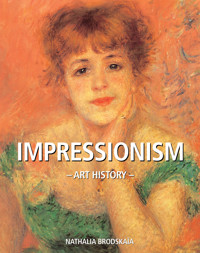
I paint what I see and not what it pleases others to see. What other words than these of Édouard Manet, seemingly so different from the sentiments of Monet or Renoir, could best designate the movement of Impressionism? Without a doubt, this singularity was explained when, shortly before his death, Claude Monet wrote: "I remain sorry to have been the cause of the name given to a group the majority of which did not have anything Impressionist." In this work, Nathalia Brodskaïa examines the contradictions of this late 19th-century movement through the paradox of a group who, while forming a coherent ensemble, favoured the affimation of artistic individuals. Between academic art and the birth of modern, non-figurative painting, the road to recognition was long. Analysing the founding elements of the movement, the author follows, through the works of each of the artists, how the demand for individuality gave rise to modern painting.
Das E-Book können Sie in Legimi-Apps oder einer beliebigen App lesen, die das folgende Format unterstützen:
Seitenzahl: 60
Veröffentlichungsjahr: 2024
Ähnliche
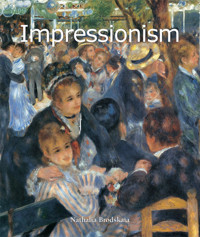

Nathalia Brodskaïa
IMPRESSIONISM
© 2024, Confidential Concepts, Worldwide, USA
© 2024, Parkstone Press USA, New York
© Image-Barwww.image-bar.com
All rights reserved. No part of this may be reproduced or adapted without the permission of the copyright holder, throughout the world.
Unless otherwise specified, copyright on the works reproduced lies with the respective photographers. Despite intensive research, it has not always been possible to establish copyright ownership. Where this is the case, we would appreciate notification.
ISBN: 979-8-89405-009-6
Contents
The Amazing World Of Impressionism: Origins, Practice And Reception
The Artists
Édouard Manet
Claude Monet
Pierre Auguste Renoir
Alfred Sisley
Edgar Degas
Camille Pissarro
Berthe Morisot
List Of Illustrations
Edouard Manet,Argenteuil, 1874. Oil on canvas, 148.9 x 115 cm. Musée des Beaux-Arts, Tournai.
THE AMAZING WORLD OF IMPRESSIONISM: ORIGINS, PRACTICE AND RECEPTION
Impression: Sunrise was the prescient title of one of Claude Monet’s paintings shown in 1874 in the first exhibition of the Impressionists, or as they called themselves then, the Société anonyme des artistes, peintres, sculpteurs, graveurs (the Anonymous Society of Artist, Painters, Sculptors, and Engravers). Monet painted scenes of his childhood hometown of Le Havre to prepare for the event, eventually selecting his best Havre landscapes for display. Edmond Renoir, journalist brother of Renoir the painter, compiled the catalogue. He criticized Monet for the uniform titles of his works, for the painter had not come up with anything more interesting than View of Le Havre. Among these Havre landscapes was a canvas painted in the early morning depicting a blue fog that seemed to transform the shapes of yachts into ghostly apparitions. The painting also depicted smaller boats gliding over the water in black silhouette, and above the horizon the flat, orange disk of the sun, its first rays casting an orange path across the sea. It was more like a rapid study than a painting, a spontaneous sketch done in oils – what better way to seize the fleeting moment when sea and sky coalesce before the blinding light of day? View of Le Havre was obviously an inappropriate title for this particular painting, as Le Havre was nowhere to be seen. “Write Impression,” Monet told Edmond Renoir, and in that moment began the story of Impressionism.
On 25 April 1874, the art critic Louis Leroy published a satirical piece in the journal Charivari that described a visit to the exhibition by an official artist. As he moves from one painting to the next, the artist slowly goes insane. He criticizes the surface of a painting by Camille Pissarro, describing the ploughed field as shavings from an artist’s palette carelessly deposited onto a soiled canvas.
When looking at the painting he is unable to tell top from bottom, or one side from the other. He is horrified by Monet’s landscape entitled Boulevard des Capucines indeed, in Leroy’s satire, it is Monet’s work that pushes the academician over the edge.
Stopping in front of one of the Havre landscapes, he asks what Impression, Sunrise depicts. “Impression, of course,” mutters the academician. “I said so myself, too, because I am so impressed, there must be some impression in here… and what freedom, what technical ease!” At which point he begins to dance a jig in front of the paintings, exclaiming: “Hey! Ho! I’m a walking impression, I’m an avenging palette knife” (Charivari, 25 April 1874).
Leroy called his article, “The Exhibition of the Impressionists.” With typical French finesse, he had adroitly coined a new word from the painting’s title, a word so fitting that it was destined to remain forever in the vocabulary of the history of art.
Responding to questions from a journalist in 1880, Monet said: “I’m the one who came up with the word, or who at least, through a painting that I had exhibited, provided some reporter from Le Figaro the opportunity to write that scathing article. It was a big hit, as you know.”
Claude Monet,Le Boulevard des Capucines, 1873-1874. Oil on canvas, 80 x 60 cm. The Nelson-Atkins Museum of Art, Kansas City, Missouri.
Edouard Manet,A Bar at the Folies-Bergère, 1882. Oil on canvas, 96 x 130 cm. Courtauld Institute of Art Gallery, London.
Claude Monet,Woman with a Parasol – Madame Monet and Her Son, 1875. Oil on canvas, 100 x 81 cm. National Gallery of Art, Washington, D.C.
The future Impressionists believed they were making a clean break with academic painting when they left Gleyre’s studio. Eleven years later, they were developing a new concept of painting as they worked en plein-air (out-of-doors). The time had come to announce this concept, as well as their independence from official art, and to show their canvases in the context of their own exhibition. But organizing such an event was not as easy as one might think.
The Salon’s precepts were extremely rigid and remained essentially unchanged throughout its entire existence. Traditional genres reigned and scenes taken from Greek mythology or the Bible were in accordance with the themes imposed on the Salon at its inception, only the individual scenes changed according to fashion. Portraiture retained its customary affected look and landscapes had to be “composed,” in other words, conceived from the artist’s imagination. Idealized nature, whether it concerned the female nude, portraiture, or landscape painting, was still a permanent condition of acceptance. The jury sought a high degree of professionalism in composition, drawing, anatomy, linear perspective, and pictorial technique. An irreproachably smooth surface, created with miniscule brushwork almost indiscernible to the eye, was the standard finish required for admission to the competition.
Each of the future Impressionists tried, with mixed results, to get into the Salon. In 1864, Pissarro and Renoir were lucky enough to be admitted, although Renoir’s accepted painting, Esmeralda, was considered a critical failure for the artist, who destroyed it as soon as the Salon closed. In 1865, paintings by Pissarro, Renoir, and Monet were accepted. In 1866, all the Impressionists – Monet, Bazille, Renoir, Sisley, and Pissarro – had their works accepted. Pissarro was singled out in a review of the Salon by the young literary figure Émile Zola. The jury of 1867 was harsh towards the young painters: Bazille was rejected and among the many paintings submitted by Monet, only one was selected. The Salon of 1868 nevertheless showed works by all five future Impressionists: Monet, Renoir, Bazille, Sisley and Pissarro. Even so, all of them felt an increasing desire to exhibit out-side of the Salon.
The idea of having a separate exhibition probably came from Courbet’s example. He was the first to actually do it. In 1865 he hastily set up a shelter on the Champs-Élysées near the Universal Exposition with a sign that read “Pavilion of Realism,” sparking strong interest among the public. The future Impressionists wanted to attract attention, too. Even when they found their way into the Salon, their modest little landscapes were only noticed by their close friends.
Organizing an exhibition turned out to be no simple matter: it required money and contacts. In the spring of 1867, Courbet and Édouard Manet each had their own solo exhibitions, after the Salon’s jury refused the paintings that they wanted to display there. Inspired by these examples, the future Impressionists never abandoned the idea of an independent exhibition, but left it to slowly ripen as they continued to work.
Pierre Auguste Renoir,Young Woman Seated (Thought), c. 1876-1877. Oil on canvas, 66 x 55.5 cm. The Barber Institute of Fine Arts, Birmingham.
Claude Monet,




