



2,99 €
Mehr erfahren.
- Herausgeber: Victor Onyebuchi Katchi
- Kategorie: Religion und Spiritualität
- Sprache: Englisch
When the ground itself begins to knock, who can remain silent?
In a convent in Coal City, a satchel of hidden ledgers ignites a storm that stretches from cisterns to courtrooms, from village streets to the marble halls of Rome. Ash falls where incense once rose. Affidavits become scripture. The people learn to keep hours not by bells but by knocks.
Ashes Beneath the Altar opens the Ashes Duology, a sweeping story of witness and mercy. Its companion volume, Where the Ashes Bloom, completes the journey from fracture to fulfillment.
Author Bio (Short):
Victor O. Katchi is the author of the Grace River Trilogy, the Ashes Duology, and other works blending faith, fiction, and justice. His novels trace the battle between silence and witness, where mercy always has the final word.
Das E-Book können Sie in Legimi-Apps oder einer beliebigen App lesen, die das folgende Format unterstützen:
Veröffentlichungsjahr: 2025
Ähnliche










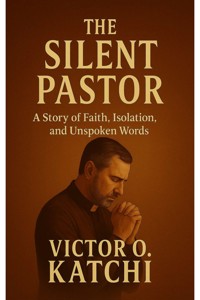
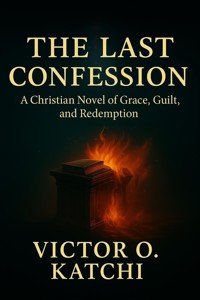

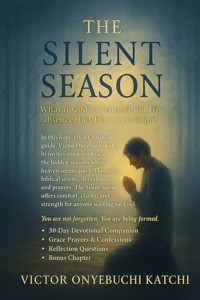
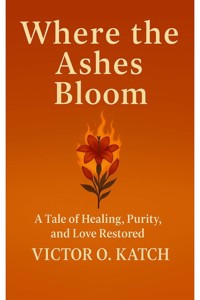

ASHES BENEATH THE ALTAR:A Novel of Witness and Mercy.
By Victor O. Katchi
Copyright PageAshes Beneath the Altar Copyright © 2025 Victor O. Katchi
All rights reserved. No part of this book may be reproduced, stored in a retrieval system, or transmitted in any form or by any means—electronic, mechanical, photocopying, recording, or otherwise—without prior written permission of the publisher.
This is a work of fiction. Names, characters, places, and incidents are the product of the author’s imagination or are used fictitiously. Any resemblance to actual persons, living or dead, events, or locales is entirely coincidental.
ISBN (Paperback): ISBN (eBook):
Cover Design: Victor o. Katchi Interior Design: Victor O. Katchi
Printed in :
DISCLAIMER This is a work of fiction. All names, characters, places, and incidents are products of the author’s imagination and are used fictitiously. Any resemblance to actual events or persons, living or dead, is entirely coincidental. The book is written to edify, warn against spiritual deception, and uphold biblical truth. It does not endorse or promote any form of ritual, spiritual abuse, or harmful religious practices.
Dedication
This book is dedicated to God Almighty and every voice that chose witness over silence.
TABLE OF CONTENTS
Title Page
Copyright
Dedication
Preface
Prologue
Chapter One - Beneath the Ashes
Chapter Two - Cracks in the Fellowship
Chapter Three - Makoji’s Eyes
Chapter Four - Whispers Beneath the Smoke
Chapter Five - The Weight of Testimony
Chapter Six - Sparks in the Shadows
Chapter Seven - The Smoldering Silence
Chapter Eight - The Fire Beneath
Chapter Nine - What the Morning Took
Chapter Ten - The Keeper of Keys
Chapter Eleven - The Hours Divide
Chapter Twelve - The Ashes Travel
Chapter Thirteen - The Road of Ashes
Chapter Fourteen - The Siege at Coal City
Chapter Fifteen - The Long Night
Chapter Sixteen - The Morning After
Chapter Seventeen - Before Sunrise
Chapter Eighteen - Backlash
Chapter Nineteen - The Night of the Storm
Chapter Twenty - The Day of Oaths
Chapter Twenty-One - The City Answers
Chapter Twenty-Two - Rome Hears
Chapter Twenty-Three - Velvet and Ash
Chapter Twenty-Four - The Satchel Opens
Chapter Twenty-Five - Ash in the Streets
Chapter Twenty-Six - Ash in the Cathedral
Chapter Twenty-Seven - Exile
Chapter Twenty-Eight - The City Rises
Chapter Twenty-Nine - Rome Trembles
Chapter Thirty - Breaking Point
Chapter Thirty-One - Morning After
Chapter Thirty-Two - The World Watches
Chapter Thirty-Three - Backlash
Chapter Thirty-Four - Backlash II – Rome and the World
Chapter Thirty-Five - Backlash III – The Cosmic Eruption
Chapter Thirty-Six - Aftermath
Chapter Thirty-Seven - Long Horizon
Chapter Thirty-Eight - Benediction
Epilogue
Acknowledgments
About the Author
PREFACE
This story began as a whisper. A question of silence, and what happens when silence refuses to hold. I wrote Ashes Beneath the Altar not as history, nor as prophecy, but as a testimony carried in fiction. It belongs to no single city, though Coal City bears its weight. It belongs to no single people, though many will find echoes of their own struggles here.
The satchel, the affidavits, the fissure, the ash—all are inventions. Yet they are also mirrors. For when truth is buried, it does not die. It knocks. And when it knocks long enough, even stone remembers how to answer.
May you read this story not as escape but as attendance. For every page keeps hours, and every hour invites witness.
— Victor O. Katchi
Prologue
The first knock was not loud. It came like a cough behind stone, a small tremor in the chapel floor that only the sacristy noticed. The sisters paused at their sweeping, glanced at one another, and said nothing. Coal City was a place of noises—buses grinding, vendors shouting, generators thudding through the night. A knock beneath stone was nothing, they told themselves.
But it came again. Three times, then a dragging fourth, slow and deliberate, as if the ground itself had decided to keep hours.
In the chancery across town, ledgers were being signed, receipts folded into envelopes, cupboards locked with iron keys. No one heard the knocking there. Or if they did, they mistook it for furniture shifting, pipes groaning, the city settling into itself. Silence was easier than suspicion.
In a small convent cell, a satchel rested under a cot. Its leather straps were worn, its buckles dulled with age. Inside, paper waited—signatures, seals, letters never meant to be read aloud. The satchel breathed faintly, like a thing that knew its time would come.
Coal City did not yet know what lay beneath its altars. It did not yet know that ash remembers. But the ground knew. And the ground had begun to knock.
INTRODUCTION
Before the first affidavit was signed, before the first knock rattled stone, Coal City carried its secrets beneath the ground. Streets bustled, bells rang, prayers rose like incense, and yet the earth knew otherwise.
This is not the story of one priest or one convent, though both carry it. It is not the story of one city, though Coal City trembles at its center. This is the story of what happens when silence is broken, when hidden ledgers are forced into light, when velvet is stripped away and replaced by witness.
It begins in quiet, as all reckonings do. And then the ground speaks.
Chapter One - Beneath the Ashes
The fellowship hall smelled faintly of wax and wood polish, as though prayers had seeped into the grain of the benches and lingered there, waiting for new lips to pick them up again. Overhead, the ceiling fans whirred with a lazy rhythm, pushing the heavy heat of the afternoon back and forth, back and forth, like a breath that refused to settle. Outside, the jacaranda trees cast shifting shadows through tall windows, their purple blossoms scattered across the courtyard like fragments of an unfinished psalm.
No one would have guessed that beneath such a calm, the altar itself was restless. Embers lay hidden under neat piles of ash, and the fire that once warmed now threatened to expose.
Phebe sat close to the front, her eyes fixed on the wooden cross that hung at the far end of the room. Her fingers toyed with the edge of a notebook, but her mind was far from her notes. Only last night, she had whispered words at that altar — words she had meant with all her heart — yet today they felt like smoke escaping from a fire she could no longer contain. Somewhere between vow and weakness, a crack had opened. She carried the secret like coal in her chest, burning, refusing to die.
Behind her, the voices of her friends drifted in fragments — Victor arguing softly with Max about some outreach plan, Edith laughing a little too brightly at Derin’s quiet joke. To any visitor, they would look like a fellowship alive with zeal and friendship, a band of students bound by faith. But Phebe felt it: fissures beneath the surface, shadows along the edges. Laughter that covered bruises. Zeal that strained against the leash of temptation.
The leader, Brother Makoji, entered then. His presence commanded attention the way a flame commands darkness. His steps were measured, his Bible held firmly in his hand, his eyes scanning the hall as though weighing each soul in turn. “Beloved,” he began, his voice a deep echo that filled the room, “the altar of God is not a decoration. It is a fire. And whatever we place upon it — be it worship or deceit, vow or sin — it will be consumed.”
The words struck Phebe with a force she could not explain. She lowered her eyes, afraid that if she lifted them, the flame would leap from the pulpit and bare her heart before them all.
Makoji’s sermon wove fire and scripture into a tapestry of both promise and threat. He spoke of Abraham’s altar on Moriah, of Elijah’s fire consuming the prophets’ challenge, of Ananias and Sapphira falling under judgment. The room grew still, as if every breath had bent to the weight of the words.
Yet even as he spoke, Phebe felt something unsettled. It was not the truth that disturbed her — for truth had always burned with clarity — but the way his eyes lingered, the way his tone pressed not just for repentance but for allegiance. A different kind of flame flickered in him, one that demanded not only holiness but control.
Edith, sitting near the window, noticed it too. She pressed her palm flat against her thigh, grounding herself against the unease that rippled through her. She had seen altars before — family altars, church altars — but never one that felt so double-edged, as if the fire that promised purity could also devour without mercy.
And somewhere in the hall, unseen, secrets shifted uneasily. Vows whispered in haste. Desires buried but alive. Deals made in shadowed corners. The altar would not ignore them. The altar never does.
When the closing prayer was spoken and the benediction dismissed, the students filed out with their usual chatter, carrying Bibles and plans, laughter and worries. Only Phebe lingered, staring at the empty pulpit, her chest tight. She whispered a confession no one else could hear:
“Lord, let not the fire fall on me.”
But she knew — the fire does not choose. It consumes what it is given, and what is hidden beneath.
And in that fellowship, beneath the neat ash of ritual and song, the fire waited.
Chapter Two - Cracks in the Fellowship
The courtyard wore the gold of early evening the way a hymn wears harmony—quiet, natural, almost unnoticeable until you’re inside it. Jacaranda petals lay bruised on the paving stones, and the fountain coughed a thin ribbon of water that caught the light and scattered it. From the chapel next door came the muffled thud of a drum as someone tuned it with the palm of a hand. A poster had been taped to the notice board at noon and now curled at the edges: NIGHT OF FIRE — FRIDAY, 7PM. COME HUNGRY.
Max had a football balanced on his thigh, tapping it up with practiced flicks, counting under his breath—“Seven, eight, nine”—while a small circle of fellowship members clapped when he reached ten and groaned theatrically when he dropped it at eleven. Edith sat on the low wall by the hibiscus hedge pretending to read a dog-eared copy of Bonhoeffer, though her eyes lifted with each ripple of laughter. Derin leaned against the metal railing near the steps, head bowed slightly, arms folded loosely, watching the courtyard the way fishermen watch water. Victor, earnest as always, tried to talk two freshmen into joining the ushering team, his voice the careful blend of invitation and certainty that never pushed but rarely took no for an answer.
Phebe arrived last and tried to pass unnoticed. She had tied her hair into a high knot to keep the heat off her neck, but a strand had escaped and tickled her cheek. She could feel the balm of evening—the air moving for once, the sun dropping its demand—but the relief stalled somewhere in her chest. The poster tugged her eyes. Night of Fire. As if the altar in the chapel could be commanded the way a stove is coaxed. As if the flame were theirs to schedule.
“Phe-be!” Max stretched her name with theatrical joy. “Come and rescue our pride. Edith refuses to play. She says games are a distraction from mortification of the flesh.”
“I did not say that,” Edith said, finally lifting her head. “I said I have a headache. Which is true.”
“You always say what’s true,” Max replied cheerfully. “That is both your ministry and your trouble.”
Phebe laughed because it was the expected thing, and the laughter sounded nearly right. Max flicked the ball toward her with a gentle pass. She trapped it with the sole of her sneaker, rolled it back and forth once, twice, the rubber whispering against stone, then nudged it across to Derin. He took it, no flourish, just a clean stop, then set it down by the steps as if returning a tool to its place.
“Meeting in fifteen,” he said. “Makoji wants us inside at the top of the hour.”
“Wants,” Edith murmured, just loud enough for the nearest to hear. “Not asks.”
Derin’s mouth tugged at one corner. “You’re determined to pick a fight with words.”
“I’m determined to keep them honest,” she said, closing the book and tucking it under her arm. “Fire is not a program.”
Victor joined them, cheeks pink from enthusiasm or the heat. “We’ll need three more ushers for Friday,” he said, “and someone on follow-up forms. Makoji says we must capture commitments while the coals are hot.”
“Language,” Edith said lightly, but her gaze flicked to Phebe and softened. “Are you alright?”
Phebe nodded too quickly. “Just tired.”
The group filtered toward the chapel in twos and threes. Inside, the heat had gathered and sat stubbornly despite the fans. Someone had strung new fairy lights along the back wall and they blinked with an officious cheer. The pulpit gleamed from an over-generous application of polish. On the front pew, a stack of sign-up sheets waited under a paperweight—names to be collected, tasks to be assigned, zeal to be organized.
Makoji stood by the altar and spoke to the drum tuner in a low tone that sounded like counsel or command; it was always difficult to tell. When he saw the core team file in, he lifted a hand. His smile arrived after the gesture, as if the two had been trained separately.
“Family,” he said, and the word warmed the room by a degree. “Night of Fire is not an event—it is an altar. We will not entertain. We will not negotiate. We will invite the flame of the Lord to fall, and it will fall.” He let the last phrase hang with a weight that dared doubt. “But altars require order. Fire needs fuel.”
He moved with an ease that suggested the plan had slept in his bones and woken with him. “Victor, ushers. Max, media and stage flow, keep it sober. No clutter on the platform—this is not a concert. Derin, prayer spine. I want a cordon of intercession from six to eight, silence in the spirit, then a second cordon during the altar call. Edith—” he paused, as if selecting where to place a delicate instrument “—scripture reading and counsel table.”
Edith blinked. “Counsel table?”
“For after the altar call. People will need direction,” Makoji said. “You have… discernment.”
The compliment fell like a coin on a stone—real, but the sound revealed what carried it. Edith inclined her head, neither refusing nor bowing.
“And you, Phebe,” Makoji said, turning his full attention at last. The room shifted a fraction, those who loved moments like this leaning in, those who dreaded them pulling a breath. “Testimony.” His voice softened and cooled. “The Lord has been dealing with you. Share it. Two minutes. Keep it pure.”
Heat climbed Phebe’s neck. Her mouth dried. Somewhere in her mind a door slammed and opened in the same instant. “I—” she began, then found a phrase that bought time. “If it will help someone.”
“It will,” Makoji said, already moving forward. “And if you feel a weight in your spirit to kneel while you speak, obey promptly. Do not quench the Spirit to preserve your face.”
He smiled as if he had offered kindness. Phebe nodded as if she had received it.
The meeting slid from assignments into prayer with no seam. The first prayer was Victor’s—grateful, structured, with phrases that had served him faithfully for years. The second was Max’s—looser, with a burst of praise that made the drum answer before the drummer intended. Derin prayed third, a low, steady current that lifted and then sat, like a hand closing over the room to keep it from spilling. When silence arrived, it came not as an absence but as a visitor, settling on shoulders, laying a palm across foreheads.
Edith opened her eyes into that hush and watched Makoji. He wasn’t praying now; he was listening. His head tilted, his brow eased, the way a man listens to a song he knows well. Then he spoke the way people do when quoting a voice none of them can hear.
“There are hidden altars,” he said softly. “In this house. In this fellowship. Some of you have promised your bodies to the fire of lust and then brought your mouths to the altar of the Lord. He is merciful—but He is not mocked.” He didn’t look at anyone, which meant everyone felt seen. “Night of Fire will expose and it will cleanse. Choose now which you desire.”
A murmur moved the air like a wind low in grass. Some wept with relief—they had been waiting to be told what they already knew. Others stiffened. Phebe felt both reactions fight in her chest. She gripped the edge of the pew until her knuckles paled, as if a tight enough hold on wood could steady a heart.
Edith’s spirit—call it conscience, call it discernment—flickered. The words were not false. That was what made them dangerous. Truth could be wielded like a blade and leave a colder wound.
After the amen, papers passed hand to hand. Names met tasks, tasks met expectations. A freshman volunteered for ushering and looked instantly important. Max scribbled NO SMOKE MACHINE on the media sheet with relish. Derin drafted a list of intercessors and paired the loud with the quiet so the line would not fray. Edith wrote Romans 12 on her palm because she refused to hold her phone during prayer. Phebe stared at the blank beside Testimony and wrote her own name, the letters too neat, as if neatness could excuse what the word implied.
When the team dispersed, the chapel returned to its regular size. Makoji lingered by the pulpit, flipping through a small black notebook, adding a word, crossing out another. Phebe hovered near the second row, halfway between fleeing and asking to be excused.
“Brother,” Edith said, approaching with the calm of a person who has rehearsed not her speech but her breathing. “I wanted to clarify the counsel table. What precisely do you envision there? If we’re to receive confessions, we should avoid theatrics. Some wounds need privacy.”
“Privacy protects shame,” Makoji said, neither unkind nor slow. “But yes—no microphones at the counsel table.” He closed the notebook with one finger marking a page. “Read Romans twelve. Read Acts five. Read Malachi one. Prepare your heart to be a knife and a bandage.”
Edith’s mouth tilted, the shadow of a smile at an image that, in another room, might have been poetry. “Knives require hands steady enough to know when to stop.”
“Then steady your hand,” he replied, not smiling.
Derin waited by the door until Edith joined him. “You’ll guard that table,” he said. It was not a question.
“I will guard the table,” she said. “I do not know if I can guard the fire.”
“Perhaps the fire guards itself,” Derin said, and the sentence troubled them both for different reasons.
Outside, the courtyard had softened into the kind of dim that forgives. Students drifted in small knots toward the hostels, peels of laughter skipping ahead of them like stones across water. Max juggled the football again, failed, blamed heat exhaustion, and offered to buy bottled drinks for anyone who would testify that he was an athlete. Victor finally found his two extra ushers and blessed them on the spot, which amused them enough to agree.
Phebe sat on the low wall with her phone in her hand and her head bowed as if in prayer. On the screen, a message thread stared back—one name pinned to the top like a thorn. No new messages. No mercy in the silence. She typed a sentence and deleted it. Typed a different one. Deleted it too. The last thing she wanted was counsel that began with the Bible and ended with a script. The second-to-last was telling no one until the fire told everyone.
“Walk you to the gate?” Edith said, appearing beside her, the way gentle people do when they have decided not to leave you alone with yourself.
“I’m fine,” Phebe said—then, because it was Edith, added, “But yes.”
They went the long way, through the jacaranda shade where the petals made their own small galaxy underfoot. Distantly, a generator stumbled and caught, setting a building humming. A boy on a bicycle shot past with a shout that sounded like joy or warning.
“I’m not the police,” Edith said after they had walked far enough for the words to come without force. “But I am your friend. If the testimony request is too much, say so. We can redirect.”
“It’s not too much,” Phebe said, too quickly again, and winced at herself. “It is what it is. Maybe the altar will be kind.”
“The altar is never kind,” Edith said softly. “But God is.”
They had reached the gate. Students flowed around them, a stream that parted and rejoined without noticing where the stones stood. Phebe tucked the loose strand of hair back behind her ear and laughed without humor.
“Night of Fire,” she said, as if naming a weather pattern. “You’ll be reading Romans twelve. I’ll be kneeling and keeping it pure. Max will save us from smoke machines. Victor will count salvations. Derin will pray like a river. And Makoji will watch the fire like a man who thinks he owns it.”
Edith did not rebuke the last sentence. She only said, “I will watch you.”
That should have comforted Phebe, and it did in the small human way that friendship does. But when she lay in bed that night, the ceiling fan slicing the air into manageable pieces, the word testimony pulsed behind her eyelids like an afterimage from a too-bright light. The altar’s wood had been polished to a shine that afternoon. In her mind, it gleamed again—inviting and merciless.
She slept. The dream came on the kind of feet dreams use—soundless, sudden, certain. She stood in the chapel alone, the fairy lights gone dark, the drum a round shadow against the wall. The altar, stripped of flowers and cloth, showed the clean plane of wood. On it lay a small pile of ash that did not scatter when she approached. It held shape the way grief holds a room. She touched it with one fingertip. Heat rose through her skin as if memory had temperature. She recoiled and saw, pressed into the ash, the faint outline of letters. Not a word, not quite. The ghost of one. She leaned closer and read what might have been there before someone swept.
Vow.
She woke with her hand in a fist and her mouth dry, the fan ticking as if to mark an hour the room had not earned.
On Friday the altar would not need to dream. It would speak. And if the fire fell—it would fall on whatever lay within its reach, both the names people offered and the names they guarded.
Chapter Three - Makoji’s Eyes
By six-thirty the chapel was already warm with bodies and worry. The ushers ran threads through the crowd, guiding latecomers into narrow spaces, stacking extra stools along the side aisle. The fairy lights that Max had strung along the back wall blinked to life one row at a time and then steadied, a shy constellation conceding the night to something brighter. Outside, the sky banked its fire behind the jacarandas; inside, everyone waited for another kind.
Victor hovered near the door with a clipboard that might as well have been a shield. He greeted people by name, nodded at strangers as if remembering them, and mouthed a quiet prayer when the next wave pressed in. “Three more seats by the window,” he told an usher, then to another, “We’ll need water at the counsel table. Please.” His voice held the cheer of a captain pretending the sea was calm.
Edith set the counsel table with deliberate care: a carafe of water, a neat stack of tissues, a box of pens, index cards for those whose confessions should be written and not spoken. She placed a slim Bible on the corner and slipped a small card into Romans 12, leaving the ribbon of the bookmark visible. The table faced away from the pulpit—on purpose. If truth came here, it should do so without the pressure of a hundred watching eyes.
Derin and the intercessors moved quietly along the side aisle and disappeared into the prayer room—ten chairs in a circle, a single lamp, air heavy with the faint odor of oil someone had spilled weeks ago. They spoke little, and when they did, their words were few enough to carry weight. Derin closed the door and placed his palm against the wood for a heartbeat, as if blessing the threshold.
Max patrolled the cables, tugging each with a reverent impatience. “No smoke machine,” he muttered to himself like a vow. He adjusted the microphone angle one last time, then stepped to the back and lifted his chin toward the drum. The drummer answered with two soft taps that sounded like a heartbeat and then fell silent.
Phebe stood in the short corridor that led to the small side door and stared at the pulpit as if it might turn its face and look back. Her name was on the program and circled twice in Victor’s careful pen. Testimony (2 min). She had rehearsed three versions alone in her room; all of them had sounded like someone else. Now, holding a slip of paper with a verse scribbled on it and a prayer that wasn’t behaving, she felt almost calm, the brittle kind that breaks if you breathe.
A hush fell that wasn’t a signal from anyone and wasn’t quite silence, just the agreement that comes when a room decides to listen. Then the chorus rose—soft at first, then widening—and the chapel shifted from human noise to worship. Voices weaved around each other, thin ones laying their threads against the strong, low ones anchoring the song to earth. The drum moved beneath like a patient heart. Phebe sang where she stood, because she always did, because the habit had built itself into her ribcage. Tonight the words scratched her throat on the way out and left no sweetness behind.
Brother Makoji entered from the side door with his Bible cradled in one hand and his other hand empty, the way some men carry fire when they mean to pass it around. He stepped behind the pulpit and waited. The chorus folded itself and set the room down at his feet.
“The altar of the Lord,” he said, and the old wood under him seemed to pay attention, “is not a stage and not a slogan. It is a consuming fire.” His eyes crossed the room like a slow searchlight. “Do not bring before it what is false. Do not ask it to bless what it was built to burn.”
A low rumble of amens answered. He did not rush. He turned a page in his Bible with the care of a man who enjoyed the weight of paper and the sound it made agreeing with his fingers.
“Some of you,” he continued, quieter, “have mingled your vows. Your mouths kneel here, while your bodies bow elsewhere. Mercy is wide, but it is not blind. If the Lord exposes you tonight, count it as kindness.”
Edith felt a shiver run along her arms and settle. The words were true enough to pass any test and sharp enough to cut through denial; what unsettled her was not the blade but the hand that wielded it. She found Derin in the side doorway—the prayer team had returned to the edges—and he met her gaze briefly, the smallest tilt of his head a question he would not interrupt the sermon to ask.
Makoji preached the way an ocean advances—steady, inevitable, shaping the coast as it comes. He spoke of altars in Scripture: Abraham lifting a knife over his promise and finding a ram in thorns, Elijah drenching the sacrifice and calling down a fire that could not be mistaken, the early church discovering that deception had a cost even under a new covenant. He quoted lines that sounded like thunder because they were, and he threaded them with the softer psalms of contrition until no one could say he had offered law without grace. It was skill, and it was weight, and it pressed on the room until people bowed because standing felt like argument.
Phebe’s heartbeat climbed into her mouth and would not climb down. She checked the slip of paper in her hand—two phrases, one verse, and the sentence “keep it pure.” She tried to picture kneeling, because he had said she might feel to kneel, and all she could see was the altar shining like a clean plate waiting for something to consume.
The song after the sermon rolled out like a long road; the congregation walked it willingly and then stood at the end waiting to be told what the road had led to. Makoji closed his Bible very gently. “If you must come,” he said, “come. If you must confess, confess. If you must surrender, kneel. Do not negotiate with the fire. It is patient, but it is not tame.”
The first few came quickly, the way a first raindrop makes the others bolder. A young man knelt and sobbed with the relief of someone who had run hard and found a gate unlocked. A girl spoke with her hands pressed flat on the wood and found words that did not accuse but named. A tall boy stood rigid as iron while Derin prayed behind him in a voice like a river over stones.
Others came because expectation has a gravity of its own. Tears learned to appear on command. A confession turned into a performance and then, under Edith’s hand at the counsel table, softened back into a confession again. She offered water to one, Scripture to another—no speeches, just lines sturdy enough for trembling to hold. She sent two to the side room with index cards. “You don’t owe the room your story,” she said, and their shoulders sagged with something that looked like gratitude.
Phebe did not remember standing. One moment she was a girl with a slip of paper and a two-minute assignment; the next she was climbing the two steps to the pulpit with her knees arguing that wood is not a safe place to stand. The microphone waited. The congregation counted seconds without trying to. Makoji stepped aside with a small nod that made it impossible to step back down.
“Good evening,” she said, because some things teach you their order and you obey without asking whether obedience is faith or habit. Her voice sounded almost steady, and that frightened her more than shaking would have. “I… I was asked to share a testimony.”
She had planned to say something about fear and faith, about mercy finding her in the place she did not deserve it. What came out was smaller and truer.
“I made a vow last month,” she said, her eyes on the cross because faces would undo her. “I meant it when I said it. I also broke it. The breaking did not remove the meaning. It revealed… something else. That I need God more than my own promises.” The last sentence escaped before she could approve it. “I’m asking for cleansing. Not from you,” she added, and heard the whisper move through the room, “but from Him.”
A silence held. It was not cold. It was not entirely warm. It was the sound a room makes when people decide whether to comfort or judge.
“On your knees,” Makoji said softly, not into the microphone, and yet somehow everyone heard it. “Only if you are led.”
Phebe’s body bent before the sentence finished. Splinters threatened her skin through her dress, or maybe that was imagination; either way, the wood felt honest under her. She set the slip of paper down and did not look at it. She said nothing more. Sometimes trust is not a speech; it is a position.
Derin’s hand hovered near her shoulder without touching it, a gesture that protected without owning. Makoji stretched a hand over her head and prayed words that were righteous but edged. It was mercy, and it was knife. Edith watched closely, ready to intercept any sentence that turned the altar into a stage. She did not need to move. The line held—for now.
The wave of response broke fully then. Students crowded the front and along the side aisles. Some knelt with their foreheads to the floor, some stood as if bracing for impact, some sat in the pews with their faces washed in quiet. Max turned off the overheads and left the fairy lights to hold the room because the light looked kinder that way. Victor kept counting ushers and cups and people and then remembered he wasn’t supposed to be counting anything that breathed, and he laughed softly at himself and stopped.
Time stretched until the night forgot it had other hours. Songs rose and fell without names. In the prayer room the intercessors kept their watch in turns. Edith read Scripture in a voice that assumed people were capable of understanding difficult mercy. “Present your bodies,” she read, and did not raise her volume, “as a living sacrifice.” The phrase went out like a cord somebody could hold while crossing water.
After a long while the altar thinned. Confessions turned to quiet. A handful remained kneeling. One girl curled her fingers around the edge of the wood as if clinging to a raft; Edith knelt beside her and loosened each finger gently, as you do with someone drowning who has forgotten the water will hold them if they will let it.
Makoji closed the service with a blessing that kept its teeth sheathed. “May the fire that tests also purify,” he said. “May nothing false survive the flame.” He laid his palm on the pulpit and left it there a full breath, as if claiming or consecrating; Edith could not tell which.
People spilled into the night with the odd hush that follows loud weeping. Laughter tried to find a place to stand and decided to wait until morning. The ushers stacked stools; the intercessors leaned against the prayer room wall and breathed like athletes after a race. Max pulled the power on the fairy lights and the room exhaled as the small stars went out.
Phebe lingered near the second row, the slip of paper back in her hand, crumpled now. She looked both lighter and more exhausted, like someone who had carried a bag longer than she should have and finally put it down in a safe place where she could still see it. Victor offered her water; she nodded thanks; she did not drink. Derin stood slightly to one side, present without demand.
“Counsel table closed,” Edith said quietly when the last student left her chair. She wiped the surface with a rag as if to fold the night away. Then she crossed to the pulpit steps. “Brother,” she said to Makoji, and the word was true in her mouth, “thank you for restraint.”
He turned and the half-smile came and went. “There is a time for display,” he said. “There is a time for secrecy. We must know which honors the fire.”
“Or which feeds it,” Edith said.
His gaze met hers, two steady lights in a room already dim. “You do not trust me.”
“I am not sure I trust anyone who thinks the flame will obey them,” she replied. She kept her tone soft, because softness can carry truth farther than iron sometimes.
He inclined his head the smallest fraction, as if conceding an argument that had not been made. “Guard your table, Sister Edith,” he said. “I will guard the altar.”
“And who guards the guard?” she asked, but too softly for him to answer, or perhaps he chose not to.
Later, when the chapel had been reset into its weekday humility and the last door clicked shut, Phebe walked the path between jacarandas with Edith and Derin. Gravel answered under their shoes. The night smelled of dust and leaves and a faint sweetness the groundskeeper said were the flowers learning how to die properly.
“I felt both cut and held,” Phebe said at last. “I do not know what to do with that.”
“The altar cuts,” Derin said. “We will do the holding.”
They reached the gate and paused in the spill of light from the security hut. A moth battered itself against the bulb in a rhythm that made the guard cluck his tongue and wave it away. People emerged from the path in twos, in ones, all of them changed in ways they might not be able to name until morning.
“Night of Fire,” Edith said, half a question now that it had happened.
“It burned,” Phebe said.
“Some of it did,” Edith answered.
They parted with the unceremonious kindness of those who know they will see each other again when sleep has done its slow work. Phebe walked the last stretch alone. In her room she set the crumpled slip of paper on the desk and smoothed it with her palm the way you do with a dress before you stand up to speak. Then she lay down and let her body admit what her mind had outrun: she was afraid and relieved and not finished. The fan turned the air in patient circles, as if to say that some things can be held without being solved.
In the empty chapel, Makoji stood for a while with both hands on the pulpit and his eyes closed. Eventually he reached into the inside pocket of his coat and drew out a small black notebook. He opened it to a page headed FUEL and, with a pen that made a precise sound on the paper, wrote two new words.
Then he closed the notebook and left the room to its old wood and its honest silence. The altar, stripped of cloth and effort, did what altars do when no one is watching: it waited, patient as fire, certain as dawn.
Chapter Four - Whispers Beneath the Smoke
The courtyard smelled of dust and roasted corn from the vendor who parked his cart just outside the gate whenever there was a service. Students clustered in loose circles, the way smoke curls and lingers after a fire has burned through. Laughter returned first—the thin kind, weightless, eager to convince the throat it had forgotten how to ache. Then came the hushes and the half-finished sentences and the long glances toward the chapel doors, as if the room itself might stride out and continue the sermon on the pavement.
Max bounded down the steps with his usual theater, flicking sweat from his brow like holy water. “No smoke machine,” he announced to nobody and everybody, grinning. “I told you—Spirit over spectacle. The fairy lights almost sinned, but I forgive them.”




