


7,99 €
Mehr erfahren.
- Herausgeber: BookRix
- Kategorie: Sachliteratur, Reportagen, Biografien
- Sprache: Englisch
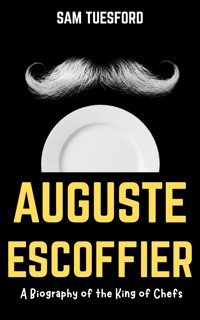
Auguste Escoffier: A Biography of the King of Chefs takes you on a captivating journey through the life of the culinary genius who revolutionized French cuisine and forever changed the world of fine dining.
From his humble beginnings in the French Riviera to becoming the world-renowned "King of Chefs," Escoffier's passion, innovation, and dedication to excellence transformed kitchens around the globe. In this richly detailed biography, uncover his profound influence on modern gastronomy, his groundbreaking kitchen management systems, and the timeless principles that continue to inspire chefs today.
If you’ve ever wondered how one man could elevate food to an art form and shape the very essence of fine dining, this book is your key to discovering the legacy of a culinary legend.
Don’t miss out—immerse yourself in the remarkable story of Auguste Escoffier now!
Das E-Book können Sie in Legimi-Apps oder einer beliebigen App lesen, die das folgende Format unterstützen:
Veröffentlichungsjahr: 2026
Ähnliche
















Auguste Escoffier: A Biography of the King of Chefs
Sam Tuesford
Published by Sam Tuesford, 2026.
While every precaution has been taken in the preparation of this book, the publisher assumes no responsibility for errors or omissions, or for damages resulting from the use of the information contained herein.
AUGUSTE ESCOFFIER: A BIOGRAPHY OF THE KING OF CHEFS
First edition. February 13, 2026.
Copyright © 2026 Sam Tuesford.
Written by Sam Tuesford.
10 9 8 7 6 5 4 3 2 1
Table of Contents
Title Page
Copyright Page
Part I: Origins and Early Passion
Part II: Rise in the Culinary World
Part III: Legacy in Luxury
Part IV: The Philosopher of Cuisine
Part V: Honors and Enduring Impact
Part VI: Conclusion
Part I: Origins and Early Passion
Chapter 1
Auguste Escoffier’s story begins not in the kitchens of lavish hotels or Michelin-starred restaurants, but in the quiet village of Villeneuve-Loubet, nestled in the heart of the French Riviera. Born on October 28, 1846, into a family that wasn’t wealthy but deeply rooted in tradition, young Escoffier’s early life was humble, marked by the kind of values that would shape his future in ways he couldn’t yet imagine.
Escoffier’s father, a man of discipline and precision, was a lawyer by profession. However, it was his mother’s side of the family that would leave a lasting imprint on him. His maternal grandparents were restaurateurs, and it was in their family-owned inn that Escoffier’s fascination with food first began to take root. He was raised with a deep respect for hard work and a profound appreciation for the quality of good, honest cooking. In many ways, his early experiences shaped the foundation for what would become his legendary career in the culinary world.
His early childhood wasn’t marked by luxury or indulgence but by a rural upbringing that centered on practical skills and self-sufficiency. As a young boy, Escoffier would have witnessed the routine of the kitchen – the rhythm of chopping vegetables, the sizzle of the stove, and the careful preparation of meals. There, amidst the scents of herbs and simmering broths, he would learn the discipline of cooking, even if he didn’t know it at the time.
His family life, though far from lavish, was one where education was valued, and Escoffier was instilled with a strong sense of duty and respect for his heritage. These early years in Villeneuve-Loubet were crucial in shaping the man who would go on to revolutionize French cuisine. They laid the groundwork for Escoffier’s future in the culinary world, where dedication, precision, and a relentless pursuit of excellence became the cornerstones of his identity.
As a child, Escoffier exhibited a natural curiosity, and it wasn’t long before he expressed a desire to learn more about the culinary arts. Despite his father’s initial reluctance to see his son enter the kitchen professionally, it was clear that Escoffier was destined for something extraordinary. The family’s humble beginnings would prove to be the fertile soil from which his immense talent would sprout, eventually leading him to become the King of Chefs.
Chapter 2: The Culinary Spark
At the age of thirteen, Escoffier’s life took a decisive turn when his passion for food and cooking led him to pursue a formal career in the culinary arts. His early experiences in the kitchens of Villeneuve-Loubet left an indelible mark on him, but it wasn’t until he entered the kitchen of a local restaurant that he truly began to understand the dedication required to master the craft.
Escoffier’s first professional experience was under the guidance of his uncle, who was a chef at a local inn in Nice. The work was grueling and demanding, but it exposed Escoffier to the fast-paced environment of a professional kitchen. It was here that he encountered the discipline of the trade – the precise timing, the balance of flavors, and the sense of teamwork required to deliver flawless dishes. Though only a young apprentice, Escoffier’s natural aptitude for cooking quickly became apparent.
As he worked in various local kitchens, Escoffier observed firsthand the intricacies of French cuisine. He learned not just about the techniques but also about the philosophy behind the dishes. The focus was always on simplicity, on letting the quality of the ingredients shine through rather than overwhelming them with excess. This lesson, one of the core tenets of his culinary philosophy, would stay with him throughout his career.
During these formative years, Escoffier was immersed in the essential skills of the kitchen. He honed his knife skills, mastered the basics of stocks and sauces, and gained a deep understanding of French culinary traditions. But what set him apart was his relentless desire to push the boundaries. Escoffier wasn’t content to simply follow orders in the kitchen; he wanted to understand the why behind every process. His inquisitive nature drove him to experiment, to refine, and to perfect.
It was at this stage in his career that Escoffier’s dedication to the craft truly began to crystallize. He was learning the fundamentals of cooking, but he was also beginning to form his own vision of what the kitchen could be. He wasn’t just aspiring to be a good cook; he was developing the ambition to be a revolutionary in the world of cuisine. His time in these early kitchens, though humble and challenging, laid the foundation for the greatness that would come.
As Escoffier moved on from his apprenticeship, it became clear that his potential was far greater than anyone had anticipated. His time in local kitchens had sparked a fire within him, and he was now ready to take on the world’s finest culinary institutions.
Chapter 3: Apprenticeship and Discipline
After several years of honing his skills in local kitchens, Escoffier’s next step was to formalize his training under the guidance of renowned master chefs. This move would set him on the path to greatness, sharpening his techniques and deepening his understanding of the culinary world. It was in the prestigious kitchens of Paris that Escoffier would truly begin to refine his craft, developing the discipline that would become synonymous with his name.
At the age of 16, Escoffier’s determination led him to Paris, where he enrolled at the prestigious Ecole de Cuisine (School of Cooking). Here, he entered the demanding world of classical French cuisine, under the watchful eyes of some of the finest chefs of the time. These chefs were not merely instructors; they were strict taskmasters who adhered to the high standards of French culinary tradition. They instilled in Escoffier the importance of discipline, order, and precision in the kitchen.
One of Escoffier’s most influential mentors was Chef Marie-Antoine Carême, the famed chef known as the "King of Chefs and the Chef of Kings." Carême’s approach to cooking was centered on meticulous attention to detail, something that resonated deeply with the young apprentice. Carême’s intricate methods, particularly his work in pastry and presentation, were nothing short of revolutionary. Under his tutelage, Escoffier learned that cooking was not just a practical skill but an art form – one that demanded both creativity and discipline.
Escoffier quickly earned the respect of his colleagues and mentors for his relentless work ethic and attention to detail. He adhered to the rigorous structure of the kitchen, constantly striving to improve. He perfected his knife skills, sharpened his understanding of French sauces, and mastered the techniques of classical French cooking. In Carême’s kitchen, every dish was a lesson in discipline. Escoffier absorbed each detail, understanding that mastery came only through repetition and precision.
Beyond the kitchen, Escoffier’s time in Paris exposed him to the cultural vibrancy of the city, which was undergoing a culinary renaissance. Paris, in the mid-19th century, was a city where food was regarded as both a necessity and a form of high art. The great restaurants of Paris were beginning to flourish, and Escoffier was fortunate to be training in such a dynamic environment. It was during these years that he witnessed firsthand the power of food to elevate a dining experience from mere sustenance to an unforgettable celebration of flavor.
Yet, it wasn’t all glamour and success in the beginning. Escoffier’s early years in Paris were filled with hardship. The kitchen was a place of constant pressure, and he was no stranger to long hours, difficult tasks, and unyielding expectations. The discipline required to succeed was unforgiving, and Escoffier often found himself exhausted by the grueling demands of the profession. But rather than deter him, these challenges only fueled his passion and determination to excel.
Through years of apprenticeship and training under the guidance of master chefs, Escoffier refined not only his technical skills but also his philosophical approach to cooking. He came to understand that culinary artistry was about much more than following recipes – it was about creating an experience, telling a story through flavors, and bringing a sense of joy and satisfaction to those who tasted his dishes. This understanding would set the stage for his future achievements.
By the time Escoffier completed his formal training, he was more than just a skilled cook – he was a disciplined, methodical chef with a deep respect for the craft. The foundation for his revolutionary impact on French cuisine had been laid, and he was ready to leave his mark on the world.




