


8,99 €
Mehr erfahren.
- Herausgeber: BookRix
- Kategorie: Sachliteratur, Reportagen, Biografien
- Sprache: Englisch
Have you ever felt stuck in the search for inspiration, looking for someone whose dedication and brilliance can spark your own creativity?
Have you wondered how the greatest chefs of today got their start or what drives them to push the boundaries of culinary art?
If you’ve ever felt the weight of tradition, innovation, and the relentless pursuit of excellence, you know the journey isn’t easy. Behind every great chef is not only a passion for food, but a mindset that challenges everything—the past, the future, and the very way we approach a plate. The world of fine dining is complex, intimidating, and sometimes even overwhelming, and finding a path through it all can feel like a never-ending struggle.
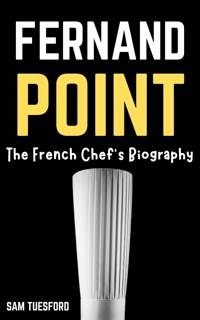
Fernand Point: The French Chef’s Biography is the solution you’ve been searching for. This captivating biography will take you inside the kitchen of one of France’s most legendary chefs, the man who mentored culinary icons like Paul Bocuse and revolutionized French cuisine. Point’s unwavering philosophy, which embraced simplicity, clarity, and purity of ingredients, created a lasting impact on both the culinary world and those who followed in his footsteps.
By reading this book, you’ll not only gain insights into his remarkable career but also discover how to apply his principles of technique, humility, and passion to your own creative endeavors—whether you’re a chef, a home cook, or someone seeking inspiration in any field of life.
If you’ve ever wondered what it truly takes to innovate without losing sight of tradition, or how a single chef could change the way we think about food, this book will answer those questions. It’s more than a biography—it’s a guide to understanding the art of simplicity and the power of authenticity.
Don’t wait any longer to learn from a true master. Step into the kitchen of Fernand Point and let his legacy shape your own journey.
Order your copy now and start your path toward culinary excellence.
Das E-Book können Sie in Legimi-Apps oder einer beliebigen App lesen, die das folgende Format unterstützen:
Veröffentlichungsjahr: 2026
Ähnliche






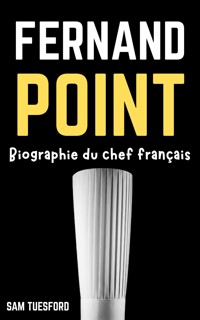






Fernand Point: The French Chef's Biography
Sam Tuesford
Published by Sam Tuesford, 2026.
While every precaution has been taken in the preparation of this book, the publisher assumes no responsibility for errors or omissions, or for damages resulting from the use of the information contained herein.
FERNAND POINT: THE FRENCH CHEF'S BIOGRAPHY
First edition. February 16, 2026.
Copyright © 2026 Sam Tuesford.
Written by Sam Tuesford.
10 9 8 7 6 5 4 3 2 1
Table of Contents
Title Page
Copyright Page
PART I
Part 2: Rise to Fame
Part 3: Legacy and Influence
Part 4: The Chef’s Philosophy
Part 5: Challenges and Triumphs
Part 6: The Final Years and Beyond
Part 7: Conclusion
PART I
Chapter 1: The Origins of Fernand Point
Long before La Pyramide became a place of French gastronomy, Fernand Point was a boy with flour-dust dreams in the quiet town of Louhans, nestled in the lush region of Saône-et-Loire in eastern France. Born on February 25, 1897, into the embrace of a family that lived and breathed food, Point’s earliest memories were tinged with the scents of simmering stocks and fresh bread.
His father, Auguste Point, was not merely a restaurateur; he was the proprietor of the railway station buffet where farmers, merchants, and travelers alike gathered to eat, talk, and find comfort.
It was in this bustling kitchen—where his mother and grandmother worked as cordon bleu cooks—that Fernand first grasped a wooden spoon at ten years old, discovering the alchemy that turned simple ingredients into something transcendent.
The rhythm of that kitchen, the cadence of boiling pots and clattering pans, became the heartbeat of his youth.
Louhans was small, but the world beyond beckoned him. A hunger for mastery led him to Paris, the crucible of French haute cuisine, where he apprenticed in some of the most esteemed kitchens of the day. At Foyot on Rue de Tournon and later at the Hotel Bristol, Point absorbed the classical techniques of French gastronomy—the sauces, the stocks, the precision of timing.
He learned respect for tradition without bowing to its rigidity.
A stint at the Majestic in Cannes and a sojourn to the Hôtel Royal in Évian-les-Bains broadened his understanding of regional flavors and refined service. By his early twenties, culinary Europe had become his classroom.
Yet, it was not ambition alone that shaped him; it was a profound reverence for the craft. He studied the market stalls at dawn, selecting produce with the same care others reserved for poetry.
The markets of Lyon and Paris offered lessons that no master could teach: the whisper of ripe herbs, the promise in a plump truffle, the poetry of a fresh fish.
These formative experiences, stitched together by sweat and curiosity, laid the foundation for a chef who would later redefine French cooking itself.
In 1922, the Point family relocated to the charming city of Vienne, just south of Lyon. There, Auguste purchased a modest restaurant near the ancient Roman pyramid that crowned the town square.
When his father passed the reins to him just two years later, Fernand renamed the establishment La Pyramide—not merely as a nod to the monument but as a symbol of the towering culinary legacy he intended to build.
From that moment forward, his life’s work was clear: to craft a kitchen where tradition was honored and innovation was inevitable, where flavors spoke with clarity and passion.
Thus began the journey of a young provincial boy whose roots were humble but whose vision was expansive—a journey toward reshaping the very soul of French cuisine.
––––––––
Chapter 2: Apprenticeship in France’s Culinary Traditions
To understand Fernand Point’s brilliance, you must first wander through the smoky corridors of great French kitchens in the early twentieth century, where rigid tradition met restless innovation.
Born in 1897 in Louhans, a small Bresse town in eastern France, Fernand’s first lessons came not from books, but from the heated cauldron of his family’s kitchen, where his mother and grandmother were respected cordons bleus and his father, Auguste Point, ran the railway station buffet with meticulous care.
From the age of ten, Fernand stood on a wooden box by the stove, learning to turn butter into velvety sauces and recognizing, even then, how the strength of a broth could elevate a meal from nourishment to poetry.
This early immersion wasn’t simply training—it was baptism by fire into the sacred art of cuisine.
At fourteen, French kitchens began to open their doors to apprentices—a rite of passage that young Point seized with both eagerness and nerve.
His first destination was the bustling capital of gastronomy: Paris. There, he entered the door of Foyot, a restaurant known for its classical grandeur and exacting standards.
In those dimly lit kitchens, where every simmer and sear was judged by tradition’s unforgiving eye, Fernand learned the grammar of French cooking—mother sauces, mise en place, and the rigorous discipline that made French cuisine the benchmark of fine dining.
With clad knives and a heart full of hunger, he moved next to the august Hôtel Bristol, an emblem of Parisian luxury and precision, where chefs demanded respect for every ingredient from carrot to consommé.
Under the watchful gaze of seasoned maîtres, Fernand refined his technique, tightening his attention to detail until it was as natural as breathing.
Yet, despite mastery of classical technique, Point’s heart constantly sought new terrains of flavor and expression.
The bright, salty air of the Mediterranean beckoned him south to Le Majestic in Cannes, where the produce was kissed by sun and sea breezes, and the lightness of southern French cuisine revealed nuances he had not encountered in Paris.
Here, elegance was not a burden but a promise—fresh herbs from the marché, delicate fish caught that morning, and the brine of the sea whispered to his developing palate.
In Cannes, he began to appreciate the simplicity and the depth of local terroir, understanding that a truly great chef must not merely execute technique, but commune with the land from which ingredients are born.
Even these experiences, remarkable though they were, could not fully stand alone.
Fernand’s journey carried him next to the Hôtel Royal in Évian-les-Bains on the edge of the Rhône–Alps and near Switzerland’s serene waters.
Here he crossed paths with culinary luminaries, including the father of a young chef named Paul Bocuse—an encounter that would ripple through culinary history, as Bocuse himself would later become one of Point’s most celebrated protégés.
In Évian-les-Bains, the kitchens were a crucible of precision and haute technique, reinforcing within Point a belief that classical training must always be the foundation upon which individuality is built.
Throughout these formative years, Point’s apprenticeship was not merely about execution; it was an apprenticeship of the senses.
In Paris, he learned to discern the difference between a good sauce and a great one. In Cannes, he rediscovered freshness and restraint. In Évian, he saw that excellence demanded both reverence for tradition and courage to innovate.
Each kitchen taught him that the soul of cuisine lies in harmony—where texture, aroma, and flavor coalesce into something beyond the sum of its parts. Guilds and mentors shaped his hands, but the markets and seasons shaped his heart.
It was also during this period that Fernand absorbed an essential philosophy of service: the meal is not a performance for the chef but an experience for the diner.
He watched kitchen brigades collaborate like ensembles, saw how front-of-house and back-of-house could dance in elegant synchrony, and learned that excellence in hospitality was as crucial as mastery in cooking.
With each apprenticeship, his vision of what a restaurant could be expanded—he envisioned a place where the chef created without confines, where menus breathed with the seasons, and where every diner felt both welcomed and honored.
By the time Fernand Point left Paris and its glittering boulevards for his next chapter in Lyon’s orbit, he was more than a well-trained chef; he was a custodian of the culinary arts with a restless, evolving voice.
He had absorbed the greatest lessons of classical French kitchens and was beginning to weave them into a tapestry uniquely his own—one that would soon blossom in La Pyramide and reverberate through the kitchens of the world for generations to come.
Chapter 3: Influences and Mentors: Shaping a Master Chef
Fernand Point’s genius did not appear overnight like a petal unfurling in the sun—it was cultivated, like a vine trained against a trellis, shaped by the mentors he worked with, the traditions he absorbed, and the voices of culinary luminaries whose shadows stretched long across the kitchens of France.
Point’s rise was rooted in reverence for the past, yet restless with an inner urge to refine what he inherited into something uniquely his own.
From the earliest flickers of his culinary life, the most profound influence came not from distant gourmets but from his own hearth. His mother and grandmother, both accomplished cordon bleu cooks at the family restaurant in Louhans, were his first teachers.
In that warm, fragrant kitchen at the train station buffet, Fernand learned that good cooking began with patience, respect for ingredients, and an almost spiritual attention to detail. Learning to cook alongside the women who had mastered the region’s traditional dishes instilled in him not only technical skill, but the conviction that the best cuisine honors its roots while aspiring toward refinement.
As a young man he stepped into the wider world of French gastronomy, undertaking formal apprenticeships in some of France’s most iconic kitchens.
In Paris, at esteemed venues such as Restaurant Foyot and the Hôtel Bristol, he absorbed the exacting discipline of haute cuisine that had been codified by earlier masters.
These kitchens did more than teach method—they taught reverence for rigor and consistency. Here, Point learned that technique could elevate a dish from simple nourishment to literary eloquence on a plate, that sauces were not mere additions but the narrative threads tying every component together.
The influence of these classical kitchens was tempered by a deeper mentor figure: the very tradition of French cuisine itself, as shaped by giants such as Georges Auguste Escoffier.
Escoffier did not train Point directly, but his structuring of brigade systems and codification of French techniques provided the bedrock upon which Fernand built his own style.
Through the discipline Escoffier espoused, Point learned that mastery of fundamentals allowed freedom in expression; that a chef must first respect the art before he dares to reinvent it.
Yet Point was not bound by the classical alone. After Paris he ventured to the Majestic in Cannes and the Hôtel Royal in Évian-les-Bains, where the freshness of regional ingredients awakened in him a new appreciation for simplicity and terroir—the notion that cuisine should sing with the voice of its place. In these kitchens he saw how the capture of local flavors, uncomplicated and pure, could achieve a clarity that even the most elaborate reductions could not match.




