


8,99 €
Mehr erfahren.
- Herausgeber: BookRix
- Kategorie: Lebensstil
- Sprache: Englisch
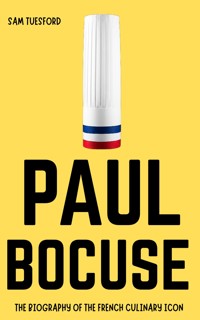
Paul Bocuse: The Biography of the French Culinary Icon is a captivating, behind-the-scenes journey into the life of the chef who revolutionized French cuisine.
From his humble beginnings in Collonges-au-Mont-d'Or to becoming a global culinary legend, Bocuse’s passion, innovation, and relentless pursuit of perfection changed the face of fine dining forever.
This biography uncovers the man behind the Michelin stars, his role in shaping nouvelle cuisine, and his legacy that continues to inspire chefs worldwide. Filled with compelling stories, expert insights, and the essence of French gastronomy, this book is a must-read for food lovers, aspiring chefs, and anyone fascinated by the culinary world. Dive into the life of a true icon and discover how Paul Bocuse’s dedication to simplicity, quality, and creativity transformed the art of cooking.
Don’t miss out—buy it now and step into the kitchen of a culinary genius!
Das E-Book können Sie in Legimi-Apps oder einer beliebigen App lesen, die das folgende Format unterstützen:
Veröffentlichungsjahr: 2026
Ähnliche










Paul Bocuse: The Biography of the French Culinary Icon
Sam Tuesford
Published by Sam Tuesford, 2026.
While every precaution has been taken in the preparation of this book, the publisher assumes no responsibility for errors or omissions, or for damages resulting from the use of the information contained herein.
PAUL BOCUSE: THE BIOGRAPHY OF THE FRENCH CULINARY ICON
First edition. February 17, 2026.
Copyright © 2026 Sam Tuesford.
Written by Sam Tuesford.
10 9 8 7 6 5 4 3 2 1
Table of Contents
Title Page
Copyright Page
Part 1: Early Life and Apprenticeship
Part 2: Rise to Prominence
Part 3: Global Influence and Legacy
Part 4: Personal Life and Philosophy
Part 5: Conclusion
Part 1: Early Life and Apprenticeship
Chapter 1: The Beginning of a Culinary Journey
Paul Bocuse’s journey into the world of cuisine was not born out of a mere fascination with food, but from a deep-seated passion that would eventually revolutionize the way the world viewed French cooking.
Born on February 11, 1926, in the small town of Collonges-au-Mont-d'Or in the Rhône-Alpes region of France, Paul was raised in a family with deep roots in the culinary arts.
His father, Georges Bocuse, was a restaurateur who ran the family’s eatery, La Mère Brazier, which was renowned for its traditional French cuisine. However, it was not just the influence of his father that set the stage for Paul’s culinary destiny—there was also the region itself, with its wealth of fresh ingredients, long-standing culinary traditions, and the rich French culture of gastronomy.
From an early age, Paul was exposed to the rhythm and heart of a kitchen.
His family’s restaurant was an ever-bustling hub of activity, where the preparation of dishes was a serious, yet vibrant affair.
While the young Bocuse initially had other ambitions, including an interest in becoming an engineer, it was the lure of the kitchen, the artistry of the chefs, and the tantalizing scents that began to captivate his imagination. His heart seemed destined for something different, something more fulfilling.
At the age of 16, Bocuse took a crucial step in his journey—he decided to pursue cooking as a career, much to the surprise of his parents who had expected him to continue in the family’s restaurant business. He enrolled at the prestigious Lycée Hôtelier de Grenoble, a culinary school in southern France. It was here that he began to truly understand the depth of his passion for food, dedicating himself to learning the art of French cuisine. Bocuse’s teachers quickly recognized his talent, and it wasn’t long before he moved on to formal apprenticeships in several top-tier kitchens around France.
In 1947, Bocuse’s career took a defining turn when he began working under the guidance of the renowned chef Fernand Point at La Pyramide in Vienne, a restaurant that would become the birthplace of many of the culinary movements that Bocuse would later champion.
Point, a legendary figure in French gastronomy, introduced Bocuse to the principles of modern French cuisine, emphasizing the importance of high-quality ingredients, meticulous technique, and an unwavering commitment to excellence. Under Point’s tutelage, Bocuse absorbed a wealth of knowledge that would shape his culinary philosophy for years to come.
Though Bocuse’s career began with the traditional approach to French cuisine, the seeds of change were planted during these formative years. The skills and knowledge he acquired would not only serve as the foundation for his future career but would also empower him to challenge the status quo of French cooking. His ambition grew as he honed his craft, eager to push the boundaries of the culinary world while remaining deeply rooted in the traditions that had shaped his early years.
This chapter marks the beginning of Paul Bocuse’s culinary journey, one that would take him from the kitchens of his family’s restaurant to the heights of international fame.
It was a journey fueled by a deep passion for food, a commitment to craftsmanship, and an unrelenting desire to leave his mark on the world. Little did he know, the young apprentice from Collonges-au-Mont-d'Or was about to become a towering figure in the history of French cuisine, transforming the culinary landscape and inspiring generations to come.
Chapter 2: Formative Years: Influences and Inspirations
Paul Bocuse’s formative years were a blend of rich cultural exposure, familial influence, and a growing understanding of the culinary world. While his early experiences in the kitchen planted the seed for his future, it was the broader cultural and social environment that truly shaped his approach to cooking and solidified his place in the French culinary tradition.
Growing up in Collonges-au-Mont-d'Or, Bocuse was surrounded by the natural bounty of the French countryside. The region’s fertile land and abundant resources provided the perfect backdrop for his culinary awakening. His family’s restaurant was situated in a locale known for its fresh produce, regional meats, and artisan breads. The area’s markets brimmed with vibrant colors and intoxicating aromas, leaving an indelible impression on the young Bocuse. These early encounters with quality ingredients would go on to influence his commitment to using only the finest products in his cooking.
But it wasn’t just the bounty of the land that inspired Bocuse—it was the people around him, especially his family, that instilled within him a deep respect for the traditions of French cuisine. His father, Georges, was a stern yet loving figure in Paul’s life. Although Georges wasn’t as famous as his son would later become, his work ethic and dedication to serving exquisite food were the foundation of the family’s restaurant. From a young age, Paul observed the intricacies of the kitchen, the careful preparation, and the respect given to each dish. These lessons would stay with him throughout his life, even as he sought to carve his own path in the culinary world.
However, Paul’s true growth as a chef came from the influential figures he encountered as he left his family’s restaurant to pursue his professional training. After completing his studies at Lycée Hôtelier de Grenoble, Bocuse went on to work at some of the most esteemed restaurants in France, where he began to cultivate his unique culinary voice. These formative years were pivotal, as he not only learned the technical skills of cooking but also absorbed the philosophies and culinary approaches of some of the greatest chefs of the time.
One such figure was the renowned Fernand Point, with whom Bocuse worked during his apprenticeship at La Pyramide in Vienne. Point was a master of his craft, and his innovative approach to cuisine would deeply impact Bocuse. Under Point’s mentorship, Bocuse discovered the importance of elevating French cuisine into something that was not just about technique but also about storytelling and artistry. Point’s influence helped Bocuse to understand that cooking was an expression of identity, a way to communicate culture, and a way to bring people together around the table.
Point wasn’t the only mentor who shaped Bocuse’s path. During his time at La Pyramide, he also crossed paths with other influential figures, including the great Auguste Escoffier’s disciples, who taught him the importance of simplifying complex dishes to highlight the natural flavors of ingredients. These influences would form the backbone of Bocuse’s culinary philosophy, which centered around the notion that the ingredients themselves should take center stage, with minimal embellishment.
Throughout these formative years, Bocuse’s culinary journey was influenced not only by the chefs he worked with but by the broader cultural currents that were taking shape in France during the mid-20th century. France was experiencing an era of modernization, and in the culinary world, this meant a shift toward lighter, fresher dishes that reflected the changing tastes and attitudes of the time. As Bocuse worked his way through the kitchens of Paris, Lyon, and beyond, he was exposed to these evolving trends, yet he remained committed to honoring the classical foundations of French cuisine.
It was during this time that Bocuse’s personal style began to emerge. He began to see himself not just as a traditionalist but as a visionary—someone who could bridge the gap between the rich history of French gastronomy and the more modern, innovative approaches that were gaining popularity. His culinary perspective would go on to challenge and expand the boundaries of French cuisine, influencing chefs across the globe.
Bocuse’s formative years were the crucible in which his culinary philosophy was forged. They were marked by a deep respect for tradition, an unyielding drive to innovate, and a passion for using the best ingredients. The lessons he learned during this time would shape his career and guide him as he moved from a young apprentice in the kitchen to a world-renowned chef and culinary icon.
Chapter 3: Learning the Craft: Early Apprenticeships
As Paul Bocuse continued his journey through the culinary world, the early apprenticeships that followed his time at Lycée Hôtelier de Grenoble played a significant role in shaping his skills, philosophy, and approach to cuisine. These years were more than just opportunities to refine technique; they were transformative moments where Bocuse began to absorb the nuances of French culinary traditions while forging his own path toward innovation.
After completing his studies, Bocuse sought out the best kitchens in France, eager to learn from the masters of the craft. His first major apprenticeship was at the celebrated restaurant La Pyramide in Vienne, where he worked under the guidance of Fernand Point. This apprenticeship would prove to be a defining period in his development. Point, regarded as one of the fathers of modern French cuisine, was known for his emphasis on precision, elegance, and, most importantly, the balance of flavors.
At La Pyramide, Bocuse learned the importance of simplifying complex dishes to allow the quality of the ingredients to shine through. Point’s philosophy, which combined a respect for tradition with a commitment to culinary innovation, resonated deeply with Bocuse. Point was a pioneer of nouvelle cuisine, a movement that rejected the heavy sauces and complex preparations of the past in favor of lighter, fresher dishes that focused on the natural flavors of the ingredients. This shift in philosophy would later become a hallmark of Bocuse’s own work.
Bocuse’s apprenticeship under Point was an intense, immersive experience. The kitchen at La Pyramide was a fast-paced environment, demanding perfection at every turn. Bocuse was taught to work with the finest ingredients, whether they were fresh vegetables, delicate seafood, or prime cuts of meat. He learned to execute dishes with impeccable technique, but more importantly, he began to understand the artistry behind each plate. Every dish was a carefully composed work of art, and each component needed to be prepared and presented with precision.
However, Bocuse’s education didn’t stop at La Pyramide. As part of his apprenticeship, he also worked in various other prestigious kitchens across France, honing his skills in different regions and learning from other culinary giants. He spent time working at Le Petit Nice in Marseille, where he learned the subtleties of Mediterranean cuisine, and at Le Cheval Blanc in Paris, where he gained an appreciation for the grandeur of classic French gastronomy.
In these kitchens, Bocuse was introduced to a wide range of techniques—from the art of making perfectly crisp pastry to mastering the delicate balance of seasoning in sauces. But it wasn’t just about technique; it was also about the culture of the kitchen, the camaraderie among the chefs, and the relentless pursuit of excellence. Bocuse absorbed these lessons, knowing that this level of dedication was essential to becoming a true master.




