


Erhalten Sie Zugang zu diesem und mehr als 300000 Büchern ab EUR 5,99 monatlich.
- Herausgeber: Guido Amabili
- Kategorie: Für Kinder und Jugendliche
- Sprache: Englisch
Yahya sees the situation of the people of Gaza. He is old enough to have memories of what life was like here in 2009, which he learnt from his mother, his uncle and several neighbours who all died that same year.
With his cousin Isra, they imagine uniting the children of the area to do something that will improve their daily lives. So, they create a group of young people like themselves who congregate in the courtyard at the back of a ruined, abandoned house.
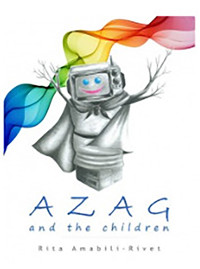
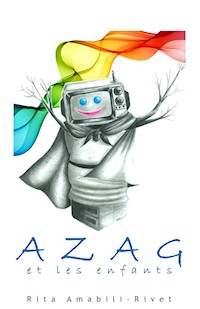
Using the debris of wood, stones and other fragments of the city left lying there, they make themselves a roofless shelter, where together, having a lot of fun, they create a new friend whom they name AZAG.
With him, they reinvent their own reality.
ABOUT THE AUTHOR
In her practice, Rita Amabili has a penchant for human rights and children’s rights. Her experience as a nurse, as an accompanying person at the end of life, as a humanist in the social sciences and as a master in theology, gave him an active practice with the human and strengthened his feminism as an author promoting the inclusion of men and women as equal persons although different. Her work as a writer and her group animation classes have enabled her to develop skills as a speaker and facilitator and thus to make the knowledge acquired over more than twenty years alive and often interactive.
As a novelist, human rights, children’s rights and the history of immigration. Her experience as a nurse, as an end-of-life accompanist, as a humanist and as an active human practitioner, reinforces her feminism, which is the inclusion of men and women. As a writer, her group animation classes have directed her as a speaker and facilitator for over twenty years.
Nurse by training, master in theology. Her work revolves around human rights, immigration, inclusion as a feminist. She has been involved in theatre, poetry, novels and has collaborated with several media, dealing with subjects related to values and the meaning of life.
Sie lesen das E-Book in den Legimi-Apps auf:
Seitenzahl: 90
Veröffentlichungsjahr: 2023
Das E-Book (TTS) können Sie hören im Abo „Legimi Premium” in Legimi-Apps auf:
Ähnliche








![Tintenherz [Tintenwelt-Reihe, Band 1 (Ungekürzt)] - Cornelia Funke - Hörbuch](https://legimifiles.blob.core.windows.net/images/2830629ec0fd3fd8c1f122134ba4a884/w200_u90.jpg)
AZAG AND THE CHILDREN
To all the children who suffer unjustly from adult conflicts , for Florence, Judith and Leane and Elena Romero for her help.
The author thanks
the Palestinian General Delegation in Canada
and especially Dr. Fadi Elhusseini.
FROM THE SAME AUTHOR:
Un bourgeon deviendra famille, Office de la famille de Montréal, 1997
Voyage sur Angélica, Éditions de la Paix, 1999
La force de l’amour, Éditions Guido Amabili, 1999
Les anges d’Angélica autour de mon pays, Éditions Parenthèses, 2001
Guido, le roman d’un immigrant, Éditions Hurtubise HMH, 2004
Un fil poétique, Tout comme une prière, Tome 1, Éditions Guido Amabili, 2007
Un fil poétique, Tout comme une prière, Tome 2, Éditions Guido Amabili, 2007
Un fil poétique, Elles, assurément !, Tome 3, Éditions Guido Amabili, 2007
Un fil poétique, Et puisque j’aime les enfants, Tome 4, Éditions Guido Amabili, 2007
Un fil poétique, Poésies diverses, Tome 5, Éditions Guido Amabili, 2007
Un fil poétique, Notre Père, Tome 6, Éditions Guido Amabili, 2007
Saffia, femme de Smyrne, Novalis, 2007
La fiction est-elle un outil pour transmettre l’Évangile ? Éditions Universitaires Européennes, 2012
Marguerite prophète, Éditions Carte Blanche, 2014
Translations:
In mio figlio vivrai per sempre, romanzo storico, Seconda Edizione, Librati Editrice, 2012
In mio figlio vivrai per sempre, romanzo storico, Edarc Edizioni, 2010
Guido, The story of an immigrant, In my son you will live forever, historical novel Éditions
Guido Amabili, 2010
La lingère d’Acquaviva, romanzo storico, Effata Editrice 2018,
Digital books:
Les Pierres parleront de toi, chronique humaine d’une violence inhumaine, roman, Éditions Guido Amabili, 2016
Un monde poétique en solidarité, poésies, Éditions Guido Amabili, 2016
Suzanna, novella, Éditions Guido Amabili, 2016
Suzanne, nouvelle, Éditions Guido Amabili, 2016
Saffia femme de Smyrne, roman historique, Éditions Guido Amabili, 2016
Voyage sur Angélica, roman jeunesse, Éditions Guido Amabili, 2016
Les anges d’Angélica autour de mon pays, roman jeunesse, Éditions Guido Amabili, 2016
Azag et les enfants, Éditions Guido Amabili, 2017.
Azag e i bambini, roman jeunesse, Éditions Guido Amabili, 2017.
Rita Amabili-Rivet
AZAG AND THE CHILDREN
Illustrations Eve Amabili-Rivet
Translated from French by Nigel Garka-Pope
Rereading by Giacomina D’Alesio
Giacomina(Jacqueline) D’Alesio B.Ed., B.A. Linguistcs
Giacomina is a passionate language teacher with a background in translation, editing, and curriculum development. She has spent 20 years working as a resource teacher, literacy specialist, and curriculum advisor. Giacomina has also been a key contributor to youth leadership programs in schools, with a special focus on conflict resolution, and community programs, both local and international.
Original title “AZAG et les enfants”
Éditions Guido Amabili
www.ritaamabili.com
Project directed by Rita Amabili
All rights of translation, reproduction and adaptation reserved
Rita Amabili, 2017
SUMMARY
Yahya lives with his father Ibrahim and the sister of his father Ghaida, her husband Saber and their two children. Yahya and his cousins; Isra 10 years old and Ezat aged 9, in addition to the two twins Shada and Sayed, aged 8, form a small band of adventurers who are loyal to each other, playing in the rubble left by incessant bombardment. (There were a total of 1,000 Palestinian toddlers killed in Gaza during the Israeli attacks in 2009 and 2014), all in search of respite from the suffocating Occupation.
One day, these friends come across a secret haunt, a sort of flowerless garden where "the ground is strewn with garbage of all kinds..." like so many memories of the Gaza bombings. The children clean it to put a little order into the place. Yahya, a creative child, finds a tank that the little ones put in the centre of a concrete base. Then by adding a sheet of metal to the top of the tank and the screen from an old abandoned television on top of that as a head, they form the shape of a robot. And so "... the robot rises, taller than them, strong, sturdy, splendid and sympathetic, with his big hat of golden straw and his blue shawl."
The robot will be named Azag, which is Gaza spelt in reverse. “ ‘…That’s the reverse of pain...’ suggests dreamy Yahya”. Ibrahim and Saber will give voice to the Azag robot through a long retractable hose that joins its head. "When Saber places his lips and breathes, the sound seems to come out of the television screen-face, under the mouth ..." , for the children, without realizing it, this is the first magical moment of their young lives. Saber says, "What Azag represents is everything that allows us to overcome the pain and difficulty of life here. Azag is that part of our heart which goes beyond the limits imposed on us by the Occupation ...”
Later, encouraged by Azag and guided by the adults, the boys and girls will write letters, addressed to all the children of the world by means of the internet, in order to reveal to them the daily life of children in Gaza. "How is your country? Mine is torn apart and I can do nothing to prevent this Occupation. Do you know what an Occupation is?” And as a sign of solidarity, Yahya and his compatriots who represent all the little tots in Gaza, receive answers from the four corners of the Earth. As Ghaida says: “... We have the ability to remove our solitude, ours and that of others, by forming a coalition with others on the planet. "
This is the reality of a group of small Palestinian children in Gaza that Rita Amabili, the author of Azag, has created. It is a plea to recognize the daily suffering of these children who are victims of the Israeli Hasbara; the Israeli propaganda machine aimed at demonizing Gaza and its inhabitants. Where toddlers are forgotten and ignored by traditional media.
Rita Amabili breathes life into the young children in Gaza, who embellish the pages of her work; Azag. In so doing, we are aware of the fate of all the children in Gaza who, after nine years of Israeli blockade, deprived of food, medicine and enjoyment are intimidated and flouted by the Israeli military presence. Their only wish to be able to live like any other young child; in peace and security. This is Azag's message: let these growing children and all the children of the earth live their childhood in peace and dignity!
Bruce Katz
Co-President of Palestinians and United Jews (Paju)
CHARACTERS:
Yahya: A 10 year old boy. His abdomen was burned by white phosphorus which has left him with permanent scars. He lives with his father Ibrahim, his father’s sister Ghaida and her husband Saber and their two children.
Isra: Girl - Cousin of Yahya and also his friend - 10 years old.
Ezat: Brother of Isra, 9 years.
Shada: Girl, the twin sister of Sayed, 8 years.
Sayed: Boy, the twin brother of Shada, 8 years.
Ibrahim: Brother of Ghaida, father of Yahya, 38. Widowed since 2009.
Ghaida: Ibrahim’s sister, 28, mother of Isra and Ezat.
Saber: Husband of Ghaida, 35, a paraplegic after an accident in 2009; Father of Isra and Ezat.
CHAPTER 1 – THE NEW GAMES ROOM
Yahya is a little worried as is often the case since the death of his mother. Some days, for no precise reason, he feels an aching in his heart. The mornings when he is not going to school are even more difficult. It often happens that Ghaida, his aunt and schoolteacher, will not be teaching that day. She is of course responsible for the school, or what remains of it, and is unable to bring the children together to do their schoolwork.
It used to be that Ghaida was the favourite teacher of all the children. Today however, the school is in ruins and the regularity of schooldays from one week to the next is broken by the Occupation...
With his hands in his pockets, the young Yahya wanders, dragging his feet along the sandy ground in the field close to where he and his family live. Since January, when he turned ten years old, he has known what the word “occupation” means, namely “the presence of soldiers from one state, in the land or territory of another state”. Yahya learned at a very early age that the soldiers he often saw from afar were not his friends and that they could even give orders to his father and other adults whom he knew. For him, the “occupation” prevented his aunt from teaching and his father from carrying on with his pastry business. In addition, it permitted the military from another country, to close roads, to destroy houses and do other horrible things in this country. Yahya does not want to think about it too much, he prefers to just run until he feels his strong heart thumping in his chest; whereupon he stops, out of breath, closes his eyes and sees an image of his mother. She at first appears and everything seems fine and wonderful, she is wearing her hijab; all is the way it used to be. Then the picture changes and he begins to perceive her covered in a white phosphorus cloud, like the way he found her on the day she died. At that point, he quickly opens his eyes in a wide stare to drive away that terrible image.
Suddenly from out of nowhere, Yahya sees Shada only three or four centimetres from his face.
“What are you doing?” She says.
The twin sister of Sayed has always been like that. She has a habit of studying people from so close that those under her examination feel as though they had put their sweater on back to front.
Every time it happened to Yahya he found it very embarrassing.
Yahya, on this occasion, abruptly steps back and quickly replies, “Nothing. I was running”.
“And you were thinking of your mother.” The little girl adds with logical reasoning.
Yahya frowns; he did not like to speak of these things. He felt she was examining him and this made him feel uncomfortable and angry as though she had found a sickness within him.
Nevertheless, he generally found Shada rather pretty; today her long brown hair was seemingly gathered together in haste, held in place by only a ribbon. Her long dress hung around her in a funny way and she wore colourless socks. Her mannerisms often reassured him, although he never allowed himself to show it. Shada the logical, the decisive, before the tall and strong Yahya with huge eyes, filled with fear.
To divert attention, Yahya without thinking begins scratching his soles in the sand making a shape. On recognising he has formed a kind of chain, he tries to improve it a little. With concentration he frowns, attentive to every detail. As he continues he thinks to himself, a chain shows how the Palestinians of Gaza are holding together as one; a chain emphasized that what the “Occupation” was doing to them was not good; a chain to confront it, to stand up and say that Yahya doesn’t like it and neither do his friends; to express...




