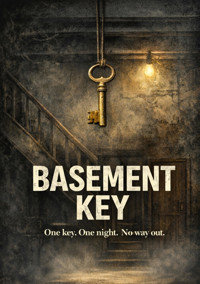
Dominik Mikulaschek dissects the invisible systems of control and the serial economy of guilt. In Kellerschlüssel (Cellar Key), he crafts a psychological thriller of oppressive relevance: a clinically efficient machine in which people become interchangeable cogs in a perfectly prefabricated narrative of guilt. Here, memories are manipulated, truth is staged and identity is erased – all documented in neat file folders. A gripping, profound wake-up call that shows how dangerous control becomes when it is disguised as care and works with the tools of bureaucracy. More than a thriller – an investigation into the fragility of our truth in the age of the perfect setup.
Dominik Mikulaschek
Basement Key
tredition GmbH
© 2026 Dominik Mikulaschek
Printing and distribution on behalf of the author:
tredition GmbH, Heinz-Beusen-Stieg 5, 22926 Ahrensburg, Germany
This work, including all parts thereof, is protected by copyright. The author is responsible for the content. Any use without his consent is prohibited. Publication and distribution are carried out on behalf of the author, who can be reached at: Dominik Mikulaschek, Holzwurmweg 5, 4040 Linz, Austria.
Contact address in accordance with the EU Product Safety Regulation:
Chapter 1 – The key in the envelope (Mara)
The envelope lay on the worn carpet outside my motel room door, a white, innocuous spot in the dreary hallway, and yet its mere presence felt like a punch in the gut. I was sure I hadn't followed anyone, had driven around three times, darted through a shopping centre and paid cash for this room, which smelled of stale smoke and cheap cleaning products. A week had passed since I left the clinic, since I decided that Mara Stein had to disappear for a while. Now I stood here, the door handle still in my hand, staring at this piece of paper that destroyed all the distance I had painstakingly built up in one fell swoop. It bore no address, no sender, only my current, false name, typed neatly and precisely. A cold shiver ran down my spine, even though the heating in the hallway was humming and producing too much heat. I bent down slowly, my knees creaking softly, a sound that seemed unnaturally loud in the silence. The carpet felt greasy under my fingers as I picked up the envelope. It was heavier than expected, containing more than just paper. I stepped back into the room, closed the door behind me and leaned against it, the dull roar of traffic from the nearby motorway suddenly just a distant, indifferent background. My heart hammered against my ribs, a fast, fluttering rhythm that I hated because it reminded me of my own fear. I breathed in, breathed out, forcing myself to calm down, a technique I had been taught in therapy. It never really worked. I rubbed my thumb over the edge of the envelope, feeling the sharp ridge of a key inside. No letter, no threat, just a job offer, the nurse at the clinic had said when I cautiously asked if any mail had come for me. She had smiled, saying it was nice that someone cared. I nodded and smiled back, while a fist clenched inside me. Now, alone in the musty room, I still hesitated. I could just throw it away, toss the key into the nearest river, drive on, take on another name. But I already knew that wouldn't work. They always found you, or you never found yourself. The curiosity was an itch under my skin, worse than the fear. With an abrupt tear, I separated the flap. The contents slid onto the rickety wooden chest of drawers that served as a desk. A folded sheet of paper, heavy, expensive stationery, and a key. The key was brass, old, with a long, elegant shank and a large, round head. It felt cold and heavy in my hand, an object of substantial importance, not like the cheap lock cylinders on these motel doors. A small oval label was stuck to the round head, inscribed in neat black lettering: BASEMENT. The word jumped out at me, simple yet full of dark implications. Cellars were places where you put things you no longer needed or wanted to forget. They were cool, secluded, often windowless. I put the key aside and unfolded the letter. The letter was brief, businesslike. A family named Caldwell was looking for a night nurse for their mother, who needed care. The pay was exceptionally high, cash on weekends, no tax deductions, no questions asked. The address was in a suburb about two hours north, a quiet, upscale neighbourhood, as a quick online search on my temporary, prepaid mobile phone confirmed. All the usual conditions were listed: discretion, confidentiality, willingness to do light housework in addition to nursing. None of this explained why the offer had reached me, Mara Stein, living under a different name in a cheap motel. Nothing explained the key. My fingers trembled slightly as I picked up the key again. I turned it in the light of the dim ceiling lamp, looking for further clues. The label was professionally printed, not handwritten. Under the word KELLER, almost too small to read with the naked eye, was a second line: NACHT 1. A designation, a numbering. NACHT 1. As if it were the beginning of a series, a sequence. A cold drop of fear ran down my spine . This was no coincidence. This was not an anonymous job advertisement. It was an invitation, one linked to my past. They knew who I was, or at least what I had done, or what I had been accused of. The thought of being in a strange house again, at night, with rules I had no control over, made my stomach cramp up. The memory of the Kessler mansion, the stuffy air, the watching windows, the taste of fear in my mouth, was still too fresh, a barely healed wound that reopened at the slightest touch. I wanted to run away. I wanted to throw the key out the window, stomp on the mobile phone, get in my car and just drive until the petrol ran out. But another part of me, the hardened, distrustful part that had survived, knew that running away was only a postponement. This was direct. A key. A basement. NIGHT 1. They didn't lure me with promises, they confronted me with a mystery, and they knew I couldn't ignore it. Because I needed to know how deep the connection went. Because I had to fear what would happen if I didn't come. I went to the small window and pushed the curtain aside. The car park was half empty, wet from the persistent drizzle. My old, inconspicuous car was fine, waiting inconspicuously in a corner. I could get in and disappear. Instead, I turned and looked at the brass key, now lying on the stationery, casting a small, dark shadow. The decision had been made before I had consciously made it. The fear was there, a constant buzzing in my nerves, but underneath it was something else: a feverish, dangerous determination. If this was a trap, I wanted to at least see the trappers. If this was a game, I wanted to learn the rules. I folded the letter paper, put it back in the envelope with the key, and slipped both into the inside pocket of my jacket. The weight was uncomfortable, a constant reminder. I began to pack my few belongings, the movements routine, almost mechanical. Toothbrush, the few items of clothing, the notebook in which I wrote nothing important. The whole process took less than ten minutes. Before I turned off the light and left the room, I took one last look back. The anonymous bareness of the room suddenly seemed like a lost paradise, an innocence I could no longer claim. I closed the door and heard the lock click shut with a final click. The hallway was still empty, only the muffled sound of a television coming from one of the other doors. I walked down the stairs, not the lift, my foot landing softly on each strip of linoleum. The reception desk was unmanned, so I pushed the room key through the slot in the glass pane. Outside, the damp, cold air enveloped me, and the rain tingled lightly on my face. I got into the car, started the engine, and felt the familiar vibration beneath me. The satnav on my mobile phone showed the route to the Caldwell address. Two hours and seven minutes. I put the car in reverse and drove out of the parking space. The motel quickly disappeared in the rear-view mirror, just a bright spot of light in the dim night. The road was wet, reflections from the streetlights drawing long, blurred lines across the carriageway. I drove automatically, my hands loose on the steering wheel, but my thoughts were racing. Who were the Caldwells? What did they know? Was the key a metaphor or a very specific request? And what would happen on NIGHT 2, assuming I survived NIGHT 1? The drive was monotonous, the suburban landscape gradually giving way to dense wooded areas, the houses getting bigger, the properties further apart. The closer I got to my destination, the tighter the ring of tension around my chest became. I kept checking the rear-view mirror, but saw only normal night-time traffic; no one seemed to be following me. Perhaps that was the perfect trick: to get me to follow myself, straight into their trap. The address led me to a quiet street lined with old trees. The houses were large, set back, affluent and discreet. The Caldwell house was slightly smaller than the others, but no less well-kept, a two-storey brick house with white shutters and a deep, dark porch. No light shone from the ground floor windows, only a faint glow came from an upstairs window. I parked across the street and watched the house for several long minutes. Nothing moved. The rain had stopped, and an eerie silence hung over the area, broken only by the soft dripping of water from the trees. Finally, I got out of the car, pulling my jacket tightly around me, the envelope with the key inside. The creak of my car door sounded incredibly loud in the silence. I crossed the street, my footsteps barely audible on the wet asphalt. The gravel in the driveway crunched under my soles. Before stepping onto the path leading to the front door, I hesitated and let my gaze wander over the façade. No cameras were visible, at least none that were obvious. The house seemed asleep, almost peaceful. But I knew the difference between calm and silence. This was a deep, waiting silence. The stairs to the porch creaked under my weight. The front door was made of heavy wood with a brass handle. Next to the door hung a small, elegant letterbox. I took a deep breath and pressed the doorbell. A muffled, melodic chime sounded inside the house. I waited. Seconds passed that felt like minutes. I was about to ring the bell again when a shadow moved in the hallway behind the frosted glass panel of the door. A light came on, then the door opened. A woman in her mid-thirties with a friendly but reserved smile stood before me. She wore comfortable but expensive-looking trousers and a jumper, her hair pinned up in a loose bun. "Mara?" she asked, her voice warm and inviting. "I'm Tessa Caldwell. Come in, please. You must be completely soaked." She stepped aside and I crossed the threshold, my heart beating faster. The hallway was narrow, panelled in dark wood, and smelled of polish and a floral, subtle air freshener. Tessa closed the door behind me, and the click of the lock sounded final, a sound that shut out the outside world. "Let me take your jacket," she said, and her hands were already helping me pull the jacket off my shoulders befor . The envelope was in the inside pocket. For a moment, I froze, but her movements were routine, not probing. She hung the jacket on a wooden rack next to the door. The envelope was safely hidden, but the presence of the key inside felt like a loud, accusatory thud. "Thank you so much for coming at such short notice," Tessa said, leading me further into the hallway. "We're really in a difficult situation since our previous helper... left. My mother-in-law, Grace, just needs someone at night. She gets very confused, restless." I nodded but said nothing. My eyes adjusted to the dim light. The hallway led to a closed door on the left, probably the living room, and a staircase on the right that led upstairs. Everything was clean, tidy, almost too tidy. "I'll show you your room and then the most important things," Tessa continued. "The rules are very simple, but important for Grace's safety. And for yours." She smiled again, but this time it didn't reach her eyes. "One rule in particular: the basement. We don't use it. It's damp, full of old stuff, a tripping hazard. It practically doesn't exist for you. Is that clear?" Her gaze met mine, friendly but unyielding. I felt the weight of the brass key through the wall of my jacket pocket, cold and hard. "Yes," I said, my voice sounding strange to my own ears. "That's clear." Tessa smiled, satisfied. "Perfect. Then please follow me." She turned towards the stairs, and I followed her, my gaze wandering across the hallway, searching for doors, for clues. Under the staircase, right in the corner, I saw a narrow, vertical line in the wood panelling, barely visible. A door. A door without a handle. My hand in my trouser pocket imaginarily enclosed the key. NIGHT 1 had begun, and the first rule was that the basement did not exist. But the key in my jacket, hidden in the envelope on the coat rack at the other end of the hallway, said otherwise. It said that the basement was very real, and that before this night was over, I would know exactly why they wanted me to believe it did not exist . Tessa was already halfway up the stairs when she looked back over her shoulder. "Come on, Mara. I'll show you where you'll be spending your nights." Her smile was still there, but in the dim light of the hallway, it looked like a mask, behind which something was lurking, just waiting for me to make the first wrong move.
Chapter 2 – The Rules of the House (Mara)
The guest room was on the first floor, right next to Mrs Caldwell's bedroom, as Tessa informed me while opening the door. The room was simple and functional, with a narrow bed with a cream-coloured quilt, a desk, a wardrobe and a small washbasin in the corner. A single window looked out onto the back garden, which was visible in the dark only as a deep, indefinable black. The furnishings were clean but cool, with no personal items, as if designed for a constant turnover of strangers. Tessa stood in the doorway, her body filling the frame as she gave a quick overview. Here was the bathroom, just down the hall; please be quiet at night. There was the emergency call button on Mrs Caldwell's bed; I should not use it unless it was a real medical emergency, as it was forwarded directly to Tessa's mobile phone. She spoke calmly and matter-of-factly, but each piece of information felt like another brick being added to a wall, a wall that enclosed me. I nodded at each point, my face a mask of professional attention, while inwardly absorbing every detail of the room and her words. The smell in the room was the same as in the hallway, floral and sterile, but underneath it was a faint, musty hint, as if the room had been closed for a long time. Tessa finished her briefing and pointed to a small folder on the desk. "This is Grace's care plan and medication protocol. Please adhere strictly to the times and dosages. Everything is pre-printed, you just need to tick the boxes and add your initials." She paused, her gaze becoming thoughtful. "We place great importance on accuracy, Mara. For insurance purposes, you understand. And for Grace's well-being." I walked over to the desk and opened the folder. The pages were protected in plastic sleeves, the tables neatly printed with columns for time, medication, dosage and signature. My eyes lingered on the first page. The date at the top of the table was tomorrow, . But in the column for night-time medication, at 22:00, there was already a small, dotted tick. It was faint, almost as if it had been made with a blunt pencil and then partially erased. A test? An accident? Or a hint that the protocol was already in place before I even got here? I said nothing, slowly closing the folder. "I see," I said, my voice sounding calm and composed. "Everything seems very clearly structured." Tessa smiled, a quick, businesslike flash. "Good. Grace is usually awake until about ten o'clock, then she takes her medication and sleeps for most of the night. Sometimes she wanders around, in which case please just gently bring her back to bed. She can be confused, sometimes anxious. Talk to her soothingly, but don't ask her any questions about the past, it will only confuse her." Her instructions were precise, rehearsed. I felt like I was reading a script in which all the dialogue had already been written. "Where is Mr Caldwell?" I asked casually as I walked to the window and stared into the impenetrable darkness of the garden. A brief silence followed, so brief that I almost thought I had imagined it. "Noah is away on business," Tessa replied, her voice still warm but slightly stiffer. "He'll be back tomorrow evening. He sends his apologies." She took a step into the room, and her presence seemed to make the space smaller. "There are a few practical rules, Mara. For everyone's safety." She counted them off on her fingers, a gesture that seemed eerily familiar, though I didn't know why. "First, as I said, the basement. It's off limits. Second, the medication. It's locked in the bathroom cabinet upstairs. I'll give you the key in a moment. Third, no private phone calls in the house. The reception is very poor here anyway, but please make any necessary calls outside or in your car. Fourth, the hallway door upstairs remains closed at night. There is a motion detector in the hallway that alerts me when it is triggered. This is just to make sure Grace doesn't fall or get lost." Each rule was reasonable, each could be explained logically. Together , they formed a network, invisible but solid. The basement did not exist. The medication was locked away. I was cut off from communication. My movements were monitored. A feeling of anxiety rose within me, an echo from another villa, with different rules, but ultimately amounting to the same thing: control. I turned away from the window and looked directly at Tessa. "That all sounds very well thought out," I said, removing all emphasis from my voice. She looked me over for a moment, her smile softening, almost sympathetic. "I know it all sounds very strict. But after what happened with our last night nurse..." She left the sentence hanging, then shook her head slightly. "We just want to make sure everything runs smoothly. For everyone involved." She pulled a small bunch of keys from the pocket of her jumper, detached a simple silver key and handed it to me. "For the medicine cabinet. Please keep it safe." I took the key. It felt light and new, nothing like the heavy brass key in my jacket. "Thank you," I murmured. "I'm going downstairs now to make a cup of tea for Grace," said Tessa, turning towards the door. "Come to the living room in about fifteen minutes and I'll introduce you to her. She's quite lucid tonight." With one last, searching glance, she left the room and closed the door quietly behind her. I stood still, exhaled, and listened to her footsteps as they walked down the hall and down the stairs. The silence that followed was different from the silence in the motel. It was saturated with the sounds of the old house, a soft creaking of the wooden beams, the distant hum of a refrigerator, the ticking of a clock somewhere downstairs. I went to the door and carefully pressed down the handle. It wasn't locked. A small, insignificant spark of relief. I opened it a crack and peered into the hallway. It was narrow, with dark carpet and wallpaper in a muted floral pattern. The door to Mrs Caldwell's room was closed. At the end of the hallway was a narrow door that probably led to a storage room or a second bathroom. And then there was the hallway door Tessa had mentioned. It was made of solid wood, with a sturdy lock and a modern, small black box attached to it at eye level – the motion detector. A tiny red LED glowed inside it, a constant, watchful eye. I closed the door again and leaned against it. My jacket was hanging on the rack below. The envelope with the brass key was inside. The urge to go downstairs and take it was almost overwhelming, but I knew I had to wait. Tessa was downstairs. Any unusual movement would attract attention. Instead, I went to the desk and opened the folder again. I studied the log more closely. The pre-ticked box was still there, a tiny blemish in the perfect organisation. Next to the folder was a pen, a simple ballpoint pen. I took it and pulled a blank page from the back transparent sleeve. Then I began to write down everything I knew. The rules. The date on the log. The locked-away medication. The motion detector. Noah Caldwell's absence. The way Tessa had spoken – friendly, but with an underlying precision that reminded me of someone I didn't want to think about. Evelyn. She had spoken like that at the Kessler mansion too. Gently, logically, while she put the noose around my neck. Was it just my paranoia seeing patterns where there were none? Or was it a style, a method used by more than one person? My hand trembled slightly as I wrote. I had to pull myself together. I was here to do a job, to earn money and go underground. That was all. But the brass key contradicted this simple explanation. It was a direct connection, a challenge. I folded the note small and put it in my jeans pocket. Then I left the room and walked quietly down the hallway to the bathroom. It was spacious, with black and white tiles and antique-looking fixtures. The cabinet above the sink was the only one with a lock. I inserted the silver key and turned it. The lock gave way with a soft click. Inside were several pill boxes with weekly labels, bottles of liquid medication and a row of blister packs of tablets, all neatly labelled. Everything looked professional and correct. I locked the cabinet again and put the key away. As I left the bathroom, I heard soft voices from below. One of them was Tessa's, soft and soothing. The other was thin, shaky, an older woman. Mrs Caldwell. I went down the stairs, the steps creaking under my weight. The living room was just to the right of the hallway. The door was open, and a warm, yellow light spilled out. I paused on the threshold for a moment and let the room sink in. It was cosily furnished, with deep leather armchairs, crowded bookshelves and a fireplace in which a gas fire flickered comfortably. A slim, frail-looking woman with thin white hair sat on the sofa. She held a teacup in both hands, as if seeking support in it. Tessa stood next to her. "Ah, there you are, Mara," said Tessa, her smile back, broad and inviting. "Grace, this is Mara. She'll be looking after you at night." Mrs Caldwell slowly raised her head. Her eyes were pale blue, watery, and she seemed to stare at me for a long time without really focusing. Then she nodded slowly. "Hello," she whispered, her voice brittle as dry leaves. "Good evening, Mrs Caldwell," I said, stepping closer but remaining at a respectful distance. "I'm pleased to meet you." She said nothing more, just stared into her cup. Tessa placed a reassuring hand on her shoulder. "Grace is a little tired today, isn't she? It's been a long day." Mrs Caldwell's eyes flickered up to Tessa, and for a split second I saw something flash in them that looked like fear or alertness. Then it was gone, and her gaze became glassy and empty again. "Tired," she repeated mechanically. "Yes, tired." I watched the interaction, every little twitch, every gesture. The interplay between clarity and confusion was difficult to decipher. Was it real? Was it fake? And if so, why? Tessa turned to me. "I'll leave you two alone for a moment. Mara, perhaps you could bring Grace some water before she takes her medication? The plan is on the fridge in the kitchen." She squeezed Grace's shoulder lightly. "I'll be right back, darling." Then she left, her footsteps echoing in the hallway before disappearing into the kitchen. I was alone with Mrs Caldwell. The silence between us was thick, uncomfortable. I slowly sat down in the armchair opposite her. "Can I pour you some more tea?" I asked. She shook her head, not looking at me, but staring at the fire. Her fingers drummed lightly on the cup, an irregular, nervous tapping. Then she spoke, so softly that I had to lean forward to understand her. "You're new." It wasn't a question, just a statement. "Yes," I said. "I'm new." She slowly turned her head and looked at me. This time her gaze seemed sharper, more present. "The last one..." she began, then broke off as if she had startled herself. Her gaze flew to the door, then back to me. "The last what, Mrs Caldwell?" I asked gently, just as Tessa had advised me to do – reassuringly, without probing questions. But I had to know. She opened her mouth, then closed it again. Her lips trembled. Then, with a sudden, surprisingly clear movement, she leaned forward and whispered: "She screamed. In the night. And then she was gone." A cold shiver ran through me. Before I could reply, we heard footsteps in the hallway. Mrs Caldwell flinched, her face immediately returning to its expression of harmless confusion. She leaned back into the pillows and muttered something incomprehensible to herself. Tessa returned with a tray holding a glass of water and a small pill box. "Everything all right here?" she asked, her gaze darting sharply between Mrs Caldwell and me. "Everything's fine," I said, standing up. "Mrs Caldwell was just a little restless, but she's calmed down now." Tessa smiled, but her eyes remained cool. "Good. Here are your meds, Grace. So you can sleep well." She helped Mrs Caldwell take the pills and drink the water. The whole process was tender and caring. Mrs Caldwell obeyed willingly, like a child. When they were done, Tessa helped her to her feet. "I'll take you to bed now, shall I? Mara will check on you in a moment." She slowly led the elderly woman out of the room. In the doorway, Mrs Caldwell turned around once more. Her gaze met mine, and for a tiny moment, the clarity was back, coupled with such a deep, desperate warning that it took my breath away. Then she was gone, and Tessa led her down the hall to the stairs. I remained in the living room, the tray in my hand, the clinking of the empty glass the only sound. The old woman's words echoed in my head. She screamed. In the night. And then she was gone. Who was the last one? The previous night nurse? What had happened to her? And why had Tessa said she had "gone"? I put down the tray and went into the kitchen to get the care schedule from the fridge. The kitchen was large, modern and spotless. There wasn't a single crumb on the immaculate stainless steel surface of the worktop. The schedule was attached to the refrigerator door with a magnet. I studied it, but it showed nothing unusual. When I turned around, I noticed a closed door next to the refrigerator. It was made of the same wood as the kitchen cabinets and was almost invisible, recessed into the wall. A cellar door? No, the cellar door was under the stairs, the narrow one without a handle. This had to be a storage room or a pantry. I walked over and tried to press the handle. It was locked. Not locked with a key, but bolted from the other side. I put my ear to the wood. Nothing. As I pulled back, I saw a tiny, light-coloured thread on the floor in front of it, like from a cleaning cloth or a uniform. I bent down and picked it up. It wasn't a thread, but a short, blonde hair. Not grey like Mrs Caldwell's, and not dark like Tessa's. I dropped it on the floor when I heard footsteps. Tessa came back into the kitchen. "All done," she said, her smile now tired, sincere. "Grace is almost asleep. You can start your rounds now. The plan says to check every two hours, but if she's sleeping peacefully, just listening is enough." I nodded. "I understand." She looked at me for a moment, and there was something in her expression that I couldn't interpret. A kind of sad knowledge. "You'll settle in here, Mara," she said, her voice un ly soft, almost regretful. "It's always a little strange at first, in a strange house. But you'll get used to it. We've had someone like you before." The smile that followed on her lips was not unfriendly, but it froze the blood in my veins. It wasn't what she said, but how she said it. The tone, the slight tilt of her head, the way her eyes fixed on me as if she knew something I didn't yet know myself. It was an echo, a reverberating click in my memory that struck precisely the nervous, suspicious part of my brain that had never quite settled down since the Kessler mansion. I didn't return her smile. I couldn't. I just stood there while her words lingered in the sterile kitchen air. We've had someone like you before. And in that moment, I knew with absolute, ice-cold certainty that the brass key in my jacket was not an invitation. It was the first move in a game whose rules I did not yet know, and Tessa Caldwell had just hinted that she knew those rules very well, and that no matter what I did, I was just another piece on a board that had been played on many times before. She turned and left the kitchen, leaving me alone with the humming refrigerator and the unspoken end of her sentence hanging in the air like a threatening fog. The night had only just begun, and already the cage around me felt closed, invisible but real, and the guard had just told me with a friendly smile that I wasn't the first prisoner here.
Chapter 3 – The Preordained Protocol (Mara)
I stood in the kitchen for a few more minutes, my breathing slowly returning to normal as my mind wrestled with Tessa's last statement. We've had someone like you before. It could have been meaningless, a simple remark about another night nurse, perhaps one who had also been nervous at first. But in this house, with the key in my jacket and Mrs Caldwell's implied warning, nothing felt insignificant. Every word was a piece of the puzzle, and I didn't even have the picture on the box yet. I shook the tension from my shoulders, a conscious, physical gesture to focus my mind. I was here to do a job. That meant sticking to the plan, administering the medication and monitoring Mrs Caldwell. Everything else was secondary, at least for the moment. I took the care plan from the fridge and studied it again under the bright ceiling light. The times were clearly marked: 10 p.m. medication, midnight check, 2 a.m. check, 4:00 a.m. check, 6:00 a.m. morning medication and handover. In addition to the check times, there were additional notes: "Record fluid intake," "Note rest periods," "Report behavioural changes." All standard stuff. I folded the plan and put it in my trouser pocket. Then I quietly went upstairs. The upstairs hallway was lit only by a small night light plugged into an outlet, casting a faint orange glow. The door to Mrs Caldwell's room was ajar. I listened, but heard only the regular, light breathing of a sleeping person. Good. I crept past her door to my own room. My jacket was still hanging over the back of the chair at my desk. I walked over, reached into the inside pocket and took out the white envelope. It felt like a burning torch in my hand. I pulled out the brass key and looked at it again in the dim light of the bedside lamp. BASEMENT. NIGHT 1. There was no turning back from this reality. I put the key in the front pocket of my jeans, where I would constantly feel its weight and shape, a constant reminder. I tore the empty envelope into small pieces and stuffed them into the pocket of my rucksack to dispose of them later. Then I picked up the folder with the medication log and sat down on the edge of the bed. I opened the first page, the page with the strange, pre-drawn check mark. I took my pen and wrote my initials next to the 10 p.m. medication, which I hadn't administered myself, but which had obviously been given. My gaze wandered across the page, searching for further anomalies. In the lower right-hand corner, outside the actual table, were tiny numbers written in pencil: 307. They were so faint that I almost overlooked them. A room number? A file number? I ran my finger over them, but they didn't smudge; they were firmly pressed into the paper. I turned the page. The following pages for the next few days were blank, ready to be filled in. But on the last page of the folder, on the inside of the hard cover, there was a small white label. It read, typed: "Caldwell protocol template, revision 4. In case of discrepancies, compare with main copy." Main copy? So was there a second, more official protocol somewhere? The one in my hands was just a copy, a template. That might explain the pre-ticked box – it was part of the template that had simply been copied over. But it didn't explain the number 307 or the general, eerie precision of the entire arrangement. I closed the folder and put it back on the desk. It was almost midnight, time for the first check. I left my room and walked quietly across the carpet to Mrs Caldwell's door. I slowly pushed it further open and peered inside. A small night light next to the bed illuminated the room in a soft yellow glow. Mrs Caldwell was lying on her back, the blanket pulled up to her chest, her hands resting on the quilt. Her breathing was steady and deep. She was asleep. I was about to retreat when I noticed that her eyes were open. She was staring at the ceiling, motionless but awake. I paused, unsure whether to go in. Then she slowly turned her head and looked at me. It was not a look of confusion or fear. It was an alert, searching gaze, clear and focused. She said nothing, only slowly moved her left hand from the blanket and tapped the edge of the bed three times with her index finger. Tap. Tap. Tap. Then she lowered her hand again and closed her eyes as if she had fallen asleep immediately. I froze in the doorway, my heart skipping a beat. This was no accidental twitch. It was a pattern, deliberate and precise. Three taps. Just like the knocking she had heard later in the hallway? Was it a signal? A cry for help? A sign that she was conscious? I waited, watching her for another minute, but she didn't move again. Her breathing became deep and rhythmic once more. I backed away and closed the door quietly, leaving it ajar as I had found it. My mind was racing. What did this mean? Was Mrs Caldwell's dementia a façade? Or were these moments of clarity just rare flashes of lucidity in an otherwise confused mind? The tapping seemed deliberate, but it could also be a repetitive movement, something that people with certain forms of dementia sometimes do. I didn't want to overthink it, but I couldn't ignore it either. I went back to my room, sat down at my desk and opened my notebook. I noted the time, "23:58", and then wrote: "Patient asleep, eyes open, clear gaze. Three taps on the edge of the bed (left hand). No verbal communication." I hesitated and added: "Seems deliberate." Then I closed the notebook. I had to approach the next few hours in a structured manner. Checking, logging, staying awake. And thinking. Always thinking. The time until two in the morning passed slowly. I stayed in my room, listened to the sounds of the house and went quietly to Mrs Caldwell's door every half hour to listen. Everything remained quiet. Shortly before two, I set off to check on her. The hallway was quiet, only the faint hum of the night light could be heard. I opened the door to Mrs Caldwell's room and entered. She was lying in the same position, now apparently fast asleep. I watched her for a moment, then turned to leave. My gaze fell on the bedside table. Next to the night light was a small silver clock and a glass of water. And next to it was something that couldn't have been there before. A small, folded piece of paper. I stepped closer, my breath catching in my throat. I glanced at Mrs Caldwell, who wasn't moving. Slowly, with trembling fingers, I picked up the piece of paper and unfolded it. It was a piece of kitchen roll, crumpled up and then smoothed out again. On it was written, in shaky but legible handwriting: Don't sleep. She's listening. I stared at the words, blood rushing in my ears. She's listening. Tessa. It had to mean Tessa. Or someone else? June, the housekeeper? I folded the note and hastily put it in my pocket. Whoever had written it, it had been a risk. And it was a warning that confirmed my worst fears. I left the room, closed the door and leaned against it for a moment with my eyes closed. The house, which seemed so quiet and peaceful, was a stage, and I was in the middle of a play whose dialogue I didn't know. Suddenly I heard a noise from downstairs. A soft, metallic clatter, as if something had fallen in the kitchen. I froze, listening intently. Nothing else. Maybe it was just the house cooling down. Or maybe it was someone moving around at night. June? Tessa? I decided to check. Slowly, on tiptoe, I went downstairs. Every creak of the stairs made me flinch. The hallway downstairs was dark, only an emergency exit sign above the front door casting a greenish glow. I crept towards the kitchen, the door was open. Inside, it was pitch black. I felt around for the light switch on the wall and found it. I hesitated. If I turned on the light, anyone who was awake would see it. But stumbling around in the dark was even more dangerous. I flipped the switch. The ceiling lights flickered for a moment, then illuminated the room in bright white light. The kitchen was empty. Everything was clean and in its place. But on the floor, next to the large refrigerator, lay a metal spoon . It could have fallen from the worktop, but the worktop was clear. I bent down and picked it up. It was cold. I put it in the sink. My gaze wandered to the closed door next to the refrigerator. It looked exactly the same as before. I walked over and put my ear to the wood again. Silence. But as I was about to turn away, I thought I heard a very faint rustling sound, like fabric or paper. It came from behind the door. I took a step back, my heart pounding in my throat. Someone was in there. Or something. Logic told me it was probably just a pantry with paper bags in stock. My instincts screamed otherwise. I couldn't open the door; it was locked. And even if I could, what then? I was the night nurse, not the house detective. I turned off the light and left the kitchen. When I reached the hallway, I stopped and stared at the narrow, handle-less door under the stairs. The cellar. The one that didn't exist. The key in my pocket seemed to burn. It wasn't time yet, no. But curiosity gnawed at me. I stepped closer, knelt down and looked at the door in the dim green light. It was really just a vertical panel, barely recognisable as a door, with no handle or keyhole visible. But at the bottom, near the floor, there was a fine slit. I placed my palm against it. The wood felt cool, but not cold. And then, quite clearly, I felt a slight draught coming from the slit. So the cellar had ventilation. It wasn't a sealed room. I stood up and wiped my hand on my jeans. As I turned to go back up the stairs, I saw something out of the corner of my eye. A movement in the dark living room. I froze. The door to the living room was closed, but moonlight was shining through the glass panels of the French doors leading to the garden. And in that moonlight, a shadow had moved for a fraction of a second. Someone was standing in the living room watching me. My throat tightened. I couldn't breathe. Should I say something? Should I go into the living room? My feet seemed to be nailed to the floor. Then the light came on in the living room. The door opened, and Tessa stood there in a silk dressing gown, her hair tousled as if she had just got out of bed. "Mara?" she asked, her voice sleepy but alert. "Is everything all right? The motion detector went off." She was holding her mobile phone in her hand, the display lit up. I forced myself to breathe calmly. "Everything's fine," I said, and my voice sounded surprisingly composed. "I heard a noise in the kitchen and went to check. A spoon fell." She looked me over, her gaze shifting from me to the basement door under the stairs and back again. "I see," she said slowly. "But please, don't do that again. If you hear something, call me. That's what I'm here for. The nights are for Grace, not for house inspections." Her tone wasn't unfriendly, but it was firm. A gentle reprimand. I nodded. "Sorry. I just wanted to be sure." She smiled faintly. "That's commendable. But trust me, everything in this house is harmless at night. Now go back upstairs and rest between checks." She waited until I had gone up the stairs. I felt her gaze on my back until I turned the corner upstairs. When I reached my room, I closed the door and leaned against it. That had been close. She had been watching me. Maybe she had been awake the whole time. Maybe she had made the noise in the kitchen herself to see what I would do. The thought was unsettling. I glanced at the clock. It was almost half past two. The next check wasn't until four. I sat down on the bed and pulled the crumpled piece of paper out of my pocket. Don't sleep. She's listening. That probably meant there was a microphone in my room. Or that Tessa was simply listening outside the door. I looked around. Where could a microphone be hidden? In the smoke detector on the ceiling? In the electrical socket? Behind a picture? It was impossible to know without taking everything apart, and that would attract attention. So I had to pretend I didn't know. I got up and went to the desk, opened the medication folder as if I were looking something up. Then I yawned theatrically, stretched, and sat back down on the bed. I took off my shoes and lay down without covering myself . I closed my eyes and breathed deeply and regularly, as if I were asleep. In reality, every sense was focused, listening for every sound behind the door, every step in the hallway. Time crawled by. I lay motionless as my mind sorted through the events of the night. Mrs Caldwell's knock. The note. The spoon in the kitchen. Tessa watching. The locked door. The locked cellar door. The key in my pocket. Everything came together to form a picture that was still unclear, but had a clear direction: this was a place of secrets and control. And I wasn't just here to work. I was here to become part of a script that was already in motion. Suddenly, I heard a soft click. It came from the door. I held my breath and closed my eyes tighter. The door handles were slowly, very slowly, being pressed down. The door opened a tiny crack. I could see the strip of light from the hallway on my closed eyelids. Someone was standing there watching me. Seconds passed that felt like hours. Then the door closed quietly again, the click of the lock barely audible. I lay motionless for another ten minutes before I dared to open my eyes. The room was empty. Someone had been watching me while I was supposedly asleep. Tessa? June? Was this the surveillance the note had warned about? It was time for the four o'clock check. I got up, yawned again in case anyone was listening, and left the room. The hallway was quiet. Mrs Caldwell was fast asleep, this time with her eyes closed. Everything seemed normal. When I was back in my room, I opened the medication folder to record the four o'clock check. I turned to the page with today's date. And then I froze. There was already a tick in the column for the four o'clock check. Light, in pencil, but unmistakable. Next to my initials, which I had written at midnight, there were now two more letters: "J.C." June Caldwell? The housekeeper? But why would she record a night-time check? It wasn't her job. Unless she wasn't checking on Mrs Caldwell, but on me. Or unless the log had been filled in advance and these entries were part of the setup. I closed the folder, my hands trembling slightly. This was more than just a strange job. This was an elaborate system, and I was already caught up in it. Dawn was breaking, a pale grey light seeping through the window. At six o'clock, I would give Mrs Caldwell her morning medication. And then, during the day, I would try to find answers. I went to the window and looked out into the garden, which was gradually emerging from the darkness. The garden was large, surrounded by a tall hedge, with an old birdbath and a small, locked garden shed at the end. A possible escape route? A place to make a phone call undisturbed? I made a mental note of it. As I turned away from the window, my gaze fell on the desk. Next to the folder lay the silver key to the medicine cabinet. And next to it, almost hidden under a loose sheet of paper, lay a second, identical silver key. I was sure I had only been given one. I walked over and picked it up. It was exactly the same, cool and new. Where did it come from? Had June left it there when she cleaned the room? Or was it a message, a duplicate for me to use for something else? I put both keys in my pocket. The confusion grew, layer by layer. The clock showed ten to six. It was time. I took the medication out of the bathroom cabinet, exactly as planned, and went to Mrs Caldwell's room. She was awake, sitting in bed, staring at her hands. She didn't seem to notice me when I entered. "Good morning, Mrs Caldwell," I said calmly. "Time for your morning medication." She slowly looked up, her gaze glassy and empty again. She obediently opened her mouth and swallowed the tablet with a sip of water. I noted the administration in my head, intending to enter it in the folder later. As I was about to place the empty water glass on the bedside table, I noticed something. In the drawer of the bedside table, which was slightly ajar, lay something white. Another note? I glanced at Mrs Caldwell, who was now staring out of the window. Slowly, with one hand, I opened the drawer a little further. It wasn't a note. It was a folded piece of paper that looked like an official document. I pulled it out with my fingertips and, without looking at it, put it in my trouser pocket. "I'll leave you alone now," I said to Mrs Caldwell. "Tessa will be with you shortly." She didn't respond. I left the room and went to the kitchen to fetch the folder and officially record the morning medication. There was no one in the kitchen. The folder was still on the table. I sat down and opened it to today's page. I filled in the line for 6:00 a.m. with my initials. Then I flipped back to yesterday's page, to the strange pre-drawn check mark. I wanted to remove it with an eraser, but then decided against it. It was evidence, however small. Instead, I took the folded paper out of my pocket. It wasn't a note. It was a photocopy of a log page. A page that looked exactly like the one in my folder, with the same date, the same columns. But on this page, all the lines had already been filled in. With my name. With my supposed initials. With entries for medication that hadn't been administered yet and checks I hadn't performed yet. The date on the copy was today, but the entries went into the late evening. And at the bottom of the page, in the column for "Special Occurrences," it said in neat block letters: Patient shows signs of sedation overdose. Mara S. administered double dose against plan. My hands went ice cold. This wasn't a log. It was a script. A script for a nursing error that was supposed to take place tonight. And I was the leading actress. I heard footsteps on the stairs. I quickly put the copied page back in my bag and closed the folder just as Tessa, freshly showered and dressed, came into the kitchen. "Good morning, Mara," she said cheerfully. "How was your first night?" I looked at her, her smile, her friendly eyes, and in that moment I knew that every word she said was a lie. The script in my folder, the photocopied accusation in my bag – it was the beginning of a chain of evidence being built against me. And the night had only just begun. "Quiet," I replied, and my own smile felt like a mask of ice. "Everything was completely quiet."
Chapter 4 – The Knocking of the Bed Frame (Mara)
Tessa's smile remained unchanged, a perfect, polished sign of contentment that didn't pick up on any of the undertones in my voice or perhaps in my eyes. "That's wonderful to hear," she said, walking over to the fridge to take out a glass bottle of freshly squeezed orange juice. "Grace can be really exhausting when she has a restless night. It's a good sign that she slept through the night." She poured two glasses and handed me one. I took it automatically, the coldness of the glass immediately penetrating my palm. "Thank you," I murmured, placing the glass on the kitchen table without drinking. The juice looked healthy and innocent, but after the copied page of the log in my bag, I no longer trusted any food in this house. Tessa didn't notice my reluctance, or at least pretended not to. She took a big gulp and then leaned against the worktop, looking at me with an expression of friendly curiosity. "Have you settled in a bit? The house can be a little eerie at night if you're not used to it." I shrugged, a nonchalant gesture that was difficult for me. "It's like any other house. It creaks and makes noises." She nodded as if confirming a profound truth. "Yes, it does. Especially the old radiator in Grace's room. Sometimes it knocks as if someone is hammering on it from the inside." She laughed softly, a clear, melodious sound. "That always worried our last night nurse." There it was again, that reference to her predecessor. I couldn't resist probing further, but I had to be careful. "She left, you said?" Tessa took another sip of juice, her gaze becoming a little pensive, almost sad. "Yes. Suddenly. One morning she just packed her things and left without saying a word. We never found out why. Maybe the job was too much for her. Or the isolation. Spending your nights in a strange house isn't for everyone." Her story sounded plausible, but it didn't fit with Mrs Caldwell's warning. She screamed. In the night. And then she was gone.