


1,99 €
Mehr erfahren.
- Herausgeber: Quickie Classics
- Kategorie: Fantasy und Science-Fiction
- Sprache: Englisch
Beltane the Smith is a chivalric romance set in a fractured medieval realm, where a master of the anvil is thrust from his forge into a campaign of rescue, rebellion, and self-discovery. Farnol's prose adopts a deliberately archaic cadence—rich in "thees" and "whiloms"—yet moves with brisk theatrical momentum: ambuscades in the greenwood, sieges of strongholds, and courtly wooing alternate with quiet meditations on labor and honor. Written amid the early twentieth-century revival of historical romance, the novel converses with Scott and Dumas while echoing William Morris's medievalist idealism. Jeffery Farnol, a leading popular novelist after The Broad Highway, cultivated a signature blend of swashbuckling action and moral sentiment. His affection for period idioms and balladry, along with practical familiarity with stagecraft and the painterly tableau, informs the novel's vivid set-pieces and ceremonious dialogue. Farnol's fascination with craftsmanship—its discipline, heat, and music—shapes Beltane's identity, suggesting why the hero's forge becomes both vocational anchor and ethical crucible. Recommended to readers who relish heroic romance tempered by reflective craftsmanship, and to scholars of popular medievalism seeking a lucid, representative specimen of early twentieth-century revivalism. Beltane the Smith rewards with buoyant adventure, tactile detail, and an unembarrassed faith in courage and constancy. Quickie Classics summarizes timeless works with precision, preserving the author's voice and keeping the prose clear, fast, and readable—distilled, never diluted. Enriched Edition extras: Introduction · Synopsis · Historical Context · Brief Analysis · 4 Reflection Q&As · Editorial Footnotes.
Das E-Book können Sie in Legimi-Apps oder einer beliebigen App lesen, die das folgende Format unterstützen:
Veröffentlichungsjahr: 2026
Ähnliche

















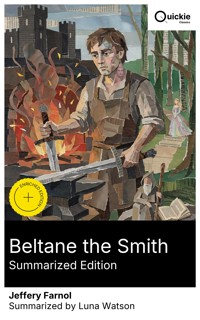
Beltane the Smith (Summarized Edition)
Table of Contents
Introduction
Between the steady beat of the anvil and the call of the battlefield, Beltane the Smith turns raw iron and raw fate into proofs of worth, as a craftsman of humble standing is tested by a world of mailed fists, bright honor, and shadowed wrong, and must choose, again and again, whether to remain the maker of tools in a village forge or become, under the pressure of injustice and love, the maker of himself, tempered by loyalty, shaped by mercy, and struck hard by duty until his heart and his hammer ring to the same brave, perilous music.
Jeffery Farnol’s Beltane the Smith is a historical romance of medieval hue, written in the early twentieth century by a noted purveyor of chivalric adventure. Set in a vividly imagined Middle Ages of forests, castles, and campfires, the novel blends pageantry and peril with a craftsman’s sensibility at its core. Without fastening itself to strict historiography, it draws on the atmosphere of chronicle and ballad to present a world in which courage, courtesy, and cruelty contend. As an instance of Farnol’s romantic fiction, it offers readers a brisk, honorable tale shaped by tradition and accessible emotion.
At the novel’s outset, Beltane is known first for his forge: the clarity of his skill, the strength of his arm, and the quiet code by which he labors. Trouble, arriving from beyond the village, refuses to leave him untouched, and an act of conscience sends him out upon the road. There he encounters allies and adversaries drawn from the unsettled realm—soldiers, outlaws, holy men, and courtiers—each quick to test his mettle. The journey widens into a struggle for communities under threat, while a figure of grace and resolve challenges his sense of purpose, sharpening his choices without dictating his fate.
Farnol tells the story in a deliberately archaizing voice that evokes minstrelsy without lapsing into pastiche, using heightened cadence, ceremonious address, and bright descriptive strokes. The effect is musical rather than antique, and it suits a narrative that moves swiftly from quiet glades to clamorous combats. Dialogue honors the courtesies and taunts of the tilting ground, while prose lingers over gleam of steel, hush of dawn, and fellowship at the fire. Humor and tenderness soften the clangor, but the moral compass points steadily. Readers may expect clear stakes, memorable set pieces, and a generous faith that valor and kindness can coexist.
Beltane’s vocation anchors the book’s themes: the dignity of labor, the shaping of character through patient blows, and the responsibility to make useful things in a broken world. Around that forge of meanings gather questions of identity and station, of how worth is measured when titles clash with deeds. The tale weighs justice against vengeance and finds courage most convincing when tempered by mercy. Love, courtly in feeling yet practical in consequence, refines resolution rather than eclipsing it. In the friction between iron necessity and humane choice, Farnol presents growth not as sudden elevation but as tempered resilience made ready for service.
For contemporary readers, the novel’s concerns feel current: it honors skilled work, insists that authority answer to conscience, and examines how communities resist fear by standing together. The story’s chivalry is not nostalgia alone; it asks what strength is for, and whether leadership can be exercised without losing tenderness. In an age crowded with noise, the book’s attentiveness to craft, promise, and place offers a countermeasure, reminding us that making well and living well are allied. Its adventure invites reflection on class mobility, chosen family, and the discipline required to turn raw temper into dependable, ethical action.
Beltane the Smith endures because it marries momentum to moral clarity, portraying a world perilous enough to test virtue yet spacious enough to reward it. Approached as a classic of romantic adventure from the early twentieth century, it offers the pleasures of gallant company and clear horizons while granting its hero the inward stakes of self-forging. Readers new to Farnol will find a generous doorway here, the language inviting them to listen for older cadences and the plot urging them forward. The result is an absorbing, spoiler-resistant experience: a tale of work, love, and duty tempered to a keen, humane edge.
Synopsis
Beltane the Smith, an early twentieth-century historical romance by Jeffery Farnol, opens in a medieval world riven by private wars and precarious loyalties. Its protagonist, a solitary blacksmith of uncommon strength and rectitude, lives close to the land and the rhythms of his forge. When violence intrudes upon this quiet life, he is drawn from his anvil onto perilous roads where courage and plain dealing are constantly tested. Farnol frames the tale with chivalric color and archaizing cadence, setting a stage in which lineage, oath, and conscience matter, yet where brute force often rules. The smith’s first steps outward establish both his moral compass and his isolation.
Leaving his accustomed toil, Beltane traverses war-scarred forests and villages, witnessing the cost of predatory governance on common folk. He encounters varied wayfarers—holy men, roving soldiers, and shrewd wanderers—whose counsel and challenges broaden his vision without reshaping his essential nature. The smith’s craft, portrayed as discipline and artistry, becomes a steadying metaphor for character: metal must be heated, struck, and tempered to hold an edge. Amid ambushes and skirmishes, he learns to gauge motives, to weigh mercy against necessity, and to act with decisive simplicity in a world that prizes guile and ceremony.
Early conflicts reveal a realm split by feuds and grasping magnates. Beltane’s instinct to shelter the vulnerable places him against marauding captains and corrupt retainers, and his refusal to bow to cruelty wins unlikely respect as well as dangerous notice. As rumors spread of a steadfast fighter who seeks no plunder, he is pulled deeper into local struggles that hint at wider disorder. Farnol lets the smith’s choices speak: each rescue, each refusal to turn away, forges reputation from deed. Leadership beckons, not as a prize but as a duty, and with it come obligations he neither expects nor wholly welcomes.
A noblewoman—compassionate, spirited, and bound by rank—enters the narrative as both complication and catalyst. Their first meetings are edged with mistrust, each constrained by role and wary of the other’s world. Yet shared ordeals, negotiated with tact and fortitude, gradually turn suspicion into regard. The romance is less courtly dalliance than proof by trial: loyalty tested, pride humbled, courage steadied. Beltane confronts a noble code that prizes lineage, while he values work and word; in this tension the book explores dignity beyond birth. Desire is never allowed to eclipse duty, but it clarifies what duty might finally mean.
Gathering comrades from disparate walks—outcasts, idealists, seasoned fighters—the smith lends his steadiness to a burgeoning resistance. Campaigns and countermarches culminate in tense defenses of threatened strongholds, where Farnol’s taste for vivid action and practical detail shows. Here the forge reappears in new guise: improvising armor, mending engines, and shaping tools that keep hope alive under siege. Beltane’s command is pragmatic rather than grand, marked by listening as much as by orders. The spectacle of battle is balanced by quiet scenes of care for the wounded, the hungry, and the fearful, insisting that valor is proved as much in patience as in prowess.
As the struggle widens, adversaries harden into a network of ruthless power, and betrayals test the fragile coalition Beltane has helped assemble. Hints surface that his past is tangled with the fate of the land, pressing questions of identity and inheritance without announcing final answers. Spiritual counsel tempers his anger; bitter losses chasten his resolve. The narrative tightens toward a decisive confrontation in which he must shape not only tactics but the moral tone of victory. The crucial lesson is less how to conquer than how to rule himself—when to strike, when to forgive, and whom to trust at the costliest moments.
Farnol ultimately binds private and public reckonings into a conclusion that honors the story’s vows without relying on surprise alone. The book’s enduring appeal lies in its synthesis of adventure and ethical inquiry: a tale of a craftsman learning to make a just life as one makes good steel, by heat, hammer, and measure. Beltane the Smith contributes to the tradition of romantic historical fiction that treats chivalry as aspiration rather than ornament. It resonates for readers drawn to questions of earned honor, humane leadership, and the possibility that steadfast work can mend a broken country without betraying a steadfast heart.
Historical Context
Jeffery Farnol (1878–1952) was a British novelist known for historical and adventure romances that enjoyed wide transatlantic readership in the early 20th century. Beltane the Smith, first published in 1915, belongs to his medieval-themed works and follows the conventions of chivalric romance and swashbuckling adventure. While employing invented places and figures, it draws on recognizably European medieval life. Farnol’s novels were widely circulated in Britain and the United States, building on a readership established by successes such as The Broad Highway (1910). The book situates readers in a world of castles, forests, and fortified towns, shaped by feudal hierarchy and local custom.
The setting evokes central institutions of the European Middle Ages: hereditary lordship, vassalage, and manorial obligations that bound peasants, knights, and nobles. Power is expressed through castles, retinues, and private justice, while roads and woodland harbor travelers, merchants, and outlaws. Town life, markets, and tolls coexist with rural villages built around the manor and parish church. Legal authority is fragmented among seigneurs, sheriffs, and ecclesiastical courts, creating overlapping jurisdictions typical of the period. Such a framework supports quest-like journeys, negotiated truces, and sieges, anchoring the narrative in practices familiar from medieval chronicles and legal customs rather than purely modern state institutions.
Chroniclers of the high Middle Ages describe recurring turbulence as magnates competed for territory and homage, often fortifying strongholds and waging private war. Castle warfare, chevauchées, and the employment of mercenary bands were common features, especially in the twelfth and thirteenth centuries. England’s mid-twelfth‑century civil conflict, remembered as the Anarchy (1135–1153), produced widespread disorder and ad hoc castle-building, conditions later writers used as a backdrop for tales of rescue and redress. Although Farnol’s names are invented, his depiction of embattled lordship, sieges, and martial retinues aligns with documented patterns of feudal conflict and the social strains such warfare imposed.
The novel’s emphasis on a blacksmith foregrounds a craft central to medieval life. Smiths forged agricultural tools, nails, horseshoes, and weaponry, supporting both subsistence and warfare. Rural smithies typically worked charcoal-fired forges, manipulating bloomery iron with hand hammers and bellows; larger towns later adopted water-powered hammers. From the twelfth century, urban craft guilds regulated training, quality, and market rights, while village smiths served manorial and parish communities. Armament production linked smiths to knights’ needs for mail, blades, and fittings. Their proximity to crossroads and markets made them visible, respected figures whose skills underpinned the functioning of estates and towns.
Ecclesiastical institutions frame much of medieval social order that romances depict. Benedictine and later Cistercian monasteries held land, dispensed alms, and offered hospitality to travelers; parish churches structured local worship and tithing. Canon law governed marriage, inheritance questions touching legitimacy, and moral offenses, while sanctuary and clerical intercession could temper secular violence. Clergy preserved learning, copied texts, and mediated disputes, and monastic chronicles recorded the very conflicts that fiction reimagines. Pilgrimage routes and reliquary cults drew diverse classes into shared spaces. Such realities inform narrative episodes featuring abbeys, hermitages, and counsel from churchmen, without requiring specific historical personages to appear.
Farnol wrote within a long tradition shaped by Sir Walter Scott’s historical novel and nineteenth‑century medievalism. Works such as Alfred Tennyson’s Idylls of the King, William Morris’s romances, and Arthur Conan Doyle’s The White Company popularized archaizing diction, knightly ideals, and episodic quests. Late Victorian and Edwardian taste for Pre‑Raphaelite imagery and the Arts and Crafts celebration of preindustrial workmanship made medieval settings culturally resonant. Farnol adopted elevated, deliberately old-fashioned dialogue and drew on themes of honor, oath‑keeping, and ordeals by arms, devices familiar to readers from popular periodicals and illustrated editions that kept chivalric storytelling at the forefront of mass entertainment.
Appearing in 1915, the novel reached readers during the First World War, when the Anglo‑American book trade continued to circulate popular fiction despite wartime shortages. Historical romances offered recognizable moral frameworks and escape from contemporary anxieties, and public culture frequently invoked medieval chivalry in sermons, journalism, and recruiting rhetoric. Lending libraries and inexpensive reprints broadened access to adventure narratives, while illustrated dust jackets and frontispieces shaped expectations of derring‑do. In that environment, Farnol’s medieval tale of ordeals, loyalty, and just retribution fit prevailing tastes, supplying action within a stable ethical vocabulary that readers already associated with knightly exempla.
Read against its contexts, Beltane the Smith reflects early twentieth‑century medievalism and the Arts and Crafts admiration for skilled handwork by elevating a craftsman to moral centrality. Its feudal backdrop contrasts arbitrary lordship with communal norms, echoing chronicles that condemn unjust castellans and praise mercy, oath‑keeping, and ordered rule. The narrative’s celebration of fellowship, protection of the vulnerable, and legitimate authority mirrors values widely affirmed in wartime civic discourse. By reshaping medieval materials into accessible adventure, Farnol offers readers both nostalgia and a resonant ethical critique of cruelty and lawlessness, without binding the story to any single documented historical episode.
Beltane the Smith (Summarized Edition)
CHAPTER I
HOW BELTANE LIVED WITHIN THE GREENWOOD
In a forest glade within earshot of Mortain’s bells lived Beltane the Smith. Beneath the trees he hammered beside a brook, mighty of limb, versed in stars, beasts, Latin and Greek through Ambrose the Hermit, ignorant of women. To live he built a hut and forged hooks, axes and blades for foresters. One evening he asked, “My father, why speak you never of women, though poets praise beauty like Helena[1]?” Ambrose sighed. “Woman’s beauty is evil; it wrecks men’s souls. Helen was a false adulteress.” “Alas!” said Beltane. That night the trees sighed while the brook chattered of cities, women and love, and he slept.
Seasons passed; Beltane roamed the forest, mended mail for wandering knights, swapped lusty blows on the moss, then lounged over legends or painted bright angels on vellum. One radiant afternoon a tall lean man with a blade-scarred mouth watched from the shade. Beltane asked, “Good sir, what’s amiss?” “The world, youth, the world—’tis all amiss, yet here you dab colour with a little brush,” the stranger said. Beltane answered, “Do your duty as carefully as I paint and the world will mend.” The man scratched his chin. “Duty? Then I must fight thee.” “Fight?” said Beltane. “I have no quarrel.
“Reason be hanged,” the stranger laughed, “I am commanded by one long dead. Pentavalon groans under a usurper; sins run loose. Yet you dally with a brush. Thou art fool, knave, boy.” He spat. Beltane rose, seized him and flung him flat. Sitting up, the man grinned. “Good spirit! Now taste steel.” He offered a broad sword that flashed RESURGAM. Beltane read, “I shall arise.” The stranger took its twin and tapped Beltane’s shoulder. Steel rang, sparks flew; taunts stung. At last the stranger’s swift blade struck thrice, whipped the great weapon from Beltane’s grasp, and left him breathless, furious, shamed.
After being beaten, Beltane stood head bowed in silence. The tall stranger softened: “Be not ashamed, good youth. Had I wished, I could have chopped thee as small as thy brush, for I have lived by the sword since boyhood. Take it not to heart.” He wrapped his cloak, lifted the fallen blade. Beltane asked, “Wilt not cross with me again? I might fare better.” “Another day; I return to-morrow. Thy hand is not yet worthy.” He strode away. Colours now dulled, Beltane bathed, then lay yearning for the great sword; sleep thundered with charging feet and the roar of battle.
Sunrise gilded Beltane’s door where the stranger loomed. “Slug-abed, rise; work awaits. Within the week I march—wars brew on the borders.” Beltane, still wondering at his dreams of strife, dressed and faced him: “Who art thou?” “No matter. I am commanded to train thee in horse and lance by one who lives yet is dead.” Beltane folded huge arms. “I am a smith. War is evil; they that trust the sword perish.” The stranger raged, “Craven babe! Must I spit on thee?” Ambrose the hermit entered; the warrior knelt. “Lord.” Ambrose blessed him, then placed the great blade RESURGAM in Beltane’s hands.
Beltane swung the blade, hid it, and met a restless grey horse. “Mount him,” the stranger said. Beltane’s steady grip calmed the beast; he vaulted up, thundered through the glade, mastered a desperate charge toward an oak, then returned. “We’ll make a horseman of thee,” the stranger nodded, handing him a lance and perching his cap on an upright sword. Beltane galloped, speared the cap clean. “Less dullard than I thought, yet with the sword thou art sorry fool.” They stripped to the waist, clashed again; the veteran laughed, battered Beltane breathless, flicked the weapon away. “Never despair, boy; my name is known everywhere.
"Mark me," the stranger said, "a knight trusts armour and swings to smite, yet a man cannot always wear plate; make thy weapon both sword and shield. Come, lift it and I will show thee every stroke." He lingered a week in the greenwood teaching Beltane war-craft, until camaraderie ripened. Upon the seventh morning, breaking fast, Beltane drooped. "Whence thy dole, good youth?" "I must part from thee, and I have no friends." "Friends may prove doubtful, yet I am thine while thou bear that goodly blade." "Wherefore?" "Thou art my scholar, perchance a notable sworder. Since you ask, I am Benedict of Bourne.","Beltane rises and Benedict grins. 'Hast heard that name?' 'Soldiers say you withstand Duke Ivo,' Beltane replies. 'Call that black usurper great?' Benedict snorts. 'I knew a greater—Beltane the Strong.' 'He loved justice,' Beltane nods. 'Now we have Black Ivo,' Benedict sighs. 'He woos Duchess Helen; I like not spit-fires—malison on him!' Breakfast done, he straps on mail, surcoat, sword, mounts the horse, touches his scar. 'Men call me Benedict o' the Mark. If any say "Benedict o' the Mark bids thee arise and follow," obey.' 'Aye, Sir Benedict.' 'More riddles await; fare thee well!' He wheels charger and rides off, mail flashing, lance gleaming.
paragraphs




