


10,00 €
Mehr erfahren.
- Herausgeber: Ithaca Press
- Kategorie: Religion und Spiritualität
- Sprache: Englisch
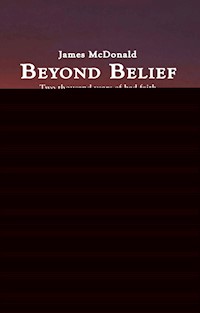
Starting from a neutral position, this book looks at claims made by Christian leaders over the centuries and analyses them in the light of modern scholarship. Erudite yet mischievous, the book's scope is wide, from early history to the present day, from America to China, and spanning many different disciplines. Many of the conclusions reached will shock devout believers, though all of them can be verified with reference to sympathetic works by biblical scholars and theologians. A recurring theme is that of open secrets - facts well known to historians and other academics in the Church, but kept from the faithful masses. These open secrets are not actively denied, just avoided so as not to cause offence to those who are familiar only with the Sunday-School version of events. Many Christians see their system of belief as dating from the earliest times, but this idea becomes difficult to sustain in the light of when and how key doctrines were established. Many ordinary Christians would be shocked to discover, for example, the prominent role played by violence and forgery in developing and promoting Christian doctrine. Whatever one's own religious beliefs, the Christian Churches provide huge amounts of material for the enquiring mind. Repercussions from crusades that happened over 900 years ago are still in evidence today. The division of the Roman Empire in early Christian times also reverberates to the present day. To a large extent, the history of the Western World over the last 2,000 years is the history of the Christian Church. Without a proper understanding of the role of the Church, it is not possible to truly understand the history of Europe, the Middle East, or indeed the Americas.
Das E-Book können Sie in Legimi-Apps oder einer beliebigen App lesen, die das folgende Format unterstützen:
Veröffentlichungsjahr: 2009
Ähnliche














.
Beyond Belief
Two Thousand Years of Bad Faith in the Christian Church
James McDonald
Beyond Belief
Two Thousand Years of Bad Faith in the Christian Church
Published by
Garnet Publishing Limited
8 Southern Court
South Street
Reading
RG1 4QS
UK
www.garnetpublishing.co.uk
www.twitter.com/Garnetpub
www.facebook.com/Garnetpub
blog.garnetpublishing.co.uk
Copyright © James McDonald, 2011
All rights reserved.
No part of this book may be reproduced in any form or by
any electronic or mechanical means, including information
storage and retrieval systems, without permission in writing
from the publisher, except by a reviewer who may quote
brief passages in a review.
First Paperback Edition
ISBN: 9780863725234
British Library Cataloguing-in-Publication Data
A catalogue record for this book is available from the British Library
Typeset bySamantha Barden
Jacket design by Garnet Publishing
Printed and bound in Lebanon by International Press: [email protected]
errata and updates may be found online at http://www.badnewsaboutchristianity.com/errata/
ACKNOWLEDGEMENTS
My sincere thanks go to Robert Dinwiddie and to Marcus Williamson for their invaluable suggestions and for their assistance in editing this book.James McDonald France, September 2010INTRODUCTION
To a large extent the history of the Western World over the last 2,000 years is the history of the Christian Church. Without understanding the role of the Church it is not possible to understand the history of Europe, the Middle East, Asia or the Americas. Nor is it possible to understand the development of ideas in such areas as politics, education, medicine, law, sociology and architecture: almost anything in fact from art to astrophysics.
Repercussions from crusades that took place over 900 years ago are still in evidence. The division of the Roman Empire in early Christian times also reverberates to the present day. The border between the eastern and western parts of the Empire re-emerged in the late twentieth century as a fault line in what was then Yugoslavia. That line is now the border between Croatia and Serbia. On the side that used to lie in the Western Empire Croats use the Latin alphabet of the Roman Catholic Church; on the other side, the side that used to lie in the Eastern Empire, Serbs use the Greek alphabet favoured by the Orthodox Church.
Whatever one’s own personal beliefs, the Christian Churches provide material for the enquiring mind. Why did Jesus never forsake Judaism if his intention was to found a new religion? Why are there so many different Christian denominations? What do they all believe, and what exactly do they disagree about? Why do the Orthodox Churches claim to be catholic, and why does the Catholic Church claim to be orthodox? Why have long suppressed theories about the role of Magdalene generated such interest in recent times? In the course of looking at the history of the Christian Churches we will find the answers to these and many other questions.
Much of the material here can be confirmed by reference to the Bible, and even some of this will be surprising. Christians are now generally aware that Bible stories are often retellings of stories found in older pagan literature, but many are unaware that numerous gods are mentioned in the Bible, not to mention numerous ‘christs’. Almost all will be surprised to discover that for the first few centuries mainstream Christians regarded the Emperor of the Roman Empire as infallible. Addressed asYour Holiness and acclaimed as Pontifex Maximus and Bishop of Bishops, a long line of Emperors were considered incapable of error on a range of matters including faith and morals, long before the concept of a Pope was invented.
The history of the Church is different from the version popularly taught in most European and North American schools. For example, few people, other than Church scholars, are aware that no original text of the Bible, or any part of it, survives. Nor that the texts that do survive are late and contradictory, and bear evidence of tampering (including the late addition of the stories of Jesus’ birth and resurrection). Few realise the extent to which forged documents helped Churches to establish doctrine and political power.
Again, most Christians see their system of belief as dating from the earliest times, but this idea becomes difficult to sustain when one looks into when and how key doctrines were established.
This book is likely to contain some big surprises for anyone who is not already a Church scholar, and to explain a few puzzles. The scope is wide, from early history to the present day, from Chinese Nestorian Christians to American Mormons, from ancient Greek philosophical arguments to medieval theology and the rise of science and rationalism.
A NOTE ON SCOPE AND SOURCES
A major difficulty lies in defining exactly what the terms Church and Churches mean. How does a Church differ from a denomination or a sect? Which organisations count as Christian Churches? Do heretical groups? Do schismatic groups? Do those who deny traditional doctrines, as the Quakers do? Without being pedantic, it is difficult to specify exactly what the terms mean each time they are used. Generally the context will make it clear which denominations are included. There have always been different groups that call themselves Christian while disagreeing with each other on important points of doctrine.
When discussing the early Church, the context will make it clear whether the term Church covers the Jewish Christians, St Paul’s group (from which most of today’s mainstream Churches have evolved) or the various Gnostic groups.* From the fourth century onwards we are generally talking about St Paul’s group, and the context will distinguish between Orthodox Churches (including what is now called the Roman Church) and the many other Churches. From around the time of the Crusades the context will distinguish between the Eastern (or Orthodox) Church and the Western Church (also called the Roman Church or Roman Catholic Church). After the Reformation the context will distinguish between the Western Churches: Roman on one hand and Western Reformed (mainly Protestant – Lutheran and Calvinist) on the other. Later still the context distinguishes between these and a proliferation of nonconformist Churches. The fact is that there have always been so many different factions that it is impractical to indicate in each case exactly which factions are included and which excluded. Any consequent ambiguity is the price of condensing the scope into a single volume. Wherever the term mainstream Churches is used, it may be taken as encompassing all but the smallest fringe groups.
* Gnostics are people who believe they possess a secret knowledge of spiritual matters, usually obtained by direct communication with God, or with a god.1 THE RELIABILITY OF CHRISTIAN AUTHORITIES
The Old Testament is divided into a number of books, most of them originally written in Hebrew, all of them now considered by Jews to have been inspired by God. Some parts of some books were originally written in Aramaic,* some apparently in Syriac or other Middle Eastern languages, but all such texts were rendered into Hebrew. Later these Hebrew scriptures were translated into Greek, Latin and other languages. Some additions to the text were written in Greek and survive only in Greek. The Jews distinguished between three kinds of book within the Old Testament: the Torah (Law), Nebim (Prophets) and Ketubim (Writings). They came to be regarded as divinely inspired in this same chronological order: first the Torah, later the Nebim, and later still the Ketubim.
For centuries the Church taught that God had communicated his word through certain Jewish prophets. There was no doubt about who these prophets were or what they had written, no question that the original text had ever been tampered with, and no possibility that errors had been introduced in authorised translations. Not only was the text internally consistent and free from error, but it also contained nothing that was superfluous. Furthermore it was held that the text had been set down in chronological order. Those without learning generally held that the text was to be interpreted literally, but biblical scholars have always used a certain amount of interpretation (they call it exegesis) to help understand the more opaque passages.
* Aramaic was a common language in the Middle East from around 700 BC to AD 700 (and is still spoken today in a few areas).Traditionally, Jews believed that the Hebrew text of the Old Testament was the infallible word of God. Orthodox Christians held that the Greek translation called the Septuagint held the same status. For centuries this was the only version used by Christians. The Roman Church later accorded the same status to a fourth-century Latin translation (the Vulgate); and later still Protestants accorded it to their own translations. Many fundamentalist Christians still believe that the Old Testament is the literal and infallible word of God, but over the last 200 years or so virtually all Christian scholars have abandoned such beliefs.
What would we expect of the Old Testament if it were, as claimed, the word of God? We might reasonably expect that there would be no doubt about what constituted the Old Testament. The books in it, called the canon, should be clearly defined. Furthermore this canon should be unchanged from the earliest days of Christianity. We might even expect some sort of divine confirmation of it. We might also expect that the Bible would be original. We would not for example expect to find stories that have been plagiarised from neighbouring cultures or other religions. If the claims made for the Bible were true, then in view of their importance we might expect that the original manuscripts would have been carefully preserved. Failing this, we might expect that various copies would at least agree with each other. We certainly would not expect to find evidence of tampering and later editing. We might also reasonably expect various books to have been written by the authors to whom they are attributed, and in the historical periods claimed for them. Also, if translations were divinely inspired, as the Greek Septuagint, Latin Vulgate, and English Authorised Version have been claimed to be, then we might expect the same standards of them as of the original text. We would not expect to find evidence of deliberate mistranslation. Also, if the Bible represented the infallible word of God, then it might reasonably be expected to be internally consistent and free from factual errors.
These expectations are not unreasonable. Neither are they merely the expectations of modern rationalists. Christians have made all of these claims and in the past have persecuted people for doubting them.
The Canon of the Old Testament Of making many books there is no end; and much study is a weariness of the flesh. Ecclesiastes 12:12There is no evidence that any divine agency ever issued or confirmed an authorised list of contents for anything like a Bible, or even for an Old Testament. Jewish scholars disagreed with each other about what constituted Holy Scripture. When the Jewish historian Josephus (AD 37–c.100) listed books believed to be of divine origin he counted only four amongst what would now be called the Writings.1Later Jews (and Christians) would count no fewer than eleven.
By the time of Jesus, the Jews had included some books as scriptural on grounds that are now known to have been flawed. The book of Esther, for example, is a popular romance that does not even mention God. Furthermore, the story in it looks suspiciously like a version of an old Babylonian myth. There was much debate in Jewish circles as to whether Esther should be counted as scripture, and eventually it won hesitating approval, primarily because it justifies the Jewish institution of Purim.* However, the book had to be reduced by half to make it acceptable. The Song of Songs, also called Canticles, is an anthology of love poems, whose place in the canon was also disputed. It won approval on the erroneous ground that its author was Solomon, hence its alternative name, the Song of Solomon. Its explicit sex scenes have long caused unease amongst both Jews and Christians, who have traditionally mollified themselves with the belief that it is some sort of allegory. Ecclesiastes found its way into the canon because it was also mistakenly believed to have been written by Solomon. Uncomfortable material was removed: for example 18 psalms had to be dropped from the book of Psalms.2The book of Daniel found its way in under false pretences, having been written much later than it purports to have been.
* Purim is a Jewish holiday that commemorates the deliverance of Persian Jews from a purported plot to exterminate them around the fifth century BC. The Jews in Jerusalem were stricter than the Greek-speaking Jews of the Diaspora* in what they regarded as divinely inspired. Greekspeaking Jews included 1 Esdras, Judith, Tobit (Tobias) and the books of the two Maccabees with the histories, and Wisdom of Solomon, Ecclesiasticus (= Ben Sirach) and Baruch and the Prayer of Manasseh with the poetic and prophetic books, while the Song of the Three Holy Children, Susanna and the Elders, and Bel and the Dragon were appended to the book of Daniel. Arguments about what was and what was not genuine scripture prompted Jewish scholars to consider the question around the end of the first century AD. The first attempt at settling a definitive Jewish canon was reputedly made around AD 90 at the Council of Jamnia, where Jewish scholars discussed the validity of various books. If such a council did ever meet,3its decisions apparently failed to reach the Jews of the Diaspora, for they continued to accept as scripture works that other scholars had rejected, and indeed they continued to tamper with and supplement what they already had for many years to come.When early Christians addressed the problem of what to regard as canonical, there was a distinct lack of agreement. No one knows what Jesus would have regarded as canonical. He probably never considered the question, since the question of a canon had not yet arisen. The first Christian known to have assembled a definitive list of Christian writings was Marcion (AD c.85–160), a ship owner and native of Sinope (Sinop in modern Turkey), in the latter half of the second century AD. He had a low opinion of Christianity’s Jewish origins and omitted the whole of the Old Testament. Stimulated into action by Marcion, the Church Father Irenaeus (AD c.130–c.200), Bishop of Lyons, compiled his own canon, which did include a version of the Old Testament.
Books that were held to be non-canonical by Jewish scholars continued to be regarded as canonical by the Jews of the Diaspora, and this dichotomy has echoed throughout Christendom to the present day, since Christian scholars generally accepted the Jews as authorities on their own scriptures. Initially the Church accepted the disputed books, at least partly because the Septuagint included them, and the Septuagint was considered to have been divinely inspired. Nevertheless, particularly unconvincing books, such as Esther, were excluded.4Leading churchmen were still disputing books like Wisdom and Ecclesiasticus as late as the eighth century,5and disagreements continued for centuries to come. When Protestants started reconsidering the canon they rejected the disputed books, falling back into line with the Hebrew texts but printing the disputed ones as an appendix. At the Council of Trent in 1545–7 the Roman Church reconsidered its attachment to the Septuagint and decided to reject from the canon 1 Esdras and the Prayer of Manasseh, along with a late addition, 2 Esdras.6The Eastern Churches reached their own compromise in 1672, accepting some disputed books and rejecting others.7
* The Jews of the Diaspora were Jews living outside the traditional Bible lands.So it is that the principal Churches still disagree about the canon of the Old Testament. Roman Catholic versions of the Bible include seven whole books and several further parts of books that are omitted from Anglican and Protestant versions. The material missing from the Anglican versions (listed in Article 6 of the 39 Articles) is included in the Apocrypha, now generally bound as a separate volume.8The Apocrypha takes its name from the Greek word apocryphosmeaning hidden away. Works hidden away in the Apocrypha were so unlikely that they have given rise to the wordapocryphal, meaning fanciful or imaginary. In his German Bible, Martin Luther (1483–1546) excluded 1 and 2 Esdras not only from the canon, but also from the appendix of apocryphal works. To complicate matters further, some books that are not generally considered even apocryphal by modern Churches are considered as fully canonical by some ancient Churches. For example, the Ethiopic Church regards 1 Enoch as canonical. Their case is strengthened by the fact that a New Testament author cites 1 Enoch as though it were valid scripture.9
The key point here is not that some biblical works are fanciful but that there is no reliable way of knowing which works possessed God’s own authority. Was it the selection of the Jews of Jerusalem or the Jews of the Diaspora? Was it the works chosen by the Eastern Churches or the Western Church, or by the Roman Catholics, the Protestants, or by one of the hundreds of other Christian sects with their own canon? It seems odd that God should have permitted such a lack of clarity and so much disagreement about the contents of his divine revelation. It is also odd that the true word of God is not immediately distinguishable from the work of impostors. No version of the canon was so obviously divine that it could inspire universal agreement. Indeed, Churches typically decide their canons by a majority vote. Furthermore, all the oldest Churches have revised their canons over the centuries. For many people, the implication is that all such canons are not the selections of God at all but of fallible and capricious human beings.
An Original Work?…Tear down your house, I say, and build a boat. These are the measurements of the barque as you shall build her: let her beam equal her length, let her deck be roofed over like the vault that covers the abyss; then take up into the boat the seed of all living creatures The Epic of Gilgamesh, c.2500 BC (translation by N. K. Sandars)
If the books of the Old Testament contained God’s unique revelation, they might reasonably be expected to be original. If on the other hand they were writings typical of the Middle East between 2,000 and 3,000 years ago, they would be likely to contain material plagiarised from other works and from neighbouring peoples. Which pattern does the Old Testament best fit? Did any biblical stories exist before God revealed them to his chosen people?
The Old Testament is not a single work but a collection of ancient Jewish writings. As a cursory glance shows, it is an amalgamation of laws, genealogies, chronicles (or histories), myths, proverbs, poetry, songs, eroticism, propaganda, prophecy, allegories, morality tales and humorous stories. In the original Hebrew there are numerous folk etymologies, puns and acrostics.* However, nearly all of these are lost in translation.‡ Any good story or choice morsel circulating in the Middle East could be included in the anthology, subject to amendments where necessary. The Jewish scholars who compiled the books that now comprise the Old Testament borrowed from the songs, folk tales and myths not only of the Jews themselves, but of their neighbours too. This sort of plagiarism was both widespread and acceptable in the Middle East at the time.
* An acrostic is a poem in which the first letter in each line spells a name or other word. ‡ The original Hebrew is full of folk-etymology puns, along the lines of man (‘adam) being created from earth (‘adamah), which are lost in translation. Similarly the name Eve is derived from the verb ‘to live’. Puns explain many apparently random phrases, for example ‘Tell it not in Gath’ resonates more in Hebrew, in which the words tell and Gath sound similar. Examples of acrostics may be found in the first four chapters of Lamentations, also Psalms 25, 34, 37, 111, 112, 119, 145, and Proverbs 31:10–31. In traditional English versions of the Bible, Psalm 119 is still divided up using Hebrew letters as numbers.
To take a well-known example, the story of Noah’s ark (Genesis 6–8) closely parallels the story of a flood given in the Epic of Gilgamesh.10Gilgamesh is an Assyrian work dating from around 2500 BC, almost 2,000 years before the biblical account was written. The story from Gilgamesh is the more complete version. In fact the biblical account appears to be an amalgamation of two derivative versions of the Gilgamesh story. Odd details are lost in the biblical account: for example where in Gilgamesh a raven, a dove and a swallow are sent to find dry land, in the biblical version only a raven and a dove are sent. Both stories appear to explain rainbows. In the biblical version Jahveh places his bow in the sky as a reminder of his covenant not to cause such a flood again. In the older version the goddess Ishtar dedicates her spectacular necklace with the ‘jewels of Heaven’ made by the sky god. The Jews would certainly have known this epic. It was to be found in many Eastern libraries – fragments have been found in Turkey, Syria, Israel and Egypt.11A Babylonian version of the story is also known, again older than the biblical version, and again more complete. There is also a well-known Greek version of the story.
The story of Moses’ mother hiding her infant son in a basket of rushes caulked with pitch, and entrusting him to the river, is also adapted from an older Middle Eastern story. The original river was the Euphrates, the role of Pharaoh’s daughter was played by the goddess Ishtar, and the child grew up to be the Mesopotamian king, Sargon of Akkad. In ancient times rivers were thought of as the embodiment of gods, so in the original tale the mother was entrusting her child to a deity, not abandoning him to the elements. The story of Moses, which may be found in Exodus 2:1–10, dates from about 1,000 years after that of Sargon.
Another well-known story from the Old Testament is that of God giving Moses tablets of stone on which were inscribed God’s commandments. But long before then the Babylonian Sun god Shamash had handed stone tablets of the law to Hammurabi, a king during the first dynasty of Babylon, around 4,000 years ago. Again there are clear parallels: Hammurabi received his tablets on top of a ziggurat, while Moses received his on top of a mountain.12The laws given to Hammurabi are sophisticated, exceeding 280 in number. They evidently provided the basis not only for the story of divine laws being inscribed on tablets, but also for some of the later Jewish laws. To take an example, the Code of Hammurabi states that:
The familiar Mosaic Code (Exodus 21:23–4) is more concise:
Hammurabi predated Moses by many hundreds of years. God seems to have copied the behaviour of other Middle Eastern gods. For example many divinities practised the art of separating the waters, as God did for Moses and his followers fleeing from Egypt.
Other Old Testament events have clear parallels in classical mythologies. For example the story of the Tower of Babel echoes that of the Giant’s staircase to Olympus. Samson slaying the lion echoes Hercules slaying the Nemean lion (and also has an older parallel in the saga of Gilgamesh). Again, in Genesis (22:1–13) God tests Abraham by telling him to kill his son Isaac and offer him up as a burnt offering. At the last minute God settles for the sacrifice of a ram instead. This is an adaptation of another old Sumerian legend, tailored to demonstrate God’s mercy and benevolence. It also has a classical parallel. When Agamemnon was about to sacrifice his daughter Iphigenia, the goddess Diana, struck by compassion, substituted a goat at the last minute.
Many passages occur in more than one book of the Bible,13a reminder of the fact that the Jews considered these books to be quite distinct works, and an illustration of how freely writers would borrow from other writers. Psalms 14 and 53 are the same, except that a Hebrew editor has substituted one divine name (Elohim) for another (Jahveh). Genesis (19:4–8) contains a story of how Lot offered his virgin daughters to the Sodomites in order to appease them. This was a popular Middle Eastern tale. Indeed it was so popular that it appears again in a slightly different form in the book of Judges (19:22–5). The participants are different but the story is much the same. Apparently, different authors have adapted the same basic story for their own purposes, adding different endings to make different points.
The pagan origin of many Old Testament stories has long been known. Sometimes the scribes who did the borrowing did little to disguise their plagiarism, for example failing to amend the text to its new home. Thus, in the Jerusalem Bible, Proverb 22:20 makes reference to ‘thirty chapters of advice and knowledge’, alluding to the Wisdom of Amenemophis, on which, as is confirmed in a footnote, ‘this whole passage is based’. Psalm 104 contains material from the Hymn to the Sun of the Egyptian Pharaoh Akhenaten, dating from around 1340 BC. Other psalms were originally written in honour of Baal.14Again, biblical texts are so similar to older pagan Canaanite texts that it has been possible to explain certain odd-looking Hebrew passages by referring to the Canaanite versions – they turn out to be either mistranslations or mistranscriptions.15
Textual Problems Yet man is born unto trouble, as the sparks fly upward. Job 5:7 (Authorised Version)It is man who breeds trouble for himself as surely as eagles fly to the height. Job 5:7 (Jerusalem Bible)There is no single original text of the Old Testament, nor is there a single original version of even one book of it. The Jews were remarkably free in early times to edit and re-edit their Hebrew texts. They did not regard their scriptures as a single body, but as separate works. As we have already seen they often copied chunks of one book into another, sometimes changing names and other details to meet the needs of the moment. Impious suggestions were also doctored. For example, it seemed wrong that God should stand before Abraham, so the two swapped places and Abraham now stood before God. There were genuine errors too. A common one was to incorporate marginal notes into the text. Typically, one scholar would add a note giving his explanation of an opaque passage. A later scholar, copying the manuscript, would interpret the note as a correction and copy it as part of the main text.16
In later times (after AD 100) Jewish scribes began to take pains to ensure that texts were accurately copied, for example by checking the number of letters and words in the new manuscripts. The texts then settled down to relative uniformity, although they preserved errors and contradictions originating from earlier editing. Until the twentieth century, the oldest known Hebrew manuscript was only about 1,000 years old. When much older texts were rediscovered, it was possible to confirm what had previously been suspected – that numerous passages had been inserted, duplicated, scrambled or omitted.
A further difficulty was that different Jewish sects each tampered with the scriptures to suit their own teachings. For example the Samaritans had their own version, and so did the Essenes. There were also mainstream variants, and it is now generally accepted that the traditional text, known as the Masoretic Text, is ‘only one late and arbitrary line, surviving from an earlier uncontrolled variety’.17The texts are only relatively uniform, and surviving manuscripts frequently disagree with each other. The New International Version (NIV) of the Bible gives variant readings in footnotes, showing that Hebrew manuscripts often disagree with each other, and with Greek, Syriac and other texts. Here are extracts from the preface to the NIV explaining how the translators worked:
A recent international committee, considering the text of the Old Testament, identified some 5,000 places where the Hebrew was so puzzling that it might need to be corrected. A few of these are noted in footnotes to modern translations, although different translations handle them in different ways.
Some cases look like simple errors. According to the Masoretic Text corresponding to 1 Samuel 1:24, Sarah took a three-year-old bull to Shiloh, but according to most other manuscripts she took three bulls rather than one. In other cases it appears that the scribes have created rather a mess by deliberate tampering. Take for example the case of the killing of Goliath. Everyone knows that he was killed by David. The Bible says so, at least it does if one reads 1 Samuel 17:49–51. But according to the original text of another passage in 2 Samuel, Elhanan killed him:
This is not what is printed in the Authorised Version, however. The translators have inserted the words ‘the brother of ’ before Goliath’s name in 2 Samuel 21:19 so that the Authorised Version reads:
The words ‘the brother of ’ are italicised in the Authorised Version because they are interpolations – additions made by the translators. They are absent in more accurate recent translations. So why did Christian scholars manipulate the text in this way? In mitigation they could claim that they were merely bringing it into line with a third version of the story in 1 Chronicles 20:5:
What seems to have happened is this: Goliath was killed by Elhanan, and the story, dating from around 950BC, was recounted in both 1 Chronicles and 2 Samuel. Some 350 years later it was felt that David’s reputation needed a boost, so David was made into the hero of the story and this new version was included in 1 Samuel. To cover their tracks the Jewish editors changed the passage in 1 Chronicles by adding the words ‘Lahmi the brother of ’. They neglected however to change 2 Samuel in the same way, leaving a contradiction which later English translators obligingly tried to cover up using the same technique. The original interpolators made another gaffe, for they used the new David and Goliath story to explain how David came to meet Saul (1 Samuel 17:31–2), neglecting to square it with a different story about how they met, which appears in chapter 16. Early manuscripts contain only one of the two stories, further evidence that the contradictions arose through tampering.18
The book of Chronicles routinely tidies up earlier historical accounts. For example in an original story the actions of King Asa were slightly flawed:
Jewish history was routinely rewritten to show a favourite leader in a good light, or to confirm God’s attachment to the Jewish people. Sometimes God was introduced into a story to explain key events. A story in 2 Chronicles 18:31–2 is essentially the same as that in 1 Kings 22:32–3, except that the mechanics of Jehoshaphat’s escape is different. In the earlier version he simply calls out to those who are about to attack him:
Significantly, the original text is not altered, but added to. The later text (Chronicles) is almost identical except that an additional sentence has been inserted.
A man called Jether has different nationalities according to different manuscripts.19It appears that it was politically correct for him to become an Israelite, and this was achieved simply by doctoring the text. Did Solomon have a mere 40 stalls for chariot horses, or a much more impressive 4,000,20and did Jashobeam kill three men on a single occasion, or was it 30 men, or 300, or even 800 men?21There are numerous such inconsistencies, both between different books, and different manuscripts of the same book.22Such tampering can be detected only when the editors failed to cover their tracks early enough and well enough. We can never know how many times they covered their tracks successfully.
Like the Jewish scribes who had not always been careful of the truth, neither were Christians. Early Christians tampered with the Septuagint, but this tampering was exposed by comparison with the original Hebrew. Christians then accused Jews of suppressing the truth in their Hebrew versions. But the Jews had largely stopped tampering with their ancient texts by the end of the first century AD and were thus routinely vindicated by the evidence. For example, in the Septuagint, Psalm 96 was amended to include an apparent prophecy about the Lord ruling from the tree (i.e. the cross). The fact that Jewish versions included no such line was explained away by the fact that the perfidious Jews had removed it from the text. In fact it was the Christians who had been responsible for the tampering, a fact easily confirmed by comparing the texts with older copies in both Greek and Hebrew. Christians also inserted a line in Jeremiah to foretell Christ’s descent into Hell: ‘The Lord God remembered His dead people of Israel who slept in the earth of the grave, and He went down to them to preach to them His salvation.’ This fraudulence has been quietly dropped, but the writings of the Church Fathers confirm that they believed it to be genuine and thought that the Jews had tried to suppress it.23We will come across a number of other attempts by Christians to insert convenient text – often either retrospective prophecies or justifications for novel doctrines.
Authorship, Order and DatingHaving now shown that every book in the Bible, from Genesis to Judges, is without authenticity, I come to the book of Ruth, an idle, bungling story, foolishly told, nobody knows by whom, about a strolling country-girl creeping slyly to bed with her cousin Boaz. Pretty stuff indeed to be called the word of God!Thomas Paine (1737–1809), The Age of Reason, Part II
Traditionally God was held to have been the author of all books of the Bible, just as Muslims believe Allah to have been the true author of the Koran. In both cases, part of the evidence of divine authorship was the sublime quality of the language used. Many Muslims hold that God must have written the Koran because no human could produce such beautiful prose. Unfortunately its supernatural beauty seems to be discernible only by Muslim speakers of Arabic and remains opaque to other Arabic speakers. The position of the Old Testament is less convincing. Even the most pious Christian scholars found the original text crude and uncouth. St Jerome for example found the language of the prophets ‘harsh and barbarous’, much preferring the quality of writing of pagan authors such as Cicero and Plautus.
Another problem is that of identifying the human authors. Most books of the Old Testament were not written by the people whose names they bear. Many were written and edited over a long period by unknown hands. Traditional ascriptions are known to be unreliable, and textual analysis reveals some books to be the work of more than one writer. The oldest book whose author is known is an apocryphal book called Ecclesiasticus or Ben Sirach, written by the Jewish scholar Jesus ben Sirach at a surprisingly late date (around 200 BC).
The books of the Law were traditionally believed to have been written by Moses, although this has long been discounted by scholars. No one previously seems to have been unduly concerned that Moses sometimes referred to himself in the third person, as in Numbers 12:3, but writing about his own death and burial (Deuteronomy 34:5–7) raised a few questions. A further give-away was the phrase ‘...before there reigned any king over the children of Israel’ (Genesis 36:31). This could only have been written after there had been a king, which was centuries after the time of Moses. Moses was not the only person traditionally identified as a biblical author to write as historical fact about events that occurred after his death. Samuel, in 1 Samuel 25:1, gives an account of his own death and burial. Again, Joshua (in Joshua 24:31) tells us that ‘... Israel served the Lord all the days of Joshua, and all the days of the elders that outlived Joshua’.
Scholars generally accept that at least four different hands were responsible for the books traditionally attributed to Moses, and that their contributions have been interwoven by a creative editor (a redactor, the scholars call him). The four strands are known as Yahwist, Elohist, Deuteronomic and Priestly. These four strands are often identifiable by characteristics in the writing, such as the name the author used for God. For example theYahwist author calls God JHVH or YHWH (spoken as ‘Yahweh’) while the Elohist author calls him Elohim. The Deuteronomic author introduced changes by the Levites after the fall of the kingdom of Israel and was responsible for a three-volume work that we now know as Deuteronomy, Joshua and Kings. The Priestly author edited these traditions together after the Babylonian Exile. The four traditions are often denoted by the letters J, E, D and P, though J and E were edited together before the others and so are often denoted together as JE. The P strand includes the books of Numbers and Leviticus and also forms the framework into which the earlier books were fitted after the Exile.
Other works are also joint efforts edited together by one or more redactors. The book of Isaiah for example is now generally acknowledged to have been written by three authors, known to scholars for convenience as Isaiah 1, Isaiah 2 and Isaiah 3. Isaiah 2 appears to have been an exponent of the retrospective prophecy. He predicted the coming of Cyrus the Great in the 530s BC after the event, and had his work incorporated into that of Isaiah 1, which dated from 200 years earlier.
Another retrospective prophet is responsible for Zechariah’s astonishing prescience, and yet another one for Jeremiah’s. Jeremiah’s interpolator was caught out by an ancient Greek translation of the original text. Comparing it to the later Hebrew text showed that the Hebrew version had been supplemented by retrospective prophecies.24Again, some works are specifically identified as being written by Solomon or David, or other kings or their sons, but these ascriptions are now discounted. As the Jerusalem Bible confirms, the Song of Songs was not written by Solomon but by an unknown author after the Exile, and Ecclesiastes not by a son of David, as it claims, but by an unknown author (possibly a number of unknown authors), again after the Exile.
The Jews took many centuries to agree on a body of scripture. Such a body had crystallised by the time of Rabbi Akiva a few generations after the time of Jesus. As we have already seen, the Jews distinguished three kinds of book:
The Torah, which comprises the first five books of the Bible, i.e. Genesis, Exodus, Leviticus, Numbers and Deuteronomy. The word Torah translates as Teaching, but these books are generally known in English as the Law. The Jews regarded them as being on a higher level than the other books. The Nebim (English Prophets), which comprise Joshua, Judges, 1 and 2 Samuel, 1 and 2 Kings, Isaiah, Jeremiah and Ezekiel along with the 12 minor prophets. In the New Testament reference is sometimes made to ‘the Law and Prophets’, meaning theTorah and the Nebim. The Ketubim (or Writings), the remaining books, which have a lower status than the Law and the Prophets.
These categories were ignored by Christians, who came to regard all of the works as equally inspired. In the Christians’ Old Testament, the books appear in a different order, with the prophets placed last, so that the final book, Malachi, appears to lead into the New Testament.
Traditionally the order of the books was believed to reflect the chronological order of the events described. Many old versions of the Bible included a chronology, often in a margin parallel to the text, which was regarded as being as free from error as the text itself. However much it was refined, the chronology was flawed by numerous absurdities and contradictions, as demonstrated by the freethinker Thomas Paine (1737–1809) in his book The Age of Reason.25At the time Paine was accused of blasphemy, as much for querying the chronology as for questioning other aspects of the Bible. No reputable Church now tries to sustain a full traditional biblical chronology.
Perhaps the most infamous case of misdating and misrepresentation is the book of Daniel. It purports to have been written during the Babylonian Exile, but scholars now accept that it was written about 400 years later, between 167 and 164 BC, at least partly in Aramaic. It is propaganda compiled to encourage resistance to the Greek ruler Antiochus Epiphanes, who was then trying to crush the Jewish religion. It tells how Daniel and his associates refused to compromise on matters of faith during the Babylonian Exile, but displays ignorance of the period, and of the Persian succession, and uses Macedonian words that were unknown at the time it was supposedly written.26It is a hotchpotch of stories, some in Aramaic, some in Hebrew; some (retrospectively) describing visions, some incorporating known Babylonian tales; some regarded as canonical, some apocryphal.
The most recent Old Testament writings date from around AD 120 – almost a century after Jesus lived, which suggests that God continued to refine his old Covenant with the Jews long after he had superseded it with his new one. Divine authorship is also compromised by the parochialism of the text. Whoever wrote the books of the Old Testament knew about nomadic life and tribal warfare in Middle Eastern deserts, but little else. For example locusts are covered exceptionally well, but penguins are badly underrepresented.
Evidence of Tampering…it is, I believe, impossible to find in any story upon record so many and such glaring absurdities, contradictions and falsehoods as are in these books. Thomas Paine, The Age of Reason, Part II
For many centuries the mainstream Churches denied that there was any evidence of tampering in God’s divine word, but this position is no longer tenable, and no mainstream Church now seeks to deny that biblical texts were tampered with. For example the introduction to the Pentateuch in the Jerusalem Bible concludes with the statement that ‘Throughout, the hands of the Deuteronomic and Priestly editors are often to be observed, annotating and adapting’.
Sometimes the text has been tampered with in an effort to make sense of it. For example, in 2 Samuel 24:10 David regretted having carried out a census, saying he had ‘sinned greatly’, even though God had told him to do so. Some 200 years later the story was revised so that it was Satan who instigated the census, but the revisers neglected to revise the original. So it is that a duplicate of the same story appears at 1 Chronicles 21:1, except Satan replaces God.
Sometimes, the disruption of regular patterns betrays the fact that changes have been made either deliberately or accidentally. For example acrostic poems have been broken up, presumably by people who failed to realise that the text formed an acrostic. Psalms 9 and 10 are really a single poem, each verse starting with a Hebrew letter in alphabetical order, but as a note in the Jerusalem Bible puts it ‘in the present text there are several letters without their strophes’. Again, in Psalm 145 one of the verses (‘Nun’) is missing from the Hebrew text and has had to be supplied from Greek texts (see the Jerusalem Bible Psalm 145, note a).
Another give-away arises from taking a passage and inserting it elsewhere without checking the context. Thus for example 2 Samuel 23:9 says that the Philistines were gathered ‘there’ but gives no indication of where ‘there’ was. Presumably the passage was picked up from another part of the text where the location of the action had already been established. A parallel passage at 1 Chronicles 11:13 identifies the place as Pas Dammim, and this is frequently substituted in translations of 2Samuel to cover up the error. Again whoever inserted the text saying that God spoke to Moses ‘face to face, as a man speaketh unto his friend’ (Exodus 33:11) apparently failed to check that this was consistent with the main narrative, which at verse 20 has God saying to Moses ‘Thou canst not see my face’.
If the same fact was stated several times, then a scribe who wanted to tamper with it had to be sure that he changed every incidence. This was often difficult. In the Dead Sea Scrolls and the Septuagint, Jacob is credited with having 75 descendants when his family came to Egypt; this is also the number quoted by Acts 7:14. But the Masoretic Text gives the number as 70, and this is the figure that appears in biblical versions of Genesis and Exodus.27
The Ten Commandments provides a series of examples of the dangers of tampering. The first problem is that there are two versions of the Commandments, at Exodus 20:1–17 and Deuteronomy 5:6–21. The two versions contradict each other by giving different reasons for observing the Sabbath.28As a note to the Jerusalem Bible says at Exodus 20: ‘This is the Priestly version of the Ten Commandments; another version, the Deuteronomic, is found in Deuteronomy 5, and it is the second which has been adopted by the Church’. But this is only the start, because neither of these versions is the original. The original Ten Commandments, inscribed by Moses at God’s dictation, bear little resemblance to either of them, being concerned mainly with religious festivals and taboos (Exodus 34:14–26). It is this list that is explicitly identified in the text as the ‘Ten Commandments’ and is stated to have been written on the tablets that Moses brought down from Mount Sinai (Exodus 34:27–9). But there is yet another problem, because there are more than ten commandments listed here, which means that this list has been tampered with as well29– quite apart from the fact that the whole collection was overtaken by the current Ten Commandments. Furthermore other sets of laws are listed that contradict each other in many details.30
Footnotes in the Jerusalem Bible demonstrate all sorts of errors and sometimes how they arose:Two versions of the institution of the monarchy, a key episode in the history of Israel, are to be found alternating in the five chapters from 1 Samuel 8. One is by an anti-royalist author and the other by a royalist.31
Another area particularly subject to both mistakes and deliberate tampering was provided by the numerous genealogies contained in the Old Testament. The New International Version (NIV) identifies dozens of inconsistencies in footnotes, sometimes several in the same genealogy.32 As an explanation of why two genealogies differ, the Jerusalem Bible (see 1 Chronicles 2 note b) points out that ‘Genealogies were often deduced from relationships between clans. This reconstruction of the descendants of Caleb may differ from the list in vv.18–24 because it was made at a date when alliances between clans were different.’
Errors of TranslationWill the unicorn be willing to serve thee, or abide by thy crib? Job 39:9Ancient Middle Eastern alphabets contained no vowels. In the earliest biblical texts only the consonants were written down, without punctuation. This provided plenty of scope for misunderstandings, especially as the tense had to be guessed from the context. In many cases the wrong vowels were later inserted, giving the wrong word and the wrong meaning. Again, since there was no equivalent to our quotation marks it is often difficult to identify the end of a speech. There were no gaps between words, and all letters were capitals, so it was sometimes difficult even to tell where one word ended and the next began. Furthermore the Jews did not use separate symbols for numbers, but like the Greeks and the Romans, used letters instead, a practice that opened up further possibilities for confusion. In addition, Hebrew writers often swapped back and forth between first, second and third person personal pronouns, and even when they did not it is not always clear which pronoun referred to which noun. Most translations iron out such ambiguities without comment.
We have seen that the original biblical texts contained errors of various sorts, but further errors have been introduced by translators. Sometimes these errors are deliberate interpolations by translators, performed to tidy up inconvenient or inconsistent passages. In other cases they are genuine mistakes. The following examples include both types.
The Septuagint Translations of the books of the Old Testament were made during the third and second centuries BC, probably for the library at Alexandria. The translations were made into the common Mediterranean language of the time, which was Greek. This collection is called the Septuagint, which in Latin means seventy, because of a tradition that it was translated by seventy scholars, all of whom were inspired and who independently produced identical translations.33The name is sometimes abbreviated as LXX, the Roman numerals for seventy.
In the first century, the New Testament did not exist and authority was believed to reside in the Septuagint and in Jesus’ sayings, which circulated orally. At one time both Jews and Christians regarded the Septuagint as divinely inspired, but over the course of time many errors were revealed, and the Jews adopted better translations. The Eastern Church retained its attachment to the Septuagint, while the Western Church adopted a Latin translation instead. The Septuagint was then virtually abandoned within Western Europe. For many centuries the Greek version was regarded there as no more than the book belonging to schismatic Eastern Churches.
The Hebrew and Greek texts differed in many ways, even before Christians started interpolating their own text.34In the original text the book of Esther is simply a nationalistic Jewish tract. Christians were not comfortable with the fact that it made no mention of God. Translators therefore inserted references to God into their versions of the Septuagint. From there the additions were transferred to other early translations.
Other additions are more difficult to discover, but are sometimes given away by linguistic features. For example, the story of Susanna and the Elders does not exist in the ancient Hebrew texts, only in the Greek. Had Hebrew editors suppressed it, as Christians claimed? Or had Greek editors added it, as the Jews claimed? As Julius Africanus noted as early as the third century AD, a principal feature of the story is a pun that works only in Greek, and the story therefore seems likely to be an addition to the original Semitic text.
Vulgate As Jews, Jesus and his disciples would have used Aramaic as their everyday language. In view of their location and their professions, we have no reason to suppose that any of them knew Greek.
Koine, a form of Greek, was the common language of the Mediterranean, and this was the language used by the Pauline Christians. Educated Romans had always spoken Greek rather than Latin, and even up to the third century the language of Roman Christians was Greek. Hippolytus (AD c.170–c.236) was the last Western theologian to write in Greek, and Tertullian (AD c.160–c.225) the first to write in Latin. In Rome, the Eucharist (Communion) continued to be celebrated in Greek up to the time of Pope Damasus (reigned 366–84). Yet in time the Western Church would claim that Latin was the peculiar language of Christianity.
Although the Bible was originally written mainly in Hebrew and Greek, the Western Church ceded primacy to its own translation. St Jerome translated (most of ) the Bible into Latin probably between 384 and 404, based on Hebrew and Greek texts, along with earlier Latin translations. His version is the known as the Vulgate, so called because it was written as a new vulgar (i.e. common) edition. At the time it was controversial. There were riots over some of Jerome’s translations, which were held to amount to tampering with established traditions.35In time it became established not merely as authoritative, but divinely inspired. In 1546 the Council of Trent pronounced the Vulgate to be the only authentic Latin text. It is still considered authoritative on questions of faith and morals by the Roman Catholic Church.36How widely it differs from modern translations (such as the Jerusalem Bible) may be seen by the dual numbering system adopted in the Jerusalem Bible.37We note a couple of errors for historical interest:
In Exodus 34:29 the Authorised Version records that when he came down from Mount Sinai ‘...Moses wist not that the skin of his face shone...’. This corrects an error in the Vulgate, which records that when Moses came down from the mountain he knew not that there were horns upon his countenance. The problem was caused by the lack of diacritical marks to represent vowel sounds: in Hebrew the words qaran, to shine, and qeren, to bear horns, have exactly the same consonants. St Jerome chose the wrong one and translated it with the Latin cornuta; so, later, did Luther, who translated it with the German gehornt. Because of this mistranslation, many of the most famous depictions of Moses show him with a set of horns. The most spectacular examples are the well-known painting by Rembrandt and the statue by Michelangelo.




