


0,49 €
Niedrigster Preis in 30 Tagen: 1,99 €
Niedrigster Preis in 30 Tagen: 1,99 €
Mehr erfahren.
- Herausgeber: Booksell-Verlag
- Kategorie: Für Kinder und Jugendliche
- Sprache: Englisch
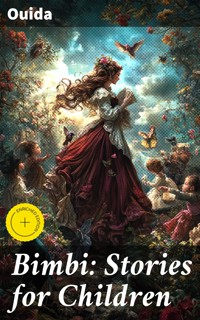
In "Bimbi: Stories for Children," Ouida crafts a collection of enchanting tales that delve into the world of childhood innocence and adventure. Through vivid imagery and lyrical prose, she weaves stories that not only entertain but impart moral lessons, resonating with themes of love, compassion, and the complexities of the human experience. The book reflects the Victorian literary style, characterized by its rich descriptions and expressive language, situating itself within a literary context that seeks to uplift and educate the young reader while maintaining a whimsical charm. Ouida, a prominent Victorian novelist, was known for her strong, eclectic style and her concerns about social justice. Raised in the vibrant cultural milieu of 19th-century Europe, her experiences with wealth, poverty, and gender dynamics informed her writing. "Bimbi" exemplifies her unique ability to blend narrative with moral reflection, reflecting a deep understanding of childhood and the moral imperatives of society, perhaps influenced by her advocacy for social reform. This collection is recommended for both children and adults alike, inviting readers to rediscover the joys of imaginative storytelling. Its timeless relevance and enchanting narratives make "Bimbi" a perfect companion for those who wish to revisit their childhood or instill a sense of wonder in the younger generation. In this enriched edition, we have carefully created added value for your reading experience: - A comprehensive Introduction outlines these selected works' unifying features, themes, or stylistic evolutions. - A Historical Context section situates the works in their broader era—social currents, cultural trends, and key events that underpin their creation. - A concise Synopsis (Selection) offers an accessible overview of the included texts, helping readers navigate plotlines and main ideas without revealing critical twists. - A unified Analysis examines recurring motifs and stylistic hallmarks across the collection, tying the stories together while spotlighting the different work's strengths. - Reflection questions inspire deeper contemplation of the author's overarching message, inviting readers to draw connections among different texts and relate them to modern contexts. - Lastly, our hand‐picked Memorable Quotes distill pivotal lines and turning points, serving as touchstones for the collection's central themes.
Das E-Book können Sie in Legimi-Apps oder einer beliebigen App lesen, die das folgende Format unterstützen:
Veröffentlichungsjahr: 2019
Ähnliche

















Bimbi: Stories for Children
Table of Contents
Introduction
Bimbi: Stories for Children gathers five of Ouida’s tales—THE NURNBERG STOVE, THE AMBITIOUS ROSE TREE, LAMPBLACK, THE CHILD OF URBINO, and FINDELKIND—into a single, coherent collection designed for young readers and for those who read with them. Its purpose is to present a concentrated view of Ouida’s humane imagination as it turns to childhood: a world of small loyalties, quiet courage, and a reverence for beauty in ordinary things. By reading these stories together, one sees not a miscellany but a deliberate suite, each piece illuminating the next, and all of them dedicated to cultivating sympathy, wonder, and moral reflection.
The contents are works of short fiction. Some are compact, fable-like narratives; others are more ample, approaching the scope of a novella. Across the volume, the modes range from gentle domestic realism to lightly allegorical or parable-inflected storytelling. There are no poems, essays, diaries, or letters here; the book is unified by prose narratives that place children—or childlike viewpoints—at their heart. Personification and symbolic motifs appear at times, yet the prose remains grounded in concrete settings and recognizable circumstances. The result is a sequence of stories that are vivid enough for independent reading and supple enough for reading aloud.
A unifying feature of these tales is their regard for the moral imagination of children. THE NURNBERG STOVE opens with a child’s bond to a treasured household object; THE AMBITIOUS ROSE TREE considers aspiration through a living emblem; LAMPBLACK turns attention to the humble material that enables art; THE CHILD OF URBINO begins in a place renowned for artistic heritage; FINDELKIND evokes the very idea of a foundling. In each, small choices carry large meanings. The narratives encourage attentiveness, gratitude, and courage, not through harangue but through situations that allow young readers to recognize and value goodness.
Ouida’s stylistic hallmark here is a lucid, melodious prose that balances warmth with precision. Descriptive passages provide vivid local color without overwhelming the narrative line, and the pacing favors episodic scenes that accrue emotional weight. Dialogue is sparing and purposeful; the narration gently guides rather than instructs. Personification appears as an imaginative aid, not a mechanical device, and symbolism remains legible to a child’s understanding. The tone is earnest yet never severe, inviting readers to admire craft, care for the vulnerable, and take delight in beauty—whether in a carved stove, a garden rose, a pigment jar, or a city’s stones.
Considered together, these stories remain significant because they model empathy across boundaries of class, craft, age, and nation. The settings range across recognizable European locales, yet the ethical concerns are intimate and universal: keeping faith with friends, honoring work well done, sharing with those who have less, and finding dignity in modest circumstances. The collection demonstrates how aesthetic experience—whether contemplating a picture, tending a plant, or cherishing a household object—can nurture character. Such concerns give the book an enduring relevance, allowing contemporary readers to recognize themselves in the children portrayed and to rehearse, in story, acts of generosity.
The volume’s design invites multiple pathways through it. Read sequentially, the motifs echo—fire and warmth, bloom and withering, color and craft, city and countryside, abandonment and adoption—so that each tale subtly reframes the last. Read singly, each story offers a complete occasion for reflection and conversation. For families and classrooms, the prose rewards being read aloud: its rhythms are clear, its imagery memorable, and its moral cues open to thoughtful discussion. Without resorting to tidy rescues or harsh judgments, these narratives allow young readers to practice discernment and to see how kindness can alter the course of ordinary days.
As a whole, Bimbi: Stories for Children presents a concentrated portrait of Ouida’s art at its most companionable. It honors childhood not as a problem to be solved but as a capacity to be cultivated—curiosity guided by conscience, imagination tempered by care. The five tales gathered here differ in setting and scale, yet they share a single aspiration: to make goodness imaginable and therefore attainable. In these pages, craft and feeling, play and principle, are held in balance. This collection invites new readers and returning admirers alike to linger, to listen, and to carry its quiet lessons into life.
Historical Context
Maria Louise Ramé (1839–1908), known as Ouida, built a cosmopolitan career that stretched from the London salons of the 1860s to a long Italian residence, shaping the European settings and humane ethos of Bimbi: Stories for Children (1882). Raised in Bury St Edmunds and famous for society romances like Under Two Flags (1867), she held court at the Langham Hotel before settling in Tuscany in the mid-1870s, chiefly in Florence, and dying at Viareggio. The children’s tales gathered in this volume—ranging across German craft traditions, Italian Renaissance memory, studio life, and charitable sentiment—translate her broader preoccupations with beauty, conscience, and transnational culture into narratives accessible to young readers.
Ouida wrote amid the Victorian print boom that followed the Elementary Education Act of 1870, which expanded literacy and schooling across Britain. Circulating libraries such as Mudie’s Select Library (founded 1842) shaped length and tone, while holiday “gift books” and illustrated editions flourished through advances in wood-engraving and chromolithography. Her fiction, including children’s stories, circulated on both sides of the Atlantic through publishers such as Chatto & Windus in London and J. B. Lippincott in Philadelphia, in an era when American reprints and later the 1891 International Copyright (Chace) Act affected authors’ earnings. Bimbi fits this late-century market of moral yet aesthetically ambitious tales for a widening juvenile audience.
The collection’s continental horizons reflect the political remapping of Europe that Victorians avidly toured. Germany unified under Bismarck in 1871 after the Franco-Prussian War, drawing Bavarian cities like Nuremberg into the new empire and intensifying interest in medieval crafts and museums such as the Germanisches Nationalmuseum (founded 1852). Italy’s Risorgimento created the Kingdom of Italy in 1861, with Rome incorporated in 1870–71 under Victor Emmanuel II, renewing British fascination with Renaissance centers from Urbino to Florence. Baedeker handbooks guided rail-borne travelers through galleries and workshops, while South Kensington Museum (1852) canonized design history. Against this backdrop, stories of treasured objects, artists, and old towns acquired fresh immediacy for Anglophone readers.
Debates over taste, labor, and domestic beauty—central to the Aesthetic and Arts and Crafts movements—permeate the book’s world. John Ruskin’s critiques of industrial ugliness (The Stones of Venice, 1851–53) and William Morris’s advocacy of handcraft valorized tiled stoves, carved wood, and flower cultivation as moral as well as decorative arts, while Walter Pater’s The Renaissance (1873) encouraged a cultivated attention to form. In such discourse, a rose tree could exemplify patient tending, and pigments like lampblack signaled the dignity of studio practice. The tension between machine and handmade, between commodity and heirloom, supplies ethical ballast to narratives that prize care, skill, and the household as a site of art.
Victorian arguments about poverty and protection of the young give a social frame to the collection’s charitable sensibility. The Charity Organisation Society (1869) and Ragged Schools movement addressed urban deprivation, while the Prevention of Cruelty to, and Protection of, Children Act (1889) marked a watershed in law. The very word Findelkind evokes European traditions of foundling care, from Thomas Coram’s Foundling Hospital (1739) in London to Florence’s Ospedale degli Innocenti, founded in the fifteenth century under Brunelleschi’s arcades. Ouida’s well-known empathy for the vulnerable—evident also in A Dog of Flanders (1872) and in anti-vivisection campaigns alongside the National Anti-Vivisection Society (1875) after the 1876 Cruelty to Animals Act—informs these tales.
Training in drawing and design expanded across nineteenth-century Europe, shaping the status of artisans and young artists who populate Ouida’s pages. Britain’s South Kensington system radiated from the National Art Training School, while the École des Beaux-Arts in Paris and the Accademia di Belle Arti in Florence codified studio hierarchies. Print culture, reliant on lampblack-based inks, fed a hunger for images via The Illustrated London News (founded 1842) and comparable German and Italian journals. Historical memory linked Nuremberg to Albrecht Dürer (1471–1528) and Urbino to Federico da Montefeltro and Raphael (1483–1520), so that children encountering artisans, pigments, and workshops also encountered the prestige and discipline of European art.
Technological modernity made the movement of stories and things palpable. By the 1860s railway grids knit Britain and the Continent; the General Postal Union of 1874 (later Universal Postal Union) regularized transnational correspondence; and telegraph cables accelerated news. Antique dealers and collectors could ship carved stoves, tiles, and canvases across borders, just as readers received seasonal gift volumes by post near Christmas. German Christkindlesmarkt traditions and domestic heating technologies—Kachelöfen, cast-iron ranges, and coal—shaped everyday winter experience, while debates pit robust craftwork against cheaper mass production. Such networks and contrasts underwrite narratives where objects are cherished, transported, bought, or saved, and where attachments travel as readily as goods.
The political and ethical climate of the 1870s–1890s also inflects the moral atmosphere of these stories. Bismarck’s Kulturkampf (1871–78), the Roman Question’s settlement after 1870, and new municipal preservationists—from Italy’s superintendencies to Britain’s Society for the Protection of Ancient Buildings (1877)—all sharpened concern for patrimony, ritual, and civic memory. Women writers entered public debates on war, poverty, and taste; Ouida castigated militarism and commercial greed even as she navigated a precarious literary economy that ended in debt and her death at Viareggio on 25 January 1908. In this larger context, Bimbi’s European settings stage an education of feeling: beauty defended, kindness practiced, tradition humanized for children.
Synopsis (Selection)
THE NURNBERG STOVE
When poverty forces a family to sell their beloved porcelain stove, a devoted child secretly accompanies it to its new home, setting off a journey that tests loyalty and the kindness of strangers.
THE AMBITIOUS ROSE TREE
An allegorical garden tale in which a rose-tree, eager to be admired above all others, learns the quiet lesson of contentment and the value of remaining true to its place.
LAMPBLACK
A young artist working with the humblest of materials draws unexpected notice, confronting the difference between fashionable success and the integrity of craft.
THE CHILD OF URBINO
Set in Renaissance Italy, a child’s unspoiled vision becomes central to the making of a masterwork, gently exposing the contrasts between pride, patronage, and simple goodness.
FINDELKIND
A mountain boy discovers an abandoned infant and strives to secure its safety despite indifference and obstacles, stirring a community to compassion.




