


1,99 €
Niedrigster Preis in 30 Tagen: 1,99 €
Niedrigster Preis in 30 Tagen: 1,99 €
Mehr erfahren.
- Herausgeber: DigiCat
- Kategorie: Gesellschafts- und Liebesromane
- Sprache: Englisch
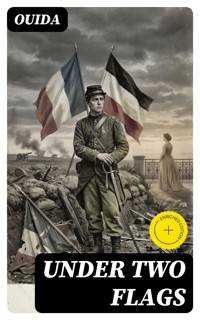
In "Under Two Flags," Ouida crafts a compelling tale set against the backdrop of the tumultuous Franco-Prussian War, blending romance, adventure, and high drama. The novel introduces the reader to the lives of its protagonist, the noble-hearted soldier who is torn between loyalty and love, as it navigates the complexities of duty and the perils of war. Ouida employs a vivid, evocative prose style, rich in descriptive imagery and emotional depth, creating a tapestry of characters that illuminate the societal norms and pressures of the Victorian era, particularly regarding issues of nationality, identity, and honor. Ouida, the pseudonym of Maria Louise Ramé, was a prolific Victorian novelist known for her penchant for romanticism and her often controversial stances on social issues. Her experiences in the tumultuous landscapes of Europe and her deep engagement with issues of class and gender undoubtedly informed the passionate and dramatic narratives present in "Under Two Flags." This novel reflects her engagement with the socio-political discourse of her time, showcasing the dichotomies of love and loyalty in a world rife with conflict. "Under Two Flags" is an essential read for those intrigued by historical fiction interwoven with themes of sacrifice and complex human emotion. Ouida's masterful storytelling invites readers to lose themselves in a world of romantic escapades and battlefields, making it a timeless exploration of the human spirit's resilience amid adversity. In this enriched edition, we have carefully created added value for your reading experience: - A succinct Introduction situates the work's timeless appeal and themes. - The Synopsis outlines the central plot, highlighting key developments without spoiling critical twists. - A detailed Historical Context immerses you in the era's events and influences that shaped the writing. - A thorough Analysis dissects symbols, motifs, and character arcs to unearth underlying meanings. - Reflection questions prompt you to engage personally with the work's messages, connecting them to modern life. - Hand‐picked Memorable Quotes shine a spotlight on moments of literary brilliance. - Interactive footnotes clarify unusual references, historical allusions, and archaic phrases for an effortless, more informed read.
Das E-Book können Sie in Legimi-Apps oder einer beliebigen App lesen, die das folgende Format unterstützen:
Veröffentlichungsjahr: 2022
Ähnliche










Under Two Flags
Table of Contents
Introduction
In Under Two Flags, Ouida sets loyalty against identity, asking how a person fashioned by privilege and taste can live with honor when the world strips away his name, his country, and his comforts, and thrusts him into a harsher theater where courage is measured not by pedigree but by endurance, where friendships and obligations cross borders, where the temptation to escape oneself vies with the duty to stand fast, and where the glitter of society is mirrored, and sometimes shamed, by the austere valor of soldiers whose only inheritance is the flag they choose to serve.
First published in 1867, this Victorian novel by Ouida, the pen name of Maria Louise Ramé, blends military adventure, romance, and the heightened emotion associated with sensation fiction. Its stages range from English drawing rooms to the North African outposts of the French Foreign Legion, a contrast that lets the narrative shuttle between manners and martial rigor. The book belongs to an era fascinated by rank, reputation, and the expanding horizons of empire, and it uses those concerns to frame a story about a gentleman reduced to anonymity and the communities he finds among professional soldiers far from home.
At the outset, a cultivated Englishman of means and effortless charm sees his situation collapse under the weight of a scandal he cannot master, and he leaves Britain to rebuild his life under another name. He enlists with the French Foreign Legion in North Africa, where discipline is severe, loyalties are hard-won, and survival depends on resourcefulness as much as bravery. Among the companions he meets is a quick-witted young woman known as Cigarette, whose courage on campaign complicates his assumptions about class and gender. From these beginnings the novel traces perilous service, moral tests, and shifts between salon and bivouac.
Readers encounter a voice that moves fluently from satiric poise to high melodrama, balancing sparkling social observation with the visceral momentum of campaign scenes. Ouida favors rich description, sharp contrasts, and a cadence that builds emotion without abandoning clarity. The tone can be romantic yet skeptical, attentive to surface glamour while alive to hardship and fatigue. Episodes unfold with a theatrical vividness, from banter in clubs to sudden challenges, desperate rides, and intense comradeship, that keeps the pace lively even as moral stakes deepen. The result is an adventure narrative that also operates as a study of manners, performance, and the costs of reputation.
Honor, class, and voluntary allegiance structure the book’s central questions: what remains of a gentleman when rank is stripped away, and who confers worth in a world policed by rumor and bureaucratic rule? Names, uniforms, and badges organize identity, yet the plot continually tests whether character can outlast circumstance. The novel also probes how admiration for military bravery sits alongside the realities of conquest, and how women negotiate the constraints of both salon and camp. These concerns resonate strongly today, in debates about national belonging, public image, institutional loyalty, and the blurred lines between performance, conviction, and survival.
Under Two Flags also offers a valuable window onto Victorian imaginings of North Africa and the French Foreign Legion, perspectives that invite contemporary readers to examine how adventure literature can exoticize as it entertains. Approaching the novel with historical awareness clarifies its depiction of empire while preserving the pleasures of its craft: intricate social staging, sustained suspense, and a keen eye for the rhetoric of bravery. Read this way, the book becomes both artifact and argument, demonstrating how popular fiction constructs ideals of courage and belonging, and how those ideals can be questioned without losing narrative propulsion.
For new readers, the novel’s enduring magnetism lies in its friction between elegance and extremity: a hero schooled in polish who must rely on stamina, a society that prizes appearances alongside a regiment that prizes endurance. The chapters create a panorama of tests rather than a puzzle to be decoded, encouraging attention to small decisions, incremental loyalties, and the ethics of self-effacement. It remains pertinent wherever reputations can be made or ruined overnight and where service asks more than comfort can give. Enter expecting velocity, atmosphere, and moral pressure, and let the rest unfurl without foreknowledge.
Synopsis
Under Two Flags (1867), a bestselling novel by Ouida, traces the fall and transformation of a gilded English officer who is compelled to rebuild his life in the North African ranks of the French Army. Moving between London drawing rooms and desert encampments, the narrative juxtaposes elegance and hardship to investigate honor, loyalty, and identity. Its title signals the hero’s divided allegiance and the social codes he navigates under two national banners. Without dwelling on mystery for its own sake, the work builds steady momentum from a fashionable world’s fragile reputations toward a harsher arena where character, not pedigree, determines worth.
In its opening movement, the novel situates “Beauty” Cecil, a cultivated officer and consummate sportsman, in the glittering pressures of aristocratic England. Adulation masks precarious finances and a culture of wagers, appearances, and brittle pride. He is admired for effortless grace yet hemmed in by expectations that prize style above substance. An ambitious kinsman advances by caution and calculation, heightening family tension. Society’s gaze, including that of a titled woman whose intelligence matches her rank, frames Cecil as both ornament and target. Ouida details the rituals of the hunt, the club, and the parade ground, revealing how reputation becomes currency and trap.
A precipitating scandal snaps the web of performance. Faced with a dishonor that would destroy another, Cecil accepts blame and takes the one course that preserves silence: flight. He leaves England abruptly, severing ties without protest or explanation, and enlists far from home among the troops of France’s African army. Concealing his identity, he submits to severe discipline and anonymity after years of deference. Ouida treats the transition not as mere punishment but as an experiment in character, placing a born aristocrat under commands that owe him nothing. The shift inaugurates the novel’s central test: whether innate honor can survive disgrace.
In Algeria, Cecil relearns life through fatigue marches, skirmishes, and barracks camaraderie. He earns wary respect as a steady, modest soldier rather than a celebrated gentleman. Among his companions is Cigarette, a fearless young cantinière whose patriotism, audacity, and devotion to the rank and file make her a small legend in the camp. She perceives in the English volunteer a chivalry deeper than polish and binds her fate to his fortunes. The desert campaigns are rendered with energy and color yet without romanticizing hunger, heat, and sudden violence. Authority figures remain formidable, and the code of the camp is both austere and binding.
As the narrative alternates between garrison life and the reverberations of English society, Cecil’s hidden past refuses to remain remote. Friendships in the regiment complicate his vow of secrecy, while encounters with travelers of rank and influence threaten recognition. A woman of high standing, once merely an observer of his elegance, discerns the discipline beneath his silence and challenges his self-effacement. The novel measures attraction against duty, and sympathy against scandal. Meanwhile, rivalries within the command, the strains of colonial war, and the hazards of the frontier press everyone toward hard choices that will either confirm or betray their professed values.
Conflict intensifies in a sequence of engagements where quick judgment carries mortal stakes. Cecil is driven to acts that could restore another’s honor at permanent cost to his own, while comradeship in the ranks demands loyalty that cannot be bartered. Cigarette’s courage acquires new gravity as she confronts what devotion entails when silence harms as surely as bullets. News from England sharpens the dilemma, making public vindication incompatible with private fidelity. Without exploiting surprise, Ouida orchestrates a convergence of battlefield peril and social reckoning in which testimony, identity, and sacrifice are weighed against the implacable rhythm of orders, marches, and alarms.
Under Two Flags endures for its melodramatic verve and its serious inquiry into the ethics of class, service, and reputation. The novel questions what honor means when titles vanish and survival depends on endurance and mutual reliance. It also captures a Victorian fascination with spectacle—uniforms, horses, and parades—while exposing the costs borne by those who fight anonymously. Ouida’s portrait of a man divided by allegiance yet constant in conduct anchors an expansive canvas of romance, comradeship, and moral testing. The result, widely popular in its day, continues to resonate as a study of self-fashioning, loyalty, and the price of silence.
Historical Context
Published in 1867, Ouida’s Under Two Flags moves between mid-Victorian Britain and French-ruled Algeria during the Second French Empire. The novel draws on institutions central to its era: London’s aristocratic clubs and racing circuits, British cavalry regiments operating under a purchase system for commissions, and, abroad, the French Foreign Legion stationed in North Africa. Europe’s expanding print culture and circulating libraries carried such adventure romances to large audiences, making their images of honor, class, and empire widely influential. This setting anchors the story in a world where reputation mattered intensely and military service—at home or abroad—could redefine a gentleman’s fate.
At home, the novel’s English milieu reflects the hierarchies and rituals of high society in the 1850s–60s: exclusive gentlemen’s clubs, fashionable drawing rooms, the turf at Newmarket, and country-house sport. Gambling, debt, and the economics of inheritance—particularly primogeniture—shaped aristocratic conduct and scandal. The British Army still sold officer commissions, a practice abolished only with the Cardwell Reforms in 1871, so wealth could purchase rank even as regimental honor codes demanded courage and propriety. These institutions form the backdrop to choices driven by reputation, obligation, and sacrifice, explaining why disgrace could propel a well-born man to seek anonymity in foreign service.
Abroad, the book’s North African setting reflects France’s conquest and colonization of Algeria, begun in 1830 and consolidated after the surrender of Emir Abd el-Kader in 1847. Through the 1850s and 1860s, the colony remained heavily militarized, with forts, desert columns, and administrative outposts mediating relations with local populations and European settlers. The army’s Bureaux arabes oversaw civil affairs while continuing counterinsurgency. Campaigning in arid terrain meant supply convoys, long patrols, and acute exposure to disease and heat. Such conditions forged the reputation of Algeria as a proving ground for endurance and discipline, a stage for hardship rather than parade-ground spectacle.
The French Foreign Legion, created in 1831, recruited foreigners into French service and became closely associated with Algeria. Known for strict discipline, anonymity for recruits, and arduous marches, the Legion attracted Europeans seeking a new start or escaping scandal. Its legend grew through colonial campaigns and widely circulated accounts, alongside famed North African units such as the Zouaves, Spahis, and Chasseurs d’Afrique. Women officially attached as vivandières or cantinières accompanied regiments, selling provisions and sometimes decorated for valor, a recognized role until the early twentieth century. This military ecosystem supplied credible roles, routines, and dangers for characters operating far from Britain.
Under Napoleon III (1852–1870), the Second French Empire cultivated martial prestige and imperial reach, from the Crimean War to Italy and Mexico, while Paris modernized under Haussmann. Britain and France fought as allies in Crimea (1853–1856), an experience that boosted British curiosity about French arms and aesthetics. Newspapers, illustrated weeklies, and military memoirs spread images of French colonial soldiery across Europe. For British readers, a gentleman serving “under two flags” resonated with this moment of guarded admiration and rivalry. The novel situates its hero within that milieu, using French service as a foil to British notions of class, honor, and duty.
Mid-nineteenth-century European culture brimmed with images of the “Orient,” especially North Africa. Salon painters such as Jean-Léon Gérôme, travel writers, and correspondents depicted bazaars, oases, and desert warfare, shaping popular expectations. Illustrated papers like the Illustrated London News reported on Algerian campaigns, while guidebooks and exhibitions mediated colonial knowledge for metropolitan audiences. Such sources encouraged a blend of fascination and misunderstanding about Islam, tribal politics, and Saharan geography. The novel draws upon this visual and textual repertoire to stage encounters and landscapes, furnishing readers with scenes that felt authentic by contemporary standards even as they reflected European vantage points.
Victorian Britain idealized separate spheres, restricting respectable women to domestic influence, yet continental armies maintained spaces—like the vivandière’s role—where women operated publicly alongside troops. This contrast let Ouida place a courageous female camp follower within a historically plausible framework, while examining how battlefield valor coexisted with official marginality. Simultaneously, debates about gentlemanliness, muscular Christianity, and military professionalism shaped expectations of male conduct. Endurance, stoicism, and self-abnegation were prized, even when they conflicted with legal or social justice. By juxtaposing polished English salons with Algeria’s garrisons, the book tests whether honor is a matter of lineage, uniform, or personal deeds.
The novel quickly gained popularity in Britain and abroad, blending aristocratic scandal, military camaraderie, and colonial adventure. Its portrayals helped consolidate the Foreign Legion’s romantic image for Anglophone audiences, an image reiterated in later stage and film versions, including a Hollywood adaptation in 1936. At the same time, the narrative scrutinizes its age: it opposes purchased privilege to earned merit, contrasts parades with desert attrition, and questions how honor survives bureaucracy and empire. In doing so, it reflects mid-Victorian faith in character while exposing inequities and brutalities that supported European power in North Africa and within Britain’s own elite society.
Under Two Flags
CHAPTER I.
“BEAUTY OF THE BRIGADES.”
“I don't say but what he's difficult to please with his Tops,” said Mr. Rake, factotum to the Hon. Bertie Cecil, of the 1st Life Guards[1], with that article of hunting toggery suspended in his right hand as he paused, before going upstairs, to deliver his opinions with characteristic weight and vivacity to the stud-groom, “he is uncommon particular about 'em; and if his leathers aint as white as snow he'll never touch 'em, tho' as soon as the pack come nigh him at Royallieu, the leathers might just as well never have been cleaned, them hounds jump about him so; old Champion's at his saddle before you can say Davy Jones. Tops are trials, I aint denying that, specially when you've jacks, and moccasins, and moor boots, and Russia-leather crickets, and turf backs, and Hythe boots, and waterproofs, and all manner of varnish things for dress, that none of the boys will do right unless you look after 'em yourself. But is it likely that he should know what a worry a Top's complexion is, and how hard it is to come right with all the Fast Brown polishing in the world? How should he guess what a piece of work it is to get 'em all of a color, and how like they are to come mottled, and how a'most sure they'll ten to one go off dark just as they're growing yellow, and put you to shame, let you do what you will to make 'em cut a shine over the country? How should he know? I don't complain of that; bless you, he never thinks. It's 'do this, Rake,' 'do that'; and he never remembers 'tisn't done by magic. But he's a true gentleman, Mr. Cecil; never grudge a guinea, or a fiver to you; never out of temper either, always have a kind word for you if you want, thoro'bred every inch of him; see him bring down a rocketer, or lift his horse over the Broad Water! He's a gentleman—not like your snobs that have nothing sound about 'em but their cash, and swept out their shops before they bought their fine feathers!—and I'll be d——d if I care what I do for him.”
With which peroration to his born enemy the stud-groom, with whom he waged a perpetual and most lively feud, Rake flourished the tops that had been under discussion, and triumphant, as he invariably was, ran up the back stairs of his master's lodgings in Piccadilly, opposite the Green Park, and with a rap on the panels entered his master's bedroom.
A Guardsman at home is always, if anything, rather more luxuriously accommodated than a young Duchess, and Bertie Cecil was never behind his fellows in anything; besides, he was one of the cracks of the Household, and women sent him pretty things enough to fill the Palais Royal[2]. The dressing-table was littered with Bohemian glass and gold-stoppered bottles, and all the perfumes of Araby represented by Breidenback and Rimmel. The dressing-case was of silver, with the name studded on the lid in turquoises; the brushes, bootjack, boot-trees, whip-stands, were of ivory and tortoiseshell; a couple of tiger skins were on the hearth with a retriever and blue greyhound in possession; above the mantel-piece were crossed swords in all the varieties of gilt, gold, silver, ivory, aluminum, chiseled and embossed hilts; and on the walls were a few perfect French pictures, with the portraits of a greyhound drawn by Landseer, of a steeple-chaser by Harry Hall, one or two of Herring's hunters, and two or three fair women in crayons. The hangings of the room were silken and rose-colored, and a delicious confusion prevailed through it pell-mell; box-spurs, hunting-stirrups, cartridge cases, curb-chains, muzzle-loaders, hunting flasks, and white gauntlets, being mixed up with Paris novels, pink notes, point-lace ties, bracelets, and bouquets to be dispatched to various destinations, and velvet and silk bags for banknotes, cigars, or vesuvians, embroidered by feminine fingers and as useless as those pretty fingers themselves. On the softest of sofas, half dressed, and having half an hour before splashed like a waterdog out of the bath, as big as a small pond, in the dressing-chamber beyond was the Hon. Bertie himself, second son of Viscount Royallieu, known generally in the Brigades as “Beauty.” The appellative, gained at Eton, was in no way undeserved; when the smoke cleared away that was circling round him out of a great meerschaum[3] bowl, it showed a face of as much delicacy and brilliancy as a woman's; handsome, thoroughbred, languid, nonchalant, with a certain latent recklessness under the impressive calm of habit, and a singular softness given to the large, dark hazel eyes by the unusual length of the lashes over them. His features were exceedingly fair—fair as the fairest girl's; his hair was of the softest, silkiest, brightest chestnut; his mouth very beautifully shaped; on the whole, with a certain gentle, mournful love-me look that his eyes had with them, it was no wonder that great ladies and gay lionnes alike gave him the palm as the handsomest man in all the Household Regiments—not even excepting that splendid golden-haired Colossus, his oldest friend and closest comrade, known as “the Seraph.”
He looked at the new tops that Rake swung in his hand, and shook his head.
“Better, Rake; but not right yet. Can't you get that tawny color in the tiger's skin there? You go so much to brown.”
Rake shook his head in turn, as he set down the incorrigible tops beside six pairs of their fellows, and six times six of every other sort of boots that the covert side, the heather, the flat, or the sweet shady side of “Pall Mall” ever knew.
“Do my best, sir; but Polish don't come nigh Nature, Mr. Cecil.”
“Goes beyond it, the ladies say; and to do them justice they favor it much the most,” laughed Cecil to himself, floating fresh clouds of Turkish about him. “Willon up?”
“Yes, sir. Come in this minute for orders.”
“How'd Forest King stand the train?”
“Bright as a bird, sir; he never mind nothing. Mother o' Pearl she worreted a little, he says; she always do, along of the engine noise, but the King walked in and out just as if the station were his own stable-yard.”
“He gave them gruel and chilled water after the shaking before he let them go to their corn?”
“He says he did, sir.”
Rake would by no means take upon himself to warrant the veracity of his sworn foe, the stud-groom; unremitting feud was between them; Rake considered that he knew more about horses than any other man living, and the other functionary proportionately resented back his knowledge and his interference, as utterly out of place in a body-servant.
“Tell him I'll look in at the stable after duty and see the screws are all right; and that he's to be ready to go down with them by my train to-morrow—noon, you know. Send that note there, and the bracelets, to St. John's Wood: and that white bouquet to Mrs. Delamaine. Bid Willon get some Banbury bits; I prefer the revolving mouths, and some of Wood's double mouths and Nelson gags; we want new ones. Mind that lever-snap breech-loader comes home in time. Look in at the Commission stables, and if you see a likely black charger as good as Black Douglas, tell me. Write about the stud fox-terrier, and buy the blue Dandy Dinmont; Lady Guinevere wants him. I'll take him down with me, but first put me into harness, Rake; it's getting late.”
Murmuring which multiplicity of directions, for Rake to catch as he could, in the softest and sleepiest of tones, Bertie Cecil drank a glass of Curacoa, put his tall, lithe limbs indolently off his sofa, and surrendered himself to the martyrdom of cuirass and gorget, standing six feet one without his spurred jacks, but light-built and full of grace as a deer, or his weight would not have been what it was in gentleman-rider races from the Hunt steeple-chase at La Marche to the Grand National in the Shires.
“As if Parliament couldn't meet without dragging us through the dust! The idiots write about 'the swells in the Guards,' as if we had all fun and no work, and knew nothing of the rough of the Service. I should like to learn what they call sitting motionless in your saddle through half a day, while a London mob goes mad round you, and lost dogs snap at your charger's nose, and dirty little beggars squeeze against your legs, and the sun broils you, or the fog soaks you, and you sit sentinel over a gingerbread coach till you're deaf with the noise, and blind with the dust, and sick with the crowd, and half dead for want of sodas and brandies, and from going a whole morning without one cigarette! Not to mention the inevitable apple-woman who invariably entangles herself between your horse's legs, and the certainty of your riding down somebody and having a summons about it the next day! If all that isn't the rough of the Service, I should like to know what is. Why the hottest day in the batteries, or the sharpest rush into Ghoorkhas or Bhoteahs, would be light work, compared!” murmured Cecil with the most plaintive pity for the hardships of life in the Household, while Rake, with the rapid proficiency of long habit, braced, and buckled and buttoned, knotted the sash with the knack of professional genius, girt on the brightest of all glittering polished silver steel “Cut-and-Thrusts,” with its rich gild mountings, and contemplated with flattering self-complacency leathers white as snow, jacks brilliant as black varnish could make them, and silver spurs of glittering radiance, until his master stood full harnessed, at length, as gallant a Life Guardsman as ever did duty at the Palace by making love to the handsomest lady-in-waiting.
“To sit wedged in with one's troop for five hours, and in a drizzle too! Houses oughtn't to meet until the day's fine; I'm sure they are in no hurry,” said Cecil to himself, as he pocketed a dainty, filmy handkerchief, all perfume, point, and embroidery, with the interlaced B. C., and the crest on the corner, while he looked hopelessly out of the window. He was perfectly happy, drenched to the skin on the moors after a royal, or in a fast thing with the Melton men from Thorpe Trussels to Ranksborough; but three drops of rain when on duty were a totally different matter, to be resented with any amount of dandy's lamentations and epicurean diatribes.
“Ah, young one, how are you? Is the day very bad?” he asked with languid wistfulness as the door opened.
But indifferent and weary—on account of the weather—as the tone was, his eyes rested with a kindly, cordial light on the newcomer, a young fellow of scarcely twenty, like himself in feature, though much smaller and slighter in build; a graceful boy enough, with no fault in his face, except a certain weakness in the mouth, just shadowed only, as yet, with down.
A celebrity, the Zu-Zu, the last coryphee whom Bertie had translated from a sphere of garret bread-and-cheese to a sphere of villa champagne and chicken (and who, of course, in proportion to the previous scarcity of her bread-and-cheese, grew immediately intolerant of any wine less than 90s the dozen), said the Cecil cared for nothing longer than a fortnight, unless it was his horse, Forest King. It was very ungrateful in the Zu-Zu, since he cared for her at the least a whole quarter, paying for his fidelity at the tune of a hundred a month; and, also, it was not true, for, besides Forest King, he loved his young brother Berkeley—which, however, she neither knew nor guessed.
“Beastly!” replied the young gentleman, in reference to the weather, which was indeed pretty tolerable for an English morning in February. “I say, Bertie—are you in a hurry?”
“The very deuce of a hurry, little one; why?” Bertie never was in a hurry, however, and he said this as lazily as possible, shaking the white horsehair over his helmet, and drawing in deep draughts of Turkish Latakia previous to parting with his pipe for the whole of four or five hours.
“Because I am in a hole—no end of a hole—and I thought you'd help me,” murmured the boy, half penitently, half caressingly; he was very girlish in his face and his ways. On which confession Rake retired into the bathroom; he could hear just as well there, and a sense of decorum made him withdraw, though his presence would have been wholly forgotten by them. In something the same spirit as the French countess accounted for her employing her valet to bring her her chocolate in bed—“Est ce que vous appelez cette chose-la un homme?”—Bertie had, on occasion, so wholly regarded servants as necessary furniture that he had gone through a love scene, with that handsome coquette Lady Regalia, totally oblivious of the presence of the groom of the chambers, and the possibility of that person's appearance in the witness-box of the Divorce Court. It was in no way his passion that blinded him—he did not put the steam on like that, and never went in for any disturbing emotion—it was simply habit, and forgetfulness that those functionaries were not born mute, deaf, and sightless.
He tossed some essence over his hands, and drew on his gauntlets.
“What's up Berk?”
The boy hung his head, and played a little uneasily with an ormolu terrier-pot, upsetting half the tobacco in it; he was trained to his brother's nonchalant, impenetrable school, and used to his brother's set; a cool, listless, reckless, thoroughbred, and impassive set, whose first canon was that you must lose your last thousand in the world without giving a sign that you winced, and must win half a million without showing that you were gratified; but he had something of girlish weakness in his nature, and a reserve in his temperament that was with difficulty conquered.
Bertie looked at him, and laid his hand gently on the young one's shoulder.
“Come, my boy; out with it! It's nothing very bad, I'll be bound!”
“I want some more money; a couple of ponies,” said the boy a little huskily; he did not meet his brother's eyes that were looking straight down on him.
Cecil gave a long, low whistle, and drew a meditative whiff from his meerschaum.
“Tres cher, you're always wanting money. So am I. So is everybody. The normal state of man is to want money[1q]. Two ponies. What's it for?”
“I lost it at chicken-hazard last night. Poulteney lent it me, and I told him I would send it him in the morning. The ponies were gone before I thought of it, Bertie, and I haven't a notion where to get them to pay him again.”
“Heavy stakes, young one, for you,” murmured Cecil, while his hand dropped from the boy's shoulder, and a shadow of gravity passed over his face; money was very scarce with himself. Berkeley gave him a hurried, appealing glance. He was used to shift all his anxieties on to his elder brother, and to be helped by him under any difficulty. Cecil never allotted two seconds' thought to his own embarrassments, but he would multiply them tenfold by taking other people's on him as well, with an unremitting and thoughtless good nature.
“I couldn't help it,” pleaded the lad, with coaxing and almost piteous apology. “I backed Grosvenor's play, and you know he's always the most wonderful luck in the world. I couldn't tell he'd go a crowner and have such cards as he had. How shall I get the money, Bertie? I daren't ask the governor; and besides I told Poulteney he should have it this morning. What do you think if I sold the mare? But then I couldn't sell her in a minute——”
Cecil laughed a little, but his eyes, as they rested on the lad's young, fair, womanish face, were very gentle under the long shade of their lashes.
“Sell the mare! Nonsense! How should anybody live without a hack? I can pull you through, I dare say. Ah! by George, there's the quarters chiming. I shall be too late, as I live.”
Not hurried still, however; even by that near prospect, he sauntered to his dressing-table, took up one of the pretty velvet and gold-filigreed absurdities, and shook out all the banknotes there were in it. There were fives and tens enough to count up 45 pounds. He reached over and caught up a five from a little heap lying loose on a novel of Du Terrail's, and tossed the whole across the room to the boy.
“There you are, young one! But don't borrow of any but your own people again, Berk. We don't do that. No, no!—no thanks! Shut up all that. If ever you get in a hole, I'll take you out if I can. Good-by—will you go to the Lords? Better not—nothing to see, and still less to hear. All stale. That's the only comfort for us—we are outside!” he said, with something that almost approached hurry in the utterance; so great was his terror of anything approaching a scene, and so eager was he to escape his brother's gratitude. The boy had taken the notes with delighted thanks indeed, but with that tranquil and unprotesting readiness with which spoiled childishness or unhesitating selfishness accepts gifts and sacrifices from another's generosity, which have been so general that they have ceased to have magnitude. As his brother passed him, however, he caught his hand a second, and looked up with a mist before his eyes, and a flush half of shame, half of gratitude, on his face.
“What a trump you are!—how good you are, Bertie!”
Cecil laughed and shrugged his shoulders.
“First time I ever heard it, my dear boy,” he answered, as he lounged down the staircase, his chains clashing and jingling; while, pressing his helmet on to his forehead and pulling the chin scale over his mustaches, he sauntered out into the street where his charger was waiting.
“The deuce!” he thought, as he settled himself in his stirrups, while the raw morning wind tossed his white plume hither and thither. “I never remembered!—I don't believe I've left myself money enough to take Willon and Rake and the cattle down to the Shires to-morrow. If I shouldn't have kept enough to take my own ticket with!—that would be no end of a sell. On my word I don't know how much there's left on the dressing-table. Well! I can't help it; Poulteney had to be paid; I can't have Berk's name show in anything that looks shady.”
The 50 pounds had been the last remnant of a bill, done under great difficulties with a sagacious Jew, and Cecil had no more certainty of possessing any more money until next pay-day should come round than he had of possessing the moon; lack of ready money, moreover, is a serious inconvenience when you belong to clubs where “pounds and fives” are the lowest points, and live with men who take the odds on most events in thousands; but the thing was done; he would not have undone it at the boy's loss, if he could; and Cecil, who never was worried by the loss of the most stupendous “crusher,” and who made it a rule never to think of disagreeable inevitabilities two minutes together, shook his charger's bridle and cantered down Piccadilly toward the barracks, while Black Douglas reared, curveted, made as if he would kick, and finally ended by “passaging” down half the length of the road, to the imminent peril of all passers-by, and looking eminently glossy, handsome, stalwart, and foam-flecked, while he thus expressed his disapprobation of forming part of the escort from Palace to Parliament.
“Home Secretary should see about it; it's abominable! If we must come among them, they ought to be made a little odoriferous first. A couple of fire-engines now, playing on them continuously with rose-water and bouquet d'Ess for an hour before we come up, might do a little good. I'll get some men to speak about it in the house; call it 'Bill for the Purifying of the Unwashed, and Prevention of their Suffocating Her Majesty's Brigades,'” murmured Cecil to the Earl of Broceliande, next him, as they sat down in their saddles with the rest of the “First Life,” in front of St. Stephen's, with a hazy fog steaming round them, and a London mob crushing against their chargers' flanks, while Black Douglas stood like a rock, though a butcher's tray was pressed against his withers, a mongrel was snapping at his hocks, and the inevitable apple-woman, of Cecil's prophetic horror, was wildly plunging between his legs, as the hydra-headed rushed down in insane, headlong haste to stare at, and crush on to, that superb body of Guards.
“I would give a kingdom for a soda and brandy. Bah! ye gods! What a smell of fish and fustian,” signed Bertie, with a yawn of utter famine for want of something to drink and something to smoke, were it only a glass of brown sherry and a little papelito, while he glanced down at the snow-white and jet-black masterpieces of Rake's genius, all smirched, and splashed, and smeared.
He had given fifty pounds away, and scarcely knew whether he should have enough to take his ticket next day into the Shires, and he owed fifty hundred without having the slightest grounds for supposing he should ever be able to pay it, and he cared no more about either of these things than he cared about the Zu-Zu's throwing the half-guinea peaches into the river after a Richmond dinner, in the effort to hit dragon-flies with them; but to be half a day without a cigarette, and to have a disagreeable odor of apples and corduroys wafted up to him, was a calamity that made him insupportably depressed and unhappy.
Well, why not? It is the trifles of life that are its bores, after all. Most men can meet ruin calmly, for instance, or laugh when they lie in a ditch with their own knee-joint and their hunter's spine broken over the double post and rails: it is the mud that has choked up your horn just when you wanted to rally the pack; it's the whip who carries you off to a division just when you've sat down to your turbot; it's the ten seconds by which you miss the train; it's the dust that gets in your eyes as you go down to Epsom; it's the pretty little rose note that went by accident to your house instead of your club, and raised a storm from madame; it's the dog that always will run wild into the birds; it's the cook who always will season the white soup wrong—it is these that are the bores of life, and that try the temper of your philosophy.
An acquaintance of mine told me the other day of having lost heavy sums through a swindler, with as placid an indifference as if he had lost a toothpick; but he swore like a trooper because a thief had stolen the steel-mounted hoof of a dead pet hunter.
“Insufferable!” murmured Cecil, hiding another yawn behind his gauntlet; “the Line's nothing half so bad as this; one day in a London mob beats a year's campaigning; what's charging a pah to charging an oyster-stall, or a parapet of fascines to a bristling row of umbrellas?”
Which question as to the relative hardships of the two Arms was a question of military interest never answered, as Cecil scattered the umbrellas right and left, and dashed from the Houses of Parliament full trot with the rest of the escort on the return to the Palace; the afternoon sun breaking out with a brightened gleam from the clouds, and flashing off the drawn swords, the streaming plumes, the glittering breastplates, the gold embroideries, and the fretting chargers.
But a mere sun-gleam just when the thing was over, and the escort was pacing back to Hyde Park barracks, could not console Cecil for fog, wind, mud, oyster-vendors, bad odors, and the uproar and riff-raff of the streets; specially when his throat was as dry as a lime-kiln, and his longing for the sight of a cheroot approaching desperation. Unlimited sodas, three pipes smoked silently over Delphine Demirep's last novel, a bath well dashed with eau de cologne, and some glasses of Anisette after the fatigue-duty of unharnessing, restored him a little; but he was still weary and depressed into gentler languor than ever through all the courses at a dinner party at the Austrian Embassy, and did not recover his dejection at a reception of the Duchess of Lydiard-Tregoze, where the prettiest French Countess of her time asked him if anything was the matter.
“Yes!” said Bertie with a sigh, and a profound melancholy in what the woman called his handsome Spanish eyes, “I have had a great misfortune; we have been on duty all day!”
He did not thoroughly recover tone, light and careless though his temper was, till the Zu-Zu, in her diamond-edition of a villa, prescribed Crème de Bouzy and Parfait Amour in succession, with a considerable amount of pine-apple ice at three o'clock in the morning, which restorative prescription succeeded.
Indeed, it took something as tremendous as divorce from all forms of smoking for five hours to make an impression on Bertie. He had the most serene insouciance that ever a man was blessed with; in worry he did not believe—he never let it come near him; and beyond a little difficulty sometimes in separating too many entangled rose-chins caught round him at the same time, and the annoyance of a miscalculation on the flat, or the ridge-and-furrow, when a Maldon or Danebury favorite came nowhere, or his book was wrong for the Grand National, Cecil had no cares of any sort or description.
True, the Royallieu Peerage, one of the most ancient and almost one of the most impoverished in the kingdom, could ill afford to maintain its sons in the expensive career on which it had launched them, and the chief there was to spare usually went between the eldest son, a Secretary of Legation in that costly and charming City of Vienna, and the young one, Berkeley, through the old Viscount's partiality; so that, had Bertie ever gone so far as to study his actual position, he would have probably confessed that it was, to say the least, awkward; but then he never did this, certainly never did it thoroughly. Sometimes he felt himself near the wind when settling-day came, or the Jews appeared utterly impracticable; but, as a rule, things had always trimmed somehow, and though his debts were considerable, and he was literally as penniless as a man can be to stay in the Guards at all, he had never in any shape realized the want of money. He might not be able to raise a guinea to go toward that long-standing account, his army tailor's bill, and post obits had long ago forestalled the few hundred a year that, under his mother's settlements, would come to him at the Viscount's death; but Cecil had never known in his life what it was not to have a first-rate stud, not to live as luxuriously as a duke, not to order the costliest dinners at the clubs, and be among the first to lead all the splendid entertainments and extravagances of the Household; he had never been without his Highland shooting, his Baden gaming, his prize-winning schooner among the R. V. Y. Squadron, his September battues, his Pytchley hunting[5], his pretty expensive Zu-Zus and other toys, his drag for Epsom and his trap and hack for the Park, his crowd of engagements through the season, and his bevy of fair leaders of the fashion to smile on him, and shower their invitation-cards on him, like a rain of rose-leaves, as one of the “best men.”
“Best,” that is, in the sense of fashion, flirting, waltzing, and general social distinction; in no other sense, for the newest of debutantes knew well that “Beauty,” though the most perfect of flirts, would never be “serious,” and had nothing to be serious with; on which understanding he was allowed by the sex to have the run of their boudoirs and drawing-rooms, much as if he were a little lion-dog; they counted him quite “safe.” He made love to the married women, to be sure; but he was quite certain not to run away with the marriageable daughters.
Hence, Bertie had never felt the want of all that is bought by and represents money, and imbibed a vague, indistinct impression that all these things that made life pleasant came by Nature, and were the natural inheritance and concomitants of anybody born in a decent station, and endowed with a tolerable tact; such a matter-of-fact difficulty as not having gold enough to pay for his own and his stud's transit to the Shires had very rarely stared him in the face, and when it did he trusted to chance to lift him safely over such a social “yawner,” and rarely trusted in vain.
According to all the canons of his Order he was never excited, never disappointed, never exhilarated, never disturbed; and also, of course, never by any chance embarrassed. “Votre imperturbabilite,” as the Prince de Ligne used to designate La Grande Catherine, would have been an admirable designation for Cecil; he was imperturbable under everything; even when an heiress, with feet as colossal as her fortune, made him a proposal of marriage, and he had to retreat from all the offered honors and threatened horrors, he courteously, but steadily declined them. Nor in more interesting adventures was he less happy in his coolness. When my Lord Regalia, who never knew when he was not wanted, came in inopportunely in a very tender scene of the young Guardsman's (then but a Cornet) with his handsome Countess, Cecil lifted his long lashes lazily, turning to him a face of the most plait-il? and innocent demureness—or consummate impudence, whichever you like. “We're playing Solitaire. Interesting game. Queer fix, though, the ball's in that's left all alone in the middle, don't you think?” Lord Regalia felt his own similarity to the “ball in a fix” too keenly to appreciate the interesting character of the amusement, or the coolness of the chief performer in it; but “Beauty's Solitaire” became a synonym thenceforth among the Household to typify any very tender passages “sotto quartr' occhi.”
This made his reputation on the town; the ladies called it very wicked, but were charmed by the Richelieu-like impudence all the same, and petted the sinner; and from then till now he had held his own with them; dashing through life very fast, as became the first riding man in the Brigades, but enjoying it very fully, smoothly, and softly; liking the world and being liked by it.
To be sure, in the background there was always that ogre of money, and the beast had a knack of growing bigger and darker every year; but then, on the other hand, Cecil never looked at him—never thought about him—knew, too, that he stood just as much behind the chairs of men whom the world accredited as millionaires, and whenever the ogre gave him a cold grip, that there was for the moment no escaping, washed away the touch of it in a warm, fresh draft of pleasure.
CHAPTER II.
THE LOOSE BOX, AND THE TABAGIE.
“How long before the French can come up?” asked Wellington, hearing of the pursuit that was thundering close on his rear in the most critical hours of the short, sultry Spanish night. “Half an hour, at least,” was the answer. “Very well, then I will turn in and get some sleep,” said the Commander-in-Chief, rolling himself in a cloak, and lying down in a ditch to rest as soundly for the single half hour as any tired drummer-boy.
Serenely as Wellington, another hero slept profoundly, on the eve of a great event—of a great contest to be met when the day should break—of a critical victory, depending on him alone to save the Guards of England from defeat and shame; their honor and their hopes rested on his solitary head; by him they would be lost or saved; but, unharassed by the magnitude of the stake at issue, unhaunted by the past, unfretted by the future, he slumbered the slumber of the just.
Not Sir Tristram, Sir Caledore, Sir Launcelot—no, nor Arthur himself—was ever truer knight, was ever gentler, braver, bolder, more stanch of heart, more loyal of soul, than he to whom the glory of the Brigades was trusted now; never was there spirit more dauntless and fiery in the field; never temper kindlier and more generous with friends and foes. Miles of the ridge and furrow, stiff fences of terrible blackthorn, double posts and rails, yawners and croppers both, tough as Shire and Stewards could make them, awaited him on the morrow; on his beautiful lean head capfuls of money were piled by the Service and the Talent; and in his stride all the fame of the Household would be centered on the morrow; but he took his rest like the cracker he was—standing as though he were on guard, and steady as a rock, a hero every inch of him. For he was Forest King, the great steeple-chaser, on whom the Guards had laid all their money for the Grand Military—the Soldiers' Blue Ribbon.
His quarters were a loose box; his camp-bed a litter of straw fresh shaken down; his clothing a very handsome rug, hood, and quarter-piece buckled on and marked “B. C.”; above the manger and the door was lettered his own name in gold. “Forest King”; and in the panels of the latter were miniatures of his sire and of his dam: Lord of the Isles, one of the greatest hunters that the grass countries ever saw sent across them; and Bayadere, a wild-pigeon-blue mare of Circassia. How, furthermore, he stretched up his long line of ancestry by the Sovereign, out of Queen of Roses; by Belted Earl, out of Fallen Star; by Marmion, out of Court Coquette, and straight up to the White Cockade blood, etc., etc., etc.—is it not written in the mighty and immortal chronicle, previous as the Koran, patrician as the Peerage, known and beloved to mortals as the “Stud Book[4]”?
Not an immensely large, or unusually powerful horse, but with race in every line of him; steel-gray in color, darkening well at all points, shining and soft as satin, with the firm muscles quivering beneath at the first touch of excitement to the high mettle and finely-strung organization; the head small, lean, racer-like, “blood” all over; with the delicate taper ears, almost transparent in full light; well ribbed-up, fine shoulders, admirable girth and loins; legs clean, slender, firm, promising splendid knee action; sixteen hands high, and up to thirteen stone; clever enough for anything, trained to close and open country, a perfect brook jumper, a clipper at fencing; taking a great deal of riding, as anyone could tell by the set-on of his neck, but docile as a child to a well-known hand—such was Forest King with his English and Eastern strains, winner at Chertsey, Croydon, the National, the Granby, the Belvoir Castle, the Curragh, and all the gentleman-rider steeple-chases and military sweepstakes in the kingdom, and entered now, with tremendous bets on him, for the Gilt Vase.
It was a crisp, cold night outside; starry, wintry, but open weather, and clear; the ground would be just right on the morrow, neither hard as the slate of a billiard-table, nor wet as the slush of a quagmire. Forest King slept steadily on in his warm and spacious box, dreaming doubtless of days of victory, cub-hunting in the reedy October woods and pastures, of the ringing notes of the horn, and the sweet music of the pack, and the glorious quick burst up-wind, breasting the icy cold water, and showing the way over fence and bullfinch. Dozing and dreaming pleasantly; but alert for all that; for he awoke suddenly, shook himself, had a hilarious roll in the straw, and stood “at attention.”
Awake only, could you tell the generous and gallant promise of his perfect temper; for there are no eyes that speak more truly, none on earth that are so beautiful, as the eyes of a horse. Forest King's were dark as a gazelle's, soft as a woman's, brilliant as stars, a little dreamy and mournful, and as infinitely caressing when he looked at what he loved, as they could blaze full of light and fire when danger was near and rivalry against him. How loyally such eyes have looked at me over the paddock fence, as a wild, happy gallop was suddenly broken for a gentle head to be softly pushed against my hand with the gentlest of welcomes! They sadly put to shame the million human eyes that so fast learn the lie of the world, and utter it as falsely as the lips.
The steeple-chaser stood alert, every fiber of his body strung to pleasurable excitation; the door opened, a hand held him some sugar, and the voice he loved best said fondly, “All right, old boy?”
Forest King devoured the beloved dainty with true equine unction, rubbed his forehead against his master's shoulder, and pushed his nose into the nearest pocket in search for more of his sweetmeat.
“You'd eat a sugar-loaf, you dear old rascal. Put the gas up, George,” said his owner, while he turned up the body clothing to feel the firm, cool skin, loosened one of the bandages, passed his hand from thigh to fetlock, and glanced round the box to be sure the horse had been well suppered and littered down.
“Think we shall win, Rake?”
Rake, with a stable lantern in his hand and a forage cap on one side of his head, standing a little in advance of a group of grooms and helpers, took a bit of straw out of his mouth, and smiled a smile of sublime scorn and security. “Win, sir? I should be glad to know as when was that ere King ever beat yet; or you either, sir, for that matter?”
Bertie Cecil laughed a little languidly.
“Well, we take a good deal of beating, I think, and there are not very many who can give it us; are there, old fellow?” he said to the horse, as he passed his palm over the withers; “but there are some crushers in the lot to-morrow; you'll have to do all you know.”
Forest King caught the manger with his teeth, and kicked in a bit of play and ate some more sugar, with much licking of his lips to express the nonchalance with which he viewed his share in the contest, and his tranquil certainty of being first past the flags. His master looked at him once more and sauntered out of the box.
“He's in first-rate form, Rake, and right as a trivet.”
“Course he is, sir; nobody ever laid leg over such cattle as all that White Cockade blood, and he's the very best of the strain,” said Rake, as he held up his lantern across the stable-yard, that looked doubly dark in the February night after the bright gas glare of the box.
“So he need be,” thought Cecil, as a bull terrier, three or four Gordon setters, an Alpine mastiff, and two wiry Skyes dashed at their chains, giving tongue in frantic delight at the sound of his step, while the hounds echoed the welcome from their more distant kennels, and he went slowly across the great stone yard, with the end of a huge cheroot glimmering through the gloom. “So he need be, to pull me through. The Ducal and the October let me in for it enough; I never was closer in my life. The deuce! If I don't do the distance to-morrow I shan't have sovereigns enough to play pound-points at night! I don't know what a man's to do; if he's put into this life, he must go the pace of it. Why did Royal send me into the Guards, if he meant to keep the screw on in this way? He'd better have drafted me into a marching regiment at once, if he wanted me to live upon nothing.”
Nothing meant anything under 60,000 pounds a year with Cecil, as the minimum of monetary necessities in this world, and a look of genuine annoyance and trouble, most unusual there, was on his face, the picture of carelessness and gentle indifference habitually, though shadowed now as he crossed the courtyard after his after-midnight visit to his steeple-chaser. He had backed Forest King heavily, and stood to win or lose a cracker on his own riding on the morrow; and, though he had found sufficient to bring him into the Shires, he had barely enough lying on his dressing-table, up in the bachelor suite within, to pay his groom's book, or a notion where to get more, if the King should find his match over the ridge and furrow in the morning!
It was not pleasant: a cynical, savage, world-disgusted Timon derives on the whole a good amount of satisfaction from his break-down in the fine philippics against his contemporaries that it is certain to afford, and the magnificent grievances with which it furnishes him; but when life is very pleasant to a man, and the world very fond of him; when existence is perfectly smooth,—bar that single pressure of money,—and is an incessantly changing kaleidoscope of London seasons, Paris winters, ducal houses in the hunting months, dinners at the Pall Mall Clubs, dinners at the Star and Garter, dinners irreproachable everywhere; cottage for Ascot week, yachting with the R. V. Y. Club, Derby handicaps at Hornsey, pretty chorus-singers set up in Bijou villas, dashing rosieres taken over to Baden, warm corners in Belvoir, Savernake, and Longeat battues, and all the rest of the general programme, with no drawback to it, except the duties at the Palace, the heat of a review, or the extravagance of a pampered lionne—then to be pulled up in that easy, swinging gallop for sheer want of a golden shoe, as one may say, is abominably bitter, and requires far more philosophy to endure than Timon would ever manage to master. It is a bore, an unmitigated bore; a harsh, hateful, unrelieved martyrdom that the world does not see, and that the world would not pity if it did.
“Never mind! Things will come right. Forest King never failed me yet; he is as full of running as a Derby winner, and he'll go over the yawners like a bird,” thought Cecil, who never confronted his troubles with more than sixty seconds' thought, and who was of that light, impassible, half-levity, half-languor of temperament that both throws off worry easily and shirks it persistently. “Sufficient for the day,” etc., was the essence of his creed; and if he had enough to lay a fiver at night on the rubber, he was quite able to forget for the time that he wanted five hundred for settling-day in the morning, and had not an idea how to get it. There was not a trace of anxiety on him when he opened a low arched door, passed down a corridor, and entered the warm, full light of that chamber of liberty, that sanctuary of the persecuted, that temple of refuge, thrice blessed in all its forms throughout the land, that consecrated Mecca of every true believer in the divinity of the meerschaum, and the paradise of the nargile—the smoking-room.
A spacious, easy chamber, too; lined with the laziest of divans, seen just now through a fog of smoke, and tenanted by nearly a score of men in every imaginable loose velvet costume, and with faces as well known in the Park at six o'clock in May, and on the Heath in October; in Paris in January, and on the Solent in August; in Pratt's of a summer's night, and on the Moors in an autumn morning, as though they were features that came round as regularly as the “July” or the Waterloo Cup. Some were puffing away in calm, meditative comfort, in silence that they would not have broken for any earthly consideration; others were talking hard and fast, and through the air heavily weighted with the varieties of tobacco, from tiny cigarettes to giant cheroots, from rough bowls full of cavendish to sybaritic rose-water hookahs, a Babel of sentences rose together: “Gave him too much riding, the idiot.” “Take the field, bar one.” “Nothing so good for the mare as a little niter and antimony in her mash.” “Not at all! The Regent and Rake cross in the old strain, always was black-tan with a white frill.” “The Earl's as good a fellow as Lady Flora; always give you a mount.” “Nothing like a Kate Terry though, on a bright day, for salmon.” “Faster thing I never knew; found at twenty minutes past eleven, and killed just beyond Longdown Water at ten to twelve.” All these various phrases were rushing in among each other, and tossed across the eddies of smoke in the conflicting tongues loosened in the tabagie and made eloquent, though slightly inarticulate, by pipe-stems; while a tall, fair man, with the limbs of a Hercules, the chest of a prize-fighter, and the face of a Raphael Angel, known in the Household as Seraph, was in the full blood of a story of whist played under difficulties in the Doncaster express.
“I wanted a monkey; I wanted monkeys awfully,” he was stating as Forest King's owner came into the smoking-room.
“Did you, Seraph? The 'Zoo' or the Clubs could supply you with apes fully developed to any amount,” said Bertie, as he threw himself down.




