


6,49 €
Mehr erfahren.
- Herausgeber: Rialto Press
- Sprache: Englisch
An idyllic village.
A ruthless killer.
And secrets by the baker’s dozen…
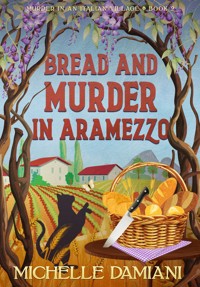
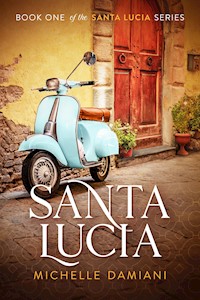
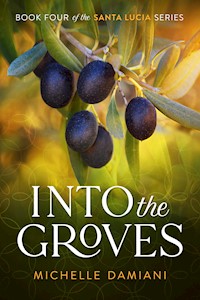
It’s been two months since Stella Buchanan discovered that real-life murder isn’t quite as relaxing as the ones between the pages of her beloved Italian mystery books. Now, somewhere between harvesting olives for oil and helping to shear the local sheep, Stella must admit that — against her better judgement — Aramezzo is starting to feel like home.
But just as village life finds a comfortable rhythm, the beloved local baker is found dead at the crack of dawn — and when Stella locates the murder weapon, she inadvertently frames herself as the main suspect.
When Stella uncovers a long-buried secret that sheds light on her friend’s floury demise, she follows her well-trained chef’s nose to Assisi. Did the mayor have a motive? Or was it an ages-old rivalry between two bakeries that moved someone’s hand to murder?
With time running out to prove her innocence, Stella must sift through the conflicting evidence to clear her name...before Aramezzo’s secrets (and the killer) catch up with her.
Bread and Murder in Aramezzo is the second book in the
Murder In an Italian Village series by Michelle Damiani and includes the recipe for a classic Umbrian dessert.
If you love cozy mysteries and armchair travel with a side of crusty bread, you’ll love these mysteries!
CLICK ‘BUY NOW’ TO HELP STELLA SOLVE THE MYSTERY OF THE BAKER’S DEATH TODAY!
Das E-Book können Sie in Legimi-Apps oder einer beliebigen App lesen, die das folgende Format unterstützen:
Veröffentlichungsjahr: 2023
Ähnliche












Cast of Characters
Casale Mazzoli
Stella arrives to Aramezzo to take over her family’s bed-and-breakfast
Mimmo the former caretaker of Stella’s bed-and-breakfast
Jobs in Aramezzo
Domenica owns the local bookshop
Matteo the streetsweeper
Cosimo the antiquarian and expert on local lore
Romina owns Bar Cappellina, married to Roberto
Roberto owns Bar Cappellina, married to Romina
Don Arrigo the village priest
Marcello the mayor
Marta raises sheep, mother of Ascanio
Leonardo an ex-racecar driver who now operates the family porchetta van
Antonio the red-bearded baker
Dario apprentice baker
Jacopo apprentice baker
Christiana owns the alimentari with her father
Orietta the pharmacist
Bruno the butcher
Flavia the florist
Villagers
Victoria the mayor’s wife
Benedetta the butcher’s wife
Celeste the baker’s wife
Luisella lingers at Bar Cappellina
The Police
Luca police officer
Salvo Luca’s partner
Palmiro the local police captain
Saturday
The baker did not look well.
In the few months Stella had lived in Aramezzo, she’d come to think of the baker as the real-life equivalent of a Muppet character. How could she not, with his ruddy cheeks and lustrous red mustache that glimmered in the barest thread of light? Now though, the baker’s wan face echoed the pale dough appearing and disappearing beneath his hands. That vibrant mustache sagged, parentheses around his frown.
Stella shifted her weight as she waited in the line snaking out of the tiny shop, past the bakery’s double doors thrown open to the street. She narrowed her eyes, her gaze following Antonio, now stalking to the oven to fling wood into the already roaring fire.
Gazing down the line of villagers waiting to enter the diminutive bakery, Stella wondered if any of them noticed the baker slapping the dough against the counter with a thwack that carried in early spring’s brittle air. Everyone’s conversations must be far too engrossing. Not one face peered curiously into the forno, as Antonio’s hands—famed for coaxing flour and water into loaves beloved throughout Umbria—now punched the dough as if holding it accountable for its sins. She amended her earlier thought. He didn’t simply look unwell . . . he looked enraged.
As she took in the preoccupied townspeople, Stella had to acknowledge herself to be the only person in line not gathered with a neighbor or two, debating the chance of rain or the merits of the Italian National Soccer team, affectionately known as Azzurri, or the Blues. She’d grown used to being the odd woman on the block and usually felt lucky that, as an outsider, she’d been able to form her few friendships. Except at times like this when she wished for eye contact with someone, to lift a quizzical brow at the smudge obscuring the baker’s usual sun.
Antonio turned, and Stella couldn’t help but notice the dullness in his eyes. She watched as he sniped at a junior baker, barking at him to clean up his station while he himself ran a handheld razor—called a bread lame—over the top of six loaves to score the dough, giving the rising bread room to expand in the oven, creating an airy, tender crumb.
At the sight of the junior baker now wordlessly scrubbing his station, Stella realized that though the villagers queued up for bread hadn’t picked up on Antonio’s seething, his apprentices couldn’t miss it. All the young men had their eyes fixed on their tasks, with none of their usual banter and teasing. The stiff hush suggested their determination to avoid Antonio’s notice at all costs. Quite a change from the usual boisterous clanging and calling out, laughter echoing joyfully down the street.
After all these months, Stella considered that joyfulness as much a part of the forno as the bakers’ uniforms. Though, Stella remembered, those uniforms had initially thrown her. Manhattan bakers certainly didn’t work in white tank tops and boxer shorts. The first time she’d caught sight of Antonio standing on the cobblestone street in what she thought was his underwear, she’d thought he looked as out of place as she felt. It had taken her at least a month to not startle at the bakers’ matching white garb, topped with a blue apron for the apprentices and white for Antonio.
She used to think she’d never grow used to the sight of barely clad men, pulling at each other, bursting into song, teasing and chiding and arguing good-naturedly even as they worked the dough and piled it into the blazing ovens, heat glinting off the sweat on their foreheads. But now she realized she had stopped remarking internally on the outfit altogether. Though back in December, she remembered Antonio joking about getting her into the forno to help with all the orders and maybe feed the bakers the sweet treats his operation didn’t have the time or capacity to manage. She’d responded that she didn’t think she’d look good in the uniform, and he’d looked down at his white boxer shorts, undershirt, and sneakers and roared with laughter.
Funny how time softened edges. If Antonio made the same joke today, Stella likely wouldn’t have the presence of mind to quip back about the outfits. There were many ways that Stella still felt like an outsider, but she supposed that acclimating to bakers in their underwear was a sign of her immersion into her ancestral village. In fact, in retrospect, she thought the get-up lent a familiar, almost intimate, tenor to the bakery. Except in moments like this, when the stiff silence bumped up against the delicate apparel in a way most unseemly.
A roar from the bakery cut off Stella’s thoughts. The villagers standing in the street fell silent. Stella couldn’t make out the words, only the volume of the tirade. Faces craned, staring into the forno, but Antonio was nowhere to be seen. On the bakery floor, the apprentices glanced at each other and then through the doorway that connected the floor with the shop.
Antonio couldn’t be yelling at the woman who sold the bread, could he? Stella tried to remember the woman’s name, but she found it hard for names to stick and constantly defaulted to calling the villagers the baker, the butcher, the greengrocer, the florist—the legacy of a childhood spent devouring Richard Scarry books from the library (her mother refused to buy them for her daughters, considering Lowly Worm’s fixation on occupations entirely too American, even while she tossed the Italian books sent by family directly into the trash). In any case, what infraction could that mild-mannered bread seller possibly have committed that was worthy of Antonio’s snarl of rage?
Just then, a stocky stranger, thin hair combed greasily across his scalp, emerged from the bakery. He walked stiffly, refusing to acknowledge Antonio, now looming at the threshold of the shop, arms folded across his chest.
Could Antonio have raised his voice like that to a customer? Stella knew Italian notions of customer service were different from the States, where she had to sound remorseful when a diner sent back a properly cooked, medium-rare, steak. But still.
Stella felt a tap on her shoulder and turned to find the owner of Aramezzo’s alimentari. She hadn’t gotten to know Cristiana well, but she always enjoyed their casual exchange of pleasantries. “Who is that?” Cristiana asked, gesturing at the stranger ambling by, rolling his shoulders as if to shed Antonio’s thundering look of death.
Stella almost turned to check if Cristiana had meant to ask someone else. But Cristiana’s eyes stayed fixed on her and Stella remembered that, of course, with her bed-and-breakfast, she would be likely to know a stranger in Aramezzo.
She shook her head. “No idea.”
Cristiana clarified, “He’s not staying at Casale Mazzoli? I thought you had guests this week.”
Stella nodded. “I do. An American couple. Young. Not this guy.”
Cristiana watched the stranger’s back recede down the street. “Allora, whoever that man is, he did something to get on Antonio’s bad side.”
“And I would have thought that impossible.”
Chuckling warmly, Cristiana said, “I know, he even smiles when Bruno makes snide remarks about his ‘stupid mustache.’ ”
Stella nodded, remembering all the times she’d heard the butcher mutter unintelligible insults at the passing baker. “I figured Antonio chalked all that up to Bruno’s sour disposition.”
Cristiana grinned. “Your Italian is coming along.”
Laughing, Stella said, “I know, right? I’m finally expanding past my elementary school whining and restaurant bawdy talk.”
Shaking her head, Cristiana said, “I meant your accent. You said that like an Umbrian. Not the usual medley of dialect.”
Stella wanted to volunteer that her Italian was a potpourri of Tuscan slang from working in Florence and Lombardian vowels from her time in Milan, blurred with her mother’s barbed commentary, but she couldn’t think of the Italian word for potpourri. So maybe her language wasn’t as advanced as Cristiana thought.
Cristiana went on, “Anyway, Bruno and Antonio used to get along. Before the whole television show debacle.”
Stella stared at Cristiana. “What?”
“The national news spot. The one that might have made them famous. Surely you know about this.” Cristiana gestured at the moving line. “Oh, you’re almost up. You getting bread or torta al testo?”
Stella stepped forward without wondering why Cristiana only figured on two options—that’s all the bakery sold, mostly to area restaurants but also to the village’s residents and those who ventured within Aramezzo’s walls for a bite of the slow-fermented, naturally risen bread. Usually, these visitors were treated to better manners than a cursing out by Aramezzo’s perennially sunny baker.
Stella realized she had yet to answer Cristiana. “A loaf. My guests are leaving today to drive to the Amalfi coast and asked me to pack them a lunch they can eat on the road.”
Cristiana frowned. “Eat on the road? You mean . . . in the car? While they drive? Why wouldn’t they stop at an Autogrill or something to have a proper meal?”
Shrugging, Stella answered as she stepped forward again. The line seemed to be moving swiftly now. “They said they tried the Autogrill on their way here from Rome, but found the system confusing—where they order, where they pay. I tried to explain it, but I could tell the idea made them too nervous.” It had been one of those complicated interactions she often had with guests—she liked this couple from Maryland (not only because they requested she make their dinners, a financial boon, but also because she never failed to warm to people who grew quiet with appreciation as they tucked into her food) and wanted them to have a memorable first trip to Italy. Which, by rights, should include a stop at Italy’s illustrious answer to fast food, a staple of road trips up and down the Boot. But Stella didn’t feel she could challenge them to push past their comfort zone. So to-go sandwiches it was. She finished the thought aloud: “They seem determined to travel only uncomplicated roads.”
Nodding slowly, Cristiana said, “How in the world did they wind up in Aramezzo?”
“A fair question,” Stella laughed. Aramezzo lay so far off the tourist trail, tucked in the hills behind Assisi, most travelers didn’t know of its existence. “The family I had at Christmas—you remember, they bought out all your decorative jars of Nutella. They’re part of the same supper club as this couple.” At Cristiana’s furrowed eyebrow, Stella went on, “It’s a thing in America. People schedule a night every month or so where they gather at a member’s house, and they all bring a dish on a theme, or from the same cookbook.”
Cristiana shook her head slowly, “I will never understand you Americans. If you want to have a meal with friends, have a meal with friends. Why must you turn it into a chore?”
Stella tamped down the pinch at Cristiana’s easy lumping of Stella in with a continent of people who didn’t know how to live. She pretended an ease she didn’t feel as she said, “Anyway, the family at Christmas told everyone about all their great Umbrian meals and inspired this couple to come. Originally, they had only planned on Rome and Amalfi.”
Laughing, Cristiana said, “You are underselling yourself, Stella. I suspect they praised yourUmbrian meals.”
The comment eased some of the sting from Cristiana’s earlier words. Since she’d arrived, Stella had been working to weave in an understanding of the food of her ancestors with her education from stints at restaurants throughout Italy. She’d tired the butcher to impatience asking questions (which, granted, did not seem hard to do—any sentence beyond, “I’d like those pork chops cut on the thick side” seemed to annoy him) and spent several long afternoons with Adele, the woman who cooked at Trattoria Cavour, Aramezzo’s only restaurant. Stella had even considered asking Antonio for a bread-baking lesson, but hadn’t yet worked up the courage. For all his open cheer, she’d noticed a thread of steel around his methods. Mostly in the form of changing the topic whenever she got close to shop talk.
Along with her ad-hoc training, Stella had cleaned Domenica out of all the Umbrian cookbooks in her used bookstore. Luckily, Domenica gave Stella the friends-and-family discount, even steeper when Stella remembered to bring something tasty to sweeten Domenica’s generosity. “Ah, well, they may have mentioned something about that.” Stella shifted uncomfortably, never gifted at accepting compliments, before realizing she was next in line.
Cristiana said, “Sounds like another five-star review coming your way. I bet you’re glad of that.”
Stella nodded, fairly certain this couple would be writing that glowing review on the drive to Amalfi. They seemed the type, and anyway, Stella had learned to hint for reviews in the footers of emails and in conversational asides. She had to. Flipping this bed-and-breakfast so she could return to the States and start over with a restaurant of her own, well, it was all part of the plan. The only question was where she’d land. Certainly not New York, after the debacle that led to her flight to Aramezzo.
Yes, that was the plan. Though lately, sometimes, she lost the shape of that particular plot, as she poured a swirl of olive oil from her own trees onto greens sautéed with plenty of garlic, or added bay leaves from the bush outside her back door to a bubbling ragu. In those moments, she only noticed the satisfaction derived from cooking for people she had some sort of relationship with—new friends, neighbors, or guests at Casale Mazzoli—rather than a roomful of strangers.
With a laugh of remembrance, Cristiana said, “Then again, you probably love any guest that doesn’t die on your watch.”
Trying in vain to smile, Stella could only say, “Ah, I’m still trying to forget about that.” She’d stopped jumping at sudden shadows, but only because the cat that came with the property, that she’d named Barbanera for his pirate-like black chin and missing ear, seemed to delight in taking her by surprise.
Cristiana patted Stella’s arm. “Aren’t we all? Better to enjoy making road panini for your living American guests than remembering . . . all of that.”
A white-haired woman in a navy blue dress and matching crepe heels stepped out of the shop, and Stella started to walk in before Cristiana pulled her back. “Torta al testo! Why aren’t you packing that for your guests? It’s so much better than a loaf of bread for a . . . picnic on wheels? It’s portable and far, far better.”
Stella made a noncommittal noise. Cristiana glared at her. “You still haven’t had a torta al testo sandwich, have you?”
Edging into the bakery, Stella stammered, “Well, I already told them what I’d be packing them. I’d hate to change the menu this late in the game.” At Cristiana’s stare, Stella added, “But later today I’ll drop by your alimentari and get one for myself. So I’m ready next time.”
“Promise?”
Stella grinned. “Promise.”
Cristiana half patted Stella’s arm and half nudged her into the shop as she said, “You’d better. You can’t call yourself an Umbrian without being well versed in our staples.”
Stella returned the smile before ducking into the shop to order her customary filetta, the local term for a simple loaf of country bread. Her eyes passed over the wheels of Umbrian flatbread. She had, it was true, thus far avoided torta al testo, what Umbrians called both the bread and the lunch it made when sandwiching any kind of cured meat. It wasn’t that she didn’t enjoy sandwiches—there were times she’d offer up her whisking arm for a bahn mi from her favorite Vietnamese dive on the Lower East side, or even a basic corned beef on rye. But she figured dry bread filled with nothing but cured meat had to be boring. Shouldn’t flatbread be slathered with hummus or lentils or something?
Perhaps, but as she handed over the euro for her bread, Stella decided Cristiana had a point. If she wanted to be part of Aramezzo, she had to at least sample their ways. Then again, she wondered, as she passed Cristiana with a farewell wave, how much did she want to be part of a town her own mother found so objectionable she never spoke of it without sneering?
Stella could now admit to herself she’d arrived in Aramezzo ready to hate it. But the labyrinth of cobblestone alleys had grooved its way into her heart. Moreover, she’d warmed to the villagers, grounded as they were in the countryside, with a dedication and curiosity about food that she found endearing. She could feel how much her heartbeat had slowed as she adapted to Umbria’s quieter rhythms.
Slowed, that is, as long as she didn’t stumble across any more dead bodies. She’d had enough of that for two lifetimes.
Stella caught sight of a man walking toward her in a blue sanitation worker’s uniform, his curly hair mostly clasped back in a ponytail, except for the premature silver tendrils that sprang up around his temples. Her thoughts drifted away like fog disappearing in warm sunshine as she raised her hand, calling, “Matteo!”
Her friend grinned. “Well, look what the cat dragged in.”
She made a show of looking behind her and he laughed, his eyebrows jumping like cricket legs. He said, “I figured you’d be seeing off your guests or already curled up by the fire with a mystery.”
Stella laughed. How did Matteo know this had been her first order of business once her guests checked out? One of her neighbors had given her a whole stack of gialli, Italian mysteries termed “yellow” for their trademark goldenrod spines. She’d thought it too generous of a trade—she’d only brought over a jar of pasta sauce made from pancetta and early spring greens after hearing his wife had sprained her ankle getting off her Vespa—but he’d insisted, saying the books belonged to their son, a hot shot lawyer in Rome who came regularly for Sunday dinner but no longer had time to read. “Isn’t it too warm for a fire? I wasn’t sure.”
“Ah, I don’t abide by these rules,” Matteo declared airily.
Stella stared at him, unsure if he was being sardonically self-critical or practicing willful self-delusion. He cut his eyes away from her and said, “Your guests seemed easygoing. Domenica said you even had time to go with her to Perugia for that installation on Raphael’s journey through Umbria.”
Stella nodded. “Super easygoing. They only asked for lots of dinners in so they could avoid having to translate menus in restaurants, but I’m okay with that.”
Chuckling, Matteo said, “I bet you are.”
“You should have seen them with the gnocchi and goose ragu.”
His eyes widened. “They allowed you to make them goose? I thought they weren’t adventurous.”
“Well, I didn’t tell them it was goose until after.”
Matteo laughed and then grew serious, his eyes fixed on Stella.
“What?” she asked. Matteo didn’t answer, and Stella realized. “Oh! Yes, I saved some for you. It’s in a container. You can pick it up anytime you’re passing.”
Matteo patted Stella’s shoulder. “That’s what I like to hear.”
As he continued walking, Stella turned to fall into step with him. “You don’t have your broom. Or your truck.”
“Not on duty yet. I told Domenica I’d stop by. She got a new stack of spy thrillers in, and I’m seeing if I want any before she shelves them. You have time for a coffee before you head back?”
She nodded, thinking aloud. “Yes, but a quick one. I have to go to Cristiana’s, and I want to catch an episode of Don Matteo before my guests come back from their hike. Have you watched it? It could take place here in Aramezzo!”
“Mysteries aren’t my thing,” he said, as he retied his silver-threaded ponytail, spinning the rubber band around it in a practiced motion.
Stella considered teasing him about what kind of worry it took to cause a guy in his thirties to gray, but she wasn’t sure that their friendship had advanced to that level of joking. Instead, she mused, “They filmed Don Matteo in Spoleto. I need to get there. It looks beautiful, and I hear there’s a shop with fabulous pistachio gelato. I guess when I have a car.” She sighed. “Well, a problem for a different day. A day with more money in it.”
He grinned and then said, “Speaking of watching television—”
“Were we?”
“I heard Luca has been watching a lot of American television shows lately. In English.” He smiled widely, cuing Stella that there was more meaning to his words than he let on.
“Luca . . . the police officer?”
“Who else?” Matteo shrugged.
“Well,” Stella ventured. “That’s good, right? It’s more broad-minded than I would expect of him, but Domenica keeps telling me I sell Luca short. That he may act condescending sometimes, but it’s part of the uniform. She keeps reminding me how, when she told him I was in danger last fall, he listened to her and raced to help. Then again, Domenica would pin a gold medal on any person under the age of fifty who reads books. The way she gushes about their conversations about historical romance . . . ”
“Madonnamia,” Matteo muttered.
“What?” she asked.
Matteo shook his head with a sigh. “Not a thing. So what’s the bread for, anyway? The sheep shearing?”
Stella wondered if she’d had enough coffee today, she seemed to have a hard time keeping up. “Sheep shearing?”
Matteo smacked his long forehead with the heel of his hand, releasing a fall of curls from his ponytail. “Oh, man. I can’t believe I forgot.”
Stella shifted the bread to her other arm.
“Marta is shearing her sheep tomorrow. She asked me to bring you, but I forgot to let you know, didn’t I?” At Stella’s non-response, Matteo went on, “It’s fun. Well, aside from getting a year’s worth of Mimmo in one day. Please come?”
At Matteo’s eyebrows creeping up to his hairline as he exaggerated a pleading expression, Stella laughed. “I don’t know how much good I’d be. I’m too citified to be comfortable with sheep.”
“Pssh. No problem. Bring something to eat and nobody will care if you volunteer to be the one hauling the baskets of wool rather than throwing the sheep.”
Stella gulped. “Throwing sheep? That’s a thing?”
Matteo laughed. “It’s not as dramatic as it sounds, trust me. Domenica will be there, some other people you’ll like. Don Arrigo, for sure.”
“I haven’t seen Don Arrigo for a while,” Stella realized aloud. She missed her conversations with the village priest. Every time they spoke she realized anew that perhaps Catholicism had more merit than her mother led her to believe.
“It’s almost Easter.” At Stella’s blank look, Matteo went on. “Confirmations, plus all those preparations, you know. So you’ll come?”
Stella hedged, “Is there something I would need to bring?”
“Something for dinner. Marta won’t care what . . . anything really . . . ” He let his voice trail off.
Grinning, Stella said, “But Matteo cares . . . okay, what’s your request?”
Matteo’s face lit up as though a sudden sunbeam had unfurled through the clouds at this precise moment. “I’ve been dreaming about your focaccia since you made it when Domenica and I came over for dinner last time.”
Her mind raced . . . she’d need to pick up supplies from Cristiana’s, but she was headed there anyway. Plus, her favorite focaccia method demanded a long rise, perfect for cozy hours getting lost in gialli. But did she want to juggle sheep or whatever? Stomp through fields with their messes? What a weenie, she chastised herself. Here Marta wanted to include her and Stella worried about soiling her shoes? Before she could talk herself out of it, she said, “Focaccia, no problem. What time tomorrow?”
“Anytime after lunch. She starts earlier, but needs the big push in the afternoon.”
They passed the spot where Stella had been waiting in line just a bit ago. Stella’s eyes flicked into the bakery, but she didn’t see Antonio. She wondered if he’d gone home. “Do you know if everything is okay with Antonio? He seemed . . . off this morning.”
Matteo ran his hand over his long face in thought. “He seemed good yesterday when I went in. Normal, which would be anyone else’s ebullient. Asked after my sisters. Said he wants to set one of them up with his son if things don’t work out with the current girlfriend. He keeps forgetting one of my sisters is married and the other one went to school with his son and didn’t like him much then. You know how hard it is to get over those early opinions.”
“Not me, I never have opinions,” Stella mugged.
Matteo laughed, then his steps slowed as they approached Domenica’s bookstore. “The forno . . . ” he muttered. “Now that I think of it, I remember my boss mentioning something. About Antonio requesting a change of service.”
“Trash service?” Stella asked, her head cocked to the side.
Matteo nodded. “I can’t remember exactly. Either they were suspending trash pick up or adding in debris pick up. All I know is I remember picturing some work happening at the bakery that could have them closed for some time.”
Stella pushed the door of Domenica’s open as she said, “Would that be enough to rattle Antonio, do you think?”
Domenica looked up from her desk, pushing up her glasses as she smiled. “Something is rattling Antonio?”
Stella took a moment to breathe in the familiar scent of Domenica’s bookshop—old books, hot coffee, and a scent she could only articulate as sun-warmed dust motes. Light slanted in through the front windows, illuminating the maze of bookshelves that wound into the back of the shop. Stella dragged a folding chair out from behind the desk and sank into it, leaving the cozy armchair for Matteo. She cut off his protests by saying, “You’re going to be on your feet all day, might as well be comfortable now. Besides, this way you’re closer to the thrillers.” Stella gestured to the stack of books with dark covers piled next to the overstuffed armchair.
As Matteo leaned over to grab one, a long-haired white cat leapt nimbly into his lap, blocking his reach. He grumbled, “If Attila lets me, that is.”
Stella grinned at Domenica. “What is it we were saying about Matteo’s priorities last week?”
Domenica adjusted her myriad scarves to better cover her throat and grinned back. “Plum out of whack.”
“Just so,” Stella said with a laugh. She looked from Domenica, her iron-gray hair held back with a burgundy velvet headband, to Matteo, begrudgingly stroking Attila. Stella never would have predicted, in a zillion years, that her exodus from Manhattan would culminate in having a should-be-retired bookstore owner and a gangly sanitation worker as her closest friends. Amici di cuori, as Matteo toasted her and Domenica at their dinner at Trattoria Cavour last month. Friends of the heart.
Stella’s reflections faded as Matteo muttered, “Cat hair all over my uniform.”
“You know where the roller is,” Stella and Domenica said at the same time before breaking into peals of laughter.
“Jinx,” said Stella, in English.
“What?” asked Matteo.
“Never mind. Just a thing kids say back home.”
Domenica pushed her glasses higher on her nose. “So what were you saying about Antonio?”
“Buongiorno, Ravioli,” Stella said as she picked up a passing cat, this one a patchwork of orange, white, and charcoal. “It’s probably nothing. But Antonio wasn’t himself this morning. Yelled at a customer, and I wondered if—”
“He what?” yelped Matteo. Attila ricocheted off his lap. Despite his earlier complaining, Matteo stared longingly after the cat before saying, “You didn’t tell me that part.”
Domenica asked, “Who did he yell at?”
Shrugging, Stella said, “I don’t know. Some guy not from Aramezzo. The whole thing was kind of surreal. If someone yelled at me in public, I’d be humiliated. Or maybe angry. But this guy . . . he looked pleased.”
“Pleased?” Domenica asked, leaning forward.
“Smug, even,” Stella said. “Anyway, Matteo was telling me that there might be something happening at the bakery, some change. Maybe it’s overwhelming for Antonio?” She wondered if she should bring him dinner. But under what pretense? You were kind of a jerk, so I figure you have a lot on your mind and could use a hot meal? No, certainly not.
Matteo said, “But what kind of change would make him tense enough to yell at a customer?”
Domenica mused, “Maybe he’s selling the forno and that guy was the new owner. A new owner who has requested permits from the city to remodel the space, and that’s what you heard?” Domenica directed the end of her thought to Matteo.
“He’s gotten enough offers over the years,” Matteo said. “But if he sold the bakery to that guy, why would he be so angry at him?”
Domenica leaned back and stared at the cracked plaster ceiling. “Hmmm. Maybe if financial trouble forced him to sell. I could picture his being resentful of a new owner stalking what he still thinks of as his territory.”
Matteo gave up cajoling Attila and settled for plucking a gray tabby off the printer and trying to hold him in his lap. Stella and Domenica rolled their eyes at each other. For a guy who carped about Domenica having more cats than books, he sure spent a lot of energy cajoling them. Matteo caught the look and said, “What? I can’t look at the books with you two chatting. I need something to do with my hands.”
Stella lifted Ravioli off her lap and stood up, cradling the calico against her chest for a moment before saying, “I’ll let you get to it. I have to head to Cristiana’s, anyway. She should be open by now.”
“Her father opened the shop about a half hour ago. I saw on my way here.” Matteo suddenly straightened. “What are you getting from Cristiana’s? Something you’ll need help tasting?”
“You are nothing if not consistent,” Stella laughed. “I promised Cristiana I’d finally try torta al testo. And I need tomatoes for tomorrow’s focaccia.”
Matteo yelped, “You haven’t had torta al testo?”
Stella glanced at Domenica to see if she shared Matteo’s horror, but the older woman straightened her headband, saying, “You know how Umbrians are about their food, cara. This shouldn’t be a surprise.”
Stella’s eyes widened. Domenica herself was born in Trevi, not that far south, and definitely in Umbria. Then again, the woman had traveled so much before settling in Aramezzo, she seemed more global than of any particular place.
Shaking his head, Matteo said, “But this isn’t just any Umbrian food. It’s torta al testo. What farmers eat when they break from picking olives and what we bring on picnics and what we stuff with grilled sausages at festivals. It’s famous.”
Stella’s slide into guilt for neglecting an Umbrian standard was forestalled by the familiarity of the word. She sat back down. “Famous?”
Ravioli sat down with her back to Stella and only a flick of her ear suggested she noticed Stella trying to draw her back to her lap. One thing about cats, Stella noticed, they knew how to hold a grudge. But not for long. She knew Ravioli would soon forget being summarily discharged from her lap and only remember Stella’s knack of scratching her in just the right place under her white chin.
“Famous,” Matteo nodded. He turned to Domenica. “You’ve heard this story?”
Domenica blinked from behind her overlarge glasses. “Of course.”
Stella said, “Well, I haven’t. Will somebody fill me in?”
Domenica gestured for Matteo to take the proverbial floor. “You tell it, I wasn’t here when it happened.”
“Well, I was little, so I don’t remember it, but I’ve heard the story more times than I can count.” He turned to Stella, leaning forward a touch. She could read his pleasure in being the one to spin a local yarn for her. “Okay, so, about twenty years ago, maybe more, a news team from Rome stopped in Aramezzo on their way to cover Assisi’s Easter celebration. They wanted to grab a quick bite and decided not to battle with the tourists in Assisi. Probably hard for you to imagine since you came off season, but Assisi at Easter is packed. A total casino.”
Stella nodded, wondering where this was going.
“Anyway, the news team stopped into Bruno’s butcher shop for torta al testo sandwiches.”
Stella frowned. “Bruno sells torta al testo? I’ve never seen any prepared food in his shop. Not even porchetta.”
“This was before his wife got sick. Now, he sticks to meats. Are you going to let me finish the story?”
“Okay, okay,” Stella mimed zipping her lip to show she wouldn’t be interrupting again.
“Anyway, torta al testo is super regional, so the news team hadn’t tasted it before. They loved it! How could they not? I mean, Antonio’s perfectly tender bread and Bruno’s prosciutto that he cures himself from local pigs. They decided it would be an excellent candidate for the regional food segment they aired once a week. So they invited Bruno and Antonio to come on the air and talk about why torta al testo is such a signature of Umbrian cuisine, how it’s so simple and so delicious at the same time.”
“I can’t picture Antonio and Bruno being in the same room, let alone doing a news segment together.”
Matteo laughed. “I know, right? But the way Mamma tells it, they were once great friends. Vacationed together in Sardinia with their wives and everything. But as it turned out, they didn’t make it on the news.”
“Why?”
Matteo sat back, pleased to arrive at the punchline of his story. “A series of disasters! First, Bruno got food poisoning, of all things. So mortifying, you can imagine the rumors, how he got sick off his own meat. They were going to cancel, but then Bruno’s wife offered to stand in for him. He tried to refuse—she’s always been shy, can’t imagine her in front of cameras—but Benedetta insisted all she had to do was slice the prosciutto, she’d done it a zillion times, and Antonio could do the talking. They took the train to Rome the morning of the shoot, but they didn’t plan on,” Matteo paused for effect, “the Mafia.”
“The Mafia!”
Domenica batted her hand into the air like she didn’t brook with such nonsense as organized crime. The woman’s unflappability was a wonder.
Stella’s knowledge of the Mafia was limited to installments of the Godfather playing in the background at parties. She’d sort of imagined the Mafia’s escapades as largely overdramatized or fictional. Perhaps a mistake.
Matteo retied his ponytail as he went on, “The Mafia. The morning of the shoot, the Mafia called the news station and warned they would detonate a bomb in the studio unless the station changed its coverage of some government thing or another. Antonio and Benedetta didn’t even make it onto the stage! The producers put them up in two rooms at the hotel across the street, saying maybe they could do it the next day. But of course, the next day, the news had to cover the bomb threat, so Antonio and Benedetta came home and that was that.”
“Oh, how tragic. They missed their chance.”
Domenica and Matteo exchanged glances. Domenica shook her head with a small smile as Matteo asked, “What do you mean?”
“What do you mean, what do I mean?” Stella said. “Their chance! They had this shot at glory and it disappeared!”
Domenica chuckled warmly to herself. Matteo shrugged and said, “That’s life, Stella. The world doesn’t owe us anything.”
Stella frowned in thought. Before coming to Aramezzo, she would have assumed the villagers to have a provincial, limited view of life. Like in the memes—grannies leaning out of windows, bragging about their handsome children, or arguing about whose side of the property line an apricot tree grew. Instead she discovered, time and again, the villagers’ rounded understanding of life. Like now, for instance. Stella practically heard a gear clicking into place as she realized how little the people of Aramezzo believed they were entitled to riches, literal or metaphorical. This one simple deviation from the American perspective allowed these small-town residents to be grateful in gentle moments and prosaic in challenging ones.
Every day, Stella’s interactions with her neighbors gave her fuel to rethink her assumptions. She wondered . . . was that unique to Aramezzo? Or was it simply living somewhere new that forced you to bend what you thought was straight, and flesh out unexplored parts of your understanding? Could this be why she liked her new friends? Domenica, whose travels had created a ground fertile for all manner of novel perceptions; and Matteo, so totally of Aramezzo he challenged her American opinions, but at the same time, so open, he left space for accepting her for who she was.
Yes, she’d worked in restaurant kitchens and so came into contact with people from around the world. But the focus had been solely on food. So she’d felt her knowledge and intuition about ingredients and processes growing, but hadn’t thought to wonder about herself.
She shook her head. She needed coffee if she was going to wrestle with deep thoughts before noon.
Stella rose again, ignoring the baleful glance Ravioli tossed over her shoulder. “Sounds like it’s time I further my culinary education.”
She said goodbye to Domenica, who wished her a happy day of reading, and Matteo, who added that he’d let her know if he heard more about the change of service to the bakery.
Stella nodded, distracted by her revelations, and stepped into the lightening morning air.
As Stella walked Aramezzo’s ring road to the alimentari, she remembered her last trip to the little grocery store. She’d stopped in to pick up olive oil and a packet of fresh mozzarella and ran into Antonio, buying prosciutto. It must have been Sunday, the bakery’s closed day. She remembered noticing how the red in Antonio’s hair and extravagant mustache gleamed, even in the low light of the shop.
Stella had been trying to decide if she should buy a bottle or a tin of oil when Antonio asked how she could have already run out of the supply she’d pressed from her trees. She told him she was trying to stretch her private supply—for sentimental reasons, since even with her refined palate she couldn’t detect a difference between the oil from her grove and what the frantoio took as payment from growers and combined to sell in local shops—and reminded him of how few olives she’d been able to harvest from her beleaguered trees.
He had laughed then, a booming laugh that filled the space, before saying, “That’s right. The bucket.” Stella had nodded. The bucket. Antonio had been behind her in the queue to have her olives pressed, and therefore been witness to her embarrassment as she stood in line with her single bucket of olives, while those around her pulled their three-wheeled trucks in, the beds groaning with teetering towers of crates. She’d tried not to notice more olives bouncing out of those trucks than she had filling her bucket. When she’d made a self-deprecating crack to Antonio about the American with the paltry haul, he’d launched into what a good year it was for olives and how next year was sure to be the same, and by then she’d have pruned the abandoned grove that came with her ancestral home and olives would be so plentiful they’d pull down the boughs like Christmas trees laden with ornaments.
The image had stalled her.
As Stella walked down the now familiar road that made up the lowest level of Aramezzo, which was constructed like a birthday cake with tunnels connecting the tiers, she remembered standing in the alimentari with Antonio that last time and thinking that she’d been wrong to think of him like a Muppet character. The man had depth.
Just as she’d stood, silent, her hand wrapped around a tin of olive oil, Antonio had asked her how to cook topinambur, what Italians called Jerusalem artichokes. His wife, he had added in an aside, had a cold and he wanted to make dinner for her. Stella had offered to cook for the both of them, but he’d shaken his head with a smile. “Baker’s hours mean I’m not home much,” he said. “Early to bed and early to rise. I like to dote on her when I can.”
Stella had smiled as the flavor profile of Jerusalem artichokes, the root of a kind of sunflower, flashed through her. Nutty, sweet . . . it would be lovely in risotto, especially with a few threads of saffron. Stella used to assume saffron came from some dusty country in Central Asia or the Middle East, but the villagers had been quick to educate her—saffron grew right here in Umbria, and even Marta with her sheep farm grew enough to sell a bit at local markets.
Stella had walked Antonio through how to make a simple risotto with Jerusalem artichokes, not mentioning that part of the reason for her suggestion was her long-seated, probably very American, belief in the power of chicken broth. Risotto, with its long cooking in ladle after ladle of hot broth, would both soothe his wife’s symptoms and make her feel warm and cared for.
Antonio had taken a little pad of paper out of his pocket and borrowed a pen from Cristiana to write down the instructions in careful script while Cristiana’s father sliced the prosciutto. It had been one of those little Aramezzo moments that plucked a chord of tenderness Stella had never known to seek.
Almost at the alimentari now, Stella remembered the end of that conversation with Antonio, the last she’d had before seeing him so altered today. Cristiana had been ringing up his basket of prosciutto and Jerusalem artichokes and arborio rice for the risotto when he tossed in a roll of black licorice candies.
Smiling, Stella had said she didn’t peg him for a lover of black licorice and Cristiana had answered before he could, “They’re for Celeste. He always brings her a roll when he does the shopping.”
Antonio had shrugged. “They’re her favorite.”
Stella had offered, “It’s funny, I love anise flavors in drinks and desserts, but can’t stand the candies.”
He’d chuckled and patted her arm before stepping outside, whistling as he walked away.
Stella remembered that she’d almost stopped him to ask about getting a bread lesson right then. She baked a great sourdough loaf, even a worthy country loaf, but there was something about Antonio’s Umbrian bread that made her want to understand it better. She suspected it had something to do with his yeast, which she knew came from wild strains. When toasted in her fireplace and drizzled with olive oil then sprinkled with sea salt, the bread developed a crisp exterior yielding to a succulent interior that reminded her of a sourdough donut she’d had once at a bakery around NYU. She wasn’t a huge fan of Umbrian bread for ordinary uses, but for bruschetta, she’d never had better.
But he’d walked away before she could work up the courage, and anyway, she needed to get back with the olive oil if she was going to have dinner prepared in time for her guests. In the moment, she’d consoled herself with remembering how often she met Antonio walking to work, his daily fresh white apron tucked under his arm. There’d be plenty of chances to catch him.
Little had she known that what seemed like Antonio’s boundless cheer did, in fact, know bounds.
Stella pushed open the door of the alimentari, the bell over her head ringing merrily to announce her presence. Cristiana called out from behind the counter as she restocked the display case with tubs of marinated anchovies and red peppers sott’olio, soaking in olive oil, “Stella!”
Stella smiled as she took a red plastic basket from the stack by the door. “Ciao, Cristiana. Long time no see.”
“I was just telling Orietta about the scene at the forno this morning,” Cristiana said, gesturing to the pharmacist who had no groceries. She’d probably popped in for chat rather than food.
Orietta said, “I’d assume Cristiana was pulling my leg, no way Antonio would yell at anyone, but I’d already heard about it from Flavia.”
Softly, Cristiana said, “He was so mad. I’ve never . . . I never would have thought it of him.”
Orietta checked her phone. “Madonna mia, where is the morning going? I have to open up the pharmacy. I’ll see you later.”
Stella and Cristiana waved goodbye, and then Cristiana turned to Stella with a grin. “Torta al testo time?”
Stella nodded, “Torta al testo time.”
Cristiana’s face wreathed in smiles. “Finally! Mortadella or prosciutto?”
Stella cocked her head. Which went better with dry bread? “What do you suggest?”
Cristiana frowned in thought. “Mortadella. But only by a hair.”
“Mortadella for the win!”
As Cristiana laughed and opened the case to remove a log-size roll of mortadella onto the gleaming meat slicer, Stella reflected on the absurdities of language across time and space. Mortadella came from Bologna, and so when it arrived in America (losing the pistachios and spices that made it such a treat in Italy), it became known as bologna.
Stella watched as Cristiana cut a triangle from a round of flatbread and then sliced it open before heating it momentarily on a hot grate while she simultaneously sliced the mortadella. When the bread had toasted to her liking, Cristiana carefully piled on layers of the mortadella and topped the sandwich with the remaining triangle of bread. Wrapping the sandwich in a waxy napkin, Cristiana handed it to Stella, who put on her game face. “Looks great!” She hoped she sounded more convinced than she felt.
She bit into the sandwich, and the look of determination left her eyes. She chewed, stunned. The bread, it practically melted away on wings of mortadella. Unlike Umbrian bread, which lacked salt, the flatbread had enough salinity to bring out the yeasty tones of the dough, and the fat of the meat melded into the crumb of the bread for one resonant, triumphant chorus. “Wow.”
“Right?”
“No, I’m serious. This is spectacular.”
“I have been trying to tell you.”
“I know, I know.”
Cristiana grinned as she went back to refilling the display case. “Orietta told me about a forno in Montefalco. No, aspetta, I think Bevagna. Right, she mentioned it was on the other side of the canal from the historic center.”
Stella tried to concentrate but found it difficult to focus.
Cristiana didn’t seem to notice. “That forno had to close because state inspectors came in and said the pipes—or was it the equipment? Something like that. Anyway, the bakery hadn’t been updated in fifty years. The inspector said they had to bring the forno up to code or close.”
Stella took another bite and concentrated on not letting her eyes roll back in her head before gesturing for Cristiana to continue.
Cristiana tucked a stray lock of caramel-highlighted hair back behind her ears. “So we think that’s what’s happening at Forno Antico. That guy Antonio yelled at, he must have been the inspector.”
Stella chewed slowly, processing this new information with what Matteo had mentioned about the change of service to the bakery. Finally, she said, “That does fit.”
Nodding, Cristiana said, “For sure we’ll know soon enough. But my money is on that guy being an inspector. I just hope Antonio can afford the renovations.”




