


0,49 €
Niedrigster Preis in 30 Tagen: 3,49 €
Niedrigster Preis in 30 Tagen: 3,49 €
Mehr erfahren.
- Herausgeber: Booksell-Verlag
- Kategorie: Poesie und Drama
- Sprache: Englisch
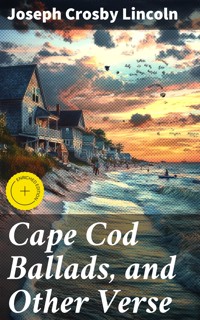
In "Cape Cod Ballads, and Other Verse," Joseph Crosby Lincoln beautifully encapsulates the essence of life on Cape Cod through a rich tapestry of verse that is both lyrical and evocative. Lincoln's literary style employs rhythmic patterns, vivid imagery, and a blend of humor and pathos, transporting readers to the shores and communities of this enchanting region. Written in the early 20th century, the collection not only reflects the local dialect and customs but also serves as a commentary on the changing landscape of American life, encapsulating the harmony and discord found within small-town existence. Joseph Crosby Lincoln, a native of Massachusetts, grew up deeply influenced by the maritime culture and landscapes of New England. His experiences as a sailor and his affection for Cape Cod's unique character provided ample inspiration for his poetry. Lincoln's background as a successful novelist combined with his passion for poetry reveals his intent to celebrate the human spirit within the rich traditions of his homeland, making this collection a unique contribution to American literature. "Cape Cod Ballads, and Other Verse" is highly recommended for readers seeking an authentic portrayal of Cape Cod's charm, coupled with keen social observations. Ideal for both poetry enthusiasts and those with an interest in regional American culture, Lincoln's work invites readers to experience the joy and struggles encapsulated in the lives of its characters, making it an enduring classic. In this enriched edition, we have carefully created added value for your reading experience: - A comprehensive Introduction outlines these selected works' unifying features, themes, or stylistic evolutions. - A Historical Context section situates the works in their broader era—social currents, cultural trends, and key events that underpin their creation. - A concise Synopsis (Selection) offers an accessible overview of the included texts, helping readers navigate plotlines and main ideas without revealing critical twists. - A unified Analysis examines recurring motifs and stylistic hallmarks across the collection, tying the stories together while spotlighting the different work's strengths. - Reflection questions inspire deeper contemplation of the author's overarching message, inviting readers to draw connections among different texts and relate them to modern contexts. - Lastly, our hand‐picked Memorable Quotes distill pivotal lines and turning points, serving as touchstones for the collection's central themes.
Das E-Book können Sie in Legimi-Apps oder einer beliebigen App lesen, die das folgende Format unterstützen:
Veröffentlichungsjahr: 2019
Ähnliche














Cape Cod Ballads, and Other Verse
Table of Contents
Introduction
This edition presents the complete text of Joseph Crosby Lincoln’s Cape Cod Ballads, and Other Verse, first published in 1902. It gathers the author’s Preface, the core sequence labeled Cape Cod Ballads, a wide array of additional poems, and the Index to First Lines that closes the volume. As a unified book by a single author rather than an omnibus of disparate writings, it offers a coherent portrait of New England’s outer shore at the turn of the twentieth century. Its purpose is plainly literary and documentary: to celebrate and preserve in verse the everyday experiences, characters, and scenery of Cape Cod, while inviting readers to hear the rhythms of a living community.
Within these covers the contents are poems: narrative ballads, character sketches, occasional pieces, and reflective lyrics. Many poems assume the voices of recognizable Cape characters, while others describe work, weather, and the sea’s moods. The sequence also includes formally signaled items such as The Ballade of the Dream-Ship and an Envoy, and it is bookended by a Preface and an Index to First Lines to aid readers and reciters. There are no essays, letters, or prose stories here; Lincoln’s storytelling takes place in verse, through compact scenes, dramatic monologues, and rhythmic portraits shaped for the spoken sound as much as for the page.
Unifying the volume are themes of community, labor, and place. Maritime life—cod-fishing, lifesaving, light-keeping, and the surf’s incessant presence—appears alongside the rituals of small-town New England: Sunday-school, choir practice, Friday meetings, and the informal parliament of kitchens and general stores. Domestic tenderness and childhood memory counterbalance storms and fog; seasonal cycles carry the book from May and midsummer through September, November, and winter nights. Throughout, Lincoln treats ordinary people with sympathy and humor, noticing their speech, their foibles, and their quiet courage. The poems make Cape Cod legible as both a working landscape and a moral one, intimate yet expansive.
Stylistically, the collection is marked by clear narrative through-lines, plain diction enriched with regional idiom, and steady rhyme and rhythm that favor memorability. Dialect spellings in titles and voices signal Lincoln’s ear for local speech, yet the poetry remains hospitable to readers beyond the Cape. He favors vignette-like structures—self-contained scenes that build character swiftly—while balancing affectionate comedy with moments of elegy and awe. Traditional stanza patterns and refrains support the ballad impulse, and the language often leans toward the conversational. The result is a body of verse that is accessible without being slight, and musical without obscuring story, place, or feeling.
As a whole, the book stands as a significant example of American regional verse, attentive to a specific coast and culture without lapsing into mere tourist portraiture. Its value rests in its sustained interest in everyday work and social ties and in its preservation of a vernacular that shaped local identity. Readers encounter not abstractions, but names, trades, weather, and rooms—elements that, cumulatively, record a historical moment while remaining alive on the page. The collection’s humor softens sentiment; its respect for labor and community resists stereotype. It endures because it makes a world palpable and keeps the human voice at its center.
The arrangement encourages multiple pathways. Opening with the cluster named Cape Cod Ballads, the volume sets its compass by the shoreline before ranging inland to parlors, schoolrooms, and village greens, then outward again to lighthouses and fogbanks. Later poems broaden into meditations on time, family, memory, and the seasons, without abandoning the maritime horizon. The presence of a Preface provides orientation, and the Index to First Lines assists in locating favored pieces. The cumulative effect is not episodic miscellany, but a deliberately varied suite, where tones of play, pathos, and quiet heroism answer one another across sections and subjects.
Approached consecutively or dipped into at leisure, these poems reward the attentive ear and the patient eye. Read for the stories they tell, the voices they channel, and the scenes they frame; read, too, for the craft that keeps cadence buoyant and images precise. The collection invites return visits, as seasonal poems find new resonance across the year and character pieces reveal fresh inflections. Above all, it offers a sustained engagement with Cape Cod as lived place—work, worship, weather, and wit—brought into a shapely chorus by Joseph Crosby Lincoln. That chorus is the book’s abiding purpose and its lasting delight.
Historical Context
Joseph Crosby Lincoln (1870–1944), born in Brewster, Massachusetts, made a national career from memories of Cape Cod village life. Before his first widely circulated collection, Cape Cod Ballads, and Other Verse (1902), he published humor and dialect sketches in Life, Puck, and The Saturday Evening Post, aligning him with the late nineteenth-century local color tradition of Sarah Orne Jewett and Mary E. Wilkins Freeman. Writing largely from New York and later Florida while summering on the Cape, he transformed small-town speech, congregational customs, and shore work into popular literature during the Gilded Age and Progressive Era, when urban readers craved nostalgic, regionally grounded narratives.
The Cape’s maritime economy—cod fishing, coasting schooners, and lifesaving—supplied images and institutions central to many poems. The United States Life-Saving Service, formalized in 1878 and merged into the Coast Guard in 1915, manned stations along the outer beaches, drilling with surfboats and breeches buoys as nor’easters and fog endangered shipping. The 1898 Portland Gale, dense fogbanks, and shifting bars made lighthouse keepers, surfmen, and fishermen community heroes. Lincoln’s verses elevate these occupations, recording the jargon of dories, trawls, and foghorns while reflecting a national fascination with coastal rescue work that newspaper readers in Boston and New York followed obsessively.
Railroads and tourism changed Cape Cod profoundly between the Civil War and 1900. The Old Colony Railroad reached the lower Cape in stages after the 1870s, while steamboats linked Provincetown and Boston, allowing urban families to summer in Brewster, Chatham, and Hyannis. Boardinghouses, “spare rooms,” and the ritual of taking boarders became economic strategies for widows and fishermen’s families as deep-sea fisheries declined. Horse-drawn carryalls, village roads, and later the first automobiles coexist in Lincoln’s settings, marking a transitional landscape. His poems register the seasonal cadence of arrivals and departures, anticipating the canal era (the Cape Cod Canal opened in 1914) that further bound the Cape to metropolitan life.
New England’s congregational culture frames Lincoln’s village world. Nineteenth-century Cape towns revolved around the meetinghouse, Friday prayer meetings, Sunday-school picnics, and hymn-singing, institutions descended from Puritan polity yet softened by nineteenth-century evangelical music and social reform. The legacy of Plymouth and the Mayflower—enshrined in school readers and local commemorations and culminating in the 1920 tercentenary—shaped civic memory across Massachusetts. In this milieu ministers, choir leaders, and the school committee emerge as local authorities, and domestic hospitality becomes an ethic. Lincoln’s humorous portraits depend upon that shared religious vocabulary while noting the frictions between piety, thrift, and small-town pride.
The poems also chronicle American parlors and technologies of memory. Mid-century daguerreotypes (introduced in the United States in 1839) linger on mantelpieces; itinerant photographers offer new “photygraphs”; cuckoo clocks and hand-organs bring European novelties to Yankee rooms and sidewalks. The sheet-music boom and Tin Pan Alley (New York, 1890s) feed the popular song, while firecrackers, Christmas stockings, and Thanksgiving dinners map a calendar of domestic patriotism. Such objects and rituals furnish comic plots and affectionate nostalgia, situating Cape households within national consumer culture even as gardens, carryalls, and wood-stoves proclaim a slower, pre-electric rhythm that many readers in 1902 already felt was vanishing.
Lincoln’s career unfolded amid mass immigration and urban machine politics that radiated from Boston and New York into small-town conversation. Irish and later Italian communities supplied firemen, organ grinders, and political clubs; the ward meeting and joint debate typified Gilded Age democracy overseen by organizations like Boston’s city machines and New York’s Tammany Hall. The Spanish-American War of 1898 revived martial imagery and the distinction between regulars and volunteers, themes widely sentimentalized in popular verse. Lincoln adopts contemporary stage dialects and stereotypes—common in magazines of the 1890s—yet usually tempers caricature with neighborly sympathy, showing how Yankees negotiated cosmopolitanism arriving by rail, newspaper, and vaudeville.
National memory courses through his verse. The old sword on the wall recalls the Civil War (1861–1865) and the Grand Army of the Republic, whose posts dotted New England after 1866 and organized Memorial Day rites. Children’s Fourth of July firecrackers, Thanksgiving tables revived nationally since Abraham Lincoln’s 1863 proclamation, and winter prayer meetings turn households into theaters of citizenship. Seasonal poems—May blossoms, midsummer heat, September mornings, and November gales—compose a New England year that anchors characters from infancy to old age. By aligning private sentiment with public ritual, Lincoln both preserves and gently satirizes the civic pedagogy of small American towns.
As a popular entertainer shaped by print capitalism, Lincoln bridged the recitation era and the mass-magazine age. Dialect verse and anecdotal ballads, heir to James Whitcomb Riley and Bret Harte, prospered in illustrated weeklies and on Chautauqua and lyceum platforms around 1900. Cape Cod Ballads (1902) established a vein he mined in novels like Cap’n Eri (1904) through the 1930s, even as the Coast Guard replaced the Life-Saving Service in 1915 and the automobile transformed the Cape. He died in Winter Park, Florida, in 1944, yet his name remained tied to Brewster and Chatham, a kindly, humorous counterweight to urban modernity.
Synopsis (Selection)
Preface
Lincoln states his aim to preserve Cape Cod’s dialect, humor, and everyday scene in light verse, setting an affectionate, anecdotal tone for the collection.
CAPE COD BALLADS
An umbrella section introducing local-color ballads and village portraits centered on Cape Cod’s people, seafaring trades, and small-town customs.
Seafaring Trades and Perils
Vignettes of Cape maritime labor and danger—'The Cod-Fisher,' 'The Life-Saver,' 'The Light-Keeper,' 'Through the Fog,' and 'The Watchers'—portray duty, endurance, and the hazards of the coast.
Sea’s Voice and Shorescapes
Lyric pieces giving the ocean and shoreline a voice—'The Song of the Sea,' 'The Wind’s Song,' 'The Little Old House by the Shore,' 'When the Tide Goes Out,' 'The Surf Along the Shore,' 'Sunset-Land,' and 'At Eventide'—meditate on rhythm, weather, and restorative quiet.
Church, Choir, and Community Meetings
Humorous and affectionate sketches of New England worship and gatherings—'The Evenin' Hymn,' 'Sunday Afternoons,' 'When Nathan Led the Choir,' 'The Sunday-School Picnic,' 'When the Minister Comes to Tea,' 'The Minister’s Wife,' 'Friday Evening Meetings,' 'Sermon Time,' 'The Parson’s Daughter,' and 'Circle Day'—highlight decorum, gossip, and fellowship.
Home, Family, and Childhood
Domestic reminiscence and small crises in family life—'The Best Spare Room,' 'The Old Carryall,' 'Our First Fire-Crackers,' 'When Papa’s Sick,' 'His New Brother,' 'A Crushed Hero,' 'A Thanksgiving Dream,' 'The Cuckoo Clock,' 'The Popular Song,' 'Little Bare Feet,' 'A Rainy Day,' 'In Mother’s Room,' 'My Old Gray Nag,' 'Summer Nights at Grandpa’s,' 'Grandfather’s Summer Sweets,' 'Jim,' and 'The Old Daguerreotypes'—celebrate household rituals, childhood scrapes, and tender nostalgia.
Village Characters and Yankee Humor
Character sketches and small-town satire—'Hezekiah’s Art,' 'Aunt 'Mandy,' 'The Story-Book Boy,' 'The School-Committee Man,' 'Wasted Energy,' 'Yap,' 'The Village Oracle,' 'The Tin Peddler,' 'Sary Emma’s Photygraphs,' 'Susan Van Doozen,' 'Sister Simmons,' 'The Fift' Ward J'int Debate,' 'Matildy’s Beau,' 'Sister’s Best Feller,' 'The Widder Clark,' 'Takin' Boarders,' 'A College Training,' 'The Croaker,' 'The Old-Fashioned Garden,' and 'The Bullfrog Serenade'—poke fun at pretension, thrift, courtship, and local politics.
Irish and Working-Class Street Portraits
Lively dialect portraits of Irish and urban working-class figures—'The Reg’lar Army Man,' 'Fireman O’Rafferty,' 'O’Reilly’s Billy-Goat,' and 'The Hand-Organ Ball'—mix boastfulness, blarney, and street-level heroics.
Nature, Seasons, and Rural Paths
Seasonal sketches of New England fields and weather—'The Meadow Road,' 'May Memories,' 'Birds'-Nesting Time,' 'Ninety-Eight in the Shade,' 'Midsummer,' 'September Mornin's,' 'November’s Come,' 'The Winter Nights at Home,' and 'The Little Feller’s Stockin''—trace the year’s work, play, and atmosphere.
Patriotism and Historical Memory
Brief patriotic meditations—'The Mayflower' and 'The Old Sword on the Wall'—link family lore and heirlooms to national origins and sacrifice.
Fables and Moral Reflections
Moralizing pieces—'The Ant and the Grasshopper' and 'Life’s Paths'—stress prudence, perseverance, and the choices that shape a life.
Closing Meditations and Formal Pieces
Formal, reflective finales—'The Ballade of the Dream-Ship' and 'Envoy'—offer a wistful imaginative voyage and a courteous leave-taking for the collection.
Index to First Lines
A reference list of opening lines to help readers locate poems within the volume.




