


18,99 €
Mehr erfahren.
- Herausgeber: John Wiley & Sons
- Kategorie: Wissenschaft und neue Technologien
- Sprache: Englisch
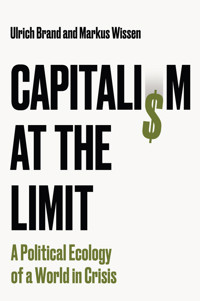
Capitalism is hitting the buffers. Unable to handle the various crises that its inherent logic of growth, profit, and competition has produced, it has led the world into a state of emergency - with the authoritarian right on the rise globally and progressive forces unable to realize the transformations needed to secure the future prosperity of people and planet. 'The old is dying and the new cannot be born', Gramsci said. We are caught between forces agitating for fundamental change, Green Capitalist modernizers, and fierce defenders of the status quo. How did this happen, and what is to be done?
In this new book, Ulrich Brand and Markus Wissen, authors of the acclaimed The Imperial Mode of Living, trace how capitalism has reached its very limits. Alongside the mutually reinforcing environmental, geopolitical, and social crises we face, they analyse the struggles that will determine the fate of humanity. Critiquing dominant pathways - from Green Capitalism to authoritarian and anti-ecological policies - that reinforce the Global North's imperial mode of living, the authors offer a fairer alternative based on solidarity and collective self-limitation. Capitalism at the Limit is a clear-sighted look at the dynamics driving the critical conflicts of our time.
Sie lesen das E-Book in den Legimi-Apps auf:
Seitenzahl: 453
Veröffentlichungsjahr: 2025
Ähnliche
















Table of Contents
Cover
Praise for
Capitalism at the Limit
Dedication
Title Page
Copyright Page
Abbreviations
Foreword by Dr Mario Candeias
1 Capitalism and the Climate Crisis
Capitalism at its limits
Eco-imperial tensions
Contested crisis management
Perspectives of solidarity
Objective and structure of this book
Notes
2 Monstrous Normality
Zeitenwende
? What
Zeitenwende
?
The imperial mode of living
Mode of production and mode of living
The class question and North–South relations
Notes
3 The Limits of Externalization
‘Humanity’ in the Anthropocene
Ecological inequalities
The Capitalocene and racial capitalism
The ‘outside’ of the capitalist economy
At the limits of the imperial mode of living
Notes
4 Green Capitalism
Gramsci and Green Capitalism
Greening the Empire? The European Green Deal
Green Capitalism and fossil capitalism
The outside of Green Capitalism
The fragility of Green Capitalist crisis management
Notes
5 Eco-Imperial Tensions
Hegemony, dominance, and dependence in global capitalism
Globalization, its dynamics, and its crisis
Selective deglobalization
A second Cold War?
‘Green’ extractivism
A new structural dimension of international politics
Reducing the burden, not shifting it
Notes
6 Authoritarian Politics
The authoritarian right and the socio-ecological class conflict
‘The raw bourgeoisie’
The crisis of petro-masculinity
At the limits of liberal democracy
Solidarity as a strategy against authoritarian stabilization
Notes
7 Perspectives of Solidarity
The lessons from Lützerath
Solidarity
The political struggle for solidarity-based (self-)limitations
Socialization and the strengthening of socio-ecological infrastructures
Solidarity-based resilience
Repairing as a practice of solidarity and transformation
Freedom and the right to stay
Transformative cells
Notes
References
Acknowledgements
Index
End User License Agreement
Guide
Cover
Table of Contents
Begin Reading
Pages
a
b
ii
iii
iv
vi
vii
viii
ix
x
1
2
3
4
5
6
7
8
9
10
11
12
13
14
15
16
17
18
19
20
21
22
23
24
25
26
27
28
29
30
31
32
33
34
35
36
37
38
39
40
41
42
43
44
45
46
47
48
49
50
51
52
53
54
55
56
57
58
59
60
61
62
63
64
65
66
67
68
69
70
71
72
73
74
75
76
77
78
79
80
81
82
83
84
85
86
87
88
89
90
91
92
93
94
95
96
97
98
99
100
101
102
103
104
105
106
107
108
109
110
111
112
113
114
115
116
117
118
119
120
121
122
123
124
125
126
127
128
129
130
131
132
133
134
135
136
137
138
139
140
141
142
143
144
145
146
147
148
149
150
151
152
153
154
155
156
157
158
159
160
161
162
163
191
192
193
194
195
196
197
198
199
200
201
202
203
204
205
206
207
208
209
210
211
212
213
214
215
216
217
218
219
220
221
222
223
224
225
226
227
228
229
230
231
232
233
234
Praise for Capitalism at the Limit
‘Capitalism at the Limit is the unsurpassable continuation of the excellent The Imperial Mode of Living. A necessary, agile, and erudite book with a holistic vision of the crisis and its solutions.’
Maristella Svampa, sociologist and writer, Ecosocial Pact From the South, Argentina
‘At a time when capitalism is trying to reinvent itself through “greening” and techno-market fixes to global ecological crises, a sharp critique of the sheer inadequacy of such approaches is urgently needed. In providing such an analysis, as well as a vision of solidarity-based alternatives for a just, sustainable planet, the authors do us a great service.’
Ashish Kothari, Kalpavriksh, Vikalp Sangam, and Global Tapestry of Alternatives
‘A brilliantly written contemporary document, fuelled by extensive empirical and conceptual knowledge.’
Jean Ziegler, University of Geneva and former UN Special Rapporteur on the Right to Food
‘Capitalism at the Limit offers much-needed clarity in this era of upheaval, showing how Green Capitalism and authoritarianism are defending an imperial mode of living. Brand and Wissen are sombre in their diagnosis, and yet every page is buoyed by their pursuit of openings for eco-social solidarity. The reader will leave better equipped to struggle for a more generous way of life.’
Cara New Daggett, Virginia Tech
‘Building upon the path-breaking analysis of their The Imperial Mode of Living, and drawing from recent social movement initiatives in Germany and elsewhere, the authors offer an invaluable contribution to climate politics from below.’
Stefania Barca, author ofForces of Reproduction and Workers of the Earth
Dedication
To Susann, Wiebke, and Simon
Capitalism at the Limit
A Political Ecology of a World in Crisis
Ulrich Brand and Markus Wissen
Translated by Jan-Peter Herrmann with David Broder
polity
Copyright Page
First published in German as Kapitalismus am Limit © oekom, 2024
This English edition © Ulrich Brand and Markus Wissen, 2026
The right of Ulrich Brand and Markus Wissen to be identified as Authors of this Work has been asserted in accordance with the UK Copyright, Designs and Patents Act 1988.
First published in 2026 by Polity Press Ltd.
The translation of this work was supported by a grant from the Rosa Luxemburg Foundation.
Polity Press Ltd.
65 Bridge Street
Cambridge CB2 1UR, UK
Polity Press Ltd.
111 River Street
Hoboken, NJ 07030, USA
All rights reserved. Except for the quotation of short passages for the purpose of criticism and review, no part of this publication may be reproduced, stored in a retrieval system or transmitted, in any form or by any means, electronic, mechanical, photocopying, recording or otherwise, without the prior permission of the publisher.
ISBN-13: 978-1-5095-6974-8
ISBN-13: 978-1-5095-6975-5 (pb)
A catalogue record for this book is available from the British Library.
Library of Congress Control Number: 2025933406
by Fakenham Prepress Solutions, Fakenham, Norfolk NR21 8NL
The publisher has used its best endeavours to ensure that the URLs for external websites referred to in this book are correct and active at the time of going to press. However, the publisher has no responsibility for the websites and can make no guarantee that a site will remain live or that the content is or will remain appropriate.
Every effort has been made to trace all copyright holders, but if any have been overlooked the publisher will be pleased to include any necessary credits in any subsequent reprint or edition.
For further information on Polity, visit our website: politybooks.com
Abbreviations
ADAC
Allgemeiner Deutscher Automobil-Club/General German Automobile Club
AfD
Alternative für Deutschland/Alternative for Germany
AK
Arbeiterkammer/Chamber of Labour
BRI
Belt and Road Initiative
BRICS
Brazil, Russia, India, China, South Africa
BSW
Bündnis Sahra Wagenknecht/Sahra Wagenknecht Alliance
BUND
Bund für Umwelt und Naturschutz Deutschland/Friends of the Earth Germany
CBAM
Carbon Border Adjustment Mechanism
CBD
Convention on Biological Diversity
CDU
Christlich Demokratische Union/Christian Democratic Union
COP
Conference(s) of the Parties
CRMA
Critical Raw Materials Act
CSR
Corporate Social Responsibility
CSU
Christlich Soziale Union/Christian Social Union
DWE
Deutsche Wohnen & Co. enteignen/Expropriate Deutsche Wohnen & Co.
ECB
European Central Bank
EGD
European Green Deal
EU
European Union
FDI
foreign direct investment
FDP
Freie Demokratische Partei/Free Democratic Party
FFF
Fridays for Future
FPÖ
Freiheitliche Partei Österreichs/Freedom Party of Austria
G7
Group of 7
GDP
gross domestic product
GEG
Gebäudeenergiegesetz/German Buildings Energy Act
HWR Berlin
Hochschule für Wirtschaft und Recht Berlin/Berlin School of Economics and Law
IfG
Institut für Gesellschaftsanalyse/Institute for Social Analysis
IG BCE
Industriegewerkschaft Bergbau, Chemie, Energie/Industrial Trade Union for Mining, Chemicals, and Energy
IMF
International Monetary Fund
IPCC
Intergovernmental Panel on Climate Change
IPCEI
Important Projects of Common European Interest
IRA
Inflation Reduction Act
IUCN
International Union for the Conservation of Nature
LNG
liquified natural gas
MITECO
Ministerio para la Transición Ecológia y el Reto Demográfico/Ministry for the Ecological Transition and the Demographic Challenge
MTECT
Ministère de la Transition écologique et de la Cohésion des Territoires/Ministry of Ecological Transition and Territorial Cohesion
NGOs
non-governmental organizations
OPEC
Organization of the Petroleum Exporting Countries
ÖGB
Österreichischer Gewerkschaftsbund/Austrian Trade Union Federation
ÖVP
Österreichische Volkspartei/Austrian People’s Party
PiS
Prawo i Sprawiedliwość/Law and Justice
RLS
Rosa-Luxemburg-Stiftung/Rosa Luxemburg Foundation
RWE
Rheinisch-Westfälische Elektrizitätswerke
SDGs
Sustainable Development Goals
SIPRI
Stockholm International Peace Research Institute
SPD
Sozialdemokratische Partei Deutschlands/Social Democratic Party of Germany
TINA
There Is No Alternative
UN
United Nations
UNEP
United Nations Environment Programme
UNFCCC
United Nations Framework Convention on Climate Change
WTO
World Trade Organization
Foreword
The appeal of ‘the imperial mode of living’, in the narrow sense of the word, was well illustrated by Ulrich Brand and Markus Wissen in their 2021 bestseller of the same name, which has now been translated from German into ten different languages. They showed how the global, imperial exploitation of people and nature enabled a relative consensus in the societies of the Global North, in which even parts of the exploited classes enjoyed growing prosperity. At the same time, this mode of living was extremely appealing to the emerging middle classes in the new and rising capitalist centres such as China, India, and Brazil, as well as in other countries of the so-called Global South. The problem, however, is that this mode of living cannot be generalized, for that would require the resources and ecological sinks of several earths. It is, so to speak, an impossible mode of living. But what comes after it?
Beginning in the major crisis of 2007–9, neoliberal forces lost the active consensus of the subaltern classes. Neoliberalism continued to dominate the field, but it increasingly relied on authoritarian measures rather than the tools of leadership and persuasion. And any project for a new accumulation push within the logic of neoliberalism also went astray: for the need for active state intervention collided with neoliberal austerity policies. From 2011 onwards, a space opened up for a variety of different social projects: left-wing awakenings with the movements of the public square occupations (‘indignados’); general strikes in Europe; the ‘Arab Spring’; the founding of new and promising left-wing parties; the revitalization of a left-wing social democracy with the movements around Bernie Sanders and Jeremy Corbyn; but of course also the spread of radical right-wing projects. A new cycle of mobilization had begun, which then also led to major climate protests. Against this backdrop, no party that sought to enter government could afford to do without a programme for ecological modernization.
If the project of Green Capitalism was still blocked after 2009 – despite being the only one that offered a realizable, also economic, way out of the crisis – ten years later it could claim to point the way, ‘becoming state-like’ (Gramsci). Ulrich Brand and Markus Wissen call this decarbonization as a ‘hegemony project’. However, they point out: ‘Given the conditions of capitalist growth, the strategies of decarbonization imply not a reduction of resource consumption but merely a shift in the sense of a selective modification of its raw materials base’ (Chapter 5). They explain that Green Capitalism is not the solution, but, rather, inevitably leads to ‘eco-imperial tensions’ in the struggle for the necessary raw materials, markets, and carbon sinks. In crisis mode, this also leads to attempts at ‘authoritarian stabilization’ internally.
The transition to a Green Capitalist project is not an ordinary transition between different periods of capitalism’s development. Rather, it touches on the foundations of a fossil-based mode of production and living that has been deeply entrenched over several periods of capitalism. That is why this unique transition unleashes so many opposing forces, so many affects, such furore. At the moment when the Green Capitalist project rises to ‘become state-like’, there is a reactionary backlash.
In the neoliberal period, the class base of active consensus was already compressed to an ever-narrower bedrock of support. But liberal and Green Capitalist modernization has failed to seek a broad class compromise. Thus, this aspiring hegemonic project has itself prepared the foundations for its own counter-project: namely, fascistization and the hatred that arises from liberal democracy itself – a democracy limited to the political arena, and which never touches the economic foundations. At least in Europe and the United States, the project of green capitalism can be regarded as a failure, for the time being. Fascistization – in Germany, in the United States with Trump, and elsewhere – is already having its effect as a counter-project to the current transformation in a ‘capitalism at the limit’.
We are dealing with a deep crisis of capitalism’s reproduction, in which the general tendency towards increased economic and social crises, dramatic ecological catastrophes, and new geo-economic conflicts and wars makes it questionable whether there will be a new, more or less stable period of capitalist transformation in the medium term. It is no consolation that even in the past such transformations could only take place through the hell of world wars, the destruction of capital, and human barbarism. These developments become more understandable when we read this book. They do not lose their horror but do become comprehensible. And the authors do not leave us mired in a fear of barbarism. They do not give up hope but instead outline perspectives for solidarity – I would also call these eco-socialist perspectives beyond the limits of the assumptions that capitalism socializes us in, even if they call them something else.
The authors have collaborated with the Rosa Luxemburg Foundation (RLS) for many years. The present book is based on two fellowships they completed at the Foundation’s Institute for Social Analysis (IfG). This long-standing and close working relationship has always been highly productive for everyone involved – and more than a pleasure, as both Uli and Markus are great sources of solidarity and friendship. We are glad to have contributed to this project, both in the past and now in co-funding this English translation.
Dr Mario Candeias
Former Director of the Institute for Social Analysis
Rosa Luxemburg Foundation
December 2024
1Capitalism and the Climate Crisis
In 2022, an international team of renowned climate researchers made headlines as they warned against the danger of a climate endgame.1 They argued that the climate crisis could develop into a global catastrophe, which would not only cause social collapse, but also potentially result in the total extinction of humankind. The more commonly cited climate scenarios had underestimated this possibility, instead concentrating too narrowly on predicting the effects of a rise in temperatures of 1.5 or 2 degrees Celsius compared to the pre-industrial era. Currently, the scholars asserted, the world is heading for a rise of between 2.1 and 3.9 degrees Celsius by the year 2100. The related risks, particularly those emerging from the mutual amplification of distinct crises – the climate crisis, the loss of biodiversity, or pandemics – remain too underexplored as to rule out the worst case at this point. In this sense, we should also take these potential worst-case scenarios absolutely seriously in our analyses. In order to do just that, the climate scientists proposed studies that not only model cascading risks and extreme temperature rises, but also conduct research into previous instances of societies collapsing throughout human history.
Two aspects of the ‘climate endgame’ text are quite remarkable. On the one hand, the authors raise extremely urgent and relevant questions. Their suggestion that things may well become a lot worse than existing models have predicted certainly appears plausible: for example, a study by the European Union’s (EU’s) Copernicus Climate Change Service has shown that 2023 was probably the hottest year the planet has experienced in 125,000 years.2 Added to this are the most recent political developments, including wars, the failure to introduce adequate environmental policies, and the rise of an authoritarian (far) right.
On the other hand, it is all the more obvious that the proposed research agenda leaves the social causes of the climate crisis essentially unaddressed: that is, the underlying social relations and the actors who might still be able to prevent a catastrophe. What exactly is at stake in the ‘climate endgame’? Who are the players involved? Do they all enter the game from similar starting points, or are most of the useful cards concentrated only in a few hands while the majority have been dealt a bad hand? Who decides the rules? And are all the players in this grim game really working as much as they can towards preventing the worst-case scenario? These kinds of questions are nowhere to be found in the text. With some exaggeration, we may translate the authors’ implicit premise along the following lines: seeing as it is the fate of humanity as a whole that is at stake, hard natural scientific facts must take absolute precedence over everything else. We have no time to waste dealing with social scientific differentiations. After all, we are all in the same boat. And that boat is running the imminent risk of sinking.
The authors of the endgame text can be classed with the field of earth systems sciences which deal with the really big questions: with ‘planetary boundaries’ or the transition of humanity into a new era called the ‘Anthropocene’. They increasingly also do make a side-glance at the social dimension of the ecological crisis: they acknowledge that social inequality is a catalyst of crisis, critically noting that those who are least responsible for the crisis are affected by it the most severely. And yet they only rarely raise questions about the social relations that produce these inequalities.3 Instead, the predominant understanding appears to be that the dramatic findings will eventually galvanize the public, so that ‘the powers that be’, in the form of decision-makers in government and society, will ultimately be unable to go on refusing to listen to ‘the truth’, namely science, and thus will translate the latter’s insights into a more effective climate policy. ‘Effective communication of research results will be key,’ the endgame authors hopefully write.4
That such hopes are an illusion is well illustrated by the experience of the (now) former German government, made up of Social Democrats (SPD), Greens, and Liberals (FDP). In 2021, these parties had formed a supposed ‘coalition of progress’ (‘Fortschrittskoalition’), proclaiming the re-foundation of the social market economy as a socio-ecological market economy.5 Their failure to live up to their promises was due only in part to the involvement of the FDP, a clientelistic party resisting any kind of progressive reforms, which held considerable power to blackmail its coalition partners – and used this power at every opportunity. This was the main reason why the coalition failed and Chancellor Scholz eventually kicked the Liberals out of the government coalition and announced early elections – a year sooner than the regaular election date. The roots of the issue go deeper: the apparatuses of the capitalist state possess a massive capacity to minimize or even ignore the greatest problem faced. Yet whenever anyone dares to advance a more ambitious political plan, it rapidly ends up in a conservative-populist propaganda maelstrom amplified by the yellow press.
This is no coincidence, nor is it exclusively a matter of the specific party coalition that may hold a majority in a particular parliament. Instead – and here we may cite a phrase by Claus Offe, which is still as accurate today as it was some fifty years ago – it is the outcome of ‘the non-accidental (i.e. systematic) restriction of a scope of possibility’6: under capitalism, the state’s policies are structurally limited by societal orientations and deeply entrenched relations of domination, which are inscribed in the state apparatuses (ministries, parliaments, or central banks) and internalized by civil servants and government personnel, and which delineate the horizon of what is considered politically possible.
For instance, environmental policy-makers fighting for the transition to electric automobility may face resistance from advocates of untrammelled fossil fuel use, but their objective is ultimately compatible with the fundamental logics that govern society and the state bureaucracy. Which is to say, it could fit with the logics of innovation; of strengthening a core industry of the German export model; of the protection of jobs for a mostly male industrial workforce; of the expansion of automotive infrastructures; and of the car-based mode of living. By contrast, whoever proposes overcoming the automobile-centred transport system and mode of living as such – as is urgently needed with a view to slowing down climate change – inevitably comes into conflict with these logics. For such an objective goes beyond the horizon of what is considered conceivable or feasible. It is at odds with oft-invoked ‘realism’ – although this is a very particular realism, of course, which systematically refuses to recognize and engage with the climate crisis in a way that would match the scale of the problem. To pin all one’s hopes on galvanizing the masses once they learn about the scientific findings – which apparently only need to be more effectively communicated – is an inadequate and most certainly a frustrating approach.
This is even truer with regard to international organizations, in which the power imbalances of a fossil fuel-driven global economy are reproduced much more directly than in the national arenas, which are at least still somewhat balanced out by liberal democratic systems. The fact that the two recent World Climate Conferences took place in oil states – COP28 in Dubai, United Arab Emirates, in 2023, and COP29 in Baku, Azerbaijan, in 2024 – is particularly remarkable in this respect. It symbolizes the collision between the supposed force of the better argument (i.e. based on scientific insight) and the interests of a fossil politics and economy seeking to co-opt the ecological policy arenas.
Capitalism at its limits
We are not implying that (international) state politics and public opinion should not be taken seriously, or that there should be no attempts to expand the horizon of what is imaginable and possible in the here and now. However, it is important to always be aware of the systemic limits of such an endeavour, as well as of the fact that it can only succeed when pushed forward by the tailwind of progressive social forces. Ultimately, the task at hand is to expand the possibilities for political action by overcoming the social relations that restrict it: relations which not only destroy nature and non-human life on a vast scale, but in which the human being – as a part of the natural world – is ‘a debased, enslaved, forsaken, despicable being’.7
In order to do this, we need a clear understanding of the social relations and of the logics – often taken for granted or seen as entirely natural – that govern our mode of living, and which are neither self-evident nor without alternative. We must comprehend capitalism and its many links with patriarchal, racialized, and colonial relations of domination. And, given the depth of the crisis we are currently in, we need, above all, a clear concept of the limits of capitalism. More specifically, we need an understanding of the many boundaries that capitalist societies are today encountering due to their inherent functional logics and which they risk overstepping – with catastrophic consequences. The objective of this book is to present a contemporary diagnosis of capitalism at its limits.
Our hypothesis is that the capitalist mode of production and the related imperial mode of living together constitute the main reason why humanity is overstepping the planet’s limits and moving towards a potentially catastrophic situation. This leads to all kinds of conflicts, potentially exacerbating the crisis, but simultaneously revealing alternatives based on solidarity. Our key aim is to contribute to strengthening the latter.
Given capitalism’s inherent logic of competition, growth, and profit, it is structurally blind to its own socio-ecological preconditions. The compulsion to grow and always remain profitable in a competitive environment places capitalist enterprises on a collision course with the reproductive needs of both human and non-human nature. For countless people and non-human forms of life, this means, and has meant historically, immense suffering or even death. Social and ecological standards, in the sense of (protective) boundaries, have always had to be constantly wrested from capital and the state through intense struggles.
By contrast, in the geographical spaces and social classes in which capitalist wealth is concentrated, the socio-ecological destructivity of the production and consumption of goods is barely ever perceived as such. Rather, it is made invisible, both in the public sphere and in everyday practices and perceptions. The fact that we are destroying the earth and our fellow human beings is suppressed.
Capital long managed to conceal these crises by outsourcing social and ecological costs to the Global South, to workers, to unpaid reproductive labour, or to future generations; by developing ever new spheres of raw material extraction (e.g. currently, the expansion of deep-sea mining) or by turning even environmental protection itself into a business opportunity. For the most part, every type of environmental problem management that was pursued prepared the ground for the subsequent, even deeper crisis. In other words, the problem management was really more of a problem-shifting. The use of coal as an energy source, for instance, was originally a measure to mitigate a different ecological problem, namely the wood crisis. And yet, in the long run, it paved the way for a deeper crisis: the climate crisis.
What is new about the current situation is that the possibilities inherent in the system for solving social and ecological crises through spatial and temporal outsourcing are well-nigh exhausted. In other words, the inbuilt capitalist tendency of boundary-shifting is itself reaching its limits.8 At least, more and more indicators are suggesting just that. Moreover, these indicators are increasingly encroaching upon the everyday lives of people in the Global North, too. Little time is left to at least mitigate the negative impact that the intensifying disasters are having on people and nature, by way of consequential climate action and effective climate adaptation policies. By the middle of the 21st century, Germany, for example, is predicted to be ‘at least two degrees warmer than at the beginning of industrialization during the 19th century. Summer days with temperatures well above 30 degrees Celsius will be completely normal, peak temperatures will climb above 40 degrees Celsius, the number of tropical nights (in which temperatures remain at 20 degrees Celsius or higher) will double.’9
At the same time, the climate crisis is only one of the phenomena resulting from the overstepping of ecological boundaries that have a crisis-like effect on everyday life. Another crisis, which was far more traumatic for many and impacted people’s lives highly unequally, was the Covid-19 pandemic. It cannot be grasped in isolation from the expansion of capitalist industrial agriculture. After all, to the same extent that livestock farming grows in scale and wildlife habitats are destroyed by deforestation and monoculture farming, the risk of zoonoses also rises: people come into contact with wildlife, and micro-organisms are transmitted to the human body, where they can cause severe illnesses. SARS-CoV-2 was the result of a strategy of unrestricted expansion that suddenly reached its limits.10
The crisis is therefore no longer local, but global. Nor is it any longer a future scenario that some parts of humanity, particularly the wealthy societies in the Global North, experience merely through scientific forecasting. Instead, the socio-ecological crisis is in many ways intruding into the everyday lives even of those who have thus far benefited – in the most diverse ways – from the capitalist destruction of nature in the form of the imperial mode of living. And yet, this mode of living, including the attempt to externalize its negative consequences, undoubtedly does remain appealing. The political and economic forces with an interest in it are making great efforts to maintain it indefinitely.
The crisis is aggravated by the still continually increasing demand for raw materials and energy for the global machinery of capitalist production and growth. This is not least a result of digitalization and partial decarbonization – the so-called twin transition. The implications of this development are severe: ‘cheap nature’11 – in the form of raw materials, energy, or CO2 sinks – on which capitalism relies, is becoming more expensive and increasingly contested. Furthermore, the costs of the existing and expected damages from disasters such as the floods in the German Ahr Valley or the forest fires in Greece can hardly be quantified. To the extent that capitalism is driving humanity into unknown territory beyond planetary boundaries, it is confronted with ever-rising, self-induced costs and undermines its own conditions of existence.
Eco-imperial tensions
Government policies are far from adequate to cope with these developments. These policies are themselves a focus of deep crisis. Instead of fencing capitalism in, they are contributing to its further unbridled expansion and to the aggravation of the societal metabolism with nature. At the international level, attempts to mitigate the socio-ecological crisis at least to some extent are being overridden and recast by rapidly mounting geopolitical and geo-economic rivalries. The latter also centre on the access to the same raw materials and infrastructures required for ecological modernization, such as certain metals or capacities for the production of green hydrogen. In this sense, this configuration can be understood in terms of ‘eco-imperial tensions’. They arise in the relationships among the capitalist centres as well as between them and emerging nations like China and India. Eco-imperial tensions are becoming a structural moment of international politics, frequently manifesting themselves in the form of open political conflict or even war.
Similarly, the rise of far-right forces in many parts of the world is a political expression of manifold crisis phenomena. In our view, it indicates the erosion of the capacity of bourgeois-capitalist societies to process their own contradictions within the framework of liberal democracy: the limits of liberal democracy – as a political form that long proved adequate for capitalism in the Global North – are becoming visible.
Contested crisis management
This is not to say that the end of capitalism and liberal democracy is just around the corner. Rather, we are currently experiencing a period of transition, the trajectory and duration of which is as uncertain as that which might come after it.
This is a phase of search processes and struggles, which may well entail some short-term, highly selective stabilizations in the form of an authoritarian and/or ecologically modernized capitalism. For example, production facilities and infrastructures for renewable energies are currently being significantly expanded on a global scale, particularly in the area of electricity production.12 Many countries have set themselves the goal of decarbonizing their economies and becoming climate neutral. In this sense, the current period of dynamic capitalist restructuring – a process that is welcomed, or at least regarded as without alternative, not only by economic and political elites but also by large parts of the population – is also and especially due to the many crises. The greening of capitalism with a focus on decarbonization has thus begun to take shape more clearly in recent years.
At the same time, the use and corresponding extraction of fossil fuels are on the rise worldwide – literally fuelled by the global economy’s growing energy demand, for example, due to digitalization, but also by high energy prices that promise high returns on investments in the mining and combustion of fossil fuels (oil in particular). In 2022, some 80 per cent of the world’s energy was produced by burning oil, coal/bituminous peat, and natural gas, 11 per cent from biofuels – which are not ecologically or socially sustainable per se – and only 1 per cent each from wind power and solar energy.13 As Christian Zeller notes, ‘[A]fter several years of restrained investment activity, fossil capital is once again increasingly investing in the renewal and expansion of fossil infrastructure.’14
As is quite apparent from the developments outlined, the green modernization of capitalism certainly does have economic and ecological potential. And yet it must compete, or coexist, with fossil strategies and with the conservative and right-wing authoritarian forces that devise and pursue them. The downside of Green Capitalism, of an authoritarian and fossil-centric development model, or of any conceivable combination of authoritarian-fossil and green elements in the capitalist centres, is the increase in disaster scenarios. These emerge on the periphery of the global capitalist system, in the relations between the centre and periphery, and in the relations among the centres themselves. Likewise, we cannot rule out a ‘collapse’ – in the sense of losing infrastructures that are essential for the supply of basic goods and services such as food, clothing, energy, or housing.15 In such a scenario, politics is reduced to a reactive crisis management which works primarily via appeals to individuals’ capacity to adapt and increase their own resilience. The reserve assets of green as well as authoritarian models of capitalism regarding both their functionality and legitimacy – that is, their hegemonic potential, an aspect which we shall return to later on – would thus appear to be quite limited and indeed likely to be depleted fairly quickly.16
The intensifying socio-ecological crisis and the related uncertainties lead to transformation conflicts. These arise wherever the diverse expressions of ecological crisis meet with social contradictions and translate into social animosities. Such conflicts revolve around future forms of production and consumption, the depth and extent of the required changes, and the distribution of the related costs. In other words, they are conflicts around the What? and How? of the transformation.
This is the reason why the critical social sciences – in alliance with emancipatory social and political forces, and proceeding from their struggles – must also address the big questions. This pertains not so much to the questions of planetary boundaries, which are covered by earth systems sciences. Instead, the question needs to be raised – in critical dialogue with these sciences – about the functional mechanisms and limits of a social system with its ever more destructive capitalist societal nature relations that is threatening to vault humanity beyond planetary boundaries – with disastrous and most unequally distributed consequences for humankind.17
Perspectives of solidarity
Going further in pursuing this question would be a rather thankless task, unless the critique of the status quo also had an opportunity to become what Marx referred to as ‘criticism in hand-to-hand combat’.18 But that chance does exist. For, despite (and in opposition to) the seemingly dystopian developments, there are important social forces pushing for fundamental socio-ecological transformations, too. The most recent and dynamic examples of the climate justice movement, including the groups Fridays for Future (FFF), Extinction Rebellion, Ende Gelände, and the Last Generation, do so particularly in terms of the relationship between the generations. The ecological legacy of those living today, so the argument goes, is drastically limiting future generations’ opportunity to live a self-determined life. FFF’s left wing has expanded this view with an analysis of the social relations within each generation. Accordingly, there are – both today and in the future – winners and losers in the ecological crisis. This places class questions, among other things, at the heart of the issue; the protest shifts away from simply appealing to politicians to take the interests of future generations seriously, and towards concrete interventions, including in workplace struggles and collective-bargaining conflicts.19
The demand for a just transition voiced by the workers’ movement and the trade unions links up the ecological and the class question even in a terminological sense. And yet this problem is addressed with the most varied degrees of radicalism. On the one hand, it is treated in the sense of more dialogue-oriented approaches that regard the transition as a problem primarily in terms of effects on employment: that is, as the threat (or, indeed, reality) of layoffs in mining, in the car industry, or in other sectors. On the other hand, there are those radical positions that adopt an internationalist perspective and call out the injustice of the status quo, advocating for a fundamental structural change and reorganization of the economy on the basis of use-values.20
Incidentally, this is the orientation of decolonial and (eco-)feminist movements that regard the climate crisis as part of neo-colonial North–South relations and of a more comprehensive crisis of social reproduction. Alongside the struggle against patriarchal violence and for the appreciation and recognition of care work and social infrastructures, the issues raised and disputed increasingly include that of who should bear the costs of climate adaptation, and of how it can be implemented in a way that reduces social and global inequalities, and of what kind of reparations the Global North should pay in compensation for the damages that the climate crisis has already caused in the Global South.21
Many of these approaches converge in the debate around degrowth and post-growth, which has developed dynamically in recent years. Indeed, this is a context in which anti-capitalist, decolonial, and feminist approaches, critical social sciences, and emancipatory activism engage in a very lively and productive exchange. Proceeding from countless struggles around socio-ecological alternatives to the status quo, the real utopia of a world that links the absolute reduction of resource-use and environmental pollution with an increase in equality and democracy is being developed and (albeit rudimentarily) put into practice. More recently, Japanese philosopher Kohei Saito introduced the ecological thinking of (the later) Marx to the post-growth debate and encapsulated its aspirational horizon in the term ‘degrowth communism’.22
Objective and structure of this book
The profound crisis in which we are currently immersed holds considerable dystopian potential. However, capitalism’s contradictions are also being politicized in emancipatory ways. In this sense, we are in the midst of a kairos moment: a situation that is anything but entirely open-ended, and yet does remain to be moulded. It is a context in which social struggles are taking place that may well, at least to some extent, decide the future of humankind. This book is our attempt to develop an interpretation that may help us to better understand the crisis and the contradictions. What we aim to provide is a political ecology of a world in crisis, assuming that an ecological perspective is essential for identifying the core of the manifold crises which have aggravated in recent times. In doing so, we also want to encourage independent action and contribute to debates around the search for emancipatory alternatives. The latter will have to be at once both radical and reform-oriented. Their emancipatory use-value will be determined by how far they manage to demonstrate a different and new world in the form of concrete changes – and thereby help pave the way for such a transformation. We are thus specifically aligning ourselves with a tradition of thought in which the inevitable tensions between concrete steps of action and more far-reaching structural changes are made strategically productive. For examples of this tradition, we could cite the concepts of ‘revolutionary realpolitik’ (Rosa Luxemburg), ‘non-reformist reforms’ (André Gorz), ‘radical reformism’ (Joachim Hirsch), or ‘double transformation’ (Dieter Klein).
In the following chapter, we draw a (connecting) line to our book The Imperial Mode of Living (2021). Proceeding from the discourse (in the German-speaking world) of the ‘Zeitenwende’ (‘historical turning point’, ‘change of era’), whose inherent notion of social normality we criticize, we recapitulate the basic objectives of the concept of the imperial mode of living, and, more importantly, we expand it by incorporating aspects concerning class theory and both global and gender relations. The second chapter thus delineates the conceptual frame for the analysis we advance in the following chapters.
In Chapter 3, we start off with a discussion of the concept of planetary boundaries, the Anthropocene narrative, and the study of ecological inequality. On this basis, we develop our own concept of the socio-ecological crisis. In this endeavour, we draw on the relevant eco-Marxist, Gramscian, feminist, and decolonial works. What marks the qualitative novelty of today’s situation, in our view, is that the phenomena of ecological crisis are disruptively descending upon human history and intensifying social crises.
In Chapters 4 to 6, we look at the developments resulting from this situation.23 Based on the example of the European Green Deal, Chapter 4 investigates the tendencies towards Green Capitalism. According to our hypothesis, this may be a remarkably influential narrative, but its potential for crisis management is rather limited. This is due to the socio-ecological costs which it produces and then temporally and spatially outsources; geopolitical and geo-economic rivalries that are increasing, not least because of the ecological crisis; and the ever more frequent disruptive crisis events that can no longer be adequately managed or resolved.
Chapter 5 turns to the confusing and rapidly changing state of international affairs. Here, we explain the already mentioned term ‘eco-imperial tensions’ against the backdrop of the intensifying ecological crisis and three further global developments. These are the crisis of neoliberal globalization, as indicated, among other things, by a partial deglobalization; the rise of China as a challenger to the established imperial centres (i.e. the United States and the EU); and, finally, an intensified exploitation of raw materials in countries of the Global South – resources which are in part needed for a decarbonization of the economies of the capitalist centres. Regardless of all the global political and economic changes which are afoot, there is an apperent consensus to expand and deepen the imperial mode of living.
In Chapter 6, we examine the rise of authoritarian right-wing politics in the crisis of the imperial mode of living. Right-wing forces react to the overstepping or blurring of various former boundaries by drawing up new (yet old) demarcations (against migrants and refugees) and identities (e.g. the revitalization of a lost notion of masculinity). In so doing, they are putting pressure on centre-right and conservative parties such that the latter themselves adopt authoritarian positions, translating them, for instance, into deadly asylum policies. Our critique is also directed at left-wing authoritarian forces – which refer to themselves as ‘left-wing conservative’ – that have gained currency in several countries more recently, for instance, in Germany, in the form of the Sahra Wagenknecht Alliance (BSW). All differences aside, we regard the authoritarian tendencies as a symptom of the boundary liberal democracy has reached. They delimit a framework within which the diverse crisis phenomena can no longer be adequately absorbed. The alternative is to either fall back behind liberal democracy or to go beyond it in the sense of ‘democratizing democracy’.
In the final chapter, we outline the horizon(s) of a crisis politics based on solidarity. Our starting point is the conflict surrounding the village of Lützerath in the Rhineland’s brown coalfields, which dominated headlines in early 2023. We discuss the lessons we can learn from the victories and defeats of the climate justice movement. In addition, we describe elements of an emancipatory alternative we believe are discernible in a number of struggles: (self-)restrictions based on solidarity; socialization (i.e. collective ownership) as the basis of a socially and ecologically sustainable economy; solidarity-based resilience; the repair economy; as well as a different understanding and practice of freedom. To conclude, we present some considerations regarding ‘transformative cells’.
We regard this book as analysis and criticism in hand-to-hand combat, so to speak. We investigate the limits of capitalism and liberal democracy, while staying aware of the limits of our own deliberations. The latter arise in particular from the dynamic of the current crisis situation and the unpredictability of concrete developments. Our aim is to identify the possibilities, both favourable and unfavourable, that are taking shape given the manifestation of numerous contradictions. We do this fully aware of the provisional nature of our reflections, and with the intention of providing orientation for emancipatory practice, of which we consider our work part.
Notes
1
Kemp et al. (2022).
2
https://climate.copernicus.eu/copernicus-2023-hottest-year-record
.
3
Even when the question is in fact raised, there usually are no consequences for the research process. Rockström et al. (2009b), for instance, note that future research should also address the social dynamics that led to the current situation of an overstepping, or near-overstepping, of planetary boundaries. Similarly, Steffen et al. critically point out that the concept of planetary boundaries fails to address the fundamental questions of equality and causation. In the authors’ view, the ecological crisis phenomena have been ‘unevenly caused by different human societies and different social groups’ (Steffen et al. 2015a, p. 1259855-8). However, the interdisciplinary dialogue has hardly advanced beyond declarations of intent thus far.
4
Kemp et al. (2022), p. 8.
5
See the coalition agreement: SPD, Bündnis 90, Die Grünen, and FDP (2021), p. 5.
6
Offe (1974), pp. 38–9. See also from an historical-institutionalist perspective Hausknost and Hammond (2020).
7
Marx (1975 [1843]), p. 182.
8
Attempts to shift the boundaries continue nonetheless. We shall return to this aspect in more detail over the course of the book.
9
Reimer (2022), p. 15.
10
Blakeley (2020); Wallace et al. (2020).
11
On this term, see Patel and Moore (2017).
12
IEA, ‘Verteilung der weltweiten Energieerzeugung nach Energieträger im Jahr 2022’, Statista, 10 October 2023,
https://de.statista.com/statistik/daten/studie/167998/umfrage/weltweiterenergiemix-nach-energietraeger/
.
13
Ibid.
14
Zeller (2023). A similar argument is prominently advanced in the Latin American debates by Viale and Svampa (2020).
15
See Servigne and Stevens (2020).
16
Correspondingly, it is hardly surprising that, according to a survey conducted in the United States in mid-2021, more than half (54 per cent) of so-called Generation Z age cohorts (18 to 24 years old) view capitalism negatively (Laura Wronski, Axios/SurveyMonkey Poll: Capitalism and Socialism, 18 December 2023,
https://www.surveymonkey.com/curiosity/axios-capitalism-update/?q=capitalism&ut_ctatext=Axios%7CSurveyMonkey+Poll%3A+Capitalism+and+Socialism&ut_source=resource_center
).
17
In a study on the multiple economic, (geo)political, daily social practice-related, and discursive reasons for inadequate climate policies, the author collective around Isak Stoddard et al. (2021) conclude that power issues constitute the decisive factor time and again.
18
Marx (1975 [1843]), p. 178 (emphasis in the original).
19
See Autor*innenkollektiv Climate.Labour.Turn (2021) as well as
https://www.sci-d.de/neuigkeiten/klimaschutz-und-klassenkampf
.
20
We owe important insights into these approaches to the fairly recent discipline of environmental labour studies. See the handbook edited by Nora Räthzel, Dimitris Stevis, and David Uzzell (2021) and the critical reconstruction and expansion of the approach by Stefan Schoppengerd (2023).
21
See Sultana (2022).
22
Saito (2023).
23
The research centre ‘Futures of Sustainability’ at Hamburg University, funded by the German Research Foundation (DFG), applies similar differentiations. According to this research team, there is an ongoing competition between projects of an ecological modernization of capitalism, an increasingly authoritarian control of the effects of the ecological crisis, and a solidarity-based transformation of capitalism (see
https://www.zukuenfte-nachhaltigkeit.uni-hamburg.de/
). Andreas Novy (2020) distinguishes between a further hyper-globalization, authoritarian forms of crisis management at the national level, and emancipatory forms of deglobalization for a peaceful planetary coexistence.
2Monstrous Normality
Earth is becoming an increasingly uncomfortable place, no longer just in the Global South, where ecological disasters are almost the norm, but also in the Global North. Floods, droughts, wildfires, or storms bring disruption that shakes up normal life, shuts down infrastructure that is usually behind the scenes and taken for granted, and causes unimaginable suffering. The climate crisis, which, for many people in the Global North, had until recently existed mainly in scientific models and media reports, is increasingly becoming an everyday reality.
Added to this are the aftershocks of the Covid-19 pandemic, which is itself closely linked to the ecological crisis – and will not have been the last of its kind. The Russian invasion of Ukraine in February 2022 did its part in even more forcefully casting certainties aside. It especially disposed of the notions that a supply of cheap energy has been secured once and for all, and that conventional wars are a thing of the past – and this was, in any case, a fairly Eurocentric view that overlooks the fact that energy poverty and armed violence are a daily occurrence in many parts of the world. The war in Gaza that began in October 2023 was another turning point in global politics, the consequences of which can barely be fathomed at this point.
Zeitenwende? What Zeitenwende?
One indicator that these are not merely temporary phenomena is the notion of a so-called Zeitenwende,1 or historical turning point, which has been widely used ever since former German Chancellor Olaf Scholz’s speech in this regard immediately after the onset of the Russian offensive.
This rhetoric could easily be exposed through ideology critique as the pretext for an unprecedented armaments programme: Germany, a country with the seventh largest defence budget in the world launched a special programme worth €100 billion, not to tackle the ecological threat, but to ramp up its military capacities. Yet, we should immediately acknowledge that ideologies are not simply veils that are put on reality and exist separately from it. Rather, they are forms of perceiving reality that guide actors’ behaviour and actions and thus themselves create reality. Moreover, the talk of a Zeitenwende is a symptom: it expresses a profound unease among political elites (and not only them), against the backdrop of an epochal turning point which was underway long before the Russian attack on Ukraine, and whose specific trajectory or outcome is today impossible to predict. In this sense, it is just like one of the discursive and political shifts manifested in the European Green Deal and in European efforts towards ‘strategic autonomy’ from the United States and, even more importantly, China.
With reference to Stephan Lessenich, we may conceive of such shifts in public discourse as traces of a crisis of established normalities:2 given the climate crisis, the energy system based on fossil fuels and the social mentalities it has shaped are inevitably reaching their limits; financial crises have become everyday phenomena; and the long-standing notion of naturally perpetual economic growth and the concomitant vision of ‘progress’ are beginning to crumble.3 Migration and refugee movements are challenging the European border regime, and, along with it, the dominant understanding of concepts such as ‘order’, ‘security’, and ‘stability’ is beginning to sway. Meanwhile, the immeasurable suffering of refugees at the EU’s borders can no longer be ignored. This is complemented by protests staged by feminist, queer, and anti-racist movements which are shaking up the social-positional order thus far dominated by white, heterosexual masculinity, as well as the everyday practices of racialized ‘Othering’.4
The Global North can therefore be said to be undergoing a both epochal and irreversible process of ‘denormalization’,5 whose origins date back to the beginning of the 2000s. Contradictions that have thus far been merely latent and, at least from the perspective of the ruling classes, somewhat manageable have become manifest in everyday relations and social conflicts.
And yet, despite the multifaceted crises and their increasing frequency, notions of normality are not disappearing. On the contrary, the greater the challenge to that which was long considered normal, the stronger the apparent desire to defend it and return to normality – including through economic growth at (almost) any cost. At best, there is a reference to adaptation, the aim being to strengthen that flexible resilience that allows individuals, societies, or eco-systems to absorb disruptions without falling out of step and transitioning into an entirely different state. According to Stefanie Graefe’s critical reading, resilience ‘not only prepares us for a present that is uncertain, in many ways unfathomable, and, therefore, generally threatening, but also provides us with the means to cope with this situation’.6
Following this view, the measures which were recently implemented by the former German government with reference to the Zeitenwende were supposed to increase resilience and adaptation. Notwithstanding all their emphasis on fundamental change, they purported to mobilize the social and economic resources required to protect the status quo. These responses included increased defence spending as a reaction to military threats; and the rapid installation of liquid natural gas (LNG) terminals as infrastructural interfaces allowing for fossil fuels from the United States, Africa, and other parts of the world to be plugged into the German grid. This type of resilience affirms the status quo. It becomes an imperative that society and individuals must heed in the face of the inevitable. The inevitable itself is regarded as an external threat to a normality worth defending.




