


0,49 €
Niedrigster Preis in 30 Tagen: 1,99 €
Niedrigster Preis in 30 Tagen: 1,99 €
Mehr erfahren.
- Herausgeber: Booksell-Verlag
- Kategorie: Geisteswissenschaft
- Sprache: Englisch
In "Celtic Literature," Matthew Arnold presents a comprehensive exploration of the poetic and narrative traditions of the Celtic peoples, illuminating the nuances of their cultural heritage. This work, characterized by Arnold's eloquent prose and critical analysis, delves into the interplay between folklore, mythology, and literary expression prevalent in Irish and Welsh literature. Arnold adeptly contextualizes these texts within the broader Victorian literary landscape, reflecting on themes of identity, nostalgia, and the historical significance of the Celtic imagination. Matthew Arnold, a prominent Victorian poet and cultural critic, was profoundly influenced by his education at Oxford and his background in the formative literary debates of his time. His interest in Celtic culture was sparked by the rich history and distinctiveness of the Celtic peoples'—a fascination that resonated throughout his literary career. Arnold sought to champion the unique qualities of Celtic literature, advocating for its significance against the backdrop of a dominant Anglo-Saxon narrative, thus broadening the understanding of literary traditions in England. This insightful volume is essential for readers interested in the intersections of culture and literature, as well as those seeking to deepen their understanding of the Celtic literary heritage. Arnold's thoughtful examination offers timely reflections pertinent to contemporary discussions on cultural identity, making "Celtic Literature" a valuable resource for scholars and casual readers alike. In this enriched edition, we have carefully created added value for your reading experience: - A succinct Introduction situates the work's timeless appeal and themes. - The Synopsis outlines the central plot, highlighting key developments without spoiling critical twists. - A detailed Historical Context immerses you in the era's events and influences that shaped the writing. - An Author Biography reveals milestones in the author's life, illuminating the personal insights behind the text. - A thorough Analysis dissects symbols, motifs, and character arcs to unearth underlying meanings. - Reflection questions prompt you to engage personally with the work's messages, connecting them to modern life. - Hand‐picked Memorable Quotes shine a spotlight on moments of literary brilliance. - Interactive footnotes clarify unusual references, historical allusions, and archaic phrases for an effortless, more informed read.
Das E-Book können Sie in Legimi-Apps oder einer beliebigen App lesen, die das folgende Format unterstützen:
Veröffentlichungsjahr: 2021
Ähnliche
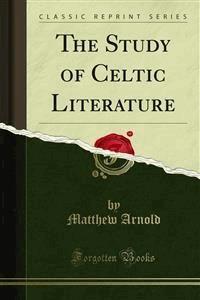

Celtic Literature
Table of Contents
Introduction
A western wind enters English letters, carrying a melancholy brightness the mainstream had long ignored. Matthew Arnold’s study turns that wind into an object of inquiry, asking what happens when the Celtic imagination meets the dominant English tradition. He pursues a central tension: how a smaller, often marginalized culture shapes the larger literary canon that surrounds it. The book invites readers to hear tonalities and temperaments not always audible in prevailing narratives. In its pages, the Celtic voice is not a picturesque aside but a formative presence, and the question becomes how that presence refines, deepens, and complicates the language of poetry and criticism.
This work is read as a classic because it pressed a boundary that Victorian criticism often left intact, insisting that English literature could not be understood without its Celtic strain. Its endurance lies in the way it opened avenues for cross-cultural reading and sharpened the vocabulary for discussing national character as a literary force. Generations have returned to it for its elegant prose, its comparative method, and its bracing confidence that minority traditions matter. It helped move the conversation beyond insular hierarchies toward a more inclusive literary history, and it did so in a voice at once judicial, speculative, and deeply attentive to style.
Celtic Literature is by Matthew Arnold, a leading English poet and cultural critic of the nineteenth century, written during his tenure as Professor of Poetry at Oxford in the mid-1860s and first published in 1867. The book gathers his reflections on the languages, temperaments, and imaginative habits commonly grouped under the name Celtic, and measures their influence on English letters. Arnold’s purpose is not antiquarian cataloguing but critical revaluation: he argues for sustained attention to Celtic traditions as a source of vitality and nuance. Without retelling entire narratives, he sketches a map of sensibility, asking readers to reconsider inherited boundaries.
The volume surveys strands of Welsh, Irish, and related Celtic materials, approaching them through their traits of feeling, cadence, and vision rather than exhaustive textual scholarship. Arnold is alert to lyric pulse, to the way atmosphere and longing can shape a literature as surely as plot. He situates these traits amid the larger traffic of cultures that formed Britain’s literary landscape, comparing them with more familiar classical and Teutonic models. What emerges is a portrait of interplay: the Celtic current interrupts, enriches, and sometimes corrects dominant modes, offering a palette of images and attitudes that reorient what readers expect from English poetry.
Arnold’s method blends literary criticism with the comparative approaches then reshaping philology and cultural history. He reads temperament alongside metrics, and national character alongside poetic craft, aiming to draw convincing lines between feeling and form. The result is not a manual of dates and manuscripts but a series of interpretive arguments about how style reveals a people’s inner weather. He writes with the poise of a practising poet and the clarifying patience of a lecturer, moving from broad claims to pointed examples. Even when his typologies feel stringent, their clarity allows later readers to test, amend, and extend the conversation he began.
As a landmark of Victorian criticism, the book influenced how later writers and scholars situated the British literary tradition within a confluence of cultures rather than a single lineage. It strengthened the case for studying Celtic languages and texts, and helped legitimize attention to regional literatures as central, not peripheral, to national identity. Its themes anticipated currents that would later animate cultural revivals and comparative studies, encouraging readers to recognize the power of small traditions to reshape the literary center. The book’s impact also resides in its style: lucid, measured, and hospitable to nuance, even when advocating for sharp distinctions and strong claims.
Readers find here a vocabulary for describing qualities that resist tidy taxonomy: suggestiveness, inward music, a predilection for longing, and an affinity with landscape. Arnold treats these as more than atmospheric ornaments; he sees them as structural forces that guide rhythm and image. The book proposes that such forces could recalibrate English poetic practice, lending it freshness and emotional reach. Crucially, he argues that cross-fertilization strengthens rather than weakens a literature, provided it is undertaken with discernment. The emphasis on mixture lends the work a modern air, connecting questions of taste to questions of cultural exchange and to the ethics of literary inheritance.
Written in the mid-nineteenth century, the study belongs to an age fascinated by origins, classifications, and the destinies of nations. Arnold addresses these preoccupations with a critic’s tact, situating Celtic materials within broader debates about language and identity. He is sensitive to the appeals and limits of the categories his contemporaries used, and he tests them against the expressive evidence of poems and prose. For present readers, its historical setting explains both its breakthroughs and its blind spots. The book models a way of listening across boundaries, yet it also bears marks of its period’s certainties, which invite careful, informed engagement.
One of the pleasures of this work is its rhetorical balance: it makes its case through cadence as well as concept. Arnold’s sentences move with calm authority, gathering examples until an argument feels not imposed but discovered. He favors clarity over ornament, yet the prose carries a quiet radiance equal to the subject’s delicacy. The book’s lecture-born structure gives it momentum, with each movement refining the last. And while it aims to convince, it also welcomes the reader as a participant in weighing evidence. This combination of firmness and openness is a chief reason for the book’s lasting influence.
To read this study today is to enter a conversation about how canons are made and remade. The book invites agreement and dissent in equal measure, encouraging readers to test its portraits against the breadth of Celtic writing now more widely available. Its value lies not only in its conclusions but in its method: listen closely, compare generously, and let style reveal substance. Contemporary readers can appreciate the call to enlarge the syllabus, even as they bring new scholarship and perspectives to bear. The work thus remains a productive interlocutor, a spur to deeper reading rather than a final verdict.
Key facts clarify its framing: Arnold, a major Victorian critic, wrote it while serving at Oxford; it was first published in 1867; it surveys Celtic traditions to argue for their formative role in English literature; it seeks to broaden the canon and refine critical language. Around these facts gather larger themes of mixture, marginality, and mutual illumination. The study’s influence can be traced in curricula, critical debates, and the persistent appeal of cross-cultural approaches to literary history. Its classic status rests on this double achievement: reshaping attention and equipping readers with a durable lens for comparative reading.
Celtic Literature endures because it couples a strong thesis with an invitation to hear differently. It evokes loss and resilience, radiance and restraint, and shows how these paired energies can alter the course of a language’s art. For contemporary audiences, it speaks to questions of identity, inclusion, and the creative power of contact. Its relevance persists wherever a dominant culture risks forgetting the sources of its richness. By restoring neglected voices and insisting on the value of tonal nuance, Arnold’s book remains both a landmark and a living guide—clear-eyed, capacious, and eager to widen the map of what we call English literature.
Synopsis
Matthew Arnold’s Celtic Literature presents a set of lectures that argue for the scholarly study of the Celtic languages and their literary monuments, chiefly Welsh, Irish, and Breton. He frames the work within nineteenth-century philology and cultural history, seeking to identify what the “Celtic element” contributes to European, and especially English, literature. The book sets out its purpose plainly: to define the Celts in linguistic terms, to characterize their literary spirit, to trace how their traditions enter medieval romance and modern poetry, and to recommend institutional support for their study. Arnold organizes his discussion by moving from definition to illustration, influence, and policy implications.
Arnold begins by clarifying who the Celts are through language rather than speculative race theories. He distinguishes two principal branches: the Goidelic (Irish, Scottish Gaelic, Manx) and the Brythonic (Welsh, Breton, Cornish). He reviews contemporary scholarship to separate linguistic evidence from national myth, noting the complex intermixture of peoples in the British Isles. England, he argues, is historically composite, with Celtic, Teutonic, and Norman strands. Establishing these categories allows him to discuss literature as an expression of inherited sensibility without claiming purity or exclusiveness, and to situate Celtic texts within the broader Indo-European family, where comparative study can illuminate origins and affinities.
Having fixed terms, Arnold sketches the traits he discerns in Celtic literature. He emphasizes quickness of feeling, intensity of emotion, and a peculiar “natural magic” in the apprehension of landscape and atmosphere. Alongside lyrical impulse and a penchant for suggestion and fantasy, he identifies a vein of melancholy and heroism. In counterpoise, he notes recurrent shortcomings: impatience of rule, lack of sustained architectonic power, and a tendency toward self-assertion or extravagance. He contrasts these features with Greek clarity and measure and with Teutonic steadiness and moral vigor, proposing that each tradition supplies what the others may lack, and that English culture reflects their interplay.
Arnold then surveys early Welsh and Irish materials to exemplify the Celtic temper. He points to the Welsh bards—such as Llywarch Hen and Taliesin—as evidence of proud, personal, and musical utterance, and to Irish heroic cycles for pathos and tragic valor. He treats questions of authenticity and transmission, acknowledging the difficulties of late manuscripts and translation. While rejecting inflated claims, he maintains that genuine fragments preserve a distinctive tone: brevity, rapid turns of feeling, and vivid natural touches. The discussion stresses how these poems, songs, and triads reveal a literature more lyric than epic, rich in suggestion rather than in formal construction.
From native verse, he moves to the Celtic contribution to medieval romance. Arnold traces how Celtic legend—especially the Matter of Britain and Arthurian materials—passed through Breton and Welsh channels into Norman-French literature, and thence across Europe. He highlights qualities of wonder, courtesy, and otherworldly adventure that these tales supplied to chivalric narrative, including motifs of the Grail and fairy enchantment. This transmission, he argues, made the Celtic imagination a formative source of European romanticism. The section emphasizes the role of intermediaries, the adaptability of stories across languages, and the persistence of Celtic imaginative patterns within a continental literary synthesis.
Turning to English literature, Arnold identifies a “Celtic element” discernible in major poets. He associates Shakespeare’s fairy world, Spenser’s luxuriant allegory, and later romantic sensibilities with Celtic traits of natural magic and emotional intensity. In eighteenth- and nineteenth-century verse, he notes how Gray, Wordsworth, and Keats exhibit an inwardness with nature, suggestion, and haunting melody that echo Celtic qualities, while Tennyson’s Arthurian poems reengage Celtic legend through modern art. For Arnold, English poetry achieves breadth by balancing Saxon solidity, Norman grace, and Celtic quickness, and it is through this combination that the national literature attains its characteristic richness and variety.
Arnold also considers the Celt in politics and social life, drawing contrasts with Anglo-Saxon practicality. He argues that the Celtic temperament, while brilliant and sensitive, is ill-suited to sustained organization and governance, and thus complements rather than duplicates Teutonic strengths. This view informs his reflections on the Irish and Welsh within the United Kingdom: misunderstanding arises when the English disregard Celtic feeling, and discord lessens when policy attends to sentiment as well as institutions. Throughout, he maintains that mutual respect and recognition of differing aptitudes are essential to national cohesion and to a fuller appreciation of shared cultural assets.
The book culminates in a program for study. Arnold urges universities, especially Oxford, to endow chairs, collect manuscripts, and foster precise grammars, dictionaries, and editions for Celtic languages. He frames this not as antiquarianism but as a contribution to comparative philology and to the historical understanding of European literature. Accurate texts and sober criticism, he contends, will separate genuine tradition from spurious claims and will rescue valuable materials from neglect. He anticipates benefits for scholars of Indo-European linguistics, medievalists tracing narrative diffusion, and readers seeking to comprehend the sources of English literary sensibility and its composite national character.
In conclusion, Arnold reiterates that studying Celtic literature clarifies both the particular genius of the Celtic peoples and the larger formation of English letters. By recognizing the Celtic element—its natural magic, intensity, and romance—alongside Greek measure and Teutonic strength, readers can grasp how imaginative balance emerges. The work’s overarching message is integrative: cultural understanding advances when each contributing tradition is fairly known. Through definition, exemplification, and institutional advocacy, the book aims to secure a durable place for Celtic studies in modern scholarship and to illuminate how older voices continue to shape the textures of contemporary literary expression.
Historical Context
Matthew Arnold’s On the Study of Celtic Literature took shape in mid-Victorian Britain, a period of industrial expansion, imperial consolidation, and anxious debate about national character. Arnold, Professor of Poetry at Oxford from 1857 to 1867 and a long-serving inspector of schools, delivered the core lectures in Oxford in 1865; they appeared in book form with Smith, Elder and Co., London, in 1867. The lectures look outward from Oxford and London to the Celtic-speaking peripheries of the United Kingdom: Ireland, the Scottish Highlands and Islands, and Wales. The political geography of union, combined with rapid urbanization in places like Liverpool, Glasgow, and Cardiff, framed Arnold’s argument about cultural integration.
The intellectual setting was shaped by the rise of comparative philology and ethnology, most visibly in Oxford through Max Müller’s celebrated language lectures in 1861 and 1863. Administratively, Britain still lacked a comprehensive national school system before the Elementary Education Act of 1870; inspection and piecemeal reforms set the tone. Arnold’s daily work exposed him to policy debates over language and curriculum precisely where English governance met Celtic communities. Public controversies about Irish unrest, Welsh education, and Highland depopulation filled the newspapers Arnold read. His book is embedded in this intersection of scholarship, governance, and public argument, proposing cultural recognition as a corrective to political estrangement.
The Act of Union of 1707 joined the Parliaments of England and Scotland, forming the Kingdom of Great Britain while preserving distinct Scottish institutions such as Scots law and the Church of Scotland. In the Highlands, however, Gaelic culture stood at a remove from the Lowland political elite and London ministries. The Society in Scotland for Propagating Christian Knowledge (chartered 1709) promoted English-language schooling as a civilizing mission. Arnold invokes Scotland’s dual inheritance to argue that British culture did not spring solely from an Anglo-Saxon root; he insists the Gaelic strain carried traits of sentiment, imagination, and music that England needed to acknowledge in the nineteenth century.
The Jacobite Rising of 1745, culminating in the defeat at Culloden on 16 April 1746, triggered measures intended to pacify the Highlands. The Disarming Act and the Dress Act (both 1746) curtailed clan structures and banned Highland dress until repeal in 1782; the Heritable Jurisdictions Act (1746) dismantled local noble authority. Military road building and garrisoning accelerated integration under Hanoverian rule. Arnold’s reflections on a subdued yet persistent Highland spirit read against this history: he treats the Celtic note of pathos and defiance as the aftersound of defeat and cultural suppression, urging readers in London and Oxford to hear it as part of Britain’s shared inheritance.
James Macpherson’s Ossian publications—Fragments of Ancient Poetry (1760), Fingal (1761), and Temora (1763)—ignited a European controversy over authenticity. Samuel Johnson’s Journey to the Western Islands (1775) and his 1773 tour challenged Macpherson’s claims, while Gaelic manuscripts and oral tradition were scrutinized in Edinburgh and beyond. Regardless of authorship disputes, Ossian associated the Highlands with sublimity and a grave, musical melancholy. Arnold inherits the controversy as cautionary backdrop: he embraces the importance of ancient Celtic poetry but urges sober scholarship, preferring verifiable Welsh and Irish materials. In his hands, the Ossian debate becomes a lesson on separating national sentiment from critical method.
The Irish Rebellion of 1798, led by the United Irishmen under figures such as Theobald Wolfe Tone, ended in suppression after battles including Vinegar Hill (21 June 1798). The Act of Union of 1800, effective 1 January 1801, abolished the Irish Parliament and created the United Kingdom of Great Britain and Ireland. Catholic exclusion from Westminster remained until 1829, and Irish grievances shifted from legislative autonomy to representation and land. Arnold’s lectures reflect on the strain the Union introduced: he seeks a cultural rapprochement by insisting that English political forms must open to Celtic feeling, lest union remain juridical rather than truly national.
Catholic Emancipation arrived with the Roman Catholic Relief Act of 1829, following Daniel O’Connell’s mass mobilization and the decisive Clare by-election of 1828. While Emancipation admitted Catholics to Parliament, it also raised the Irish county franchise from 40 shillings to 10 pounds, tempering the democratic impact. Emancipation altered the constitutional landscape but did not address land tenure or language decline. Arnold writes within the post-1829 world of legal inclusion and social frustration; he interprets Irish discontent through cultural neglect, arguing that English opinion-makers should study Irish myth and song to understand the moral energy behind Irish political demands.
The Great Famine in Ireland (1845–1852) reshaped the United Kingdom. Phytophthora infestans appeared in 1845; the blight returned catastrophically in 1846. Public works failed to stem starvation, and the Temporary Relief Act of 1847 introduced soup kitchens during Black ’47, while the Poor Law shifted costs to local ratepayers. Administrators such as Charles Trevelyan, Assistant Secretary to the Treasury, pursued laissez-faire grain policies and viewed the crisis as providential, decisions widely criticized then and since. Population fell from roughly 8.18 million in 1841 to 6.55 million in 1851 and to 5.79 million in 1861, amid over a million deaths and mass emigration to Liverpool, Glasgow, New York, and Boston. Evictions and landlord-assisted emigration were common; the Quarter-Acre Clause of 1847 compelled many smallholders to surrender plots to qualify for relief. The famine zone overlapped with Irish-speaking districts, accelerating the decline of the language; by the 1851 census about 23 percent of the population reported speaking Irish, often as a second language. Politically, the catastrophe hardened attitudes toward British governance and fed post-famine nationalist organization. Arnold wrote on Celtic literature within two decades of this trauma. His insistence that English readers recognize a distinctive Celtic moral temper—ardent, quick, and idealizing—should be read as a response to a Union endangered by misunderstanding. He treats the preservation and study of Irish legend and verse not as antiquarian play but as a civic task, a way to humanize debates over land, representation, and public order in the wake of famine and displacement.
The Fenian movement, organized as the Irish Republican Brotherhood in Dublin by James Stephens on 17 March 1858 and mirrored in the United States by John O’Mahony’s Fenian Brotherhood, brought revolutionary republicanism to mid-1860s headlines. Raids into Canada in 1866, the failed rising in Ireland in March 1867, the Manchester rescue of Kelly and Deasy and the execution of the Manchester Martyrs (23 November 1867), and the Clerkenwell explosion (13 December 1867) alarmed Britain. Arnold’s book, published in 1867, seeks to defuse such antagonism culturally: he reframes the Irish temperament for English readers, urging respect rather than caricature to prevent political estrangement from hardening into permanent hostility.
In Wales, the 1847 education inquiry—popularly the Blue Books—commissioned by Ralph Lingen, Jelinger Symons, and Henry Vaughan Johnson, condemned Welsh-language culture as backward. The reports, issued in three volumes, provoked outrage, remembered as Brad y Llyfrau Gleision (the Treason of the Blue Books), and encouraged schoolroom practices such as the stigmatizing Welsh Not. The controversy reverberated through the 1850s and 1860s as Nonconformist Wales expanded schools and chapels. Arnold’s lectures respond obliquely by praising the quickness and lyrical gifts of the Welsh, insisting that English policy must not confuse linguistic difference with moral deficiency. He elevates Welsh narrative tradition as a national asset requiring scholarly and public support.
Lady Charlotte Guest’s English translation of the Mabinogion, issued in parts between 1838 and 1849, brought medieval Welsh prose tales into the British mainstream. Working from manuscripts associated with the Peniarth collection and publishing in London, Guest connected industrial south Wales—her home at Dowlais—with elite metropolitan readers. Her editions popularized figures and settings that fed nineteenth-century interest in Celtic myth beyond Wales. Arnold benefits from this groundwork: he can gesture to accessible Welsh sources when arguing that Celtic literature offers delicacy, irony, and romance as complements to English strength. Guest’s success exemplifies how antiquarian diligence could reach a wide audience and reshape national self-understanding.
The Highland Clearances, spanning roughly the 1760s to the 1850s, transformed the Gaelic-speaking Highlands. Landlords replaced communities with large-scale sheep runs; notorious episodes include the Sutherland clearances (1811–1821), where factor Patrick Sellar’s actions in Strathnaver in 1814 drew prosecution and acquittal in 1816. Emigration to Nova Scotia, Cape Breton, and Upper Canada carried Gaelic song and memory overseas. Depopulated glens and diaspora communities in Glasgow and Greenock altered Scotland’s social map. Arnold reads the lingering tone of sorrow and exile in Gaelic poetry as historical witness, using it to argue that modern Britain must listen to the emotional history of peoples it had economically and administratively reconfigured.
Comparative philology supplied the scientific scaffolding for treating Celtic seriously. Franz Bopp’s 1816 work on Indo-European, and Johann Kaspar Zeuss’s Grammatica Celtica (1853; posthumous 1871 edition), established the Celtic languages as Indo-European and mapped their grammar. In Oxford, Max Müller’s public lectures on the science of language (1861, 1863) made such findings fashionable. Scholars like Whitley Stokes in Dublin advanced Old Irish studies. Arnold leans on this climate of verification: he argues not from romantic fancy but from a philologically grounded corpus. The book’s confident generalizations about Celtic temperament rest on a claim that rigorous study of Welsh and Irish texts had finally become possible.




