


Erhalten Sie Zugang zu diesem und mehr als 300000 Büchern ab EUR 5,99 monatlich.
- Herausgeber: Birlinn
- Kategorie: Religion und Spiritualität
- Sprache: Englisch
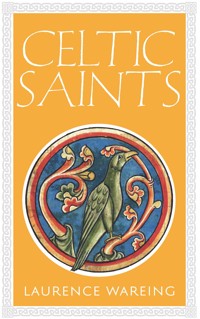
They may be coated in layers of myth and pious anecdote but dig deep enough and the pioneering leaders of Celtic Christianity are revealed as reassuringly human individuals, responding to their faith by deliberately living on the edges of society. From the goddess-nun Brigid and absent-minded Cainnech to severe ascetics such as Columbanus and Baldred, together they demonstrate a close connection with the natural world, an astonishing self-discipline and, above all, a rigorous commitment to what it meant to be 'pilgrims for Christ'. Establishing a network of influential monastic communities, they travelled from the territories of the Atlantic seaboard – Ireland, Wales and Cornwall – across Scotland, the north of England and deep into continental Europe, transforming the religious experience of all they encountered.
Sie lesen das E-Book in den Legimi-Apps auf:
Seitenzahl: 70
Veröffentlichungsjahr: 2020
Das E-Book (TTS) können Sie hören im Abo „Legimi Premium” in Legimi-Apps auf:
Ähnliche










First published in Great Britain in 2020 by
Birlinn Ltd
West Newington House
10 Newington Road
Edinburgh
EH9 1QS
www.birlinn.co.uk
ISBN: 978 1 78027 570 3
Copyright © Laurence Wareing 2020 Illustrations copyright © Abigail Salvesen, 2020
The right of Laurence Wareing be identified as the author of this work has been asserted by him in accordance with the Copyright, Designs and Patents Act, 1988
All rights reserved. No part of this publication may be reproduced, stored, or transmitted in any form, or by any means, electronic, mechanical or photocopying, recording or otherwise, without the express written permission of the publisher.
British Library Cataloguing-in-Publication Data A catalogue record for this book is available on request from the British Library
Designed and typeset by Mark Blackadder
Printed and bound by Bell & Bain Ltd, Glasgow
For Alex and Joelwalkers,climbers,seekers,friends
Contents
Acknowledgements
Introduction
Brigid (Bridget, Brid)
Ninian (Nynia)
Piran and Ciaran of Saighir
Patrick
David (Dewi)
Petroc and Samson
Kessog
Teneu (Enoch, Thenew)
Kentigern (Mungo) and Conval
Finnian of Clonard
Ciaran of Clonmacnoise
Columba (Collum Cille)
Cainnech (Kenneth)
Donnán
Caten and Blane
Fillan
Brendan
Mirin (Mirren)
Columbanus
Aidan
Ebba (Aebbe)
Bega (Bees)
Cuthbert
Maelrubha
Dympna (Dymphna)
Baldred
Further reading
Index of saints
Acknowledgements
Extracts from ‘Mirin’ by James Robertson used with permission.
I am grateful to those who have pointed me towards both saints and sources that otherwise might have eluded me, in particular Hugh Andrew, Jennifer Bell and James Robertson.
Ann Crawford and Andrew Simmons have been supportive guides along the way.
Helen, as always, has been my best critic and chief encourager.
Introduction
At low tide on An Tràigh Mhòr, ‘the Big Beach’ that welcomes ferries to the Isle of Tiree, sits a small, flat rock known as ‘The Little Cursed One’. It is said that St Columba condemned the rock to lie forever bare after the seaweed covering it proved inadequate to the task of holding his coracle fast. Further along the same beach is a rocky outcrop whose strands of seaweed did the job more effectively; this Columba named ‘The Holy Skerry’.
It is a fleeting incident that, nevertheless, sheds its own light on Columba and the other Christian leaders of Irish-Celtic heritage included in this volume. It hints at a figure with considerable authority whose sense of relationship with the natural world around him was palpable – even bearing pre-Christian echoes – and for whom the practicalities and dangers of travel were an ever-present concern.
Journeying was a core expression of Columba’s faith: coracles and currachs were tangible symbols of his mission. Leaving home behind was almost a prerequisite for those we call Celtic saints: the beginning of faith commitment. In an iconic moment, the young Columbanus stepped over the prone body of his mother, who had lain down to block the doorway to their home, as he resisted her desperate attempt to prevent his departure.
While accounts of martyrdom as we usually imagine it are rare among the Celtic saints, many of these peregrinari pro Christo (‘pilgrims for Christ’) set out in witness to their faith with the clear intention of never returning to their homeland or family. Columba, himself, may have been an exception but he, like those in whose tradition he followed, placed himself, quite literally, beyond his comfort zone in ways that are almost impossible for many of us to imagine nowadays. The journeys themselves were frequently perilous: for every saint that made it across the treacherous Irish Sea (whether in a currach or miraculously perched on a leaf), one has to wonder how many drowned in the attempt.
Further, in order to establish the closest possible connection with their God, many such individuals chose to retreat to remote, hostile locations – frequently on islands or barren ocean rocks. They deliberately embraced the severely ascetic ‘white martyrdom’ of self-exile – a kind of living death.
Not surprisingly, their faith was closely tied to their interactions with, and respect for, the natural world through which they travelled with Bible, bell and walking staff. Though the appropriation of this form of spirituality into a modern, ecologically aware type of Christianity can be misleading, there is, nevertheless, a sense in which the pared-down lifestyles of the Celtic saints both drew upon and valued deeply a connection with God in each particular experience of the world around them.
Gott Bay, Tiree
The men and women who are representative of Celtic Christianity travelled across the territories of the Atlantic seaboard – Ireland, Wales, Cornwall – and eastward, with present-day Scotland providing fertile ground for missionary activity. Their influence is also felt strongly in present-day Northumbria. At one level, the movement was a spreading network of monasteries, with the major foundations, such as Clonard, Bangor, Iona and Lindisfarne, birthing a kind of monastic family tree that stretched into continental Europe.
The task of capturing the real human lives linked to these influential monastic foundations, and of corralling them into an orderly gathering, either by date or geography, is always going to be provisional – based, as it has to be, on the creative imagination of oral traditions.
However, by attempting a rough chronology, we can begin to build a picture of ‘Celtic’ Christianity emerging in the late 300s ad. At this time, the Romans were leaving Britain and Ninian, or someone like him, was establishing his missionary base in the south west of Scotland. We can see its decline from the mid-700s, by which time the Celtic strain of Christian faith was being rapidly subsumed within the form of Christianity organised from Rome. Dates are often imprecise but where something helpful can be said about them they are mentioned in the narrative.
With those parameters in mind, this necessarily representative selection of saints excludes familiar names such as Scotland’s patron saint, Andrew (whose relics were a European import) and subsequent notable individuals whose lives took place outside this period, such as the highly influential Queen Margaret.
Those who have made the cut would neither have defined themselves as ‘Celts’ nor set themselves in opposition to the Christian tradition based in Rome. They did, however, offer a distinctive expression of Christianity characterised by what theologian James Mackey calls an ‘athletic Christian spirituality’. It is unremittingly itinerant, glimpsed in countless place names, and revealed most tangibly within the physical spaces that were their holy retreats: Kildare, Clonard, Iona, Lindisfarne, Bass Rock, and even ‘the big beach’ on Tiree.
Abernethy Round Tower
Brigid (Bridget, Brid)
Kildare (Ireland); East Kilbride (Scotland)
Brigid emerges out of pagan religious beliefs, assuming the name of a goddess associated with fertility, healing and the divine creativity that makes life possible. As such, she embodies the early Christian tendency to transform or build upon existing religious beliefs and rites. The site of an oak tree, sacred to druidic culture, became the monastic cell or church that she established with other women at Kildare – the ‘church of the oak’. An eternal fire that the women guarded, also echoing pre-Christian traditions, was surrounded by a hedge, past which no man was allowed to go. From this base, Brigid established both female and male monastic communities, calling upon Conlaed to oversee the monks. Her death, dated as the first day of February, coincided with the ancient festival of Imbolc, marking the beginning of spring. Several traditions of that day associated with Brigid, including the making of distinctive square crosses from rushes, continue to bind both Christian and pre-Christian memories together.
The complex crossover of Christian with pre-Christian traditions and establishments embodied in the legends of Brigid is found in a number of Scottish locations where the new faith, introduced by missionaries from Ireland, built quite literally upon existing pagan and Pictish foundations. East Kilbride, for example, is a name that suggests the Gaelic for ‘the clients or companions of Brigit’. Likewise, Abernethy Round Tower is one of only three Irish-style bell towers found elsewhere in the British Isles. It is associated with both an early Pictish religious foundation, with a dedication to Brigid, and a later, wealthy Christian foundation.




