


Erhalten Sie Zugang zu diesem und mehr als 300000 Büchern ab EUR 5,99 monatlich.
- Herausgeber: IVP Formatio
- Kategorie: Religion und Spiritualität
- Sprache: Englisch
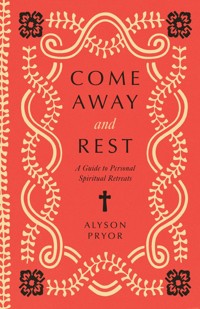
Find Peace in His Presence: A Companion for Your Spiritual Retreat Do you feel inundated from all sides, your soul overwhelmed by endless consumption, constantly absorbing relentless content wherever you go? Yet does your soul still feel hungry and satisfaction seem out of reach? What you're longing for is solitude with God. Come Away and Rest invites you to step away from the noise of a hurried world and into the sustaining presence of God. Alyson Pryor gently guides you on a healing, life-giving path of spiritual renewal through personal retreats of silence, solitude, and intentional rest. This thoughtful guide offers step-by-step instructions for customizing six types of personal retreats that you can practice from anywhere. Whether you're new to the idea of retreats or looking for fresh guidance, this book will be a nurturing companion for your spiritual growth. In Come Away and Rest, you will find: - Guidance for how to prepare for a personal spiritual retreat - Step-by-step instructions for crafting six personal retreats, ranging between six hours to several days - Wisdom for re-entering life after a retreat If you need discernment, are grieving, are going through a time of transition, or are simply weary, Come Away and Rest helps you find the sacred rhythm of spiritual retreat. Pryor's reflections lead you through the deeper purpose of resting in God's presence—a practice that isn't just restorative but essential. Discover the rest your soul longs for. Get your copy of Come Away and Rest and be inspired to make retreating with God an essential rhythm in your spiritual life.
Sie lesen das E-Book in den Legimi-Apps auf:
Seitenzahl: 322
Veröffentlichungsjahr: 2026
Das E-Book (TTS) können Sie hören im Abo „Legimi Premium” in Legimi-Apps auf:
Ähnliche

















FOR MY TEACHERS, COLLEAGUES, STUDENTS,
DIRECTEES, AND FRIENDS AT THE INSTITUTE FOR
SPIRITUAL FORMATION AT BIOLA UNIVERSITY.
You have shepherded my heart in the ways of God and
the practice of rest.
AND TO DREW,
who sent me out with joy.
CONTENTS
1The Invitation
Come to me, all you who are weary and burdened, and I will give you rest.
My first personal retreat took place in a convent. The House of Prayer, a small, Spanish-style home tucked into a residential neighborhood, housed two nuns in their late eighties who lived there full-time, Sister Mary and Sister Margaret. Part of their ministry involved letting non-Catholic strangers like me rent a room for fifteen dollars a day. I began a small and faltering rhythm of traipsing in once a month, exhausted, red-eyed, laden with books, slippers, and tea bags. They would pat my hands and feed me lemon bars they’d made that morning with lemons from the tree out back.
To say these nuns, and the time spent in their care, saved my life would not be an overstatement. I began visiting them shortly after the birth of one of my five children, when a sudden onslaught of panic attacks left me immobilized. Up until that point, the only experiences I’d had of retreats were large-scale events the women from my church attended or ones where I was hired as a speaker. My soul was and continues to be filled in a way through those retreats with community, insight, friendship, and laughter. Still, I’d leave with a deep weariness, often more exhausted than when I came. I was yearning for a deeper kind of rest, and the panic attacks took that longing from a whisper to a scream. I cannot say exactly what brought me to the House of Prayer, only that my desperation drove me there. The psalmist writes, “As the deer pants for water, so I long for you, O God” (Ps 42:1 TLB). My thirst drove me to their door like an animal hunting for water.
After a lemon bar, or three, I retreated to my room to settle into my new surroundings. I took in the twin bed and matching nightstand, the small desk, and the crucifix on the wall. I had no idea what to do with myself. I was especially unclear on how much time should be “holy time” and how much was allowed to be “regular time.” I was not sure if, now that I had marked off this day as a “retreat,” all six hours and forty-five minutes that my kids were in school ought to be devoted to unceasing prayer. I sat on the firm twin bed, wondering if I should take a nap or a hike, read, or pray. I regarded crucified Jesus on the wall across from me. My hands, usually occupied with writing, dishes, ferrying toddlers in and out of their car seats, weighed heavy and useless on my lap. My Bible, so often used for teaching preparation, suddenly felt foreign to me. My thoughts, unaccustomed to silence, clamored for attention. I felt a visceral pull toward my phone and all its distractions. Who was I when I was no longer useful? Who was I without my schedule, my children, my work, my things?
I see in hindsight that I was wrestling with the ramifications of space versus time. Rabbi Abraham Heschel writes,
The result of our thinginess is our blindness to all reality that fails to identify itself as a thing, as a matter of fact. This is obvious in our understanding of time, which, being thingless and insubstantial, appears to us as if it had no reality. Indeed, we know what to do with space but do not know what to do about time except make it subservient to space. Most of us seem to labor for the sake of things of space. As a result, we suffer from a deeply rooted dread of time and stand aghast when compelled to look into its face.1
In our society, opening questions to each other begin: “And what do you do?” We have communally agreed that work is superior to rest because in work we communicate our value and importance to ourselves and each other. We measure our lives by what we export into the world, not by what we receive into our souls, as though we could separate the two. Retreating slammed me into the reality of how anchored I was in the thinginess of my life. It revealed how I saw myself primarily as one who gets things done—one who teaches, plans, executes, and produces. In aiming to leave thinginess behind and enter instead into the realm of sacred time, I found myself on God’s turf. I had no trinkets to distract me, no claim on how vital my role was in my own life, just the furious beauty of being face-to-face with God.
Of the many things we might claim that keep us from time away with God, this, I’m convinced, is at the top of the pile. We fear, in the depths of our being, that if we fully surrender ourselves to sacred time, God won’t show up. And then, realizing we are utterly alone in the universe, we will slowly dissolve into insanity like Tom Hanks’s character in that movie where he gets trapped on a deserted island and becomes best friends with a deflated volleyball. This seemed like a valid possibility only ten minutes into my retreat as I sat on the stiff twin bed.
This fear is real, valid, and surprisingly common. After years of fumbling through my own retreats, friends began to ask me to plan retreats for them. Later, when I became a certified spiritual director, I had even more people willing to show me hidden longings tucked deep inside their souls. They, too, had no idea what to do with time away with God even though they wanted it desperately. They sensed the same call to come away—to leave the thinginess of their day-to-day lives—to enter into sacred moments, which they heard bleating for their attention even when they did not know what to give them. They, too, were hunting for fresh water.
When my frame first shadowed the nuns’ door, I could have told you only that I came to meet with the living God. The throbbing within me for peace, the desperation for silence, the dehydration from traveling too long without drinking deeply, became too painful to ignore. My soul was in desperate need of rest, the kind only God could provide.
By the time lunch rolled around at the convent, I had accomplished very little, only reading a few pages in a book I’d brought before drifting off into a two-hour nap. When I woke, I noticed my body felt relaxed, having spent several hours without someone demanding I open a fruit snack or wipe their behind. But I also felt unsettled. I did not know what I was supposed to be doing or if I was retreating the right way. I regarded the crucified Jesus some more. He regarded me.
Once I got hungry enough, I roused myself from the bed and found a homegrown salad waiting for me in the fridge that Sister Margaret had shown me on my introductory tour. I went outside to sit in the sun for lunch. The nuns had a large backyard, with plenty of low benches and paths for walking. They also had an extensive in-ground garden with plump heads of lettuce, shiny stems of beets, and forest-green kale that sprouted up like miniature palm fronds. I noticed the tops of carrots, a hem of string beans, and several more plants I could not name. It was immaculate. I saw, too, the lemon tree next to an avocado tree. Between the two was a bench. I was somehow still tired, so I sat.
Was this enough? I wondered. Enough to turn my face to the warm sun, to hear the chirp of a bird as it lifted itself from the small birdbath a few feet away, disturbed by my presence? Was it enough to just sit, breathe, and smell the lemon blossoms? Was I enough, sitting here useless, thoughtless, prayerless? I felt one question hit my soul’s bottom, Did God love me when I rested?
In a flash of memory, I remembered being newly married—I worked two jobs and my husband worked four—and we were still so poor we only used the internet at the library. One of my jobs was waiting tables at a breakfast place in town. I had a manager there who was the most fastidious rule keeper I have ever met. He repeatedly reiterated the part of the hiring contract that detailed California law on mandatory break periods. I do not know what this man’s past trauma was with the legalities of the state of California, but I’ll be darned if he didn’t know the hot second my four hours were up and I needed a fifteen-minute break. Balancing five eggs Benedicts with a side of waffles on one arm, he would usher me into the break room—my tip lost for good. He would glare at his watch for the vast majority of those unrelaxing fifteen minutes while my fellow employees and I stared off into space, wiping our hands on our aprons, rotating in our plastic chairs to make small talk. He would often tap his foot as if to hurry the break along.
Sitting in the nuns’ backyard, I realized I’d made God not into my own image but into the image of this manager. This understanding weighed heavy on my chest that I did not, at my core, believe God wanted rest for me. He might allow it, but in measly bits, like my former manager gave, and only in the hopes of making me more productive for any Important Kingdom Activities I might be called on to do. I had ingested the notion that God wanted to “use” me, and if I was useless, resting, what then? My heart felt so heavy I wondered if it might push through my skin.
“I’m so tired,” I offered as a prayer. I pictured Jesus beside me, nodding solemnly. Yes, you are. “How do I fix it?” I asked, but the fading image was gone. Still, I felt the sturdy presence. Yes, yes you are. I felt a wave of desire, hunger, and thirst for rest and let myself feel it more thoroughly, more dangerously than I ever had before. The wave brought with it anger. Tears pricked at the back of my eyes. “God, why don’t you give me more rest? How am I supposed to teach and disciple and serve at church with all these demands at home? I can’t keep going. I’m so tired,” I said over and over and over.
Once I was done talking, I felt the tears dry on my face. Matthew 11:28-30 (NASB 1995) began to crystallize as my mind pulled at its edges from memory, “Come to Me, all who are weary and heavy-laden, and I will give you rest. Take My yoke . . . I am gentle and humble in heart, and YOU WILL FIND REST FOR YOUR SOULS.” The call of Jesus, offering me rest, felt like a raindrop falling into a still body of water, the echoes of those words extending, invading some new part of me. I became aware, quite suddenly, that I was no longer on that hard plastic chair in a break room. There was no one making demands on my time. I was on a comfortable, wooden bench, the warm afternoon sun cradling my face. The bird returned to his bath to finish his drink.
My questions percolated, revealing an imaginary divide between secular and sacred time, of what was mine and what was God’s. I fixated on how much of my time on retreat (and by proxy, in life) ought to be “holy time,” elevating it above “regular time.” These questions revealed my ability to quantify and elevate doing for God, things I deemed “ministry” or “service,” leaving me unable to spiritually quantify time spent watching the sunset, eating pizza, or painting my daughter’s nails. They revealed my transactions with a God who gifted me and wanted to use me—an exchange of goods and services—and how that was not at all the same as a relationship with a God who simply wanted to love me.
These questions also revealed my unease with rest: How do I do this? Why does this matter? What are the parameters? But maybe instead of asking how, why, and what questions, I ought to have asked who questions. Who is this God who wants rest for us? Who is this God who wants to love us in our uselessness? What does he do, or want to do in rest that he cannot accomplish in our frenzied activity?
I returned to my room, newly energized, and opened my Bible. I found myself in Genesis with a God who rested after six days of work, just to show us the ropes (see Gen 2:2-3). He blessed this time, setting it apart from other kinds of time, naming it holy. Paradoxically, in Psalms, he is a God who never slumbers, specifically so he can watch over those who do (see Ps 121:4). Then we reach the Gospels, which show us Jesus frequently seeking out wilderness times of rest. We are told, “Jesus often withdrew to lonely places and prayed” (Lk 5:16 NIV, italics mine). The only One whose actions could save the world regarded retreating as vital to his work.
The imagery of Matthew 11, to come to Jesus, is to be with him where he is, and only there will our souls find rest. It is to be so close to him that we are tied to him like one animal tied to another, moving when he moves, pausing when he rests. The invitation is to keep pace with Jesus so that we similarly come away to rest as “often” as possible. If we are honest, many of us would prefer to be released into the fields as autonomous work animals. We would feel more comfortable with the Christian life if it included a GPS location for God’s will. But we misunderstand the call on our lives to be primarily people who get things done as opposed to people who stay close to Jesus.
In retreat time, sacred time, we come face-to-face with who we think God to be. Is he demanding, tapping his toe while we sit in the breakroom, waiting impatiently for us to return to our Important Kingdom Activities? Is he distant and aloof? Is he mad? Is he benign like a celestial Santa Claus, with good intentions but perhaps a tad helpless to give our souls the rest they so desperately need? As A. W. Tozer aptly points out, “What comes into our minds2 when we think about God is the most important thing about us.” But what comes to mind for us when we think on God is not nearly as important as what comes to his mind when God thinks about us.
This face-to-face, thinking on him as he thinks on us, is called beholding. And beholding is the only path to transformation, “Now the Lord is the Spirit, and where the Spirit of the Lord is, there is freedom. And we all, with unveiled face, beholding the glory of the Lord, are being transformed into the same image from one degree of glory to another” (2 Cor 3:17-18). Here Scripture offers us an additional image of being yoked to Jesus, an Old Testament image, of humanity face-to-face with God. When we come away with God, we are being changed; the more we look at him the more we look like him. What I perceived initially as an unexpected consequence of retreat—the terror of being face-to-face with the living God—was actually the plan all along.
A central question of retreat is: Do I see God as he is? Retreat offers an invitation to extended beholding, like a honeymoon for lovers or those gauzy, disorienting first days with a newborn, gazing into their bottomless gray eyes full of stars. The Holy Spirit needs time and space to do the deep internal work only he can do. None of this happens immediately, and usually not even quickly.
Whatever we behold transforms us. It forms our souls in a certain way to only and ever behold the finite when eternity is implanted within our hearts (see Eccles 3:11). Distraction is the enemy of the soul, and today’s souls are up against more distraction, disengagement, and numb escapism than ever before. If we become what we behold, for the vast majority of us we are becoming whatever is on the screen of our phones. This screen, designed to addict, sparks to life whenever it recognizes our faces. When our eyes and minds and hearts are full of the here and now, the urgent, the popular, the newsworthy—it creates fear and compulsory action. Our culture might assert we are only and ever about what we do—our toil and our turnout. But sacred time away with God “dissolves the artificial urgency of our days,” exposing what is most real and true.3
Many of us have yet to connect the abundant life Jesus offers with the pace at which he lived. For Jesus, retreating wasn’t a pause from his “real life,” it was life. He goes before us, showing that face-to-face time alone with God is the very thing our soul is most desperate for. It is the fresh water the animal within us has been hunting. In that fresh, clear pool we see God as he is, and eventually we even begin to see ourselves as we are—if we pause long enough for our rushed work to subside, the pebbles and sand to settle, and our thoughts like so much silt to descend so that we might see clearly.
The morning after I got home from my retreat, my husband started a forty-eight-hour work shift. I got the school-aged kids out the door, gas in the car, and dog food from the pet store. By 10:30 a.m., my toddler, who had woken up at 5 a.m., was hollering for a nap and I realized I hadn’t had a bite to eat all day, never mind luxuries like brushing my teeth. As I hauled my son’s squirming body up the stairs for his nap, Jesus’ words came to me again: “Come to Me, all who are weary and heavy-laden, and I will give you rest.” The words washed over me, sharp like salt water, and I pricked at their sting. Jesus, I prayed, how? I felt angry for having gotten away, the taste of respite turning sour on my tongue.
I cradled my son’s head as he thrashed, insisting he was not tired. I tucked the covers around him, gently. As he continued his protest, I lowered the blackout shades in his room with one hand, rubbing his back with the other. His breath slowed, and so did my own. We sat like that for a long time, longer than any day can hold. A thousand memories of coaxing my children into rest stretched out along the horizon of my mind. Love swelled hot and bright in my chest. I love my children and desperately want good for them. I felt the presence of Jesus again, nodding along with me, as my heart cried out for rest. The heat rose to the back of my eyes, filling them with tears. I was loving enough, able enough to give my son rest, to pull the blinds down on his little world, and assure him of my care. I told God that somewhere inside me, I doubted he could do the same. We sat like this, the three of us, for a long time.
When God created the earth, he did so to form it into what his creatures would need: meaningful work and holy rest. The sun hovers above us only two-thirds of the day at most, then God lowers it, a reminder of his love for us within the reality of our limitations. The Judeo-Christian understanding of time is rooted in rest, anchored in nightfall, in the unproductive third of our lives. “There was evening and there was morning . . .” (Gen 1:5). God begins with evening; God begins with rest. Sabbath begins at nightfall, when, for our part, we are vulnerable, useless, and snoring. Eugene Peterson says,
When it is evening, “I pray the Lord my soul to keep” and drift off into unconsciousness for the next six or eight hours, a state in which I am absolutely nonproductive and have no cash value. The Hebrew evening/morning sequence conditions us to the rhythms of grace. We go to sleep and God begins his work. We wake and are called out to participate in God’s creative action. But always grace is previous. Grace is primary. We wake into a world we didn’t make, into salvation we didn’t earn.4
God does not begin with activity but with rest. We, however, think we must check off all the boxes and get all the things done, and only then can we rest. We are, in general, ruthless with ourselves, working ourselves into the ground in the name of Jesus—boring through the earth for that center bull’s-eye. Kingdom work, done in his name, we’ve assumed, is superior to rest.
Jesus showed us otherwise. His longest recorded retreat lasted forty days. Before he ever healed a leper or taught a sermon, we read that Jesus was baptized and then “the Spirit immediately drove him out into the wilderness” for his forty-day retreat (Mk 1:12). The Holy Spirit, not Satan, led Jesus into the desert. Angels attended to him afterward.
The Father’s words over Jesus before entering the wilderness give us our best glimpse at the purpose of retreats. “A voice came from heaven, ‘You are my beloved Son; with you I am well pleased’” (Mk 1:11). The Father declared Jesus’ identity for all to hear: “You are mine” (belonging), “beloved” (loved), and “pleasing” (delightful). These three attributes encompass Jesus’ life and ministry, sustaining him for forty days in the wilderness and beyond. Only at the retreat’s end was Satan allowed on the scene to challenge these exact areas where God had strengthened him. The reader is left to wonder how the scene might have played out differently if Jesus had refused to come away when the Spirit called, and what he would have drawn on to resist the lies of the enemy.
Jesus was in touch with his soul’s deepest needs, retreating to remind himself who and whose he was. It was not enough for him to keep “doing” for the kingdom, silencing his thirst for time away. Jesus retreated before big events or when he had a decision to make (see Lk 6:12-13), when he needed discernment (see Mt 26:39), when he was weary (see Mk 6:31), to reinforce his identity or purpose (see Jn 6:15), when he needed time to process his grief (see Mt 14:10-13), in response to opposition (see Mt 4:1), or for no other reason than to come away for rest and refreshment (see Mk 1:35). “Come away” he said to his disciples, “by yourselves to a desolate place and rest a while” (Mk 6:31). When we retreat, we stay yoked to him, following his example and command. In keeping pace with Jesus, we constantly encounter the world’s deepest wounds and needs. Jesus knew what we are still learning: that the more we engage with the world’s brokenness, the more we need to come away.
After many years of sitting with people in the state of their souls, I see that we are, as a whole, more desperate for rest than we realize. Our culture fans the flame of burnout. We are overfed yet malnourished, saturated with information yet devoid of the peace gleaned from wisdom. We constantly perform yet fail to make meaning out of our overpacked, overscheduled, overstimulated lives. We follow a Savior who offered us “life to the fullest” (Jn 10:10 CEB), but we cannot locate the abundant life on the shelf, put it in our cart, or find a way to purchase it. Absorbed in the thinginess of our lives, we reject holy time as irrelevant. Bound to the things of this world—our demands, our work, and our families—we reap the consequences of continual attachment to the finite. If we let it, retreat exposes our beautiful uselessness, vulnerability, and inability to earn what we most need from God. Holy rest, like salvation, cannot be taken, only received.
Accepting this essential invitation to come away, we receive an offering that has echoed through the ages, “Come, everyone who thirsts, come to the waters; and he who has no money, come, buy and eat!” (Is 55:1). We come to drink living water we cannot buy and the bread of life we cannot purchase, illuminating how we have filled our desires with lesser things that have not satisfied. We come without payment because Jesus paid it all, and he carries the weight of the yoke as we keep pace with him. May we go where he travels and rest when he pauses. May we enter spacious pastures to roam freely, drink deeply, and rest.




