


0,49 €
Niedrigster Preis in 30 Tagen: 1,99 €
Niedrigster Preis in 30 Tagen: 1,99 €
Mehr erfahren.
- Herausgeber: Booksell-Verlag
- Kategorie: Religion und Spiritualität
- Sprache: Englisch
In "Come Rack! Come Rope!", Robert Hugh Benson masterfully intertwines historical narrative with deep theological exploration, crafting a compelling tale set during the turbulent days of the English Reformation. Through rich character development and vivid descriptions, Benson captures the inner turmoil of his protagonists who grapple with faith, loyalty, and the harrowing consequences of religious persecution. The novel's literary style combines elements of both realism and romanticism, allowing readers to engage with the emotional stakes of its characters, while also reflecting the broader social and political challenges of the era. Robert Hugh Benson, an English writer and priest, was a significant figure in the early 20th-century literature, known for his prolific contributions to both fiction and religious discourse. His conversion to Catholicism profoundly influenced his worldview, leading him to explore themes of faith and moral struggle. It is this personal evolution, combined with his extensive theological background, that informs the profound depth of the characters' journey in "Come Rack! Come Rope!", illustrating the weight of faith amidst external pressures. This novel is highly recommended for readers interested in historical fiction that delves into the complexities of faith and sacrifice. Benson's eloquent prose, combined with the gripping narrative, not only engages but prompts reflection on the enduring themes relevant to contemporary society. Those seeking a rich, thought-provoking read will find this work a rewarding exploration of the human spirit. In this enriched edition, we have carefully created added value for your reading experience: - A succinct Introduction situates the work's timeless appeal and themes. - The Synopsis outlines the central plot, highlighting key developments without spoiling critical twists. - A detailed Historical Context immerses you in the era's events and influences that shaped the writing. - A thorough Analysis dissects symbols, motifs, and character arcs to unearth underlying meanings. - Reflection questions prompt you to engage personally with the work's messages, connecting them to modern life. - Hand‐picked Memorable Quotes shine a spotlight on moments of literary brilliance. - Interactive footnotes clarify unusual references, historical allusions, and archaic phrases for an effortless, more informed read.
Das E-Book können Sie in Legimi-Apps oder einer beliebigen App lesen, die das folgende Format unterstützen:
Veröffentlichungsjahr: 2019
Ähnliche










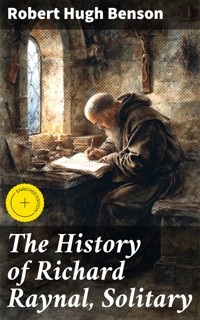


Come Rack! Come Rope!
Table of Contents
Introduction
This novel explores the price of fidelity when public allegiance and private belief collide.
Come Rack! Come Rope! is a historical novel by Robert Hugh Benson, set in late sixteenth-century England during the reign of Elizabeth I, when penal laws placed Catholics under severe pressure. Written by an English Catholic priest and novelist, it first appeared in the early twentieth century and belongs to his body of ecclesiastical and historical fiction. The book immerses readers in a world of clandestine worship, surveillance, and suspicion, evoking the textures of everyday life as well as the stark realities of persecution. Its setting and focus establish a tense backdrop against which questions of conscience take center stage.
Without revealing its turns, the story follows ordinary believers and the itinerant clergy who minister to them in secret, charting the quiet heroism of a community that must hide in order to survive. Houses become chapels, bridle paths become escape routes, and a casual knock at the door can carry mortal danger. Characters wrestle with choices that test loyalties to family, faith, and crown, while friendships and affections bend under strain. Readers can expect a narrative that balances domestic scenes with swift, dangerous encounters, offering a steady build of suspense rather than spectacle, and placing moral decision-making at the heart of the drama.
Benson’s voice is measured, reflective, and attentive to atmosphere. He layers period detail with an intimate sense of interior struggle, so that small gestures—a whispered warning, a hurried blessing—acquire dramatic weight. The style favors clarity over ornament, yet it allows a contemplative cadence to run beneath moments of pursuit and concealment. Dialogue and description work together to create a lived-in landscape of barns, manor houses, and hedgerows, through which fear and hope travel side by side. The result is a quietly relentless mood: not thunderous or sensational, but persistent, sober, and deeply human in its portrayal of endurance.
Thematically, the novel probes conscience under constraint, asking what one owes to law, to tradition, and to the bonds of affection. It considers how communities construct resilience—hospitality, coded language, networks of trust—when ordinary practices are criminalized. The story weighs prudence against courage and explores the paradox that secrecy can both protect and corrode. Questions of identity—religious, social, and national—press in from every side, highlighting how belief shapes daily choices as much as grand gestures. The book also suggests that sanctity, or at least integrity, is often revealed not in public triumphs but in steady, unheralded acts of fidelity.
For contemporary readers, its relevance is clear. The narrative prompts reflection on religious freedom, civil authority, and the ethics of resistance, topics that remain urgent wherever conscience and policy collide. It invites empathy across confessional and ideological lines by depicting ordinary people caught between ideals and survival. The novel also speaks to the anxiety of living under scrutiny—whether from institutions, neighbors, or internalized fear—and to the creative solidarities that arise in response. Far from an antiquarian exercise, it becomes a lens for considering how communities preserve meaning and dignity when the costs are high and the choices are narrow.
Approached as a reading experience, this book offers measured tension, carefully drawn settings, and a moral center that rewards patient attention. It will appeal to readers who value historically grounded fiction, religious or not, and to those who appreciate conflict rendered through character rather than spectacle. Expect scenes of quiet domesticity punctuated by close calls, a sense of place that feels tangible, and a tone that respects the gravity of its subject without bleakness. Above all, it offers an intimate encounter with courage in ordinary lives, inviting readers to consider what they would risk, and for whom, when conviction demands a cost.
Synopsis
Come Rack! Come Rope! unfolds in Elizabethan England, chiefly in Derbyshire, where religious conformity is demanded by law and Catholic practice survives in secrecy. The story opens amid ordinary village life, with festivals and family ties setting a familiar scene. Two childhood friends, newly grown, face adult choices as the state tightens control over belief and worship. Their world is threaded with hidden chapels, whispered signals, and midnight rides, yet also with daily chores and neighborly obligations. Against this backdrop, Benson presents a community learning to live under watchful eyes, balancing loyalty to crown and law against conscience, tradition, and spiritual duty.
As officials intensify searches and fines, traveling priests begin to appear in the district, bringing sacraments to households willing to risk sheltering them. The two central figures, drawn closely to each other, confront a dilemma that pits marriage and settled life against a sterner calling. Counsel from trusted elders and the tangible need of the faithful shape their decision. With quiet resolve, they choose a path of service that places personal happiness behind what they regard as a higher obligation. The narrative emphasizes disciplined preparation, watchfulness, and mutual support, portraying ordinary people adapting their homes, habits, and hopes to an increasingly perilous reality.
One thread follows the young man across the Channel to the English seminaries on the Continent, where exiles study Scripture, apologetics, and the practical arts of clandestine ministry. There he learns the caution required for coded letters, safe routes, and the use of aliases, while absorbing a sense of solidarity with a dispersed nation of believers. The account of his formation is brisk and factual, stressing obedience, prudence, and charity rather than any spirit of rebellion. When he returns to English shores, the journey is tense but unromanticized, focusing on the logistics of evasion and the discipline necessary to avoid bringing danger upon others.
Once back in the north midlands, he moves within a web of discreet hosts, messengers, and artisans who keep the mission alive. Benson describes priest holes, double walls, and the carefully staged routines that enable a household to appear innocent at a knock. Encounters with pursuivants are measured, concentrating on procedures, warrants, and inventories rather than melodrama. Services are brief and mobile, compassion is practical, and catechesis takes place by candlelight. The narrative shows how small acts of kindness—food left in a stable, a cloak exchanged on a lane—sustain a ministry that is both domestic and dangerous, relying on patience more than bold gestures.
The parallel thread remains with the young woman at home, where she becomes a careful steward of information, hospitality, and morale. She manages delicate conversations with neighbors, judges whom to trust, and plans for sudden searches. Benson depicts her interior life as steady and purposeful, with devotion expressed through discretion, industry, and restraint. She supports the poor and the sick, maintains outward conformity where necessary, and quietly safeguards rooms and passages whose significance only a few understand. Her choices convey the cost of fidelity in the realm of ordinary duties, showing how courage often takes the form of constancy rather than display.
The wider political climate sharpens the risk. News of foreign threats, rumors of conspiracies, and the memory of recent prosecutions lead to new statutes and harsher enforcement. A high-spirited acquaintance flirts with reckless schemes, and the protagonists urge moderation, distinguishing pastoral care from political intrigue. This section foregrounds surveillance and paperwork: lists, examinations, and bonds that alter daily life. Raids grow more frequent and less predictable. The narrative traces how fear and bravado unsettle the young, how fatigue erodes caution, and how the community attempts to remain unified while avoiding entanglement in plots that would endanger everyone and blur spiritual aims.
A decisive turn arrives with a coordinated search that pierces the careful routines of several households. The description of the raid is procedural and tense: doors cataloged, servants questioned, caches tested, and suspicious architectural lines probed. Some are taken into custody, and formal examinations follow, focusing on allegiance, attendance, and harboring. Court sessions display the letter of the penal laws and the narrow room for defense. Benson’s presentation underscores the clash between conscience and compliance without detailing verdicts. The protagonists face the machinery of the state with the same restraint that guided earlier choices, weighing truthfulness, prudence, and responsibility for those who might be implicated.
The closing movement gathers around quiet farewells, measured testimonies, and the endurance of those who wait. Letters circulate with practical instructions and words of encouragement, while communities adjust to absences and altered routines. The novel’s title phrase, often associated with unbending resolve, serves as a motif for patient steadfastness rather than defiance. Benson keeps the emphasis on the interior stance: acceptance without bitterness, hope without naïveté, and a continued refusal to confuse pastoral duty with political revolt. Outcomes are handled with restraint, the focus remaining on how conviction is sustained in trials, and how dignity can be maintained when choices are constrained.
In its final impression, Come Rack! Come Rope! presents a portrait of faith lived under pressure, highlighting ordinary networks that preserve identity without spectacle. The book’s central message concerns fidelity to conscience amid conflicting loyalties, and the quiet heroism possible in domestic spaces. By tracing two lives from village beginnings through disciplined service and public testing, the narrative shows how courage may be communal, steady, and practical. It does not argue policy so much as depict its effects, leaving readers with the sense of a people enduring, adapting, and remembering. The result is a compact, chronological account of conviction held through changing fortunes.
Historical Context
Set in the English Midlands during the 1580s and 1590s, the narrative unfolds amid the uplands and market towns of Derbyshire and its environs, where recusant gentry houses, parish churches, and Assize courts intersect. The reign of Elizabeth I (1558–1603) provides the political frame, while localities such as Derby, Hathersage, Sheffield, and the estates of families like the Fitzherberts and Talbots anchor the action. Geography matters: wooded valleys and moorland edges offered concealment for itinerant clergy, even as royal officers and pursuivants hunted them. The social fabric is parish-based, administered by Justices of the Peace and the ecclesiastical commission, with surveillance intensifying as religion becomes a test of political loyalty.
The Elizabethan Religious Settlement of 1559, comprising the Act of Supremacy and the Act of Uniformity, reestablished royal authority over the church and mandated the Book of Common Prayer. After Pope Pius V’s bull Regnans in Excelsis (1570) excommunicated Elizabeth, Parliament hardened policy: the 1571 Treasons Act criminalized possession of papal bulls; the 1581 Act to Retain the Queen’s Majesty’s Subjects in their due Obedience raised recusancy fines to 20 pounds per month and penalized participation in Catholic worship; and the 1585 Act Against Jesuits and Seminary Priests made presence of foreign-ordained priests treason. The novel dramatizes these statutes through raids, oaths, and fines that pressure gentry households and criminalize hospitality to clergy.
The English Catholic seminary system, founded by William Allen at Douai in 1568 and relocated to Rheims (1578–1593), supplied trained priests for a clandestine mission in England. The Jesuit enterprise of 1580, led by Edmund Campion and Robert Persons, sought to reconcile souls rather than foment rebellion, as Campion’s Brag declared. Campion’s capture at Lyford Grange in July 1581 and execution at Tyburn on 1 December 1581 exemplified the lethal stakes; his phrase come rack, come rope became a watchword of endurance. The book mirrors this mission: the protagonist’s formation abroad, covert returns via coastal landings, and reliance on priest holes evoke the lived logistics of Allen’s network and Jesuit pastoral strategy.
Mary, Queen of Scots, after seeking refuge in 1568, spent nearly nineteen years in English custody, much of it under George Talbot, Earl of Shrewsbury, and Bess of Hardwick in and around Derbyshire and Staffordshire. She resided at Tutbury Castle, Sheffield Castle and Manor, Chatsworth House, and Wingfield Manor, creating a persistent political magnet for Catholic hopes and fears. Her execution at Fotheringhay on 8 February 1587 followed trial for complicity in conspiracy. The novel uses Mary’s proximity to the Midlands to explain heightened searches, rumor, and suspicion, showing how household religion in Derbyshire became entangled with national security in the late 1580s.
The Babington Plot of 1586 crystallized the nexus of espionage and faith. Anthony Babington of Dethick, Derbyshire, corresponded with Mary via a beer-barrel cipher channel at Chartley, intercepted and deciphered by Francis Walsingham’s team, notably Thomas Phelippes. Mary’s approval of an assassination scheme, extracted in July 1586, led to mass arrests; Babington and companions were executed at St Giles Fields on 20–21 September 1586, after a show trial. Mary’s subsequent trial occurred in October 1586. In the novel’s world, local ties to Babington intensify danger for recusant households, while interrogators like Richard Topcliffe personify the machinery of state coercion that collapses spiritual allegiance into treason.
The Spanish Armada of 1588, roughly 130 ships under the Duke of Medina Sidonia, sailed from Lisbon to escort Parma’s army for an invasion. English squadrons under Lord Howard of Effingham, with Sir Francis Drake, harried the fleet, culminating at Gravelines in late July 1588, before storms drove the Armada around Scotland and Ireland; barely half the ships returned. The victory stoked Protestant nationalism and sharpened anti-Catholic suspicion. In provincial England, musters, beacon chains, and coastal watches were matched by intensified house searches and arrests inland. The novel reflects the post-Armada climate, where fears of foreign invasion justify harsher enforcement against seminarians and their lay protectors.
Local repression in Derbyshire, especially the events at Padley Hall near Hathersage, most directly shapes the book’s world. Padley, associated with the Fitzherbert and Eyre families, functioned as a recusant stronghold with hiding places and a chapel. In July 1588, shortly after the Armada crisis began, officers raided Padley and seized the missionary priests Nicholas Garlick and Robert Ludlam; the secular priest Richard Simpson was apprehended and tried with them. At the Derby Assizes they were condemned under the 1585 statute and executed at St Mary’s Bridge, Derby, on 24 July 1588, their bodies displayed as deterrent spectacle. These men are commemorated as the Padley or Derby Martyrs. The raid illustrates the coordination between local gentry rivalries, sheriffs, and the Crown’s religious policy, as well as the practical countermeasures of Catholics—false walls, secret stairs, and warning systems—that Nicholas Owen and other craftsmen perfected across England. Benson draws on this concrete topography: manor houses serve as refuges and traps; pursuivants stage nocturnal searches; and the assize timetable dictates life-and-death outcomes. The novel’s clandestine Masses, coded signals, and reliance on kinship networks reflect actual Derbyshire practice, where recusancy lists, informers, and periodic sweeps devastated households with fines and imprisonments. By embedding the Padley sequence within a wider Midlands web—Sheffield’s Talbot connection, nearby Mary Stuart custodial sites, and Babington’s Derbyshire circle—the narrative shows how a provincial county became a front line of England’s confessional conflict in 1586–1590.
The book functions as a critique of the confessional state by depicting how law conflates conscience with treason, enabling surveillance, torture, and exemplary punishment to police identity. It exposes asymmetries of power—agents like Topcliffe versus unarmed laity—and the economic violence of recusancy fines that eroded gentry estates and pressured tenants. Women’s clandestine labor as harborers highlights gendered risks and resilience within a patriarchal legal regime. By tracing arbitrary searches, coerced oaths, and show trials, the narrative indicts due-process failures and collective suspicion after Mary’s execution and the Armada. The portrait of provincial life under emergency powers questions the justice of fusing national security with religious uniformity.
Come Rack! Come Rope!
PREFACE
Very nearly the whole of this book is sober historical fact; and by far the greater number of the personages named in it once lived and acted in the manner in which I have presented them. My hero and my heroine are fictitious; so also are the parents of my heroine, the father of my hero, one lawyer, one woman, two servants, a farmer and his wife, the landlord of an inn, and a few other entirely negligible characters. But the family of the FitzHerberts passed precisely through the fortunes which I have described; they had their confessors and their one traitor (as I have said). Mr. Anthony Babington[2] plotted, and fell, in the manner that is related; Mary languished in Chartley[5] under Sir Amyas Paulet; was assisted by Mr. Bourgoign; was betrayed by her secretary and Mr. Gifford, and died at Fotheringay; Mr. Garlick and Mr. Ludlam and Mr. Simpson received their vocations, passed through their adventures; were captured at Padley, and died in Derby. Father Campion[1] (from whose speech after torture the title of the book is taken) suffered on the rack[4] and was executed at Tyburn. Mr. Topcliffe tormented the Catholics that fell into his hands; plotted with Mr. Thomas FitzHerbert, and bargained for Padley (which he subsequently lost again) on the terms here drawn out. My Lord Shrewsbury rode about Derbyshire, directed the search for recusants[3] and presided at their deaths; priests of all kinds came and went in disguise; Mr. Owen went about constructing hiding-holes; Mr. Bassett lived defiantly at Langleys, and dabbled a little (I am afraid) in occultism; Mr. Fenton was often to be found in Hathersage—all these things took place as nearly as I have had the power of relating them. Two localities only, I think, are disguised under their names—Booth's Edge and Matstead. Padley, or rather the chapel in which the last mass was said under the circumstances described in this book, remains, to this day, close to Grindleford Station. A Catholic pilgrimage is made there every year; and I have myself once had the honour of preaching on such an occasion, leaning against the wall of the old hall that is immediately beneath the chapel where Mr. Garlick and Mr. Ludlam said their last masses, and were captured. If the book is too sensational, it is no more sensational than life itself was to Derbyshire folk between 1579 and 1588.
It remains only, first, to express my extreme indebtedness to Dom Bede Camm's erudite book—"Forgotten Shrines"—from which I have taken immense quantities of information, and to a pile of some twenty to thirty other books that are before me as I write these words; and, secondly, to ask forgiveness from the distinguished family that takes its name from the FitzHerberts and is descended from them directly; and to assure its members that old Sir Thomas, Mr. John, Mr. Anthony, and all the rest, down to the present day, outweigh a thousand times over (to the minds of all decent people) the stigma of Mr. Thomas' name. Even the apostles numbered one Judas!
ROBERT HUGH BENSON.
Feast of the Blessed Thomas More[6], 1912. Hare Street House, Buntingford.
PART I
CHAPTER I
I
There should be no sight more happy than a young man riding to meet his love. His eyes should shine, his lips should sing; he should slap his mare upon her shoulder and call her his darling. The puddles upon his way should be turned to pure gold, and the stream that runs beside him should chatter her name.
Yet, as Robin rode to Marjorie none of these things were done. It was a still day of frost; the sky was arched above him, across the high hills, like that terrible crystal which is the vault above which sits God—hard blue from horizon to horizon; the fringe of feathery birches stood like filigree-work above him on his left; on his right ran the Derwent, sucking softly among his sedges; on this side and that lay the flat bottom through which he went—meadowland broken by rushes; his mare Cecily stepped along, now cracking the thin ice of the little pools with her dainty feet, now going gently over peaty ground, blowing thin clouds from her red nostrils, yet unencouraged by word or caress from her rider; who sat, heavy and all but slouching, staring with his blue eyes under puckered eyelids, as if he went to an appointment which he would not keep.
Yet he was a very pleasant lad to look upon, smooth-faced and gallant, mounted and dressed in a manner that should give any lad joy. He wore great gauntlets on his hands; he was in his habit of green; he had his steel-buckled leather belt upon him beneath his cloak and a pair of daggers in it, with his long-sword looped up; he had his felt hat on his head, buckled again, and decked with half a pheasant's tail; he had his long boots of undressed leather, that rose above his knees; and on his left wrist sat his grim falcon Agnes, hooded and belled, not because he rode after game, but from mere custom, and to give her the air.
He was meeting his first man's trouble.
Last year he had said good-bye to Derby Grammar School—of old my lord Bishop Durdant's foundation—situated in St. Peter's churchyard. Here he had done the right and usual things; he had learned his grammar; he had fought; he had been chastised; he had robed the effigy of his pious founder in a patched doublet with a saucepan on his head (but that had been done before he had learned veneration)—and so had gone home again to Matstead, proficient in Latin, English, history, writing, good manners and chess, to live with his father, to hunt, to hear mass when a priest was within reasonable distance, to indite painful letters now and then on matters of the estate, and to learn how to bear himself generally as should one of Master's rank—the son of a gentleman who bore arms, and his father's father before him. He dined at twelve, he supped at six, he said his prayers, and blessed himself when no strangers were by. He was something of a herbalist, as a sheer hobby of his own; he went to feed his falcons in the morning, he rode with them after dinner (from last August he had found himself riding north more often than south, since Marjorie lived in that quarter); and now all had been crowned last Christmas Eve, when in the enclosed garden at her house he had kissed her two hands suddenly, and made her a little speech he had learned by heart; after which he kissed her on the lips as a man should, in the honest noon sunlight.
All this was as it should be. There were no doubts or disasters anywhere. Marjorie was an only daughter as he an only son. Her father, it is true, was but a Derby lawyer, but he and his wife had a good little estate above the Hathersage valley, and a stone house in it. As for religion, that was all well too. Master Manners was as good a Catholic as Master Audrey himself; and the families met at mass perhaps as much as four or five times in the year, either at Padley, where Sir Thomas' chapel still had priests coming and going; sometimes at Dethick in the Babingtons' barn; sometimes as far north as Harewood.
And now a man's trouble was come upon the boy. The cause of it was as follows.
Robin Audrey was no more religious than a boy of seventeen should be. Yet he had had as few doubts about the matter as if he had been a monk. His mother had taught him well, up to the time of her death ten years ago; and he had learned from her, as well as from his father when that professor spoke of it at all, that there were two kinds of religion in the world, the true and the false—that is to say, the Catholic religion and the other one. Certainly there were shades of differences in the other one; the Turk did not believe precisely as the ancient Roman, nor yet as the modern Protestant—yet these distinctions were subtle and negligible; they were all swallowed up in an unity of falsehood. Next he had learned that the Catholic religion was at present blown upon by many persons in high position; that pains and penalties lay upon all who adhered to it. Sir Thomas FitzHerbert, for instance, lay now in the Fleet in London on that very account. His own father, too, three or four times in the year, was under necessity of paying over heavy sums for the privilege of not attending Protestant worship; and, indeed, had been forced last year to sell a piece of land over on Lees Moor for this very purpose. Priests came and went at their peril…. He himself had fought two or three battles over the affair in St. Peter's churchyard, until he had learned to hold his tongue. But all this was just part of the game. It seemed to him as inevitable and eternal as the changes of the weather. Matstead Church, he knew, had once been Catholic; but how long ago he did not care to inquire. He only knew that for awhile there had been some doubt on the matter; and that before Mr. Barton's time, who was now minister there, there had been a proper priest in the place, who had read English prayers there and a sort of a mass, which he had attended as a little boy. Then this had ceased; the priest had gone and Mr. Barton come, and since that time he had never been to church there, but had heard the real mass wherever he could with a certain secrecy. And there might be further perils in future, as there might be thunderstorms or floods. There was still the memory of the descent of the Commissioners a year or two after his birth; he had been brought up on the stories of riding and counter-riding, and the hiding away of altar-plate and beads and vestments. But all this was in his bones and blood; it was as natural that professors of the false religion should seek to injure and distress professors of the true, as that the foxes should attack the poultry-yard. One took one's precautions, one hoped for the best; and one was quite sure that one day the happy ancient times his mother had told him of would come back, and Christ's cause be vindicated.
And now the foundations of the earth were moved and heaven reeled above him; for his father, after a month or two of brooding, had announced, on St. Stephen's Day, that he could tolerate it no longer; that God's demands were unreasonable; that, after all, the Protestant religion was the religion of her Grace, that men must learn to move with the times, and that he had paid his last fine. At Easter, he observed, he would take the bread and wine in Matstead Church, and Robin would take them too.
II
The sun stood half-way towards his setting as Robin rode up from the valley, past Padley, over the steep ascent that led towards Booth's Edge. The boy was brighter a little as he came up; he had counted above eighty snipe within the last mile and a half, and he was coming near to Marjorie. About him, rising higher as he rose, stood the great low-backed hills. Cecily stepped out more sharply, snuffing delicately, for she knew her way well enough by now, and looked for a feed; and the boy's perplexities stood off from him a little. Matters must surely be better so soon as Marjorie's clear eyes looked upon them.
Then the roofs of Padley disappeared behind him, and he saw the smoke going up from the little timbered Hall, standing back against its bare wind-blown trees.
A great clatter and din of barking broke out as the mare's hoofs sounded on the half-paved space before the great door; and then, in the pause, a gaggling of geese, solemn and earnest, from out of sight. Jacob led the outcry, a great mastiff, chained by the entrance, of the breed of which three are set to meet a bear and four a lion. Then two harriers whipped round the corner, and a terrier's head showed itself over the wall of the herb-garden on the left, as a man, bareheaded, in his shirt and breeches, ran out suddenly with a thonged whip, in time to meet a pair of spaniels in full career. Robin sat his horse silently till peace was restored, his right leg flung across the pommel, untwisting Agnes' leash from his fist. Then he asked for Mistress Marjorie, and dropped to the ground, leaving his mare and falcon in the man's hands, with an air.
He flicked his fingers to growling Jacob as he went past to the side entrance on the east, stepped in through the little door that was beside the great one, and passed on as he had been bidden into the little court, turned to the left, went up an outside staircase, and so down a little passage to the ladies' parlour, where he knocked upon the door. The voice he knew called to him from within; and he went in, smiling to himself. Then he took the girl who awaited him there in both his arms, and kissed her twice—first her hands and then her lips, for respect should come first and ardour second.
"My love," said Robin, and threw off his hat with the pheasant's tail, for coolness' sake.
* * * * *
It was a sweet room this which he already knew by heart; for it was here that he had sat with Marjorie and her mother, silent and confused, evening after evening, last autumn; it was here, too, that she had led him last Christmas Eve, scarcely ten days ago, after he had kissed her in the enclosed garden. But the low frosty sunlight lay in it now, upon the blue painted wainscot that rose half up the walls, the tall presses where the linen lay, the pieces of stuff, embroidered with pale lutes and wreaths that Mistress Manners had bought in Derby, hanging now over the plaster spaces. There was a chimney, too, newly built, that was thought a great luxury; and in it burned an armful of logs, for the girl was setting out new linen for the household, and the scents of lavender and burning wood disputed the air between them.
"I thought it would be you," she said, "when I heard the dogs."
She piled the last rolls of linen in an ordered heap, and came to sit beside him. Robin took one hand in his and sat silent.
She was of an age with him, perhaps a month the younger; and, as it ought to be, was his very contrary in all respects. Where he was fair, she was pale and dark; his eyes were blue, hers black; he was lusty and showed promise of broadness, she was slender.
"And what news do you bring with you now?" she said presently.
He evaded this.
"Mistress Manners?" he asked.
"Mother has a megrim[7]," she said; "she is in her chamber." And she smiled at him again. For these two, as is the custom of young persons who love one another, had said not a word on either side—neither he to his father nor she to her parents. They believed, as young persons do, that parents who bring children into the world, hold it as a chief danger that these children should follow their example, and themselves be married. Besides, there is something delicious in secrecy.[2q]
"Then I will kiss you again," he said, "while there is opportunity."
* * * * *
Making love is a very good way to pass the time, above all when that same time presses and other disconcerting things should be spoken of instead; and this device Robin now learned. He spoke of a hundred things that were of no importance: of the dress that she wore—russet, as it should be, for country girls, with the loose sleeves folded back above her elbows that she might handle the linen; her apron of coarse linen, her steel-buckled shoes. He told her that he loved her better in that than in her costume of state—the ruff, the fardingale, the brocaded petticoat, and all the rest—in which he had seen her once last summer at Babington House. He talked then, when she would hear no more of that, of Tuesday seven-night, when they would meet for hawking in the lower chase of the Padley estates; and proceeded then to speak of Agnes, whom he had left on the fist of the man who had taken his mare, of her increasing infirmities and her crimes of crabbing; and all the while he held her left hand in both of his, and fitted her fingers between his, and kissed them again when he had no more to say on any one point; and wondered why he could not speak of the matter on which he had come, and how he should tell her. And then at last she drew it from him.
"And now, my Robin," she said, "tell me what you have in your mind. You have talked of this and that and Agnes and Jock, and Padley chase, and you have not once looked me in the eyes since you first came in."
Now it was not shame that had held him from telling her, but rather a kind of bewilderment. The affair might hold shame, indeed, or anger, or sorrow, or complacence, but he did not know; and he wished, as young men of decent birth should wish, to present the proper emotion on its right occasion. He had pondered on the matter continually since his father had spoken to him on Saint Stephen's night; and at one time it seemed that his father was acting the part of a traitor and at another of a philosopher. If it were indeed true, after all, that all men were turning Protestant, and that there was not so much difference between the two religions, then it would be the act of a wise man to turn Protestant too, if only for a while. And on the other hand his pride of birth and his education by his mother and his practice ever since drew him hard the other way. He was in a strait between the two. He did not know what to think, and he feared what Marjorie might think.
It was this, then, that had held him silent. He feared what Marjorie might think, for that was the very thing that he thought that he thought too, and he foresaw a hundred inconveniences and troubles if it were so.
"How did you know I had anything in my mind?" he asked. "Is it not enough reason for my coming that you should be here?"
She laughed softly, with a pleasant scornfulness.
"I read you like a printed book," she said. "What else are women's wits given them for?"
He fell to stroking her hand again at that, but she drew it away.
"Not until you have told me," she said.
So then he told her.
It was a long tale, for it began as far ago as last August, when his father had come back from giving evidence before the justices at Derby on a matter of witchcraft, and had been questioned again about his religion. It was then that Robin had seen moodiness succeed to anger, and long silence to moodiness. He told the tale with a true lover's art, for he watched her face and trained his tone and his manner as he saw her thoughts come and go in her eyes and lips, like gusts of wind across standing corn; and at last he told her outright what his father had said to him on St. Stephen's night, and how he himself had kept silence.
Marjorie's face was as white as a moth's wing when he was finishing, and her eyes like sunset pools; but she flamed up bright and rosy as he finished.
"You kept silence!" she cried.
"I did not wish to anger him, my dear; he is my father," he said gently.
The colour died out of her face again and she nodded once or twice, and a great pensiveness came down on her. He took her hand again softly, and she did not resist.
"The only doubt," she said presently, as if she talked to herself, "is whether you had best be gone at Easter, or stay and face it out."
"Yes," said Robin, with his dismay come fully to the birth.
Then she turned on him, full of a sudden tenderness and compassion.
"Oh! my Robin," she cried, "and I have not said a word about you and your own misery. I was thinking but of Christ's honour. You must forgive me…. What must it be for you!… That it should be your father! You are sure that he means it?"
"My father does not speak until he means it. He is always like that. He asks counsel from no one. He thinks and he thinks, and then he speaks; and it is finished."
She fell then to thinking again, her sweet lips compressed together, and her eyes frightened and wondering, searching round the hanging above the chimney-breast. (It presented Icarus in the chariot of the sun; and it was said in Derby that it had come from my lord Abbot's lodging at Bolton.)
Meantime Robin thought too. He was as wax in the hands of this girl,[1q] and knew it, and loved that it should be so. Yet he could not help his dismay while he waited for her seal to come down on him and stamp him to her model. For he foresaw more clearly than ever now the hundred inconveniences that must follow, now that it was evident that to Marjorie's mind (and therefore to God Almighty's) there must be no tampering with the old religion. He had known that it must be so; yet he had thought, on the way here, of a dozen families he knew who, in his own memory, had changed from allegiance to the Pope of Rome to that of her Grace, without seeming one penny the worse. There were the Martins, down there in Derby; the Squire and his lady of Ashenden Hall; the Conways of Matlock; and the rest—these had all changed; and though he did not respect them for it, yet the truth was that they were not yet stricken by thunderbolts or eaten by the plague. He had wondered whether there were not a way to do as they had done, yet without the disgrace of it…. However, this was plainly not to be so with him. He must put up with the inconveniences as well as he could, and he just waited to hear from Marjorie how this must be done.
She turned to him again at last. Twice her lips opened to speak, and twice she closed them again. Robin continued to stroke her hand and wait for judgment. The third time she spoke.
"I think you must go away," she said, "for Easter. Tell your father that you cannot change your religion simply because he tells you so. I do not see what else is to be done. He will think, perhaps, that if you have a little time to think you will come over to him. Well, that is not so, but it may make it easier for him to believe it for a while…. You must go somewhere where there is a priest…. Where can you go?"
Robin considered.
"I could go to Dethick," he said.
"That is not far enough away, I think."
"I could come here," he suggested artfully.
A smile lit in her eyes, shone in her mouth, and passed again into seriousness.
"That is scarcely a mile further," she said. "We must think…. Will he be very angry, Robin?"
Robin smiled grimly.
"I have never withstood him in a great affair," he said. "He is angry enough over little things."
"Poor Robin!"
"Oh! he is not unjust to me. He is a good father to me."
"That makes it all the sadder," she said.
"And there is no other way?" he asked presently.
She glanced at him.
"Unless you would withstand him to the face. Would you do that, Robin?"
"I will do anything you tell me," he said simply.
"You darling!… Well, Robin, listen to me. It is very plain that sooner or later you will have to withstand him. You cannot go away every time there is communion at Matstead, or, indeed, every Sunday. Your father would have to pay the fines for you, I have no doubt, unless you went away altogether. But I think you had better go away for this time. He will almost expect it, I think. At first he will think that you will yield to him; and then, little by little (unless God's grace brings himself back to the Faith), he will learn to understand that you will not. But it will be easier for him that way; and he will have time to think what to do with you, too…. Robin, what would you do if you went away?"
Robin considered again.
"I can read and write," he said. "I am a Latinist: I can train falcons and hounds and break horses. I do not know if there is anything else that I can do."
"You darling!" she said again.
* * * * *
These two, as will have been seen, were as simple as children, and as serious. Children are not gay and light-hearted, except now and then (just as men and women are not serious except now and then). They are grave and considering: all that they lack is experience. These two, then, were real children; they were grave and serious because a great thing had disclosed itself to them in which two or three large principles were present, and no more. There was that love of one another, whose consummation seemed imperilled, for how could these two ever wed if Robin were to quarrel with his father? There was the Religion which was in their bones and blood—the Religion for which already they had suffered and their fathers before them. There was the honour and loyalty which this new and more personal suffering demanded now louder than ever; and in Marjorie at least, as will be seen more plainly later, there was a strong love of Jesus Christ and His Mother, whom she knew, from her hidden crucifix and her beads, and her Jesus Psalter—which she used every day—as well as in her own soul—to be wandering together once more among the hills of Derbyshire, sheltering, at peril of Their lives, in stables and barns and little secret chambers, because there was no room for Them in Their own places. It was this last consideration, as Robin had begun to guess, that stood strongest in the girl; it was this, too, as again he had begun to guess, that made her all that she was to him, that gave her that strange serious air of innocency and sweetness, and drew from him a love that was nine-tenths reverence and adoration. (He always kissed her hands first, it will be remembered, before her lips.)
So then they sat and considered and talked. They did not speak much of her Grace, nor of her Grace's religion, nor of her counsellors and affairs of state: these things were but toys and vanities compared with matters of love and faith; neither did they speak much of the Commissioners that had been to Derbyshire once and would come again, or of the alarms and the dangers and the priest hunters, since those things did not at present touch them very closely. It was rather of Robin's father, and whether and when the maid should tell her parents, and how this new trouble would conflict with their love. They spoke, that is to say, of their own business and of God's; and of nothing else. The frosty sunshine crept down the painted wainscot and lay at last at their feet, reddening to rosiness….
III
Robin rode away at last with a very clear idea of what he was to do in the immediate present, and with no idea at all of what was to be done later. Marjorie had given him three things—advice; a pair of beads that had been the property of Mr. Cuthbert Maine, seminary priest, recently executed in Cornwall for his religion; and a kiss—the first deliberate, free-will kiss she had ever given him. The first he was to keep, the second he was to return, the third he was to remember; and these three things, or, rather, his consideration of them, worked upon him as he went. Her advice, besides that which has been described, was, principally, to say his Jesus Psalter more punctually, to hear mass whenever that were possible, to trust in God, and to be patient and submissive with his father in all things that did not touch divine love and faith. The pair of beads that were once Mr. Maine's, he was to keep upon him always, day and night, and to use them for his devotions. The kiss—well, he was to remember this, and to return it to her upon their next meeting.
A great star came out as he drew near home. His path took him not through the village, but behind it, near enough for him to hear the barkings of the dogs and to smell upon the frosty air the scent of the wood fires. The house was a great one for these parts. There was a small gate-house before it, built by his father for dignity, with a lodge on either side and an arch in the middle, and beyond this lay the short road, straight and broad, that went up to the court of the house. This court was, on three sides of it, buildings; the hall and the buttery and the living-rooms in the midst, with the stables and falconry on the left, and the servants' lodgings on the right; the fourth side, that which lay opposite to the little gate-house, was a wall, with a great double gate in it, hung on stone posts that had, each of them, a great stone dog that held a blank shield. All this later part, the wall with the gate, the stables and the servants' lodgings, as well as the gatehouse without, had been built by the lad's father twenty years ago, to bring home his wife to; for, until that time, the house had been but a little place, though built of stone, and solid and good enough. The house stood half-way up the rise of the hill, above the village, with woods about it and behind it; and it was above these woods behind that the great star came out like a diamond in enamel-work; and Robin looked at it, and fell to thinking of Marjorie again, putting all other thoughts away. Then, as he rode through into the court on to the cobbled stones, a man ran out from the stable to take his mare from him.
"Master Babington is here," he said. "He came half an hour ago."
"He is in the hall?"
"Yes, sir; they are at supper."
* * * * *
The hall at Matstead was such as that of most esquires of means. Its daïs was to the south end, and the buttery entrance and the screens to the north, through which came the servers with the meat. In the midst of the floor stood the reredos with the fire against it, and a round vent overhead in the roof through which went the smoke and came the rain. The tables stood down the hall, one on either side, with the master's table at the daïs end set cross-ways. It was not a great hall, though that was its name; it ran perhaps forty feet by twenty. It was lighted, not only by the fire that burned there through the winter day and night, but by eight torches in cressets that hung against the walls and sadly smoked them; and the master's table was lighted by six candles, of latten on common days and of silver upon festivals.
There were but two at the master's table this evening, Mr. Audrey himself, a smallish, high-shouldered man, ruddy-faced, with bright blue eyes like his son's, and no hair upon his face (for this was the way of old men then, in the country, at least); and Mr. Anthony Babington, a young man scarcely a year older than Robin himself, of a brown complexion and a high look in his face, but a little pale, too, with study, for he was learned beyond his years and read all the books that he could lay hand to. It was said even that his own verses, and a prose-lament he had written upon the Death of a Hound, were read with pleasure in London by the lords and gentlemen. It was as long ago as '71, that his verses had first become known, when he was still serving in the school of good manners as page in my Lord Shrewsbury's household. They were considered remarkable for so young a boy. So it was to this company that Robin came, walking up between the tables after he had washed his hands at the lavatory that stood by the screens.
"You are late, lad," said his father.
"I was over to Padley, sir…. Good-day, Anthony."
Then silence fell again, for it was the custom in good houses to keep silence, or very nearly, at dinner and supper. At times music would play, if there was music to be had; or a scholar would read from a book for awhile at the beginning, from the holy gospels in devout households, or from some other grave book. But if there were neither music nor reading, all would hold their tongues.
Robin was hungry from his riding and the keen air; and he ate well. First he stayed his appetite a little with a hunch of cheat-bread, and a glass of pomage, while the servant was bringing him his entry of eggs cooked with parsley. Then he ate this; and next came half a wild-duck cooked with sage and sweet potatoes; and last of all a florentine which he ate with a cup of Canarian. He ate heartily and quickly, while the two waited for him and nibbled at marchpane. Then, when the doors were flung open and the troop of servants came in to their supper, Mr. Audrey blessed himself, and for them, too; and they went out by a door behind into the wainscoted parlour, where the new stove from London stood, and where the conserves and muscadel awaited them. For this, or like it, had been the procedure in Matstead hall ever since Robin could remember, when first he had come from the women to eat his food with the men.
"And how were all at Booth's Edge?" asked Mr. Audrey, when all had pulled off their boots in country fashion, and were sitting each with his glass beside him. (Through the door behind came the clamour of the farm-men and the keepers of the chase and the servants, over their food.)
"I saw Marjorie only, sir," said the boy. "Mr. Manners was in Derby, and Mrs. Manners had a megrim."
"Mrs. Manners is ageing swifter than her husband," observed Anthony.
There seemed a constraint upon the company this evening. Robin spoke of his ride, of things which he had seen upon it, of a wood that should be thinned next year; and Anthony made a quip or two such as he was accustomed to make; but the master sat silent for the most part, speaking to the lads once or twice for civility's sake, but no more. And presently silences began to fall, that were very unusual things in Mr. Anthony's company, for he had a quick and a gay wit, and talked enough for five. Robin knew very well what was the matter; it was what lay upon his own heart as heavy as lead; but he was sorry that the signs of it should be so evident, and wondered what he should say to his friend Anthony when the time came for telling; since Anthony was as ardent for the old Faith as any in the land. It was a bitter time, this, for the old families that served God as their fathers had, and desired to serve their prince too; for, now and again, the rumour would go abroad that another house had fallen, and another name gone from the old roll. And what would Anthony Babington say, thought the lad, when he heard that Mr. Audrey, who had been so hot and persevered so long, must be added to these?
And then, on a sudden, Anthony himself opened on a matter that was at least cognate.
"I was hearing to-day from Mr. Thomas FitzHerbert that his uncle would be let out again of the Fleet soon to collect his fines."
He spoke bitterly; and, indeed, there was reason; for not only were the recusants (as the Catholics were named) put in prison for their faith, but fined for it as well, and let out of prison to raise money for this, by selling their farms or estates.
"He will go to Norbury?" asked Robin.
"He will come to Padley, too, it is thought. Her Grace must have her money for her ships and her men, and for her pursuivants to catch us all with; and it is we that must pay. Shall you sell again this year, sir?"
Mr. Audrey shook his head, pursing up his lips and staring upon the fire.
"I can sell no more," he said.
Then an agony seized upon Robin lest his father should say all that was in his mind. He knew it must be said; yet he feared its saying, and with a quick wit he spoke of that which he knew would divert his friend.
"And the Queen of the Scots," he said. "Have you heard more of her?"
Now Anthony Babington was one of those spirits that live largely within themselves, and therefore see that which is without through a haze or mist of their own moods. He read much in the poets; you would say that Vergil and Ovid, as well as the poets of his own day, were his friends; he lived within, surrounded by his own images, and therefore he loved and hated with ten times the ardour of a common man. He was furious for the Old Faith, furious against the new; he dreamed of wars and gallantry and splendour; you could see it even in his dress, in his furred doublet, the embroideries at his throat, his silver-hilted rapier, as well as in his port and countenance: and the burning heart of all his images, the mirror on earth of Mary in heaven, the emblem of his piety, the mistress of his dreams—she who embodied for him what the courtiers in London protested that Elizabeth embodied for them—the pearl of great price, the one among ten thousand—this, for him, was Mary Stuart, Queen of Scotland, now prisoner in her cousin's hands, going to and fro from house to house, with a guard about her, yet with all the seeming of liberty and none of its reality….
The rough bitterness died out of the boy's face, and a look came upon it as of one who sees a vision.
"Queen Mary?" he said, as if he pronounced the name of the Mother of God. "Yes; I have heard of her…. She is in Norfolk, I think."
Then he let flow out of him the stream that always ran in his heart like sorrowful music ever since the day when first, as a page, in my Lord Shrewsbury's house in Sheffield, he had set eyes on that queen of sorrows. Then, again, upon the occasion of his journey to Paris, he had met with Mr. Morgan, her servant, and the Bishop of Glasgow, her friend, whose talk had excited and inspired him. He had learned from them something more of her glories and beauties, and remembering what he had seen of her, adored her the more. He leaned back now, shading his eyes from the candles upon the table, and began to sing his love and his queen. He told of new insults that had been put upon her, new deprivations of what was left to her of liberty; he did not speak now of Elizabeth by name, since a fountain, even of talk, should not give out at once sweet water and bitter; but he spoke of the day when Mary should come herself to the throne of England, and take that which was already hers; when the night should roll away, and the morning-star arise; and the Faith should come again like the flowing tide, and all things be again as they had been from the beginning. It was rank treason that he talked, such as would have brought him to Tyburn if it had been spoken in London in indiscreet company; it was that treason which her Grace herself had made possible by her faithlessness to God and man; such treason as God Himself must have mercy upon, since He reads all hearts and their intentions. The others kept silence.
At the end he stood up. Then he stooped for his boots.
"I must be riding, sir," he said.
Mr. Audrey raised his hand to the latten bell that stood beside him on the table.
"I will take Anthony to his horse," said Robin suddenly, for a thought had come to him.
"Then good-night, sir," said Anthony, as he drew on his second boot and stood up.
* * * * *
The sky was all ablaze with stars now as they came out into the court. On their right shone the high windows of the little hall where peace now reigned, except for the clatter of the boys who took away the dishes; and the night was very still about them in the grip of the frost, for the village went early to bed, and even the dogs were asleep.
Robin said nothing as they went over the paving, for his determination was not yet ripe, and Anthony was still aglow with his own talk. Then, as the servant who waited for his master, with the horses, showed himself in the stable-arch with a lantern, Robin's mind was made up.
"I have something to tell you," he said softly. "Tell your man to wait."
"Eh?"
"Tell your man to wait with the horses."
His heart beat hot and thick in his throat as he led the way through the screens and out beyond the hall and down the steps again into the pleasaunce. Anthony took him by the sleeve once or twice, but he said nothing, and went on across the grass, and out through the open iron gate that gave upon the woods. He dared not say what he had to say within the precincts of the house, for fear he should be overheard and the shame known before its time. Then, when they had gone a little way into the wood, into the dark out of the starlight, Robin turned; and, as he turned, saw the windows of the hall go black as the boys extinguished the torches.
"Well?" whispered Anthony sharply (for a fool could see that the news was to be weighty, and Anthony was no fool).
It was wonderful how Robin's thoughts had fixed themselves since his talk with Mistress Marjorie. He had gone to Padley, doubting of what he should say, doubting what she would tell him, asking himself even whether compliance might not be the just as well as the prudent way. Yet now black shame had come on him—the black shame that any who was a Catholic should turn from his faith; blacker, that he should so turn without even a touch of the rack or the threat of it; blackest of all, that it should be his own father who should do this. It was partly food and wine that had strengthened him, partly Anthony's talk just now; but the frame and substance of it all was Marjorie and her manner of speaking, and her faith in him and in God.
He stood still, silent, breathing so heavily that Anthony heard him.
"Tell me, Rob; tell me quickly."
Robin drew a long breath.
"You saw that my father was silent?" he said.
"Yes."
"Stay…. Will you swear to me by the mass that you will tell no one what you will hear from me till you hear it from others?"
"I will swear it," whispered Anthony in the darkness.
Again Robin sighed in a long, shuddering breath. Anthony could hear him tremble with cold and pain.
"Well," he said, "my father will leave the Church next Easter. He is tired of paying fines, he says. And he has bidden me to come with him to Matstead Church."
There was dead silence.
"I went to tell Marjorie to-day," whispered Robin. "She has promised to be my wife some day; so I told her, but no one else. She has bidden me to leave Matstead for Easter, and pray to God to show me what to do afterwards. Can you help me, Anthony?"
He was seized suddenly by the arms.
"Robin…. No … no! It is not possible!"
"It is certain. I have never known my father to turn from his word."
* * * * *
From far away in the wild woods came a cry as the two stood there. It might be a wolf or fox, if any were there, or some strange night-bird, or a woman in pain. It rose, it seemed, to a scream, melancholy and dreadful, and then died again. The two heard it, but said nothing, one to the other. No doubt it was some beast in a snare or a-hunting, but it chimed in with the desolation of their hearts so as to seem but a part of it. So the two stood in silence. The house was quiet now, and most of those within it upon their beds. Only, as the two knew, there still sat in silence within the little wainscoted parlour, with his head on his hand and a glass of muscadel beside him—he of whom they thought—the father of one and the friend and host of the other…. It was not until this instant in the dark and to the quiet, with the other lad's hands still gripped on to his arms, that this boy understood the utter shame and the black misery of that which he had said, and the other heard.




