


4,49 €
Mehr erfahren.
- Herausgeber: Lauren O. Thyme
- Kategorie: Für Kinder und Jugendliche
- Sprache: Englisch
The novel
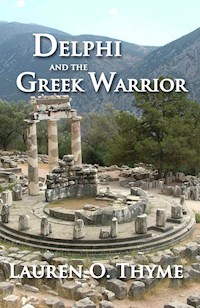
DELPHI and THE GREEK WARRIOR is an extraordinary composite of accurate Greek history with little-known particulars of a tiny group of revered women known as Oracles of Delphi.
Lauren examines the plight of ancient women not uncommon to modern feminine issues as she portrays Lady Selene, a heroine we can celebrate in today’s world.
Selene is raised at Delphi, a sacred site in ancient Greece, to become the next Oracle. Oracles are not afllowed to marry which creates problems when Selene meets and falls in love with Heraclius, a handsome athlete and soldier-to-be in the Pelopenesian War.
When Heraclius goes missing, Selene journeys throughout war-torn Greece looking for her lover.
Das E-Book können Sie in Legimi-Apps oder einer beliebigen App lesen, die das folgende Format unterstützen:
Veröffentlichungsjahr: 2019
Ähnliche












![Tintenherz [Tintenwelt-Reihe, Band 1 (Ungekürzt)] - Cornelia Funke - Hörbuch](https://legimifiles.blob.core.windows.net/images/2830629ec0fd3fd8c1f122134ba4a884/w200_u90.jpg)





Table of Contents
Title Page
Copyright Page
Dedication
Ch 1 Selene, the Greek Warrior, and Delphi
Ch 2 The Cave Age 12 438 BC
Ch 3 Apollo Age 13 437 BC
Ch 4 Heraclius Age 14 436 BC
Ch 5 Demetria Age 15 435 BC
Ch 6 Poseidon’s Boy Age 16 434 BC
Ch 7 Xanthippe Age 17 433 BC
Ch 8 Sybota Age 18 432 BC
Ch 9 The First Year of the War Age 19 431 BC
Ch 10 Tydeus Age 20 430 BC
Ch 11 Aegeus Age 21 429 BC
Ch 12 Athens Age 22 428 BC
Ch 13 The Andron Age 23 427 BC
Ch 14 Naxos Age 24 426 BC
Ch 15 Apollo’s Message for Aegeus Age 25 425 BC
Ch 16 Ianthe and Kriton Age 26 424 BC
Ch 17 Thebes Age 27 423 BC
Ch 18 Kalambaka Age 28 422 BC
Ch 19 Milossa and Corinne age 29 421 BC
Ch 20 Selene’s family Age 30 420 BC
My Greek Warrior
After Notes
Also by the Author
DELPHI and the GREEK WARRIOR
A novel
Lauren O. Thyme
Lauren O. Thyme Publishing
Santa Fe, New Mexico
2019
Delphi and the Greek Warrior © 2019 by Lauren O. Thyme
Lauren O. Thyme Publishing, Santa Fe, New Mexico
All rights reserved
Published in the United States of America
No parts of this book may be reproduced in any form or by any means, electronic or mechanical, including photography, recording, e-books, or any information storage and retrieval system, without permission in writing from the publisher.
For information contact:
LaurenOThymeCreations.com
Jacket/cover design:
Free images from Pixabay:
Front cover: delphi-1178710_960_720.jpg by DebraJean
Special thanks to Sue Stein for her invaluable help
in editing and crafting Delphi and the Greek Warrior.
I dedicate this book to Donna Sandoval -
my precious friend and Selene’s grandmother
Chapter 1
Selene, the Greek Warrior, and Delphi
Everything changes.
Saplings become trees, their leaves wrinkle and fall, only to leaf out again in the spring. Birds fledge when they’re young, fly away to warmer climes, then return to make their yearly nests. Old nanny goats no longer provide milk and pass away, their bones making thick soup. Wood burns relentlessly, fire into ash. Rocks wear down from rain running over them during countless days and nights. Granite’s surfaces crack during earthquakes. Even the gods seem to become weary with humans and turn their sublime faces away.
From my studies I cite the Greek poet Simonides who wrote of the fragility of life:
“One thousand years, ten thousand yearsare but a tiny dot,the smallest segment of a point,an invisible hair.”
* * *
When I was 14, I met him. My love. My darling Heraclius. I first saw him on the rocky path to Delphi. He glowed with good health and strength. As he walked up to where I stood transfixed, I thought I was in the presence of a god. Then he spoke and I was in awe of his deep, booming voice. Surely this was Zeus speaking.
I still envision Heraclius as the stalwart young man I had met all those years ago. Handsome. Brave. Athletic strength and potency like the rocks of Delphi.
Before he left for battle, his Athenian armor flashed in the sunlight as he moved. Bronze breastplate hugging his pectoral muscles, flesh and bronze cleaving to each other, as if made of the same material. Swollen bumps like nipples patterned on the metal. When he detached the straps holding the armor to his body, his warrior muscles underneath were golden-brown.
Oh, how I adored touching his bare chest, running my small fingers over his firm masculine flesh.
My hands are not as soft and supple as when I knew him. Time, grief, and travel have altered and weathered them.
* * *
I hear footsteps on the pebbled path leading to my cave. A man and woman are trudging up the precipitous terrain of Delphi to find me. To consult with me. I’m not a Delphic Oracle as my mother Xanthippe and grandmother Demetria were. No. I am simply a woman. A woman with an unrelenting gift from Apollo. A trait passed down through my lineage. My inner vision and messages from the god are more sharply in focus with every day that passes, while I huddle in my cool cavern of rock, staying out of the harsh, hot sun.
The couple spot me standing near the entrance, while I am partly hidden in shadow.
“Hello!” the man shouts. He raises his hand in greeting, squinting to make sure he has found the one he is looking for.
The woman is shy. She stands back, not able to peek at me. Grey eyes searching the ground, as if there is something to be wary of. A snake, perhaps?
Apollo’s sun chariot is high in the dazzling blue sky. No clouds to block it. Intense heat sears the rocky, familiar landscape all around me. I know every turn of the path. Every rock outcropping. Each monument. I have lived here at Delphi most of my life.
“I am Selene,” I declare to them.
The couple pause at the entrance. The man speaks. “We have traveled a long way to see you, Lady.” He clears his throat. He reverently places some cut logs on the ground. The woman hands him two woven bags.
“Eggs. Some onions. An eggplant. Zucchini.” He quickly examines one sack to verify the precious eggs are intact. Satisfied, he exhales in relief and passes them over to me.
“Thank you,” I reply, my voice raspy with fatigue. I turn and set the containers against the rocky inner wall.
“And pita bread, too,” the woman pipes up. “We bought some from the village below.” She’s not much more than a girl, a child near the age I was when I met my love. She forces a smile, although she is young and frightened, scared of facing a woman who communes with a god.
“Come,” I say, motioning. “Please, step inside and sit. Get out of the heat. Be at ease.” I point to a rocky platform, on which I have placed a faded pad made of strips, stuffed with wool from the spring shearing, and dried bay leaves.
Trying not to stare at me, the couple walk to the hard stone couch and seat themselves.
I place myself at their feet on the ground in front of them, reclining on an old woven carpet, a gift from my grandmother.
The three of us sit silently for a few minutes, avoiding eye contact, unsure how to begin.
I break the awkward silence. “I have some fresh goat yogurt mixed with honey from the sacred beehives here. One of the villagers brought it to me this morning. Would you like some?”
“Yes, please,” the girl nods politely. She looks at the man questioningly.
He nods. On closer examination he appears to be much older than her.
I get up and scoop some of the heavenly concoction from the crock into a plain wooden bowl and hand it to the girl, along with a well-worn but clean wooden spoon.
She takes them from me gingerly, hesitantly. The young woman measures a small quantity of the thick whiteness while golden honey gathers at the edges, and holds it to the man’s now-open mouth. He envelops the spoon with his lips and sucks in the delicacy. “Mmmmm,” he murmurs, and licks off the remainder, grinning openly with pleasure.
“It is considered food of the gods,” I mention quietly, satisfied at his enjoyment. “You, too,” I encourage the young woman.
She takes the spoon from him and daintily ladles a small amount for herself and tastes it. She says nothing but her sparkling, clear grey eyes speak of delight beyond words.
When they have finished every mouthful, I take the bowl and spoon from them and place them near me in a large terracotta container of water, suitable for washing. I sit on the rug again.
Now that they are relaxed, I speak. “There is something you came here to ask me,” I embolden them.
The girl blushes and looks at her feet, then up at the man.
He nods, then speaks directly to the point. “We want to marry but our families forbid it.” His jaw tightens.
“Why?” I interrogate gently.
“We are from two adjoining villages who have old feuds. It is said that someone from my village stole some chickens from hers.” He shrugs his shoulders. “That was long ago but still there is bad blood.”
I look at the girl. “You are already pregnant.”
“Yes.” Her disgrace speaks through her body language and averted head.
“What shall we do?” her lover inquires earnestly, hoping for a fortunate message from Apollo.
I close my eyes. I can feel the warmth from the sun god moving from high above me to my heart area. “Apollo blesses you both,” I announce after a time. “He advises you to move to yet a third village, but not too far away so that your families can visit you. In time the anger will turn to peace and eventually love.”
They each nod in acknowledgement.
“Give your families—and yourselves—time to heal the bad feelings. Your child, a son, will be born healthy.” When I open my eyes, I see tears running down her youthful cheeks.
She turns to the man and clings tightly to him. He strokes her wet face.
I arise, pronouncing we are finished. There is nothing more for me to say. I am used to the sudden comings and goings of messages along with the pilgrims for whom they are intended.
He stands and pulls the girl gently to her feet. I am a small woman and he towers over me. “Thank you,” he tells me simply.
I smile and nod. “Took good care of the two of them.”
“I will.” A man of few words.
They leave my rocky home, heading down the path, stepping carefully, as not to slip on the loose gravel. The girl leans against her lover, exhausted by their long trip, the steep path, and relief. They never look back at me, as they head down the steep trail, but I am used to that, too.
For centuries the Temple of Apollo at Delphi has been paid handsomely. To reward the Temple was to ensure good luck. Statues and massive temples were built on the site. A stadion for athletic tournaments. A theatre. 96 marble statues along the Sacred Way. Treasuries containing substantial amounts of gold, silver, and electrum. Beautifully carved friezes of hoplites in battle. Beaten gold plates and bronze plaques.
Throughout the land wealthy men, armies, cities, and politicians longed to have a reading with the Delphic Sibyl regarding wartime and peacetime enterprises; political and civil controversies; intellectual, religious, and personal pursuits. They paid handsomely for the privilege and hoped for favorable results. The glory of the Delphic Oracle had grown steadily for hundreds of years while the Temple became rich beyond imaging.
But I am not an Oracle. Have never been an Oracle.
Yet I know I have done well this day and the god is happy with me, the most important payment I can receive. That and being grateful I had positive news to tell the couple, which isn’t always the case. My job is to speak honestly and simply so there is no doubt of the message. Truth is always better than a lie, no matter how well intentioned. I have clarity that an Oracle may be lacking, perhaps from the vapors overwhelming her mind while seated on the tripod within the inner shrine of Apollo, the hallowed Adyton.
The sweetness of today’s message resonates through me, as though my smile can be felt from tip to toe. I look around my cave. A secluded home, austere and simple. Remembering the period I spent traveling with Kriton and the other soldiers, sleeping outside in the elements, in good weather and bad. Looking for Heraclius. I would have never suspected when I was a girl, deeply in love, that I would live alone in my elongated stone abode near the top of holy Mt. Parnassus.
I believe I am performing sacred service and thus my life has meaning. Many people come to consult with me. They bring me payment in the form of presents. Food. Olive oil. Honey. Firewood to keep me warm at night. Blankets to keep me warm. A chiton to clothe me. Whatever pilgrims think I need and they can afford.
I straighten my unadorned peplos that comes to just below my knees. My legs are skinny although at one time when I was younger I was shapely and attractive, so Demetria, my grandmother told me. She was a dear soul, a loving woman, unlike my mother Xanthippe who was argumentative and unsympathetic.
The three of us lived near the village below Delphi, not far from the Temple complex, in a white-washed stucco house built for us. Rules had been loosened to allow the three of us to live in the same abode. No men were allowed in the family sanctorum, although both my mother and grandmother had secret lovers and each became pregnant once. My grandmother Demetria bore my mother. My mother Xanthippe gave birth to me, Selene, a name that refers to the moon, perhaps from her moonlit trysts.
They were both good-looking women, not to mention they were known as Pythias or Sibyls, Oracles of Apollo. They were considered superior, and revered by all. However, we were not allowed to marry nor have families, according to the tenets of Delphi.
My mother and her mother bickered constantly. How to cut an onion properly. How to debone a chicken. How to sweep the matted floor so the dust didn’t rise up and make one of them sneeze. What the proper way was to go about receiving messages from Apollo. On and on, day after day. One might have thought that they would eventually tire of the game.
Demetria, Xanthippe and I possessed the second sight. The ability ran through us, so there was never a question we would become Oracles when we were old enough. However, I decided for myself at 9 years old, that the life and role of Priestess was not suitable for me. I wanted a normal life, including a husband and children, and to live outside of the holy strictures. The prestige of being a Sibyl didn’t appeal to me. I desired to be free and unencumbered by the onerous responsibilities of having visions and messages come through me from Apollo, those messages often deciding the fate of powerful men, politicians, armies, even city-states.
The moment when my mother Xanthippe found out about my plan to decline the honor of becoming a Sibyl, Hades itself trembled.
She took hold of me by the chin so I had to look up at her. “What do you mean?! A normal life? Ha! We are special. Don’t you understand that? You want to throw all of it away and try to survive like the village women around here, as nothing. To be mere property of a man. You ungrateful girl! After all I have done for you. Without me you would be nobody. You’d be plucking chickens, milking goats, and having a dozen snot faced children running after you, whining and complaining. Along with an ungrateful, arrogant husband. Is that what you want?”
“Leave the child alone,” Grandmother gently interrupted Xanthippe in her lengthy harangue. Saving me from her fury once again.
“You stay out of this, old woman,” Xanthippe snarled. “You’re always spoiling her.”
“Now, daughter…” but she wasn’t allowed to finish.
“We will talk about this later. Meanwhile she is under MY control.”
“All right. All right,” Demetria temporized, trying to placate her daughter Xanthippe. “Yes, let us not argue about this anymore.”
My mother folded her arms over her ample chest, breasts slightly sagging, aging belly protuberant, smirking, as if she had won the battle. She didn’t understand the power of water dripping on a stone, eventually changing its shape and size.
A raven cawed, perched on an olive tree outside, the sound emphasizing the moment of Xanthippe’s triumph inside our home.
No one knew that, unlike her charming demeanor at work as an Oracle, my mother could be a harridan, especially when crossed. None of her lovers knew that aspect of Xanthippe unless they spent a great deal of time with her, which didn’t usually happen. Her time outside the home was limited and she was carefully guarded and protected, although she and Demetria had ways of eluding observation when they intended.
While having a lover was officially frowned upon, for generations Sibyls had used the potent herb silphium to prevent pregnancy. Silphium was the essential item of trade from the city of Cyrene, and was so critical to the Cyrenian economy that most of their coins bore a picture of the plant. Silphium was used widely by most of the Mediterranean cultures, considering it worth its weight in silver coins.
Legend said that the herb was a gift from the god Apollo, which made it even more appropriate for Oracles to partake of it. Another plant, asafoetida, could be used as a cheaper substitute for silphium, and had similar enough qualities. But the Oracles dared not use the alternative, for fear of pregnancy, being cast out of society, or even stoned to death. Marriage was not an option.
* * *
The couple picks their way down the steep slope, making sure not to slide on the stones, keeping their footfalls short and sure. He has his arm around her waist, thickening with life. Do they love each other? Will their love last? Those answers didn’t come to me during our time in the cave. All I heard is their families will relent and make peace for the sake of the child. That is the ecstatic function of being a visionary, bringing valuable news, even for an unofficial oracle as I am today.
The lengthening shadows haunt my simple home. The stone is getting cold and damp with night. Although the mountain is sweltering by day, once the sun begins to set at this altitude, evening chills the rocky expanse.
I speak to the shadows. “Are my mother and grandmother proud of me from their perspective in the underworld? Do they forgive me for breaking the noble family tradition of the Delphic Oracle? Can you tell me who my father is, the unknown figure from my mother’s past?”
My birthright is a hushed secret, not revealed to anyone, nor spoken of even in whispers because of the sacred tradition of Delphic celibacy.
The shadows say nothing, remaining mute to my thoughts and queries.
Evening approaches. Wind whistles through my cave, mocking me with inscrutable messages. I wrap a long himation around my shoulders to warm myself until I can get a fire going with the wood given to me today as a sacred offering.
Earlier in my life I tried to argue with the Fates. I chose a lover instead of becoming the next Delphic Oracle. The man left to fight glorious battles. I gave birth to his boy-child. A man from the great city-state of Athens married me and adopted the son. Nonetheless I abandoned my husband and the youngster to find my lover. Though the outcome is now clear, I would still walk the same path towards my difficult future.
Perhaps I intuited the conclusion even at the beginning of our affair, but love is a stubborn wound that often refuses to heal, even with the best of intentions. Neutrality, lack of feeling, is the only solution. I wasn’t able to create that calm inside me. It is a mystery that I could love the faithless, perplexing man. And still do.
Maybe I wasn’t strong enough with the spirit of Apollo inside me to be an Oracle. Possibly I was connected to Aphrodite instead, with her overwhelming, sensuous urges and whimsical lovers, unfaithful with many men to her crippled husband Hephaistos and their marriage bed. Is that why I was drawn to Heraclius? Who became a warrior in the same fashion as Ares, Aphrodite’s most famous paramour? Although I’ve been Seer for many, I cannot see myself.
“Tell me, I beg you, Apollo. Reveal what I need to know,” I beseech him.
The god remains silent.
As an Oracle-in-training I was well-educated. I recall a passage from Euripides’ play Hippolytus that echoes my own turmoil:
“Eros, Eros, melting desire in the eyessweet delight in the soulsof all your victims,come to me never, never if not in peace;never upset my mind,dance with me out of time…”
Chapter 2
The Cave Age 12 438 BC
From my viewpoint standing on the patch of dirt in front of our little white house I can see the children of Delphi village playing. Our cottage isn’t part of the community, but is situated on the outskirts, far from residents and pilgrims alike.
Children are not allowed to be near me. They are considered unclean, while my mother, grandmother, and I are pure. My home and my family are sacrosanct thus I cannot associate with the masses. Thus I am alone in my holiness.
I don’t want to be holy. I want to play with other children. Screech and run through the hills and get dirty, be a part of the community, and forgo loneliness. Yearning to be a part of their carefree lives, I sometimes cry myself to sleep in my solitude.
Watching the youngsters from this distance, my sadness arises. My teeth clenched tightly together, I command the friendless pain in my gut to leave me. Hum a tuneless song, kick a pebble at my feet, and pretend I am fine. The stone buildings and the glory of this place do not impress me. I would rather be part of village life, instead of cast away into the complicated domains of Oracles, Priests, treasuries and cold marble statues. Statues don’t soothe me. They are unresponsive to my desire for comfort and affection.
Why did the Fates decree I would be born into my family? This place? This life? I want to be a conventional girl living an ordinary existence. Would I know how to manage living as a mundane person? No, but I would like to try and am willing to learn. To achieve a normalcy that the village women do not comprehend as uninteresting. Husbands, laundry, cooking, gardening, and children are the epicenter of their lives. Could I be part of their communal existence, humdrum though it might be?
My grandmother finds me outside. “Oh, there you are, Selene. I have been looking for you. Did you have something to eat?”
“Yes, grandmama. I had some pita bread dipped in olive oil, yogurt, and some dried dates.”
“That is good,” she replies kindly. “Olives have been properly brined and are ready to eat. Would you like some of those? You need to put more meat on your bones, dear one. You are too skinny as it is.”
I smile at her. Demetria means well and is not scolding me as Xanthippe does. “I love you, Grandma,” I tell her.
“I love you too, Selene.” She enters our house.
Our home is more comfortable than any peasant’s hut in Delphi village. It contains three bedrooms, one in front for grandmother, and another for me at the far end, with a large chamber for my mother in the middle. An oikos for company is located to the right of the front door; while a gyneceum is situated to the left, a chamber for girls, women, and small children only. A kitchen is set off in one area, next to the gyneceum, with a simple wood table and stools and a separate storage area, with a door to the outside courtyard where the round earthenware oven is located. There is a small patio with a tiled roof to shade the intense sunlight. Greek houses often contain an andron as well, which is exclusively for men, but no men live in this house.
The throngs of pilgrims are absent in Delphi at this time. Today includes one of the three passes of the moon when the Oracle is not in residence at the Temple of Apollo. Where my mother Xanthippe is honored as Pythia, the Oracle. My grandmother is also a Pythia, has been in residence before her daughter Xanthippe came of age, and sometimes still performs the oracular task when needed. Visitors congregate in the Adyton, a cleft in the mountain that houses the sacred grotto, where the Pythia, my mother, sits on Apollo’s tripod throne swooning in ecstasy. She listens to the god’s words, revealing messages to eager travelers.
But today no masses of men are clamoring for answers. No government officials are present, looking influential, waving vital documents in the face of the Priest. No one is frantically bathing in the icy Castalian Spring, praying to be first in line. No priests scurrying here and there collecting massive fees and donations. No sacrifices of goats to appease the god.
Simple tranquility this day; a dry, predictable day. A few clouds gather at the top of Mt. Parnassus as the mountain creates its own weather. All around me flowers are blossoming in the spring sunshine, flourishing in cracks and crevices of the slope where water has been deposited from rainfall and winter snow. Crocus are dying out, while daffodils are bursting into bloom, their yellow heads nodding gracefully in the wind. During the heat of summer wild grasses will grow tall, when orange and yellow calendulas proliferate.
Glancing up the steep hill above Delphi that I have never been bold enough to climb, I make a momentous decision. Today I will ascend the dusty, stony trail that leads ever higher towards Mt. Parnassus. Past marble buildings, temples and treasuries. Between the pair of cliffs called Phaedriades above the Castalian Spring, where Oracles, Priests and pilgrims cleanse themselves in the holy water.
In ancient times Zeus released two sacred eagles from opposite ends of the earth to find the center. The eagles met at Delphi. Then Apollo slew Python, a demonic serpent, near the Castalian spring that bubbles up near the cleft in the mountain where the Oracle, my mother sits, listening to the prophecies of the god in the Adyton. The naval stone, a marble Omphales, is placed at the entrance to the Adyton, while small carvings of the omphalos are given as votive offerings to pilgrims.
Several times I had ventured partway up the incline, but always got called back home, where I was forced to sit inside my gloomy and unpleasant home. There, two unhappy women berated each other while I pretended to be invisible.
I run along flagged pathways, near temporarily-closed buildings, treasuries, and Temples, to the unpaved trail to Mt. Parnassus, and start hiking. The path is a steep climb and my breathing grows labored. Below me I see the valley of Phocis, a vast and overwhelming chasm at the bottom of the mountain. I am alone on the footpath. Village children are not allowed on this track.
Girls of the community, regardless of age, are all children. They are unaware of the mysteries of men, men’s demands, and the wars men incite on each other. These girls will remain childlike until old age. Then they will cross the river Styx, ignorant of anything more significant than village life, cleaning, cooking, and eventually and periodically having babies.
If a woman gives birth to a boy child, she is praised, as boys grow up to be men and have value, while girls and women do not. Therefore girl children are not celebrated. They are less than a bug at one’s feet. Girls are merely possessions like a goat or a water bladder or at best a tiny plot of land. Boys are taught mysteries, histories of gods and heroes that are not privy to girls. When boys grow up they become warriors, fight momentous battles, and become celebrated heroes like Odysseus.
However, the men of Delphi village will not become heroes. They haul heavy rocks, stones, and marble to build monuments, their faces sweaty, their muscles straining, calling out to each other in their working partnerships. They till the unyielding soil near their homes in order to create gardens and grow food. Create shelters for goats and chickens. No Delphi man has ever become a warrior nor ventured off to battle. They are needed here to care for the colossal sacred precinct called the Temple of Delphi—and their own families.
However, I’m neither a woman nor a man, but a young ignorant girl, isolated from village knowledge. Bleeding has not yet commenced for me. Both women of my home have instructed me on this mystery. The experience in which I must unwillingly participate seems dreadful to me.
“You will be a woman, then,” my mother nods meaningfully.
“I don’t care. I don’t want to bleed,” I tell her. I have memories of villagers who have been hurt and bled profusely. Several of them died of their wounds. I had no need to be a woman, especially if I would die of bleeding.
The woman’s curse apparently comes every month. Every month I could bleed to death. A game of chance to tempt death every 28 days Could that be why women are worthless, because they can die any month?
The only woman of value in the whole of the Greek world is the Delphic Oracle, treated with utmost respect and deference by everyone. She is tended to, cared for, and educated. The Oracle is paradoxically always a woman, a prophetic woman, in spite of the lowly status that women generally hold.
Men voyage from all over the known world to seek an audience, to have an opportunity for a holy message from Apollo through the female Pythia, while women are excluded from attending. Kings need to appreciate and ascertain their empires. Politicians want to attest to the status and wellbeing of their cities and citizens. Generals must confirm the outcome of battles and wars.
My mother once told me a tale of Croesus who had sought a reading at Delphi. “He was richer than any king alive. He received a message from the Oracle, but the Priest misunderstood the words, and because of that, Croesus lost his kingdom.” She chuckled cynically, shaking her head at the absurdity of men.
The oracular Sibyl has been an institution for hundreds of years. People couldn’t remember when an Oracle was non-existent.




