


0,49 €
Mehr erfahren.
- Herausgeber: Quickie Classics
- Kategorie: Gesellschafts- und Liebesromane
- Sprache: Englisch
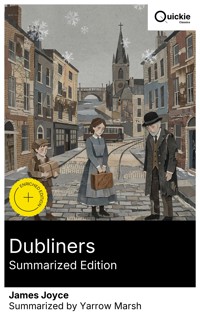
Dubliners gathers fifteen anatomies of early twentieth-century Dublin - domestic interiors, streets, public houses - rendered in the spare prose Joyce called "scrupulous meanness." From "Araby" and "Eveline" to the culminating "The Dead," the collection charts paralysis and sudden "epiphanies," when ordinary gestures reveal moral and historical pressure. Its realist surface, tuned to speech and social detail, quietly seeds modernism: shifting focalization, motifs of snow, light, and stasis, and an urban map binding private desire to colonial and ecclesial constraint. Born in Dublin in 1882 and Jesuit-educated, Joyce drafted most stories before his 1904 self-exile, intent on exposing his city's spiritual condition with clinical exactitude. Years of rejection and censorship preceded Grant Richards's 1914 publication, sharpening his commitment to unvarnished portrayals of class, church, and empire. Work in Trieste and Rome and an ear for Hiberno-English feed the book's ethical poise: compassion without sentimentality, indictment without caricature. Readers seeking a lucid pathway into high modernism will find Dubliners indispensable. It rewards close attention to structure and sound, invites comparison across tales, and prepares the way for A Portrait and Ulysses. For students and general readers alike, it offers enduring narrative pleasure and bracing historical insight. Quickie Classics summarizes timeless works with precision, preserving the author's voice and keeping the prose clear, fast, and readable—distilled, never diluted. Enriched Edition extras: Introduction · Synopsis · Historical Context · Author Biography · Brief Analysis · 4 Reflection Q&As · Editorial Footnotes.
Das E-Book können Sie in Legimi-Apps oder einer beliebigen App lesen, die das folgende Format unterstützen:
Veröffentlichungsjahr: 2026
Ähnliche







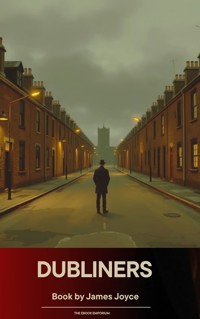

Dubliners (Summarized Edition)
Table of Contents
Introduction
Between stasis and yearning, Dubliners charts the struggle to awaken in a city that seems to hold its people fast. James Joyce’s collection of short stories presents early twentieth-century Dublin with a clarity that feels both documentary and intimate. Composed in spare, carefully weighted prose, these pieces observe ordinary streets, rooms, and conversations until they disclose a difficult, often charged stillness. The effect is not melodramatic but quietly seismic: a portrait of communal habit and private hesitation, drawn at human scale. Rather than a single plot, the book offers distinct lives whose crosscurrents build a shared atmosphere of expectation, doubt, and muted desire.
First published in 1914, the collection stands at the threshold of literary modernism while remaining rooted in the realist sketch. Its setting is Dublin at the turn of the century, a place rendered through workplaces, parlors, streets, and public rooms rather than through grand events. Joyce’s method is observational and unsentimental, attentive to gesture, habit, and the tones of everyday speech. The result is less an argument than an arrangement of evidence, inviting readers to notice patterns of custom and constraint. In this way Dubliners situates individual experiences within a social fabric, showing how a city’s rhythms shape private hopes.
Reading Dubliners is to encounter a voice that refuses ornament and trusts perception. The sentences are lucid and measured, often allowing a scene to accrue its force through small details and understated irony. Perspectives vary but rarely call attention to themselves; the stories prefer the steadiness of close observation to overt commentary. Episodes unfold with the tempo of lived time, accumulating pressure in pauses and glances. The tone is restrained, compassionate without indulgence, alert to comedy as well as disappointment. Joyce’s craft draws the reader into complicity, asking us to complete the meaning that the characters can only approach.
The collection offers a sequence of self-contained stories rather than a continuous narrative, each centered on seemingly ordinary moments that mark turning points or refusals to turn. Across these portraits we meet children, adolescents, and adults navigating family ties, work, friendship, courtship, and faith, often at thresholds they struggle to cross. Journeys are contemplated, errands undertaken, gatherings attended; possibilities appear and retreat. What unites the pieces is less plot than atmosphere, a tissue of places and habits that constrains and shelters in equal measure. As readers, we inhabit a city’s texture and watch everyday choices accrue quiet consequence.
Dubliners probes the weight of routine, the pull of memory, and the pressure of social expectation. It considers how institutions, traditions, and family roles can steady a life while narrowing its horizons, and how desire presses against those boundaries without always finding release. Moments of recognition arrive not as grand revelations but as clearings in the ordinary, when the self glimpses its own posture toward the world. Throughout, the stories explore responsibility, economic strain, loyalty, and the ethics of attention to others. The city becomes both setting and metaphor, its patterns mirrored in private circuits of habit and hope.
For contemporary readers, these portraits are resonant not because their circumstances are identical to ours, but because the structures they trace persist in new forms. Urban life still organizes intimacy and ambition; work still negotiates dignity and constraint; migration, caretaking, and the search for belonging continue to test allegiance and imagination. Dubliners models a way of looking that is rigorous about power and tender toward the ordinary, insisting that attention to small choices and shared spaces reveals a culture’s deepest truths. Its craft teaches patience, empathy, and skepticism toward easy narratives about progress or decline.
Approached slowly, the collection rewards readers who listen for echoes—images, situations, seasons—that weave discreet threads from one story to the next. Rather than pursuing suspense, Joyce cultivates recognition, the feeling that a gesture or street corner carries accumulated meaning. The best preparation is the willingness to notice, to let the apparent simplicity of a scene keep unfolding. In doing so, we encounter a city and a set of lives that become legible without being simplified. Dubliners endures because it makes plain how people live with their circumstances, and how, in that living, they imagine other ways to be.
Synopsis
James Joyce’s Dubliners, first published in 1914, gathers fifteen interlinked short stories set in Dublin at the turn of the twentieth century. With close attention to ordinary detail, the collection presents a city defined by routine, social pressure, and conflicted loyalties. Joyce arranges the book to trace a rough arc from childhood to adolescence, maturity, and public life, allowing recurring concerns—religion, family duty, money, and national identity—to resurface in varied forms. The prose favors understatement and precise observation over melodrama, inviting readers to register quiet shifts in feeling. Across these pieces, characters navigate decisions that reveal both the limits and possibilities of self-knowledge.
The opening trio focuses on childhood experience. In The Sisters, a boy contemplates the death of a priest he admired, absorbing adult hints and silences that raise questions about faith, authority, and decay. An Encounter follows two schoolboys who play truant in search of adventure, only to meet an unsettling stranger whose presence exposes darker currents beneath the city’s familiar streets. Araby portrays a young narrator enamored of a neighbor, whose plan to visit a bazaar becomes a test of hope, patience, and pride. Together, these stories render early awakenings as encounters with ambiguity rather than clear instruction.
Adolescence emerges as a realm of promise narrowed by duty and desire. In Eveline, a young woman weighs the pull of a new life abroad against vows to family and the claims of the past, a conflict framed by domestic labor and inherited fear. After the Race observes a college student among glamorous foreign acquaintances and new technologies, where speed, spectacle, and social ambition eclipse steadier forms of belonging. Joyce neither condemns nor celebrates these impulses; he records how aspirations are shaped by class, fashion, and national self-consciousness, and how moments of choice arrive amid noise, charm, and persuasive company.
Two Gallants follows a long afternoon and evening in which two acquaintances roam the city, trading stories of conquest and advantage. Their talk and small schemes reveal a culture of performance and transaction, where sentiment and opportunism blur. The Boarding House turns to Mrs. Mooney, who runs a respectable establishment and carefully manages a romance between her daughter and a lodger. In a world where unions can secure livelihoods as well as feelings, social leverage matters. Without dwelling on outcomes, Joyce underscores how calculation and tenderness coexist, and how public reputation shapes private arrangements.
Maturity introduces sharper contrasts between aspiration and constraint. In A Little Cloud, a quiet clerk reunites with a worldly friend, measuring his own literary hopes against the other’s confident narrative of success abroad. Domestic responsibilities and the city’s familiar patterns press against his ambitions, prompting subdued self-reckoning. Counterparts attends to a harried copy clerk who endures petty humiliations at work and seeks relief in drink and camaraderie. The rhythms of office, pub, and street expose class tensions and wounded pride. Both stories note how frustration seeks outlets that rarely address its root causes, leaving recognition without release.
Clay centers on Maria, a gentle laundry worker whose journey to a holiday gathering brings small rituals, minor embarrassments, and quiet affection. The story accords dignity to modest expectations while hinting at losses that remain unspoken. A Painful Case follows Mr. Duffy, a solitary bank official who forms an intense bond with a married woman and then retreats into rigorous independence. News he later encounters compels him to reassess the costs of his carefully ordered life. Joyce’s restraint emphasizes the weight of choices made in silence, as characters confront solitude, habit, and the difficulty of genuine connection.
Public life enters the foreground in Ivy Day in the Committee Room, where political canvassers pass a damp afternoon debating work, loyalty, and the legacy of Charles Stewart Parnell. Rhetoric, memory, and practical needs collide, revealing a politics of small favors and lingering disillusion. A Mother turns to the cultural sphere: Mrs. Kearney promotes her daughter’s musical engagements and clashes with organizers over professionalism, payment, and respect. Nationalist aspirations and bourgeois propriety intertwine, and the question of who speaks for culture—on what terms and for whose benefit—remains pointedly unresolved.
Grace begins with a commercial traveler’s mishap and follows friends who shepherd him through recovery and toward a religious retreat. The story dwells on conversation—about work, fault, doctrine, and decorum—rather than spectacle, balancing genuine concern with the desire to restore social order. Joyce presents Catholic ritual and middle-class manners with careful neutrality, observing how communal gestures can console without necessarily transforming. The narrative’s movement from accident to reflection raises questions about the difference between outward reform and inner change, and about whether grace is an event, a habit, or an arrangement negotiated among peers.
The collection culminates in The Dead, set at a winter gathering hosted by two elderly music teachers. As speeches, songs, and toasts unfold, Gabriel Conroy negotiates family expectations, literary vanity, and the pressures of national feeling. An evening’s conversation and a late revelation invite him to reconsider his relationships and the scales by which he measures a life. Without dramatizing a single decisive turn, Joyce closes on an image of shared yet fragile belonging. Dubliners thus leaves a durable impression of ordinary lives poised between inertia and desire, suggesting that recognition—however quiet—can alter how one inhabits the world.




