


0,49 €
Niedrigster Preis in 30 Tagen: 1,99 €
Niedrigster Preis in 30 Tagen: 1,99 €
Mehr erfahren.
- Herausgeber: Booksell-Verlag
- Kategorie: Lebensstil
- Sprache: Englisch
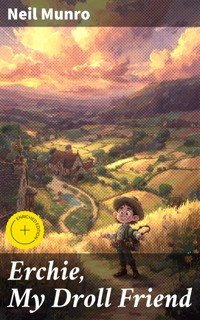
In "Erchie, My Droll Friend," Neil Munro crafts a captivating narrative that captures the wit and charm of the Scottish character through the semi-autobiographical adventures of Erchie, a loveable rogue whose escapades provide humorous insights into early 20th-century Scottish life. Munro's prose exhibits a delightful blend of realism and humor, drawing readers into a vivid representation of his country's social fabric while offering sharp commentary on the nuances of human nature. The novel encapsulates a rich literary tradition, echoing the narrative styles of contemporary Scottish authors who aimed to mirror the quirks and idiosyncrasies of their society. Neil Munro, a noteworthy figure in early 20th-century Scottish literature, was deeply influenced by his surroundings, having grown up in the vibrant Gallus area of Glasgow and later moving to the picturesque Highlands. His experiences as a journalist, historian, and novelist are woven into the fabric of "Erchie," reflecting his keen observation of Scottish folklore and character. Through Erchie's eyes, Munro explores the cultural landscape of Scotland, shedding light on the struggles and joys of its people during a transformative period in history. For readers who appreciate a harmonious blend of humor, regional culture, and character-driven storytelling, "Erchie, My Droll Friend" is a delightful literary journey not to be missed. Munro's ability to capture the essence of human experience ensures that Erchie remains a relatable figure, whose adventures resonate long after the final page is turned. In this enriched edition, we have carefully created added value for your reading experience: - A comprehensive Introduction outlines these selected works' unifying features, themes, or stylistic evolutions. - A Historical Context section situates the works in their broader era—social currents, cultural trends, and key events that underpin their creation. - A concise Synopsis (Selection) offers an accessible overview of the included texts, helping readers navigate plotlines and main ideas without revealing critical twists. - A unified Analysis examines recurring motifs and stylistic hallmarks across the collection, tying the stories together while spotlighting the different work's strengths. - Reflection questions inspire deeper contemplation of the author's overarching message, inviting readers to draw connections among different texts and relate them to modern contexts. - Lastly, our hand‐picked Memorable Quotes distill pivotal lines and turning points, serving as touchstones for the collection's central themes.
Das E-Book können Sie in Legimi-Apps oder einer beliebigen App lesen, die das folgende Format unterstützen:
Veröffentlichungsjahr: 2019
Ähnliche







Erchie, My Droll Friend
Table of Contents
Introduction
This collection brings together, in a single, continuous reading experience, the full sequence of sketches that comprise Neil Munro's Erchie, My Droll Friend. Framed by a preface and followed by twenty-nine episodic pieces, it preserves the integrity of Munro's design while presenting the complete portrait of a singular Glasgow character and his circle. The scope is deliberately compact yet expansive in effect: moments at work, at home, and in the streets accumulate into a citywide panorama seen from a familiar corner. By gathering the series as a whole, the volume offers both coherence and the pleasure of self-contained scenes.
Although now read as a unified book, these pieces retain the cadence and immediacy of their origins in the popular press, where Munro built his reputation as a storyteller and journalist. The collection's purpose is not to convert episodic material into a novel, but to curate an ordered cycle whose progression enriches the central figure without demanding a conventional plot. An introductory portrait is followed by domestic, social, and civic vignettes that expand the milieu. Read sequentially, they suggest a widening map of relationships; dipped into individually, they function as polished studies of character and situation.
The texts gathered here are prose sketches and short stories, compact episodes that privilege voice, setting, and incident over elaborate plotting. They are humorous narratives, often structured as conversational scenes or recollected encounters, with the feel of a reporter's notebook shaped by a storyteller's craft. The preface offers an essayistic overture, situating the material and tone, while the chapters themselves range from brief character studies to fuller comic set-pieces. There are no poems, letters, or dramatic scripts in this volume; its unity lies in prose fiction that blends anecdote, dialogue, and observational detail to achieve its effects.
A unifying theme is the lived texture of urban life as experienced by working people in a great Scottish city. Service, hospitality, and the rhythms of the dining-room provide a steady vantage point, yet the sketches extend to family rituals, neighborhood gossip, and public occasions. Friendship and obligation, thrift and pride, aspiration and restraint recur in varied guises. The titles hint at domestic thresholds, seasonal customs, and local institutions, allowing the collection to chart how private affections and civic identities interweave. Beneath the laughter lies a consistent interest in how communities sustain dignity, memory, and mutual regard.
Stylistically, Munro is distinguished by economy, quick characterisation, and a musical ear for speech. The pieces are dialogue-rich, with cadences that reflect a Glaswegian idiom without sacrificing clarity for readers beyond that locale. Humor derives from contrast—between literal and implied meanings, earnestness and absurdity, surface politeness and underlying feeling—yet the tone remains generous rather than scornful. Descriptions are precise, the comic timing carefully paced, and the narrative stance nimble, moving from close-up to wide-angle as a scene requires. The result is a blend of drollery and observation that reads as both intimate testimony and social panorama.
Taken together, the sketches continue to matter because they capture a recognisable moral and emotional landscape: people negotiating work, kinship, and public life with resourcefulness and wit. As a record of voice and setting, the collection preserves textures of speech and habit that are central to Scottish literary heritage. As storytelling, it demonstrates how brevity and recurrence can build depth, each return to familiar figures reframing what we know. The balance of comedy and sympathy gives the book an enduring appeal, inviting readers to value nuance over caricature and to see everyday episodes as worthy of attentive art.
Readers new to Erchie will find that the pieces reward both continuous reading and leisurely browsing. The arrangement—from introductory portrait to episodes of removal, celebration, work, and return—creates a gentle rhythm that mirrors the cycle of ordinary lives. Recurrent names and places offer a sense of community, while the language rewards listening for inflection as well as meaning. The purpose of this edition is simply to present, intact, the body of work that forms Erchie, My Droll Friend, so that its humor, humane intelligence, and closely observed milieu can be appreciated as a complete, interrelated whole.
Historical Context
Neil Munro (1863–1930), born at Inveraray in Argyll, wrote the Erchie sketches while working in Glasgow journalism at the turn of the twentieth century. Publishing many of his urban vignettes under the byline Hugh Foulis in the Glasgow Evening News, he drew upon both Highland upbringing and city newsroom to frame a shrewd, comic observer of modern Scotland. The pieces first appeared as topical columns before collection in book form in the early Edwardian years, when Munro’s career straddled serious historical novels such as The New Road (1914) and popular sketch-cycles like Para Handy (from 1905), all rooted in west-coast geography and speech.
Glasgow’s explosive growth provides the social ground of the collection. By 1900 the Clyde was a world shipbuilding capital, with yards at Govan, Partick, and Clydebank (John Brown’s) feeding engineering, foundry, and marine supply trades. Migration from the Highlands and the Irish west forged dense tenement districts—Bridgeton, Calton, Anderston—whose cafés, public houses, missions, and music halls shaped a vernacular public sphere. Corporation ownership of trams and utilities, and a strong liberal civic ethos, produced recognizable urban routines: shifts and pay nights, Fair Fortnight holidays, and Saturday crowds in Trongate and Sauchiehall Street. Erchie’s world compresses this bustling metropolis into a talkative corner table.
The late Victorian and early Edwardian decades registered imperial wars and royal pageantry as local spectacle. The South African War (1899–1902) filled Glasgow newspapers with casualty lists and patriotic subscriptions; Edward VII’s coronation in 1902 and his widely reported West Highland “King’s Cruise” of 1903 on the royal yacht Victoria and Albert drew crowds to Oban, Tobermory, and the Clyde piers. At home, the 1901 Glasgow International Exhibition in Kelvingrove Park showcased municipal pride and industry. Such events furnished Munro with shared reference-points for satire and sympathy, enabling recurring characters to measure themselves against national ritual while never quite leaving the street-level Glasgow scene.
Cultural modernity enters the sketches through new venues and tastes. The Glasgow Style, associated with Charles Rennie Mackintosh and Margaret Macdonald, reshaped interiors in the 1890s and early 1900s; Miss Cranston’s Ingram Street and Willow tea rooms (the latter opened 1903) offered bright “art” social spaces for clerks and shop-girls. The music hall—epitomized by the Britannia Panopticon, showing moving pictures from 1896—bled into early cinema-going, the “pictures” that fascinated mixed audiences. Burns suppers and statues kept a nineteenth-century cult alive (notably the 1896 centenary of Burns’s death), while municipal museums at Kelvingrove (opened 1901) democratized art, giving Erchie occasion to weigh taste and fashion.
Religious and associational life supplied the community frameworks that thread the collection. The 1900 union forming the United Free Church, followed by the 1904 “Wee Free” crisis, and an expanding Catholic parish system after Irish migration, sustained bazaars, guilds, and benefit societies. Debates on temperance and Sabbath observance shaped leisure choices, while spiritualism—never far from late Victorian curiosity—lingered in parlour séances and humorous ghost-talk. Funeral customs and friendly-society insurance, professionalized by new undertakers, reflected urban anxieties about respectability and cost. These networks gave plausible stages for charity events, raffles, wakes, and church halls where Munro’s talkers aired judgments with piety, mischief, and thrift.
Domestic and gendered experience in Glasgow’s tenements informs much of the humor and pathos. Twice-yearly term days—Whitsunday and Martinmas—produced mass “flittings,” when families shifted lodgings along stairwells and streets with handcarts. Women’s paid work in service, shops, and tea rooms, alongside unpaid household management, shaped tea-parties, Christmas shopping rituals, and the seasonal bustle around Valentine’s Day. Department stores on Sauchiehall and Argyle Streets and co-operative societies expanded consumer choice. Marriage contracts, desertion cases, and family remittances echoed through police courts and kirk sessions. Munro mines these routines to show working-class respectability negotiating modern goods, gossip, and the fragilities of wage-dependent households.
Transport innovations stitched the city and the West into a continuous stage for excursion and encounter. The Glasgow Subway opened in 1896, and electric trams spread from 1898 to 1901, bringing cheap mobility to clerks and labourers. Rail excursions and the Fair Fortnight sent crowds to Rothesay, Largs, and Ayr, while Clyde steamers and David MacBrayne’s West Highland services connected Glasgow to Oban and Skye. Royal and tourist cruises alike dramatized the scenic Highlands for urban spectators, even as Highland migrants remade Lowland streets. These connective tissues—cars, boats, platforms, and piers—carry Munro’s characters toward chance meetings, misread fashions, and comic collisions of class and region.
Across his career, Munro balanced reportage with literary craft, refining a dialogic, dialect-rich mode that dignified the quick wit of ordinary speech. His sketches emerged from the rhythms of the evening newspaper, topical yet built for later collection by publishers such as William Blackwood and Sons (Edinburgh and London). The Independent Labour Party (1893) and early “Red Clydeside” rumblings, philanthropic surges led by Andrew Carnegie (funding scores of Scottish libraries from the 1880s to 1910s), and university life at Gilmorehill (after 1870) all flicker through the backdrop. By braiding such public facts into intimate talk, Erchie’s conversations become a social history in miniature.
Synopsis (Selection)
PREFACE.
Sets out the origins and spirit of the Erchie sketches, framing their Glasgow setting and conversational mode.
ERCHIE
Introduces Erchie as a droll Glaswegian observer whose wit and everyday encounters anchor the collection.
I INTRODUCTORY TO AN ODD CHARACTER
A portrait of Erchie’s speech, habits, and circle, establishing the tone and recurring concerns of the pieces.
II ERCHIE’S FLITTING
Erchie navigates the chaos of moving house, revealing neighborhood dynamics and practical, thrifty wisdom.
III DEGENERATE DAYS
A satiric complaint about modern manners and morals, measured against Erchie’s idea of the ‘better’ old days.
IV THE BURIAL OF BIG MACPHEE
A community funeral prompts wry reflections on reputation, ritual, and the social niceties around death.
V THE PRODIGAL SON
A local version of the prodigal tale lets Erchie weigh forgiveness, pride, and family standing without moralizing.
VI MRS DUFFY DESERTS HER MAN
Marital discord in the Duffy household sparks commentary on loyalty, temper, and the terms of reconciliation.
VII CARNEGIE’S WEE LASSIE
Talk of Andrew Carnegie and his family becomes a lens on philanthropy, ambition, and class aspiration.
VIII A SON OF THE CITY
Erchie celebrates urban identity and resourcefulness through a character study emblematic of Glasgow life.
IX ERCHIE ON THE KING’S CRUISE
A royal tour provides occasions for civic pride and level-headed views on pomp and public spectacle.
X HOW JINNET SAW THE KING
Jinnet recounts her perspective on the royal sighting, balancing curiosity with down-to-earth judgment.
XI ERCHIE RETURNS
After time away from familiar haunts, Erchie takes stock of what has and hasn’t changed among his acquaintances.
XII DUFFY’S FIRST FAMILY
Complications from Duffy’s earlier ties surface, testing loyalties and common sense in his household.
XIII ERCHIE GOES TO A BAZAAR
A charity bazaar becomes a tour of social types, fundraising gambits, and small temptations.
XIV HOLIDAYS
Plans and mishaps around a brief holiday highlight thrift, expectation, and modest pleasures.
XV THE STUDENT LODGER
Taking in a student reveals generational contrasts and the comic frictions of shared quarters.
XVI JINNET’S TEA-PARTY
Jinnet hosts neighbors for tea, where small talk unfolds into revealing gossip and community ties.
XVII THE NATIVEs OF CLACHNACUDDEN
A visit north prompts affectionate caricatures of Highland manners as seen by a city-dweller.
XVIII MARY ANN
A young woman’s prospects and choices invite commentary on work, courtship, and character.
XIX DUFFY’S, WEDDING
Duffy’s nuptials set off preparations and the social choreography of a Glasgow wedding day.
XX ON CORPORAL PUNISHMENT
Erchie considers the debate over discipline, balancing tradition against humane restraint.
XXI THE FOLLIES OF FASHION
Passing trends and dress are fodder for satire about taste, pretension, and practicality.
XXII ERCHIE IN AN ART TEA-ROOM
An outing to a fashionable tea-room exposes avant-garde airs and the democratization of culture.
XXIII THE HIDDEN TREASURE
Rumors of buried wealth stir the neighborhood, revealing credulity, cunning, and comic deflation.
XXIV THE VALENTEEN
Valentine customs are viewed through local courtships and the gentle absurdities of romance.
XXV AMONG THE PICTURES
A gallery visit prompts plain-spoken opinions on art, status, and the gap between critics and common viewers.
XXVI THE PROBATIONARY GHOST
A tongue-in-cheek haunting tests superstition against common sense in a domestic setting.
XXVII JINNET’S CHRISTMAS SHOPPING
Seasonal errands showcase thrift, bustle, and the quiet ambitions behind modest gifts.
XXVIII A BET ON BURNS
A friendly wager about Robert Burns sparks rivalry and a communal salute to Scots verse.
XXIX THE PRODIGAL’S RETURN
The earlier prodigal thread comes full circle in a tempered close on reconciliation and perspective.
THE END.
A brief coda that bids farewell to the company and underscores the collection’s affectionate portrait of Glasgow life.




