


Erhalten Sie Zugang zu diesem und mehr als 300000 Büchern ab EUR 5,99 monatlich.
- Herausgeber: Books on Demand
- Kategorie: Religion und Spiritualität
- Sprache: Englisch
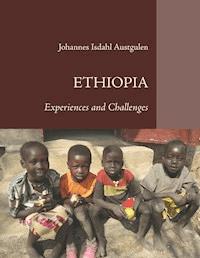
This book tells briefly about the pioneer missionaries effort in the previous Welega province in Western-Ethiopia, and then about the untiring Ethiopian pastor and bible translator, Onesimus Nezib (1856- 1931). However the author’s main intention with the writing is to recall from personal experiences during serving terms in the same province in close co-operation with national colleagues, and with a special focus on health care. In particular he writes about the work among the Gumuz people who are living along the Blue Nile River – also he records from his experiences among the Berta people, another lowland group. The health service was for a period carried on as an ambulatory work, but after some time permanent clinics were established. The book has a lot of photos which will introduce these lowland people and show the health care activities and other branches of the work of the church. One of the author’s working-terms was at a major clinic on the highland where the Oromo people are living, and the book refers to quite many experiences from there. It is also recalled from the overthrown of Emperor Haile Selassie in September 1974, and about the difficult time which followed during the reign of the communist regime until it was defeated at spring 1991. After a shorter time with some tumults between two liberation organizations the situation became normalized and with good living and working conditions.
Sie lesen das E-Book in den Legimi-Apps auf:
Seitenzahl: 391
Veröffentlichungsjahr: 2018
Das E-Book (TTS) können Sie hören im Abo „Legimi Premium” in Legimi-Apps auf:
Ähnliche








Table of Contents
Preface to the revised version
A brief presentation of Ethiopia
Mission effort in bringing the gospel to the past Welega province in western Ethiopia
Swedish pioneer mission among the Oromo people in Welega
Focus on mission work in Sirba village by the Blue Nile
Visiting our former working places along the Blue Nile in 2012
Postscript
Preface to the revised version
In this book I describe the various working periods of missionary service as a deacon and nurse in Ethiopia, starting in 1972, and ending in 1997. My wife Gudrun, also a nurse, and I were connected to the Norwegian Missionary Society (NMS), with the Western Synod of the Ethiopian Evangelical Church Mekane Yesus (EECMY) as our employer. In three of the periods we were working in Welega province in Western Ethiopia, but in 1995 there were formed nine ethnically based regions which replaced the thirteen provinces within the country. Because of that change we were working in the Gumuz Beneshangul Region at our last period, 1995 – 97.
After a short presentation of Ethiopia, and before writing about the personal experiences and challenges, I find it naturally to give a very brief review of the Swedish pioneer missionarie’s effort to bring the Gospel of Jesus Christ to the Oromo people in Welega. I have also very roughly written about the German pioneer mission in the same province. The Oromo peoples own tireless pastor and bible translator, Onesimus Nezib, has got his deserving notice in my book.
Most of our time in Ethiopia we were working in the Blue Nile Valley where the population is the Nilotic people called Gumuz. It has been important for me to record from the very start with ambulatory work by walking from village to village – to a more stationary existence due to constructions of permanent residences and clinics. There were also working terms among two other ethnic groups, Berta and Oromo, described in this book. However it has to be pointed that the book is mainly concentrated on the Gumuz tribe we were working among in the Western part of the “Valley,” quite near the Blue Nile, (in Eth. called Abbay). Most of the following photos are from that area. At the end of the book it is recorded from recent visits to our previous working places near the Nile. Today no people are living there as the population had to move away about two years ago, and establish new settlements, because of the Great Ethiopian Renaissance Dam which will overflow the lower landscape within a couple of years. Economical compensation for the concerned people has been given by the government.
I am also writing some about the difficult time during the communist regime, 1974 – 91, and the turbulent time in 1991 – 92 due to disagreement between the government and the Oromo Liberation Front (OLF).
We, like the other missionaries at that time, carried out our service by living among the people at different sites. Today there is a great change as national personnel have got the full responsibility over the various branches within the work of the Church. There are still some missionaries, and these have important tasks as counsellors concerning different projects which are run by the Ethiopian Evangelical Church. However today’s missionaries are living at central places and this makes it of course impossible to keep close contacts with the local communities. The change of the task regarding missionaries and national church workers has gone tremendous fast. My book shows an era which is over, but the change is in line with the policy of the apostle Paul. The work of the church is today expanding nicely, but it is wise to look back to the pioneer work performed by the Swedish and German missionaries, by Onesimus Nezib and others, who laid the foundation of today’s rapid church growth.
I thank my wife for her many diary entries. Likewise I thank our son, John Helge, who has done the preparation of the pictures which are with one exception picked from our private photo collection. Lastly I would like to thank the former Swedish missionary, Mr. Karl-Erik Lundgren, who encouraged me to make this English version.
18th January 2018 Øvrebø, Norway
Johannes Isdahl Austgulen
A brief presentation of Ethiopia
Ethiopia is located in East-Africa. The size is 1,100,000 square km, and it is ranking as number 10 of 54 African countries. The population has increased rapidly through the recent years and counts now approximately 100 million. Regarding population Ethiopia comes as number two after Nigeria, and then followed by Egypt. There are around 90 ethnic groups in the country and 83 different languages, but the main languages Amharic, Oromo and Tigray are most widely spoken. It is not uncommon that many people are accustomed to one or two of these languages besides their own ethnically based language. The main group of the Ethiopian people is the Oromo with approximately 35% of the population, and then comes the Amhara with about 27%, and the Tigray with 6 – 7% (Wikipedia).
Addis Ababa is the capital city and has more than 5 million inhabitants. The altitude of the city is 2300 – 2500 meters, and it is located in the middle of the country without any port to the sea. It is quite surrounded by eucalyptus trees, and from the Entotto Mountain there is a very nice view over the city.
Geographically the Ethiopian landscape has significant differences. The Danakil desert in the northern Afar region (in the Great Rift Valley) is one of the hottest environments in the world. Opposite to this there are a lot of high mountains where the Simien Mountains in the north of Ethiopia are especially well known. The highest of them is Ras Dashen with 4543 meters. In these mountains there are a lot of gelada baboons which are found only in Ethiopia. However between these extremes there are beautiful landscapes both on the highland and in the lowland, including rivers and lakes. Well known is Lake Tana in the north, the source of the famous Blue Nile River, or “Abbay” as it is called in Ethiopia.
The Great Rift Valley goes through Ethiopia, and it has a significant influence on the geographical differences within the country. In this Valley there are several lakes where Lake Langano, 200 km south of Addis Ababa, is worthy to mention as it is a favorite place for tourists because of the nice sand banks and the good opportunity for swimming in addition to excellent hotel and bungalow accommodations. Lake Awasa is also well known, partly because there are a lot of hippos. Several other lakes can also be found.
Ethiopia has a very old history, and there are a lot of remainders from the ancient time, even well preserved buildings can still be seen in the north; in Axum, Gondar, and in Lalibela. These historical places, also Bahar Dar by Lake Tana, are yearly visited by several groups of tourists from different countries. The famous obelisks (monolithic pillars) in Axum – the castles and palaces in Gondar – the rock churches in Lalibela, have impressed everybody who has been there.
The Orthodox church of Ethiopia can be dated back to around year 350 when king Ezana made Christianity as a religion of the state. This Church has through difficult times in the past kept the Ethiopian people together as a unity. Especially in the north of Ethiopia we will find a lot of Orthodox churches, but also elsewhere in the country. This Church denomination has totally around 40 million members, not all of them residing in Ethiopia, but also in other countries inside and outside Africa.
Ethiopia is the origin land of coffee plants, and the Ethiopian coffee is in large amounts exported to other countries. Sugar production should also be mentioned, and in the recent years there has been an increasing export of flowers, mainly roses. At present time Ethiopia is constructing Africa’s largest dam, the Ethiopian Renaissance Dam by the Blue Nile, 20 km from the border with Sudan. The aim is to produce up to 6000 MW electric power for intern use, and also for export to nighbouring countries.
Ethiopia was ruled by kings and emperors for numerous of centuries until the last emperor, Haile Selassie, was deposed on September 12th 1974 by a group of military officers with colonel Mengistu Haile Mariam as a leading person. He was in favor of the communist ideology. (The emperor died on August 27th 1975, and there is a strong assumption that he was assassinated). A Coordinating Committee took over the leadership, and general Aman Andom became the Head of State. Already on November 17th 1974 he was killed under an attack arranged by colonel Mengistu while the general was in his residence in Addis Ababa. General Teferi Benti was shortly after the death of Aman Andom assigned as the Head of State, but on February 3rd 1977 he was executed together with some other persons. After that colonel Mengistu became the real and strong leader of the country. The communist regime was on power until Mengistu Haile Mariam was defeated at spring 1991, and then he fled to Zimbabwe. Ethiopia was now released from a regime which all the time kept on fighting with the Eritreans, and after some time also with resistance organizations in Ethiopia. During the communist time the country had to suffer in many ways, also the Churches got their burdens.
After the victory over Mengistu and his regime Meles Zenawi became the new leader of Ethiopia. He was the president of the Transitional Government of Ethiopia from 1991. In 1995 there were formed nine ethnically based regions which replaced the thirteen previous provinces within the country. By this the Federal Democratic Republic of Ethiopia was instituted with Meles Zenawi as the Prime Minister. After his death in August 2012 he was succeeded by Hailemariam Desalegn who had served as a Deputy Prime Minister. Ethiopia has gone into a new era after the fall of the Mengistu regime, however the Democratic Republic is not in favor of press freedom, and the opposition groups don’t have the best conditions.
On the other side there has been a remarkable development in Ethiopia through the last years. New and good asphalt roads are going to different directions. Large hotels are erected mostly all over the country, and also the numbers of factories have increased, likewise other buildings. Hospitals have been constructed almost “everywhere,” and in general the health service has greatly improved. Electric power is provided to more and more people. The mobile telephone system is operating even in a lot of rural areas, likewise internet connections. In 2015 a City Train started to operate in Addis Ababa. Nevertheless there are still a lot of challenges to face. One of them is to improve the living standard of the poorest. This is not easy since the prices of food and different other important articles are increasing from time to time.
Lastly I will point that the Ethiopians are social, helpful and hospitable. In that way we Europeans have a lot to learn from our fellow-beings in that smiling country with the smiling people. Travelers who are coming either as tourists or for other purposes will for sure return home with rich and unforgettable impressions in their minds from this fascinating country. On this point I refer to my own experiences.
MISSION EFFORT IN BRINGING THE GOSPEL TO THE PAST WELEGA PROVINCE IN WESTERN ETHIOPIA
Map outline of Welega in western Ethiopia from about 1970. There is plotted several small airstrips which are only memories of an earlier era. Even in the three bigger towns Nakamte, Nedjo and Mendi there are no opportunities for air travel any more, but a new asphalt road goes from Addis Ababa through all these towns. However, in Asosa there is a modern paved airport where Ethiopian Airlines has its regular scheduled flight.
SWEDISH PIONEER MISSION AMONG THE OROMO PEOPLE IN WELEGA
The Swedish Evangelical Mission has performed an admirable effort in Ethiopia. The main work of the mission was among the numerous Oromo population, and this is particularly true in the previous Welega province in western Ethiopia. It is therefore appropriate to summarize some of the Swedish missionarie’s activities. In my writing the names of quite a few of the pioneer missionaries will be mentioned, several more names could have been added, but this is just a brief recall of the establishment of the Swedish Evangelical Mission in Welega.
The Swedish Evangelical Mission (Evangeliska Fosterlandsstiftelsen) was founded in 1856. From the very beginning there was a desire to evangelize among the “Galla” people in Ethiopia. Now only the term Oromo is used on this etnic group which counts approxemately 35% of Ethiopia’s population (Wikepedia). The Swedish missionaries had a tough start-up time before they got a foothold among the people they felt called to go forth with the gospel. In spring 1866, the first missionaries came to the port city of Massawa (in Eritrea). From there they would travel to the Oromo areas far inland. They had the following motto: “To Galla or die.” They experienced a long and arduous travel on foot, facing both adversity and opposition, but they would never give up. Two of the missionaries died of disease. In January 1869 there came nine new missionaries from Sweden, who together with the survivors of the first group intended to enter the Oromo area. Illness and death occurred again, and moreover, two missionaries and their Ethiopian companions were murdered while they should get into Ethiopia from Sudan. Further expeditions took place every few years. Despite both resistance and betrayal, strenuous and long marches, illness and other difficulties, – the Swedish missionaries and their companions continoued in their tireless efforts to reach into the Oromo people with the gospel of Christ. Their faith is admirable, and they succeeded eventually to realize their call and their visions.
The Swedish missionaries starting out missionary activity in Welega’s provincial capital Nakamte and proceed west to Nedjo and Mendi. (After the new constitution in 1995 all these places belong to the Oromia regional state, also called region 4)
Dr Erik Søderstrøm played a key role at the start of the mission work in Nakamte, but he was not alone in this. His wife, Gusti, and his sister, Karin Søderstrøm, also made considerable efforts there. Both of them were experienced nurses. This small missionary group came to the provincial capital 22nd March 1923, and immediately they established a mission station there. They were the first Swedish missionaries who came to Welega province. In October, the same year, they established a small primitive hospital. The building was inadequate in relation to the massive demand there was for various health services, including surgery. It was therefore worked hard to establish a larger hospital. This desire became more or less in a fact of July 1931. Although there was continuing construction work, they chose to start with hospital management there as quickly as possible. First on February 16th 1932 was the construction of the new hospital compleated. Dr. Søderstrøm was a versatile doctor who worked hard without thinking much of his own comfort. Eventually he came to a point where he had to take a rest break and traveled to Alexandria in Egypt where he spent four months. His health condition improved during his stay in Egypt, and again he proceeded with his significant and diverse health care in Nakamte. Beside the medical work proclaiming the gospel of Jesus Christ was also an important task for the Swedish mission, and the missionaries showed eagerness in their work for Christ. Moreover, as the time went on, national pastors and evangelists were trained and engaged in preaching the word of God.
Start of missionary activity in Nedjo year 1927
On October 5th 1927 a large caravan left from Nakamte to Nedjo to start the mission operations at the latter place. The caravan consisted of Rev. Martin Nordfeldt with his wife, Ingeborg, and their little daughter Gunvor. Together with them was also a skilled nurse named Hilma Olsson. Moreover, they had 65 mules which were loaded with the equipments which were needed for the establishment of a mission station in Nedjo. Among other things, they brought with them a considerable amount of gears and tools. In addition to the loads on the mules there were 30 people who were carrying luggage. On the way they had to pass through the hot and remote Didessa Valley. At the lowest point of this valley flows the large Didessa River. At the time of the Swedish caravan there was no brigde, and it was a venture to make their way through the strong water stream. It must be pointed that not only the river was a challenge, but the whole stretch of the caravan road through the valley was tough, and there were also a lot of wild animals like lions, leopards and wild pigs. Without any major problems the caravan reached the highland-town Ghimbi. From there they proceeded to Nedjo. Althogether the caravan used ten days on the entire route.
Martin Nordfeldt performed a substantial and varied work in Nedjo. This included both the ministry, construction work and more. Some of his buildings are still in use at the station. A special attention may be put on the church which in recent years has been expanded a few times. Nurse Hilma Olsson started with clinic work, and she got quite rapidly a number of patients for treatment. Still there is a clinic at the same compound, but the present clinic buildings are not the same as on her time. About Hilma Olsson the adventurer and “gold-digger,” Willian Avenstrup from Norway, wrote the following report in a book which he published in 1935 with the title “Gjennom Etiopias jungle” (Through Ethiopia’s jungle): “A small, handsome and fair-haired lady in a riding suit came towards me, smiling all over her face. She was a young Swedish woman, going the same way as we, though only to Nedjo in the province of Welega. The woman told that she was going to work at the Swedish missionary service as a nurse for the people in the area. She was accompanied by a young Danish woman who was just going to Nakamte in the same province to serve as a teacher for the little children at the station. With great pleasure we could then offer to be the ladies companions and guards during the journey through the jungle further forward. The nurse had 20 mules packed with drugs and windows to their new Swedish chapel there. She was a stately person and managed the drivers and mules as a man. The teacher, however, was unfamiliar with the hardships of this nature and crying sometimes over them. She took the world and the life too heavy and suffered even because of that.”
William Avenstrup travelled in 1930 together with his European colleague from Addis Ababa to “Beneshangul “(Asosa area) relatively close to the border of Sudan, a walking distance of about 700 km. Their caravan consisted of 47 well loaded mules plus a large number of porters and helpers. They were about 60 km west of Addis Abeba, close to the famous town Addis Salem, when they met these two women by the end of April 1930: Hilma Olsson “who was just going to Nedjo” had then still at least 440 km left on her stretch of road, including the difficult route through the Didessa Valley.
Back to Mr. Avenstrup 20 days later: “We could now see Nedjo at a distance, and I partly saw a crowd of people gathered at the city’s entrance. They were so beautiful dressed in pure white robes, and each one had a little book in the hand.” Dom er mina Gossar (they are my friends) said the nurse, they are here to receive me.” As we were two days late, her “Gossar” (friends) probably both slept there and walked around the brink of the final date of her, being allowed to show her their love and joy of having her back again. I rode beside her towards the group of about 30 people who reverently stood and sang by their hymnbooks. I took off my pith-helmet and was deeply moved during the hymn singing. I saw from that day that she was more than only a human nurse. I thought essentially just that she lacked wings to fly right into the heaven. When she had pressed everybody in her hand, they all went in procession in front of us through the town and over to the Swedish church where we were received by Rev. Nordfeldt and his wife. Getting to them was for us to come home. Their eyes were shining of goodness, and they did not know all the good they would do for us. We were there for two days and arranged our camp next to the residence of the Nordfeldts. During these days I learned the pastor to know as a person whom the fine Swedish nation can be proud of. He is the station manager, and he is both counsellor, physician, builder and everything else – all to perfection. His wife helps him to teach the little children and has daily 50 of them to teach in their own language. Pastor Nordfeldt has personally built both the church and its rectory, and prettier constructions can no trained professional person do at home.“
So far Mr. William Avenstrup: His vivid account of the missionary work in Nedjo at that time is of historical value. The church he refers to was inaugurated 6th sept. 1930, and I may add that Nedjo church has a special place in the hearts of my wife and me. Our son, John Helge, was baptised here 23rd June 1974 by the Norwegian missionary, Rev. Øyvind Eide. Still pastor Nordfeld’s church is used every Sunday, but during the newer time there have been undertaken necessary extensions because of a growing congregation.
Nedjo mission station became staffed with several Swedish missionaries. When we stayed there in the period May 1973 – January 1975 there was still a Swedish management at Nedjo clinic. Other Swedish missionaries who were living at the station (compound) had their work within different fields. This continued for some years, but now it is many years since there were Swedes in Nedjo. Two German missionary couple were working in turn here in recent time, but both the evangelical work as well as clinical work are now run entirely by national staff associated the Mekane Yesus Church.
Nedjo main church – originally built by the Reverend Nordfeldt and dedicated Sept. 6.th1930. It has been upgraded several times during the years because of an increasing need for seating
The Swedish missionaries are proceeding to Mendi town in the year 1947
Mendi is located 75 km west of Nedjo, but the distance was about 5 km longer when the Swedish missionary couple, Rev. Arne Hansson and his wife Elsa, started their missionary work in this town in summer 1947. It might be that the Italian occupation of Ethiopia, (1936-1941), was contributing to that the establishment of missionaries in Mendi did not follow their start in Nedjo in a faster tempo? But it might as well have been a question of economy?
The couple Hansson arrived Ethiopia in the spring of 1946 to serve as missionaries. They visited Mendi the first time on September 28th in the same year. At this point, however, it was not finally determined to create a missionary activity there. Much of the reason for this was the strained finances of the Swedish mission. A preliminary work had been done already, and there were acquired a plot of land for the mission. Rev. Martin Nordfeldt had visited the area in 1935, and he took then the opportunity to plant some eucalyptus trees on the site. There was also already a small group of Christians in Mendi when Hansson came on his first visit there. Emperor Haile Selassie was informed about the Swedish mission’s strained economy and for this reason had refused to institute work in Mendi. The emperor acted quickly, and he offered to contribute $ 7,500 to build a school, clinic and houses for the missionaries, while he also offered to provide funds for the annual operation of this new establishment. The Emperor’s generous intervention led to that the Swedish mission immediately decided to go ahead with a construction program and other programs. It was the couple Arne and Elsa Hansson who should start with this as soon as it was possible for them. Elsa gave birth to a boy in Addis Ababa in February 1947, and due to the contemporary road conditions, they had just to wait a little before moving to the new site with their little baby. On July 14th they started on their journey from Nedjo to Mendi. This was a caravan trip, and they brought a lot of equipment along which would be useful during the establishment of the mission station in Mendi. After three days of travel they arrived into their new working place, but already some distance outside the town, they were warmly received by a crowd of Christian inhabitants.
It was quickly established both a small missionary house and a primitive clinic. The following year (1948) they could consecrate a church. Work germinated and grew at the station. New and better houses were erected, including a larger and more expedient clinic building. Some more missionaries arrived to the new station. The first of these was the enterprising nurse and midwife, Lydia Larsson, who arrived on April 15th 1948. Also in Mendi there was a need of getting national workers, especially within evangelism activities, but also within the health care. There were found several eager and faithful persons who entered the work after having got the necessary education. Sustainable communities emerged during the coming years both inside and outside the town.
The Swedish missionaries continued in their duties in various fields through a number of years. Later on some Norwegian missionaries were periodically olso attached to this station. When I stayed in Mendi together with my family from the beginning of January 1975 to the end of June of the same year, and in a short time in the early summer of 1976, there were still Swedish missionaries at the station. At a newer date the station was alternately staffed by Swedish and Norwegian missionaries, but there were also periods when all the work was performed solely by Ethiopian ECMY workers. My wife and I were the last foreign missionaries in Mendi in the years of 1991 – 93. In the same way as in Nedjo, all church activities in Mendi, and in the areas thereabouts, are now entirely run by national workers of the Mekane Yesus Church (EECMY). There is a huge growth in the church’s work both in Mendi town as well as in the rural areas. It should also be noted that in 1993 it commenced construction work of a large church which would replace the existing church at the station. The new church has been in use since January 12.th 1997, and it has seats for 1500 – 2000 persons. On every Sunday the congregation members and others, will join the service in the church; singing, praying and listening to the gospel of Jesus Christ. The work which Arne and Elsa Hansson instituted in 1947 has really given fruit by the help of the Holy Spirit – and the harvest time is still going on.
A brieaf account from the German Hermannsburg Mission’s work in Aira territory
The German Hermannsburg Mission (GHM) was founded in 1849, and they started their mission service in Aira in 1928. Geographically this place is located south/east in the former Welega province. A hospital was also erected there at an early stage. Several clinics were also instituted in the territory, some of them quite far away. A major clinic was built at Tchallia, about one hour drive from Aira. With funding from the Lutheran World Foederation, a brand new and modern hospital was inaugurated at Aira in January 1994. This is owned and operated by the Mekane Yesus Church. The GHM Mission has also performed an extensive evangelical service beside the medical work, all in close co-operation with national church workers. Today there is only one German missionary left, Mr. Herman Kruse in Tchallia, but he will return back to Germany within a shorter time after many years of service in Ethiopia. The Mekane Yesus Church will then run the entire work without missionaries also in these areas.
Onesimus Nezib – missionary among his own people
Onesimus Nezib was a person who had received special graces from God. His eagerness to bring the gospel of Christ to the Oromo people in Welega is significant. He was born in the year 1856 in the neighboring province Illubabor and was named Hika Awaji. He had a brother and a sister. He himself was the youngest of them. His father died when the boy was four years old. The mother, who apparently was a good and talented person, expelled both love and dependents above their three children. When Hika was a few years older he became a shepherd boy which was a very common task for kids. (This is still common at the countryside). One day he was brutally robbed by a gang who took him by force, and he was made a slave. The mother was completely helpless regarding the gang members, and she even lost the two other children who disappeared at about the same time. Hika was stolen from his slave owners and later sold four times. When he was 14 years old he came to the port city of Massawa where he was set free by the French vice consul who lived in this city. Soon he contacted the Swedish missionaries in Massawa who initially had come to reach the Oromo people far inland. Hika got five years of schooling, including teaching in Christianity, at a school which the Swedes had created. It appeared obvious that the boy had extraordinary abilities. 31th March 1872 he was baptized and took the name Onesimus Nezib. Already at this time he felt a strong calling to go into the country and preach the word of God among his own people, but the Swedish missionary Lundahl arranged it so that he did go to Sweden, and there he took his five years theological study. After completing the study, he returned to Massawa. In 1877 he was part of the first hard and long expedition trip with the purpose of bringing the gospel to the Oromo people. Now he was newly married, and his 19 years old wife, Mehret Hailu, became a group member on this arduous and long journey. Onesimus got seriously ill, but he recovered after some time. Unfortunately it went much worse with the two Swedish missionaries, Pålmann and Arrhenius, who both died one by one due to the serious illness. Both Onesimus and Mehret participated in several other expeditions where the goal was to reach the Oromo land. Each one of these arduous and sometimes perilous jurneys has its own story. Their strong intention and courage is admirable, likewise their trust in God.
In the year 1886 Onesimus got a strong urge to translate the Bible into the Oromo language, this idea had then simmered in him for a while. The task seemed enormous, and not only that. Because he had been away from the typical Oromo areas through many years, and mostly used Amharic as the spoken language, he was not sure of some words and expressions in his own language. Fortunately he had become acquainted with a young Oromo woman named Aster Ganno (1874-1964). Also she had fallen into the clutches of slave hijackers and was brought in a ship bound for Yemen, but she had been delivered by a warship belonging to the Italian Navy. She was then free and lucky and started her school education. Aster Ganno was very gifted, and therefore she had a well developed language sense. She responded positively on the question to collaborate with Onesimus in the translation work. Onesimus and Aster proceeded with their great task with eagerness and diligence. In 1893 the translation of the New Testament was completed. Four years later – in 1897 -the Oromo version of the Old Testament was finished, by then the entire bible was translated into the Oromo Language. Onesimus and Aster continued then in auditing and polishing their work.
The manuscript was to be published by St. Chrischoma in Switzerland, and Onesimus travelled there to follow the entire process. In October 1898 he received the sad message from home that his little baby daughter was dead. His first wife Meheret died during childbirth in November 1888, and a few years later he had married Lydia Dimboa from Welega. She was mother of the little girl which he got the news of her death. The loss of the baby gave him a downturn, and he decided to travel as soon as possible home to Eritrea where they were residing at the time. Lydia showed a great strength despite the loss of her little baby. She wrote a letter to him in whish she voiced vehemently and asked her husband not to travel, but to remain at St. Chrischona to complete his work there. “When I heard that you thought of escapeing from the work, I was worried. I thought that the ship would be exposed to a storm, and that it would go the same way with it as for the ship the prophet Jonas traveled with.” Onesimus followed the advice from Lydia, and the complete Oromo Bible was released on 10th June 1899. It was called “Onesimus bible” and was written in the Amharic letters called “Fidells.” This Bible has had a huge impact on the gospel spreading among the Oromo people of Ethiopia. In our days there is a rich church growth in most of the Oromo areas, and Onesimus bible is still used. It is found in thousands of homes. Reading skills were poor in the past, and still there are many older people who have not learnt to read, therefore reading aloud from the bible is done in many homes, and in different contexts.
When Onesimus returned to Eritrea from Switzerland in August 1999 many thought that now he would try to go as fast as possible to Welega with his new bible, but more work and other stresses had drained him of energy. Instead of traveling far he began to evangelize for around 500 Oromo people in Asmara (now the capital city of Eritrea). In April 1903 he got a letter from Bodji in Welega. The letter emerged that a growing evangelistic work was booted in these parts. Onesimus then decided to go to Welega to enter the preaching activities of the Oromo populated lands in this province. It was now much easier to get into there compared with the previous years. On 15th April he arrived in Nakamte together with his family. It was then obviously clear that his strength had returned, and in the years which followed he made a great effort to spread the gospel in several areas in the province, including Nakamte, Bodji and Nedjo. Periodically he was opposed by the Orthodox Church, but he stood bold and was a true witness of Christ both in word and in deed. His collaboration with missionaries was always characterized by mutuality and closeness. Together they had accomplished the kingdom of God in Welega province. At the age of 75 years he just continued working like before, and there was no question of retirement. On Sunday 21st June 1931, he had a program to preach in Nakamte church, and he was walking fast on the road in order to reach the church ahead of the service time. People who met him during his walk were amazed of this rapid pace on that particular Sunday. Usually he would stop and greet friends and acquaintances. Without stopping he just said “I must hurry – for today I will die.” Before he reached the church he must have felt some discomfort because he aimed for the house of Dr. Søderstrøm, but suddenly he got a stroke. His close co-worker, Aster Kanno, was present in the doctor’s house. Also the doctor was there, but nothing could be done for the seriously ill patient, and he died the same night. This faithful witness of God was buried at the churchyard in Nakamte, and his grave is still seen there.
A new translation of “Onesimus Bible,” written in Amharic letters, was released in 1993. Several translators had then been engaged in this work, among these Rev.Tesgaraa Hirpo, the former President in Western Synod of the Mekane Yesus Church. Likewise Mr. Teophilos Qana’a, the former Secretary General of the same synod. Already In 1997 a new edition of the Oromo bible was introduced; the so called “Qube” translation where Latin letters are used. It was Rev.Tesgaraa Hirpo and Rev. Henning Uzar (from Germany) who had the main responsibility for the Qube edition.
The establishment of the Ethiopian Evangelical Church Mekane Yesus
I have written just a brief account from the incipient effort to bring the gospel to the Oromo people in the past Welega province – also through health care. Some few names are mentioned, but several more names could be added. However it is not the purpose of my writing to give a total picture of how the gospel was proclaimed and received among the people, and how the health service was performed by missionaries and national church workers in the various parts of the province. Other books may give a proper insight in all this.
The evangelical work which was performed both by missionaries as well as by the nationals, didn’t only concern the mentioned province, but also within different other provinces. In the south of the country missionaries from the Norwegian Lutheran Mission (NLM) started a wide-ranging work among various groups of people in 1948 after they had been chased out of China by the communist regime. Finnish and Danish missionaries also came to the southern part of Ethiopia to perform their missionary service. All in all the number of evangelical Christians increased quite rapidly, and there was a need of a co-ordination of the total activity within the dominical work. Then the Ethiopian Evangelical Church Mekane Yesus (EECMY) was instituted in 1959. This Church is the head of all branches within the evangelical work, also for the service which is performed by the concerned foregn mission organisations. Year by year the Mekane Yesus Church has been growing enormously and its total number of members counts today 5.6 millions (Wikipedia).
The Gumuz people
The Gumuz people are living on both sides of the Blue Nile, and at some distance away from the river. Until around 1980 these people were called shanqalla, in fact a nickname. Gumuz is now the only word which is used regarding this group of people, but some years back they sometimes also called themselves sese or bega. Ethnically they are classified within the Nilotic group of people. Some anthropologists are using the term Pre-Nilotic, but anyway it is sure that they belong to the indigenous people of Ethiopia.
The Scottish explorer and adventurer James Bruce travelled in Ethiopia for a couple of years around 1770. In his book “Travels to Discover the Source of the Nile” (1790), he writes that the people on the highland called them shanqalla even at that time. He also tells that it was not uncommon to sell these people as slaves. Furthermore he states that the Gumuz were numerous in those days. The British traveller, Charles Tilstone Beke, (1800 – 1874), who spent quite a lot of time in the Godjam province of Ethiopia, has given sad reports about Gumuz people who were sold as slaves.
Their religion used to be traditional animistic faith where the spirits play an important role. They are called mus’a and are thought to dwell in houses, trees and mountains. However the Christianity is now expanding more and more, although there are still areas where the Gospel of Christ is not well known. The Islamic religion may be found at sertain places, but it doesen’t play an essentially role.
The Gumuz people live in traditional round bamboo cottages with thatched roofs. In newer time, square or rectangular huts, is not uncommon. Even some few cottages are provided with corrugated iron roofs. This trend will probably be more and more prevalent (common) in the central settlements, but the economy may put restrictions here. Natural household based on agriculture have always been their main occupation, their staple food is sorghum. To make a field useful for crops they are cutting down trees, thereafter burning them – and further on they prepare the soil by using homemade pickaxes/hoes. This is quite different from the agriculture performance by the Oromo people on the highland where it is common to use ox/oxen and tree-plough in such a work. To smooth the soil by pickaxes/hoes requires many working hands, so it is of a great advantage to have many family members. Polygamy was quite common in the past, and that was in fact ideal for such an agriculture method, but it is forbidden now. The Blue Nile Valley (Abbay Valley) is relatively thinly populated and available land exists, this is a great advantage.
Having used the same field in a 3-4 years period they have to chop down trees again and clear up new fields. In some places, this requires a lot of effort, especially in areas where there are many trees. These are cut down by hand with axes made by local blacksmiths. It is the males who are responsible for this work, and sometimes there are quite thick tree trunks which must be cut through. As mentioned above, the next step is to burn the folded trees, but coal colored trunks that are only half burned are often left behind for a long time. By using their small hoes the Gumuz workers have no trouble regarding processing the earth at that kind of twisting places. Plowing with ox however, would be very troublesome, even impossible. Sowing of sorghum and maize takes place in May. Harvest of maize is around October, for sorghum about two to months later. These two grain layers are very different, but common for them is that they form high-growing plants which are likely to hide residential cottages when planted inside the villages. At the dry seasons the hidden cottages are again visible.
Like in other African countries the women are taking copious part in the labor. They participate actively in sowing and harvest work, likewise with the weed cleansing until the corn plants are so high that they have conquered the weed. Also women are carrying all crops home, where sorghum grain is stored in outdoor silos, while corn cobs hung on racks (like stockfish in northern Norway) or even indoors under the cottage-roofs. Fields can be prepeared a quite far distance away from the village. I have more than once been greatly impressed by seeing Gumuz women coming home to their villages with heavy grain loads – one packed basket on each end of the yoke. The women will not get away with just carrying the harvest home – they are those who stand for all food making. The main course for this people is porridge made of sorghum. The round grains will be crushed between two stones in the traditional way. Often the women or girls are lying on their knees during this process. However there are those who have built up a solid stand in the cottage for that kind of tasks. That means that the person can stand upright during the grinding operation, which prevents sore knees in addition to other benefits.
The ready grinded grain is cooked in large troughs on three bigger stones placed on the ground in the middle of the cottage. Sertainly there is also a fire between the stones. This is their stove for almost all cooking. The porridge should be cooked for quite a long time, and stirring it all the time with a large wooden spoon is necessary. This is a hard job because the mass is fairly thick. The unfinished product is grinded once again at an early stage of the prosess. The ready cooked porridge will be taken into a wodden trough, and then formed into a fairly firm and big “cake.” Around this is poured a sauce which can be made of different materials, the best one is the sesame (salit) sauce, but this is more rare. Sause made of beans is also excellent. A little more different is the sause prepared from a plant which they gather at the Nile River bank. During the meals are the residents and the possible guests seated around the trough and helping themselves with their hands. Before and after any meal, everybody has to wash the hands, even at occations where only coffee is served. The women have often their own dining, but not necessarily. The hot porridge lumps are dipped into the sauce – and then to the mouth. Usually the meal is over quite soon. It may happen that the guests are getting a trough of porridge for themselves depending on how many people who are present. There is usually porridge meals morning and night, never more often. Between two harvests there is a difficult period due to lack of sorghum. In this period there may be just one porridge meal, or they have to eat something else.
Maize (corn) is prepared in different ways, but often just to roast it on the fire, sometimes outside the cottage. The process of the porridge is described somewhat thoroughly as this has been going on in exactly in the same way generation after generation through the ages. The social community during meals is valuable, and the conversation is likely to be both light and bright while meals can be fully enjoyed. The climate in the valley is not suitable for growing coffee. Therefore the coffee comes from the highland and is bought on the major marketplaces. Preparation of this also takes time: Coffee beans must be burned and crushed – then boiled in pots made of baked clay. The newboiled coffee is served in tiny cups without handles like everywhere in Ethiopia. These cups are called “sini.” In the Gumuz area it is quite common to add a little bit salt in the coffee – that is delicious.
It is women’s job to carry home water by using the traditional yoke – and balance one container on each side of the wooden yoke. I have not seen Gumuz vomen carrying waterpots or other items on their heads as it is usual in different other countries. The people try to establish their villages near to water sources, but this is not always possible. When the women are fetching water from the rivers, they often use the good possibility to have a refreshing bath at the same time, or at least have




